


Likes
Comments
Share

@Flavors
Follow
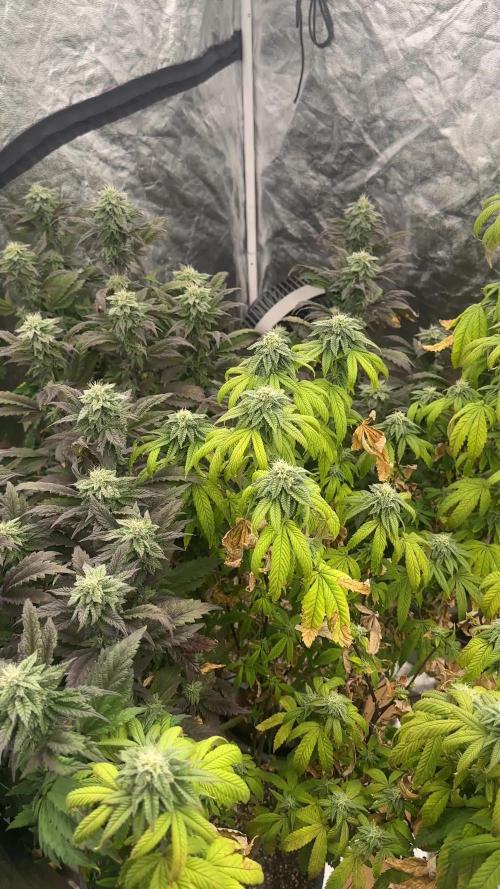
Another week in the books! 📅 Red Hot Violet is still thriving — stacking leaves and holding strong 💪💚. The Amaretto Sour is still tucked in beside her, and while I haven’t separated them yet, both are adapting to the shared space surprisingly well 🤞🌿.Growth is steady, color is deep, and the canopy looks lush 🍃✨. I’m keeping an eye on root competition, but so far they’re coexisting like stubborn siblings sharing the same room 😅.Nutrients and watering schedule are locked in 🔒💧, and I’m continuing to prep for that upcoming flip to flower soon 🌸🚀.Patience and balance — that’s the theme this week. 🙏🌱





Likes
11
Share

@Suemchen
Follow
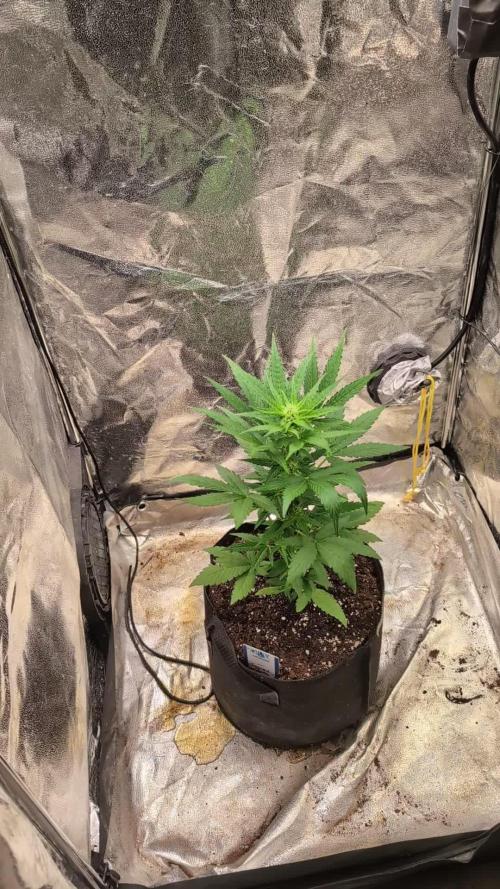
Sanlight EVO 3-60 at 80%
Day 29: did nothing today 👌🏻
Day 30: looking good and watered again🌊. Watered with rain water, 1 ml/l Cal Mag, and 1 ml/l Green Sensation.
Day 32: looking good and watered again. Watered with rain water and 1ml/l Powerzyme, 1 ml/l Hesi Boost, 1 ml/l Cal Mag, 1 ml/l Bloom Complex and 1 ml/l Green Sensation. EC at 1.0 and a pH of 6.4.

Likes
7
Share


@darb35
Follow
This will be a bit of a challenge, one of the LCC is 45cm while the others are 25cm.
I gave them little ramps to keep canopy even and all 3 are still looking healthy.

Likes
17
Share


@Reyden
Follow
Purtroppo la volta scorsa forse avevo dato da bere troppo ravvicinato e ho visto che questa volta fa più fatica ad asciugare..quindi aspetto che asciuga bene anche dentro, non è mai un buon segno però la pianta 🌱 non sembra proprio stare male..proverò a dare da bere solo dal sottovaso la prossima con una saluzione a 1700 di EC e PH 6.8 ✨✨✨ la Auto Purple OG Punch non è stata sottoposta a nessun tipo di allenamento 🏋️♂️ Perché volevo vedere come diventerà e che conformazione dei rami riesce a sviluppare, visto che ho praticamente cambiato a 12/12 dopo due settimane di crescita…in effetti le Autofiorenti sono fatte per crescere a 18/6 per far emergere il loro massimo potenziale, contando che è cresciuta con 12 ore di luce cercherò di tenerla anche qualche giorno in più per farla maturare come si deve 😀🤞

Likes
9
Share


@PanchitoGrow
Follow
Been adjusting some of the side branches to get some light to lower branches.
Recharge + CalMag every watering. Been looking good so far.
Found some kind of mites laying on the ground and some lower leafs, any tips on how to fix this I really would appreciate it!
Confirmed: Thanks Mr_Weeds_Autos, they are soil mites, I was on panic mode after watching them crawling on soil!

Likes
3
Share


@Hydroponicfarm7
Follow
Terminamos la 3ª semana de floración. Añadimos hesi pk 13-14 para que exploten los cogollos. Seguimos con la humedad por las nubes, no baja del 60. Seguimos firmes ☄️🔥

Likes
20
Share


@Tmasm
Follow
Saudações a todos 👍 🤛
1/5 está crescendo bem agora,
Comecei LST, para lado contrário do seu golpe, garantindo que no futuro não parte novamente.
Teve um pequeno contra tempo, mas não foi mau de todo, promoveu rebentos inferior.👍🤞
2/5 está tomando forma, folhas e planta se normalizando, uma anomalia quase imperceptível, sinal de que está no caminho certo.
Comece e um pouco de LST, em outra semana atrás muito de leve, mostrando alguns sinais laterais bons 🤞🤞
Não se esqueça de ver novidades em www.zamnesia.com
Crescendo em www.plagron.com
Boa fumaça
Plantas felizes
Até 👋 para a semana

Likes
5
Share


@Sativa763
Follow
Sooo another update :
Week 4
This week starting with Mulch, using hay, first time for me.
Plants Are looking very good and are growing Nice.
Snapped a Branch on the Right one ..
Sad. Very sad.
Switch will be done at may 1st so in realtime we Are on day 45 of flower!
Lets say they are still alive ✌️
See you soon
Happy growing

Likes
33
Share


@Viridios
Follow
The time has come to start my flush,wil be doing a week to a week and half of pure water flush. The smell coming from the plants are beautiful..very sweet fruity flavors..
!!! 💚💚
Lady's now slipping into there sexy purple outfits..😁😁💚

Likes
11
Share

@RakonGrow
Follow
+
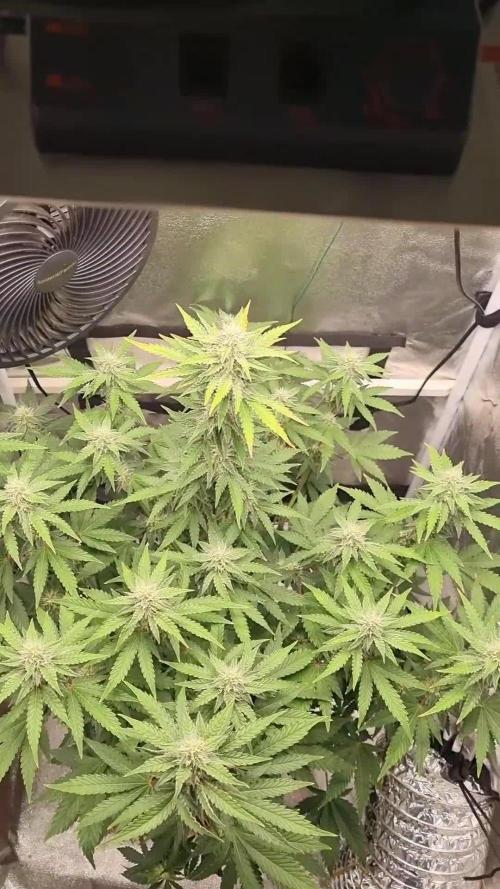
Day 57 :
Pantime
Day 55 :
4L mixed Water (EC 0.577) -5.8PH-20ml-Flores
+
Likes
4
Share

@Organic_G
Follow
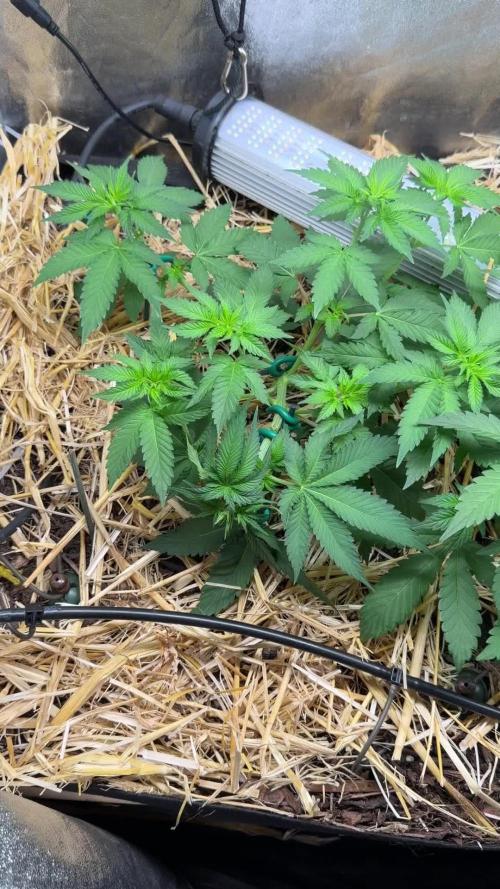
Die Ladys wurden gestern etwas beschnitten, habe untere treibe entfernt und neue treibe die nicht wachsen sollen. Ansonsten fühlen die Ladys sich extrem wohl wie man an der Bio Masse sehen kann. Gehen nun über in die Blüte, zumindest gibt es erste Vorblüteerscheinungen.

Processing
Likes
2
Share


@Fergie
Follow
Hey guys so another couple weeks hav3 passed this lady's is coming along nicely . Started pre flower and stretch should come this week .


Likes
21
Share


@XG_Jack
Follow
Harvest day - I save my harvest post for the yield results so I have one more to follow.
Beautiful grow though and really impressed with the yield and results. I typically only grow indoors, this is my first full outdoor grow with a photo actually. It definitely changed how I view growing seeing the plants react outdoors.
Also I’m in newly legal NY state and we would not be here today if it wasn’t for people like Jack Herer fighting for us at the most difficult times to do it. Jack was born in Buffalo, NY so this grow was a grow to pay homage to a man that led the way. This strain has also won the 2nd most cannabis cups behind only Skunk #1 a strain well deserving of the Jack Herer name.

Likes
119
Share


@Natrona
Follow
*****DIVINE SEEDS *****
*****OPIUM*****
Sponsored grow
Week 1
Germination April 6. After starting seeds in moist cotton pads, I put the sprouted seed in seed starting soil. Their 5-gallon air pots ready and waiting for the girl's final home.
This week 7-13 consisted of plain ph 6.6-6.9 water only. I gave a capful in the morning and evening.
Until the plants are big enough to go outside, I will be using my AC Infinity tent and equipment. Once outside, I will be watering with well water and recharge and any additional fertilizers or amendments will be determined at that time.
DIVINE SEEDS
***OPIUM***
Divine Seeds developed Opium as a new champion strain, unprecedently powerful and loaded with unbelievable quantities of resin. Certainly, no average genetic base could be behind such brilliant parameters! Several Afghani Indica landraces, recognized as most potent and resinous, were bred together with a mighty Brazilian Sativa which Opium inherits its bright berry taste from. Then a great deal of work followed aiming for the highest THC level and endurability as well as a branchy structure that would provide maximal yields. Now we can proudly title Opium the best Indica you could dream of growing!
Indoors these plants mostly stay mid-height (1.5 m), reaching up to 2.0 m out of doors. Depending on your height limitations, Opium flourishes universally in grow boxes, balconies, green houses and terraces. Due to its Afghani parentage, this strain can stand hot weather if provided enough water and some shadow. Responds well to any training techniques: ScroG and SoG, LST, topping and FIM, supercropping. The start of blooming is marked with a rush of growth, when plants stretch almost 1.4x. Expect heavy colas that often require additional supports. Whilst ripening, Opium gives off a pungent earthy stench with fruity and berry undertones, also a bit of pine. Ready for outdoor harvesting in October.
The stoning psychedelic impact of Opium is like being hypnotized (unless you’ve had too much, then it feels more like a blackout). Stone-lovers will appreciate every minute with Opium: its spicy taste immerses your mind into daydreaming, while the body rests flat. Recreation with this psychedelic Indica means silent tripping from one insight to another. Mighty enough to kill chronical pains, Opium is also medically efficient against insomnia, nausea, appetite disorders, muscle spasms, headaches, irritation, fatigue, panic attacks, epilepsy. Best consumed at night time, the effects keep going for up to 4 hours.
Equipment and nutrients
Pots: 5gallon Air pots
Soil Fox Farm Happy Frog Amended with worm castings, dolomite lime and mychorihiza Recharge
Seeds provided by Divine Seeds
Divine Seeds breeding company
The link to Opium Feminized Seeds
Opium - Divine Seeds breeding company
The link to Opium Auto Seeds
Auto Opium - Divine Seeds breeding company
=================================
Equipment: AC Infinity
CLOUDLAB 844 – Advance Grow Tent 48”x48”x80”
CONTROLLER 69 PRO – Grow Tent Controller
CLOUDLINE LITE 6 - Inline Fan 6"
IONBOARD S44 – LED Grow Light Board 400W
CLOUDRAY S6 – Oscillating Circulation Clip Fan
Carbon Filter 6”

Likes
4
Share


@trigs
Follow
Light experimental LST throughout the week.
Started getting signs of root rot on 7/3/2023. The res had started to smell like a pond, and the roots were browning heavily. Added 35mL of 3% H2O2 to the reservoir, followed by a double dose (~16mL) of Hydroguard


Likes
20
Share


@B_Content
Follow
Alots of leaning ladies this week and not enough garden wire to tie all the ladies up, either way the trichomes are looking great and are right where I like them to be.
I only weigh 1 plant wet which was the one I processed for hash, which was around 400 grams trimmed. The remaining 3 ladies have a lot of great big. dense buds.
The smell is very similar to a citrus cleaner. After about 10 to 14 days we will have these ladies trimmed up and ready for jars.
Thanks to all the growmies out there who stopped by, liked and commented!
Until the next grow!
Processing
Likes
19
Share


@Smokwiri
Follow
All looks good after the slow start
i had lst planned, but since the nodes are short i'll keep it this way.
first signs of flowering is visible too now, very eager to see how she progresses


