Likes
Comments
Share
@Trinidad
Follow
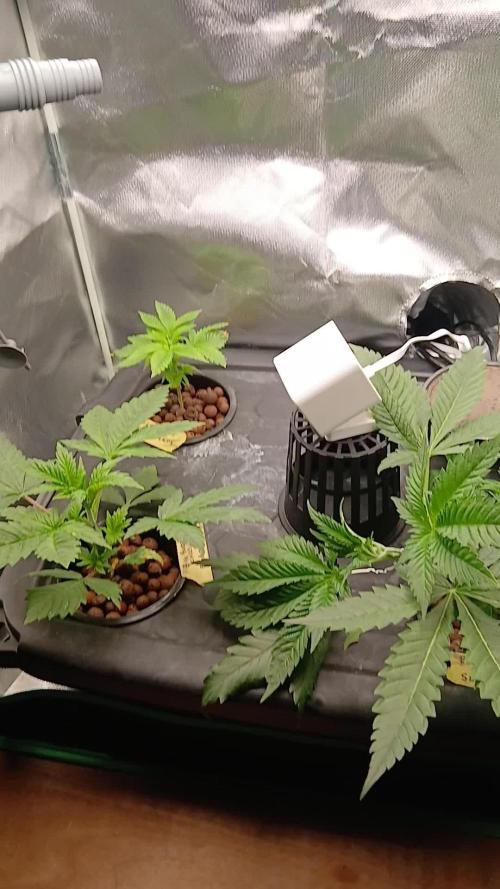
15.11.25 Day 37 Blue Cheese which was initially the biggest has recovered. I left her without water for to long. She is now the smallest. The Big Buddha Cheese is looking good, now is good time for training and moving into individual buckets. The badazz OG Cheese is starting to sprint ahead.
Likes
26
Share
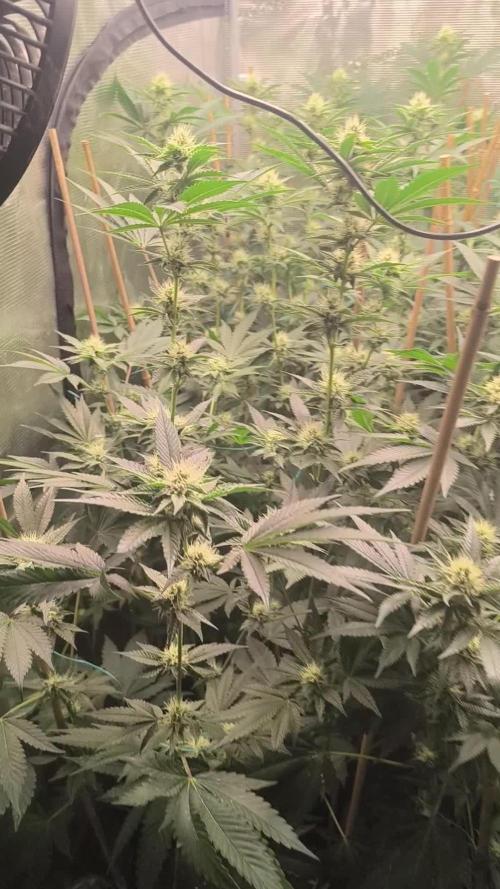
Finishing up week 9 flower. She's looking great! I have had a few small issues this week. Noticed she has a few crispy tips. I have been feeding pretty heavy and the drip system has been getting clogged up with the Big Bud coco. Not a great product to feed using a drip. So I'll be top feeding for the remainder. Her buds are ripening nicely. Thinking she's not going to end up with very large buds however she does have a lot of them so I'm super happy!!!
Likes
2
Share
@FEBREZE
Follow
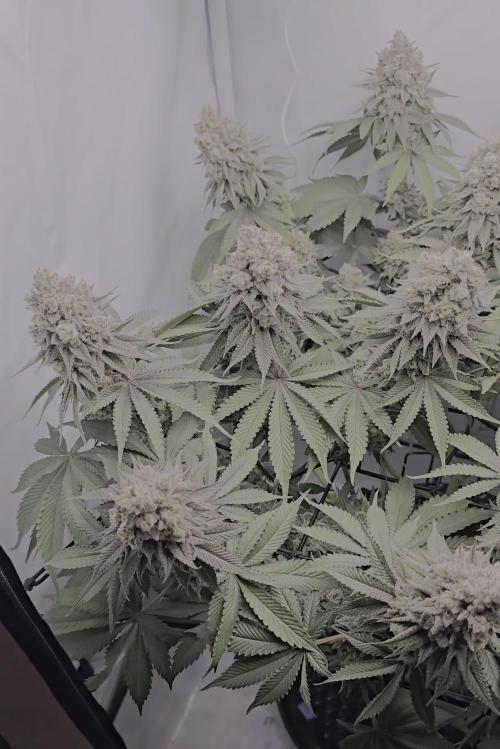
Studio54 – Original DeepEast x WizardTreez Cut aka RS54 Sunset Sherbert x OZ Kush#54 Tag 35 der Blütephase wurde etwas Entlaubt. Die Buds sind schon ordentlich dick geworden und fangen an zu Purplen.
Likes
8
Share
@Sinktip
Follow
Pretty happy with progress on the flowering. No idea how much longer it will take but I ran out of fertilizer. Will head to the local hydro store to pick some more up today. The large spindly plant is still growing. It's about twice as tall as the others and nowhere near as far along with the flowering - at least the buds are still much smaller. No idea what variety - a mystery plant!
Processing
Likes
3
Share
Just on auto pilot waiting for some height before topping again .which we did again today , feeding daily 500ml with nutrients, slight burning when feed 1320ppm at ph 6.0 but will continue raising ppm,. Used topps for clones
Likes
8
Share
@Ihad12
Follow
Getting really close alot of cloudy trichs
Likes
8
Share
She started off slow but the stretch kicked in on week 3. Flowering lasted for 5 weeks I was blown away by the development of Mephisto genetics cosmic queen. she stayed under 20 inches tall. But buds swelled up with long pistols that started out clear and eventually turned white. I’m going to grow again for sure. Once I find my method and style. This was my first grow using Mephisto genetics and my first organic grow as well.
Likes
2
Share
Remember that, however you are played, or by whom, your soul is in your keeping alone. Even though those who presume to play you be kings or men of power, when you stand before God, you cannot say, 'But I was told by others to do thus,' or that virtue was not convenient at the time. This will not suffice. Remember that. Day:18 84°F and 65% RH (VPD) for the vegetative stage. Approximately 1.15kPa(assuming leaf temperature is about 2°F cooler than the air), which falls right into the ideal vegetative sweet spot (0.8kPa to 1.2kPa). At 1.15kPa, plants can draw water and nutrients efficiently without risking stress or wilting. It keeps the leaf pores (stomata) open, allowing for ideal carbon dioxide intake and maximizing vegetative growth. VPD is determined by the leaf's temperature, not just the ambient air. Because leaves usually run 1° to 3°F cooler than room air under bright grow lights, my actual VPD will be slightly lower, closer to the 1.0kPa mark. As she transitions from vegetative growth to flowering, one can gradually lower the humidity (to around 45–60%) and drop temperatures slightly to prevent disease from settling inside dense buds when they appear. Night:6 At 70°F and 60% relative humidity, Vapor Pressure Deficit (VPD) is 0.86 kPa. This is right on the cusp of whats optimal for the vegetative stage. During the nighttime, plants generally close their stomata and undergo cellular respiration rather than photosynthesis. Transpiration slows to a near stop, making VPD less critical at night than during the day. However, maintaining a nighttime VPD between 0.8 and 1.0 kPa is highly beneficial in that it ensures the air is dry enough to prevent powdery mildew or bud rot, but moist enough to keep the plant from undergoing unnecessary stress. This range keeps the environment comfortable for cellular processes and prevents large atmospheric swings. Keeping it all flowing. (Not pushing them yet, these are photoperiods) The optimal soil (root zone) temperature for cellular root respiration and nutrient uptake in cannabis is between 68F & 72F This narrow range balances biological energy production (cellular respiration) with the dissolved oxygen levels in the soil, maximizing plant growth and health. Warmer soils hold significantly less dissolved oxygen. When soil temperature exceeds 74F oxygen depletion occurs, inhibiting cellular respiration almost entirely, At 68-72F root cells generate optimal adenosine triphosphate (ATP) via respiration to power root-tip elongation and the active transport of water and nutrients. Too Hot (Above 78F) Root respiration increases, demanding more oxygen, while the water's oxygen-carrying capacity drops. This creates a prime environment for anaerobic pathogens and Pythium (root rot). Too Cold (Below 60F) Root metabolism and cellular respiration slow to a crawl. This severely impairs nutrient and water absorption, leading to yellowing, wilting, and phosphorus deficiencies. A lot depends on whether it's automatic or photoperiod; with photoperiod, there is not as much of a need to push "hard" as the real countdown only begins once the flower is initiated. Automatics, on the other hand, the chronological "clock" begins ticking the moment the seed germinates. It is of critical importance that the seedling growth gets off to the races, understanding that early growth is like compound interest, which will pay off come harvest. This reality is why getting autoflowers "off to the races" early on yields such exponential benefits. The "compound interest" is directly related to the surface area of the leaves. Larger, faster-growing seedlings process more light and build bigger root networks early on, which translates into an explosion of vertical and lateral growth during their short vegetative window. The margins for error are so thin with autoflowers; this early-stage momentum depends on several critical practices. Seedlings exposed to increased atmospheric CO2 levels early in life will develop at an increased rate. To effectively "extend" or optimize the capacity of Photosystem II (PSII) for increased photosynthetic efficiency. In standard oxygenic photosynthesis, Photosystem II (PSII) is naturally limited to the red-light spectrum, peaking at 680nm. Extending its light-harvesting capacity past 700nm into the far-red region requires bypassing the natural limits of standard chlorophyll a. Adding 730 nm (far-red) LEDs alongside standard red/blue lights has been shown to increase canopy photosynthesis by 20–30% in several crops by acting synergistically with shorter wavelengths. However, the limitation is that excessive, pure IR/Far-red light (without accompanying red light) can trigger the "shade avoidance response," causing plants to grow tall, weak, and spindly rather than robust. Utilizing infrared light (specifically the 700-750 nm far-red range) is a viable method to boost photosynthetic efficiency. It acts as a bridge to allow PSII to utilize a broader spectrum of light, breaking the traditional 700 nm barrier. UVR8-mediated signaling (often in conjunction with CRY proteins) triggers protective mechanisms that maintain the stability of the photosynthetic apparatus (including LHCII and reaction center proteins), thus ensuring that the efficiency of Photosystem II remains higher in UV-B-exposed plants compared to plants lacking this receptor. ΦPSII indictates the rate of electron transfer from water to plastoquinone, which drives the production of ATP and NADPH. There is a close link between ΦPSII and the true rate of CO2 fixation (Φ*co2). ETR stands for Electron Transport Rate. It measures the speed at which electrons are moved through the thylakoid membranes in a plant's chloroplasts during the light-dependent reactions of photosynthesis. Infrared light (particularly Near-Infrared or NIR) improves cellular energy by interacting directly with the electron transport chain (ETC) in mitochondria. This process boosts adenosine triphosphate production, which acts as a metabolic coefficient multiplier by accelerating enzyme activity dramatically. Extend then multiply. Far-Red photons interact with plant photoreceptors to accelerate the plant’s biological "clock" or trigger a shade-avoidance response. Autoflowers don't use the plant's biological clock, although the IR will initiate a shade avoidance and make them stretchy. You can just add equal measures of 660nm-680nm to negate the shade avoidance effect. Replacing nights' "darkness" with a combination of IR+ and 660nm. Because autoflowers don't require a dark period to flower, many growers just blast them with light. 18/6 24/0. However, this ignores the plant's metabolic rhythms, where daytime photosynthesis (light reactions) must be perfectly balanced with nighttime carbon fixation and assimilation (Calvin cycle) to avoid bottlenecking plant development. Cellular respiration is a 24/7 process, but it can only function while the plant has the free oxidative capacity to do so. A 100% photosynthetically active leaf cannot perform cellular respiration. The viral trend of defoliation of every leaf that isn't "getting enough light" is of great detriment overall, putting 100% of the cellular respiratory "workload" and responsibility on the 0/4/6 hours of darkness in sub-optimal conditions for enzymatic activity. Photosynthesis captures nearly 100% of the initial energy as carbon, while cellular respiration is the process that unlocks 90% of that captured energy into usable ATP so the plant can use it. Respiration is considered only roughly 30% to 40% efficient. It captures enough of the potential energy in glucose to synthesize around 30 to 38 ATP molecules per glucose molecule. The remaining 60% to 70% of the energy in the sugar is not captured in ATP; instead, it naturally escapes into the environment as heat, which helps regulate plant temperature. In plants, the primary enzymes of the Electron Transport Chain (ETC) and the ATP synthase complexes are typically adapted to function optimally in warmer temperatures (roughly 77°F to 95°F, depending on the specific plant strain). As temperatures rise within this physiological range, molecular collisions increase, speeding up respiration and ATP production. The cannabis plant has a branched respiratory pathway. During heat or cold stress, plants activate Alternative Oxidase (AOX). AOX burns sugars to dissipate energy as heat rather than coupling it to ATP production. This pathway actually functions optimally at elevated temperatures to help protect the cell from the damaging build-up of Reactive Oxygen Species (ROS) during heat stress. Enzyme activity generally scales with heat; there is a strict biological limit. If canopy temperatures in a grow room exceed 104°F, the enzymes and their supporting lipid membranes lose stability. Not saying you need to go crazy, just optimize nights the same as we optimize days. Phosphorus is the driving force behind early seedling development. It acts as the "energy hub" of the plant, directly driving cell division, robust root growth, and the creation of DNA. Without an adequate, easily accessible supply early on, the plant's overall growth potential and final yield can suffer permanently.
Likes
1
Share
Looking good Las raices consiguieron un trenzado hermoso No sé si eso es normal pero está planta me sorprende y me sigue sorprendiendo
Likes
8
Share
@valiotoro
Follow
A wonderful genetic thank you Fast Buds ❤️‍🔥🤩 The trim was super easy the buds are FAT & FROSTY full of resin 🤤 I’m very happy with the harvest 96g !! For the light i’ve used the Spider Farmer SE-7000💡
Likes
21
Share
@gr3g4l
Follow
con 64 dias y viendo el estado de los tricomas diría que voy a empezar a regar con agua sola , unas 3 veces más en el que añadiré en el riego Dos de acido cítrico por uno acido ascórbico y en 7 -10 dias cosecharé.
Likes
8
Share
@Kirsten
Follow
23.3.25: Hulkberry 💜💚 is sprouted, and now progressing well. It was a slow start, as I did not soak the starter plug and the seed kept drying out. I also added more perlite than usual and so when I was watering the seed, everything was moving with the perlite. Now that we have broken soil, I did need to remove the shell as it had dried out and became stuck. It came off easily enough, and I did not cause any damage to the plant. The extra perlite should be fine now, as we have roots to keep us in place at last, as well as the starter plug. When I get some more coco I will top dress, as the level of the soil has lowered since it was filled due to the extra perlite. That probably won't be soon though. It will probably coincide with the normal top dress schedule. The super soil mix I made was approximately constituted 8 gallons of; ☆ 60% Canna Coco ☆ 30% Perlite ☆ 9% Worm castings ☆ 1% Organic dry amendments. - Ecothrive Life Cycle - Ecothrive Charge - Diatomaceous Earth - Ground Cinnamon - RHS Mycorrhizal Fungi granules - Great White Mycorrhizal Fungi blend Thanks for hanging out 🍃 ✌️ 💚 🙂
Likes
17
Share
Esta semana ha llovido mucho(desde el lunes hasta el jueves) y la maceta se siente pesada, espero que pronto salga el sol y no aparezcan hongos, He regado apenas con tricodermas como para combatir futuros hongos. Por calendario le faltan 2 semanas...
Likes
3
Share
At this point of the process, you just sit there and observe how the plant gets fatter and fatter. The only thing you have to do is give her food, take care of her and that's it. Harvest is coming Sólo queda mirar, alimentarla y cuidarla básicamente. Los cogollos sólo se dedican a crecer.
Likes
1
Share
I soaked 3 Laughing Buddha seeds - 2 developed a taproot - 1 bad I soaked 3 Acapulco Gold seeds - 2 developed a taproot - 1 bad I soaked 3 Amnesia Lemon - All 3 were bad and did NOT develop a taproot I also tried the paper towel method on 2 Amnesia Lemon - Both were bad and did NOT develop a taproot Seeds were soaked by using 75F degree water, water was kept warm using a heating pad over night, cups were covered to prevent light leaks Seeds were sown on wet paper towels inside of a plastic baggy, covered and placed on heating pad for warmth at 75% water PH level 6.4 4 seeds that developed at taproot were placed in 78F grow tent, 80% humidity, 16 hour light cycle, lights 24 inches away, light meter reads around 250 with the plants moved off slightly to the side of a 4x2 tent 5 foot tall. Carbon filter not used as it was taking the temperature and humidity down too much. I DO NO RECOMMEND BARNEYS SEEDS - THEY DO NOT STAND BEHIND THEIR PRODUCTS I was offered a 30% off coupon on a future purchase, but I was not compensated for their out of date seeds. worth of garbage seeds, one strain would not germinate and the other two strains did not fully germinate. Customer service was condesending and rude.
Likes
5
Share
Wow. The gruntz is insane. I left for work and when I got back, WTF! The gruntz was touching the light. It wasn’t burning but wow we had to fold over the tops and put a net in to hold her down. It’s been 3 weeks of flower and this girl is still reaching for the moon! Nasha genetics ( we take freebies for the name drop!) whatever you do, holy cow. They are starting to hair up now. I think the gruntz could’ve filled the tent by herself but there are 3 other plants in with her. I’m wandering if the widows will get enough light. We might have to raise the pots off the floor. And with spring coming (well it keeps snowing here but they say it’s coming) we are getting busy with the garden and life. Anyways we didn’t do much with the gruntz other than water. Now that she is getting some hair we will top dress some build a bloom and or some craft blend, just to help. Around a tablespoon per pot. Over all it was a good week, we just hope the gruntz stops stretching soon. Wish you all the best. Spread some love and share some bud!
Likes
21
Share
@DRO420
Follow
Time to defoliate soon , but the buds are coming in nicely.
Likes
3
Share
Likes
7
Share
@Reaper
Follow
can anyone explain why my buds are this small? i dont have these issues in soil or coco
Likes
7
Share
10-weeks of flowering, let hang dried for 7days, then into C-Valet containers @ 62% Rh for 6 weeks.