


Likes
Comments
Share

@RabbitHole
Follow
Hello =) schönen Sonntag euch 🌞
🌿 Wochenupdate
Die Woche war leider wieder alles andere als ruhig 😅
Ich konnte zwar durch regelmäßiges Absenken des EC den Burn von Notorious stoppen, aber wäre ja langweilig, wenn jetzt gerade in der wichtigen Phase alles gut läuft, oder =D
Zum Regulieren habe ich immer feste Summen entnommen, dann die neu zuzufügende Menge auf die vorher berechneten Werte gebracht, und durch gezieltes, getrenntes Einstellen weiterhin ein vollständiges NPK-Profil bei insgesamt niedrigerem Ionenlevel gewährleistet =) ⚖️
Ich bin ja mit recht hohem EC in die Bulking-Phase gestartet, unter der Annahme, das wird gut gehen, wenn ich ein bisschen entspannter fahre und Notorious wieder besser mitmacht.
Was ich eher weniger auf dem Schirm hatte, war, dass sich dadurch der Nährstoff- und Ionenbedarf der Pflanzen funktional stark verschoben hat 🤦♂️ =D
Das Ganze dann in Kombination mit sehr weichem Wasser (wirklich brutal geringe Pufferkapazität 😵💫) und entspannterer Lösung – also mehr freiem Wasser und damit mehr Raum für Säureeintrag, führte langsam zu einer zunehmenden Versauerung der Nährstofflösung...
Ich habe den sich einschleichenden pH-Drift zunächst als normales Uptake-Pattern bei dem Verhalten meiner höher angesetzten Lösung gedeutet, und den EC durch regelmäßige Top-ups weiter nach unten reguliert, das verbrauchte Wasser ersetzt und den pH wieder nach oben gezogen. Allerdings ausschließlich über Top-ups, ohne aktives pH+ bzw. ohne echten Pufferaufbau.
Dabei habe ich leider viel zu spät gecheckt, dass sich das pH-Muster immer weiter nach unten verschiebt =(..
Nach etwa zwei Tagen wurde dann klar, dass es sich um ein Pufferproblem handelt und der pH-Wert bei unverändertem Vorgehen in einen kritischen Bereich rutschen würde.
Durch die Verzögerung beim Beschaffen von pH+ stand das System über etwa drei Nächte jeweils mehrere Stunden im zu sauren Bereich (pH 5,3–5,0), was in dieser Phase leider zu einer deutlichen Wachstumsbremse geführt hat 😑🥀
Der Fehler lag nicht im reinen EC-Wert, sondern in der fehlenden Pufferreserve.
Das habe ich – FML – bei dem sehr weichen Wasser dummerweise viel zu spät berücksichtigt 🤦♂️💀
Nach dem Einbringen von pH+ und dem Auffüllen des Puffers ist das Pattern aber wieder so, wie es sein sollte =) ✅
Das Wurzelsystem hat nach etwa 12 Stunden direkt wieder losgelegt mit gutem Uptake.
Ich hatte hier wirklich Glück, dass die Pflanzen lediglich gehemmt waren, und hoffe jetzt, in den letzten 2–3 Wochen noch ein bisschen was gutmachen zu können 🤞🔥
Passiert mir sicher nicht nochmal =D
🌸 Pflanzenstatus & Training
Aktuell durch die letzte Woche hier nicht allzu viel zu berichten..
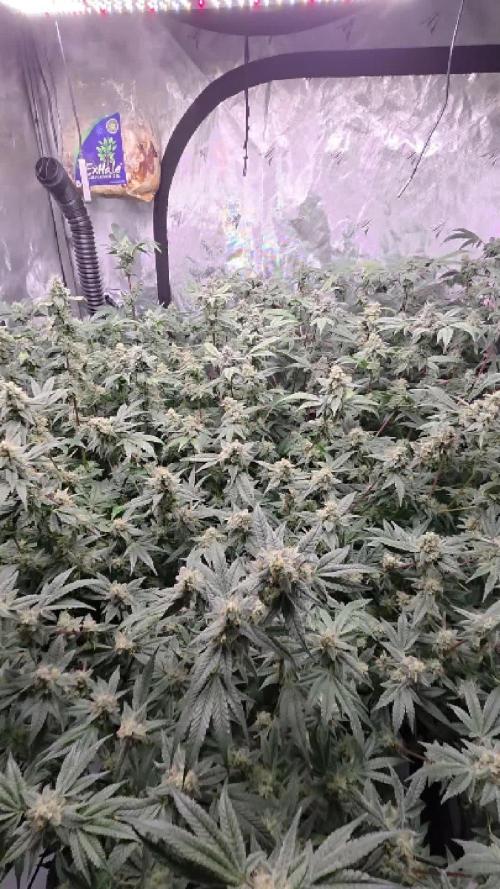
Blueberry Cupcake zieht den Frost weiter an und sie riecht traumhaft =)
Ich habe auch den Eindruck, dass sie die Woche noch am besten mitgemacht hat.
Entwicklungstechnisch wirkt es so, als könnte hier noch etwas kommen, da noch viele weiße Stigmen sichtbar sind – vor allem an den Seiten der Buds 🌿
Vom jetzigen Stand hoffe ich auf noch 2–3 Wochen =)=)🔥
Purpz hat ebenfalls gelitten und nicht sonderlich viel in Stacking investiert.
Der Frost zieht auch hier schön weiter an, allerdings haben sich leichte Verfärbungen auf den Blättern gezeigt 🍂
Insgesamt sieht sie immer noch heftig aus, gerade deshalb ärgert mich die Handbremse hier wirklich … schöner Pheno 💜
Notorious hat einfach fast eine Pause eingelegt =D
Das Frostbild ist weiterhin schön, allerdings ist sie in ihrer Entwicklung fast stehen geblieben..
Ich vermute, dass der zuvor hohe EC in Kombination mit der pH-Thematik hier deutlich mehr genagt haben 😣
Positiv ist jedoch, dass sie nicht weiter abgebaut, sondern lediglich kurz pausiert hat und jetzt gefühlt dort weitermacht, wo sie aufgehört hat =)
Sie stackt auch wieder etwas =D
Guzzlerz hat ja von Anfang an zu kämpfen gehabt, und ich habe das Gefühl, dass ihr genau das jetzt zugutekommt =D
Sie entwickelt sich konstant weiter und hat sogar unter den Bedingungen der letzten Woche noch etwas an Masse aufgebaut.
Sie hat einen angenehmen, süßlichen, flachen Duft 🍯 fast karamellartig, finde ich =)
⚙️ System
Jetzt wieder Top-up-Logik weiterfahren =)
VPD: 1,20 kPa
CO₂: 700–800 ppm im Durchschnitt 🌫️
EC: 1.500–1.600 µS/cm
PPFD: 1.000 µmol/m²/s
Vielen Dank mal wieder für eure Zeit 🙏 =)
Schöne Woche euch und gesunde Plants 🌱💚



Likes
49
Share


@AsNoriu
Follow
Day 119. After 72 hours of darkness - chop day !!!
P.S. if you are searching for Killer Kush, she got separate diary, my favourite of all 3 strains.
Day unknown !!! Though I uploaded dry weight results and videos, but made it only with Cheeses, all footage is deleted now , so this part will be missing, stoners life ... ;)))
Happy Growing !!!

Likes
7
Share


@DrewbieDoobieNoobie
Follow
coming to the bitter end may be 2 more weeks until harvest.
Not seeing a lot of bulk or growth. the fade is on, and the watering has been drastically reduced.
lets see how it gose next week

Likes
25
Share

@squalino
Follow
Journal de Culture : Frost 1 (Semaine 5)
Génétique : Frostbanger (F2 Perso) | Système : Autopot 20L
📣 Remerciements
Un immense merci à toutes les personnes qui suivent ce journal depuis le début ! Un merci tout particulier à @MIA_BIOTABS et à Mrs_Larimar pour leurs précieux conseils qui m'aident à mener cette session au mieux. Merci à tous pour votre soutien constant !
🛠️ Configuration Technique
Éclairage : Lumatek ATS 300W Pro (réglé à 75%)
Distance lampe/canopée : 55 cm
Climat : Jour : 25°C / Nuit : 21°C
Humidité (HR) : 50%
Tente : 1m80 de hauteur
📅 Évolution & Floraison : La phase sérieuse commence !
État de la plante :
jour +35
La structure est maintenant bien établie. La phase de stretch semble se stabiliser, laissant place au développement des sites de floraison.
Hauteur actuelle : 68 cm (+22 cm)
Stade : Floraison confirmée. Les pompons commencent à se former et la plante change d'allure pour se concentrer sur la production.
Travail sur la plante :
Entretien :
Je n'ai pas touché à la plante depuis une semaine. Après le travail d'aération et de palissage précédent, j'ai choisi de la laisser tranquille pour ne pas la stresser lors de son passage en floraison. Elle s'épanouit d'elle-même.
Structure :
Le palissage à la ficelle fait toujours son office, maintenant une canopée ouverte où l'air circule parfaitement.
Gestion du système Autopot :
le 12/05 Nutrition :
Fidèle à la méthode Biotabs, la plante n'a reçu que de l'eau claire via le système Autopot. Sa couleur vert foncé et sa vigueur prouvent que le substrat est parfaitement équilibré pour cette phase de transition.
le 14/05
apport de 50 cl de tea compost
preparation tea compost :
LE MELANGE :
15 grammes tea compost avec 5 ml d'orgatrex pour 1 litre d'eau ( 4 plantes donc ×2. 50cl par plante ) .
mélanger le tous dans un sceaux.
LA PREPARATION
materiel :
1 sceau
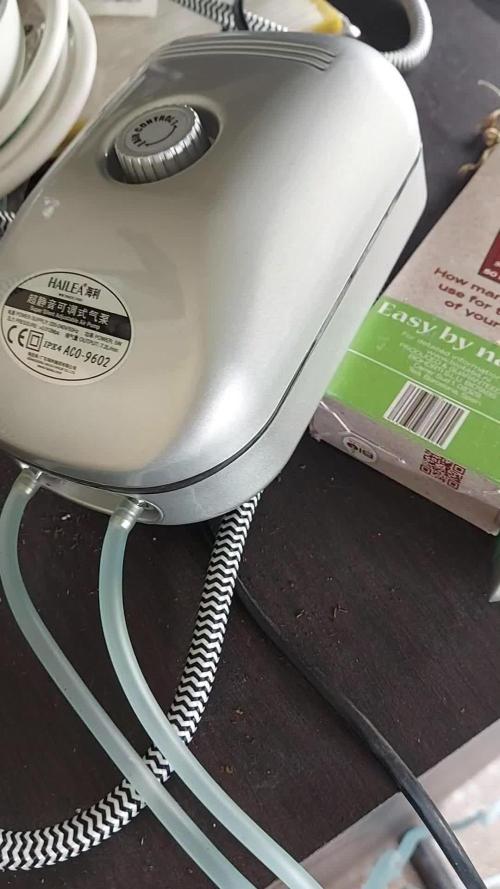
1 pompe à air pour aquarium. ( 15 euro ).
je vais utiliser pour 18h00 la pompe de mon aire dôme de l'autopots. j'ai acheté aussi 2 petit diffuseur d'air à 4 euros . ustensil utiles pour aérer le tea compost .
mettre les diffuseur dedans allumé la pompe et laisser pendant 18h00.
normalement le température idéal pour que les micro-organismes se développent est entre 18 degrés et 22 degrés.
pour ma part le mélange était dans ma salle de culture à enciron 24 , 25 degrés.
voir video et photos ajouter
18h00 après
filtrer le mélange pour éviter touts dépôts susceptible de moisir et ramener des champignons.
donner au plante 50 centilitres .
Le tea compost se garde mal donné dans l'heure qui suis le stop de l'aération
Résumé :
On arrive à un moment charnière. Avec 68 cm de hauteur, elle occupe l'espace de manière idéale. Les fleurs commencent à se dessiner nettement sur chaque sommet dégagé lors du dernier LST. La plante est sereine, le cultivateur aussi !
À bientôt pour la suite de la floraison !


Likes
21
Share


@Hazeberg
Follow
Day 57: Welcome to week 9. I defoliated a bit again. Nothin else to do today.
Day 58: Nothing to do today. This week I aim for a VPD of 1.1 kPa.
Day 59: Time to upgrade. The new AC Infinity S22 has arrived. Now there are 2 of them and both should support her pretty well. Let’s see, how she will finish.
Day 60: With the second light in the tent, the temperature is quite high and around 25° C and I was not able to get the humidity to 60 % because the fan was running to fast and I don't want to use a humidifier in the flowering phase. So I decided to raise the temperature and humidity max levels. Let's see, how she likes this and what the avg. VPD will be at the end of the week.
Day 61: Nothing to do today.
Day 62: I removed some fan leafs. Also I noticed some days before, that she needs a bit more nutrients, so I added a bit more today to the reservoir. Maybe she has a bit of light stress. 2 of the S22 and at the nearest point only 20 cm is maybe a bit too much. So I lowered them to 80%. I hope that helps in addition.
Day 63: Last day of the week. I hope lowering the LED to 80% helps her during the next week. It looks like light stress. Today I cleaned the reservoir and refilled it.
--------------------------------------------------------------
You also like to get some seeds from Fast Buds?
You like a 15% discount?
Just use the following code on your next order: CSYIJC
Happy growing
--------------------------------------------------------------
🙏 Thanks for visiting and follow for daily updates 🌱
Likes
19
Share


@Aqualung
Follow
WOW these two beauts are really filling out! No complains from me just wish I LST the SBR like i did the Dinafem but at the time the SBR wasn't as bendy as the Dinafem, it is amazing what one bend can do to help produce more bud sites. I'm sure that one big cola from the SBR is going to very nice looking though! My next photoperiod grow I will prob top, LST and trim, but i need to do some research again because I forgot everything lol 😅. My next grow journal is up! Growing two Seedsman Pink Kush CBD 1:30 Autos! 👍


Likes
10
Share


@SolitudeCorners
Follow
6️⃣6️⃣6️⃣****Week8 Bloom6****6️⃣6️⃣6️⃣
12/4/24
Water20L+Agsil21 10ml+Bloom 150-160ml+Core 70ml
PH 5.9 EC 2.5
Runoff Tray PH6 EC3.2
⛺️ PH5.9 EC3.2
13/4/24
Water 30L+Agsil21 15ml+Bloom 230ml+Core 120ml PH5.9 EC2.5
Runoff Tray PH 6.1 EC 3.4
⛺ PH 6 EC 5
14/4/24
Water 30L+Agsil21 15ml+Bloom 200ml+Core 100ml PH 5.9 EC 2.4
Runoff Tray PH 6.1 EC 3.6
⛺️ PH 6 EC 5
15/4/24
Water 20L+Agsil21 10ml+Bloom150ml+Core 70ml +Calboron 10ml PH 5.9 EC 2.5
Runoff Tray EC 3.8 PH 6
⛺️ EC 4 PH5.9
16/4/24
Water 30L+Agsil21 15ml+Bloom 230ml+Core 120 ml
Runoff Tray PH 6.1 EC4
⛺️ PH 5.8 EC4
17/4/24
Water 20L+Agsil21 10ml+Bloom 160ml+Core 95ml PH5.9 EC 2.5
Runoff Tray EC 3.6 PH 6.1
⛺️ EC 4.2 PH 5.8
18/4/24
Water 28L+Agsil21 13ml+Bloom 180ml+Core110ml PH 6 EC2.5
Runoff Tray EC 3.5 PH 6
⛺ EC 4.8 PH 5.6 (Flush with thrivegens)
Likes
5
Share


@Rangaku
Follow
Another week of impressive growth , chunking up nicely. Same same next week

Processing
Likes
4
Share


@Cannibalgardens
Follow
Well we have hit day 16 and that was a tough ride to say the least learning all the time .The light was to close had her at 22" inches but 34 " was the sweet spot as you can see she recovered quickly . Besides that I've been giving her nutrients and a foiler spray and am excited to see her next week , thanks for checking in canna family ...

Likes
14
Share


@GoldenWeedGrower
Follow
D85/F41 - 24/06/23 - She's almost ready, I think I'll start the flush soon
D86/F42 - 25/06/23 - Temp is still too high, I'm trying to refresh the environment with air conditioning
D87/F43 - 26/06/23 - First Thricomes Video. I'm going to start the flush today and I'll arwest next WE
D88/F44 - 27/06/23 - Flushing
D89/F45 - 28/06/23 - Flushing
D90/F46 - 29/06/23 - Flushing
D91/F47 - 30/06/23 - She's ready. Tomorrow I'll cut her

Likes
3
Share

@DE_BW
Follow
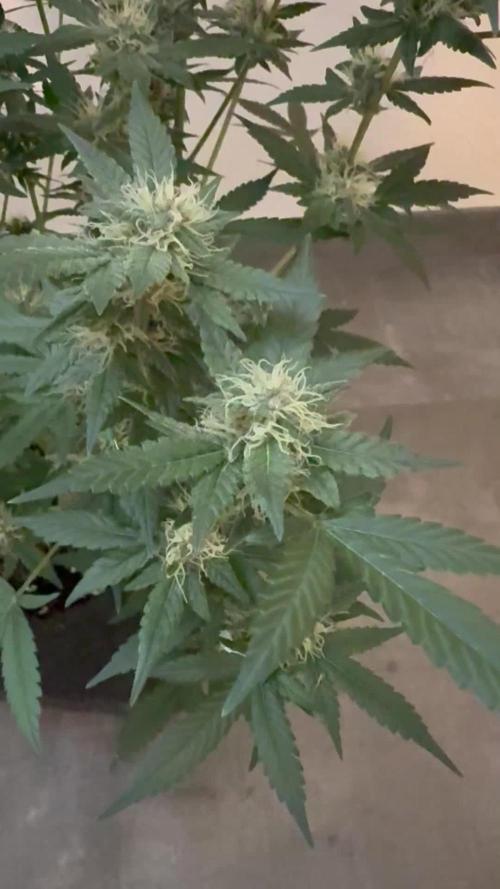
She is really stacking the Buds. Absolute pleasure to watch her develop
D58: Feeding 4l
D60: Feeding 4l. Switched to Overdrive. Minimal foxtailing is forming
D63: Feeding 4l.
Processing
Likes
14
Share


@Mr_Og_GreenThumb
Follow
Week 12, Day 83 from seed and 3rd day of flower.....The 5 day of this week officially marked the start of the flowering season!! So I flushed both of these bad boys with ph'd water for two days and then today I switched them to 12/12. I gave them their first dose of bloom nutrients and then lollipoped them as you can see, pixs . Grateful no issues to report for the past 3 weeks have been trouble-free!! I'm going to leave the MH bulb in for an additional 2 weeks to prevent any stretching before switching to the HPS. But so far they are still loving their environment. I'm also in the process of keeping clones of fat banana and hulkberry while i try this new strain of Peanut Butter Tree.
Likes
14
Share


@MasterKush714
Follow
Yooooo what up gang!!!
Thought I'd stop through and do an update for yall!!!
SOOOOO: 1) she is getting really strong at the trunk and arms CropSalt hitting great!!
2) going to do clones in a week or so
3) the big tent will use the clones which is almost ready to go.
4) after they are rooted enough going to flip the small tent!!
5) will stay on top of this as much as possible!!! Thanks for stopping by gang!!!

Likes
20
Share


@NONSENSE
Follow
Good day everyone,
So right now I clean the plant with water.
I just correct the PH to 6.3-6.5 and use simple water with PPM 180-200.
the plant looks very nice.
Please see the pictures - looks like winter time, all plant covered with snow :) I like it.
the smell is fruity.
After about 4-5 days I will harvest it and will update the report with the results and smoke experience.
Good luck
Likes
9
Share


@Sato_Growing
Follow
My girls are going perfect they took about 10cm in height and become more bushy.
500-700 ml water per plant every day watering
About 3-4 times i water with nutrients and 3-4 times with water, depends on how many nutrients they want
Likes
45
Share


@Ultraviolet
Follow
2nd net is up. Early bud formations are promising. holding up to the extremes pretty well, some leaves taking minor damage, but overall, she is holding up, gave her 1 night at 50F see how she would react, stressful. Not advised as it messes with her metabolism, but I want to see if it triggers any anthocyanin response. Love to see her purp up but no signs yet.
My homework.
Rubisco regeneration is intrinsically linked to nitrogen supply because Rubisco is a major sink for nitrogen in plants, typically accounting for 15% to over 25% of total leaf nitrogen. The regeneration phase itself consumes nitrogen through the synthesis of the Rubisco enzyme and associated proteins (like Rubisco activase), and overall nitrogen status heavily influences the efficiency of RuBP regeneration.Structural Component: Nitrogen is an essential building block for all proteins, and the sheer abundance of the Rubisco protein makes it the single largest storage of nitrogen in the leaf.
Synthesis and Activity: Adequate nitrogen supply is crucial for the synthesis and maintenance of sufficient Rubisco enzyme and Rubisco activase (Rca), the regulatory protein responsible for maintaining Rubisco's active state. Nitrogen deficiency leads to a decrease in the content and activity of both Rubisco and Rca, which in turn limits the maximum carboxylation rate, Vmax, and the rate of RuBP regeneration Jmax, thus reducing overall photosynthetic capacity.
Nitrogen Storage and Remobilization: Rubisco can act as a temporary nitrogen storage protein, which is degraded to remobilize nitrogen to other growing parts of the plant, especially under conditions of nitrogen deficiency or senescence.
Nitrogen Use Efficiency (NUE): The allocation of nitrogen to Rubisco is a key determinant of a plant's photosynthetic nitrogen use efficiency (PNUE). In high-nitrogen conditions, plants may accumulate a surplus of Rubisco, which may not be fully activated, leading to a lower PNUE. Optimizing the amount and activity of Rubisco relative to nitrogen availability is a target for improving crop NUE.
Photorespiration and Nitrogen Metabolism: Nitrogen metabolism is also linked to the photorespiration pathway (which competes with carboxylation at the Rubisco active site), particularly in the reassimilation of ammonia released during the process.
To increase RuBisCO regeneration, which refers to the process of forming the CO2 acceptor molecule Ribulose-1,5-bisphosphate (RuBP) during photosynthesis, the primary methods involve optimizing the levels and activity of Rubisco activase (Rca) and enhancing the performance of other Calvin-Benson-Bassham (CBB) cycle enzymes.
Biochemical and Environmental Approaches:
Optimize Rubisco Activase (Rca) activity: Rca is a crucial chaperone protein that removes inhibitory sugar phosphates, such as CA1P (2-carboxy-D-arabinitol 1-phosphate), from the Rubisco active site, thus maintaining its catalytic competence.
•Ensure optimal light conditions: Rca is light-activated via the chloroplast's redox status. Adequate light intensity ensures Rca can effectively maintain Rubisco in its active, carbamylated state.
•Maintain optimal temperature: Rca is highly temperature-sensitive and can become unstable at moderately high temperatures (e.g., above 35°C/95F° in many C3 plants), which decreases its ability to activate Rubisco. Maintaining temperatures within the optimal range for a specific plant species is important.
•Optimize Mg2+ concentration: Mg2+ is a key cofactor for both Rubisco carbamylation and Rca activity. In the light, Mg2+ concentration in the chloroplast stroma increases, promoting activation.
•Manage ATP/ADP ratio: Rca activity depends on ATP hydrolysis and is inhibited by ADP. Conditions that maintain a high ATP/ADP ratio in the chloroplast stroma favor Rca activity.
Enhance Calvin-Benson-Bassham (CBB) cycle enzyme activity: The overall rate of RuBP regeneration can be limited by other enzymes in the cycle.
•Increase SBPase activity: Sedoheptulose-1,7-bisphosphatase (SBPase) is a key regulatory enzyme in the regeneration pathway, and increasing its activity can enhance RuBP regeneration and overall photosynthesis.
•Optimize other enzymes: Overexpression of other CBB cycle enzymes such as fructose-1,6-bisphosphate aldolase (FBA) and triose phosphate isomerase (TPI) can also help to balance the metabolic flux and improve RuBP regeneration capacity.
Magnesium ions, Mg2+, are specifically required for Rubisco activation because the cation plays a critical structural and chemical role in forming the active site: A specific lysine residue in the active site must be carbamylated by a CO2 molecule to activate the enzyme. The resulting negatively charged carbamyl group then facilitates the binding of the positively charged Mg2+ion. While other divalent metal ions like Mn2+ can bind to Rubisco, they alter the enzyme's substrate specificity and lead to dramatically lower activity or a higher rate of the non-productive oxygenation reaction compared to Mg2+, making them biologically unfavorable in the context of efficient carbon fixation. The concentration of Mg2+ in the chloroplast stroma naturally increases in the light due to ion potential balancing during ATP synthesis, providing a physiological mechanism to ensure the enzyme is activated when photosynthesis is possible. At the center of the porphyrin ring, nestled within its nitrogen atoms, is a Magnesium ion (Mg2+). This magnesium ion is crucial for the function of chlorophyll, and without it, the pigment cannot effectively capture and transfer light energy.
Mg acts as a cofactor: Mg2+ binds to Rubisco after an activator CO2 molecule, forming a catalytically competent complex (Enzyme-CO2-Mg2+). High light + CO2) increases demand: Under high light (60 DLI is a very high intensity, potentially saturating) and high CO2, the plant's capacity for photosynthesis is high, and thus the demand for activated Rubisco and the necessary Mg2+ cofactor increases. Mg deficiency becomes limiting: If Mg2+ is deficient under these conditions, the higher levels of Rubisco and Rubisco activase produced cannot be fully activated, leading to lower photosynthetic rates and potential photo-oxidative damage.
Optimal range: Studies show that adequate Mg2+ application can enhance Rubisco activation and stabilize net photosynthetic rates under stress conditions, but the required concentration is specific to the experimental setup.
Monitoring is key: The most effective approach in a controlled environment is to monitor the plant's physiological responses e.g., leaf Mg2+ concentration, photosynthetic rate, Rubisco activation state, and adjust the nutrient solution/fertilizer to maintain adequate levels, rather than supplementing a fixed "extra" amount.
In practice, this means ensuring that Mg2+ is not a limiting factor in the plant's standard nutrient solution when pushing the limits with high light and CO2.
Applying Mg2+ through foliar spray is beneficial to Rubisco regeneration, particularly in alleviating the negative effects of magnesium (Mg) deficiency and high-temperature stress (HTS). While Mg can be leached from soil, within the plant it is considered a mobile nutrient, particularly in the phloem. Foliar-applied Mg is quickly absorbed by the leaves and can be translocate to other plant parts, including new growth and sink organs.
Foliar application of: NATURES VERY OWN MgSO4 @ 15.0g L-1 in a spray bottle.
Foliar sprays are often recommended as a rapid rescue measure for existing deficiencies or as a supplement during critical growth stages, when demand for Mg is high. Application in the early morning or late evening can improve absorption and prevent leaf burn.
The starting point [of creativity] is curiosity: pondering why the default exists in the first place. We’re driven to question defaults when we experience vuja de, the opposite of déjà vu. Déjà vu occurs when we encounter something new, but it feels as if we’ve seen it before. Vuja de is the reverse—we face something familiar, but we see it with a fresh perspective that enables us to gain new insights into old problems. Come walk in the enchanted forest.


Processing
Likes
45
Share


@Kelseyheart
Follow
Hi fam!! So week 6 started out great but then Anchorage , Alaska got hit with a pretty massive earthquake. Roads broken, houses callapsing, etc.. I thought my plants were going to be completely destroyed.. BUT they survived. A few broken leaves and stems.. they were set back a little but that's better than I expected. If these FastBuds can survive a light falling on them, then they deserve some credit. Quality seeds. Great genetics.
Happy growing
Sending love xoxo


