


shorts_status_processing


@SupremeTimmy
Follow
Greetings to all who follow the development of my blueberry. I am very pleased to see you. Comment. Like.
A week passed in the normal mode, the head swells in order to strengthen the flowering. I used pesticides of the gibberlinic acid group.


@Chedderbob112
Follow
Awrite troopers am shit at filling in ma diary someone seems to hav noticed ma diary’s hav sad face well Bob has a happy face happy 😃 rite troops waiting for the ladies at the bak to finish hav started to pot up the next run because a just want it started am fighting for space n am working oota wan tent so no got a veg flower system that I had before but enjoy trying new things so revenging and takin clones from flowering plants


@CalimannpackZ
Follow
Just added Mephisto 3 sour crinkles and 2 double grapes to the equation. It was meant to be 4 sour crinkles but one seed still ent popped so I’m hoping it will! On to the grow where I haven’t trained any plants it’s a fight for space but I’m happy with most of the plants few fast buds wedding still ent properly flowered yet week 7 on but am happy with a couple glues and the 3 runtz the runtz is frosty! The grape Walkers are starting to swell and fill out big time I am happy so far with it all had a couple burns and defincys through the 7 weeks so far but got over them! The grape walkers are the big budded plants then the frosty ones at the back are runtz then the rest are glues! Started defoliating plants


@Fruitgrower
Follow
17.12
F47
I am definitely thinking I mixed up the seeds now.
The 2 in the airpots are now likely to be the same strain and I'm guessing royal gorilla because of the purpleing.
The 2 in the fabric pots must be cookies gelato. They are taller, greener and way thicker stems.
If anyone could chime in and help me out identifying the two strains that would be appreciated 🤦♂️
Still no nutes given.
Under 12 hours of spiderfarmer light
19.12
Day 49
Noticed some odd (or not) deformeties on the 2 (what I believe to be after the potential mixup) cookies gelato....


@TheCannaProphet
Follow
~ AirCube Active Oxygen Ebb/Flow System sponsored by GrowAce, featuring Strawberry Gorilla Auto by FastBuds ~
Well guy's and gal's here we go again on another exciting Autoflower run together! This time will be different as I will be doing a 'Hydroponic' run utilizing the AirCube Active Oxygen Ebb/Flow System by GrowAce, who were kind enough to sponsor me for this run, so it should be interesting to see what results I get and have some fun along the way!
•Let me first tell you about this 6 Pot Ebb/Flow system from GrowAce:
"The AirCube system is the one and only Ebb & Flow grow system on the market that combines the benefits of air pruning with a fully automated Ebb+Flow system! With the AirCube's proprietary fabric pot in bucket design, this system is guaranteed to outgrow any other Ebb + Flow system on the market. The results speak for themselves- grow MASSIVE roots that result in MASSIVE fruits!
Air Pruning- Air Pruning only happens with fabric pots. As the roots reach the fabric walls of the pot, they penetrate and grow into the breathable fabric. Once penetrated, the roots are exposed to air, which causes the tips of the root to dehydrate and naturally prune themselves. This natural pruning process forces the roots to grow tons of lateral fibrous feeder roots. This results in a plant that utilizes the entire root zone and fills the entire pot with tons of roots. These fibrous feeder roots are incredibly effective in uptaking water and nutrients, resulting in a plant that grows healthier and more vigorously!
Oxygen Benefits- Without oxygen, nutrient absorption cannot occur. On a molecular level, oxygen is needed to transmit nutrients across the cell walls and into the roots of a plant. With the AirCube's proprietary bottom lifted draining design, the system actively draws all of the water out of the bucket pulls vital oxygen into the root zone.
Maximum Versatility with Any Grow Medium: The AirCube System is the only system on the market that allows you to use any growing medium you like. Use coco coir, soil, peat moss, perlite, vermiculite, hydroton, rockwool or any other medium you wish! This system is the most versatile Ebb and Flow bucket system in today's hydroponics industry.
Temperature Control- with the fabric pots constructed with highly porous polypropylene fabric, heat dissipates easily and effectively. Unlike standard plastic pots, heat isn't trapped in the root zone. Heat in standard plastic containers can reach temperatures of up to 125 degrees. When this type of heat is trapped and unable to escape, it can damage your plant's health and limit the potential of your harvest. Growing in the AirCube System, plant roots grow cooler, healthier, and more vigorous.
Largest Pots in its Class- this system features 5 Gallon grow buckets, the largest pot size of any other ebb and flow hydroponic system in the market.
Modular and Expandable- start with 6 grow buckets and expand up to 36 grow buckets with the optional 105 gallons PopTank reservoir!"
For my medium and nutrients I decided to also switch things up from my regular Organic runs, going with Plagron Nutrients and Root Royale 70/30 Coco/Perlite. When filling the fabric pots with medium, I first added just under a gallon of horticulture perlite from Nor-Cal as a base layer to ensure good drainage and then filled the remainder with the Root Royale.
•Now for one of my favorites, and award winning strain from my friends at FastBuds... Strawberry Gorilla Auto:
I'll be running Strawberry Gorilla Autoflower which is a 55/45 Sativa/Indica Hybrid. "ATTENTION ALL! Due to our continuous efforts in evolving our breeding process, we are proud to confirm that our Strawberry Gorilla Auto has now become one of the most potent autoflowers in the world! Paving the way to our recent success where she ranked on top & brought home the gold at the very first American Autoflower Cup in California. Moreover, she proved that not only modern autoflowers can compete with photoperiods, but they can even beat them in their field. At the most recent edition of the Farmer’s Cup and competing against various photoperiodic strains, Strawberry Gorilla Auto took home the title of 'Highest Combined Terpenes' in the highly sought-after 'Home Grow Hash' category, with an impressive 97.163 mg/g total terpene content! Our exceptional genetic selection's crowning Strawberry Gorilla Auto strain is a spectacular hybrid known for producing yields of up to 600 gr/m2 in 70 days. This is a very manageable grow that can reach heights of up to 150 cm - due to its magnitude we recommend it for more experienced growers, as a huge plant may be a little overwhelming for first-timers. This show stopping sativa heavy hybrid is perfect as an all day smoke, producing a taste bud tingling, pungent berry and diesel terpene-rich flavor combo that leaves you with a grin from ear to ear, a perfect choice for those looking for a day-and-night autoflower! "*
*References: GrowAce.com, 2fast4buds.com
______________________________________________________________________________________________________________________________________________________________________________________________________________________________________________________________________________________________________________________________________
The Setup:
• AC Infinity 4x4 tent
•AC Infinity Cloudline T6 Exhaust Fan w/ Controller 67
•HLG 650R w/UVA Bar *** For some reason GD does NOT have a listing for the USA version of the 650R so I selected the closest match to it.
•AirCube Active Oxygen Ebb/Flow 6 pot System
•TrolMaster Hydro-X Controller for light
•AutoPilot APC8200 co2 controller fed by a 50# tank
•16" Hurricane oscillating fan and 8" floor fan
•Tent cooling via filtered outside air delivered by AC Infinity Cloudline T6 fan
•BlueLab instruments: PH Pen and Truncheon Nutrient Meter
______________________________________________________________________________________________________________________________________________________________________________________________________________________________________________________________________________________________________________________________________
Weekly Updates:
12/13- Week 6 of flower... Here we go! All three Tropicana Cookies are progressing through flower with the #3 still struggling. The #1 and #2 plants are both doing well, and are definitely two different phenotypes. The #1 plant is taller, bushier, with leaves that have long thin 'sativa' like fingers. While the #2 pheno is shorter, flowered faster, and has leaves that have more of a 'indica' structure to them.
12/15- I am continuing to drain/clean/refill the reservoir every 5 days and will be doing that first thing tomorrow after their last feed of the cycle. The #3 plant seems to be getting some better color in her lower sections, but still looks like crap up top. The #1 and #2 plants continue to impress me with their vigor and development.
12/17- Yesterday, I drained/cleaned/refilled the AirCube reservoir with 80L of well water, and then added the usual combination of Plagron nutrients ( Cocos 'A' & 'B', Green Sensation and Royal Rush) giving a total solution strength of 950ppm which I then ph'd to 5.6 @ 68℉.
12/19- Week 6 of flower's history and we're only 2-3 more weeks away from the finish for these lovely ladies from FastBuds!
💚 Thank you for checking out my passion in life! Please visit as often as you wish and I hope you enjoy this journey as much as I know I will! Grow what you love, Love what you grow!💚


@Italianganya88
Follow
Letzten 7 tage unglaublich an masse und höhe gewonnen echt atemberaubend das anzusehen ,hab das zelt gut voll bekommen mit wenig plants bis jetzt alles super. Habe heute meine neue Led lampe bekommen bin positiv begeistert.Habe 600watt durch eine 1200watt ausgetauscht.


@Tazard
Follow
She has reached above the light (light is 72” above her nutrient tank) I supercropped a few of the tallest branches but she’s still in the light. She is developing flowers very well and she has nice tight internodal distances. I suspect she will fill in most of the runs in her tops.


@cadur
Follow
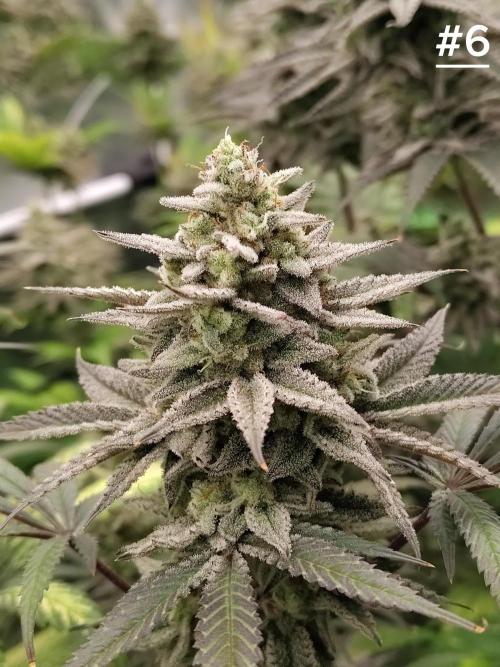
LST has gone well, branches are as far away from the middles as I can get them. Very happy so far, however grow costs are creeping up with the heater and two spider farmer sf1000s.
No leaf issues, it's paid off not using any nutrients at all so far. Just tap wate which is hard where I am.
Signs of pre flowers....will add 1/4 recommended flowering nutrients, probably at the end of the coming week.






@Altitonans_Fulmen
Follow
For most crops, a slightly acidic soil pH between 6.0 and 6.8 is ideal because it optimizes nutrient availability. When soil pH rises above 7.0 (alkaline), the concentration of hydrogen ions H+ drops significantly, and they are replaced by calcium, magnesium, or sodium ions on the clay colloid exchange sites. To naturally lower alkaline soil pH, you can add organic matter (carbon-rich materials), which produces weak organic acids as it decomposes. Maintaining this slightly acidic range stimulates a highly active, diverse microbial community; these microbes decompose organic matter and release carbon dioxide CO2, which plants absorb through their roots and leaves to boost photosynthesis and sugar production. Furthermore, the added organic carbon acts like a sponge, drastically improving the soil's water-holding capacity.
While soil biological activity does involve cellular electron transport, electrical conductivity (EC) in soil is actually a measure of dissolved mineral salts, not a voltage carried by individual microbes. Soil microorganisms secrete organic acids and chelate metallic and non-metallic minerals, transforming locked-up inorganic compounds into bioavailable organic complexes. Unlike harsh synthetic fertilizers that can dehydrate soil life in high concentrations, these naturally chelated nutrients safely nourish the plant, creating a thriving, self-sustaining ecosystem where plants can efficiently synthesize their own food.
Metal-based: Could include elements like iron, manganese, copper, or zinc, which are essential nutrients for plants but can exist in forms not readily accessible.
Non-metal-based: Examples like calcium carbonate, phosphate, or sulfur are also important for plant growth and potentially serve as building blocks for the organic salt.
Chelation in a plant medium is a chemical process where a chelating agent, a negatively charged organic compound, binds to positively charged metal ions, like iron, zinc, and manganese. This forms a stable, soluble complex that protects the micronutrient from becoming unavailable to the plant in the soil or solution. The chelate complex is then more easily absorbed by the plant's roots, preventing nutrient deficiency, improving nutrient uptake, and enhancing plant growth. Chelation is similar to how microorganisms create organic salts, as both involve using organic molecules to bind with metal ions, but chelation specifically forms ring-like structures, or chelates, while the "organic salts" of microorganisms primarily refer to metal-complexed low molecular weight organic acids like gluconic acid. Microorganisms use this process to solubilize soil phosphates by chelating cations such as iron (Fe) and calcium (Ca), increasing their availability.
Added sugars stimulate soil microbial activity, but directly applying sugar, especially in viscous form, can be tricky to dilute. Adding to the soil is generally not a beneficial practice for the plant itself and is not a substitute for fertilizer. While beneficial microbes can be encouraged by the sugar, harmful ones may also be stimulated, and the added sugar is a poor source of essential plant nutrients. Sugar in soil acts as a food source for microbes, but its effects on plants vary significantly with the sugar's form and concentration: simple sugars like glucose can quickly boost microbial activity and nutrient release. But scavenge A LOT of oxygen in the process, precious oxygen. Overly high concentrations of any sugar can attract pests, cause root rot by disrupting osmotic balance, and lead to detrimental fungal growth. If you are one who likes warm tropical high rh, dead already. Beneficial, absolutely, but only to those who don't run out of oxygen. Blackstrap is mostly glucose, iirc regular molasses is mostly sucrose. Sugars, especially sucrose, act as signaling molecules that interact with plant hormones and regulate gene expression, which are critical for triggering the floral transition. When sucrose is added to the growth medium significantly influences its effect on floral transition.
Probably wouldn't bother with blackstrap given its higher glucose content. Microbes in the soil consume the sugar and, in the process, draw nitrogen from the soil, which is the same nutrient the plant needs. Glucose is not an oxygen scavenger itself, but it acts as a substrate for the glucose oxidase (GOx) enzyme, effectively removing oxygen from a system. Regular molasses (powdered if you can), as soon as she flips to flower or a week before, the wrong form of sugar can delay flower, or worse. Wrong quantity, not great either. The timing of sucrose application is crucial. It was more complicated than I gave it credit for, that's for sure. When a medium's carbon-to-nitrogen (C:N) ratio reaches 24:1, it signifies an optimal balance for soil microbes to thrive, leading to efficient decomposition and nutrient cycling. At this ratio, soil microorganisms have enough nitrogen for their metabolic needs, allowing them to break down organic matter and release vital nutrients like phosphorus and zinc for plants. Exceeding this ratio results in slower decomposition and nitrogen immobilization, while a ratio below 24:1 leads to faster breakdown and excess nitrogen availability.
Carbon and nitrogen are two elements in soils and are required by most biology for energy. Carbon and nitrogen occur in the soil as both organic and inorganic forms. The inorganic carbon in the soil has minimal effect on soil biochemical activity, whereas the organic forms of carbon are essential for biological activity. Inorganic carbon in the soil is primarily present as carbonates, whereas organic carbon is present in many forms, including live and dead plant materials and microorganisms; some are more labile and therefore can be easily decomposed, such as sugars, amino acids, and root exudates, while others are more recalcitrant, such as lignin, humin, and humic acids. Soil nitrogen is mostly present in organic forms (usually more than 95 % of the total soil nitrogen), but also in inorganic forms, such as nitrate and ammonium. Soil biology prefers a certain ratio of carbon to nitrogen (C:N). Amino acids make up proteins and are one of the nitrogen-containing compounds in the soil that are essential for biological energy. The C:N ratio of soil microbes is about 10:1, whereas the preferred C:N ratio of their food is 24:1 (USDA Natural Resource Conservation Service 2011). Soil bacteria (3-10:1 C:N ratio) generally have a lower C:N ratio than soil fungi (4-18:1 C:N ratio) (Hoorman & Islam 2010; Zhang and Elser 2017). It is also important to mention that the ratio of carbon to other nutrients, such as sulfur (S) and phosphorous (P) also are relevant to determine net mineralization/immobilization. For example, plant material with C:S ratio smaller than 200:1 will promote mineralization of sulfate, while C:S ratio higher than 400:1 will promote immobilization (Scherer 2001).
In soil science and microbiology, the C:S ratio helps determine whether sulfur will be released (mineralized) or tied up (immobilized) by microorganisms.
A carbon-to-sulfur (C:S) ratio smaller than 200:1 promotes the mineralization of sulfate, when the C:S ratio is low, it indicates that the organic matter decomposing in the soil is rich in sulfur relative to carbon. Microorganisms require both carbon and sulfur for their metabolic processes. With an excess of sulfur, microbes take what they need and release the surplus sulfur into the soil as plant-available sulfate
A carbon-to-sulfur (C:S) ratio higher than 400:1 will promote the immobilization of sulfur from the soil. This occurs because when high-carbon, low-sulfur materials (like sawdust) are added to soil, microbes consume the carbon and pull sulfur from the soil to meet their nutritional needs, temporarily making it unavailable to plants.
200:1 C:S 400:1: In this range, both mineralization and immobilization can occur simultaneously, making the net availability of sulfur less predictable.
This dynamic is similar to how the carbon-to-nitrogen (C:N) ratio regulates the availability of nitrogen in soil. Just as microbes need a certain amount of nitrogen to process carbon, they also require a balanced amount of sulfur. Both mineralization and immobilization are driven by the metabolic needs of the soil's microbial population.
Sulfur is crucial for protein synthesis. A balanced ratio is particularly important in relation to nitrogen (N), as plants need adequate sulfur to efficiently use nitrogen. A severely imbalanced C:S ratio can hinder the efficient use of nitrogen, as seen in trials where adding nitrogen without balancing sulfur levels actually lowered crop yields.
Maintaining a balanced carbon-to-sulfur (C:S) ratio is highly beneficial for plant growth, but this happens indirectly by regulating soil microbial activity. Unlike the C:N ratio, which is widely discussed for its direct effect on nutrient availability, the C:S ratio determines whether sulfur in the soil's organic matter is released (mineralized) or temporarily locked up (immobilized).
Glucose will hinder oxygenation more than sucrose in a solution because glucose is consumed faster and has a higher oxygen demand, leading to a more rapid decrease in oxygen levels. When cells respire, they use oxygen to break down glucose, and this process requires more oxygen for glucose than for sucrose because sucrose must first be broken down into glucose and fructose before it can be metabolized.
In a growth medium, glucose is a more immediate and universal signaling molecule for unicellular and multicellular organisms because it is directly used for energy and triggers a rapid gene expression response. In contrast, sucrose primarily acts as a signaling molecule in plants to regulate specific developmental processes by being transported or broken down, which can be a more complex and slower signaling process.
Critical stuff.


@Jungle
Follow
Was thinking about going to 12/12 this week, but have put it off till next. Veg filling >1/4 of the 16sq ft net, but I can't wait much longer! Moved from one 13g container to 2x13 (one with plant) plus a 27g reservoir. Expect to be much more stable on nutes now. Remote reservoir keeps temp of nutes down.


@plant
Follow
One or two weeks and this little beaut should be finished. Really happy with the trichome development in the last week or so starting to smell gassy 🤙 stay lit everyone, happy new year 👍🐞🤙🌲



@Northern_Ent
Follow
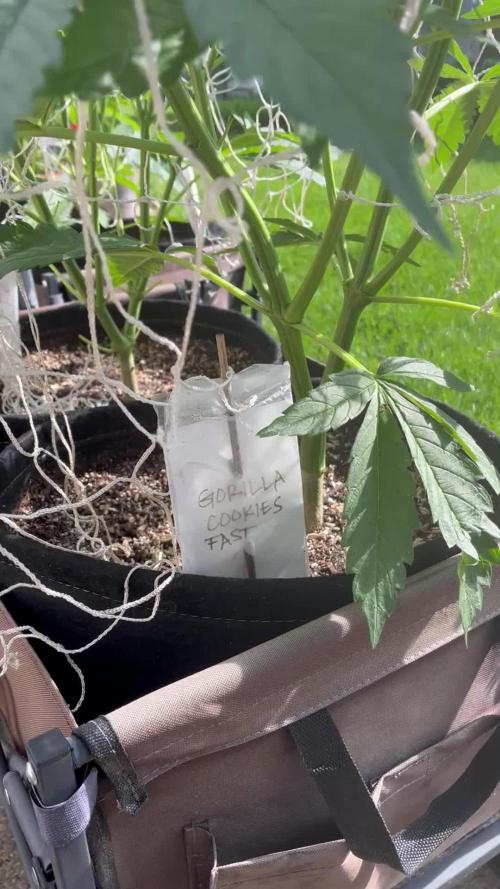
July 11: hail storm went through this afternoon and did some damage. Happened very fast, and was the next day after a big storm caused some flooding in the city and made the news.


@RDWCGrowing
Follow
I had a lot of fun with this strain and it was grown against 400 growers so let me say PHENO hunting is a true thing. Overall the Bud was a nice dense structure and the smoke on it was smooth and the high nice and even.




@Hylex
Follow
19.10 Blüte hat heute gestartet auf 12/12
21.10 3Tag in der Blüte.
Scrog läuft gut würde ich sagen.
Netztspielereien jeden Tag😂
Bald Spiderman😂😂.
22.10 4.Tag Blüte.
Soweit zufrieden Morgen kommt der entfeuchter hoffe dann läuft es besser.

shorts_status_processing


@Mr_nugs_lover_David
Follow
Super super frosty and sticky nugs, very dense and compact, big calyx, stinks, beautiful strain to grow the 2 plants of wedding cake Auto I have got the same aroma, this girl is being fed using nothing but a good soil prepared organically with complete organics by guanokalong and also seaweed powder, and also I added florians livings organics which is such an awesome organic super food for the plants that makes the strains performer better when when it comes the time to smoke you don't feel all that chemical stuff. Thank you so much everybody hope you enjoy! 💚🌱🎂✌️


@Johnny420_pt
Follow
Starting to flower, she looks really beautiful
Day 41 some defoliation because humidity is to high.