


Likes
Comments
Share

@Organic473
Follow
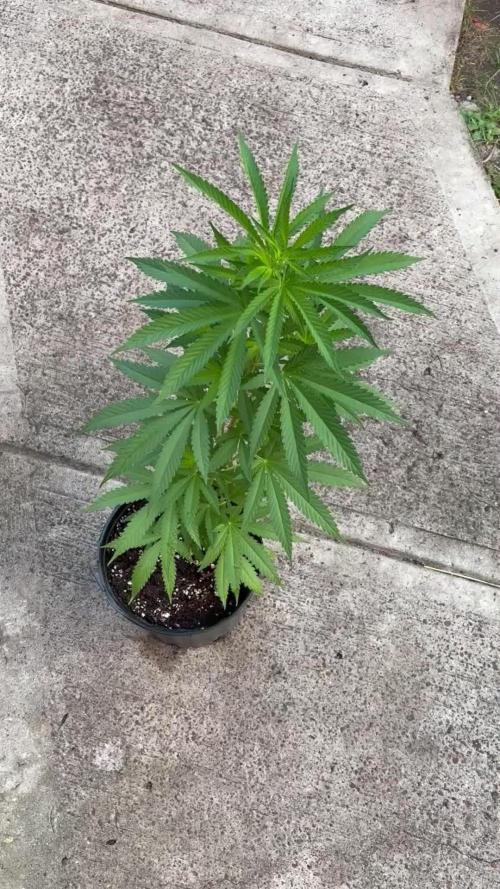
This girl has an amazing grow structure. I love growing her no complaints. She is very healthy.

Likes
23
Share


@adam_pawloski87
Follow
This week went real great , one has been getting flushed and the rest we will start flush Tomorrow! These ladies are doin so amazing! Hope you all enjoy !! Stay tuned for next week! Cheers an happy holidays!

Likes
10
Share


@Hix57
Follow
Le 41e jour avec mes précieuses plantes se déroule en douceur. Je remarque un léger jaunissement sur quelques feuilles, peut-être le début de la floraison, un besoin d'azote, ou simplement un processus naturel. Pour remédier à cela, je vais leur offrir un peu d'azote et observer les résultats avec attention.
En parallèle, j'ajuste progressivement les niveaux de phosphore et de potassium, veillant à éviter les excès qui ont pu survenir par le passé. Chaque jour, je m'efforce de progresser et d'accumuler de précieuses expériences.
Je vous remercie de me lire et de me suivre dans cette aventure 🙏🌱
Remarque :
Engrais : phosphore et potassium augmenté très légèrement. Ajout d'un peu d'azote.
Symptômes : léger jaunissement des feuilles comme dans toutes les cultures au 38e/40e jour. Problème toujours a identifier.
Likes
3
Share


@ForbiddenBotanist
Follow
Today is the start of week 8. Very nervous about the harvest so im checking it with a microscope daily. Any tips or suggestions appreciated!


Likes
10
Share


@Elguacho420
Follow
Buenas a tod@s... 3ra semana de floración de estás lemon cookie kush, de momento van bien, algunas hojas oxidadas a esta altura pero creo q es normal, eh podido regular bien la comida( a mí creer) y eh visto mejoras en las variedades, no las noto como antes q estaban como decaídas y se las veia agobiadas, las veo bien y en esta tercera semana se ve claramente la diferencia... Los nutrientes utilizados se ve q son la bomba... 🙌🏻👌🏻 La semana q viene más y mejor, se están poniendo hermosas...❤️ Muchas gracias y buenos humos para todos... 💨💨🇦🇷🤝🏻🇪🇦 🏻♂️

Likes
6
Share


@DrReginald
Follow
Перевел на 12/12 часов. Пока хорошо выглядит без удобрений) Жду начала цветения)

Likes
14
Share


@MrGrowthSpurt
Follow
Everything is running smoothly. Nothing really to report on. I added a second trellis for support and I switched from feeding every 4th day, to every 3rd day.

Likes
6
Share


@Plantinator
Follow
Bud sites are getting ready now. I did a bit more LST and removed a few side shoots which never gonna make it due to lack of light.
I replaced the light, under the TS 1000 she was praying all day long.
On the previous run I had problems with the FC3000, it was turning itself off at random times. Mars Hydro was kindly sent me a replacement controller, so far it seems like this problem has been solved.
However, I tried to use the app again and it’s still shite. 💩😂 So I just use the light in manual mode. Such a shame for the extra features I cannot use.
For DLI I will use the following chart:
AUTO FLOWER LED LIGHT INTENSITY
Recommended LED PPF/PAR Values / DLI Based on 20 hrs. of light.
Seedlings 150 - 200 umol / DLI 10.80 - 14.4 moles per day
Veg up to 9" 450 umol / DLI 32.40 moles per day
Early bloom 500 umol / DLI 36.00 moles per day
Mid bloom 650 umol / DLI 46.80 moles per day
Late bloom 750 umol / DLI 54.00 moles per day
Ripen 400 umol / DLI 28.80 moles per day
*** Use extreme caution going 700 umol or higher @ 20 hrs/day this could cause leaf burn***
The only difference is that I will keep this run in 18/6, so I ignore the PAR values above.
IMO the best thing you can do is to read the leaves all the time and use the charts as a guidance.
Likes
21
Share


@Wicked_Stix
Follow
Flipped these girls to flower on day 26. Most of them have been looking good and growing pretty fast. I topped off the reservoir and added a little maxibloom. All 8 plants are drinking a total of about 2 gallons of water per day now. I kinda slacked on training them this week, but I will try to get them spread out some over the next week. I have been pulling a few fan leaves from the bottom so they can get good air circulation.

Likes
6
Share


@artems
Follow
Bad Guy has been through the wringer with me. First, there were issues with the mainlining, so I had to train just one branch. Then, there was nutrient burn, followed by underfeeding. But despite all my mishaps, the plant endured and grew big and strong! 🌿 It still maintains a distinct candy-like aroma, and I can't wait to give it a taste! Overall, it's been a learning experience, and despite the challenges, it's rewarding to see the plant thrive. 🌟 Looking forward to the harvest and enjoying the fruits of my labor! 🍬

Likes
16
Share


@Prop207
Follow
White Runtz is absolutely smelling out of this world. Pineapple kush smells amazing of course, but the White Runtz is absolutely fragrant as hell.
They are in the same chamber as the ducks and in the same RDWC system. These girls are loving life, I can't wait to chop.
As you know season 2 of this Old Dung Heap has its cast defined. Not sure what I want to grow next son TODH Se3.
Likes
11
Share


Likes
6
Share


@Exoticfarm99
Follow
Se acerca campaña de corte
Las demás las seguimos cada 10 días con tes


Likes
11
Share


@Cryptovirus
Follow
Going to have to harvest early as I veged her for way too long in a 0.5 gallon fabric pot, need to get her before more problems happen...


Likes
21
Share


@Techpuffin
Follow
This plant only started flowering after I switched it to 12-12
Not an autoflower
This plant also has a mystery graft!
I grafted a few and only one survived but as I did not label them I’m not sure what it is
Could be RQS royal Cush or northern lights automatic both indica plants suppose to be autos.
Bare in mind this royal jack is sativa!
It seams to be ok
I will be providing it more light to incourage it to flower
Looking forward to seeing what the flower will be like.
Likes
40
Share


@TheCannaBrit
Follow
Just time to finish these guys with a flushing agent then we HARVEST!!


Likes
52
Share


@Ultraviolet
Follow
You don't become confident by shouting affirmations in the mirror, but by having a stack of undeniable proof that you are who you say you are, outwork your self-doubt.
Nitrogen fixation is a chemical process by which molecular nitrogen (N2), which has a strong triple covalent bond, is converted into ammonia (NH3) or related nitrogenous compounds, typically in soil or aquatic systems but also in industry. The nitrogen in air is molecular dinitrogen, a relatively nonreactive molecule that is metabolically useless to all but a few microorganisms. Biological nitrogen fixation or diazotrophy is an important microbe-mediated process that converts dinitrogen (N2) gas to ammonia (NH3) using the nitrogenase protein complex (Nif).[2][3]
Nitrogen fixation is essential to life because fixed inorganic nitrogen compounds are required for the biosynthesis of all nitrogen-containing organic compounds, such as amino acids and proteins, nucleoside triphosphates and nucleic acids. As part of the nitrogen cycle, it is essential for agriculture and the manufacture of fertilizer. It is also, indirectly, relevant to the manufacture of all nitrogen chemical compounds, which include some explosives, pharmaceuticals, and dyes.
Nitrogen fixation is carried out naturally in soil by microorganisms termed diazotrophs that include bacteria, such as Azotobacter, and archaea. Some nitrogen-fixing bacteria have symbiotic relationships with plant groups, especially legumes.[4] Looser non-symbiotic relationships between diazotrophs and plants are often referred to as associative, as seen in nitrogen fixation on rice roots. Nitrogen fixation occurs between some termites and fungi.[5] It occurs naturally in the air by means of NOx production by lightning.[6][7]
All biological reactions involving the process of nitrogen fixation are catalyzed by enzymes called nitrogenases.[8] These enzymes contain iron, often with a second metal, usually molybdenum but sometimes vanadium.
Green clover (Fixation)
White clover (Fixation)
Red Clover. (Fixation)
Yellow Clover. (Fixation, deeper roots)
Sweet Thai Basil. (Terpenes)
Italian Basil. (Terpenes)
Chamomile.(Oil production)
Borage.(Pest attraction taste)
Lavender.(Pest attraction smell)
Marigold(Pest attraction visual)
Mycorrhizae are beneficial associations between mycorrhizal fungi and a plant’s root system. Mycorrhizal fungi spores germinate in the soil, creating filaments (hyphae) that penetrate the root cells, thus establishing a symbiotic relationship. This collaboration leads to the development of both intra-radical and extra-radical networks of filaments, enabling efficient exploration of the soil for enhanced access to nutrients and water. Consequently, these vital resources are transferred to the plant, resulting in numerous benefits for crop cultivation.
Various mycorrhizal products are available in diverse formulations (powder, granular, and liquid), concentrations, and qualities. Ongoing advancements in products, technologies, and research are reshaping our understanding of mycorrhizae. Despite these positive developments, certain misconceptions persist. In the following discussion, we aim to clarify the truths and dispel the myths surrounding mycorrhizae products.
MYTH #1
A HIGHER NUMBER OF MYCORRHIZAE SPECIES MEANS BETTER RESULTS.
Contrary to common belief, having a higher number of mycorrhizae species in a product does not translate to better results; in fact, it often yields the opposite outcome. A plant can sustain only one association with a particular mycorrhizal fungi species. Introducing multiple species creates competition among them, which is not advantageous for the plant. The initial colonizer does not ensure the highest success; instead, it gains precedence. It is recommended to select a product with a concentrated presence of a single mycorrhizae species known for its effective performance, rather than opting for a product with multiple species at lower concentrations.
MYTH #2
ECTOMYCORRHIZAE ARE EFFECTIVE FOR CANNABIS PLANTS.
Although ectomycorrhizae can colonize five to ten percent of plant species, cannabis is not among them. Ectomycorrhizae do not penetrate the root cells; instead, they develop around the roots and on the exterior. For cannabis plants, it is essential to seek out endomycorrhizae. Endomycorrhizae are capable of colonizing 70% to 90% of plant species, including cannabis. Unlike ectomycorrhizae, endomycorrhizae penetrate the root cells, forming structures like arbuscules for the exchange of nutrients and water with the plant.
MYTH #3
WHOLE INOCULANT (PROPAGULES) PERFORM BETTER THAN ONLY VIABLE SPORES.
The propagule count specified on most mycorrhizae products indicates the presence of spores (viable and unviable), hyphae, and root fragments. However, it is crucial to note that only viable spores, those with the capacity to germinate, can successfully colonize a plant’s root system. Spores are to mycorrhizal fungi what seeds are to cannabis plants—a fundamental component enabling fungi reproduction. Consequently, even if a mycorrhizal product boasts millions of propagules, its effectiveness hinges on the presence of viable spores. Without viable spores, the product will not contribute to plant development. Therefore, the genuine value of a mycorrhizal inoculant lies in the quantity of viable spores it contains, as only viable spores can efficiently initiate symbiosis.
MYTH #4
ALL METHODS OF APPLICATION YIELD IDENTICAL RESULTS.
To establish the symbiosis, mycorrhizal fungi spores must be close to the plant roots. The optimal recommendation is to directly apply mycorrhizal inoculant to the roots, either in powder, granular or slurry form. This method ensures maximum proximity between the spores and the roots, facilitating a rapid establishment of symbiosis. Particularly with crops like cannabis, which have a short growing cycle, employing this technique is the most effective way to obtain optimal benefits. Alternatively, techniques such as blending the inoculant with the soil are effective, but there may be a delay in the establishment of symbiosis. This is because the roots need to grow and come into contact with the dispersed spores throughout the growing media.
MYTH #5
MYCORRHIZAE CAN ONLY BE GROWN ON LIVING PLANTS.
While the predominant method for commercially producing mycorrhizae involves growing them on the root systems of living plants (in vivo production), it is not the exclusive nor the optimal technique. In fact, this production approach has notable drawbacks that the “root organ culture” method just does not have (in vitro production). In vitro production occurs in meticulously controlled, aseptic laboratory conditions, allowing for the consistent generation of products that are viable, highly concentrated, species-specific, and free from pathogens. Achieving such precision and quality is impossible when relying on the cultivation of mycorrhizal fungi on plants exposed to external conditions.
In conclusion, it is crucial to take all these factors into consideration when choosing the appropriate product for your crop to fully harness the wide array of benefits provided by a high-quality mycorrhizal product.
STRONGER PLANT – Stress resistance.
FASTER GROWTH – Improve plant structure and shorter veg time.
INCREASE YIELD – Overall more biomass.
IMPROVED QUALITY – Increase cannabinoids and terpenes content.

Likes
9
Share


@Lazuli
Follow
Light defoliation on both of them,
They are both in full flower now, the autopot seems to go a bit quicker