Likes
Comments
Share
Likes
29
Share
Inizio 4 settimana di fioritura 💪...gente è incredibile ma vero! Ho messo in terra un pezzo di piantina che mi s'è rotta(talea) ,senza radicante ne niente. Solo messa in terra...sono passati quasi 10 giorni ed è ancora viva e sta crescendo...vuol dire che ha attaccato con le radici.......non ci credevo nemmeno io, ma quando mi dicono che ho il pollice verde inizio a crederci😂🤣😉😂🤣💪✌️🕉️. W la ganja sempre.....la pianta sacra che salverà il mondo
Likes
5
Share
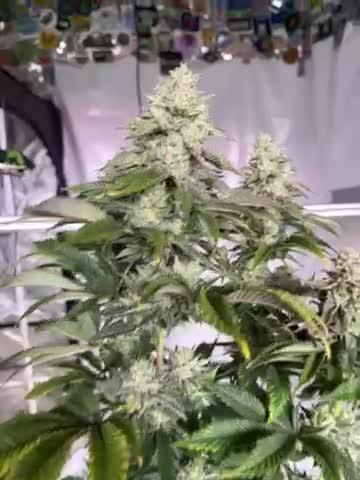
Moin, Seit nun 5 Tagen befindet sich die White Sweet Candy OG in der Blüte und alles verläuft sehr entspannt. Langsam beginnt die Pflanze sich etwas zu stretchen ist dabei aber deutlich weniger aggressiv als so manch andere Sorte. Die Sorte macht auf mich einen wirklich sehr guten Eindruck, bisher gab es kein einziges Problem, die Internodienabstände finde ich sehr gut und die Blätter werden wirklich riesig und alle Triebe wirklich sehr stabil und die Pflanze hat einfach Bock zu wachsen! Mittlerweile ist Die Tropfbewässerung auch installiert und übernimmt dir Bewässerungssystem, gegossen wird dabei 3x täglich, wobei nur am Tag der erste Bewässerungszyklus mit Drain gegossen wird. Sobald der Stretch durch ist kommt zusätzlich eine kleine Intercanopy-LED zum Einsatz, sodass hoffentlich alle Blüten Licht abbekommen. Die zusätzlichen 30 W der Internopy-LED wird von der oberen LED Leistung abgezogen sodass statt wie sonst 130 W von oben nun 100 W von oben und 30 W von den Seiten auf die Pflanzen gegeben wird mal sehen wie das Endergebnis aussieht. 😄 Bisher habe ich den Dünger auch noch nicht auf den Blüte Dünger umgestellt um die am Anfang der Blüte notwendige Stickstoffzufuhr weiterhin hoch zu halten, ab kommender Woche bzw ab der nächsten Tank füllung kommt dann der Blüte Dünger zu Einsatz. Hey, The White Sweet Candy OG has been flowering for 5 days now, and everything is going very smoothly. The plant is slowly starting to stretch a bit, but it’s doing so much less aggressively than some other strains. This strain is making a really good impression on me so far, there hasn’t been a single problem. I think the internode spacing is great, the leaves are getting really huge, all the shoots are very sturdy, and the plant is just eager to grow! The drip irrigation system is now installed and handling the watering; it’s watered three times a day, though the first watering cycle is done with drain only on the day itself. Once the stretch phase is over, I’ll also be adding a small intercanopy LED, so hopefully all the flowers will get some light. The additional 30 W from the intercanopy LED will be deducted from the upper LED output, so instead of the usual 130 W from above, the plants will now receive 100 W from above and 30 W from the sides. Let’s see how the final result turns out. 😄 So far, I haven’t switched to the bloom fertilizer yet to keep the nitrogen supply high, which is necessary at the start of flowering; starting next week or when I refill the tank, I’ll start using the bloom fertilizer.
Likes
47
Share
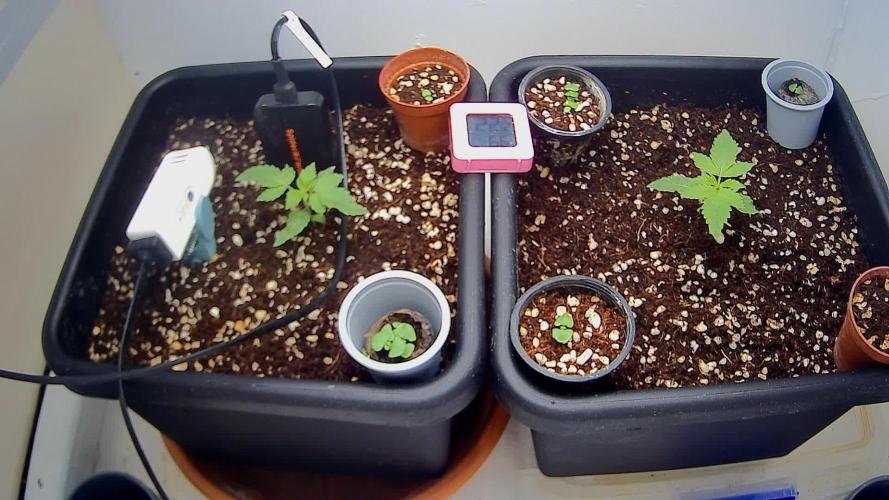
Hello Everyone 👏, As you can see, are all Cherry Colas growing, they all have a tightrips in their pots for now, for recognition. Will make nicer pictures of them in a few days. They are now 4 days from germination🙏. The humidifier had been added, so I had to adjust the room a lil bit. Seedlings don't need much nutrients, neighter do autoflowers. with normal soil I would recommend to only give water for 1-2 weeks, since it holds nutrients in it as well. But since I'm using Cocos for this grow, I might have to add some basic nutrients in the upcomming week. For this week I gave/give only water turns and Startbooster turns. Update day 5: - Lowerd the lights to avoid stretching. they are now at 75cm distance from lamp to pots. I want them at 40-50 cm, but I don't want to rush it. - Added another layer of cocos to avoid the soil from drying up therefore the roots from dying. This will happen because of lowering the lamps down, the soil will get exposed more to heat. As you can see, the humidifier is doing his thing haha. Pictures and videos where taken without the lights + fans on. because of that, it will look like this. Still fun thought. Enjoy 🙌
Likes
2
Share
Growth kind of exploded in week 4. The LST and topping leads to major bush properties. I keep the plant in check by removing major leafs and metal hooks.
Likes
201
Share
Looks like shit 🤣 Timelapse proofs it. Soil too hot, bionova roots its too much, too old seeds or low humidity? Choose your compination. Going to restart this again with different soil and without bn roots. Hope we get to the finish some day. Keep it smoking while waiting
Processing
Likes
6
Share
@ProfDoty
Follow
This actually marks the first week from breaking through top soil. My ladies are taking the somewhat high temps very well, doing my best to keep it down around 79-81(Day) and (72-75) at night. They say the colors really pop at lower temps so hopefully I can work my way down even more to achieve those colors in the end. I’m using the Batch 64 Moonshine (super coco), haven’t heard a lot about, but my hydroponics shop recommended and it looks like it’s treating the ladies right. GP started to lean over on Day 4 and just couldn’t get up , so I propped her up with a twist tie and she’s doing great now 😎Anybody have a clue as to why she just slumped over in the first place? I haven’t ph my water at all but I will this next week coming up and will also be adding in some small doses of Terpinator each watering. I will be Ph (ing) my water between 6.2-6.6 this coming week and will be observing how the plants respond to the watering. Hopefully another great week is ahead filled with lots of growth. All comments welcomed HELP ME !!! or jus say what’s up ha ✋
Likes
25
Share
ANTHOCYANIN production is primarily controlled by the Cryptochrome (CR1) Photoreceptor ( !! UV and Blue Spectrums are primary drivers in the production of the pigment that replaces chlorophyll, isn't that awesome! 1. Diverse photoreceptors in plants Many civilizations, including the sun god of ancient Egypt, thought that the blessings of sunlight were the source of life. In fact, the survival of all life, including humans, is supported by the photosynthesis of plants that capture solar energy. Plants that perform photosynthesis have no means of transportation except for some algae. Therefore, it is necessary to monitor various changes in the external environment and respond appropriately to the place to survive. Among various environmental information, light is especially important information for plants that perform photosynthesis. In the process of evolution, plants acquired phytochrome, which mainly receives light in the red light region, and multiple blue light receptors, including his hytropin and phototropin, in order to sense the light environment. .. In addition to these, an ultraviolet light receptor named UVR8 was recently discovered. The latest image of the molecular structure and function of these various plant photoreceptors (Fig. 1), focusing on phytochrome and phototropin. Figure 1 Ultraviolet-visible absorption spectra of phytochrome, cryptochrome, phototropin, and UVR8. The dashed line represents each bioactive absorption spectrum. 2. Phytochrome; red-far red photoreversible molecular switch What is phytochrome? Phytochrome is a photochromic photoreceptor, and has two absorption types, a red light absorption type Pr (absorption maximum wavelength of about 665 nm) and a far-red light absorption type Pfr (730 nm). Reversible light conversion between the two by red light and far-red light, respectively(Fig. 1A, solid line and broken line). In general, Pfr is the active form that causes a physiological response. With some exceptions, phytochrome can be said to function as a photoreversible molecular switch. The background of the discovery is as follows. There are some types of plants that require light for germination (light seed germination). From that study, it was found that germination was induced by red light, the effect was inhibited by subsequent far-red light irradiation, and this could be repeated, and the existence of photoreceptors that reversibly photoconvert was predicted. In 1959, its existence was confirmed by the absorption spectrum measurement of the yellow sprout tissue, and it was named phytochrome. Why does the plant have a sensor to distinguish between such red light and far-red light? There is no big difference between the red and far-red light regions in the open-field spectrum of sunlight, but the proportion of red light is greatly reduced due to the absorption of chloroplasts in the shade of plants. Similar changes in light quality occur in the evening sunlight. Plants perceive this difference in light quality as the ratio of Pr and Pfr, recognize the light environment, and respond to it. Subsequent studies have revealed that it is responsible for various photomorphogenic reactions such as photoperiodic flowering induction, shade repellent, and deyellowing (greening). Furthermore, with the introduction of the model plant Arabidopsis thaliana (At) and the development of molecular biological analysis methods, research has progressed dramatically, and his five types of phytochromes (phyA-E) are present in Arabidopsis thaliana. all right. With the progress of the genome project, Fi’s tochrome-like photoreceptors were found in cyanobacteria, a photosynthetic prokaryotes other than plants. Furthermore, in non-photosynthetic bacteria, a homologue molecule called bacteriophytochrome photoreceptor (BphP) was found in Pseudomonas aeruginosa (Pa) and radiation-resistant bacteria (Deinococcus radiodurans, Dr). Domain structure of phytochrome molecule Phytochrome molecule can be roughly divided into N-terminal side and C-terminal side region. PAS (Per / Arndt / Sim: blue), GAF (cGMP phosphodiesterase / adenylyl cyclase / FhlA: green), PHY (phyto-chrome: purple) 3 in the N-terminal region of plant phytochrome (Fig. 2A) There are two domains and an N-terminal extension region (NTE: dark blue), and phytochromobilin (PΦB), which is one of the ring-opening tetrapyrroles, is thioether-bonded to the system stored in GAF as a chromophore. ing. PAS is a domain involved in the interaction between signal transduction-related proteins, and PHY is a phytochrome-specific domain. There are two PASs and her histidine kinase-related (HKR) domain (red) in the C-terminal region, but the histidine essential for kinase activity is not conserved. 3. Phototropin; photosynthetic efficiency optimized blue light receptor What is phototropin? Charles Darwin, who is famous for his theory of evolution, wrote in his book “The power of move-ment in plants” published in 1882 that plants bend toward blue light. Approximately 100 years later, the protein nph1 (nonphoto-tropic hypocotyl 1) encoded by one of the causative genes of Arabidopsis mutants causing phototropic abnormalities was identified as a blue photoreceptor. Later, another isotype npl1 was found and renamed phototropin 1 (phot1) and 2 (phot2), respectively. In addition to phototropism, phototropin is damaged by chloroplast photolocalization (chloroplasts move through the epidermal cells of the leaves and gather on the cell surface under appropriate light intensity for photosynthesis. As a photoreceptor for reactions such as escaping to the side of cells under dangerous strong light) and stomata (reactions that open stomata to optimize the uptake of carbon dioxide, which is the rate-determining process of photosynthetic reactions). It became clear that it worked. In this way, phototropin can be said to be a blue light receptor responsible for optimizing photosynthetic efficiency. Domain structure and LOV photoreaction of phototropin molecule Phototropin molecule has two photoreceptive domains (LOV1 and LOV2) called LOV (Light-Oxygen-Voltage sensing) on the N-terminal side, and serine / on the C-terminal side. It is a protein kinase that forms threonine kinase (STK) (Fig. 4Aa) and whose activity is regulated by light. LOV is one molecule as a chromophore, he binds FMN (flavin mononucleotide) non-covalently. The LOV forms an α/βfold, and the FMN is located on a β-sheet consisting of five antiparallel β-strands (Fig. 4B). The FMN in the ground state LOV shows the absorption spectrum of a typical oxidized flavin protein with a triplet oscillation structure and an absorption maximum wavelength of 450 nm, and is called D450 (Fig. 1C and Fig. 4E). After being excited to the singlet excited state by blue light, the FMN shifts to the triplet excited state (L660t *) due to intersystem crossing, and then the C4 (Fig. 4C) of the isoaroxazine ring of the FMN is conserved in the vicinity. It forms a transient accretionary prism with the tain (red part in Fig. 4B Eα) (S390I). When this cysteine is replaced with alanine (C / A substitution), the addition reaction does not occur. The effect of adduct formation propagates to the protein moiety, causing kinase activation (S390II). After that, the formed cysteine-flavin adduct spontaneously dissociates and returns to the original D450 (Fig. 4E, dark regression reaction). Phototropin kinase activity control mechanism by LOV2 Why does phototropin have two LOVs? Atphot1 was found as a protein that is rapidly autophosphorylated when irradiated with blue light. The effect of the above C / A substitution on this self-phosphorylation reaction and phototropism was investigated, and LOV2 is the main photomolecular switch in both self-phosphorylation and phototropism. It turns out that it functions as. After that, from experiments using artificial substrates, STK has a constitutive activity, LOV2 functions as an inhibitory domain of this activity, and the inhibition is eliminated by photoreaction, while LOV1 is kinase light. It was shown to modify the photosensitivity of the activation reaction. In addition to this, LOV1 was found to act as a dimerization site from the crystal structure and his SAXS. What kind of molecular mechanism does LOV2 use to photoregulate kinase activity? The following two modules play important roles in this intramolecular signal transduction. Figure 4 (A) Domain structure of LOV photoreceptors. a: Phototropin b: Neochrome c: FKF1 family protein d: Aureochrome (B) Crystal structure of auto barley phot1 LOV2. (C) Structure of FMN isoaroxazine ring. (D) Schematic diagram of the functional domain and module of Arabidopsis thaliana phot1. L, A’α, and Jα represent linker, A’α helix, and Jα helix, respectively. (E) LOV photoreaction. (F) Molecular structure model (mesh) of the LOV2-STK sample (black line) containing A’α of phot2 obtained based on SAXS under dark (top) and under bright (bottom). The yellow, red, and green space-filled models represent the crystal structures of LOV2-Jα, protein kinase A N-lobe, and C-robe, respectively, and black represents FMN. See the text for details. 1) Jα. LOV2 C of oat phot1-to α immediately after the terminus Rix (Jα) is present (Fig. 4D), which interacts with the β-sheet (Fig. 4B) that forms the FMN-bound scaffold of LOV2 in the dark, but unfolds and dissociates from the β-sheet with photoreaction. It was shown by NMR that it does. According to the crystal structure of LOV2-Jα, this Jα is located on the back surface of the β sheet and mainly has a hydrophobic interaction. The formation of S390II causes twisting of the isoaroxazine ring and protonation of N5 (Fig. 4C). As a result, the glutamine side chain present on his Iβ strand (Fig. 4B) in the β-sheet rotates to form a hydrogen bond with this protonated N5. Jα interacts with this his Iβ strand, and these changes are thought to cause the unfold-ing of Jα and dissociation from the β-sheet described above. Experiments such as amino acid substitution of Iβ strands revealed that kinases exhibit constitutive activity when this interaction is eliminated, and that Jα plays an important role in photoactivation of kinases. 2) A’α / Aβ gap. Recently, several results have been reported showing the involvement of amino acids near the A’α helix (Fig. 4D) located upstream of the N-terminal of LOV2 in kinase photoactivation. Therefore, he investigated the role of this A’α and its neighboring amino acids in kinase photoactivation, photoreaction, and Jα structural change for Atphot1. The LOV2-STK polypeptide (Fig. 4D, underlined in black) was used as a photocontrollable kinase for kinase activity analysis. As a result, it was found that the photoactivation of the kinase was abolished when amino acid substitution was introduced into the A’α / Aβ gap between A’α and Aβ of the LOV2 core. Interestingly, he had no effect on the structural changes in Jα examined on the peptide map due to the photoreaction of LOV2 or trypsin degradation. Therefore, the A’α / Aβ gap is considered to play an important role in intramolecular signal transduction after Jα. Structural changes detected by SAXS Structural changes of Jα have been detected by various biophysical methods other than NMR, but structural information on samples including up to STK is reported only by his results to his SAXS. Not. The SAXS measurement of the Atphot2 LOV2-STK polypeptide showed that the radius of inertia increased from 32.4 Å to 34.8 Å, and the molecular model (Fig. 4F) obtained by the ab initio modeling software GASBOR is that of LOV2 and STK. It was shown that the N lobes and C lobes lined up in tandem, and the relative position of LOV2 with respect to STK shifted by about 13 Å under light irradiation. The difference in the molecular model between the two is considered to reflect the structural changes that occur in the Jα and A’α / Aβ gaps mentioned above. Two phototropins with different photosensitivity In the phototropic reaction of Arabidopsis Arabidopsis, Arabidopsis responds to a very wide range of light intensities from 10–4 to 102 μmol photon / sec / m2. At that time, phot1 functions as an optical sensor in a wide range from low light to strong light, while phot2 reacts with light stronger than 1 μmol photon / sec / m2. What is the origin of these differences? As is well known, animal photoreceptors have a high photosensitivity due to the abundance of rhodopsin and the presence of biochemical amplification mechanisms. The exact abundance of phot1 and phot2 in vivo is unknown, but interesting results have been obtained in terms of amplification. The light intensity dependence of the photoactivation of the LOV2-STK polypeptide used in the above kinase analysis was investigated. It was found that phot1 was about 10 times more photosensitive than phot2. On the other hand, when the photochemical reactions of both were examined, it was found that the rate of the dark return reaction of phot1 was about 10 times slower than that of phot2. This result indicates that the longer the lifetime of S390II, which is in the kinase-activated state, the higher the photosensitivity of kinase activation. This correlation was further confirmed by extending the lifespan of her S390II with amino acid substitutions. This alone cannot explain the widespread differences in photosensitivity between phot1 and phot2, but it may explain some of them. Furthermore, it is necessary to investigate in detail protein modifications such as phosphorylation and the effects of phot interacting factors on photosensitivity. Other LOV photoreceptors Among fern plants and green algae, phytochrome ɾphotosensory module (PSM) on the N-terminal side and chimera photoreceptor with full-length phototropin on the C-terminal side, neochrome (Fig. There are types with 4Ab). It has been reported that some neochromes play a role in chloroplast photolocalization as a red light receiver. It is considered that fern plants have such a chimera photoreceptor in order to survive in a habitat such as undergrowth in a jungle where only red light reaches. In addition to this, plants have only one LOV domain, and three proteins involved in the degradation of photomorphogenesis-related proteins, FKF1 (Flavin-binding, Kelch repeat, F-box 1, ZTL (ZEITLUPE)), LKP2 ( There are LOV Kelch Protein2) (Fig. 4Ac) and aureochrome (Fig. 4Ad), which has a bZip domain on the N-terminal side of LOV and functions as a gene transcription factor. 4. Cryptochrome and UVR8 Cryptochrome is one of the blue photoreceptors and forms a superfamily with the DNA photoreceptor photolyase. It has FAD (flavin adenine dinucle-otide) as a chromophore and tetrahydrofolic acid, which is a condensing pigment. The ground state of FAD is considered to be the oxidized type, and the radical type (broken line in Fig. 1B) generated by blue light irradiation is considered to be the signaling state. The radical type also absorbs in the green to orange light region, and may widen the wavelength region of the plant morphogenesis reaction spectrum. Cryptochrome uses blue light to control physiological functions similar to phytochrome. It was identified as a photoreceptor from one of the causative genes of UVR8 Arabidopsis thaliana, and the chromophore is absorbed in the UVB region by a Trp triad consisting of three tryptophans (Fig. 1D). It is involved in the biosynthesis of flavonoids and anthocyanins that function as UV scavengers in plants. Conclusion It is thought that plants have acquired various photoreceptors necessary for their survival during a long evolutionary process. The photoreceptors that cover the existing far-red light to UVB mentioned here are considered to be some of them. More and more diverse photoreceptor genes are conserved in cyanobacteria and marine plankton. By examining these, it is thought that the understanding of plant photoreceptors will be further deepened.
Likes
501
Share
Week 1 went off perfectly, purples babies reaching WEEK 2! 😍 PRESENTATION OF THE LADIES 😍 ------------------------------------------ The four plants are the same genetic. But they already have a different look, and I would introduce them to you :) 1) The Ugly - She have terrible first leaves. But she isn't late compared to the other. So I still believe in my Ugly! 2) The fatties - 2 of them grew wide leaves. It's just about leaves shape for now. 3) The solar panel - This one grew less wide but longer leaves. Regarding the Ugly, I must say that for the 4 seeds, I had to manually remove the shell when they sprouted. They all had their shell on after sprouting, and I don't like that. Probably a bit old seeds? For now, they share the same needs, and seems all happy. But this might change. I may even not be abble to recognize them, except if I cheat on them by putting labels on their pots ^^ 💧 WATERING 💧 ------------------ Luckily, the weather is offering some rains, and I been abble to put the ladies out under the rain during day 7 and 8. Not that long, they still got watered on Day 8, some hours after the rain. With feeding for the first time! 🍗 FEEDING 🍗 ------------------ First feeding. Used Fish-mix at 0.8ml/L. I plan to have a second watering in the week, but without nutrients. That's why I written 0.4ml/L in diary settings. If you know me, you also know that I like Fish-mix, but that I'm also effraid of it ^^ As foliar later during veg, it's an awesome products, easy to see that plants love it. But it seems verry powerfull, and need to be used carefully when given to plant. My rule is to limit to 50% of recommended dose. For now. Anyway, Fishmix right after a rain must turn on every form of life in soil I believe 😀 Even life coming from rain. 🏡 GROWING CONDITIONS 🏡 ----------------------------------- Starting an indoor session on the end of summer seems a good choice for me: - Some rains that provide me better water - I can put the ladies out if verry sunny, to save electricity/money - Perfect temps in the grow room. My house is always windows open. ​The growroom lightup in the end of the afternoon, when the day get cooler - Plants will flowering indoor during winter. I need heat during winter, so thanks grow room :D And cold air mean verry dry air! So reaching low humidity on the end of flowering will be verry easy! Pests : Nothing to report for now. I'm expecting a visit of my good old friends the thrips in 2-3 weeks 😎 Grow tent & Light (XS2000 ViparSpectra) : Something I notice just now: I'm abble to close the grow tent without air-extraction. I never been abble to do that in the past. This light is waaaay more efficient, and produce way less heat, because I couldn't keep tent close with my previous Mars Hydro TSW2000. Don't be effraid, I still renew the air in tent multiple times a day ;) 💜💜💜💜💜💜💜💜💜💜💜💜💜💜💜💜💜💜💜💜💜💜💜💜💜💜💜💜💜💜💜💜💜 Thanks for reading guys :) Thanks for crossing your fingers last week, as you can see.... it worked! PS : Improved my skill with my new camera. But except more and more better ones as I practice ^^ 💜💜💜💜💜💜💜💜💜💜💜💜💜💜💜💜💜💜💜💜💜💜💜💜💜💜💜💜💜💜💜💜💜 Update Day 13: Plants watered with PH 6.2 water. Look at that Hugly... She really have a problem 😅 I'll try my best with her 🙌
Processing
Likes
21
Share
Fed once this week with a weak feed including top max. I use kombucha vinegar as pH down. Water from my tap is ph6.8-7.0 and 38-42ppm so I might start using calmag supliment as the ppm at my old house used to come out of the tap at ph7. 2 and 200-220ppm. I had 2 plants that didn't like the light at 30000 lux and started bleaching so I took them out. I've defoliated today day 35 as humidity was getting over 80% and also to let light to the lower bud sights. Pre flower pistils showed on some plants around day 33 (some still have none) so I'll consider this the end of veg start of flower. The kalimist indica pheno is still not showing pre flower pistils but is always hard to force flowering when it's not mature for some reason. It's always 7-14 days behind everything else 🤔
Likes
87
Share
@Wastent91
Follow
Eccoci ragazzi! Allora come potete vedere la ragazza spruzza di vigore da tutti i pori! Ha un bel verde intenso e un sacco di nuove grandi foglie e diramazioni da tutte le parti, posso dire che sta procedendo davvero bene, e questa penso sia l ultima settimana di vegetativa, spero nn si allunghi troppo in fioritura, staremo a vedere la situazione come si svolge, buon 420 a tutti alla prossima settimana! 💪🤞😸🌱🌿🌲🧑‍🌾😎
Likes
4
Share
Last week's vidoe. For some reason, it's taking like minutes to upload thirty second videos. I will try my best to show the updated videos on a lot of these plants.Now i'm impressed with a lot of my autos growing in this naturally derived nutrient.Solution
Likes
1
Share
the signs of flowering are becoming way more noticeable first 2 plants are lemon cherry cookies auto and last one is frozen face auto the white stigmas and streaching side branches are streaching outwards looking forward to seeing more flower development
Likes
8
Share
@pegas
Follow
El olor es cada vez más dulce y afrutado, 3 semanas y estarán listas para la cosecha.
Likes
3
Share
@sellem
Follow
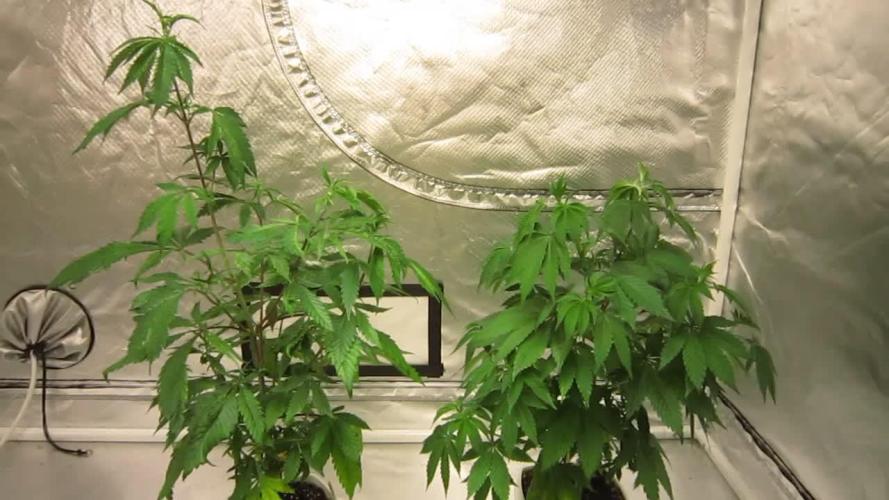
Week 3 is plagued by heat, as am i. Was on work trip during week 2 - 3, SO did some work on her, she did fine, Plant did good as well. As noted in the beginning of the diary, i will continuosly remove Fan Leaves of the Main stem throughout Veg, Defoliate a lot and later maybe pull out the scrog. Transplanted on the one day i was home at Day 16, from 3L Plastic Pot to 20L Airpot, but my GOD was she already rooted, not bound, but already some ring roots. Watered her in until some runoff after a Watering by SO on Day 14. Day 14 was 0.8L 5.8 PH 1ml/L Power Roots and 2.5ml/L Terra Grow. Also First Defoliation. Day 16 was Transplant, Watered her in with 3L, 5.9PH, 1ml/L Power Roots and 0.5ml/L Terra Grow, and a bunch of Great White Mycorhizzae sprinkled around the rootball. 20L is also filled with Plagron Terra Lightmix, Rice Husks, and a dash of limestone. Rest of the week went fine, albeit very hot. Shes pulling through though!
Likes
21
Share
Este sueño es posible gracias a Royal Queen Seeds, Marshydro, XpertNutrients y Trolmaster, sin ellos esto no se podria cumplir . 💐🍁 Dynamite Diesel: Royal Queen Seeds se ha asociado con Tyson 2.0 para ofrecer la genética desarrollada por este campeón en forma de semillas. La Dynamite Diesel recibe su nombre en honor al apodo de Mike Tyson al inicio de su carrera, Kid Dynamite. Es un cruce entre dos variedades míticas, la Sour Diesel y la Skywalker OG, que son conocidas por sus intensos sabores y sus efectos estimulantes,tiene un 22% de THC, lo que la sitúa en la categoría de peso crucero. En interior, esta variedad crece a alturas de 100-150cm y produce hasta 550g/m² tras una fase de floración de unas 9 semanas. Al aire libre, puede alcanzar hasta 2m de altura y produce una cosecha máxima de 675g por planta. 🚀 Consigue aqui tus semillas: https://www.royalqueenseeds.es/rqs-semillas-cannabis-tyson/664-dynamite-diesel.html 💡TS-3000 + TS-1000: se usaran dos de las lámparas de la serie TS de Marshydro, para cubrir todas las necesidades de las plantas durante el ciclo de cultivo, uso las dos lámparas en floracion para llegar a toda la carpa de 1.50 x 1.50 x 1.80. https://marshydro.eu/products/mars-hydro-ts-3000-led-grow-light/ 🏠 : Marshydro 1.50 x 1.50 x 1.80, carpa 100% estanca con ventanas laterales para llegar a todos los lugares durante el grow https://marshydro.eu/products/diy-150x150x200cm-grow-tent-kit 🌬️💨 Marshydro 6inch + filtro carbon para evitar olores indeseables. https://marshydro.eu/products/ifresh-smart-6inch-filter-kits/ 💻 Trolmaster Tent-X TCS-1 como controlador de luz, optimiza tu cultivo con la última tecnología del mercado, desde donde puedes controlar todos los parametros. https://www.trolmaster.com/Products/Details/TCS-1 🍣🍦🌴 Xpert Nutrients es una empresa especializada en la producción y comercialización de fertilizantes líquidos y tierras, que garantizan excelentes cosechas y un crecimiento activo para sus plantas durante todas las fases de cultivo. Consigue aqui tus Nutrientes: https://xpertnutrients.com/es/shop/ 📆 Semana 3: Ha sido una buena semana, ella ha dado un gran cambio en su lugar definitivo 😎. Se le ha aplicado un tratamiento insecticida con agua + tierra de diatomeas ( 1 cucharadita por litro de agua), también se le aplica un tratamiento fungicida con una infusión de cola de caballo para evitar futuro moho. A partir de ahora se riega manualmente con las dosis recomendadas por el fabricante.
Likes
52
Share
Transplanted into big girl pot now . Really pleased with her progress . Keep singing Tom petty last dance with Mary Jane. Think she's likes it lol . Happy growing n peace to my fellow herbalists 🕊️🕊️🕊️
Likes
346
Share
@Canna96
Follow
This week went pretty well, other than she stretched like crazy and I am now getting worried about running out of vertical space. I also had a few of my bottom leaves get a few brown and yellow spots on them. I did post some pics and asked a question, thank you for the responses, much appreciated! I am thinking about adding my Spyder Farmer LED 100 Watt light into the tent for the nebula auto because it is about 23 inches shorter than the sour diesel. I believe it would only raise my temp about 2 degrees, and possibly lower the humidity by one or two percent. I must say my dehumidifier has been a freaking stud, running 24X7 and not complaining. I should look into adding another unit, it has been in the mid 90's and muggy for about a week. So far I have to say I am super impressed and excited with this setup, the genetics, and with growing this wonderful plant in general. Already planning ahead to my next grow, and what I can do better. I have been enjoying myself and I really appreciate everyone who has taken the time to answer my questions! I am having a blast and am excited to see what this lady will give up in a few weeks!