The Grow Awards 2026 🏆
Likes
Comments
Share
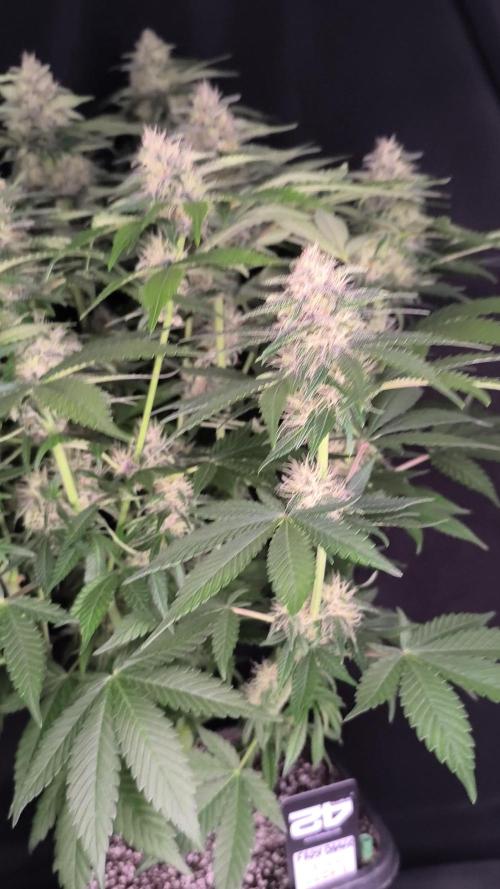
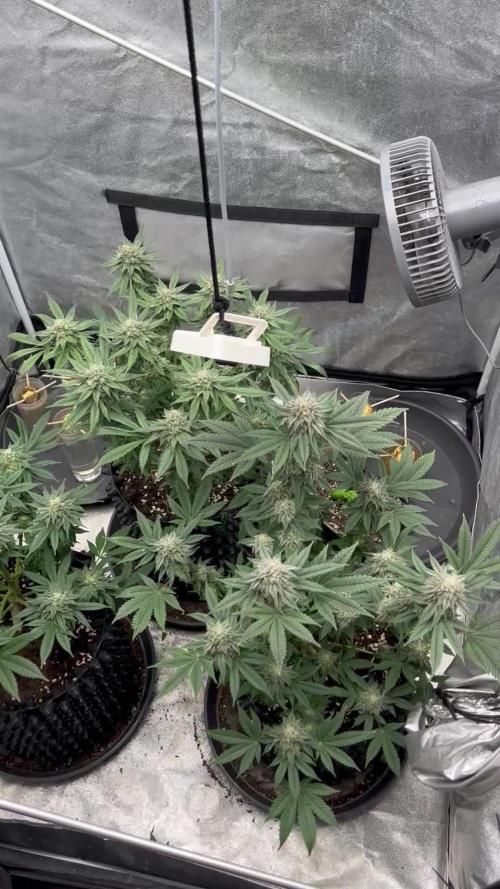
This week I noticed a decent increase in height and I figured I should get LST started. I wanted to wait to transplant my ladies, but due to covid, my supply of soil is not here yet, and I can’t fill my 10 gallon pots for the transplant. I looked up online and people said you should be able to transplant the plant successfully by cutting the ties and ensuring you just don’t disturb the roots / medium. I went ahead and got started with LST and I accidentally snapped one of my plants main stems during the process. I mean literally snapped, could see the hollow centres, hanging by a thread of fibre. *so heart broke * I had read online e you can repair it with duct tape and that aloe Vera helps. I did not have duct tape handy but I got some aloe and used the ducting tape that came with my exhaust fan to try to secure it. Fingers crossed it’ll heal If I had some root stimulant I would’ve tried planting it but I don’t have any. I was wondering could that be a form of super cropping? Do you think it’ll just be like a really brutal attempt at topping the plant? Very curious about everyone else’s thoughts on this Pics are attached. Aside from that one my LST went well from what I can tell. I did not train my blue dream out of fear of wrecking my one plant of that strain. I also did not LST one of my mystery caramel due to the stem feeling the same as the one that snapped. The rest I tied down and attached photos can you guys tell me if it looks like I did it correctly ? Would love some feed back. All in all I feel like we are kicking off the week strong. Good growing to everyone
Likes
10
Share
Dropped using the Bloom this week to address the tip burn & added more bamboo to support the colas, hope to harvest in a couple weeks I think.
Likes
4
Share
So week 6 is Live now and it looks like she’s ready for blooming
Likes
10
Share
@Jerrza
Follow
Plants doing all well, few more weeks to go
Likes
29
Share
@Ned_Grows
Follow
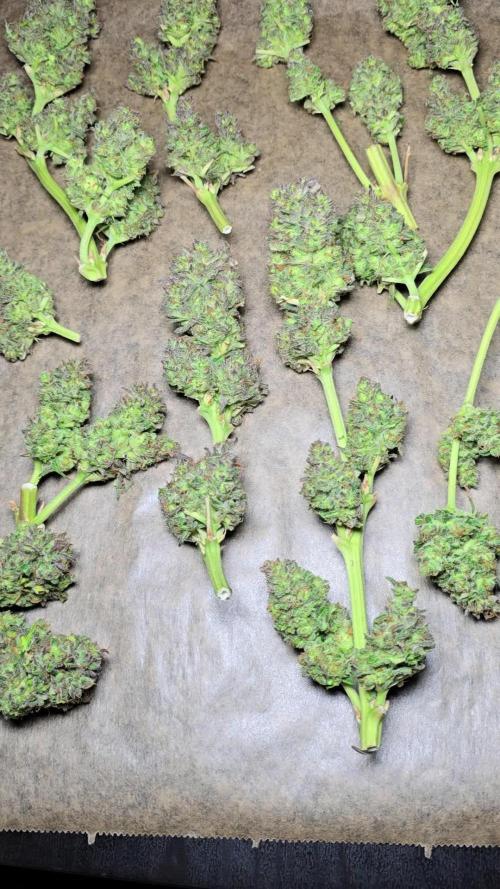
This grow was another learning process for me as I made a couple of errors along the way but overall I'm still staisfied with this grow. There were two different pheno's one short and the other stretched, the shorter one didn't frost up as much as stretchy but had a slightly higher yield, the individual weights are 126g for shorty and 114g for stretchy. Overall the grow could of been better and there's lots of room for improvement, I feel that I can do better next time but still Happy with it 😁
Likes
8
Share
@Eauderay
Follow
Dinafem Critical Cheese is one of the best plants I have grown! Resistant to mold ( at night sometimes the humidity reached 99.9% and so the wall started to show fungus marks, the situation was rectified by adding an extra fan) . Critical cheese is a pleasure to grow, especially one of them who smells like strong lemony cheesy goodness and is very sticky, my room smells so strong when i open the grow room door! I will try all of Dinafem seeds in the future!
Likes
32
Share
@Ciocanna
Follow
The seed germination is going very well; I used water with a pH of 6.0. Big Bazooka 💥 Feminized seeds Genetics: mostly Indica Big Bud x Jack Herer Flowering time: 55 days THC: 29%
Likes
20
Share
Eccoci qui... Scusate il ritardo nella pubblicazione ma sono statoo super impegnato, ora finalmente rimetto in sesto le settimane con questa pubblicazione, MANCA DAVVERO MOLTO MOLTO POCO!! Sono ormai interdetto da STRAIN 1 è davvero WOW non ci sono altre parole!!! Grazie a @KhalifaGenetics e @xpertnutrients per la collab e a tutti per il supporto🔥🌲❤️
Likes
2
Share
This strain was everything the breeders promised. All the buds were purple and some fan leaves turned pink. She isn’t really dripping in resin but I still needed gloves during trim.
Likes
6
Share
@Dartagnan
Follow
Done some LST last week to open up the plant. The SCROG net was setup a few days after that. This strain is showing a lot of branching, it might work really well with the SCROG method.
Likes
16
Share
@goodcall
Follow
This week has been all smooth sailing, I have adjusted my feeding practices a bit and stuck with the 12/12 light. The only main difference is I have moved the light higher and cranked the intensity, this means I can get more coverage. LSD-25; I can not get enough of the colour on her, my last run wasn't great and I had a not so purple pheno so this is a pleasant change. I am thinking 2 - 3 more weeks on nutes then another couple weeks flushing till chop day Lemon OG Haze; Plenty of growth, almost a bit more than I wanted but the sativa genes are in full force. Plenty of bud sites and I am going to plan on 6 weeks till she's good.
Likes
42
Share
~Humboldt Seed Co. AMHERST SOUR DIESEL~ ???Secret origins??? The mystery of the unknown🧐 Amherst Sour Diesel is a cannabis seed whose origins are kept a secret. This wonderful vigorous marijuana plant will reward your work with large, elongated, compact buds complemented by a rich complex aroma. Indoors it performs best with a short growth and outdoors, in temperate, warm, dry and Mediterranean climates or in a greenhouse. A marijuana plant that boasts balanced properties. -Top-notch flavor and effect -Idyllic feelings to treat the senses -The aroma of this cannabis hybrid is a pleasant combination of ripe fruit and oil. The flavor is rich and complex, with hints of tropical fruit, oil and exotic wood. -The effect, typically Sativa, is euphoric, uplifting, powerful and long-lasting. A cannabis strain Sativa lovers will know how to appreciate. ____________________________________________________________________________________________________________________________________________________________________________________________________________________________________________________________________________________________________________________________________________________________________________________________________________________________________________________ Tech Specs: ~Amherst Sour Diesel~ Feminized Genotype: 20% Indica / 80% Sativa Cross: Chemdawg x Amherst Super Skunk Suitable for: Indoors and outdoors Indoor flowering: 65-70 days Indoor yield: 400-600 g/m2 Outdoor harvest time: Late October Outdoor yield: 2000-3000 g/plant Outdoor height: 2-3 m THC: 27% CBD: 0.1% ____________________________________________________________________________________________________________________________________________________________________________________________________________________________________________________________________________________________________________________________________________________________________________________________________________________________________________________ THE SETUP: ~Planted into Jiffy Peat Pellets that were hydrated with de-chlorinated water with SuperThrive added then ph'd to 6.0 @ 80℉ ~Grown 100% organic in 10g fabric pots with Mother Earth 70/30 Coco/Perlite medium amended with 2tbs/g of Down To Earth 4-4-4 / 2 cups/g of Earthworm Castings / 1tbs/g of Dr. Earth Flower Girl 3-9-4, 1tbs/g of Dr. Earth Bat Guano, 3/4 cup of Down To Earth Azomite and 1 tsp/g Down To Earth Fish Bone Meal. ~24hr light cycle during Germination / 19/5 light cycle for Vegetation and 12/12 for Flower ~Straight water ph'd @ 6.2-6.8 when needed and weekly Compost Tea's. ____________________________________________________________________________________________________________________________________________________________________________________________________________________________________________________________________________________________________________________________________________________________________________________________________________________________________________________ WEEKLY UPDATES: 10/11- Week Eight! Here we go on our way to sticking a fork in this run! Her fade is in full swing and she's putting out trichomes like crazy! Hopefully by the end of this week she'll be hanging after she spends a couple of nights in the dark. I watered today using straight water that's ph'd to 6.5-6.7 @ 72℉. I gave her a 1g to keep her flush going and then turned her pot. Trichome status: 70% milky / 30% clear 10/13- I watered today with 0.75g of straight water that was ph'd to 6.5-6.7 @ 72℉ and gave her pot a turn. She's progressing in her fade and is still bulking up. Her trichomes aren't quite where I like them yet, so more than likely she'll be going in the dark by next weekend! She is one beautiful cultivar! 🤩💚 10/15- My routine of watering every other day continues. Yesterday I watered her with her usual 1.5g of straight de-chlorinated water that was ph'd to 6.5-6.7 @ 72℉ and gave her pot a turn. Today was just spent checking her over, turning her pot and doing a quick check of her trichomes which are close, but not quite ripe enough yet! 10/17- Wow!... Eight weeks of flower DONE! 😎👍 Now my sights are set on getting this girl finished up and on her way to 48 hours in the dark before she's hung to begin drying. I went ahead and watered her with her usual 0.75g of straight de-chlorinated water that was ph'd to 6.7 @ 72℉ and checked her trichomes, which are looking just about right! This journey is coming to a close in the next couple of weeks with her harvest, drying and trimming up. I so appreciate you following along with me , it's been a blast sharing with you all! 😎🙏 ~Thanks so much for checking out my diary! This epic run is in the home stretch with harvest fast approaching...Stay lifted and be Blessed! 😎🙏~ This week promises to be exciting so don't forget to check in! Harvest time will be here before you know it and I'm getting stoked to see the results! 😎🙏💚 ~Thanks for stopping in! This epic run is in the home stretch with harvest fast approaching...Stay lifted and be Blessed! 😎🙏~
Processing
Likes
12
Share
@GrowGuy97
Follow
Day 28 - These ladies are growing like crazy! 2 of them are already almost as tall as my white widow autos that are about 2 weeks ahead! Day 30 - Still stretching like crazy, starting to look much better though I have to say! Day 32 - Ladies are starting to get nice & purple!
Likes
7
Share
@Epwood
Follow
The holiday season got away from me a bit and prevented me from getting an update in on Monday but the plants are _really_ taking off. There are now visible bud sites and plenty of them. *Full Disclosure*: I've significantly upgraded my light in my flower tent from a Spider Farmer SF-2000 to a Spider Farmer SF-4000 and, as such, I'll likely see my yield take off quite a bit this grow. It's certainly having an impact on the heat in the tent and, subsequently, the amount of time the in-line fan is running; that being said, the plants appear to be responding quite well! The last two grows I've run have fallen off hard (complete and total yellowing/chlorosis and drying out regardless of consistent watering/light/nutes/pH) around week five of flower and, with that in mind, I'm trying to keep this grow as simple as possible. I'm purposely using no advanced grow techniques where I'd usually top, LST, and HST. The only "advanced" technique I'm using is a bit of defoliation but this is mainly just to avoid some of the dense bottom growth that tends to decrease air flow, increase humidity, and take away from more rewarding top-growth. This week, along with replenishing nutrients, I've fully emptied out and cleaned my reservoir. While doing so, I noticed a fair amount of red-ish algae growth which I'll likely address with more consistent cleaning of the reservoir and some sort of additive (I'd welcome any suggestions and dosage if you've got any suggestions). All in all, great progress.
Likes
20
Share
Bonjour à tous les padawans et maîtres jedis Comme vous pouvez le voir sur les photos la plante est magnifique sans carence et commence sa sénescence Le rinçage est fini et les trichomes sont ambrés à hauteur de 30% je lasse donc le substrat bien sec pour effectuer la récolte pour le jour 79 Cette culture touche donc à sa fin et le plaisir aussi. Je suis curieux et me languis de savoir le poid net de cette plante je pense que cela dépassera les 30 grammes À bientôt
Likes
10
Share
Voltage, also known as electric pressure, electric tension, or (electric) potential difference, is the difference in electric potential between two points. In a static electric field, it corresponds to the work needed per unit of charge to move a test charge between the two points. In the International System of Units (SI), the derived unit for voltage is named volt. The voltage between points can be caused by the build-up of electric charge (e.g., a capacitor), and from an electromotive force (e.g., electromagnetic induction in generators, inductors, and transformers). On a macroscopic scale, a potential difference can be caused by electrochemical processes (e.g., cells and batteries), the pressure-induced piezoelectric effect, and the thermoelectric effect. Since it is the difference in electric potential, it is a physical scalar quantity. A voltmeter can be used to measure the voltage between two points in a system. Often a common reference potential such as the ground of the system is used as one of the points. A voltage can represent either a source of energy or the loss, dissipation, or storage of energy. Dropping the temps will slightly raise the humidity, air holds less % water the colder it is. Lights on 25-35rh% the same water content will spike to 50rh% + at night just by dropping the temps. At night all the juice photosynthesis has been storing up is mashed and mixed up to make all the goodies we need for bud, water is used to transport all these things everywhere, like little solvent transport devices, once a nutrient/protein has been delivered to destination the plant needs to get rid of all this excess water molecules it was using to transport. The only solution at night is to spit it back out into the air at night. During the peak of flower, this can catch a grower unaware, with a 4x4 full tent it can be a challenge to control all that moisture exhaust overnight especially if you're really pushing the limits. We live in a water world, above or below, our misconception is we live on dry land, we don't live in less watery conditions than above or below. We fit into a very narrow band of moisture that just so happens to be full of lots of air and everything else required for life. Got my first full whiff of the smell of purple lemonade, always surprises me how accurately the smell fits names, the dominant terpenes in the Purple Lemonade weed strain are carene, linalool, limonene, and myrcene. Carene gives this strain its sweet, citrus flavor and some woody notes, whereas the linalool I recognize so well from Granddaddy Purp. Myrcene has been shown to have sedative qualities while bringing musky, earthy elements to the flavor profile. Trichome production started to ramp up, and the plant that grew taller/closer to UV showed noticeably thicker coatings. The taller plant shows slight yellowing of lower leaves, and the smaller plant is green and lush but the buds are slightly less progressed, interesting. I super-cropped the main stem of the tall one just over a week ago (clean). I expected it to be the one slightly behind in development. The plant has roughly 10-15% "Total resources" that it keeps in case emergencies arise. Reserves if you will. My rationale behind breaking anything goes hand in hand with slowing things down as production is lost due to the time it takes to repair damage. I recall watching a YouTube video, where a curly hair gentleman would super crop in a manner to damage but not disrupt using a twisting method, using fingers and thumbs placing them close together one goes clockwise other counter clock this varies a lot depending on the thickness of stem but what you wait for is a tiny snap, it may take several rolls to weaken if walls are tough I found. No snapping or bending of the stem, you want just to fracture it but not puncture this way the xylem and phloem channels remain flowing,the damage is repaired almost instantly and the 10-15% is dispatched with very little repair time. Everything in the general vicinity of the stress will now grow stronger so as to prevent further similar damage. This is why I had expected the tall one to lag behind in development once I had cropped it but low and behold it worked and the tall one has slightly more developed buds. The effects of birdsong on plant life may at first glance be far-fetched. Nigh on ten years ago an article appeared in Nexus Magazine on the discovery or invention of a method of growing plants using bird sounds. Christopher Bird and Peter Tompkins describe the development of Dan Carlson’s Sonic Bloom in their book The Secret Life of Plants. Many others have, it seems, recognized the role of birdsong in the growth of plants, and influenced or directly helped Carlson to develop his invention. Dan Carlson’s desire to see that no one need be hungry through shortage of food sought to understand the optimum growth of plants. He discovered that plants also feed from ‘the top down’ as well as the roots. Underneath all leaves are pores called stomata which open to take in nutrients and moisture from the air. Carlson’s observation that the more bird life there is on the farm, the more abundant is plant life, has been echoed by farmers throughout history, except in modern times. Where there is little bird life, plants are stunted, and dwarfed. Nature has the birds sing at dawn and dusk, which dilates the stomata, and so feeds the plants. One can immediately see the importance of trees. The development of Sonic Bloom was to create birdsong, which is played to the plants, while a foliar nutrient is sprayed onto the plants at the same time as they are being stimulated by the sound, to enhance their growth. This method produced fantastic results in the amount of abundantly nutritious produce from one plant, often in poor soils and in drought conditions. Carlson showed that the breathing leaves of plants are the source of the nutrient intake for growth. This of course is also true for humans—the breath is food. We shall discourse on this on another occasion. Plants transfer nutrients to the soil via this breathing, and Carlson showed that his plants improved the soil and helped earthworms proliferate. The secret of Sonic Bloom was the development of the music of the same frequency as the dawn chorus of the birds. With the help of a Minneapolis music teacher, Michael Holtz, a cassette was prepared. It seems that both birds and plants found Indian melodies called ragas delightfully suitable. This is actually quite profound, although the American farmers, especially women, who had to endure this music whilst it was played to the plants, found it irritating. Holtz found the “Spring” movement of Vivaldi’s The Four Seasons appropriate and concludes: “I realized that Vivaldi, in his day, must have known all about birdsong, which he tried to imitate in his long violin passages. Holtz, it is related by the authors Bird and Tompkins, also realized that the violin music dominant in “Spring” reflected Johann Sebastian Bach’s violin sonatas broadcast by the Ottawa University researchers to a wheat field, which had obtained remarkable crops with 66 percent greater yield than average, with larger and heavier seeds. Accordingly, Holtz selected Bach’s E-major concerto for violin for inclusion on the tape. “I chose that particular concerto,” explained Holtz, “because it has many repetitions but varying notes. Bach was such a musical genius he could change his harmonic rhythm at nearly every other beat, with his chords going from E to B to G-sharp and so on, whereas Vivaldi would frequently keep to one chord for as long as four measures. That is why Bach is considered the greatest composer that ever lived. I chose Bach’s string concerto, rather than his more popular organ music, because the timbre of the violin, and its harmonic structure, is far richer than that of the organ. Birdsong has long been loved but also studied with reference to the musical scale and harmonics. As Holtz deepened his study he said, “I began to feel that God had created the birds for more than just freely flying about and warbling. Their very singing must somehow be intimately linked to the mysteries of seed germination and plant growth. The spring season down on the farms is much more silent than ever before. DDT killed off many birds and others never seem to have taken their place. Who knows what magical effect a bird like the wood thrush might have on its environment, singing three separate notes all at the same time, warbling two of them and sustaining the others. Tree and bird life are essential to Earth's existence, which Carlson, Holtz, and others have shown, but indeed others see and feel. “Plants”, says Steiner, “can only be understood when considered in connection with all that is circling, weaving, and living around them. In spring and autumn, when swallows produce vibrations as they flock in a body of air, causing currents with their wing beats, these and birdsong, have a powerful effect on the flowering and fruiting of plants. Remove the winged creatures, Steiner warns, and there would be stunting of vegetation. Nothing more needs to be added here. It has been said that you cannot hurt the humblest creature or disturb the smallest pebble without your action having a reaction upon something else...You cannot think of an evil thought, no matter how private, without it having an effect upon somebody else. Whatsoever you do in life sets up some form of resonance. When I say the morning chorus of the birds awakens the earth I mean that the characteristic song of the birds sets in motion a series of vibrations which react upon other forms of life. Remember, the soil of the earth is full of living microorganisms. The plants are also living organisms. You, yourselves, are living organisms. Now, this is the beauty and wonder of it all—when one aspect of nature has been moved into a state of resonance it immediately relays its vibrational motion to something else. So when I say the dawn chorus awakens the earth I literally mean what I say. I do not suggest that the earth would come to a standstill without the bird song, but I do mean that life on earth would be sluggish and ineffectual without that first instigating outburst of vibrational power poured forth at just the right pitch and tone to set off a chain effect. I know some of you will say, what happens in those parts of the world where there are no birds? Well, what does happen? Very little, I assure you. The hot deserts and the polar regions where there are few, if any, birds are not renowned for their wonders of nature. It is as though they are asleep. Nothing grows, few things live. Little resonates and there is a great stillness over everything. You see, that outburst of sound just before dawn is like the little lever that works the bigger lever which turns the wheel which moves the machine…and so on. Never underestimate small things. Animals are blessed with instantaneous and unthought-out wisdom. They are in direct contact with God and they act and live as though they are fully aware of it. Men are also in contact with God, but most of them act as though they have never heard of God because they are largely veiled from their divine center by their own thinking minds of which they are so proud.
Processing
Likes
8
Share
De vuelta familia, traemos esta semana y es que ya recuperamos unos problemas que surgieron por el trasplante(no les sentó bien). Después de trasplantarlas el sustrato no secaba bien los primeros días y se marchitaron 4 hojas, con algo de alimentación, esperar algo más entre riego y riego, solucionamos el problema y a seguir adelante. Ph controlado en 6.5 alimentando todo con la gama jungle y adicionales de advanded nutrients. Quitando esos pequeños quebraderos de cabeza, esta variedad es bastante sensible a la temperatura y hay que tener cuidado, porque marca muy rápido los síntomas. No obstante no quiere decir que sea mala cepa, si no tener algo más de experiencia y pericia. Es la única variedad que nos afectó algo la temperatura baja por la noche. Pero sin Serios problemas
Processing
Likes
9
Share
@GetTheGat
Follow
Well 84 days later ...in Flower its was finally time to Harvest . I sure had my challenges as a beginner and learned a lot by my mistakes and learning about fixing issues and keeping the environment Consistent . I did turn my 600HPS down to 400 as i was my plants were getting light burn and heat burn ..... lets just say i was learning all the way throw . it was exciting being my very first time . I started flowering too late late and they stretched and stretched ... i dont have much space ....lesson learned . I had to train them to grow sideways which did help significantly as did the lower my light to 400 watts ..my space is a square Meter and low ...... it was crazy but I really enjoyed it and there hanging ..... Personally I thought id end up killin them ...lol Thanks for the advice and comments they were greatly appreciated ... Happy growing .... Hope my next ones are Prettier ,,,,LOL Cheers