


Likes
Comments
Share

@Altitonans_Fulmen
Follow
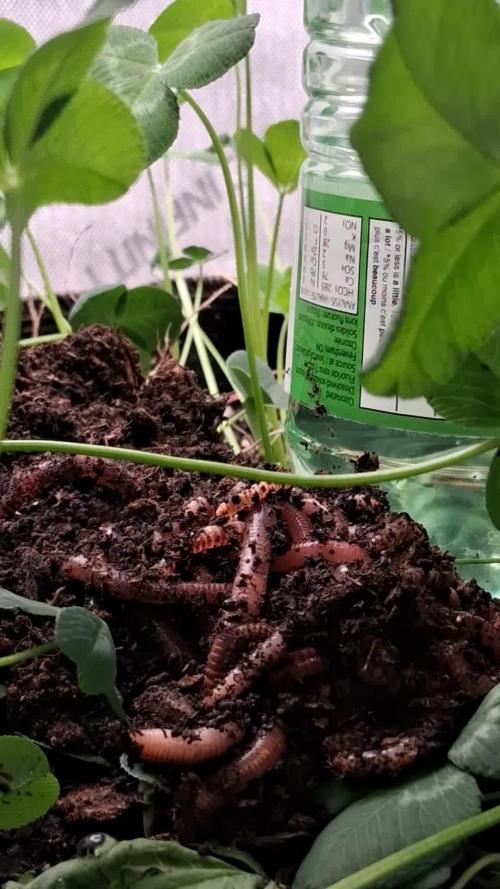
Topped once, turned off IR @ nights, slowed vertical growth back down, and took off both of the very lowest internodes on each plant.
Eisenia fetida
Stratiolaelaps scimitus
Armadillidium vulgare
Likes
120
Share


@DogDoctorOfficial
Follow
Get ready for a fun and informative update, including the training techniques i am using to shape our Tangie into a true ninja warrior!
Our Tangie has been flourishing with energy and vigor, showcasing her ninja skills at every turn. With each passing day, she grows taller and stronger, reaching for the sky like a true botanical ninja. Her vibrant green leaves are a testament to her health and vitality, shimmering in the grow room like emerald blades of a ninja's sword.
To help guide our Tangie's growth and maximize her potential, i've employed the art of Low Stress Training (LST). Picture this: we're like plant whisperers, gently manipulating her branches to create a symphony of growth. Through the technique of leaf bending, i encourage her branches to spread out, creating a wide and even canopy. It's like teaching her the ancient martial art of flexibility and agility.
By skillfully bending and tying down her branches, i ensure that each bud site receives an equal amount of light. This training technique not only promotes better light penetration but also encourages the growth of multiple colas, leading to a higher yield of resinous and potent buds. Our Tangie is like a ninja warrior, adapting to her environment and maximizing her potential with every training session.
But training isn't limited to physical techniques alone. I am also nurturing our Tangie with the perfect balance of nutrients from Aptus Holland. Their specialized formulas act as her ninja fuel, providing her with the essential elements she needs to grow strong and healthy. With each nutrient feeding, she absorbs the power of growth and development, inching closer to becoming a legendary ninja of the cannabis realm.
Of course, light plays a crucial role in our Tangie's training regime. She thrives under a PPFD (photosynthetic photon flux density) of 500, bathing in the intense glow of her training camp. These photons are like her training partners, pushing her to optimize photosynthesis, grow denser foliage, and develop the building blocks for future bud production. With each photon absorbed, she becomes a more formidable ninja warrior.
Creating the ideal environment for our Tangie is essential for her training success. She prefers a cozy temperature range of 27 to 28 degrees Celsius, providing her with the warmth and comfort of a tropical paradise. With a relative humidity level of 60 to 70%, she thrives in the perfect balance of moisture and freshness, creating an environment that supports her ninja-like growth and training.
Before we conclude, let's give another shoutout to Dutch Passion, the master breeders behind our Tangie strain. Their dedication to crafting top-notch genetics has allowed us to embark on this incredible journey. I am forever grateful for their expertise and commitment to the world of cannabis cultivation.
So let's continue this thrilling adventure with our Lego Ninja Tropical Tangie Run. Embrace the power of LST and leaf bending as you shape your plants into formidable ninja warriors. Remember to provide them with the right nutrients, light, and environment to support their growth. May your gardens be filled with the spirit of the ninja, and may my Tangie's training lead to an abundance of resinous and flavorful buds.
Stay tuned for the next update, where we'll unravel more tales from the captivating world of our Tangie. Until then, keep training with passion, harness the power of LST, and watch as your plants transform into stealthy ninja warriors.
As always thank you all for stopping by, for the love and for it all , this journey of mine wold just not be the same without you guys, the love and support is very much appreciated and i fell honored and blessed with you all in my life<3 <3 <3
#aptus #aptusplanttech #aptusgang #aptusfamily #aptustrueplantscience #inbalancewithnature #trueplantscience #dutchpassion #dogdoctorofficial #legoninjago #growerslove
With true love comes happiness <3 <3 <3 Always believe in your self and always do things expecting nothing and with an open heart , be a giver and the universe will give back to you in ways you could not even imagine so <3 <3 <3
Friendly reminder all you see here is pure research and for educational purposes only
<3 <3 <3 Growers Love To you All <3 <3 <3

Likes
7
Share


@Nikkov
Follow
Since last week I've been doing the normal watering only when they ask and watering once a week with top crop top veg fertilizer and they've responded very well and both are already in 11L airpots that I transplanted during this week
Likes
Comments
Share

@SirNutalot
Follow
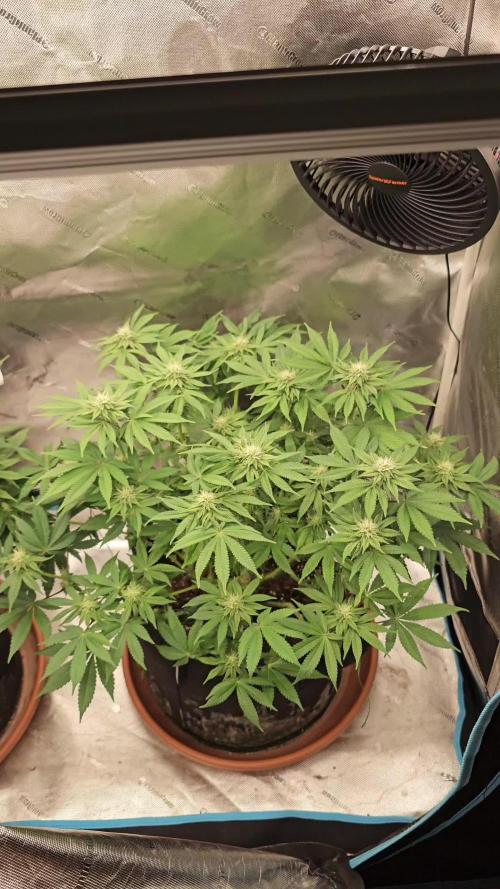
She looks good after the high stress
But sadly there was one hermie
He or she have to go ...

Likes
19
Share


@420DeepGrow
Follow
Gracias al equipo de Royal Queen Seeds, Marshydro, XpertNutrients y Trolmaster, sin ellos esto no seria posible.
💐🍁 Gelato #44:
Los criadores de Tyson 2.0 criaron Gelato 44 a partir de cepas finas. Al cruzar la Sunset Sherbet y la Thin Mint Girl Scout Cookies, crearon un híbrido de dominancia índica que asesta fuertes golpes en el cuerpo y la cabeza.
Su contenido de THC del 22% crea sinergia con terpenos colocantes para ablandar los músculos
Mantenla hidratada y con una dieta constante y pasará por la fase de floración en unas ocho semanas. Las plantas de interior alcanzan una altura máxima de 120 cm y producen 400-450 g/m², mientras que sus homólogas de exterior alcanzan los 180 cm y producen hasta 600 g por planta.
🚀 Consigue aqui tus semillas:
https://www.royalqueenseeds.es/rqs-semillas-cannabis-tyson/664-dynamite-diesel.html
💡TS-3000 + TS-1000: se usaran dos de las lámparas de la serie TS de Marshydro, para cubrir todas las necesidades de las plantas durante el ciclo de cultivo, uso las dos lámparas en floracion para llegar a toda la carpa de 1.50 x 1.50 x 1.80.
https://marshydro.eu/products/mars-hydro-ts-3000-led-grow-light/
🏠 : Marshydro 1.50 x 1.50 x 1.80, carpa 100% estanca con ventanas laterales para llegar a todos los lugares durante el grow
https://marshydro.eu/products/diy-150x150x200cm-grow-tent-kit
🌬️💨 Marshydro 6inch + filtro carbon para evitar olores indeseables.
https://marshydro.eu/products/ifresh-smart-6inch-filter-kits/
💻 Trolmaster Tent-X TCS-1 como controlador de luz, optimiza tu cultivo con la última tecnología del mercado, desde donde puedes controlar todos los parametros.
https://www.trolmaster.com/Products/Details/TCS-1
🍣🍦🌴 Xpert Nutrients es una empresa especializada en la producción y comercialización de fertilizantes líquidos y tierras, que garantizan excelentes cosechas y un crecimiento activo para sus plantas durante todas las fases de cultivo.
Consigue aqui tus Nutrientes:
https://xpertnutrients.com/es/shop/
📆 Semana 8:
Se aprecian unas lindas preflores hembra, comienza a estirar de forma acelerada.
Todo sigue su ritmo y ellas comen bien todos los nutrientes, comienzo a aplicar sugarshot, silica force y enzimas.


Likes
2
Share

@mTuff
Follow
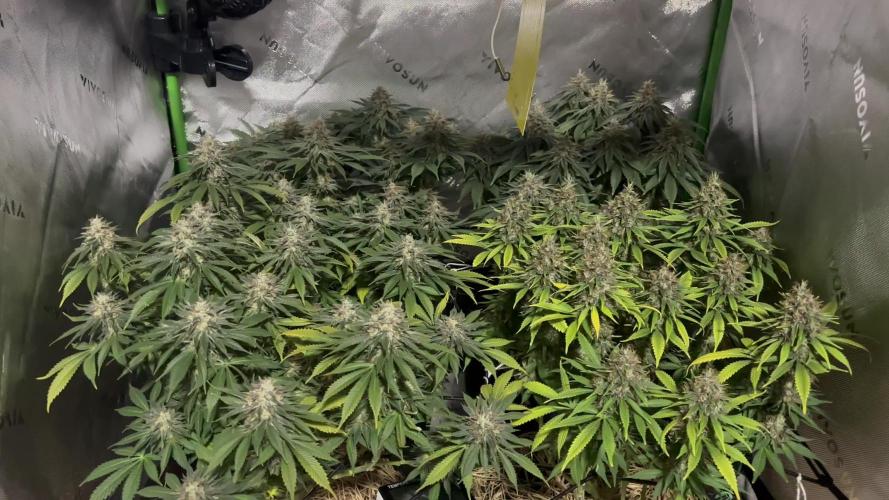
Três das quatro plantas estão com sementes, acabei colhendo uma delas e as outras três vou colher semana que vem :(, para minha sorte eu tenho um lindo clone da única que não se tornou hermafrodita :(, foi muito difícil controlar o clima não sei aonde errei



Likes
11
Share


@Buddyhighs
Follow
Another week down look at that canopy 😍
I think the stretch has finished and there’s no need for the second net so it’s come down.
Not a lot a work this week a bit of defo and top dressing.
Yeah for the first time this grow no a lot to say I guess……. Till next week let get it 💪🏽


Likes
14
Share


@Dunk_Junk
Follow
Growing well for her first week of life.
Planted straight into her 20L airpot with new compost. No perlite added.

Likes
13
Share


@smokeycropping
Follow
Se regó con un té de compost y se ven ya las flores con mayor tamaño y tomando buena forma no le hice defoliacion a este cultivo para testar los quantumboard
Likes
5
Share

@FicoCG
Follow
Liebe Leute,
Die Woche 8 ist im vollen Gange!!!
Ich habe mir heute die Mühe gemacht und das Vorschaltgerät der Hauptlampe aufs Dach mit einem Blech zum Schutz gelegt, damit die Temperatur etwas runter geht!
Ich habe jetzt für die letzten Wochen die Lampe nochmal auf volle Power gedreht und hoffe, das ich jetzt bei den Außentemperaturen bei nicht mehr als 29 Grad Celsius im Zelt Lande.
Die GG#4 und Purple Haze, haben den Düngeschock gut verkraftet und gehen top in die letzten Wochen der Blüte.
Leider hat es die Lemon Skunk (Red No.2) etwas erwischt, aber sie müsste es auch bis zum Ende durchhalten.
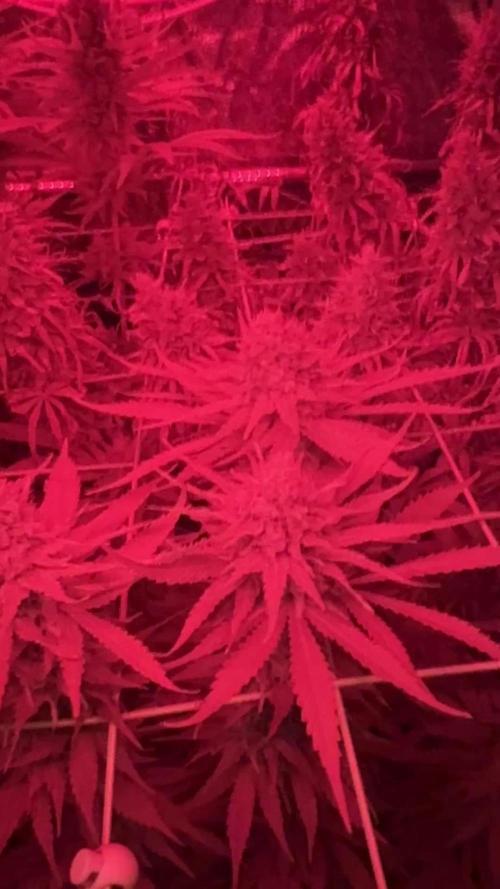
Die Trichome sind noch klar und warten nur noch darauf zum Höhepunkt zu kommen. Ich ernte aus Erfahrung wegen der Wirkung bei ca. 10% Bernstein. Also die nächsten zwei Wochen Augen ganz weit auf und die Lupe aus der Hose kramen.
Ich hoffe euch gefallen die Bilder und wie die Lady‘s aussehen!
Liebe Grüße, euer Fićo


Likes
5
Share

@hassehujasse
Follow
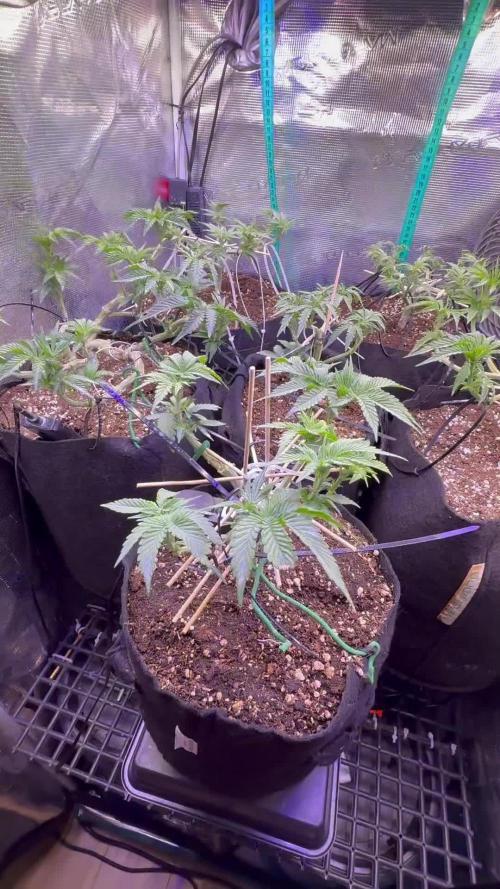
24/7 Dedication 10000000% Involvement Future is HereExploreer Level. Have to bring it to All Community
Peace
Likes
9
Share


@TeaTime
Follow
This cultivation I lost a little bit the size that could reach . 😓
The light stayed too much close of the plant .


Likes
11
Share


@CocoLogic
Follow
August 23th: (F6)
Fertigation once a day with same recipe (1150 EC 6.1 PH) watered until 10-20% run-off
August 24th: (F7)
Fertigation once a day with same recipe (1150 EC 6.1 PH) watered until 10-20% run-off
August 25th: (F8)
Fertigation once a day with same recipe (1150 EC 6.2 PH) watered until 10-20% run-off
August 26th: (F9)
Fertigation once a day with same recipe (1150 EC 6.2 PH) watered until 10-20% run-off
August 27th: (F10)
Fertigation once a day with same recipe (1150 EC 6.2 PH) watered until 10-20% run-off
August 28th: (F11)
Fertigation once a day with same recipe (1150 EC 6.2 PH) watered until 10-20% run-off
August 29th: (F12)
Fertigation once a day with same recipe (1150 EC 6.2 PH) watered until 10-20% run-off
Supercropped the 4 taller branches on the PE2 as a test and to get them at same level
Note: The Tut height is at the EXTREME limit had to remove the tray to gain 2 inch, will have to get the light at the roof of the tent and hope it will do it, first run of my life in 48 inch height space will learn from it for the next runs! :)


Likes
3
Share

@RockoCalenberg
Follow
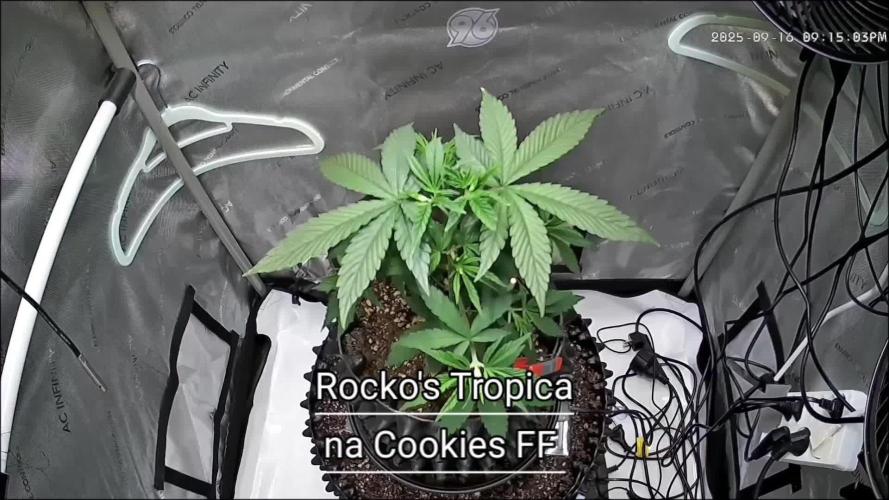
Sie macht sich weiterhin gut und hat ordentlich Durst, ca.10l alle 2 Tage.
Leider habe ich an manchen Trieben Zwitter Zeichen in Form von einzelnen Bananen entdeckt und mit einer Pinzette entfernt. Irgendwas gefällt der Dame nicht, hatte noch nie Zwitter Probleme 🤔
Likes
15
Share


@TommyBVRSA75
Follow
Por los vecinos indiscretos habemos tenido cambios muy grandes.
He comprado una tienda y un sistema Led PhytoLed Nx2 200 Full Spectrum y con la floración empezando he tenido que tomar la decisión más drástica de los últimos anos. Convertirme del Outdoor de siempre al Indoor.
Del Outdoor hemos traído problemas que no teniamos presentes - la existencia de gusanos en el grow que me han atacado los primeiros dias de grow indoor. Las he detectado caso todas pero las hon hojas guias estaban comidas y detecte a tiempo de eliminarla un casulo que no dio en mariposa con mucha suerte mia.
Detecte tambien en un estadio temprano algo de Spider mites y una que otra mosca Blanca...uffff...Menudo lio tenia...Pero le he estado combatiendo una guerra sin limites con óleo de neem y buscas dos a tres veces Al dia hoja por hoja y la cosa se ha normalizado un poco...pero sigue la guerra.
Además por el tiempo que lleva ya tengo claro que no se trata del strain Dark Purple Auto y si una Northern Light Blue Feminizada o sea una fotoperiodica que tomará sus más de 25 semanas en estar lista a la cosecha. Por lo que este grow se há convertido en una clase practica de grow y un experimento que será muy valioso cara al futuro. A todos los amigos y al dios Jah les pido fuerza, conocimiento y que me apoyeis en los consejos que creais más importantes para que saquemos adelante mi reyna.

Likes
19
Share


@clueless_smoker
Follow
17/01
So I have had serious doubts about my 300W CFL grow light since day 1 so I decided to instead opt for a Mars Hydro TS1000. Looking forward to seeing if there's any difference!
With regards to my previous grow question, my tap water, while drinkable tastes terrible and has a higher than normal amount of chlorine which i heard is terrible for plants. Hence the RO water. Got hit by a really cold spell last week and I struggled to keep the tent above 16 degrees C but it's starting to get back to normal now so hopefully will see some good growth :)
20/01
So I may have set her back by a couple of day's with the new light, apart from the apparent change in wavelength from CFL to led that can cause some stress I also gave her 100% on the dimmer. Just a quick note to any newbies out there, the Mars Hydro TS1000 gives you a recommended distance from the canopy for each stage of growth but not recommended power, if your girl is at my stage of growth use 25-30%.
On the bright side she has adapted nicely and no lasting damage seems to have been done. Seeing signs of growth all over and she's back to praying :)
23/01
She recovered from the change of light nicely! She's growing like a superstar now and just got her first feed today. Gonna take it easy on the nutrients, really don't wanna stress her out anymore. I have been turning up the light strength daily and she's currently happy at 50%.
Likes
67
Share

@Tower84
Follow
Cherry Limeade von Doja – Wochenupdate 🌱
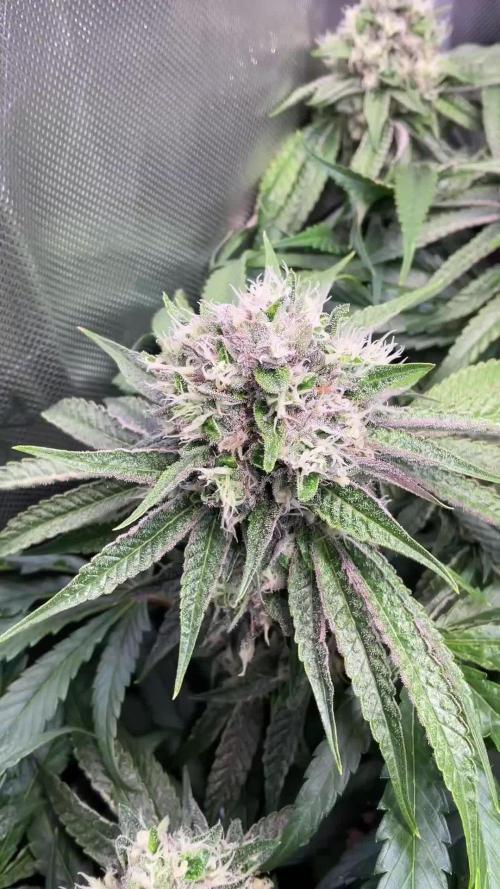
Die Entwicklung der Buds schreitet weiterhin sehr gut voran 🌸. Sie legen sichtbar an Masse zu und insgesamt entwickelt sich die Cherry Limeade genau so, wie ich es mir zu diesem Zeitpunkt der Blüte wünsche.
Auch beim Geruch hat sich wieder einiges getan 👃. Das zuvor sehr spritzige Limettenaroma ist mittlerweile etwas schwächer geworden. Dafür entwickelt sich das Terpenprofil zunehmend in eine angenehme Zitrusrichtung mit etwas Süße und Cremigkeit 🍋🍦. Genau diese Entwicklung gefällt mir sehr gut. Das erhoffte Kirscharoma ist allerdings leider weiterhin überhaupt nicht wahrnehmbar 🍒. Ich hoffe zwar immer noch, dass sich hier gegen Ende der Blüte noch etwas tut, langsam habe ich aber Zweifel, ob die Cherry Limeade tatsächlich noch in diese Richtung geht.
Beim Tensiometer habe ich inzwischen einen weiteren Versuch nach den Angaben des Herstellers durchgeführt. Leider zeigt es auch diesmal nach einigen Tagen wieder deutlich trockenere Werte an, als ich aufgrund des tatsächlichen Zustands des Substrats erwarten würde 🤔.
Ich habe inzwischen allerdings einen Verdacht, woran es liegen könnte. Mein Substrat enthält einen gewissen Kokosanteil, der bei der Herstellung der Suspension stark aufquillt. Wenn ich diese Suspension wie vorgesehen in das Loch einfülle und anschließend die Keramiksonde einsetze, scheint sich das Substrat beim anschließenden Rücktrocknen wieder etwas zusammenzuziehen. Dadurch könnte der direkte Kontakt zwischen Keramiksonde und Substrat schlechter werden und das Tensiometer anschließend zu trockene Werte anzeigen.
Diese Woche werde ich deshalb noch einen letzten Versuch mit einer entsprechenden Anpassung durchführen 🔧. Danach werde ich das Thema für diesen Grow aber auch erst einmal abhaken. Ich kontrolliere den Wasserverbrauch der Pflanze ohnehin relativ regelmäßig und habe dadurch einen zusätzlichen praktischen Anhaltspunkt 💧. Aktuell liegt der Verbrauch bei etwa 1,8 Litern pro Tag, was für die Größe der Pflanze weiterhin sehr plausibel erscheint.
Ab heute erhöhe ich den Ziel-VPD noch einmal leicht von 1,3 auf 1,4 kPa 📈. Ansonsten läuft der Grow inzwischen praktisch vollständig auf Autopilot 🤖. Alle drei bis vier Tage fülle ich den Wassertank wieder auf – viel mehr gibt es momentan nicht zu tun.
Genau so soll es sein: Die Pflanze macht ihr Ding und ich versuche, möglichst wenig daran herumzuschrauben 😎🌱.
📊 Aktuelle Parameter:
💡 Licht: 900 PPFD / DLI 39 (12/12, Stufe 6, 40 cm Abstand)
🌡️ Temperatur: 28 °C
💧 Luftfeuchtigkeit: 61 %
📈 VPD: 1,3 kPa → 1,4 kPa
🌿 CO₂: Ø 740 ppm
💦 Wasserverbrauch: ca. 1,8 l/Tag
Cherry Limeade – Weekly Update 🌱
The buds are continuing to develop very well 🌸. They are visibly putting on more weight, and overall the Cherry Limeade is progressing exactly as I would hope at this stage of flower.
The aroma has also changed quite a bit 👃. The very zesty lime aroma that dominated before has become a little less pronounced. In return, the terpene profile is developing more towards a pleasant citrus aroma with some sweetness and creaminess 🍋🍦. I really like this direction. Unfortunately, there is still absolutely no sign of the cherry aroma I was hoping for 🍒. I’m still hoping it might show up towards the end of flower, but I’m slowly starting to doubt whether this Cherry Limeade will actually develop much cherry character.
I made another attempt with the tensiometer this week, once again following the manufacturer’s instructions. Unfortunately, after a few days it is again showing noticeably drier values than I would expect based on the actual condition of the substrate 🤔.
However, I now have a theory about what might be causing it. My substrate contains some coco, which expands quite strongly when making the suspension. When I fill the suspension into the hole as recommended and then insert the ceramic probe, the substrate seems to shrink slightly again as it dries back. This could result in the ceramic probe losing some of its direct contact with the surrounding substrate, causing the tensiometer to indicate conditions that are actually drier than they really are.
I’ll therefore make one final attempt this week, with a slight adjustment to the installation 🔧. After that, I’ll probably leave the issue alone for the rest of this grow. I regularly monitor the plant’s actual water consumption anyway, which gives me another useful practical reference point 💧. At the moment, the plant is using around 1.8 liters per day, which still seems very realistic for a plant of this size.
Starting today, I’m also increasing the target VPD slightly from 1.3 to 1.4 kPa 📈. Apart from that, the grow is basically running on autopilot 🤖. Every three to four days I refill the water reservoir, and that’s pretty much all there is to do at the moment.
And honestly, that’s exactly how I like it: the plant does its thing and I try not to mess with it too much 😎🌱.
📊 Current parameters:
💡 Light: 900 PPFD / DLI 39 (12/12, Level 6, 40 cm distance)
🌡️ Temperature: 28 °C
💧 Humidity: 61 %
📈 VPD: 1.3 kPa → 1.4 kPa
🌿 CO₂: Avg. 740 ppm
💦 Water consumption: approx. 1.8 L/day
Wenn du möchtest, kann ich den nächsten Wochenkommentar wieder im exakt gleichen Stil fortführen und dabei nur die Veränderungen zur Vorwoche herausarbeiten.


