


Likes
Comments
Share

@Ger-Smurf
Follow
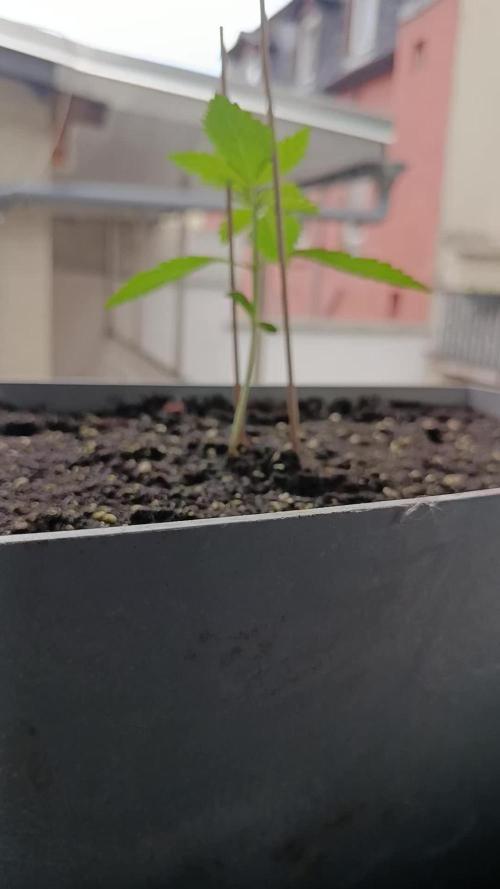
Herzlich Willkommen Zurück 👋 diese Woche war das Wetter leider sehr wechselhaft. Es gab vermehrt Regen und es ist sogar einmal zu einem richtigen Sturm gekommen. Dabei ist die Cherry Cola umgekippt. Aber nicht schlimm! Ich hab der Lady zwei stützen zur Unterstützung gegeben😉 Ich möchte euch auch ein Produkt aus meiner Sammlung ans Herz legen! sysMag von LastinG ! Ein super Produkt das ich zu jedem meiner Grows durchgehend benutzte und nie enttäuscht worden bin. Ich gebe 0,3 ml auf 1 Liter Gießwasser. Gönnt euren Ladys www.lasting.green ! Ich bin überzeugt davon und ich glaube das werdet ihr auch sein😉 Bis zur nächsten Woche und viel Spaß und gutes Wetter 😸👌👌

Likes
27
Share


@gottagrowsometime
Follow
Welcome to my Frosted Guava Auto Diary Sponsored by Zamneisa & Mars-Hydro.
FREAK RESULTS. "HAS STARTED GROWING UP AND THROUGH OUT A LOAD OF NEW WHITE PISTILS"
Flower Day 5-20 Days 50-63 7cm put on in the last few days of wk 9 roughly day 59-63
So, not bothering to measure my plant as I thought it had stopped at 68cm and didn't budge for a wk. Been I flushed her and restarted her on plagron/atami/terpinator she decided hey. Let's put on another 7cm and throw out a bunch of new white pistils. Never had this with an auto before. Very strange. I seen her develop the past 15 days. Very slowly. And well. She's not great bud wise. She's a runt that's extremely largy with a very hign leaf-calyex ratio, I've seen other FGA and some killer bud. The leafs are mainly singled fingered leafs that appeared late into her process. And I just can't reach the stems proper and would cause more harm than good. I was hoping she'd get super frosty and I'd be able to make some bubble hash or something. She is at to throw out a whole new load of white pistils. I decided hey, why not throw her under something a little more powerful. At this stage in an auto grow. I really wouldn't bother, as her bud making energy should be mainly spent and at this stage I'd be if anything reducing light % or rasing my light by 5-10cm for ripening. I'm curious to see what will happen. She is drinking a lot more. So I've upped her PK and added some Atami products and will wait to see what happens. I'm not mad about the way she is. I'm holding out hope this is a freak of nature (with autos you really can never make a grow plan). Even if she does put on some mass it'll still be sparce and far apart. And very high leaf ratio. And it's only been the last few days she started growing up again. I only noticed cause the top was closer to the light, and after looking closer. I see new pistils and bud forming lightly. Will be a nightmare to trim. I hope she puts on frost during ripening.... only more time will tell. I'd of been better off with the fem version. She'll easily go into 12 weeks.
Diet/Defoliation
Was stuffed switched to plagron. Jungle juice did take her a long way. And truly happy with the results. But, I want to try new things and added Plagron Green Sensation and a few others. And Atami Bloom boosters 390-400ppm feed needed to be PH'ed from 7.9 to 6.5 2x a week. Alga Bloom feeds with Green Sensation is 6-630ppm with Silic Rock & pure Zym, 2x a wk. Terpinator feeds are 350ppm 6.1ph and once a wk. (Ambient tap ppm/ph 105-110ppm 6.75-6.7ph). Defoliation was done at the end of wk 8. She was 68cm for 10 days. And took her height on day 60 she she was 71 now she's 75cm tall. Her leaf ratio is very high. And very poor bud sites. More like larf lights. But, I've got a glimmer of hope. I've introduced new bloom boosters and upped the ppfd to 1000ppfd from 850-900ppfd.
Lights
SF/P1000s were used up until yday where I then put it under my SP3000 at a 14-10 maybe if I'm bothered ill put it back under the 2x100watts if I feel like it. Most days though I reckon I'll leave them under the SP.
Co2
Co2 was shockingly high at 1150 in my tents with the exhaust on. But with no high temp it's useless. And has little to no affect. You need 29-31c. It's a fine balance. Cause when your LVPD Leaf VPD hits 32c your stomata stops and the tiny pores close. I've learnt so much about co2 growing. Now I've the right equipment. And with the summer coming in. I should be able to meet the temp/co2 level with exhausts on and been able to use my Dehumidifier in a sealed grow room. When it gets to winter. I think I'll pack it in. I'm just not getting caught out last summer with the heat. I may aswel take full advantage of the high temps and not having a sealed tent and keep exhausts on, just keep RH down. It should be a lot easier. If I like co2, I'll get a controller for fans/temp/ lights & co2. My one now can only control co2ppm and light. I'll get pic readings later. I haven't got it hooked up fully as no way am I using co2 without any alarms.
Thanks to my sponsors from Zamneisa & Mars-Hydro for their products and support. Much appreciated to all who viewed, liked &/R commented. Look forward to seen your diaries. Either way thanks for dropping by.

Likes
13
Share


@GrowGuy97
Follow
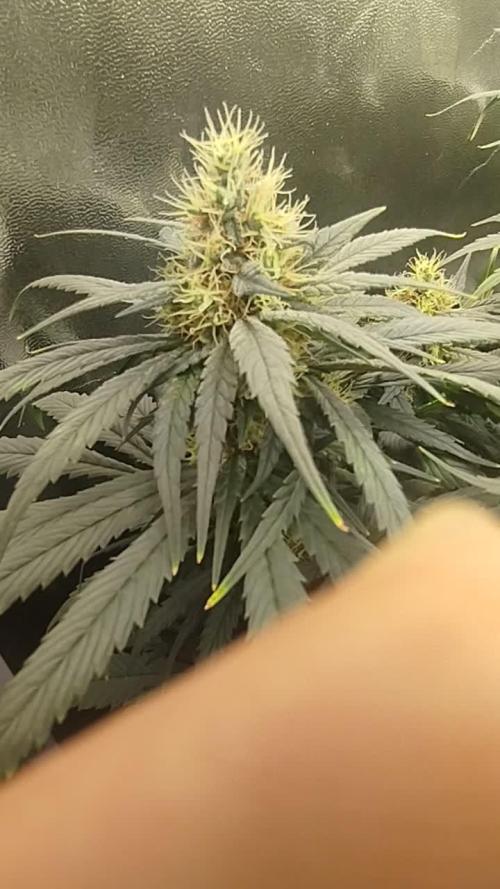
Everything is going great, just waiting on flower tent to finish & these ladies will be going straight into flower😍✌️🏼🌱
Day 40 first day of flower, everything seems to be going ok so far!
Day 41 Can see they are starting to stretch!😍


Likes
Comments
Share


Likes
13
Share

@smoking_hills9
Follow
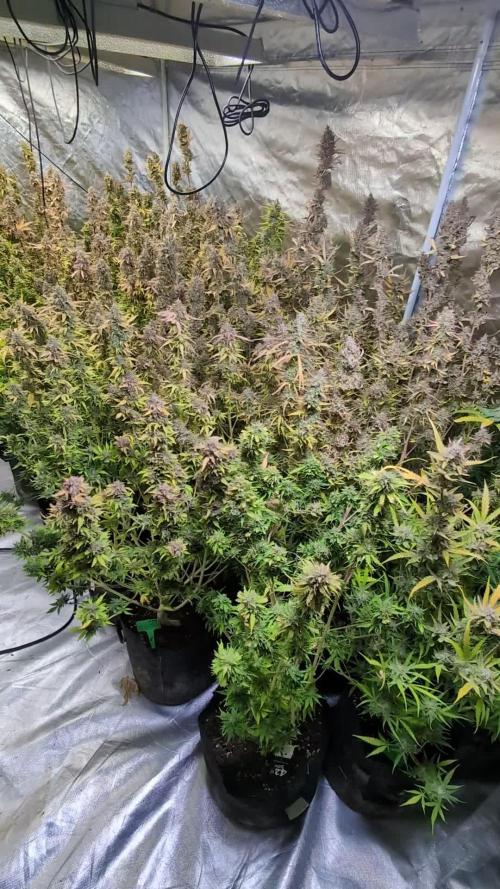
1 of the best autoflower I ever grew. Super stable genetics. Tones of super tasty buds. Definitely will grow again.
Dry weight of 3 plants is 180 gr. Hard sticky buds with nice smell

Processing
Likes
2
Share


@Sundown
Follow
This lady is getting real big, i wish i had induce her to flower 1 week before, but shit happens :) HST to deal with it :P
Never had a Blue Dream Pheno with so many sativa %,
I'm sorry about the quality of pics and videos but my phone sucks, i promisse some good bud porn with better quality for the next weeks :p

Likes
Comments
Share

@Budhunter
Follow
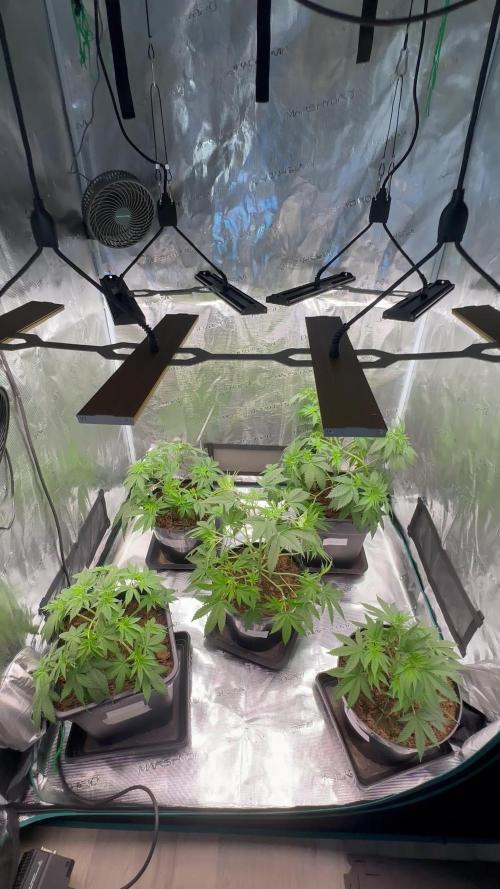
Week 5 Veg - day 41
Lemon tree is healthy and growing tall 🙏🏼
1 or 2 more weeks and I will be flipping into flower. Let’s go

Likes
37
Share


@AUTOBUDDHA
Follow
Cut out the nitrogen this week, they received two feedings this week of only micro, bloom, and big bud!
These girls are super healthy and absolutely loving life!
Very large plants! Looking like they will be an xl harvest!
Check out my other grow. Blue dream matic!
Likes
2
Share


@AustinRon
Follow
El Diablo Week 4 - Bolt II
[Twenty20Mendocino]
(X-Factor X Whiskey Zulu)
Objective
- Trained Plant - @3Nodes - Bend apical meristem to Node 1 Height, 7 STEMS . . .
Week 4 : [ Wed Feb 14, 2025, ED 1Q25 29:B:4:1]
[ Tue Feb 21, 2025, ED 1Q25 35:B:4:7]
24/0 @ Germination through 24 Hour Open Cotyledons (then 18/6)
Germination: 25 Jan 2025
#3A Earliest Harvest Date: Thu Apr 10 2025
#3B Latest Harvest Date:
Mon April 21, 2025
__
Fri Feb 21, 2025
ED 1Q25 29:B:4:1
Applied 1 Gallon (3800), or 14% of pot volume, focused on periphery of PLANT to periphery of POT.
- Cal Mag Fuel: [ 4, ml, gal]
- Silica Skin: [ 4, ml, gal]
- Peak Bloom: [ 3, ml, gal]
- Root Anchor: [ 4, ml, gal]
- Quillaja 60 Powder: [ 2.5, g, gal]
We’ve oversaturated the pot - center unaffected, plant happy. Need to train down Apical - this afternoon.

__
Sat Feb 22, 2025
ED 1Q25 30:B:4:2
Edwina Pheno is Cold. There is MORE than enough moisture through Monday.
- Let’s Foliar, CalMag Fuel and Peak Bloom
Root Steering is based on Phosphorous/Potassium Levels -
- @2.5+:1 - Root Bias
- @ Shoot Bias
__
Sun Feb 23, 2025
ED 1Q25 31:B:4:3
__
Mon Feb 24, 2025
ED 1Q25 32:B:4:4
Watered Bottom Half of container -
LST: Trained Top DOWN


Cold snap is ending - should be able to get a little warmer . . .
Tied down remaining Stems for flat canopy
__
Tue Feb 25, 2025
ED 1Q25 33:B:4:5


LightIntensity: [ 350, µMol/m2/s]
- [ ] Temp: [ tbd, °F]
- [ ] RH: [ tbd, %]
- [ ] VPD: [ tbd, kPa]
- Lowering Light Height to Raise PPFD
- We’re at about 350 - Need to get to 700 in the next 10 days
- Watered ~ 500 ml to periphery . . .
__
Wed Feb 26, 2025
ED 1Q25 34:B:4:6
LightIntensity: [ 350, µMol/m2/s]


She is incredibly supple - the transplant has taken, and she seems to have a grown about an inch. Took advantage and bent her outwards and radially to balance space between extended stems, and to maintain EVEN canopy height.

__
Thu Feb 27, 2025
ED 1Q25 35:B:4:7
LightIntensity: [ TBD, µMol/m2/s]
Temperature: [ tbd, °F]
RH: [ tbd, %}
VPD: [ tbd, kPa]
Lighting
- [x] Lower Light 5 clicks per day UNTIL 700 µMol/m2/s achieved, then re-evaluate.

Likes
74
Share


@Mr_Maes
Follow
This week we will see the colas and buds really dense up. We are about 2 weeks away from harvest now. Next week I will start my flush.


Likes
22
Share


@HydroHerb420
Follow
Wish I could have vegged the clones another couple of weeks but the Zkitzo was just growing to fast. In hindsight shouldn’t have put a plant from seed in with the clones. Seeds always grow like mad in NFT and clones are more manageable as they don’t have a tap root. Still got some absolutely beautiful looking and smelling bud from the Zkitzo so can’t really regret it. The Gelatos are rock solid right through and look absolutely beautiful. Used rainwater right the way through on this so should smoke nice to. Better pictures as it dries.
Likes
2
Share


@AestheticGenetix
Follow
7/8/25 Starting to look very very nice. Some nice purple flakes on the edges of the sugar leaves with bright hairy orange pistils on nice bulbous shaped buds
Likes
5
Share


@Purplepassion
Follow
High,
Here is the really last update until you ( and also me) will see it again in ~6-12 days.🤞🏽
At this point I'm pretty happy and really excited. Hopefully around 22° are not too much and it still will taste nice.
Likes
9
Share


@Tango_Hotel_Charlie
Follow
Dealt with pm issue why I havent posted. Its gone. Fed compost tea, fpj, and foop. Also hit her with some mykos. Im already getting iny head when I want to begin amemding this for rhe next round
Likes
114
Share


@Tropicannibis_Todd
Follow
💩Alrighty Then Growmies We Are Back At it 💩
Well folks we just finished up the last run and so we are back to do it all over again 😁
So what do you say we have some fun 👈 We got some Gorilla Punch 👊 👊 👊 DAY 42
👉 Its been a really crazy couple of week's 😳 So I've had a few issues what's done is done , but I think we are on track and she's doing good 👌
So i gave them a flush and then there normal feeding so hope that fixes it 🤔 Time will tell 🙂
FC4800 from MarsHydro Lights being readjusted and chart updated .........👍👉Added an RU45 too the mix 👍
www.marshydro.ca
👉I used NutriNPK for nutrients for my grows and welcome anyone to give them a try .👈
👉 www.nutrinpk.com 👈
NutriNPK Cal MAG 14-0-14
NutriNPK Grow 28-14-14
NutriNPK Bloom 8-20-30
NutriNPK Bloom Booster 0-52-34
I GOT MULTIPLE DIARIES ON THE GO 😱 please check them out 😎
👉THANKS FOR TAKING THE TIME TO GO OVER MY DIARIES 👈
Would you like to hang with the growdiary community 👉 https://discord.gg/gr4cHGDpdb 👈
Processing
Likes
69
Share


@Mimi420
Follow
Hi guys!
Look al all that beautifoul flowers!They on FD 45.The bud proudocion is masive for the 9l pots.Ang geting heavy for the thin branches.Hope they can hold the weight.Going to start flushing some of them.I love the beautifol black coolors ok Black DOG and Blue Kush.
Stay green!


Likes
38
Share


@OutForReal
Follow
Monday
It’s beginning of week 4 and they are doing pretty well. The main stems are hard and strong and it’s impossible to bend them at that point.
I am practicing a very light hand LST everyday like I am showing in the video.
Tuesday
Watering for both of them , you can follow the (simple) process in the videos. The plants are doing great except for a little issue on one of them that I will show you tomorrow.
Topping or not ? May be beneficial so I’m about to do it. Fiming maybe ?
Thursday
Topping on video ! Simple method


Likes
35
Share


@SooSan
Follow
90x60x140 (Mars Hydro)
FC-E4800 (Mars Hydro)
Easy2go Aquavalve5 (Autopot)
Living Soil (Demetearth)
Bruce Banner (PEV Seed)
Gorilla GG4 (Ganja Farmer)
Cream Caramel (Sweet Seed)
Gorilla Gelato (Ganja Farmer)
Blueberry (00 Seed)
Kalini Asia (Zamnezia)
Biscotti Mintz (Barney's Farm)
Blackberry Cake (Sensi Seed)
Amsterdam Amnesia (Dutch Passion)
Gelato Cookie (Ganja Farmer)
Purple OG Punch (Ganja Farmer)
Sweet ZZ (RQS)
Rainbow Road (Paradise Seed)
Substrat ~50L:
30L Super Light Mix Biotechnologie
18L coco
2L perlite
1,7kg lombricompost
350g guano de chauve-souris
350g Zéolithe
350g Basalte
170g guano vers de farine
170g biochar
0,7g Endomychorise glomus intraradices
0,7g Bacillus Amyloliquefaciens
Paillage de luzerne alfalfa
Arrosage avec 2ml/L de mélasse de canne 1x par semaine
Pulvérisation avec 1% d’huile de neem jusqu'à la 2eme semaine de floraison


