


Likes
Comments
Share


@DogDoctorOfficial
Follow
Unfortunately Grow Diaries seems to have bugged during the last Cosmic Noodles update. The harvest report itself was saved and the text is still there, but most of the photos disappeared and I’m currently unable to properly edit or restore that update.
Because I still want to finish this diary correctly and document everything from start to finish, I’m uploading the remaining harvest, drying and trimming photos into this temporary flowering-week update instead. So even though this appears under a normal flower week, the content shown here actually reflects the harvest process already explained in the previous report.
My apologies for the confusion to all. I didn’t want to leave the diary incomplete after coming this far together.
Wishing everyone a beautiful day, and as always, thank you all for being here and following this journey from seed to harvest. 🌱
Growers Love
DD

Likes
30
Share


@XperencdGmanXG
Follow
Pretty resistant to wpm but still susceptible. I'd like to breed in more resistance but that may lower cbd content. So we will see what she taste like and go from there and

Likes
2
Share
@DogDoctorOfficial
Follow
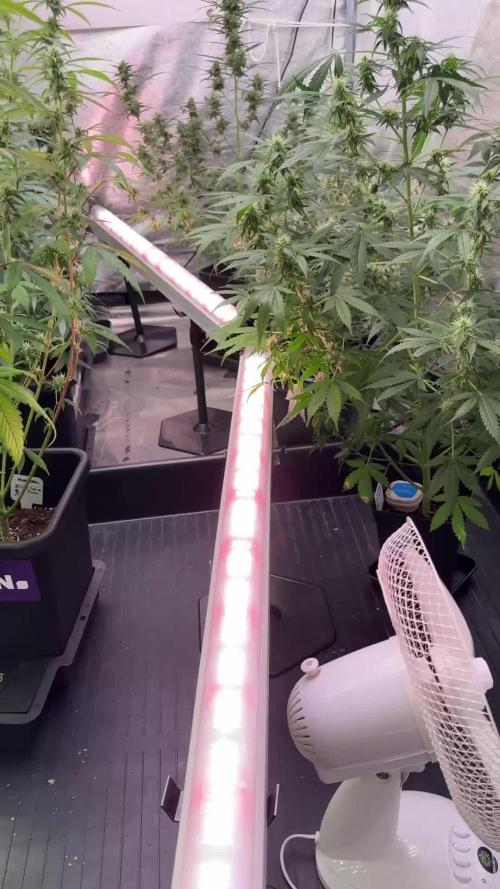
? Blueberry Muffin – Pheno B
Week 9 | Same Genetics. Completely Her Own Story. 🌿🔥
Welcome back to another week of the 8×8 Adventure! 💚🌱
If you've been following these individual phenotype diaries, you already know that I absolutely love this part of the project.
Because sometimes you can take two plants from the same cultivar...
Give them the same environment.
The same light.
The same irrigation.
The same nutrition.
The same room.
And still end up with two plants that look like they were given completely different instructions.
That's exactly what we're seeing with these two Blueberry Muffins.
And this girl?
She's writing her own story.
She's compact.
She's lush.
She's beautifully structured.
And she's becoming increasingly interesting as flowering progresses.
This week was another step toward giving her the space she needs to turn all that beautiful structure into flowers.
So let's have a look at what our little Blueberry Muffin Pheno B has been doing. ?🌸
🌱 Week 9 – The Compact Sister
Blueberry Muffin Pheno B has never been interested in becoming the tallest girl in the room.
And honestly?
I don't think she cares.
She's approximately 75 cm tall, but height doesn't really tell the story with this phenotype.
Her personality is in her density.
She's compact.
She's leafy.
She's got a strong central structure with flowering sites distributed throughout the plant.
And as flowering has progressed, that compact architecture has become even more obvious.
This is where growing multiple phenotypes becomes so much fun.
Her sister has her own architecture.
This girl has hers.
Neither one is trying to imitate the other.
They're simply expressing what they have genetically programmed inside them.
And I absolutely love it.
🌸 Flowering Development – She's Filling the Space
The flowers are now becoming much more established throughout the plant.
The fresh white pistils are everywhere, and the individual flowering sites are becoming increasingly recognizable.
What I particularly like about Pheno B is how much flower development she's carrying inside such a relatively compact structure.
She's not using a huge amount of vertical space.
She's using the space efficiently.
Branches are filling in.
Flowering sites are developing.
The canopy is becoming increasingly dense.
And this is where our job as growers changes slightly.
Earlier in the grow, density was simply beautiful.
Now that we're moving deeper into flower, we have to think about what that density means for:
💨 Air movement
💡 Light penetration
🌡️ Microclimate
💧 Humidity management
🌸 Flower development
And that's exactly what we're doing this week.
✂️ Cleaning the Canopy – Making Room
Like her sister, Pheno B also received some selective defoliation this week.
But there's an important distinction.
We're not cleaning her because she's doing something wrong.
We're cleaning her because she's doing too much of a good thing. 😄
She's naturally compact and very leafy.
And as the flowers develop, some areas can become quite crowded.
So we're opening her up a little.
Removing selected leaves that are overlapping.
Removing foliage that isn't contributing much anymore.
Creating some breathing room around developing flowers.
And generally making the architecture easier to manage.
This isn't about stripping the plant.
Far from it.
She's still beautifully green.
She's still carrying plenty of healthy foliage.
We're simply creating a little more space between everything.
Sometimes the best canopy is not the one with the most leaves.
It's the one where every remaining leaf has room to work.
💨 Airflow – Especially Important for This Girl
This is probably even more relevant with Pheno B than it is with her sister.
Because this girl is compact.
And compact plants naturally create more areas where leaves and flowers can sit close together.
That can be beautiful.
But as flowers become denser, I don't want stagnant little pockets developing inside the canopy.
Good airflow is one of those things you don't really notice when everything is working properly.
And that's exactly how I like it.
Air moving through the plant.
Humidity being managed.
No unnecessary congestion.
No little hidden corners where moisture can sit.
We're not trying to create a sterile plant.
We're simply trying to make the environment less friendly to problems such as mildew or mould as flowering progresses.
Prevention is always easier than dealing with a problem later.
💡 She's Compact – So Let's Use the Photons
This is another reason I like opening her up a little.
At around 75 cm, she's not particularly tall.
And that's perfectly fine.
But when you have a compact flowering plant, I want to make sure the available photons can actually reach the places where they're useful.
She already benefits from the additional light strategy we're running in the room, including the inner and under-canopy lighting.
That's a huge advantage.
But even with additional lighting, there's no reason to let unnecessary layers of foliage block one another if we can naturally improve the canopy.
We're not trying to expose every flower directly to the light.
We're simply creating pathways.
Light pathways.
Air pathways.
And observation pathways.
That's what this little cleanup is about.
🌿 Still One of the Lushest Girls in the Room
And after the cleanup...
Look at her.
She's still lush.
She's still green.
She's still compact.
And she's still unmistakably Pheno B.
This is something I really wanted to preserve.
I don't want to turn her into a completely different plant just because we removed some leaves.
The phenotype is the phenotype.
Our job isn't to erase that.
Our job is to help her express it as efficiently as possible.
And I think we're getting a really nice balance now.
Enough foliage to power the plant.
Enough space to let the canopy breathe.
Enough structure to support the developing flowers.
And enough visibility for us to actually see what's happening.
That's a pretty good combination.
? Two Sisters – Two Personalities
This comparison is becoming one of my favourite parts of the entire 8×8 Adventure.
Because if you put Pheno A and Pheno B side by side, you can immediately see that they're related...
but they're not identical.
Pheno A has developed her own open architecture.
Pheno B is the compact, lush sister.
Pheno A has been a little more demanding in some areas.
Pheno B has generally looked extremely comfortable with the current environment.
And yet both plants are producing their own beautiful version of Blueberry Muffin.
This is exactly why I don't like forcing every plant into the same training schedule.
If I had tried to make these two plants behave identically, I'd have removed some of the most interesting information this grow is giving us.
Instead, we're allowing the differences to remain visible.
Same genetics.
Different phenotype.
Different personality.
Different expression.
And that's the story.
⚗️ Nutrition – No Need to Fix What Isn't Broken
The feeding programme remains unchanged this week.
We're continuing with:
Terra Bloom – 2.2 ml/L
Pure Zym – 1 ml/L
Sugar Royal – 1 ml/L
Power Buds – 1 ml/L
pH adjustment as required
Current solution is around:
pH 6.0
EC ~2.0 mS/cm
And Pheno B continues looking very comfortable with it.
She's maintaining that beautiful green colour.
She's developing flowers.
She's growing normally.
And there are no obvious reasons to start changing the recipe simply for the sake of changing it.
That's one of the things I've learned during this project.
When the plant is happy...
sometimes the smartest thing you can do is leave it alone.
🌡️ The Room – Small Changes, Same Stability
The environment has changed slightly compared with some of our earlier updates, but we're still maintaining a very stable room.
Current conditions are approximately:
🌡️ Day temperature – 29°C
🌙 Night temperature – 25°C
💧 Relative humidity – 60%
⚗️ pH – 6.0
⚡ EC – ~2.0 mS/cm
💨 CO₂ – ~693 ppm
💦 Watering – ~1.3 L/plant/24h
🌡️ Solution temperature – 25.2°C
🌡️ Substrate temperature – 25.6°C
💡 Light schedule – 12/12
? Pot size – 15 L
So we're sitting around a 4°C day/night temperature difference.
And again, I don't look at any one number in isolation.
Temperature interacts with humidity.
Humidity interacts with transpiration.
Light affects plant demand.
Root-zone conditions affect water and nutrient uptake.
Everything is connected.
And at this point in flower, I'm particularly interested in keeping the relationship between those factors stable rather than chasing some theoretical perfect number.
💨 Opening the Canopy Helps the Whole Room
There's another reason I'm happy we cleaned her up this week.
It's not just about Pheno B.
When you've got a room full of flowering plants, every canopy contributes to the overall environment.
More open foliage means air can move through more easily.
More airflow means fewer stagnant pockets.
And better movement through the room helps the environmental system do its job.
Again, defoliation isn't a replacement for proper ventilation or environmental control.
But good canopy architecture and good environmental management work together.
And that's exactly what we're trying to achieve.
🔬 A Plant That's Becoming Easier to Read
One thing I really appreciate about Pheno B is that she's becoming easier and easier to understand.
At the beginning, we didn't know what she was going to become.
Now we do.
She's telling us:
"I'm compact."
"I'm vigorous."
"I'm leafy."
"I'm going to build my flowers inside this structure."
And our response is simply:
"Okay. Let's work with that."
That's what I mean when I say grow with the plant, not against it.
We're not trying to make her taller.
We're not trying to make her look like Pheno A.
We're not trying to turn her into something she's not.
We're simply giving this particular phenotype the conditions and space she needs to perform.
📸 The Camera Doesn't Lie
The photographs this week really show how much she's changed.
The close-ups reveal those developing flowers and their increasingly defined structure.
The wider photographs show just how much vegetation she's carrying around those flowers.
And then there are the little details.
The colour.
The leaf posture.
The branching.
The way the flowers are distributed.
Those details are why I love documenting individual phenotypes.
A single photograph can show what the plant looks like.
But a series of photographs over several weeks shows who the plant is becoming.
And Pheno B is becoming a very beautiful little flowering plant.
🔮 Looking Ahead
From here, I'm not looking to make any dramatic changes.
The major framework is already there.
The selective cleaning has given her some additional breathing room.
The environment is stable.
The feeding is stable.
The flowers are developing.
Now comes the part where patience becomes increasingly important.
Over the coming week, I'll be watching for:
🌸 Continued flower development
🌿 Increasing density around the flowering sites
💎 Early resin development
💨 Continued airflow through the canopy
💧 Stable water demand
🌡️ A stable flowering environment
And most importantly...
I'll be watching the plant.
If she tells me she needs something, we'll respond.
If she doesn't...
we let her work.
💭 Final Thoughts – Her Own Little World
There's something really satisfying about this plant.
She isn't dramatic.
She doesn't need to be.
She's just beautiful.
Compact.
Lush.
Healthy.
And increasingly covered with developing flowers.
And what's especially fascinating is that her sister is doing something completely different while receiving essentially the same treatment.
That's the magic of phenotype hunting.
You don't know exactly what you're going to get.
You give the genetics the same opportunity.
Then you watch.
And eventually...
they introduce themselves.
Pheno B has introduced herself as the compact, lush, elegant sister.
And I really like her.
This week wasn't about changing her.
It was about giving her a little more room to breathe.
A little more room for photons to move through.
A little more room for air.
A little more room for those flowers to develop.
And now...
she's ready.
The canopy is cleaner.
The flowers are becoming more defined.
The environment is stable.
The nutrition is steady.
And this beautiful little Blueberry Muffin is heading deeper into flower.
Let's make her shine.
Let's give her the spotlight she deserves.
Because she may be the compact sister...
but she's certainly not a small personality. ?🌸🔥
🙏 Thank You
As always, a huge thank you to everyone following the 8×8 Adventure.
Thank you to Zamnesia for these beautiful Blueberry Muffin genetics and for giving us the opportunity to explore just how differently two phenotypes from the same cultivar can express themselves.
Thank you to Plagron for supporting the plants with the growing media and nutrition throughout the journey.
Thank you to Future of Grow for providing the lighting that allows these twelve different genetics to perform under the same artificial sun.
Thank you to Lumiflora for helping us bring additional light into the inner and lower parts of the canopy.
Thank you to TrolMaster for helping keep the environment stable.
And, of course, thank you to everyone in the GrowDiaries community.
Every comment.
Every question.
Every observation.
Every person simply stopping by to see how the girls are doing.
It all makes this adventure more enjoyable.
Two Blueberry Muffins.
Two phenotypes.
Two personalities.
And we're nowhere near finished discovering what they can do.
Until next week...
Growers Love and happy growing! 🌱💚?
See you next week with Blueberry Muffin Pheno B. 🌸🔥
Likes
12
Share


@Noob_quest
Follow
So harvested Gigi yesterday (D70) as she looked ready.
And also very beautiful in my humble opinion. Covered in trichomes and very bright orange pistils pics don’t do justice. The buds are smallish but really hard / dense abs she stinks to high heaven.
After a week of drying, Heidi is just about to start curing. (120g / 4 oz). Tbh we’re smoking her already as she’s already way better than current stash. Tastes absolutely delicious, I’m not one for describing pretentious flavours. She tastes dank and makes me properly stoned lol. Also only gonna get better now on the cure.
Naomi is the final girl still going, plan to pull her on Sat/Sun D77 ish.
She’s the biggest of the 3. Despite showing some signs of earlier nute burn she has powered through with the biggest and longest buds of all 3. Very excited about her.
And finally the other 2 girls (not included in this diary) strawberry pie autos look a few weeks behind these but just going into beast mode both are 1.2m tall and getting loads of solid super stinky and frosty buds.
In summary pretty fuckin fantastic start to the year. Happy Days.
Thanks for reading. Have a great week.😊

Likes
8
Share


@HighOhioAn
Follow
Papaya sherbet what can I say? Has given me a run for my money but the end result is exactly what I wanted. Nice frosty thick: cola beautiful node spacing cannot wait to see how the rainbow melon turns out. Fast buds for life.🔥💯
Likes
23
Share


@dataTwiiix
Follow
06/19: Début deuxième semaine de floraison. Elle commence à produire du SUCRE :D. premier fillet mit en place (j33)
Ajout de BudCandy 1/sem (A partir de cette semaine)
06/20: rien à raconter au repos. (J35)
06/21: 2L eau clr (j36)
06/22: (j37)
06/23: à partir de maintenant je vais remplacer 1/2 topMax par boost accelerator de Canna.
06/24: arrosage +/-2L *engraisser
06/25: je ne trouve pas le plants énorme j'aurais du donner plus de grow/fishmix pendant la phase de végétation peu être pourtant j'avais ajouter de l'humus de lombric à mon soil.?¿ (j40)
Likes
2
Share


Processing
Likes
58
Share


@Dahoola
Follow
-----------------------
Update start week 4:
-----------------------
We entered the first week of bloom for MBAP. Have had a perfect run-up and you notice that. She is ready to bloom abundantly. Besides the usual leaftucking, I also did some defoliation of the lower leaves and shoots. I have reduced the humidity in the room and we are now around 60%. New update later this week!
--------------
End week 4 :
--------------
End of the first week of flowering behind us. Everything is going well, good growth and budsites continue to develop. I further removed the lower shoots and did some leaftucking where necessary. She has developed into a beautiful, large and open plant. Ideal for her future bud development. On to the 2nd week of flowering. Until next week everyone!


Likes
1
Share


@mauigrown
Follow
Week 9 is here and we are looking at harvesting! After checking the trichomes of just the top colas, I decided this week I was going to harvest. I am updating this post after I have dried and harvested the plant so do not have much more details. I flushed the plant this week with Flora Kleen along with terpinator and microbes.
I cut down the plants and hung them up in the tent to dry using a clothes hanger with clips I got off of Amazon. It took 10 days to dry the bud and my temps and humidity would fluctuate throughout the day and night. I stayed in the mid to low 70s for temperature and humidity was at 50% at first. Then I added a humidifier and had it dry in 60% humidity.
Will update the rest in the harvest update.
Likes
63
Share

@Growbody
Follow
Meine lieben Freunde und Freundinnen, Brüder und Schwestern im Geistigen und Tatkräftigen, herzlich Willkommen zum Greenhouse Summer Outdoor Grow 2026.
Der erste Strain des Outdoor Grows den ich Euch vorstellen werde ist die Purple Lemonade FF von 2Fast4Buds, eine 60% Sativa die laut FastBuds etwas nebulös als eine Kreuzung aus purple und citrus Cali Genetik beschrieben wird. Egal, sie soll sehr fruchtig und zitronig schmecken und könnte schöne Farben bekommen. Außerdem soll Sie eine kurze Blütezeit haben. Hier ist die URL:
https://2fast4buds.com/de/seeds/purple-lemonade-fast-flowering#description
Der zweite Strain der im Set mit dabei ist, ist die Mimosa x Orange Punch fem. von Barney's Farm, die ihre Genetik und den Taste bereits im Namen trägt, eine 65% Indica, die laut Barney's "ein wirklich sensationelles, zitrusähnliches und mandarinenartig-süßes Aroma" haben soll. Auch sie könnte interessante Farben bekommen. Hier die URL:
https://www.barneysfarm.de/mimosa-x-orange-punch-552
Last but not least, der dritte Strain ist die Chocolate Sherbet fem. von Grower's Choice, eine 70% Sativa, deren Eltern Chocolope x Sunset Sherbet sind. Auf den Geschmack bin ich schon jetzt gespannt, cremiges Haschisch. Mit bis zu 240cm könnte sie die größte im Greenhouse werden und würde dann bis zur Decke wachsen. Hier ist die URL:
https://www.growerschoice.nl/de/chocolate-sherbet.html#description
EDIT:
Nachdem die oben aufgeführten Pflänzchen nicht so recht loslegen wollten, habe ich mich entschlossen, fertige Stecklinge von Hanfgarten aus Österreich dazuzubestellen. Die Stecklinge kommen in die Mörtelwannen, die selbst gezogenen kommen in die bereits bewährten 15 und 20 Liter ROOTiES. So kann ich die auch mal direkt in die Sonne stellen.
Der erste Steckling ist die Blueberry von Hanfgarten, eine 80% Indica, einer Kreuzung aus Afghan Indica x (Thai Sativa x Mexican Oaxacan Sativa), die nach 8 Wochen Blüte Mitte Oktober fertig sein soll. Außerdem soll sie fruchtig, beerig und süß schmecken. Auch hier gibt es eine URL:
https://www.hanfgartenshop.de/blueberry.html
Der zweite Steckling ist die Runtz, ebenfalls von Hanfgarten, ein Hybrid aus Zkittlez × Gelato, die auch nur 8-9 Wochen Blüte hat, mal sehen. Wenn sie ein ähnliches Aroma hat wie die Wurlz bin ich happy. Die URL:
https://www.hanfgartenshop.de/runtz.html
Der dritte Steckling ist die Super Lemon Haze, eine 80% Sativa von Greenhouse Seeds, deren Genetik von Lemon Skunk x Super Silver Haze stammt. Mit 9-10 Wochen Blüte steht sie wohl mit am längsten im Greenhouse. I💖Haze und hier sind die URL's:
https://www.hanfgartenshop.de/super-lemon-haze.html
https://shop.greenhouseseeds.nl/feminised-cannabis-seeds/1-seed-pack/super-lemon-haze/?variation_id=604
Auch dieses Jahr gibt es wieder etwas Neues:
Mir ist vor einigen Wochen im Baumarkt ein Foliengewächshäuschen begegnet. Die Aussicht, meine Schätzchen immer im Trockenen zu Wissen, lies mich sofort (also sofort nach einem Recall mit meiner Liebsten) zuschlagen. Danach war nur noch ein teilweiser Umbau unseres Gartens nötig, einen kleinen Weg anders verlegen, ein Fundament ausheben, Bordsteine zersägen, 2 Zentner Beton verbuddeln, Löcher bohren, verdübeln und verschrauben ohne das der Beton ausplatzt, einen haufen Astwerk vom Wein opfern und viel Rasen neu anlegen, das war's schon fast.
Neu:
Sind auch die zwei 90 Liter Maurerbottiche, in denen sich meine Pflanzen wohlfühlen dürfen, 4x soviel Platz wie im letzten Summer Outdoor Grow. Zur Drainage habe ich Rheinkiesel 9-18 verwendet. Da drauf kam mein altes Erdmischungsrezept mit frischem Kompost von Piluweris, Lehm, den die Wühlmäuse ständig in unserem Rasen aufwerfen und Sand aus'm Kieswerk mit gaaanz viel Staub drinne, praktisch Gesteinsmehl. Auch hier gab's was Neues: Hornmehl zusätzlich, hatich früher schon verwendet und ganz vergessen. Der erste Sack Sonnenerde Hanferde wurde mit der oberen Schicht meiner Mischung vermischt. Der zweite Sack kam dann blank obendrauf.
Neu:
Für mich ist auch die angewendete Keimmethode noch neu, die Samen zuerst in einem Marmeladenglas mit temperiertem Wasser mit Zusatz von Wasserstoffperoxyd keimen zu lassen. Das ist jetzt das dritte Mal, dass ich diese Methode anwende. Der Vorteil daran ist die superschnelle Keimung, der Keim schaut tatsächlich bereits am nächsten Tag aus der Schale und nach ein oder zwei weiteren Tagen haben sich die Keimlinge von der Samenschale befreit. Das weitere Vorgehen bereitet mir noch Probleme. Ich verwende immer noch die SmartStart Plugs von Zamnesia die ich praktisch halbiere, also von oben nach unten einmal Mittendurch. Dahinein lege ich jetzt den Keimling und klappe die zwei Hälften dann zusammen und pflanze den Plug in den Topf.
Neu:
In die Wannen kommen zusätzlich Gäste als da wären erprobte und neue sowie überwinterte Chilisorten, verschiedene Basiliken oder -kums, Weiße Melisse, Roter Klee, paar Blumen und so.
Tag 71: Im Greenhouse hat es tags bis 40°C bei 24% RLF, heiß und trocken. Die Mörtelwannen bekommen jeden morgen 10 Liter, die Töpfe ~2 Liter Brunnenwasser. Abends gibt es noch eine kleine Erfrischung. Nachts hat es 16°C bei 89% RLF, bisle kühl und 6 Liter/m² hat's geregnet.
Tag 72: Tagestemperatur im Greenhouse heute 41,5°C bei 24%RLF. Nachts kühlt es auf 18°C ab, bei 90% RLF.
Tag 73: Die Sonne brennt, 42°C bei 20%RLF, Nachts 18°C bei 87%.
Tag 74: In der Nacht ein wenig Regen, 15 Liter/m² und am Tag war es wieder heiß.
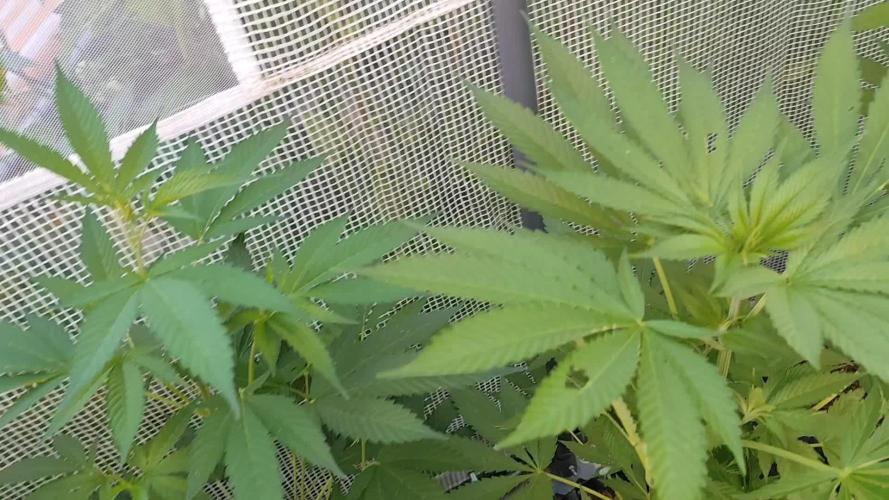
Tag 75: Die Blueberry von Hanfgarten ist mittlerweile 91 cm, hat einige lange Seitentriebe und wächst schon vorne aus dem Greenhouse. Die Runtz von Hanfgarten, 69 cm hoch, nutzt jeden Raum, den sie auch bekommt, die Zebrange ist nach hinten ordentlich gestutzt. Die Super Lemon Haze Hanfgarten/Greenhousseeds ist mit 60 cm die kleinste im Greenhouse, bekommt aber demnächst mehr Platz und mehr Licht. Die Purple Lemonade FF von 2Fast4Buds hat mit ihren 63 cm einen ziemlich dicken Stamm entwickelt, da kommt noch was. Die Chocolate Sherbet von Grower's Choice kommt auf 86 cm, ebenfalls mit dickem Stamm und die Minosa x Orange Punch ist mit 108 cm die größte. Wenn man im 2. Video genau hinschaut, sieht man ganz kurz oben auf der Purple Lemonade einen kleinen grünen Grashüpfer. Der war für etwas Blattfrass verantwortlich und lebt jetzt auf der Streuobstwiese.
Tag 76: Es hat etwas abgekühlt, 34°C bei 44% RLF, Nachts bleibt es bei 18°C und 96% RLF. Hab mir ein Schwerlastregal besorgt um meine Erden besser lagern zu können. Jetzt bekommt die gebrauchte Sonnenerde Hanferde Zeit und Ingridenzien um sich zu regenerieren.
Eins kann ich versprechen: It will take a very, very long time 😃 Schön das du es bist, der mich begleitet 👍😎


Processing
Likes
154
Share


@CBD_Sweden
Follow
@FAST_BUDS,
Hi all the happy people here in GrowDiaries.
This is my second cultivation ever and it will be fun to try a bigger space than my closet grow.
First, I'm just going to say I'm done with the construction of my new growroom.
I put some pictures on the construction here in week one.
The room is 2.14 meters by 1.7 meters and has a ceiling height of 2 meters.
It provides a floor area of 3.6 square meters.
I use a 54 Watt Lightwawe T5 for germination and 2 Pcs 400 Watt HPS lamps.
I have a channel fan that replaces the room air about 40 times an hour to get a comfortable environment in the room, the air enters a fresh air intake from the outside.
The air is purified through a carbon filter to then leave the room to the rest of the basement.
Then I use that heat to heat the rest of the basement.
I will use 8 pcs 15 liter Autopots to grow with and a 100 liter water tank that supplies the pots of water and nutrition.
I will grow completely organically in soil and will watercure my buds to get the best possible medicine for me.
But there are no cultivation rooms to be displayed here, so I continue with what is most important.
Today I have put my seeds in my moisture dome and hope the seeds have germinated within a few days.
I am very excited to see how the new growroom will work and how this new secret CBD plant from @FAST_BUDS, will turn out.
..............................................................................................................................................................................................................................................................................................................................................
2017-09-11. Kl 12.00. Week 4 starts. I have cleaned the whole room for the new week and gave the girls water and nutes. Added videos and pics. Girl nr 1 is 27 cm high and girl nr 2 is 22 cm high.
-----------------------------------------------------------------------------------------
2017-09-12. Kl 10.00. New pics and video. Girl Nr1 has grown 5 cm in 23 hours, from 27 to 32 cm.😍
-------------------------------------------------------------------------------------
2017-09-13. Kl 22.00. Everything is looking great in the garden right now. Added new video.
--------------------------------------------------------------------------------------------------
2017-09-15. KL 10.00. New video added. Girls are looking great and they got 3 liters of water and nutes this morning. Girl Nr 1 is 38 cm high and Nr 2 is 28.
-----------------------------------------------------------------------------------------------------------------------------------------------------------------------------
2017-09-16. Kl 10.00. The girls grow like crazy, i have to defoliate about 20 leafs a day. Added 2 liters of water and nutes this morning and 2 new videos.
-------------------------------------------------------------------------------------------------------------
2017-09-17. This is the last day of week 4. Added a time laps from germ to week 4.
Likes
15
Share


@Kelloggs420
Follow
From now on, I shall update my diary everyday.
I used some rosemary oil spray for the remaining spider mites. Worked like a charm
Day 40: the buds are still developing new pistils. The weather these days has been sunny to cloudy with some rain.

Likes
1
Share

@CranedriverDan
Follow
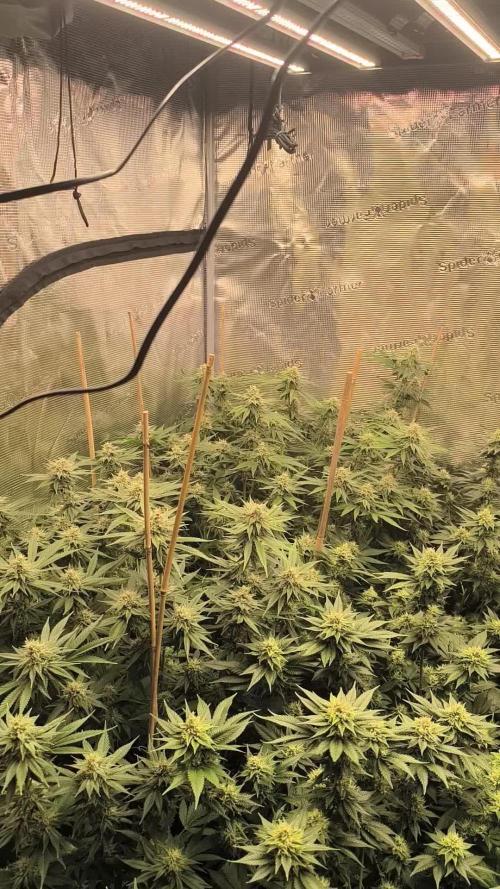
Holky jsou na začátku 7 týdne květu. Začínají silně vonět a palice jsou krásně pocukrované . Trichomi většina ještě průhledná.
Likes
5
Share

@peterfly98
Follow
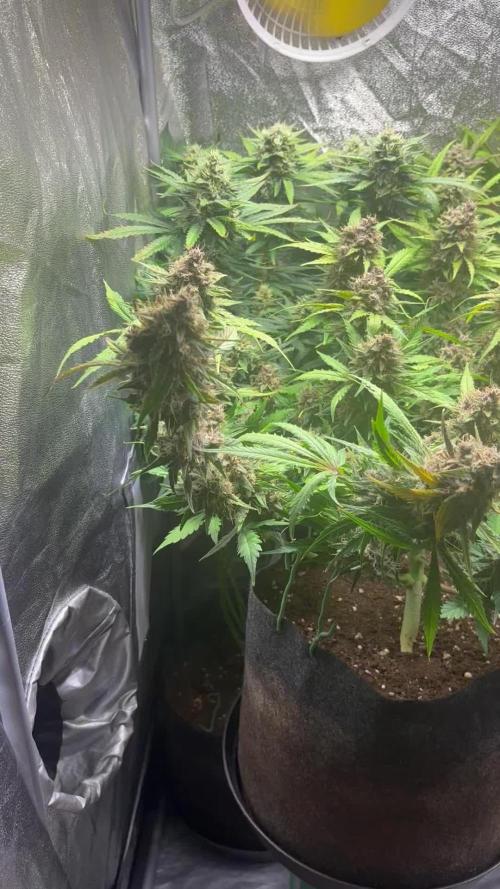
Massive heat wave still here. I had to reduce the light to 50% (450ppfd) to manage the heat.
Plants are doing well and with this heat they smell amazing.
G1 is almost ready! I’ll check the trichomes daily to have the optimal window for harvest.
G2 is super frosty and it swell a bit from the last week.
Frostbanger has 3 really big buds who will swell even more. She is 80cm tall so I’m using some support for the branches to help with the weight.
Likes
29
Share


@Ultraviolet
Follow
Hope you are well. Thanks for taking the time.
Little main line defoliation to focus growth.
A cell is a quantum measuring device for light’s frequency to make order from the chaos that light frequencies bring from our environment. A cell performs mechanical resonance, where its intrinsic structures vibrate at specific resonant frequencies when exposed to external mechanical stimulation. Cells possess the ability to sense and respond to mechanical cues from their environment, a process known as mechanosensing. This can involve the activation of signaling pathways and changes in gene expression. Cellular resonance is a component of mechanotransduction, the process by which cells convert mechanical force into a biochemical signal that triggers a cellular response.
Plants perceive mechanosensory stimuli, such as vibration and touch, through structures like trichomes (hairs) and specialized ion channels embedded in their cell membranes. Plants are sensitive to frequencies ranging from ultrasound to lower sound waves, such as 250 Hz. The perception depends on various factors, including the stiffness of the underlying tissue, which can be tuned by the plant to perceive specific frequencies associated with environmental cues like insect herbivory.
While the exact molecular mechanisms are still being explored, scientists have identified several potential pathways that may be affected by acoustic vibrations in this frequency range: 4000-5000 Hz. Enzyme activity: Sound waves can increase the activity of certain enzymes, such as amylase, and elevate the content of soluble sugars and proteins. Increased stomatal opening in response to specific frequencies can optimize photosynthesis by increasing the plant's absorption of water and CO2. In addition to enhancing drought tolerance, sound vibrations can strengthen plants' overall resistance to stress. Studies have shown that some genes related to stress response can be activated by sound stimulation.
The Emerson effect is a phenomenon where the combination of red and far-red light increases the rate of photosynthesis beyond the sum of the two wavelengths used separately. This synergy is important for understanding Extended Photosynthetically Active Radiation (ePAR), which includes the far-red spectrum, because it means a more comprehensive measurement is needed to fully understand light's effect on plant growth. ePAR meters measure light up to 750 nm, which is necessary to capture the far-red light that participates in the Emerson effect.
The human eye can detect more shades of green than any other color due to a combination of our cone cell sensitivity and evolutionary history. Our eyes are most sensitive to the yellow-green part of the spectrum, which is the peak of our visual sensitivity, and a large part of our ancestry was spent needing to distinguish subtle variations in greenery for survival. or our primate ancestors, being able to discern subtle differences in green was crucial for survival. It helped them identify edible plants and avoid poisonous ones, as well as detect predators hiding in foliage. This constant need to distinguish shades of green drove the evolution of our color perception to become most sensitive to it.
S-cones: Detect short wavelengths, perceived as blues and violets.
M-cones: Detect medium wavelengths, perceived as greens.
L-cones: Detect long wavelengths, perceived as reds and yellows.
The primary reason for our enhanced sensitivity to green is that the peak sensitivities of the M-cones and L-cones are very close together in the green-yellow region of the visible spectrum. This overlap means that green light stimulates both the M-cones and L-cones, creating a more robust and detailed signal for the brain to interpret. In contrast, the S-cones are more isolated and respond to a much narrower band of light, leading to less sensitivity for blues.
The brain's visual processing pathways also play a role. Our visual system processes color differences through "opponent channels," which compare the signals from different types of cones. The opponent channel that processes red versus green has a more precise and intricate system than the blue versus yellow channel, leading to finer discrimination in the green part of the spectrum.


Likes
9
Share


@Haoss
Follow
These seeds are grown in Georgia, LAGODEKHI x OG KUSH, seeds of the same variety should be grown in coconut and soil


Likes
31
Share


@McBubatz
Follow
Soweit alles gut, hab sie jetzt zum trocknen aufgehängt. 400g nass ist ordentlich und bis jetzt das beste Ergebnis was ich hatte.
Geschmack usw wird nachgereicht wenn sie ins Glas kommen.
Sehr nice, 80g trocken (natürlich/leider den Überschuss zur aktuellen gesetzliche erlaubten Menge fachgerecht entsorgt).
Buds sind super, richtig fett sogar nach dem Trocknen, auch ordentlich fest und super harzig. Geschmack geht momentan leicht tropische und süße Geschmack mit nem heftigen cheese ton. Is lecker aber nicht ganz was ich erwartet hab 😅. Kommt jetzt erst mal in Gläser zum aushärten, denke da wird sich auch am Geschmack noch was tun.
Likes
12
Share

@Nocone_Purple
Follow
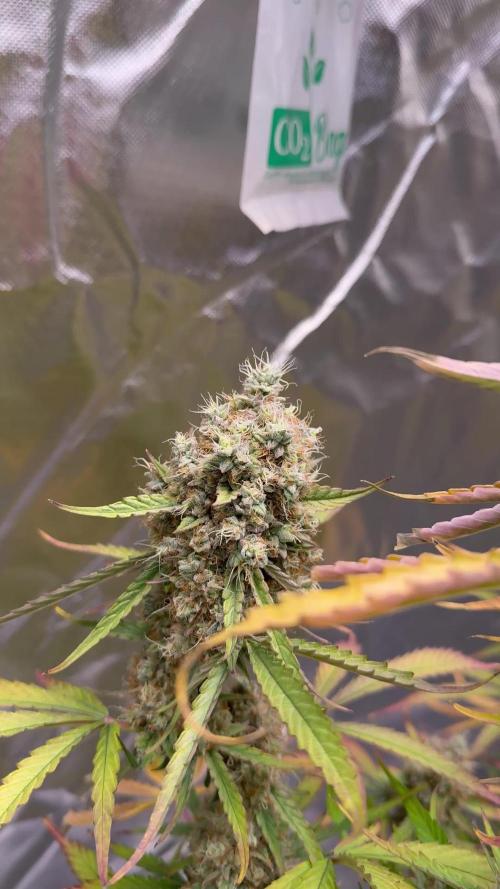
This week marked the final stretch of the grow the Epsilon F1 is now fully mature and absolutely covered in thick, frosty trichomes. The main colas have gained impressive density, with most pistils turning a rich orange while the trichome heads are mostly milky with a few amber ones starting to appear.
The fade is beautiful, with yellow and purple tones spreading through the fan leaves as the plant naturally finishes its life cycle and directs all remaining energy into the buds. The aroma has become more intense and complex sweet, fruity, and slightly earthy.
Overall, she looks perfectly healthy and ready for harvest very soon. A light flush is underway, and I’ll be checking the trichomes daily to harvest at the ideal point depending on the desired effect, either a bit earlier for a more uplifting high or a few days later for a deeper, more relaxing one.