


Likes
Comments
Share

@hassehujasse
Follow
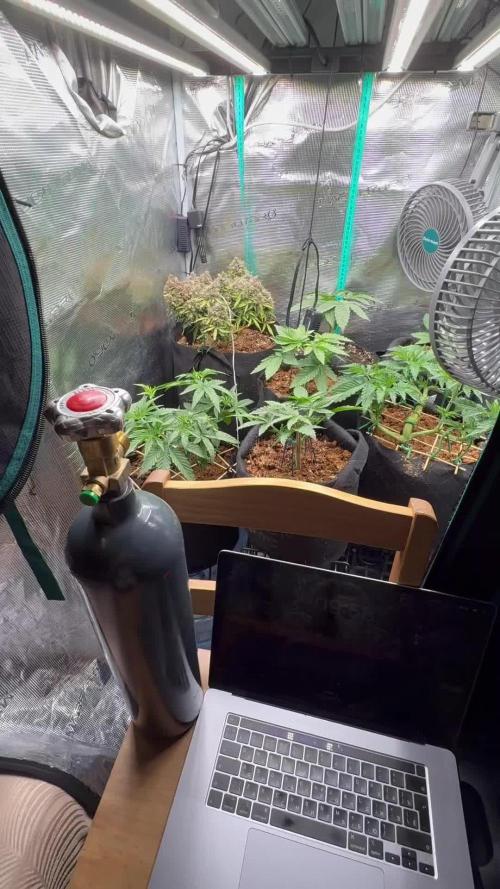
How many data sensors you have? I have got 4 temperature-humidity sensors from Mars Hydro, 1 temperature humidity sensor TFA,1 humidity sensor in Xiaomi humidifier, 2 temperature sensors TFA, 2 co2 sensors, 1 soil sensor, 1 light sensor. Data loggers Mars Hydro, TFA, SensiRoom. What you need more?! I need 4 soil data loggers & sensors. Industrial temperature & humidity sensor, 20 hours of hard work. Time to sleep.
Just Fun 4*19L *7L 3*4L pots in 70/70 All 8 plants Hasse.
Co2 5L, Biobizz, Coco Rhiza, Plagron bat guano. Preparing my baby to Fly Over World
Upgraded everyday. Enjoy it😎

Likes
Comments
Share

@420DeepGrow
Follow
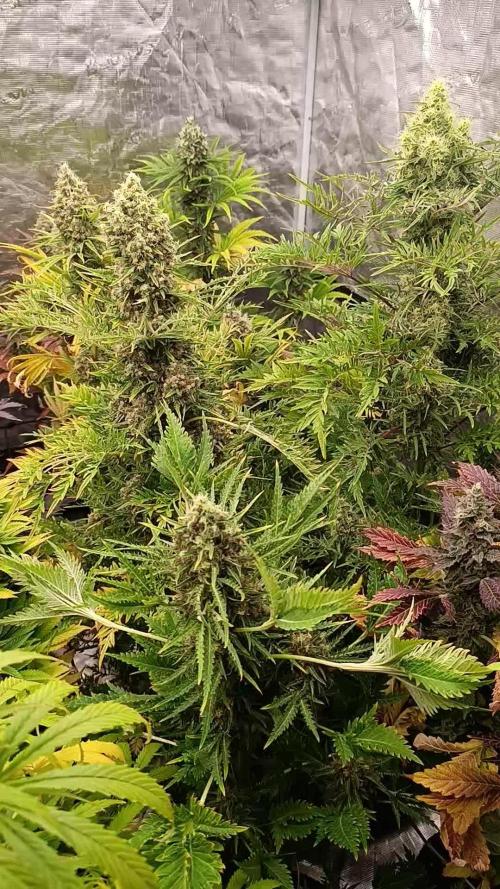
📆 Semana 8
La Mentha de Croco se acerca a su punto clave de maduración, afinando cada detalle antes del cierre. Los cogollos siguen compactándose y ganando peso, cubriéndose con una capa de resina más gruesa y brillante. Los pistilos continúan anaranjándose y los cálices empiezan a hincharse, señal de que la planta está entrando en su fase más madura.
El aroma se intensifica aún más: dulce, fresco y con ese toque mentolado que ahora destaca al mínimo roce. La estructura sigue limpia y aireada, sin humedad acumulada, y los riegos se ajustan al milímetro para mantener el equilibrio justo antes del lavado.
🌸 Última semana de engorde real: terpenos, resina y maduración afinándose para un final perfecto.
¡Seguimos creciendo fuerte 💪!

Likes
2
Share

@Karlossss23
Follow
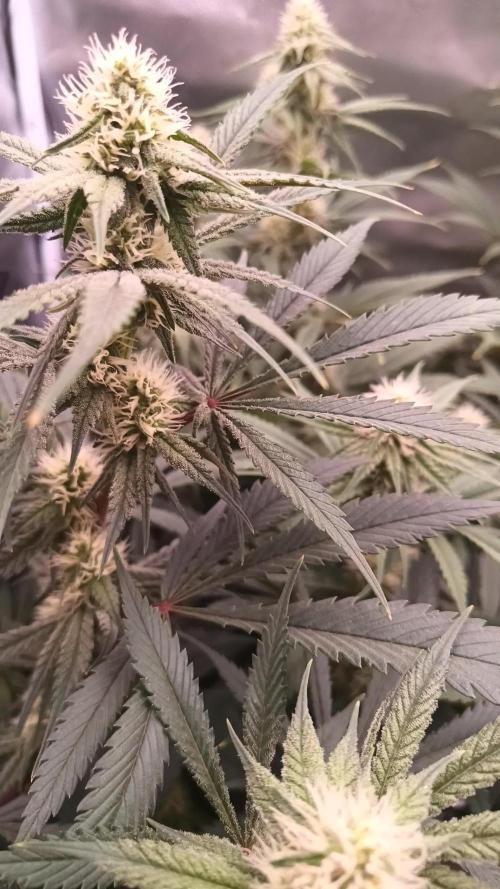
Zdarec
Čtvrtý týden květu je za námi a na jedné holce se ukázali červené stonky, tak dostali do zálivky phosphorus plus ale zatím jen 1ml/l.



Likes
4
Share


Likes
10
Share


Likes
1
Share


@EUROGROW
Follow
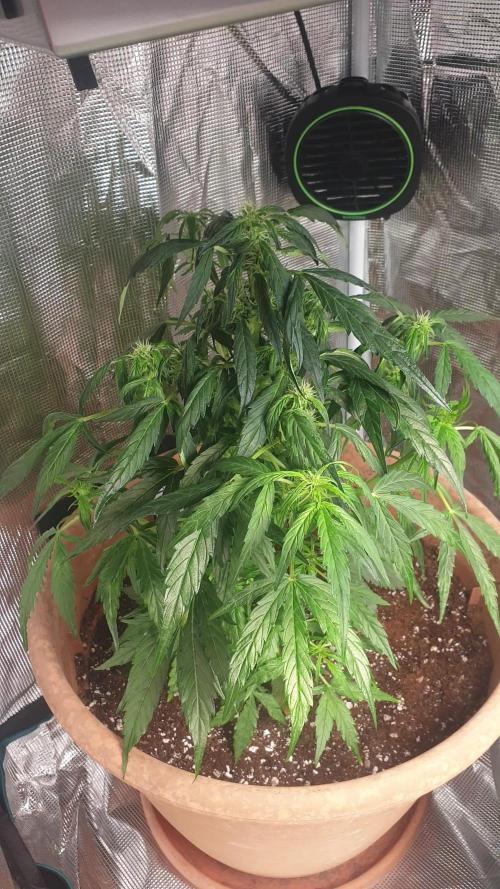
WEEK 3 ! They grew like fu*k this week and all started to look healthy again since the first set of leaves were kinda bleached. it was most def PH issues, I think I found my sweet spot at PH 6.
Tonight I will raise the LED to 500w and start adding Co2. I also added an extra pot full of coco and nutrients under each pots since the roots were already popping through my Air Pots.
Likes
37
Share


@LaGrassaFarm
Follow
Esta ha sido la última semana para algunas, en estos días las cosecharé.
Esta semana ha bajado la temperatura, teniéndola muy baja con las luces apagadas.




Processing
Likes
10
Share


@Andres
Follow
she grows healthy ... she is in her last weeks outdoor ... the days are cloudy most of the day ... with the substrate top crop mix .. she feeds every 10 days

Likes
5
Share


@Mr_nugs_lover_David
Follow
Very strong amnesia smell, smells a little bit louder than the pheno #2 however the clasic amnesia smell it's awesome, cannot wait for her to be Ready!! 👨🌾💚 Stay tuned!

Likes
9
Share


@caspersaints1
Follow
Day 65-42
Fed 2L
Day 66-43
Nothing - starting to see fading
Day 67-44
Fed 2.5 L
Say 68-45
None
Day 69-46
Watered with 2l forgot to ph and 500ml 5.3 water
Usually at around 7.6 pl before placing ph down . Oops
Day 70-47
Fed 1.25L
Started flush
2ml active boost
4 ml dragon force
Start normal watering at day 54
Day 71-48
Nothing
Day 72-49
Fed 2L
Day73-50
Nothing
Day74-51
Fed 2 L
Day 75-52
Nothing
76-53
Fed 2L
Day 77 -54(15th)
Nothing
Day 78-55 - last day with feed
Fed 2 L
1 L ph’ed to 5.8
1L ph’ed to 6.1
Last day watering with nutes . Now to watering with normal ph’ed water
Day 79-56
Nothing
Day 80 -57
Nothing , (did not water as was not dry but looking back I should’ve )
Day81-58
Watered 2L but no run off . ( will water again tomorrow hopefully get a lot
Day 82-59
Watered 1.5
400-500ml run off
Day 83-60
Nothing
Day 84-61
Fed 2L
Day85-62
Nothing
Day 86-63
Last day water
Day 87-64
Nothing
Likes
209
Share


@Rock_n_Roll_Randy
Follow
Day 73 for the 54 plant grow. 42 different strains of photoperiods and 12 different autoflower strains in the:
8X8 GROW TENT WITH THE NEW FC-E6500, FC4800 AND TSW2000 and green buzz all organic/vegan fertilizers🤘
The girls are loving their MARS MANSION and everything is doing good and looking nice and getting bigger👍 lots of hairs clumping up now and they are all getting nice and frosty and starting to stink ALOT. MARS HYDRO ALWAYS GETS EM FROSTY👍.I AM NEVER DISAPPOINTED With how awesome these lights are🤘. KEEP KILLING IT MARS🤘👏👏
BREEDERS AND SEEDS:
DIVINE SEEDS:
MAZAR, OPIUM, WHITE WIDOW, OG KUSH, PABLO ESCOBAR, DIVINE INDICA.
AUTO WHITE WIDOW
AUTO PABLO ESCOBAR
AUTO WHITE RUSSIAN
AUTO FRACTAL
AUTO MONTREAL
AUTO OPIUM
AUTO KABUL
AUTO MAZAR.
WEEDSEED EXPRESS:
GREEN CRACK, GHOST TRAIN HAZE, LITHIUM OG, CHEESE.
DOCTORS CHOICE:
DC KUSH, AUTO NIAGARA, AUTO ROCK MACHINE.
EXOTIC SEEDS:
HIPPIE BERRY, MALASANA GELATO, EXOTIC ANIMAL.
GENE/MEME SEEDS:
BLACK HELL.
ORIGINAL SENSIBLE SEEDS:
PURPLE PUNCH COOKIES, WEDDING CAKE, PURE KUSH, GORILLA COOKIES.
SWEET SEEDS:
BLACK JACK, GORILLA GIRL, SWEET ZKITTLES.
EMERALD TRIANGLE SEEDS:
GORILLA GLUE, MASTODON KUSH.
SEEDSMAN SEEDS:
BLACK SUGAR, PEYOTE FORUM, PEYOTE WIFI, BADAZZ COOKIES OG, PURPLE GHOST CANDY, STRAWBERRY BANANA GRAPE, L.A. PEYOTE KUSH, PEYOTE WIFI CBD, FUEL DOG, CRITICAL PURPLE KUSH.
AMSTERDAM MARIJUANA SEEDS:
GIRL SCOUT COOKIES EXTREME, GREEN CRACK.
QUEBEC CANNABIS SEEDS:
BRUCE BANNER, GREEN CRACK, QUEBEC CBD 20:1.
I 💚 GROWING MARIJUANA:
SKYWALKER OG, BANANA KUSH, BLUEBERRY CBD.
FOR EVERYTHING MARS HYDRO VISIT:
www.mars-hydro.com
www.marshydroled.ca
PROMO CODE: rocknroll
VISIT THE ALIEXPRESS STORE:
@marshydro_aliexpress2
Instagram: @marshydropenny
https://youtube.com/channel/UChU5ZWwNi-DvnO3oWVU3ceA
https://greenbuzzliquids.com/
#greenbuzzliquids
@GreenBuzzLiquids
https://greenbuzzliquids.com/en/shop/
PROMO CODE: rocknroll
https://www.youtube.com/watch?v=8hEqyS1jPpI
https://growdiaries.com/diaries/112437-grow-journal-by-rock-n-roll-randy/week/593118
Thanks for taking the time to read and check out my shit🤜🤛
FC-E6500 LED GROW LIGHT:
FC-E6500 grow light with 3978pcs OSRAM BridgeLux Diodes & Moso Driver, market-leading PPF 2.7 µmol/J, Max 2.5g yield/watt with 30% higher Average PPE, more cost-effective when compared to same style type lights. Only consumes 650W, perfectly cover 5x5ft (personal), 4x4ft (commercial) grow space. Innovative Precise Uniform Lighting-Built-in removable bars interval & dimmability enable the exact & dynamic PPFD control over each of the plant growing stages, FC-E6500 detachable bars deliverSuperior Heat Dissipation: Real Aluminum heatsink together with 6 slim profile passive cooled bars (THINNER & LARGER surface) and detachable Meanwell Driver, create less heat. save 50% hydro than other old grow lights! Driver can be mounted remotely on the side of a grow tent/rack or on an adjacent wall to remove heat from grow space. Full Spectrum UV IR LED: With Yield Max spectrum (660nm Osram enhanced Deep Red,2800k-5000k,730-740nm IR,380-410nm UV LEDs), Average PPFD the FC-E6500 LED grow lamp enables cultivators to produce BIG FAT Dense Buds, perfect for full-cycle hydroponic, soil, grow tent/grow room.
Dimmable Commercial Grow Light: Cost-efficient, easy dimming & daisy chain With a max up to 20 lights, IP65 Waterproof, master light easily controls the rest. Perfect for commercial & home horticulture.
FC4800 LED GROW LIGHT:
GET THE MAX FROM MARS👍: Welcome one of the newest members of the Mars Hydro family🤜🤛🤘. The Mars Hydro FC 4800 480W LED Grow Light can accommodate up to a 4' x 4' area for flowering. It has OVER 2000 LED chips consisting of the best selling Samsung LM301B diodes which has a Luminous Efficacy of: 220 lm/W
0.2 W, 3 V mid power,
Osram 660nm Diodes, Infrared light and UV LIGHT👍. It boasts the incredible efficiency of 2.8 µmol/J, maximum 2.5gram yield per watt with 30% higher Average PPFD. This High-intensity spectrum is beneficial for plants at all stages - from veg to bloom, and creates Big dense Buds👍. achieve 50% higher yields & quality compared with the old lights! Only consumes 480W for 4x4ft personal grows, and 3x3ft for commerical grow. It comes with a dimmer and daisy chain function with a maximum of up to 15 lights, the master light controls the rest👍. Wide 6-bar design offers even & wide canopy coverage and can maximizes your grow space. slim 180° FOLDABLE DESIGN... YES I SAID FOLDABLE🤘🤣 , making it compact and easy to install, it's IP65 WATERPROOF and will give you no worries while growing in a humid environment and makes it a flexible high performance commercial grow light for enormous SUPER FROSTY yields.😛😛😛. MARS GETS EM FROSTY BOYS👍
AWESOME HEAT DISSIPATION: The Low energy consumption FC4800 growing light has 6 passive-cooled bars and an aluminum heat-sink a removable driver you can upgrade later or have it outside your tent. with zero noise you can save up to 50% in your electricity bill compared to HID's or HPS lights!
It also has a removable driver so you can upgrade it in the future or have it outside your grow space for better heat control in your growroom👍
UPGRADED FULL SPECTRUM: Yield Max Spectrum with enhanced red (Top-Bin Samsung 3000k-5000knm, Osram 660nm Deep Red), speed up blooming & fruiting, perfectly suited for full-cycle growing. The FC4800 LED grow lamp was born for Big Buds, perfect for commercial, grow tent, grow room, hydroponics, and all soil grows.👍
THE BEST SAMSUNG DIODES: THE FC4800 has Top Bin genuine Samsung Osram Diodes, combined with remarkable 2.8 µmol/J Efficacy, 30% higher Average PPFD, 50% less energy consumption, to maximize your yields. They give you a TRUSTED 3 years warranty 100% Satisfactory guaranteed!!!
TSW2000 LED GROW LIGHT:
INCREASE YIELD AND CROP QUALITY WITH MARS HYDRO LED GROW LIGHTS: NEWEST SMD LED technology provides the highest PAR/LUMEN output (1122umol@18") and can make you get 30% higher yield compared to OLD blurple led lights. Max 2.5g yield per wattage and achieve maximum quality and quantity, much better than traditional HPS grow systems
LOW ENERGY CONSUMPTION LED GROW LIGHT: Consuming only 300W true output with 684 LEDS! It saves up to 50% energy than other led grow lights. Perfect for 3.5x3.5ft bloom stage, 4x4ft veg stage. Over 90% light energy can be absorbed by plants, it will have higher intensity in a MARS HYDRO grow tent with diamond design mylar, or by crossing over using multiple TSW2000
HIGH EFFICIENCY FULL SPECTRUM INDOOR GROW: 3000K 5000K and IR 660nm 760nm RED, makes it close to natural light, highly engineered to provide improved growing performance for plants at all stages of growing, rapid plant response from seed to flower; Uniform and wide-beam light distribution for your plant's optimal growth
8x8 GROW TENT:
The MARS HYDRO 8x8 Grow Tent interior is made of a unique diamond design mylar which is highly reflective. (Other companies mylar and reflective rate is as low as 50%, and it won't provide efficient light. They use thick 1680D oxford canvas, and being double stitched, it is tear proof and perfect for locking in the light. Their grow tent keeps 100% of the light inside the tent and helps your plants absorb more light. EXTRA-THICK material means No light leaks or rips at all.👍
Strong Stable metal corner adapters and poles are the trustful supporters of the tent. It's very sturdy, neither rusting or paint flaking off. quick and easy tool-free setup. They use heavy-duty metal zippers, with double layer black lining, by far the best on the market which creates a light-proof seal.
The Easy observation windows are made by double layers of cloth. Observe the growing conditions of your plants without opening the tent and avoid disturbing your plants. The observation windows also serves to dissipate heat and ventilate the air.
Likes
5
Share


@homegrownowngrown
Follow
A good week for ICC photo.
I topped her and started bending branches for some horizontal development.
Once she’s covering the entire pot with some budsites and tops I will let her start stacking nodes vertically.
I am using “garden hooks” I’ve made with metal food skewers and will use those to bend and guide branches outwards.
Feed is the same really and I am really digging it so far, Gaia green and coco loco for a supersoil type grow in regards to waterings and feeds.
No ph checking, no dechlorinating water, just tapwater and a few add ins like fishshit and recharge, a seaweed/kelp foliar, and worm castings/topdresses.
Trying this routine out and hope to be able to reamend the pot and drop again.
This plant is in midweek5 of veg and has about 6-8 weeks to go before I can flip her to flower.

Likes
2
Share

@Nucleosynthesis
Follow
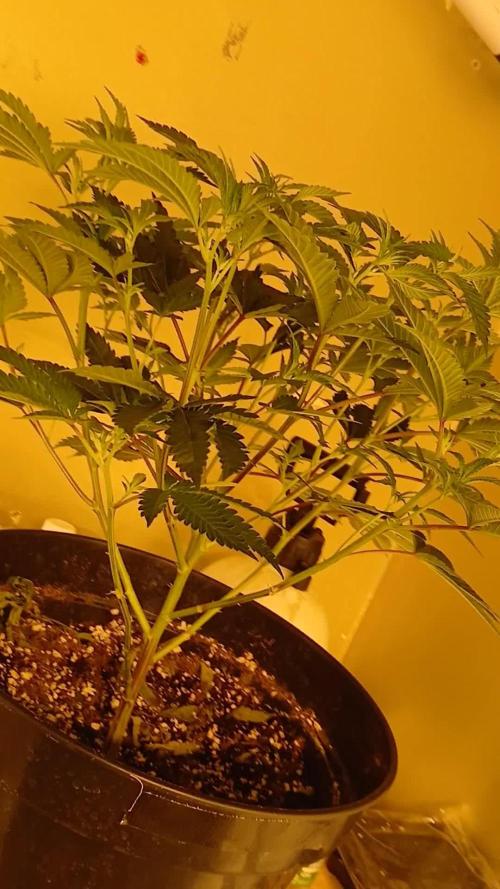
Smashing it as per usual, these girls are just the best to work with, even after 15 years no genetic drift, no watering down, just still goes as strong as she did all those years ago! A truly special cut 💪💪
Likes
1
Share

@Olduffybastard88
Follow
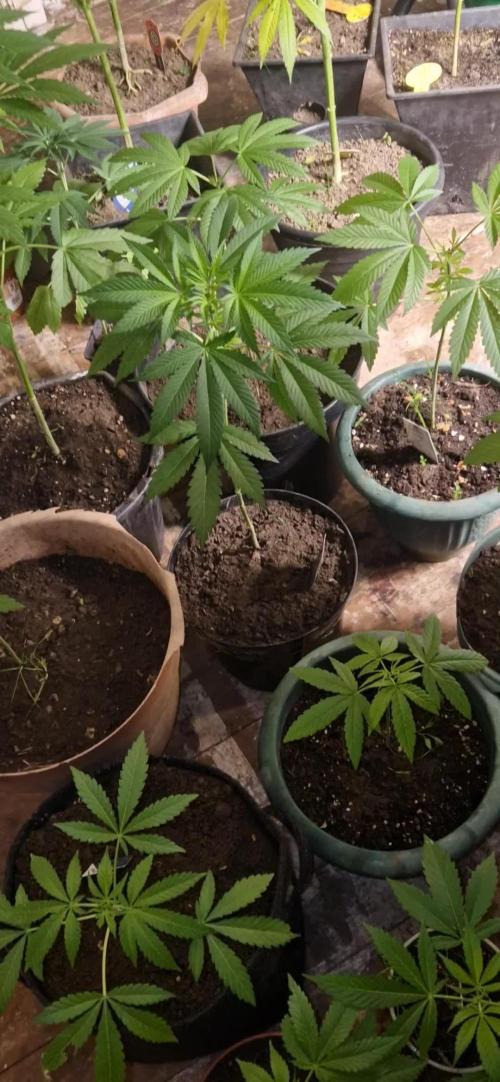
Quick wrong over the plants no room on the tent so leaving these girls in naturally sunlight while I still have it

Likes
9
Share


@Chubbs
Follow
420Fastbuds
FBT2308/Week 4
What up grow fam. Weekly update on these two. Both have recovered beautiful after doing a major defoliation earlier this week. Hard to tell that I took off anything let alone all the major fan leafs. Still keeping the same feeding schedule of nutes every 3rd feeding with just ph'd water and calmag the other two. Since last week I'd say they doubled in size and the one that had some issues in the beginning looks like it fixed itself. All in all Happy Growing.
Likes
10
Share


@Andre3001
Follow
She responded well to the brace, she can hold herself up. Growing strong.
Processing
Likes
12
Share


@Vegetoo420
Follow
Removed two fan leaves and I’ll start LST soon
Here we are ! I start LST and I can’t wait to see her looking the light tomorrow

Likes
19
Share


