


Likes
Comments
Share

@WalachianGrowinDiary
Follow
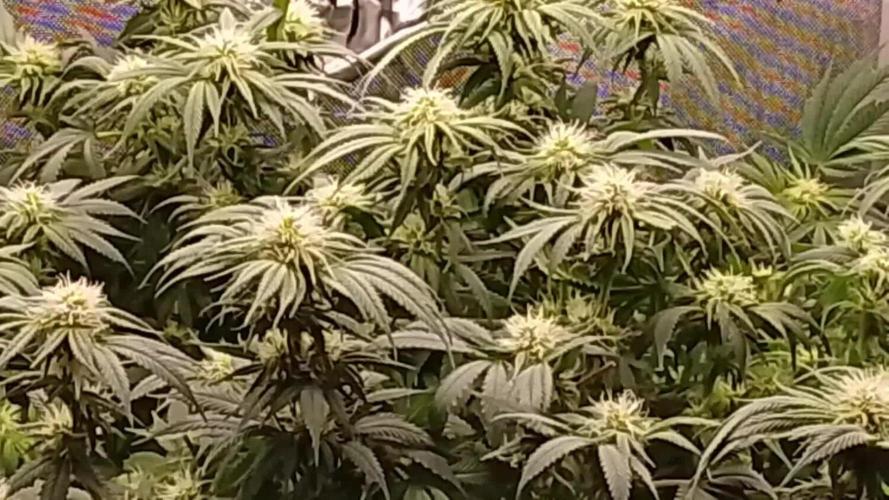
Next defoliation at fourth week of flower. Watering with BioEnhancer 1g/l And compost Tea .

Likes
52
Share


@Cannabeast40
Follow
Finally harvest time arrived 🤗
It’s been a great run, though I had to improve a lot along the way. But as usual there was a way to get things done and finished up😎
After a long heatwave I decided to chop the whole tent, just a bit before I actually wanted to. But I see amber trichomes and heavy buds, so I think it’s safe to chop now, so here we go. 🤩
Can’t wait to taste this after so long watching over it🤤
More details to come.



Likes
4
Share


@FreakyGip5y
Follow
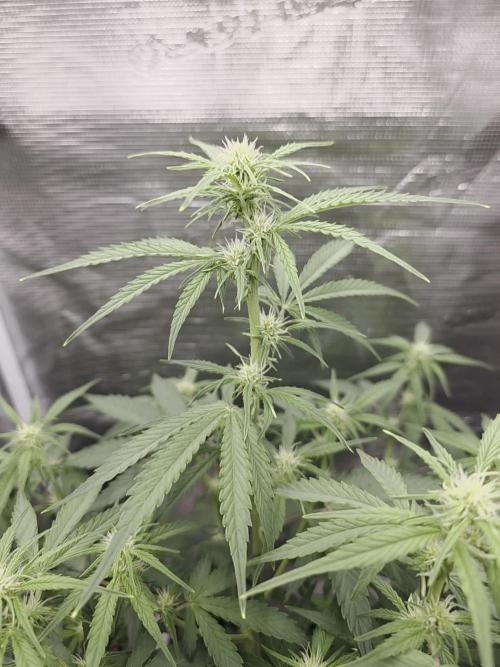
2nd week of flushing, no time to yield and dont kind letting it rest a bit more . As expected this royal cheese auto is not giving much, the terp Profile is there but you really gotta smell the bud to get the terp profile. Will upload the yielding too as soon as i get to do it.
Happy growing, good people 💚
Likes
13
Share


@Phaleg
Follow
Last days were mostly overcast weather and fresher temperatures here. All 3 plants slowed down their growth and they also lost some yellow leaves from the lower part of the plant. I hope this is normal.
Plant 3, the one that suffered the bending trauma last week (see photos for details) is not showing signs of lethal damage yet, fingers crossed for me please! XD
Now let's have a look of the heights they have reached
PLANT 1 = 165cm (65"), +5cm (+2")
PLANT 2 = 160cm (63"), +8cm (+3")
PLANT 3 = 144cm (57"), +9cm (+3,5")



Likes
6
Share


@Gatekeeper265
Follow
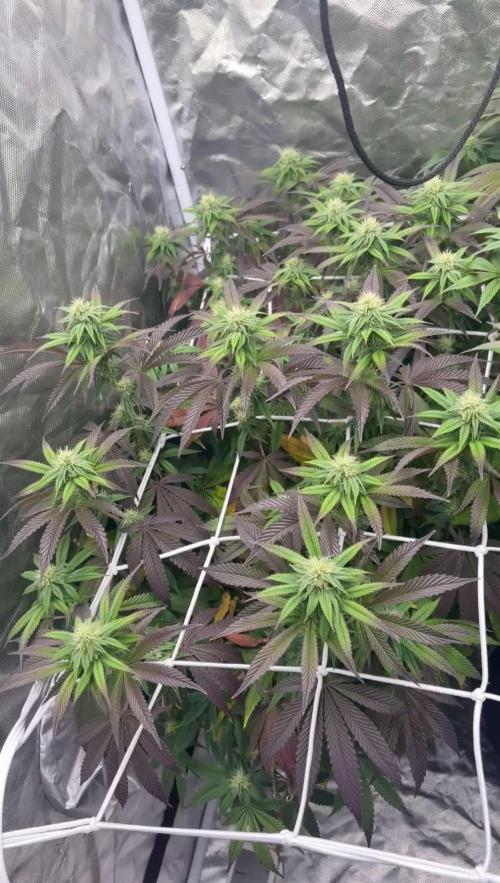
Woah- she has just exploded in size! Had to do a video cos she was so big!
Likes
4
Share


@CannaIGrow
Follow
This plant plus one more started to wilt earlier on in the week, I figured it was probably time to transplant seeing as they had been in the solo cups for 2 weeks. After transplant plants seemed to be happy again. I introduced amino acids this week as well. They are getting the grease spray and drench program


Likes
Comments
Share


@Santaclaus
Follow
Día 40 me ha dado carencias de calcio magnesio y posforo y potasio, me he dado cuenta un poco tarde... Las hojas estaban caídas y se me estaban poniendo amarillas con manchas marrones...les puse calmag y empezaron a buscar la luz ... También me di cuenta, que las Lili que no veía se me ponían las hojas moradas, creía que era exceso de nitrógeno, pero no era posforo y potasio... Así, que lo que no quería hacer, lo he hecho he metido a tope de nutrientes y más... Espero no liarla más...

Processing
Likes
3
Share


@Kushizlez
Follow
Day 56-63 (Day 5F-12F)
(Day 6) Water retention is still a big issue in this soil, even with the reduced amendments, loose compaction and added perlite. Pots just aren’t drying out fast enough and I still need to water in enough to reach the bottom. I wish I had some flood trays for this exact reason so I could bottom water instead.
(Day 9) I’m going to try running 2 liters of water through each pot until I see a good amount of runoff on each plant. Maybe the nutrient content of the soil is just too high. If this doesn’t work, I got nothing.
Plants are drooping like crazy but that’s not surprising as I just flooded them. I’m going to turn on the carbon filter to clear out the humidity a lot faster. Over the next few days I’m going to let the filter suck the life out of this tent until it’s bone dry.
If I start seeing deficiencies arise from my minor flush, I will foliar feed some 1-1-1 kelp and some 3-0-0 calmag. I highly doubt I will see any deficiencies but it doesn’t hurt to plan ahead.
(Day 11) Ladies responded well to that heavy watering which is a little surprising honestly. The pots are still soaked and super heavy but they seem to be happy.
(Day 12) I’m really not seeing any well defined bud sites which is not a good sign at this point. I have never grown under HPS and have never flowered a true 10 week strain so it could just take a little longer in early flower. So far I’m unimpressed


Likes
8
Share


@Mr_nugs_lover_David
Follow
Very good journey to me, she has responded very well to the lst training, providing me beautiful colas, enough for me to have nice clean organic nuggets to smoke. I would definitely would run this Ak420 by seedstockers again, the sweetest phenotype was the number #2 which you can take a look at here in my page!

Processing
Likes
21
Share


@rhodes68
Follow
9/14 Week 9 and she is doing fine
Little vid she is front left
Nuets not changing for now
9/16
Doing well but some white tips are saying we gotta reduce the salts so will be dropping CT nuets 10% and upping PK to 2.5
Extra space is really doing them well
Defoliation again tonight the war on stemmed leaves has begun
9/17
Held a meeting of the minds and decided the best course of action is to flip the light schedule so I can feed them more appropriately, twice a day.
Leaving nuets as they are as this will drop pot EC. Setting the alarm for the AM before lights out at 7:30 and changing the sched to 6AM-6PM summer is done no need for current schedule. Lights be out from 7:30AM to 6AM long I know but should not bother them.
9/19
Lights on girls feed buds look fine
Video enjoy

Likes
223
Share


@HazeyBobby
Follow
It has been a great week of growth and no further accidental toppings - first pistils beginning to show at the end of the week. Tops are looking good, forming shape across the net. Stretched branches are being tucked under one square across every 3-4 days. The net is filling up nicely, with some limited pruning below the canopy of both leaves and growth stems. I'm trying to avoid any defoliation on this grow.
Fertigating with an inflow EC of >1.4 seems to be moving the run-off EC higher - will maintain higher inflow EC until run-off is within acceptable range. Run-off EC Should be within 300 Points of Inflow EC.
Run-off EC still remains below target although now increasing to where it should be. Tracking run-off volume/EC/pH at every fertigation event as I manage the feed EC to monitor what the plant is doing/feeding. Fertigation is maintained now to once a day (at lights on) to maintain the target EC. Light period is during the night time to better maintain heat/humidity conditions during light off period (which happens during daytime).
-----------------------------------------------------------------------------------------------------------------------------------------------------------------------------------------------------------------------
The grow setup includes ;
- Secret Jardin DS120W tent (120cm x 60cm x 180cm) placed inside the bedroom
- Mars Hydro SP250 LED light
- extraction fan - AC Infinity Cloudline T6 (gives me great control over the environment)
- ventilation fans
- aquarium heater for nutrients solution (for winter use only)
- small oil heater (for winter use only)
- small dehumidifier
- 20L Airpots (as final pots) and 3.5L general plastic pots (for seedling stage)
- Canna Coco substrate mixed with 40% perlite
- GHE Flora Trio as base nutrients and various additives
- pH and EC/TDS meters
- 2x Govee Thermo/Hygro meters (one at canopy, the other at the roots level - these allow for external monitoring and recording)
-----------------------------------------------------------------------------------------------------------------------------------------------------------------------------------------------------------------------
Some strain info from Royal Queen Seeds ;
An amazing mix of genetics background - Its true genetics are unknown. Some say OG Kush is a mix of ChemDawg with a Lemon Thai and Pakistani Kush. Others say that it’s just a special cutting of ChemDawg from the early 90s. The most obvious trait of OG Kush is its strong, unique, very dank, slightly citrus aroma, almost like fuel or strong detergent. The flavour of OG Kush is equally as strong and dank, with a long-lasting aftertaste.
Strong mental and physical high - OG Kush is an extremely strong cannabis strain, with most experienced smokers listing it as one of their favourites. The effect is as strong physically as it is mentally. Though its effect is like an Sativa, the strain's genetics are mostly Indica. The effect is as strong and complex as the flavour. OG Kush takes around 8 weeks to flower and on average the yield is 500 grams per plant.
Likes
7
Share

@Mr_nugs_lover_David
Follow
As always it's just a pleasure to grow this sativa dominant strain which definitely reminds me of a great indica with her extremely fruity and tropical sweet terpenes, very happy to have her in my garden and to be able to smoke such a high quality strain once again, hope you guys have enjoyed as much as me!
Likes
13
Share


@Oyziphar
Follow
This week wasn't as bad as last week 😊 Nights were cold 😰, but not to much rain 😿 and a few hours of sun 😍
Temperatures in the greenhouse were medium : during the day 20°C 💀; min temp 3.5°C ; max temp 31,7°C 😤
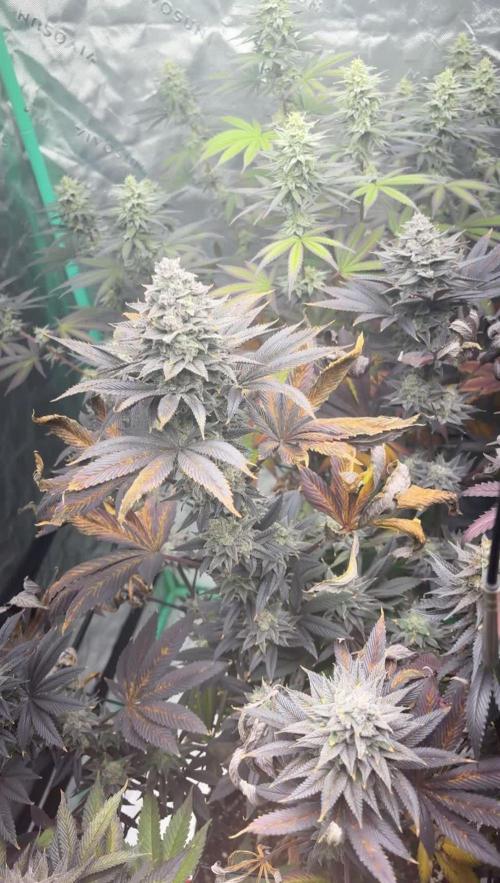
Cookies Gelato has turned completely purple 👍👍👍
I defoliated the plants 😙 and had to remove budrot (especially in the Cookies Gelatoes)😨
I took the prettiest Cookies Gelato outside for a photo session in my garden 😍
Probably these will be the last pictures of the plans, before harvesting ! 👍😄

Likes
8
Share

@TyRun
Follow
Organic stuff in the irrigation system didn’t take long to become a problem. I had to disconnect the whole dripper manifold and flush it properly — even with hydrogen peroxide, because the lines went nasty. From now on, I’m adding enzymes separately by hand.
A new pump arrived too: 40W, 2500 L/h. Things started working much better right away. The drippers are pushing way stronger now. Should’ve stopped being cheap from the start.
Also grabbed a new camera, so I can finally keep an eye on the tent remotely again.
I still couldn’t really get the pH down where I wanted it. Some leaves are getting burnt here and there. I’m keeping the input around 5.2, but honestly it doesn’t help much. Luckily, the buds don’t seem to care too much — they’re still stacking and getting denser.
Spotted a couple of fresh green nanners on #3, the one in the middle. Plucked them off right away, and so far I haven’t found any more.
We’re getting close to the finish now. Autumn is starting from the lower parts, so I cut nitrogen down to around 90 ppm. Did a light cleanup as well — removed some of the burnt fan leaves and opened things up a bit.
I’ve already dimmed the light down to 160W, otherwise I just can’t keep the temperature under control. Summer heat has finally arrived, so I’m basically catching the last train of decent conditions. Looks like I’ll finish just in time.
#3 already looks pretty much ready, only the lowers are still filling in a little. #4 is still throwing some new pistils, but not that actively anymore. #1 and #2 look like the youngest and most active ones, but I’m not really counting them — they’ve got their own little world going on.
So yeah, that’s pretty much it. Around two more weeks and then chop time.
Likes
55
Share


@Ultraviolet
Follow
2nd net is up. Early bud formations are promising. holding up to the extremes pretty well, some leaves taking minor damage, but overall, she is holding up, gave her 1 night at 50F see how she would react, stressful. Not advised as it messes with her metabolism, but I want to see if it triggers any anthocyanin response. Love to see her purp up but no signs yet. Remember, For every molecule of glucose produced during photosynthesis, a plant needs to split six molecules of water. This process provides the hydrogen needed for synthesizing glucose and other organic compounds, while oxygen is released as a byproduct.
Homework.
If Rubisco activity is impaired and it cannot properly function or regenerate its substrate, the plant's leaves are likely to turn a pale green or lime green, a condition known as chlorosis. Essentially, Rubisco activity is highly regulated and susceptible to various environmental and metabolic factors that can cause it to become inhibited, leading to an apparent failure in RuBP regeneration due to a lack of consumption.
Rubisco regeneration is intrinsically linked to nitrogen supply because Rubisco is a major sink for nitrogen in plants, typically accounting for 15% to over 25% of total leaf nitrogen. The regeneration phase itself consumes nitrogen through the synthesis of the Rubisco enzyme and associated proteins (like Rubisco activase), and overall nitrogen status heavily influences the efficiency of RuBP regeneration. RuBisCO is a very large enzyme that constitutes a significant proportion (up to 50%) of leaf soluble protein and requires large investments in nitrogen. Insufficient nitrogen supply limits the plant's ability to produce adequate amounts of RuBisCO, thereby limiting the overall capacity for photosynthesis and carbon fixation. Maintaining the optimal, slightly alkaline pH is crucial for the proper function and regeneration of Rubisco. Deviations in either direction (too high or too low) disrupt the enzyme's structure, activation state, and interaction with its substrates, leading to decreased activity and impaired RuBP regeneration. (Lime/yellowing)
Structural Component: Nitrogen is an essential building block for all proteins, and the sheer abundance of the Rubisco protein makes it the single largest storage of nitrogen in the leaf.
Synthesis and Activity: Adequate nitrogen supply is crucial for the synthesis and maintenance of sufficient Rubisco enzyme and Rubisco activase (Rca), the regulatory protein responsible for maintaining Rubisco's active state. Nitrogen deficiency leads to a decrease in the content and activity of both Rubisco and Rca, which in turn limits the maximum carboxylation rate, Vmax, and the rate of RuBP regeneration Jmax, thus reducing overall photosynthetic capacity.
Nitrogen Storage and Remobilization: Rubisco can act as a temporary nitrogen storage protein, which is degraded to remobilize nitrogen to other growing parts of the plant, especially under conditions of nitrogen deficiency or senescence.
Nitrogen Use Efficiency (NUE): The allocation of nitrogen to Rubisco is a key determinant of a plant's photosynthetic nitrogen use efficiency (PNUE). In high-nitrogen conditions, plants may accumulate a surplus of Rubisco, which may not be fully activated, leading to a lower PNUE. Optimizing the amount and activity of Rubisco relative to nitrogen availability is a target for improving crop NUE.
Photorespiration and Nitrogen Metabolism: Nitrogen metabolism is also linked to the photorespiration pathway (which competes with carboxylation at the Rubisco active site), particularly in the reassimilation of ammonia released during the process.
To increase RuBisCO regeneration, which refers to the process of forming the CO2 acceptor molecule Ribulose-1,5-bisphosphate (RuBP) during photosynthesis, the primary methods involve optimizing the levels and activity of Rubisco activase (Rca) and enhancing the performance of other Calvin-Benson-Bassham (CBB) cycle enzymes.
Biochemical and Environmental Approaches:
Optimize Rubisco Activase (Rca) activity: Rca is a crucial chaperone protein that removes inhibitory sugar phosphates, such as CA1P (2-carboxy-D-arabinitol 1-phosphate), from the Rubisco active site, thus maintaining its catalytic competence.
•Ensure optimal light conditions: Rca is light-activated via the chloroplast's redox status. Adequate light intensity ensures Rca can effectively maintain Rubisco in its active, carbamylated state.
•Maintain optimal temperature: Rca is highly temperature-sensitive and can become unstable at moderately high temperatures (e.g., above 35°C/95F° in many C3 plants), which decreases its ability to activate Rubisco. Maintaining temperatures within the optimal range for a specific plant species is important.
•Optimize Mg2+ concentration: Mg2+ is a key cofactor for both Rubisco carbamylation and Rca activity. In the light, Mg2+ concentration in the chloroplast stroma increases, promoting activation.
•Manage ATP/ADP ratio: Rca activity depends on ATP hydrolysis and is inhibited by ADP. Conditions that maintain a high ATP/ADP ratio in the chloroplast stroma favor Rca activity.
Enhance Calvin-Benson-Bassham (CBB) cycle enzyme activity: The overall rate of RuBP regeneration can be limited by other enzymes in the cycle.
•Increase SBPase activity: Sedoheptulose-1,7-bisphosphatase (SBPase) is a key regulatory enzyme in the regeneration pathway, and increasing its activity can enhance RuBP regeneration and overall photosynthesis.
•Optimize other enzymes: Overexpression of other CBB cycle enzymes such as fructose-1,6-bisphosphate aldolase (FBA) and triose phosphate isomerase (TPI) can also help to balance the metabolic flux and improve RuBP regeneration capacity.
Magnesium ions, Mg2+, are specifically required for Rubisco activation because the cation plays a critical structural and chemical role in forming the active site: A specific lysine residue in the active site must be carbamylated by a CO2 molecule to activate the enzyme. The resulting negatively charged carbamyl group then facilitates the binding of the positively charged Mg2+ion. While other divalent metal ions like Mn2+ can bind to Rubisco, they alter the enzyme's substrate specificity and lead to dramatically lower activity or a higher rate of the non-productive oxygenation reaction compared to Mg2+, making them biologically unfavorable in the context of efficient carbon fixation. The concentration of Mg2+ in the chloroplast stroma naturally increases in the light due to ion potential balancing during ATP synthesis, providing a physiological mechanism to ensure the enzyme is activated when photosynthesis is possible. At the center of the porphyrin ring, nestled within its nitrogen atoms, is a Magnesium ion (Mg2+). This magnesium ion is crucial for the function of chlorophyll, and without it, the pigment cannot effectively capture and transfer light energy.
Mg acts as a cofactor: Mg2+ binds to Rubisco after an activator CO2 molecule, forming a catalytically competent complex (Enzyme-CO2-Mg2+). High light + CO2) increases demand: Under high light (60 DLI is a very high intensity, potentially saturating) and high CO2, the plant's capacity for photosynthesis is high, and thus the demand for activated Rubisco and the necessary Mg2+ cofactor increases. Mg deficiency becomes limiting: If Mg2+ is deficient under these conditions, the higher levels of Rubisco and Rubisco activase produced cannot be fully activated, leading to lower photosynthetic rates and potential photo-oxidative damage.
Optimal range: Studies show that adequate Mg2+ application can enhance Rubisco activation and stabilize net photosynthetic rates under stress conditions, but the required concentration is specific to the experimental setup.
Monitoring is key: The most effective approach in a controlled environment is to monitor the plant's physiological responses e.g., leaf Mg2+ concentration, photosynthetic rate, Rubisco activation state, and adjust the nutrient solution/fertilizer to maintain adequate levels, rather than supplementing a fixed "extra" amount.
In practice, this means ensuring that Mg2+ is not a limiting factor in the plant's standard nutrient solution when pushing the limits with high light and CO2.
Applying Mg2+ through foliar spray is beneficial to Rubisco regeneration, particularly in alleviating the negative effects of magnesium (Mg) deficiency and high-temperature stress (HTS). While Mg can be leached from soil, within the plant it is considered a mobile nutrient, particularly in the phloem. Foliar-applied Mg is quickly absorbed by the leaves and can be translocate to other plant parts, including new growth and sink organs.
Foliar application of: NATURES VERY OWN MgSO4 @ 15.0g L-1 in a spray bottle. For those high-intensity workouts when 1 meal a day is just not enough!
Foliar sprays are often recommended as a rapid rescue measure for existing deficiencies or as a supplement during critical growth stages, when demand for Mg is high. Application in the early morning or late evening can improve absorption and prevent leaf burn. The plant was getting a little limey yellow in the centre. Shortly thereafter, she was back in business, green mostly regenerated. The starting point [of creativity] is curiosity: pondering why the default exists in the first place. We’re driven to question defaults when we experience vuja de, the opposite of déjà vu. Déjà vu occurs when we encounter something new, but it feels as if we’ve seen it before. Vuja de is the reverse—we face something familiar, but we see it with a fresh perspective that enables us to gain new insights into old problems.
Confidence is evidence... nothing more. You are confident because you have driven 10,000 times, you are confident because you have spoken 10,000 times. People think confidence is a feeling, but it's not. If you want more confidence, then you need to create evidence, take more shots, collect more data, build more experiences, take more risks; fail, confidence doesn't come first; it is the reward you get for doing the work. no one else wants to do.