


Likes
Comments
Share

@CannabisDemon
Follow
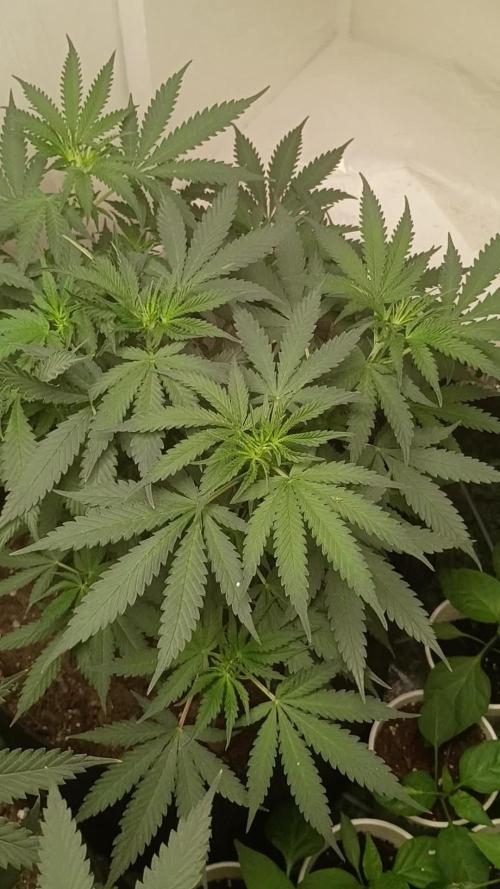
This girl is looking Amazing! I am so excited to see what this plant produces. Does anyone have any tips on what I should do with this plant as far as should I defoliate or "lollipop" it? I've never gone this far before in a grow of photoperiod!?


Likes
28
Share


@Weedman46
Follow
11 days from when I switched to 12/12 ladies got there final lst and lollipoped today I will probably defoliate one more time at day 21 of 12/12 and that's all the training She's getting

Likes
14
Share


@EaRtH
Follow
11.5. - Entering new week with fattening buds and smelly growbox. I'm really excited for the harvest now, however still couple weeks left. Watered 💧
14.5. - Damn, all that high humidity made some damage. To be specific I'm having issues with rust fungi. Next time I have to lower the amount of plants in my box as I don't have enough space and airflow. Watered 💧
17.5. - Watered 💧
11.5. - 17.5.2024

Likes
11
Share


@artems
Follow
During the first week, Permanent Marker by Seed Junky faced challenges due to low humidity, manifesting in stressed, wilted leaves. Notably, the lower leaves began showing a purple hue. Despite these setbacks, given its lineage and Seed Junky's reputation, optimism prevailed. Implementing misting and environmental adjustments, the strain's resilience became evident. This purpling, while unexpected, added intrigue. With vigilant care, I remain hopeful, anticipating both challenges and the strain's promising growth ahead.

Likes
3
Share


@Krautis_IndoorFarm
Follow
📅 Tag 27 im Positronics Seeds Arg Beet! LST-Start & Genesung! 💚🌱
Die ersten Tage nach dem Topping und der Notfall-OP sind überstanden, und die Ladies zeigen, was in ihnen steckt! Das Wachstum im Living Soil mit Wurm Power ist weiterhin fantastisch, und die Pflanzen erholen sich prima.
• ✂️ Topping-Erfolg.Die vor vier Tagen gesetzten Toppings haben ihr Ziel erreicht. Überall sprießen neue Haupttriebe, was die Pflanzen buschiger macht und die Basis für eine hohe Ernte bildet. Die Z-Vally und die OreoZ Milkshake entwickeln sich nun zu schönen, mehrtriebigen Büschen.
•


Likes
7
Share


@Mett420
Follow
Dopo due settimane senza postare nulla siamo all’ultima settimana di prodotti prima del risciacquo. Tutte e 4 le piante sembrano avere un ottima struttura, una buona ramificazione degli apicali e teste compatte e profumate (a super incollose, senza guanti non si possono toccare. Partiremo a breve con il risciacquo con il ghiaccio per incentivare i pigmenti viola a formarsi ed espandersi su tutta la pianta. Ci aggiorniamo a inizio risciacquo!


Likes
107
Share


@Tropicannibis_Todd
Follow
ALRIGHTY THEN GROWMIES 😎
REMINDER I DO 2 UPDATES PER WEEK 👉WEEKLYROUNDUP👈👉MIDWEEKLY UPDATE👈
We just hit week 6 and all is well , have to admit she's just killing it super happy with how shes coming along 😃 .......
I'm still training her with LST and it's looking good 👌 And she's filling out the pot perfectly👌 Lots of tops 👈
Have had no troubles with her what so ever, rain water to be used entire growth
Lights being readjusted and chart updated .........👍
I GOT MULTIPLE DIARIES ON THE GO 😱 please check them out 😎
THANKS FOR TAKING THE TIME TO GO OVER MY DIARIES 👍
👉IF ANYONE IS LOOKING FOR A PLACE TO HANGOUT VIA GROWDIARIES AND TALK GROWING AND JUST CHILL AND WHATEVER .....👈
👉I CREATED GROWDIARIES DISCORD SERVER !!!!!!!!!!!👈
LINK IS 👉
https://discord.gg/zQmTHkbejs
AND SEE HOW IT PLAYS OUT !!!!!!!

Likes
7
Share


@Canna_Enthusiast
Follow
Sadly I’ve discovered some rootrot.
The PH dropped to 5.2 within one day, I measure PH daily and already noticed some deficiency in the old leaves.
I immediately checked the roots and discovered slimey brown gunk on my roots.
Decided to cut all the gunk off and clean and sterilize the resivoir.
Placed the plant in quarantine with very low light to let the plant focus on recovery and root building instead of growth.
This rotting situation will probably set me back for 2/3 weeks but I expect the plant to comeback fine.

Likes
57
Share


@Ultraviolet
Follow
Views expressed are my own. All opinions are my own. The opinions expressed here belong solely to me and do not reflect the views of Growdiaries or Grandcru Genetics.
The cannabis strain Grape Guava can be a purple strain, depending on its specific phenotype and genetic makeup. While not all phenotypes of Grape Guava are purple, some variations, such as the Zatix Grape Guava, are noted for their striking purple appearance due to the genetic expression of anthocyanin pigments.
Grand Cru Genetics is a cannabis seed bank that emerged in 2018 from a group of breeders in Madrid to provide a satisfactory experience to all cannabis users.
"If we do things, we do them well. Due to our experience in the sector and our taste for excellence, we know high quality and we seek it in everything we propose and do."
"We have a “cultivate without giving up” philosophy that we apply to everything we do. We do not give up, we are friends of change, and we adapt as necessary in a still restricted sector."
"We speak relaxed because we know how to relax. We are not intense or preachy; we accept everyone as they are, and we understand that farming is not for everyone. But for those who do, we are here to accompany you. We like to do it and tell it. We are experts in the field because we are the first to do it. We speak from experience and connect with others because we share the passion for cultivation."
"Cannabis has the ability to show us a world of possibilities. When you cultivate and live its growth process, you enjoy a path full of emotions and not just the final destination. At Grand Cru we find beauty in small things. We are attentive, observant, detail-oriented and aware of everyday things, and we savor them without rushing."
In a garden of green, Grape Guava gleams,
With its fruity aroma, enchanting dreams.
Clusters of grapes, guava's sweetness ignite,
A strain so divine, in purple and white.
Euphoria whispers, a lush fruity haze,
Grape Guava's embrace, a tranquil daze.
Off and away.@1400ppm. The increased CO2 allows plants to thrive at higher temperatures, which in turn necessitates higher humidity to maintain the ideal VPD for healthy growth and transpiration. 80F -5F = 75F LST with 70% RH = 0.72 kPa. Higher temperatures and humidity promote rapid growth, nutrient uptake, and photosynthesis while maintaining a lower stress level. Temperature influences the rate of enzymatic reactions involved in aerobic respiration. Enzymes, such as those involved in glycolysis, the Krebs cycle, and the electron transport chain, work most efficiently at an optimal temperature range. In low temperatures, enzymatic activity will slow down, thus reducing the rate of aerobic respiration. In high temperatures, enzymes can become denatured, thus impairing their function and stopping the process of aerobic respiration. Glucose is the primary fuel for aerobic respiration. The rate of aerobic respiration increases with the availability of glucose, as it is the starting point for glycolysis. If glucose levels are low, cells may rely on alternative energy sources such as fatty acids or amino acids , but these processes may yield less ATP or be less efficient. To determine this effect, carbon dioxide volume was measured (as carbon dioxide is an output of aerobic respiration)
18/6 with the 6 being IR. The near infrared (IR-a) borders around 700nm up to 1400nm @ photon par flux density of 1.8 instead of darkness, keeping temps overnight a neat 77F-80F.
I think of my tent as a lung. What goes in must come out. When the rate of air going out exceeds the amount of air coming in, it creates a negative pressure. Tent concaves (bends in). If set up correctly, the RH will begin to drop slowly to the desired level I set, and the extraction turns off when it reaches the desired RH. The plant, as it performs cellular respiration, will always release more water into the air; therefore, the RH% of the tent overnight will increase, as long as oxidative phosphorylation is occurring. As soon as the RH% creeps back up to 55%, the extraction turns back on, over and over. This creates a strong pressure differential, which will work wonders with mass flow. Replicating high and low-pressure fronts in nature. Critical for oxygen diffusion at the critical time of peak cellular respiratory function..
Moisture will not transfer from a saturated atmosphere to another if that air is already at or above its saturation point, meaning the air can't hold any more water vapor. Once I understood that water is produced as a by product during cellular respiration, specifically at the very end of the electron transport chain (ETC) where electrons are finally transferred to molecular oxygen, the higher the RH of the air, the more resistance there is for more moisture to be added to that environment, and effects the ease with which it does so. But none of that water comes from the pot; it's pulled from the air. If you run high daytime RH, your medium/pot is 100% reliant on transpirational root pull to move water. ZERO evaporation happens across the atmosphere if the tent air has high RH%, the medium cannot release its water through evaporation. Once a canopy develops, light no longer slowly wicks and evaporates from the topsoil. The Soil-Plant-Atmosphere Continuum (SPAC) describes the continuous pathway and process of water movement, driven by a gradient in water potential, from the soil, through the plant's roots, stem, and leaves, and finally evaporating into the atmosphere through transpiration. There is evaporation, there is transpiration, and then there is evapotranspiration; Evapotranspiration (ET) is the combined total of two processes: evaporation (water lost directly from soil and surface water into the atmosphere) and transpiration (water released from plants to the atmosphere through their leaves). Evapotranspiration represents the total amount of water that moves from the medium into the air. There is no such thing as a medium with too much water, only a medium that retains too much for too long.
The water must always flow efficiently from one atmosphere(Medium) to another(Air) in a timely manner. Moisture is a critical factor for bacterial growth and decay. Dictating how long it's allowed to sit in any one location for any given period is a key preferred control. To ensure a net reduction in a bacterial population, the rate of removal (ET) must exceed the rate of bacterial growth (decay rate), which is often modeled as a growth rate for the specific bacterium under the given conditions. By optimizing daytime VPD, we also optimize conditions for bacterial growth to explode exponentially above 77°F.. If water is allowed to sit in a medium without an escape within a timeframe, nothing good will happen. IF High RH is maintained overnight as well as during the day, placing 100% of water movement at the behest of daytime transpiration, roots can only pull where they can reach, and if soil is compressed above a certain point, moisture will become trapped in a medium with no way of moving day or night. This will begin the countdown for decay to take hold. When water stagnates in a medium, it loses oxygen, creating anaerobic conditions that foster the growth of harmful microorganisms like bacteria and fungi, which can produce toxins and disease vectors.
Thigmomorphogenesis, the process by which plants respond to mechanical stimuli like touch by altering their growth and development, results in significant morphological changes to improve survival against mechanical perturbations. This complex response involves sensing touch and initiating physiological and genetic responses, leading to changes in form and structure over days or weeks. The process is triggered by physical forces such as wind, rain, or touch. Plants adapt to these stimuli by changing their shape and structure, which may include slower growth, thickened stems, or altered leaf development. Plants possess sophisticated mechanisms to detect even subtle mechanical stimuli and initiate responses. A variety of molecules, including calcium ions, jasmonates, ethylene, and nitric oxide, are involved in signaling these mechanical inputs. Touch can induce the expression of genes that encode proteins for calcium sensing, cell wall modification, and defense mechanisms. A plant exposed to constant wind may become shorter and sturdier. A plant that is touched frequently might grow more slowly to conserve energy and develop thicker cell walls. These changes increase a plant's resilience and ability to survive in harsh environments.
Let's get Thiggy with it.
Likes
16
Share


@Samsemilla
Follow
Die zweite Blütewoche startet für die Ladies mit Futter in Form von jeweils 5ml Biotabs Bio PK 5-8.
Ich starte erstmal mit der halben Dosis und beobachte wie die Pflanzen sich verhalten.
Ich habe das Bio PK in weniger Wasser (ca 300ml / 5ml / je Pflanze) als empfohlen gelöst, um die Untersetzer nicht zu fluten.
Ich nehme an bei 4 Liter Nährstofflösung pro Topf würden sonst die Wannen überlaufen.
Außerdem habe ich wieder einige Blätter entfernt.
Einige Blätter haben einen relativ speziellen Charakter.
Einige Tage nach dem letzten Blattschnitt habe ich das Netz eingehängt - besser spät als nie.
Bei der Gelegenheit habe ich auch wieder einige Blätter entfernt.
Um zu schauen was mich eventuell erwarten könnte, habe ich bei meinem Apotheker des Vertrauens ein bisschen GMO zkittlez bestellt.
Etwas speziell, gefällt mir aber sehr gut. 🙏🏻💪🏻
Die Ladies haben die zweite Hälfte Bio PK bekommen.
Die Lampe läuft auf 150W Leistung.


Likes
25
Share

@ThatsmyGrow
Follow
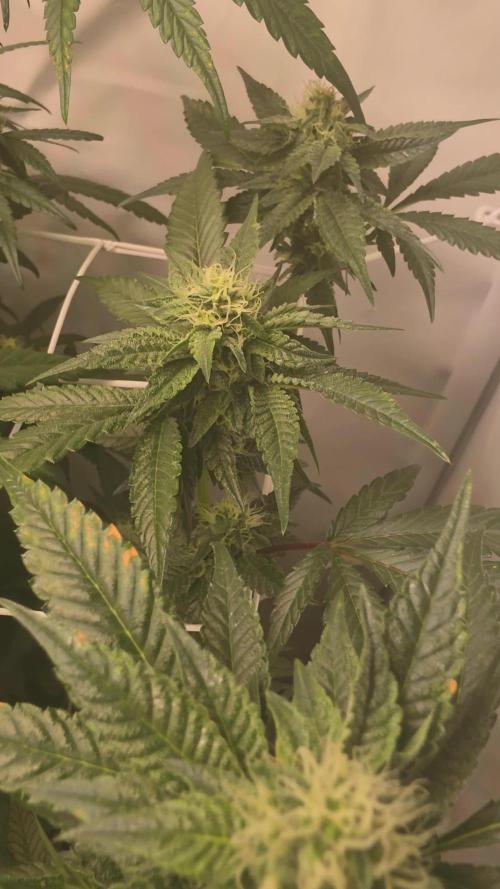
Another week has passed, and this time there really wasn’t much to do besides keeping up with the feeding.
At this stage, I’m mostly just watching the flowers develop and seeing how much more frost and weight they put on from week to week. The plants are looking beautiful, so for now I’m enjoying the quiet phase and simply watching them do their thing.
Sometimes there’s nothing better than just sitting back and enjoying the progress of your plants.
Everything is looking good, and I’m really curious to see how these flowers develop over the next few weeks.
Likes
Comments
Share


@DmbTexasRanger
Follow
Going to run my light close to the dominant plant even if I burn it.


Likes
Comments
Share


@BeHappyNtoke
Follow
Last week of pre flower girls are doing great can’t believe they’re clones

Likes
Comments
Share


@DaddyPrime2
Follow
8/21/24 gave her some cal mag from the uprising foundation. 5 ml total for the 5 gal pot. 3 tsp of grow and 2 tsp of bloom. slowly transitioning from grow to bloom over the course of 4 weeks. did some light defoliation and some lollipopping. shes not too bushy in the sense of leafy. her fan leaves have super long petioles.
8/26 she's grown four inches so far this week. about an inch a day. wild.


Likes
16
Share


@BrainStorm22
Follow
Semana 2
Ec : 1600
Ph : 6.3-6.4
Se descartaron 2 plantas por ser machos las demas lucen espectacular con muy buen color solo queda esperar y ver como se forma lo que seran las flores de estas bellas plantas🏔️

Likes
24
Share


@OGOZHigh
Follow
So Buddy‘s
Den Ladys geht es hervorragend. Sie machen ordentlich Fortschritte.
Wetter spielt wieder Perfekt mit.
Updates folgen ✌️
Likes
11
Share


@Ieiogrow94
Follow
Eccoci qui...
Tutto va per il meglio, questa settimana ho eseguito Lollipopping e Defoliation per far si che le cime principali sprigionino al meglio il loro vigore.
Siamo verso la fine del progetto ora bisogna solo aspettare la fine...
Grazie a tutti per il supporto🔥🌲❤️
Likes
7
Share


@gablmo
Follow
Finally flower. They are 4 feet now. What am I going to do? I don't want them to burn into the light.
