Likes
Comments
Share
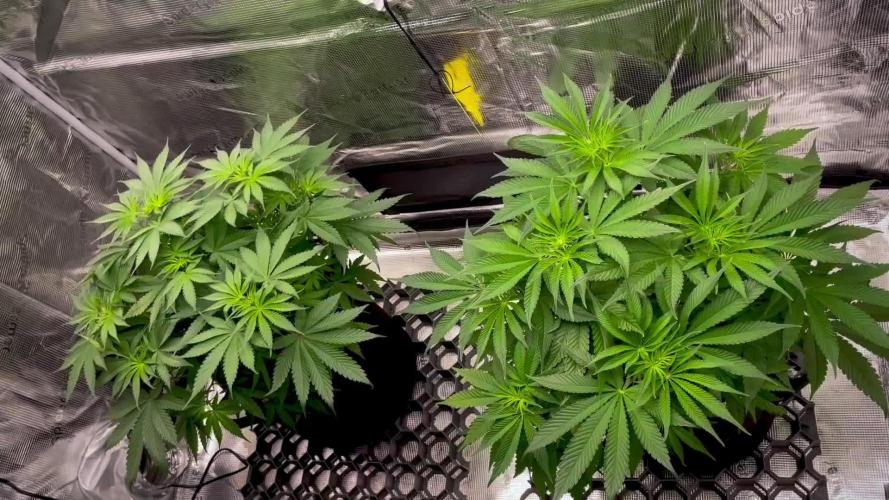
Both plants look very healthy and continue to grow steadily. The current outdoor weather is ideal for the vegetative stage. The outdoor plant is developing very symmetrically and shows excellent growth characteristics. The indoor plant is also doing very well. It has been defoliated and trained using the SCROG method, both of which it has handled exceptionally well.
Processing
Likes
15
Share
@Deli_Weed
Follow
Va muy bien hasta el momento, engordando cada dรญa, eh tenido que amarrar algunas ramas al tronco principal porque empezaban a caer con el peso, eso es buena seรฑal ๐Ÿ’ช๐Ÿป๐ŸŒฒ
Likes
24
Share
@Kirsten
Follow
29.3.25: This week has flown by. Everything is looking good. I've been watering alternatively with Bud Explosion PK booster and Sea K(elp) by Greenleaf nutrients. Also, plain water I'm between feeding. I watered yesterday and had run off from 2 pots, so I will wait for them to dry out sufficiently before watering again. Trying to mitigate the risks of mildew and / or mould due to too much water / humidity. 31.3.25: I cleaned out the tent and disinfected it again. Had a bit of runoff, which had left a bit of residue on the floor. Today, I took all the photos and videos whilst cleaning the tent. The pots had sufficiently dried, so I will water with the Greenleaf nutrients. I watered with dechlorinated water PH'd between 6.2-6.4. 6.5 litres contained the following nutrients: โ™ก 1/4 Tsp Mega Crop Part A. โ™ก 1/2 Tsp Bud Explosion PK booster โ™ก 1/4 Tsp Sea K(elp). (All by Greenleaf nutrients). Thanks for hanging out ๐Ÿƒ โœŒ๏ธ ๐Ÿ’š ๐Ÿ™‚
Likes
17
Share
@Dunk_Junk
Follow
Wow she's turned on the trichomes this week!!!!!!! Very frosty! Almost white.
Likes
12
Share
@Siriuz
Follow
She is loaded right now very heavy and potent yielding plant oh yeah thanks 420 fastbuds I will be getting more of your seeds you rock Guys im so happy I boughy fastbuds seeds It was great to see this second seed pop an amazing grapefruit we did fiming and she eneded up with many colas and many flowers plus super frosty and smelly Also turned purple all buds which to us was a surprise and did not expect that Since last grapefruit was different than this Thanks a lot for all your support Imagine if we had a full spectrum light I think we would be growing trees Honestly we have more than we expected COMING from an Indoor thats nearly located in a tropical climate of 30/33 degrees most of the year and with that said raising temps very hot sometimes very humid thats close to the equator So we have to use A/C all times and maintain humidity levels by spraying all walls to keep it around 45/60% while ac is on remember droping temps so we have to make it as comfortable as possible and that its not easy in this side of the world OR either you need a lot of money which I dont have yet to build a super setup and a separate ROOM with all of that temp and great humidity lvls so yeah we do what we can with our budget We live somwhere where things are pretty much fckd up but it is what it is Hey at least we are safe because it is illegal lol so yeah brothers we have hard times And still with all risk we here doing our best Showing all support Showing im greatful TO find a space like this where We all can share like and Comment And help each other grow better everyday Blessings to you all Keep EM buds coming Happy growing
Likes
20
Share
@Robin87
Follow
And the first week of flower is amongst us, Iโ€™m not sure if itโ€™s the fast bud genetics, the living soil, or a mixture of both, but I think the videos say it all, the deep green throughout, day 41 and just look๐Ÿ˜. Everythingโ€™s been sitting nicely 24/7 Humidity 49~56%, temps 23~26c This week they all received there last top feed, along with a slight bit of defoliation, some massive fan leaves! slightly over watered as you will notice in one of the videos, but I wonโ€™t be surprised if theyโ€™ve grew another few inches over night.
Likes
19
Share
Two of the three have been cut. The first one was just a stubby little lady that had just under an ounce of dried flower. The second one was taken last night and her main cola weight 5 wet and was just covered in oily terpenes. This last one while behind the others is by FAR the frostiest and I canโ€™t wait for her to ripen. Therefore I am not calling it a harvest until the trichomes become perfect as the last one did.
Likes
25
Share
FAT BANANA ๐ŸŒ AUTO / RQS WEEK #7 OVERALL WEEK #2 FLOWER This week no issues to report she's doing really well so far buds are looking good and growing at a high rate. Stay Growing!! Thank you for stopping by and taking a look!! It's much appreciated!! Thank you ROYAL QUEEN SEEDS!! FAT BANANA ๐ŸŒ AUTO / RQS
Likes
Comments
Share
Likes
47
Share
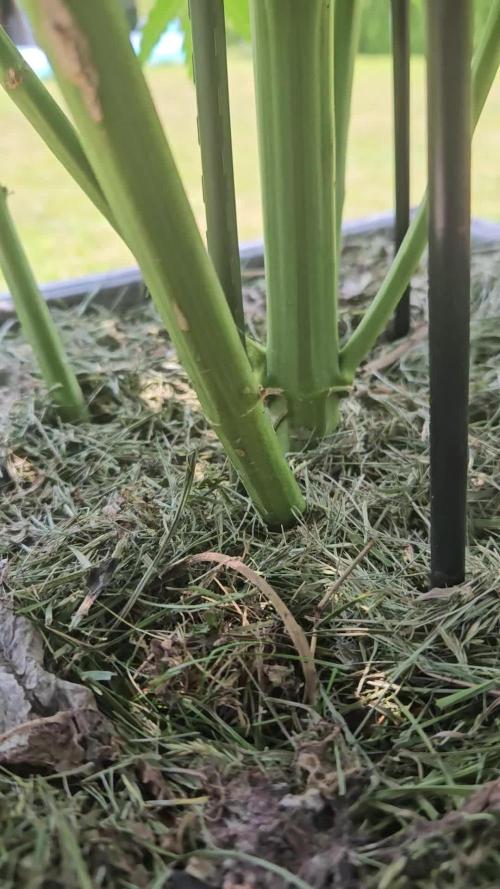
What's in the soil? What's not in the soil would be an easier question to answer. 16-18 DLI @ the minute. +++ as she grows. Probably not recommended, but to get to where it needs to be, I need to start now. Vegetative @1400ppm 0.8โ€“1.2 kPa 80โ€“86ยฐF (26.7โ€“30ยฐC) 65โ€“75%, LST Day 10, Fim'd Day 11 CEC (Cation Exchange Capacity): This is a measure of a soil's ability to hold and exchange positively charged nutrients, like calcium, magnesium, and potassium. Soils with high CEC (more clay and organic matter) have more negative charges that attract and hold these essential nutrients, preventing them from leaching away. Biochar is highly efficient at increasing cation exchange capacity (CEC) compared to many other amendments. Biochar's high CEC potential stems from its negatively charged functional groups, and studies show it can increase CEC by over 90%. Amendments like compost also increase CEC but are often more prone to rapid biodegradation, which can make biochar's effect more long-lasting. biochar acts as a long-lasting Cation Exchange Capacity (CEC) enhancer because its porous, carbon-rich structure provides sites for nutrients to bind to, effectively improving nutrient retention in soil without relying on the short-term benefits of fresh organic matter like compost or manure. Biochar's stability means these benefits last much longer than those from traditional organic amendments, making it a sustainable way to improve soil fertility, water retention, and structure over time. Needs to be charged first, similar to Coco, or it will immobilize cations, but at a much higher ratio. a high cation exchange capacity (CEC) results in a high buffer protection, meaning the soil can better resist changes in pH and nutrient availability. This is because a high CEC soil has more negatively charged sites to hold onto essential positively charged nutrients, like calcium and magnesium, and to buffer against acid ions, such as hydrogen. EC (Electrical Conductivity): This measures the amount of soluble salts in the soil. High EC levels indicate a high concentration of dissolved salts and can be a sign of potential salinity issues that can harm plants. The stored cations associated with a medium's cation exchange capacity (CEC) do not directly contribute to a real-time electrical conductivity (EC) reading. A real-time EC measurement reflects only the concentration of free, dissolved salt ions in the water solution within the medium. 98% of a plants nutrients comes directly from the water solution. 2% come directly from soil particles. CEC is a mediums storage capacity for cations. These stored cations do not contribute to a mediums EC directly. Electrical Conductivity (EC) does not measure salt ions adsorbed (stored) onto a Cation Exchange Capacity (CEC) site, as EC measures the conductivity of ions in solution within a soil or water sample, not those held on soil particles. A medium releases stored cations to water by ion exchange, where a new, more desirable ion from the water solution temporarily displaces the stored cation from the medium's surface, a process also seen in plants absorbing nutrients via mass flow. For example, in water softeners, sodium ions are released from resin beads to bond with the medium's surface, displacing calcium and magnesium ions which then enter the water. This same principle applies when plants take up nutrients from the soil solution: the cations are released from the soil particles into the water in response to a concentration equilibrium, and then moved to the root surface via mass flow. An example of ion exchange within the context of Cation Exchange Capacity (CEC) is a soil particle with a negative charge attracting and holding positively charged nutrient ions, like potassium (K+) or calcium (Ca2+), and then exchanging them for other positive ions present in the soil solution. For instance, a negatively charged clay particle in soil can hold a K+ ion and later release it to a plant's roots when a different cation, such as calcium (Ca2+), is abundant and replaces the potassium. This process of holding and swapping positively charged ions is fundamental to soil fertility, as it provides plants with essential nutrients. Negative charges on soil particles: Soil particles, particularly clay and organic matter, have negatively charged surfaces due to their chemical structure. Attraction of cations: These negative charges attract and hold positively charged ions, or cations, such as: Potassium (K+) Calcium (Ca2+) Magnesium (Mg2+) Sodium (Na+) Ammonium (NH4+) Plant roots excrete hydrogen ions (H+) through the action of proton pumps embedded in the root cell membranes, which use ATP (energy) to actively transport H+ ions from inside the root cell into the surrounding soil. This process lowers the pH of the soil, which helps to make certain mineral nutrients, such as iron, more available for uptake by the plant. Mechanism of H+ Excretion Proton Pumps: Root cells contain specialized proteins called proton pumps (H+-ATPases) in their cell membranes. Active Transport: These proton pumps use energy from ATP to actively move H+ ions from the cytoplasm of the root cell into the soil, against their concentration gradient. Role in pH Regulation: This active excretion of H+ is a major way plants regulate their internal cytoplasmic pH. Nutrient Availability: The resulting decrease in soil pH makes certain essential mineral nutrients, like iron, more soluble and available for the root cells to absorb. Ion Exchange: The H+ ions also displace positively charged mineral cations from the soil particles, making them available for uptake. Iron Uptake: In response to iron deficiency stress, plants enhance H+ excretion and reductant release to lower the pH and convert Fe3+ to the more available form Fe2+. The altered pH can influence the activity and composition of beneficial microbes in the soil. The H+ gradient created by the proton pumps can also be used for other vital cell functions, such as ATP synthesis and the transport of other solutes. The hydrogen ions (H+) excreted during photosynthesis come from the splitting of water molecules. This splitting, called photolysis, occurs in Photosystem II to replace the electrons used in the light-dependent reactions. The released hydrogen ions are then pumped into the thylakoid lumen, creating a proton gradient that drives ATP synthesis. Plants release hydrogen ions (H+) from their roots into the soil, a process that occurs in conjunction with nutrient uptake and photosynthesis. These H+ ions compete with mineral cations for the negatively charged sites on soil particles, a phenomenon known as cation exchange. By displacing beneficial mineral cations, the excreted H+ ions make these nutrients available for the plant to absorb, which can also lower the soil pH and indirectly affect its Cation Exchange Capacity (CEC) by altering the pool of exchangeable cations in the soil solution. Plants use proton (H+) exudation, driven by the H+-ATPase enzyme, to release H+ ions into the soil, creating a more acidic rhizosphere, which enhances nutrient availability and influences nutrient cycling processes. This acidification mobilizes insoluble nutrients like iron (Fe) by breaking them down, while also facilitating the activity of beneficial microbes involved in the nutrient cycle. Therefore, H+ exudation is a critical plant strategy for nutrient acquisition and management, allowing plants to improve their access to essential elements from the soil. A lack of water splitting during photosynthesis can affect iron uptake because the resulting energy imbalance disrupts the plant's ability to produce ATP and NADPH, which are crucial for overall photosynthetic energy conversion and can trigger a deficiency in iron homeostasis pathways. While photosynthesis uses hydrogen ions produced from water splitting for the Calvin cycle, not to create a hydrogen gas deficiency, the overall process is sensitive to nutrient availability, and iron is essential for chloroplast function. In photosynthesis, water is split to provide electrons to replace those lost in Photosystem II, which is triggered by light absorption. These electrons then travel along a transport chain to generate ATP (energy currency) and NADPH (reducing power). Carbon Fixation: The generated ATP and NADPH are then used to convert carbon dioxide into carbohydrates in the Calvin cycle. Impaired water splitting (via water in or out) breaks the chain reaction of photosynthesis. This leads to an imbalance in ATP and NADPH levels, which disrupts the Calvin cycle and overall energy production in the plant. Plants require a sufficient supply of essential mineral elements like iron for photosynthesis. Iron is vital for chlorophyll formation and plays a crucial role in electron transport within the chloroplasts. The complex relationship between nutrient status and photosynthesis is evident when iron deficiency can be reverted by depleting other micronutrients like manganese. This highlights how nutrient homeostasis influences photosynthetic function. A lack of adequate energy and reducing power from photosynthesis, which is directly linked to water splitting, can trigger complex adaptive responses in the plant's iron uptake and distribution systems. Plants possess receptors called transceptors that can directly detect specific nutrient concentrations in the soil or within the plant's tissues. These receptors trigger signaling pathways, sometimes involving calcium influx or changes in protein complex activity, that then influence nutrient uptake by the roots. Plants use this information to make long-term adjustments, such as Increasing root biomass to explore more soil for nutrients. Modifying metabolic pathways to make better use of available resources. Adjusting the rate of nutrient transport into the roots. That's why I keep a high EC. Abundance resonates Abundance.
Likes
13
Share
@russrahl
Follow
Everything went good this week, having trouble keeping the humidity up but I got some plans to rectify that soon. Lol roots are all down into the buckets now except the runt of the litter in the back corner. But we are only a week in so itโ€™s still early for her. Just been feeding plain water phโ€™d at 5.8 with some UC Roots added. Been scooping a cup of water daily from there bucket and pooring it over the rock wool and pebbles back into the bucket just to keep things wet and the roots moving. They are sitting around 5000 lux and seem to be enjoying it. Iโ€™m just using a phone app with a paper diffuser to test it but it seems to be pretty good and didnโ€™t cost much. Well thatโ€™s about it for this week, be back again next week, Cheers๐Ÿ’จ
Likes
97
Share
@AsNoriu
Follow
Day 106. Trim jaiiiiiilllllllll !!!! First done, think it could reach my record 240. Insane quality. 4 rows of solid buds hanging .... Next one .... Both finally finished and honestly, that's my plants to be proud of !!! Day 114. All is done, no doubts its my best grow. Happy Growing !!!
Likes
129
Share
@StarLorr
Follow
Welcome to my Cherry๐Ÿ’Cola diary. In this Diary: Seeds: [420 Fast Buds]from my growmie Tropicannibis_Todd ๐Ÿ‘Š๐Ÿป๐Ÿ˜Ž Media: Pro~Mix HP Open Top Grow Bag, Connect. Nutrients: Green Planet Nutrients, 2 Part Dual Fuel starter kit. RealGrowers: Recharge. Diablo nutrients: Ripping. Feeding : Wed 13Mar: 3 1/3L Nutes/Recharge pH'd 6.5 Sat 16Mar: 2.6L Monster K,Blaster pH'd 6.5 ___________________________ __________________________ She's so gorgeously filled with buds!๐Ÿ˜‹ ___________________________ Thanks for stopping by, likes and comments are appreciated.๐Ÿ‘Š๐Ÿป๐Ÿ˜Ž Keep on growin! Keep on tokin!!! ๐Ÿ˜™๐Ÿ’จ๐Ÿ’จ๐Ÿ’จ๐Ÿ’จ๐Ÿ’จ
Likes
1
Share
Im very happy with this grow coming so far without any issues, last grow Iโ€™ve had a huge powdery mildew problem
Likes
7
Share
๐ŸŒธ Week 4 โ€“ Gorilla Cookies Auto Pheno Hunt Week 4 has officially started and all 6 phenos have entered flowering ๐Ÿ”ฅ๐ŸŒธ Really happy to see every plant transitioning into bloom now. From this point on, things should get much more interesting because the differences between the phenos are becoming impossible to ignore. ๐Ÿ“ˆ Current observations: Several phenos are stretching hard since flowering started Some plants are already reaching heights of around 40 cm Growth patterns are becoming much clearer between each phenotype On the taller phenos you can already see that the first side branches are developing almost like additional main colas ๐Ÿ‘€ ๐Ÿ’ง Feeding & training: This week the plants received their first bloom nutrients following the Master Recipe. I also continued removing selected large fan leaves that were shading potential flower sites to improve light penetration and help lower branches develop more evenly. ๐Ÿ“Š Current environment: Temperature stable around 26ยฐC Humidity remaining between 63โ€“65% VPD holding around 1.3 kPa Light intensity unchanged Now the exciting phase begins โ€” the next few weeks will probably be the most important ones to identify the strongest and most beautiful phenos in the hunt ๐Ÿ‘€๐Ÿ”ฅ ๐Ÿ’ฌ Which pheno do you think will dominate once flower production really kicks in?
Likes
5
Share
Likes
9
Share
In a week, I give compost tea, and fermented plant juice once each ^^ Hope you guys have a wonderful day today ^^v *** Please Like, comment & share *** Highly appreciated -----/-----<@
Likes
10
Share
Smell is unreal, sweet candy shop sorta scente, buds are extremely hard so far like steel ๐Ÿคž.... the tall scruffy thing in baxk, hasn't had the optimum PAR as you can see also, it was the only one in the gold label special mix (pre fertilised) media...
Likes
6
Share
Her last week of flowerโ€ฆshe has that sweet slightly skunky smell.
Likes
81
Share
_____๐Ÿ“… Week 6 | ๐Ÿ“… Day 36 - 42 | 03.05 - 09.06 ______ 09.06.25 | Day 42 ๐ŸŒž๐Ÿ’ง ๐Ÿ”ธWhat can I say? The little guy has developed splendidly, looks super healthy and has a beautiful strong green color. A bit small for my taste, but next week the ladies will be sent into bloom :) This week I watered them 2 x with 2000 ml ๐Ÿ”ธ I'm not taking part in any contests with the mems and they are from the internet _________________________________________________________________________________________ current conditions: ๐ŸŒก๏ธ๐Ÿ”†= 24-25ยฐ ๐ŸŒก๏ธ๐ŸŒœ= 18-19ยฐ ๐Ÿ’จ Hum. = 65% ๐Ÿ”ฆ PPFD = 500 umol 18/6 ๐Ÿ”ฆโŒšDLI = ~ 32 _________________________________________________________________________________________ Equipment to use: ๐Ÿ’ก Light: 2 x Sanlight Evo 4- 120 on 50% โ›บ 120 x120 x 180 ๐Ÿฏ Pots: 18 liter pot ๐ŸŒฑ Soil: Bio-Bizz light mix ๐Ÿ’Š Nutrients: Advanced Nutrients ๐Ÿ’ง Water: Tap Water 0,5 EC