


Likes
Comments
Share
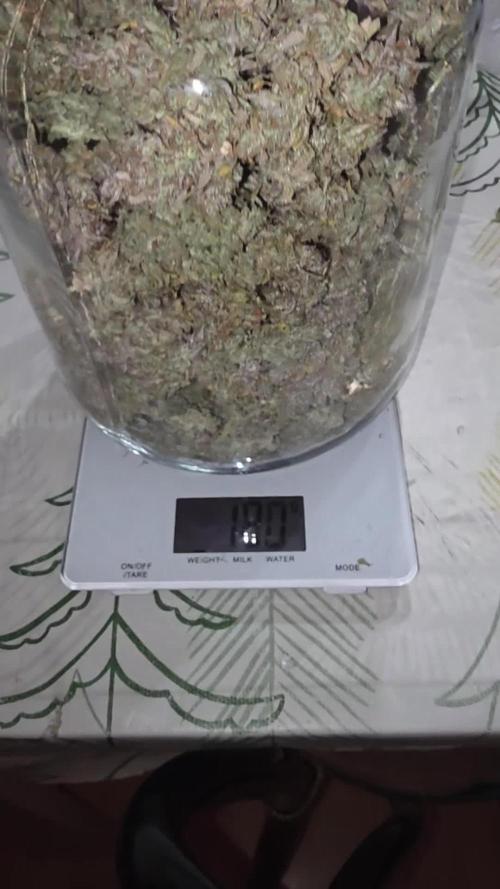
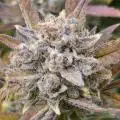

Processing
Likes
12
Share


@Lennys_Laboratory
Follow
Feed Started With Tap Water Left Overnight For Chlorine/Chlorides To Evaporate.
Next Day.
Starting EC of our water is 0.10-0.15.
I added 1ML of Regenaroot Per Litre. Then Used Canna Terra Flores Until EC measured 0.5.
I then used the mighty bloom enhancer by the ml until my EC measured 0.9
Always Give A Little Sprinkle Of Great White Into The Mix
Finally i PH'd the mix to 6.2. Made sure the feed was of adequate temp (21c) and continued to feed.
😎


Likes
46
Share


@GermanGrow182
Follow
Die feminisierten stehen kurz vor Beginn der Blüte und wachsen immer langsamer in die breite.
Critical Auto ist fast fertig. Noch ein paar Tage (gutes Wetter ist angesagt) und dann wird auch sie geerntet. Creamatic ist geerntet und trocken mit 23g besser im ertrag als erwartet. Es läuft gut 👍
Bis nächste Woche ✌️

Likes
36
Share


@Roberts
Follow
Gorilla glue is growing well. Have a few minor issues like the light burn wet spot, and a slight magnesium deficiency I believe. She got heavy training today with lst and defoliation. Just spreading the case out more. The spider Farmer G3000 is on about 25 percent. Very strong light. Everything is moving along. Another 2 weeks, and will be looking for maturity signs and going to flowering around then. Thank you Spider Farmer, and Amsterdam marijuana seeds. 🤜🤛🌱🌱🌱
Www.amsterdammarijuanaseeds.com
Thank you grow diaries community for the 👇likes👇, follows, comments, and subscriptions on my YouTube channel👇. ❄️🌱🍻
Happy Growing 🌱🌱🌱
https://youtube.com/channel/UCAhN7yRzWLpcaRHhMIQ7X4g
Spider Farmer G300w: https://amzn.to/3S2zvsd
Spider Farmer 10X20 Heat Mat Kit - https://amz.fun/lsa0J
Spider Farmer Amazon Store: https://www.amazon.com/spiderfarmer
Spider Farmer Official Site: https://spider-farmer.com
Discount code: saveurcash (is stackable)

Likes
9
Share


@NewOfficialDrillInvaders
Follow
2of them was suuuuper frosty but i lost pictures bid are still not dry yet so will update soon

Likes
4
Share


@Bretwalda
Follow
Underfed these girls a bit and they had a late defoliation but they seem to have done okay

Processing
Likes
39
Share


Likes
14
Share


@nine666
Follow
Hi growers! this is my first grow and I will try to be as detailed as possible.
The first video is day 2 and the second video is day 6. The first pot is the Fast buds BlackBerry Auto, second pot is the Fast buds Zkittles Auto and the Two at the back are the SweetSeeds Honey Peach CBD. originally the back left pot was meant to be a Fast buds Tangie'matic but the seed didn't germinate so around day 4 of the grow I decided to germinate another Honey Peach CBD Seed.
Equipment using is:
2 x 300w Viperspectra LED Lights
4 x 12L Fabric Pots
2 x 9" Clip Fans
1 Standing oscillating fan
1 Thermostat with RH reading
and a cheapish Carbon Filter kit from EBay.
As this is my first grow i have been on quite a tight budget but if things go well I will be slowly upgrading all of the equipment over time.
Notes:
As you can tell by the video I am very limited to space, I can't remember the exact measurements but I think its 48inches cubed

Likes
47
Share


@rhodes68
Follow
11/17 Week 8
Man I will be glad when this grow is over, if making mistakes promotes learning well... Im a fricking PHD ...
Ok progress on Maggie the yellow is limited to the very top as buds are building in particular those a couple inches from the top.
Thinking another root drench is in order, cant hurt and letting her dry a bit as a prep.
Looks like tomorrow
Layla doing ok she exhibits far fewer problems but the same issue are present she is just a hell of plant along with the Runtz which she shares the tent.
Thinking about the feeding tomorrow will decide what to do then.
They have plenty of time to finish up, had some issues on germination on the grow following so looks like it may be delayed a week from the scheduled 2 weeks.
Maggie may need it.
11/19
Have stumbled onto to something it seems. The further I move the lights out, they are now at twice the "ideal" placement of 14" at 28" and the yellowing is disappearing to a great extent.
Problem with this of course is not enough light at bud sites not on the canopy which lets face it is most of your bud.
It is absolutely something that makes the plants insanely susceptible to light burn. New one for me but maybe some of yall know so making a question of it. Pics at lights out only and I missed today so new pics later if I get back in time.
Update :
Defoliated and tightened training on all three to spread things out from the center and open up the light and air paths. Raising the lights is working just wish I knew why as lights are higher than crap with little room for more than a few more inches. Would drop the watts to 450 but need the heat to keep the grow room level as our temps here swing 40 degrees all the time. Something I learned with the help of a carbon filter. If things normalize will begin dropping lights to see what happens.
11/20
Setting the lights at 24" as I am not risking yield any further than that on Layla and the Runtz, Have the canopy as level as it can be with Brandy getting the least light being on a coco coir block (heh) for height, which she is responding well to since I opened up the plant and no longer worried over mold issues in that main bud.
Have Layla on a milk crate to bring her into decent light as well as the Runtz. She is just a lovely thing building those white crystalline buds.
Maggie has turned into a beast at least I know her root ball is huge from the growth above. Seriously defoliated her removing several small lower branches and leaves blocking light and air paths. Next feed will be continuing what seems to be working, Epsom salt and bloom nuets (no calmag with epsom salt) with a foliar feed after lights out which may well be with calmag.
Foliar feeding today at lights out, one quart sprayer with 1ml CaliMagic and 0.5ml wetting agent un-PH warmed to 75 F before spraying (our tap water comes out at @50F so...), just trying to hit hard and effective
* New Pics after foliar
Update
Folks its taken 8 weeks and a final piece of the puzzle provided by Grey_wolf resulted in a near full strength cal-mag foliar feeding and the last def bites the dust.
See what happens from here but its the first time I have felt good about this grow since the bad time germing at week one. *big sigh of relief*
Have a whole list of things I will never do again in soil more about that at harvest.
Right now I need to work on why calcium is blocked at the roots but thats another day right now I just wanna look at em. 😁
11/22 Another foliar feed same as before just diluted 30% and all three got it today JIC
Cannot find a pale leaf or top and hairs are standing up on the top buds for once and buds building nice on the lower ares the defs were cleared up first.
Going to stop the foliars for a few days see what happens but will resume at first sign of need.
Maggie has potential even after all this and we going to help her be all she can :D
11/22 Feeding day -
Bio-Bloom 7ml - calmag 4ml - Recharge .5tsp / gal at 6.5PH to all three. No foliar today
11/23
The thickness of the hair growth on Layla is amazing! Will try and get pics at lights out of it if my crappy camera will catch it.
Never seen anything like it, once again THIS this is what we intended by growing Stardawg :)
Update:
Pics and vid hope it comes through well enough as for the green in that tent and the dense hairs on Layla
Likes
98
Share


@DogDoctorOfficial
Follow
I love growing its a big passion of mine , and the fact that GD exists makes everything so much better, one can interact with others and enjoy and learn from each others. Thank you all growers love and keep them green <3 <3 <3

Likes
Comments
Share


@UGrowGuy
Follow
01/20- Girls are growin. Some are a lil upset about the fan hitting them, better than mold. I have gone through 48 gallons of water over the last week!





Likes
31
Share


@Cipriano
Follow
Regando 3 x na semana com água.
Previsão de corte na próxima semana.
Muito contente com meu cultivo e pela ajuda de todos aqui grows. 🌱🌱🌱🌱👊🏼

Likes
11
Share


@CookiesAndCake
Follow
Week 18
Day 120 | 08/11/2021:
I just can’t stop looking at them, they are so plump 🍑 I watered them today with just 1L of plain water because I want to harvest them in 4 days and don’t want them to wilt, but at the same time I know it’s better to let the soil be on the dryer side when harvesting.
Day 124 | 12/11/2021:
Today the beauties are being harvested!!! So exciting because they’ve been growing for a while and I can’t wait to finally vape them. From day 1, no, even from germination, the seeds were so strong and quite resistant to nutrient deficiencies. Very good and strong genes, I’m really happy that I tried them out! I will be hanging them with the stem to dry for 10-14 days, I keep the leaves so that the humidity can stay high in the tent, I used to struggle a lot with humidity when I would hang them without leaves, and then the buds tasted like hay for the next month, so I try to avoid that now. Can’t wait to see that the total weight is! They are quite big but I think the buds are not extremely dense so it could be deceiving 👀
Likes
9
Share


@OS_Farmz
Follow
Everything goes good. Cutting big leaves. If someone of exeriensed growers knows how to make them feel even more better let me know plz;) Peace🤙🏻


Likes
4
Share

@Sobreruedas
Follow
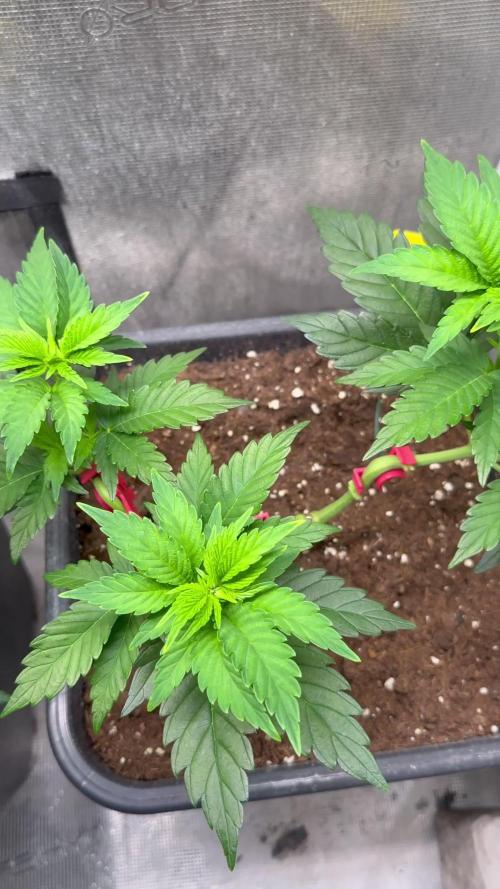
Mainlining is progressing nicely.
The main stem was topped at the 3rd node, and each main branch was topped again at the 3rd node to build a clean and symmetrical manifold.
I always wait until the branches have 5 nodes before topping, to make sure the plant is strong enough to handle the stress.
This week I performed a selective defoliation and some light LST, only to guide the branches and keep everything level.
I’m still deciding between 8 or 12 main colas, depending on how the plant continues to respond.
In the video you can clearly see the before and after of defoliation and training 🌱💪

Likes
54
Share


@ASCBOOGS
Follow
Day 63 veg last day of veg going to.give plants a 36hour dark period before the flick some leafs are still looking slightly yellow super cropped few of the longer branches to.help maintainneven canopy when going 12/12 lights are on 600w settings to get it ready for.flowering

Likes
8
Share

@GERGrowDesigns
Follow
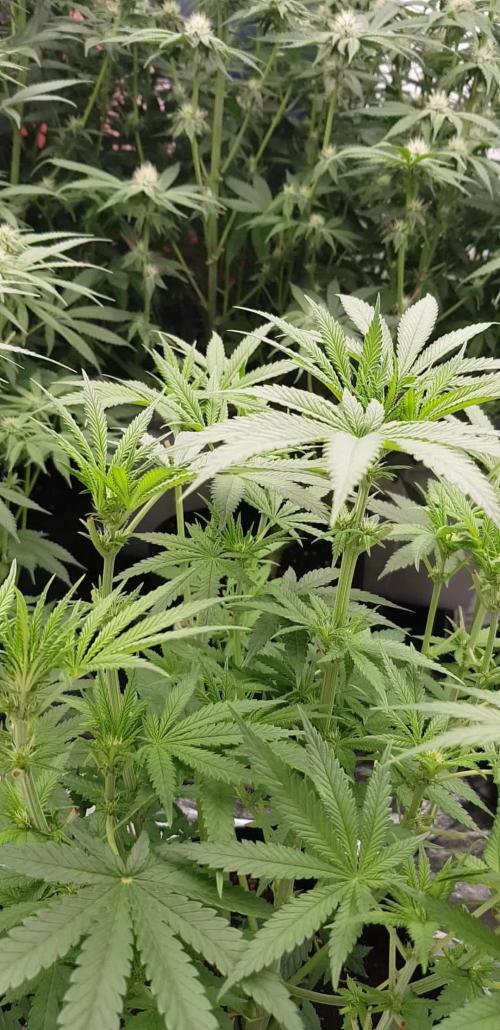
Welcome to Flower week 2 of Fast Buds LemonPaya
I'm excited to share my grow journey with you from my
FastBuds Project . It's going to be an incredible ride, full of learning, growing, and connecting with fellow growers from all around the world!
For this Project , I’ve chosen the Feminized Photo strain Lemonpaya :
Here’s what I’m working with:
• 🌱 Tent: 120x60x80
• 🧑🌾 Breeder Company: Fast buds
• 💧 Humidity Range: 50
• ⏳ Flowering Time: 58 Days
• Strain Info: 30%THC
• 🌡️ Temperature: 26
• 🍵 Pot Size: 16l
• Nutrient Brand: Narcos
• ⚡ Lights : 600W x 2
A huge thank you to Fast Buds for allowing me to try my Best with this amazing collection from Automatic and Photo Strains they managed to Sponsore . Big thanks for supporting the grower community worldwide! Your genetics and passion speak for themselves!
I would truly appreciate every bit of feedback, help, questions, or discussions – and of course, your likes and interactions mean the world to me as I try to stand out in this exciting competition!
Let’s grow together – and don’t forget to stop by again to see the latest updates!
Happy growing!
Stay lifted and stay curious!
Peace & Buds!
Likes
17
Share


@Mastr
Follow
Hi all grower auto orange bud week 13 she had long veg pase due transplant shock but now she get very big and bushy u feed her 1ml bio grow 4ml bloom 2ml big bud
Half ml cal mag with 5 litre water ph every other day
The bud top leaf start getting purple so beautiful plant definitely grow her again
