


Likes
Comments
Share

@Condocannibus
Follow
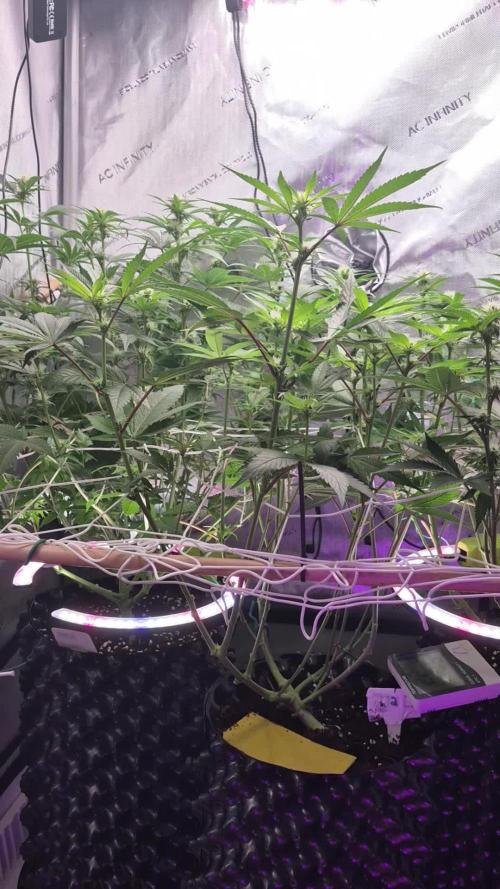
2nd week of stretch done.
No deficiencys
Big stretch.
Thanks everyone

Likes
5
Share


@CannaIGrow
Follow
This plant seems to have grown much denser and better than my first plant. I just got the ac infinity ventilation setup with controller 69 for my 2x2, still trying to learn, hopefully grow #3 goes even better. Stay tuned
Likes
226
Share


@Kitties_and_Colas
Follow
~_~_~_~_~_~_~_~_~_~_~_~_~_~_~_~_~_~_~_~_~_~_~_~_~_~_~_~_~_~_~_~_~_~_~_~_~_~_~_~_~_~_~_~_~_~_~_~_~_~_~_~_~_~_~_~_~_~_~_~_~_~_~_~_~_~_~_~_~_~_~_~_~_~
10/16/21
😼 we upload the good, the bad and the ugly, the end of this run definitely falls in that last category lol 😹.. despite the mess, it should still be a decent harvest ❤️..Trichs are getting cloudy, maybe 1-2 more weeks before they're done..the color is really starting to fade, the finish line is in sight! Happy harvests everyone!!
💡🌱😽💨
~_~_~_~_~_~_~_~_~_~_~_~_~_~_~_~_~_~_~_~_~_~_~_~_~_~_~_~_~_~_~_~_~_~_~_~_~_~_~_~_~_~_~_~_~_~_~_~_~_~_~_~_~_~_~_~_~_~_~_~_~_~_~_~_~_~_~_~_~_~_~_~_~_~

Likes
18
Share


@VI_Cannabis
Follow
June 7 - We ordered some new lights last week, they are 240w kingbrite samsung lm310h with uv/ir, 3000k, and meanwell drivers.
We setup the new room and moved the girls into there. After a bit of LST and a watering (with nutrients) at roughly 7ph, they were ready to go under the 2 new lights and the same SF-1000 we have been using in this grow.
The new room is a 12 ft enclosed trailer. I moved everything from the small tent into this. I put clear poly on the walls, floor and ceiling. I put poly on the shelf I am going to be keeping in there as well. I bought 50ft of 6mm mylar and lined the floors, roof and sides with it. I plan to get some reflective tape to seal everything and to cover the wood. I did not get much of a chance to watch temp's today as they it was later in the evening after all was said and done. The inline fan blowing in air from outside.
June 8 -
9 AM i checked the plants, they were at 25.2 and 50% RH. Late through the day I had checked and we had gotten up to around 32 degrees. So I moved the inline fan to the closer vent, hooked up to that, and had the air blowing out of the trailer with the inline fan sucking it from above the lights.
I then added oscillating fan and had it blowing air on the left side of the room so it would somewhat circulate once I closed the doors. I then checked at about 9pm and we were at 22 degrees. Definitely noticed a decent amount of growth already. I have the lights on a 22/2 cycle as I was worried about the heat at night time.
June 9 -
Some great growth from the girls, still having problems controlling the temps in the afternoon. I decided to prop the door open a bit to have a constant breeze throughout the day while I am at work. Decided to do some more LST and also a bit of defoliation. I took about 25% of the leaf's that were blocking the new growth as it was getting a bit bunched up. I was then told the leaf's are almost solar panels for them. So from now on I will be trying to just do some tucking unless needed. The leaf's I removed were most of the damaged leaf's, I am not to sure if that makes much of a difference. I gave them a watering with only water as there is a potential I am getting a bit of a nutrient buildup along with the PH problem. Or potentially the reason for the ph problem is nutrient buildup. After watering with A PH of 7 I got some run off and tested it. The smaller plant gave me a PH of about 5.5 where the bigger one is around 5.0.
June 10 -
Plants are looking happy and showing tons of growth. Seems to be trying to stretch outwards. Not a ton of sign of PH issues showing so potentially getting it under control. Still a bit of damage to previous leaf's but it is what it is! The last few days I have been leaving the door open a bit in order to keep the temps down. I decided to test something and turn the lights off (automatically) at 11AM and back on at 5PM so light schedule has now changed to 18/6 and it seems I may have figured out the issue. We haven't had lots of sun the last couple days so it hasn't been to hard and I have yet to know if it truly fixed the heat issue for now. (I will be looking into a ac unit as well since it typically gets to around 30-35 around here.
June 11 - Pulled some of the branches back down and added a few more LST spots. Seems we have a good amount of growth from the smaller plant out of the 2 topped spots. Unfortunately it looks like I fucked up on the bigger plant and only one of the nodes seems to have new growth. I will continue to monitor that but I think I cut the node to low and also to soon. Other then that, the girls are doing great. They seem to be absolutely loving these new lights. I gave them some nutrient water today as well. roughly 3L each. They seem to be A hell of A lot more thirsty under these new lights.
June 12 - The girls are doing great , they are still just doing growing away. Lots of progress everyday. I am going to be getting a go-pro so I can set-up a time-lapse for the rest of this grow. I received my new inline fan, I got A ac infinity CLOUDLINE T4 with the temperature humidity controller. I am going to be having one fan pushing fresh air in and one fan pulling out the hot air. I will be doing that tomorrow since I have to work today.
June 13 - I ordered another 50ft of mylar and that showed up today. I have decided to remove the shelf and add another 3+ feet to the grow space. So today I installed more poly, mylar, the ac infinity fan. I have it set-up to pump in air if it gets to warm. I am thinking of switching it to the output that way if it gets to hot or to humid I can have that air pulled out of the trailer. Right now my other inline fan is the outtake and I just have it set on full. Overall I think everything is set-up a bit better and more accessible. I will be putting my 2x2 tent in there at the left of the doors so I can have a veg room when these 2 are in flower. I plan to have 4 in veg and 4 in flower for the next grow. Still waiting on JOTI seeds, ordered 3 weeks ago and still have not been shipped. I will be getting those going the moment they arrive.
The girls seem to be happy still, did a bit more LST to try to keep everything even, mainly I'm just pulling down on the spots I already have tie wire on.
Likes
27
Share


@Smokwiri
Follow
Plant got rootbound in week 10veg but competition rules were grow with supplied materials, bloom was very productive. Smell is dank, hits how dank weed was when you started smoking weed.

Likes
5
Share


@Ninjabuds
Follow
My gas tax plant is looking absolutely incredible right now. It's got these massive buds that are super dense and have this awesome dark color to the leaves. I'm so excited to see how it turns out when it's finally ready to be harvested. I've been checking the height, the thickness of the stem, and the density of the buds to get an idea of how much longer I have to wait. I think I might start flushing it soon.
The past few weeks have been so beautiful, watching the plants grow and change. It's amazing how something so small and fragile can turn into something so strong and vibrant. Now that they're getting ready to bloom, it feels a little bittersweet. I'm so excited to see the finished product, but I'll definitely miss having them around while they're growing.
Likes
35
Share


@nonick123
Follow
Día 66 (05/08) Cerrado por vacaciones
Día 67 (06/08) Mi amigo viene a casa a hacer un riego con 1 Litro de H2O pH 6,5
Día 68 (07/08) Cerrado por vacaciones
Día 69 (08/08) Vuelta de vacaciones! A ver como están después de 5 días sin verlas... 😱
Riego con 1 litro de H2O pH 6,5
Añado 3 cm de sustrato nuevo porque se ha compactado y se ven las raíces! 😢
Día 70 (09/08) Riego 500 ml H2O pH 6,55
Eliminación de algunas ramas bajas
Día 71 (10/08) Riego 500 ml H2O pH 6,55
Sesión de fotos semanal!
Día 72 (11/08) Riego con 1 Litro de Té Vegetativo de Lurpe Solutions. Preparación: 24 horas con bomba de aire (oxigenación) con ingredientes:
Green Sunrise 8 ml/L + Insect Frass 16 ml/L + Hummus Lombriz 8 ml/L + Melaza 1 ml/L + Kelp Hidrolizado 0,25 g/L
Aplicación foliar Kelp hidrolizado de Lurpe Solutions a 0,25 ml/l
💦Nutrients by Lurpe Solutions - www.lurpenaturalsolutions.com
🌱Substrate PRO-MIX HP BACILLUS + MYCORRHIZAE - www.pthorticulture.com/en/products/pro-mix-hp-biostimulant-plus-mycorrhizae

Likes
166
Share


@DutchFarmer
Follow
🌿 GrowDiaries Harvest Review Runtz by Zamnesia Seeds 🌿
Participating in this contest has been an incredible journey! A massive shoutout to Plagron and Zamnesia for making this possible. Growing Runtz in a 1-liter pot was an experiment that exceeded all expectations yielding a whopping 2 ounces! 😱
Aroma & Flavor:
The scent is absolutely intoxicating: fruity candy haze with a gassy undertone that fills the room. Each puff delivers a smooth smoke, leaving behind a clean white ash, a testament to its quality.
Bud Structure:
The buds are dense and chunky, resembling big, oily nuggets. Their vibrant colors and resin coated appearance make them a visual delight.
Effects:
This strain hits hard with a potent and euphoric high, perfect for evening relaxation.
The balance between indica and sativa effects provides a creative uplift followed by a soothing body relaxation.
Final Thoughts:
From seed to harvest, this grow was a rewarding experience.
The combination of top-tier genetics and quality nutrients from Plagron made all the difference. I'm thrilled with the results and proud of what I've achieved in such a compact setup.
Thank you once again to the GrowDiaries community, Plagron, and Zamnesia for this opportunity.
Here's to more successful grows ahead! 🌱🔥
DIARY COMPLETE
Likes
13
Share


@Dunk_Junk
Follow
She is very nearly there. Will start the staggered harvest in a few days. Whatever buds are ready will be clipped off.

Likes
6
Share


@The_Lonely_Farmer
Follow
Well the apricot has finally surcome too budrot and I have removed but expect it too return as it allways seems too 🙄
Such a shame as shes started really letting off her beautifull smells I hope but dint see her making it too harvest 😔 so sad too see the last outdoors auto nearing her end but we shall plod on and leave her be too see what comes of her 🌱
Great smell coming from her i must say 😍💚
Likes
3
Share


@Giuliojuana
Follow
La settimana sta andando bene qualsiasi Consiglio su come migliorare è ben accetto

Likes
92
Share


@DogDoctorOfficial
Follow
🌟 Welcome to the TrolMaster Chronicles: Seed to Harvest Adventure! 1st run🌟
Hey, Grow Fam! It’s DogDoctor here, and I’m thrilled to kick off this exciting new series with you. Today marks the beginning of our journey through the TrolMaster sponsorship, and we’re diving right into the heart of the action with germination and unboxing. 🌱✨
We’re starting strong with the Germination Station by @thecannakan, a game-changer for this process. I’ll be showing you all the details as we delve deep into every aspect of our grow adventure.
Here’s today’s lineup for the germination extravaganza:
1️⃣ Mandarin Squeeze - Terpyz Mutant Genetics. 🌈 One seed germinated.
2️⃣ Punch Pie RQS and Tyson 2.0 Genetics. 🍰 One seed germinated.
3️⃣ RS11 by Kannabia Seeds. 🚀 One seed germinated.
4️⃣ Green Papaya by Super Sativa Seed Club. 🍍 Tester unreleased seed, one germinated.
5️⃣ Gorilla Mellon by Fast Buds. 🍉 Two seeds, one germinated (the first one didn’t make it).
6️⃣ Tropical Smoothies - Tried all seeds from the pack, but unfortunately, none germinated. 🌴
We’re also using the complete organic mineral line from @aptusholland, which includes top-notch nutrients to ensure our plants get the best start possible. 🌿✨ Plus, we’ve got the new ProMix Mycorrhizae soil, which will help create a thriving root environment. 🌱
Throughout this journey, I’ll be breaking down every step, sharing tips, and keeping it real with both the successes and challenges. I’m excited to share this adventure with you, and there’s so much more to come!
For more in-depth coverage and exclusive content, make sure to check out my YouTube channel and subscribe—where you’ll find full video breakdowns, detailed insights, and more. 🌟🎥 Follow me on Instagram for additional exclusive updates and behind-the-scenes peeks that you won’t find anywhere else! 📸✨
Your support means the world to me, and I can’t wait to have you along for every step of this amazing journey. Let’s grow together and make some magic happen!
#TrolMasterChronicles #SeedToHarvest #GrowDiaries #GrowJourney #TrolMaster #TheCannakan #GrowLife #PlantAdventure #HighFrequency #PositiveVibes #GrowWithMe #SubscribeNow #ExclusiveContent #AptusHolland #ProMixMycorrhizae
P.S. 🌟💚 I want to take a moment to express just how honored and grateful I am to be the first TrolMaster Maverick. This opportunity is a dream come true, and I’m beyond excited to embark on this journey with all of you. Being a part of this incredible community and pushing the boundaries of indoor horticulture with TrolMaster and ThinkGrowLED is a privilege I don’t take lightly. 🙌
A massive shoutout and thank you to the entire TrolMaster and ThinkGrow team for believing in me and supporting this adventure. Your trust and support mean the world to me, and I promise to give it my all to make this journey as amazing as possible. 🌟🙏
Thank you, Grow Fam, for being here from the start. Your encouragement and enthusiasm fuel my passion and make every step of this journey worth it. Here’s to making magic happen together and to many more incredible milestones ahead. Let’s grow, learn, and shine! 🌱✨
With all my heart,Growers Love and thank you. 💚
#FirstMaverick #TrolMasterFamily #ThinkGrowLED #GratefulHeart #GrowTogether #MakingMagic
Lets Play a game , FB Gorilla Melon Jump in to the future, can you guess the week ? Let me know in the comments before we get there , this is just for fun Lets Grow 💚💚💚 Growers Love everyone 💚💚💚


Likes
1
Share


@GaliforniaWeeds
Follow
Día 5/10/20 día 29 de floración
Acaba de amanecer un nuevo día y todo continúa bien. Seguimos alimentando las nenas con 1,6 de ec y 6,1 de ph. De momento el engorde no es abrumador pero si constante y si nada cambia obtendremos unas buenas flores!!
Día 7/10/20 día 31 de floración
Hoy nos vemos forzados a retirar algunas hojas que tapaban demasiada luz y que podríamos considerar sumideros de nutrientes. Por otro lado el riego de hoy ha sido solo de agua más zyco kleanse así prevenimos la sobrefertilizacion.
Día 9/10/20 día 33 de floración
Hoy preparamos un nuevo tanke de nutrición y lo hacemos a 1,75 de ec y a 6,1 de ph. En los siguientes días observaremos cómo se adaptan a esta nutrición x si tenemos que realizar cambios. No te lo pierdas!!
Día 11/10/20 día 35 de floración
Hoy te reina la semana 5 de floración y lo hacemos preparando un nuevo tanque de nutrición con el tanque totalmente limpio. La solución está a 1.8 ec, 6.1 ph y a 20 grados. La temperatura de la sala se mantiene a 23 6 la humedad al 47% para evitar la aparición de hongos en sus últimos días de maduración , algo que se puede apreciar en el avance de sus flores. No te lo pierdas!!
Likes
7
Share


@GERGrowDesigns
Follow
Welcome to Flower Week 5-6 of Divine Seeds Auto Black Op1um
I'm excited to share my grow journey with you all as part of the Divine Seeds Autoflowering Competition 2025. It's going to be an incredible ride, full of learning, growing, and connecting with fellow growers from all around the world!
For this competition, I’ve chosen the Feminized Automatic strain: Auto Black Op1um
Here’s what I’m working with:
• 🌱 Tent: 120x60x80
• 🧑🌾 Breeder Company: Divine Seeds
• 💧 Humidity Range: 50
• ⏳ Flowering Time: 8W-10W
• Strain Info: 25%THC
• 🌡️ Temperature: 26
• 🍵 Pot Size: 0.5l
• Nutrient Brand: Narcos
• ⚡ Lights : 200W x 2
A huge thank you to Divine Seeds for allowing me to be a part of this amazing competition and Sponsoring the Strains. Big thanks for supporting the grower community worldwide! Your genetics and passion speak for themselves!
I would truly appreciate every bit of feedback, help, questions, or discussions – and of course, your likes and interactions mean the world to me as I try to stand out in this exciting competition!
Let’s grow together – and don’t forget to stop by again to see the latest updates!
Happy growing!
Stay lifted and stay curious!
Peace & Buds!

Likes
21
Share


@The_OG_kush
Follow
First week went perfectly. Environment stable, good growth for first week. Co2 going in tomorrow and a humidifier going in as well.

Likes
4
Share

@Hou_Stone
Follow
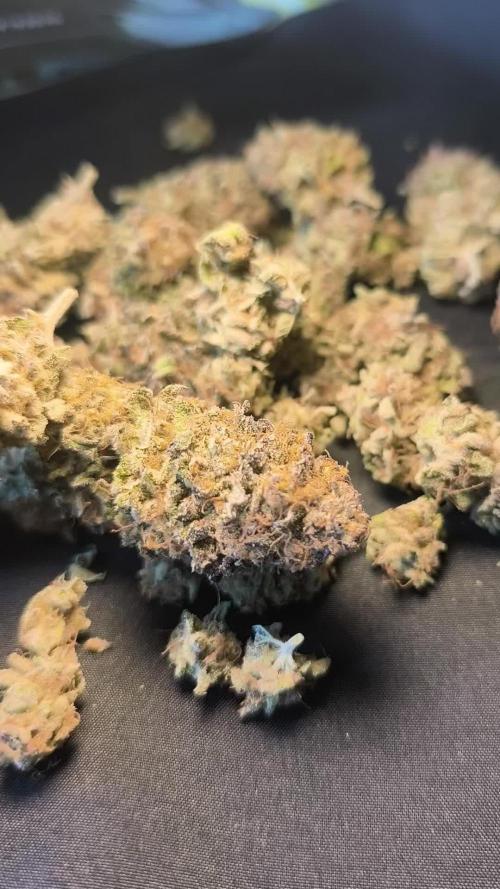
J'ai laisser les plantes séché dans la tente de culture, lumière éteinte, sans ventilateur pour entammer un sechage lent de 2-3 semaines. Ensuite est venu le moment le plus chiant de la culture pour moi, la manucure. Une fois la manucure effectué je vais laisser curer mes buds dans des bags

Likes
25
Share


@JeyGanesha
Follow
Ultima settimana, max 10 giorni per il flush,e poi raccolgo....devo dire che questa watermelon della korngarden seeds non è venuta carica di tricomi (come la wedding cake) ma strutturalmente è venuta bella carica,i fiori sono grandi e duri come delle vere pannocchie 🤣😜✌️,poi vedremo ,vi dirò com'è da cremare
Processing
Likes
14
Share


@Stkz420
Follow
1 sour livers is smelling sweet and lemony other 1 smelling like a zesty liver🤔. Cant quite put my finger on the aroma coming from the northern hog but shes possibly in the best condition she ever has been.


Likes
6
Share


@DrShotzUK
Follow
BANANA PURPLE PUNCH - 420 FAST BUDS
This plant started off stunted and looking all round unhealthy but I gave hear time lowered her nutrients and she’s come right back to life forming nice dense dark purple buds …
The smell is amazing she smells of berries and lemony woody gassy smell. Nothing like banana if you ask me!
Cannot wait to smoke this strain
DRSHOTZUK