




@BobbersDown
Follow
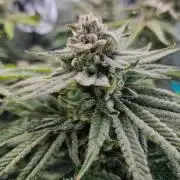
Just mild trimming at this point. Serious resin production. Even the fan leaves leave the fingers very sticky. Super frosty, swelling like crazy. Smells of mango and citrus. Favorite time of the grow!!! ❄️ ?



@ReeferKeefer
Follow
1. Strawberry Cough Autoflower https://www.sonomaseeds.com/cannabis-seeds/strawberry-cough-autoflower-feminized-marijuana-seeds/
I planted this seedling 03/29 into 60% mix Gaia Green Living Soil in 2 gallon cloth pot. Light is a Samsung full spectrum 100W Quantum LED. This little thing is pretty happy but she’ll be happier once we get a few more friends planted 🌱
2. https://blimburnseeds.com/tangie-auto


shorts_status_processing


@Max1973
Follow
Day 35 - few pics and vids..... everything going along nicely 👍
This is a pretty big update, so i'll add to it over the next few days, as i
finish building it all....
i'm building these 2 x SS haze, the full tent, just finishing up the setup.....
trimming them, changing solutions to 12/12 and flower.....
changed the exhaust fan and filter setup to the better outside the tent method....
and installed 12v CPU computer fan, lol ("alta9" fits in 4in ducting perfectly), drops wattage on extractor fan.... 10w tops...
got a few kg of active carbon and making/replacing the carbon filter ....
i'll add afew vids of the new setup in afew days...
Day 36 - few pics/vid of new tent setup...... "alta 9" fan :)
post tomorrow after i finish trimmin and settin up night mode etc......
and into tomorrow we go, lol ... Day 37....
slowly getting there..... little bit more to go...
this should make things abit more interesting..... right tank (short babie) has : 19 lts of tap water @18oC + 150 ml -dutch master one gold FLOWER.... 6.4 PH - 1400 PPM
left tank has : 19 lts of tap water @18oC + 50 ml of elements a and 50ml of b and 10 ml of nitro and 20ml of Crystalic (molasses/pot) .... 6.5 PH - 1200 PPM
more pics / vids of the finished tent setup.... roots, transfer, etc... Day 37 is alot of vids of the clean and change to flower.....
edit - day after build noticed left tank (nutrifield) not enough bubbles..... pulled out the 4 air pump and swapped to the 2 x original oxipumps...
much better, also to fix the problem with ph goin high, and bubbles not stirin the mix, was to add another 10ml of crystallic and another 5ml of nitro...
then pumped both tanks with ph down and set em to 5.8-6.2 - both plants have fully recovered from the big trim, and bounced back within 12-24hrs,
post pics/vid in abit.....
Day 39 - made a freaky video... was curious about what the plants would see looking up at the lights...
the lights and buzzing of air compressors and bubbling tank water, and dazzling lights turned out pretty cool in vid editor,
was in selfie mode....
and final vid of the bounceback from trim :)
👍😎


@Bluemels
Follow
Tag 116: Ab heute gieße ich nur noch unbedüngt. In 2 Wochen ist schon ernte. Die Blätter sehen schon ziemlich mitgenommen aus, das liegt denke ich zum einen an den hohen Sativa Anteil und an meiner zu starken entlaubung 😱
Aber die Blüten sehen super harzig aus.


@Dennis_Bong
Follow
Diese Woche war für die Pflanzen eine große Belastung, da sie in den Keller umgezogen sind. In der Wohnung wurde es einfach zu warm. Die Box hat einen Zuluftschlauch bekommen, sodass immer Frischluft von außen kommt. Die Abluft wird auch nach außen abgeführt. Der Keller wird zusätzlich mit einem Amazon Badezimmerlüfter belüftet. Die Luftfeuchtigkeit konnte somit im Durchschnitt auf 60 Prozent gesenkt werden. Bei Regen hatte ich auch schon Höchstwerte von 82 Prozent in der Box. Dazu habe ich einen zusätzlichen Handylüfter in der Box installiert, der 40 Watt hat und für gute Belüftung sorgt. Zusätzlich baue ich mir nächste Woche ein Belüftungssystem mit KG-Rohren. Ich nehme zwei Stück und installiere sie an der Zuluft der Box. Dann werden sie am Rand der Box platziert und Löcher rein gebohrt, um die Pflanzen von unten zu belüften. Die Rohre kommen auf die ganze Fläche von 1,5 Metern. Was den Dünger betrifft, kann ich nur sagen, ich bin sehr zufrieden. Die Buds werden langsam echt fett. Die Pflanzen weisen keine Mängel auf, bis auf Calzium-Magnesium, das zusätzlich über das Gießwasser eingebracht wird. Apropos Gießwasser: Ich habe mir Tropfer und ein 100-l-Autotop-Flexi-Tank bestellt. Dazu ausführlicher Bericht nächste Woche, so wie zu der ab und zu Luft. Die Lampen laufen mittlerweile auf 100 Prozent. Die Titan sind mittlerweile im Schnitt 75 cm groß, so wie die Cosmos. Diese Pflanze ist sehr durstig und bekommt mehr Wasser als die anderen und ist im Umfang deutlich größer als die Titan und Epsilon. Die Epsilon sind ca. 55 cm im Durchschnitt, haben aber die dicksten Buds.
Wichtigste Punkte:
- Pflanzen in den Keller umgezogen wegen zu hoher Temperaturen in der Wohnung
- Belüftungssystem installiert (Zuluft, Abluft, Badlüfter, zusätzlicher Lüfter in der Box)
- Luftfeuchtigkeit im Durchschnitt auf 60% gesenkt
- Neues Belüftungssystem mit KG-Rohren geplant
- Dünger zufriedenstellend, Buds werden größer
- Calzium-Magnesium-Mangel, wird über Gießwasser ausgeglichen
- Neue Bewässerung (Tropfer, Flexi-Tank) bestellt
- Lampen auf 100%
- Titan und Cosmos ca. 75 cm, Cosmos durstiger
- Epsilon ca. 55 cm, dickste Buds
!!!!!!!!!!!!!!!!!!!!!!!!!!!!!!!!!!!!!!!!!!!!!!!es fehlen noch Bilder Nachtrag kommt !!!!!!!!!!!!!!!!!!!!!!!!!!!!!!!!!!!!!!!!!!!
Ein danke geht raus an meine Freundin sie Übernimmt Bilder und Videos.


@WeedleyScott
Follow
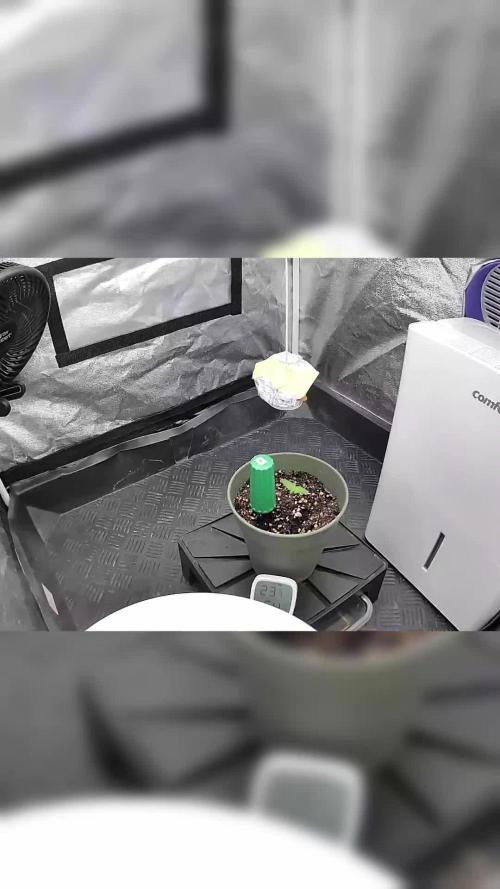
Das wird wohl die letzte Woche, ich schaue mal wann ich ernte. Ich denke ich werde ab jetzt auch nicht mehr gießen damit die Erde etwas trocknet und die Pflanze etwas stressed. Ich werde auch 1-2 Tage vorher das Licht aus lassen.
Aktuelle Werte:
VPD: 1.6
Humidity: 54%
Temp: 31°C
DLI: 50
1055 PAR


@UrbanBoer
Follow
I cannot wait to see how this beautiful Queen is going to look at te end of the flowering stage, she’s the closet I’ve came to LST in a manner I wanted this baby to grow, loving how brunches twirl around the twig, l have stopped growing Christmas tree shaped babies. I LST from the seedling phase right through to flowering, you should not forget that this plant can take stress, imagine it was growing in the wild, some stress in your plant’s lie is critical for positive growth, from my point of view my trees are going to struggle with big buds, because it does not have this thick stems.


@101Dalmatia
Follow
My first grow ,I started with a HPS 600 double ended light Lumatec and at the beginning I knew that summer ☀️ is coming and that I'll have to change to LED ,
Fighting to keep my temperature and humidity at the right range .I made a decision to go with 20 / 4 light cycle.


@Weedy_Shepherd
Follow
It's been 3 weeks from seedling till here, all plants are growing vigorously and have topped once so far, will topp them one more time in the next week then a week of rest time after the topping and straight after into flowering! 7/9 plants are regular so i still need to hunt out witch is male and female next week!


@Ultraviolet
Follow
Lacewings seemed to have mostly killed themselves by flying into hot light fixtures. I may have left the UV on which was smart of me :) Done very little to combat if anything but make a sea of carcasses, on the bright side its good nutrition for the soil.
Made a concoction of ethanol 70%, equal parts water, and cayenne pepper with a couple of squirts of dish soap.
Took around an hour of good scrubbing the entire canopy.
Worked a lot more effectively and way cheaper.
Scorched earth right now, but it seems to have wiped them out almost entirely very pleased.
Attempted a "Fudge I Missed" for the topping. So just time to wait and see how it goes.
Question?
If I attached a plant to two separate pots but it was connected by rootzone, one has a pH of 7.5 ish the other has 4.5. Would the Intelligence of the plant able to dictate each pot separately to uptake the nutrients best suited to pH or would it still try to draw nitrogen from a pot with a pH where nitrogen struggles to uptake?
Food for stoner thought experiments!
Another was on my mind.
What happens when a plant gets too much light?
Well, it burns and curls up leaves.
That's the heat radiation, let's remove excess heat, now what?
I've always read it's just bad, or not good, but when I look for an explanation on a deeper level it's just bad and you shouldn't do it.
So I did.
How much can a cannabis plant absorb, 40 moles in a day, ok I'll give it 60 moles. 80 nothing bad ever happened.
The answer, finally. Oh great........more questions........
Reactive oxygen species (ROS) are molecules capable of independent existence, containing at least one oxygen atom and one or more unpaired electrons.
"Sunlight is the essential source of energy for most photosynthetic organisms, yet sunlight in excess of the organism’s photosynthetic capacity can generate reactive oxygen species (ROS) that lead to cellular damage. To avoid damage, plants respond to high light (HL) by activating photophysical pathways that safely convert excess energy to heat, which is known as nonphotochemical quenching (NPQ) (Rochaix, 2014). While NPQ allows for healthy growth, it also limits the overall photosynthetic efficiency under many conditions. If NPQ were optimized for biomass, yields would improve dramatically, potentially by up to 30% (Kromdijk et al., 2016; Zhu et al., 2010). However, critical information to guide optimization is still lacking, including the molecular origin of NPQ and the mechanism of regulation."
What I found most interesting was research pointing out that pH is linked to this defense mechanism. The organism can better facilitate "quenching" when oversaturated with light in a low pH. Now I Know during photosynthesis plants naturally produce exudates (chemicals that are secreted through their roots). Do they have the ability to alter pH themselves using these excretions? Or is that done by the beneficial bacteria?
If I can prevent reactive oxygen species from causing damage by "too much light".
The extra water needed to keep this level of burn cooled though, I must learn to crawl before I can run.
Reactive oxygen species (ROS) are key signaling molecules that enable cells to rapidly respond to different stimuli. In plants, ROS plays a crucial role in abiotic and biotic stress sensing, integration of different environmental signals, and activation of stress-response networks, thus contributing to the establishment of defense mechanisms and plant resilience. Recent advances in the study of ROS signaling in plants include the identification of ROS receptors and key regulatory hubs that connect ROS signaling with other important stress-response signal transduction pathways and hormones, as well as new roles for ROS in organelle-to-organelle and cell-to-cell signaling. Our understanding of how ROS are regulated in cells by balancing production, scavenging, and transport has also increased. In this Review, we discuss these promising developments and how they might be used to increase plant resilience to environmental stress.
Temperature stress is one of the major abiotic stresses that adversely affect agricultural productivity worldwide. Temperatures beyond a plant's physiological optimum can trigger significant physiological and biochemical perturbations, reducing plant growth and tolerance to stress. Improving a plant's tolerance to these temperature fluctuations requires a deep understanding of its responses to environmental change. To adapt to temperature fluctuations, plants tailor their acclimatory signal transduction events, specifically, cellular redox state, that are governed by plant hormones, reactive oxygen species (ROS) regulatory systems, and other molecular components. The role of ROS in plants as important signaling molecules during stress acclimation has recently been established. Here, hormone-triggered ROS produced by NADPH oxidases, feedback regulation, and integrated signaling events during temperature stress activate stress-response pathways and induce acclimation or defense mechanisms. At the other extreme, excess ROS accumulation, following temperature-induced oxidative stress, can have negative consequences on plant growth and stress acclimation. The excessive ROS is regulated by the ROS scavenging system, which subsequently promotes plant tolerance. All these signaling events, including crosstalk between hormones and ROS, modify the plant's transcriptomic, metabolomic, and biochemical states and promote plant acclimation, tolerance, and survival. Here, we provide a comprehensive review of the ROS, hormones, and their joint role in shaping a plant's responses to high and low temperatures, and we conclude by outlining hormone/ROS-regulated plant-responsive strategies for developing stress-tolerant crops to combat temperature changes.
Onward upward for now.
Next!
Adenosine triphosphate
(ATP) is an energy-carrying molecule known as "the energy currency of life" or "the fuel of life," because it's the universal energy source for all living cells.1
Every living organism consists of cells that rely on ATP for their energy needs. ATP is made by converting the food we eat into energy. It's an essential building block for all life forms. Without ATP, cells wouldn't have the fuel or power to perform functions necessary to stay alive, and they would eventually die. All forms of life rely on ATP to do the things they must do to survive.2
ATP is made of a nitrogen base (adenine) and a sugar molecule (ribose), which create adenosine, plus three phosphate molecules. If adenosine only has one phosphate molecule, it’s called adenosine monophosphate (AMP). If it has two phosphates, it’s called adenosine diphosphate (ADP).
Although adenosine is a fundamental part of ATP, when it comes to providing energy to a cell and fueling cellular processes, the phosphate molecules are what really matter. The most energy-loaded composition for adenosine is ATP, which has three phosphates.3
ATP was first discovered in the 1920s. In 1929, Karl Lohmann—a German chemist studying muscle contractions—isolated what we now call adenosine triphosphate in a laboratory. At the time, Lohmann called ATP by a different name. It wasn't until a decade later, in 1939, that Nobel Prize–-winner Fritz Lipmann established that ATP is the universal carrier of energy in all living cells and coined the term "energy-rich phosphate bonds."45
Lipmann focused on phosphate bonds as the key to ATP being the universal energy source for all living cells, because adenosine triphosphate releases energy when one of its three phosphate bonds breaks off to form ADP. ATP is a high-energy molecule with three phosphate bonds; ADP is low-energy with only two phosphate bonds.
The Twos and Threes of ATP and ADP
Adenosine triphosphate (ATP) becomes adenosine diphosphate (ADP) when one of its three phosphate molecules breaks free and releases energy (“tri” means “three,” while “di” means “two”). Conversely, ADP becomes ATP when a phosphate molecule is added. As part of an ongoing energy cycle, ADP is constantly recycled back into ATP.3
Much like a rechargeable battery with a fluctuating state of charge, ATP represents a fully charged battery, and ADP represents a "low-power mode." Every time a fully charged ATP molecule loses a phosphate bond, it becomes ADP; energy is released via the process of ATP becoming ADP.
On the flip side, when a phosphate bond is added, ADP becomes ATP. When ADP becomes ATP, what was previously a low-charged energy adenosine molecule (ADP) becomes fully charged ATP. This energy-creation and energy-depletion cycle happens time and time again, much like your smartphone battery can be recharged countless times during its lifespan.
The human body uses molecules held in the fats, proteins, and carbohydrates we eat or drink as sources of energy to make ATP. This happens through a process called hydrolysis
.
After food is digested, it's synthesized into glucose, which is a form of sugar. Glucose is the main source of fuel that our cells' mitochondria
use to convert caloric energy from food into ATP, which is an energy form that can be used by cells.
ATP is made via a process called cellular respiration that occurs in the mitochondria of a cell. Mitochondria are tiny subunits within a cell that specialize in extracting energy from the foods we eat and converting it into ATP.
Mitochondria can convert glucose into ATP via two different types of cellular respiration:
Aerobic (with oxygen)
Anaerobic (without oxygen)
Aerobic cellular respiration transforms glucose into ATP in a three-step process, as follows:
Step 1: Glycolysis
Step 2: The Krebs cycle (also called the citric acid cycle)
Step 3: Electron transport chain
During glycolysis, glucose (i.e., sugar) from food sources is broken down into pyruvate
molecules. This is followed by the Krebs cycle, which is an aerobic process that uses oxygen to finish breaking down sugar and harnesses energy into electron carriers that fuel the synthesis of ATP. Lastly, the electron transport chain (ETC) pumps positively charged protons that drive ATP production throughout the mitochondria’s inner membrane.2
ATP can also be produced without oxygen (i.e., anaerobic), which is something plants, algae, and some bacteria do by converting the energy held in sunlight into energy that can be used by a cell via photosynthesis.
Anaerobic exercise means that your body is working out "without oxygen." Anaerobic glycolysis occurs in human cells when there isn't enough oxygen available during an anaerobic workout. If no oxygen is present during cellular respiration, pyruvate can't enter the Krebs cycle and is oxidized into lactic acid. In the absence of oxygen, lactic acid fermentation makes ATP anaerobically.
The burning sensation you feel in your muscles when you're huffing and puffing during anaerobic high-intensity interval training (HIIT) that maxes out your aerobic capacity or during a strenuous weight-lifting workout is lactic acid, which is used to make ATP via anaerobic glycolysis.
During aerobic exercise, mitochondria have enough oxygen to make ATP aerobically. However, when you're out of breath and your cells don’t have enough oxygen to perform cellular respiration aerobically, the process can still happen anaerobically, but it creates a temporary burning sensation in your skeletal muscles.
Why ATP Is So Important?
ATP is essential for life and makes it possible for us to do the things we do. Without ATP, cells wouldn't be able to use the energy held in food to fuel cellular processes, and an organism couldn't stay alive.
As a real-world example, when a car runs out of gas and is parked on the side of the road, the only thing that will make the car drivable again is putting some gasoline back in the tank. For all living cells, ATP is like the gas in a car's fuel tank. Without ATP, cells wouldn't have a source of usable energy, and the organism would die.
Eating a well-balanced diet and staying hydrated should give your body all the resources it needs to produce plenty of ATP. Although some athletes may slightly improve their performance by taking supplements or ergonomic aids designed to increase ATP production, it's debatable that oral adenosine triphosphate supplementation actually increases energy.
An average cell in the human body uses about 10 million ATP molecules per second and can recycle all of its ATP in less than a minute. Over 24 hours, the human body turns over its weight in ATP.
You can last weeks without food.
You can last days without water.
You can last minutes without oxygen.
You can last 16 seconds at most without ATP.
Food amounts to one-third of ATP production within the human body.


@MaltaHerbman
Follow
First 7 days of the Strawberry Gorilla from Fastbuds.
She was germination in glass of water than move to cotton and in 2 days it had more than an inch of root so i moved to her home 12 liters pot with biobizz,coco peat and perlite for the vegitation she will have the Marshydro Ts 600 in 80 x80 grow tent.


@buddhi_coop
Follow
This week was tricky. A lot of stress for both me & the plants. They were droopy & not drinking water. I had them in too small of containers so I transplanted them thinking that was the problem. They’re in 5 gallon grass root pots now. I topped them with craft blend & diatomaceous earth, rice hills as well. They’re in Build A Soil 3.0 now. I just fed them compost tea too. They seem to be doing better besides the short one in the back left.


@AlpineGoat
Follow
She had some struggle but finally recovered from the bad start and show the first new leafs! Hoping a good nutrients will boost her up!
After 24hrs she started an explosive grow, hope to not feed her too much!
Tuesday 27 is transplant day! I’m using some light mix with rqs soil booster, so I can only water her without mix any nutrients.


@TerpTurtle
Follow
14 day dry | Curing in Grove bags, filled 7 QP bags & got 56g of keif out the trim bin from only 2 plants!
More pictures coming! STAY FROSTY GROWMIES


@frogDUDE
Follow
So far so good - starting to move indoors at night as the overnight lows are dipping to 5 degrees C- just a bit too cold!! Daytime temps still between 20-25 so still good for life outdoors during the day 💚💚


@TheGreenGroomer
Follow
Day 58 of flower, and I've officially started the flush! Overall, I'm really happy with how things are looking, but I’m a bit gutted about all the larf below that isn’t getting good light. A lot of the lower growth is going to end up as cookies, but it’s a lesson learned! Next time, I’ll be more aggressive with removing small, weak branches and focusing on the main colas. I’m also planning to flip around day 40 of veg while they’re still small since this Gorilla Glue stretches like crazy once it hits flower, Excited to see how these buds ripen over the next week and the colors they bring!


@BioBuds
Follow
FastBuds - Forbidden Runtz Showdown
We started another grow. This time we are going to start off with 2 sets of two auto's, after which we will start in three regulars right away. So we will double use the 18-hour schedule and try to save power that way.
In addition to this challenge, we are going to do a Runtz Showdown between two respected breeders with comparable strains. Her opponent will be... drumroll: the Runtz XL Auto by Sweetseeds.
Let's see where this will bring us. We did some witchcraft since we sowed the seeds by moonlight, on Imbolc; the pagan day of celebrating Bridget, the Goddess of Spring, we dedicate this grow to her. We asked for abundance and health, love and happiness and put the seeds in the ground.
The Soil
Of course, we started in our trusty organic super soil or living soil, I will include the recipe again for anyone wanting to emulate it.
The Light
And to help us again to hopefully get way over 600 grams this grow with the total grow of autos and regulars, the SP 300 by Mars Hydro will be helping us out again!
The Genetics
Fastbuds Forbidden Runtz
Taste: Earthy, Fruits, Sweet
THC: Up to 26%
CBD: < 1%
Harvest EU Indoor: 450 – 550 gr/m2
Harvest US Indoor: 1.5 – 1.8 oz/ft2
Harvest EU Outdoor: 50 – 150 gr/plant
Harvest US Outdoor: 2 – 5 oz/plant
Size: XXL
Height: 90 – 130 cm
Height US: 35 – 51 inches
Flowering: 9 weeks
Room: Indoor/Outdoor
Gender: Feminized
Genes: Sativa 35%/Indica 65%
Genetics: Forbidden Runtz Auto
Autoflowering: Yes
Thank you for checking out our new grow and for following!
Big Hug Biobuds and Sunshine.


@Cannabis4Crohns
Follow
Carbon filter and in-line fan with tempature and humidity controls installed, as weak smell noticicable, when opening tent.
Watering increased to 2 litres every 3 days with frequency of feeding increased to each time I water.


@zelamax
Follow
La otra vez no puede terminar con el diario porque trabajaba,pero hora voy a hacer crecer esta bebe 🍀🌱con mucho cariño !!!! Tengo ganas de ver el color Rosa tiene que ser muy buena 🤤🤪🤪🤪😜🤩


