


Likes
Comments
Share

@MrWeeedWorld
Follow
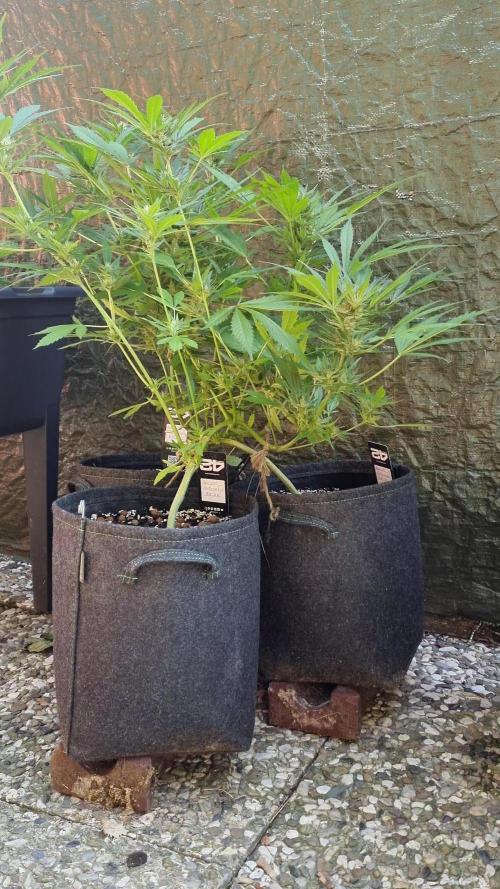
Drei Pflanzen. Ein Herz. Ein gemeinsames Ziel.
Woche 11 markiert für dieses Projekt einen ganz besonderen Abschnitt. Was vor einigen Wochen als Experiment mit drei einzelnen Pflanzen begann, fühlt sich inzwischen wie eine einzige, perfekt zusammengewachsene Apricot an.
Jeder Blick auf den Stamm erinnert mich daran, wie viel Vertrauen ich in dieses Training gesetzt habe. Drei Pflanzen wurden zu einer Einheit verbunden – und heute versorgen sie sich gegenseitig, als wären sie schon immer ein einziger Organismus gewesen. Genau solche Momente machen Homegrowing für mich so faszinierend.
In dieser Woche hat sich der Fokus endgültig auf die Blütenbildung verlagert. Fast jeder Trieb produziert inzwischen kompakte Buds, die von Tag zu Tag dichter werden. Gleichzeitig beginnt sich eine schöne Schicht aus Trichomen über die Sugar Leaves zu legen und verleiht den Blüten bereits jetzt einen frostigen Schimmer. Besonders im Morgenlicht sieht man, wie die ersten Harzkristalle langsam das Licht reflektieren.
Die Struktur der Pflanze gefällt mir inzwischen ausgesprochen gut. Durch das frühe Training gelangt das Sonnenlicht nahezu an jeden Budsite, wodurch sich die gesamte Pflanze sehr gleichmäßig entwickelt. Genau das war das Ziel dieses Projekts – keine dominante Hauptcola, sondern viele kräftige Blüten, die sich gemeinsam entwickeln.
Natürlich zeigen die unteren Blätter inzwischen erste Alterserscheinungen, was in diesem Stadium völlig normal ist. Die Pflanze steckt ihre gesamte Energie inzwischen sichtbar in die Blütenproduktion. Genau dort soll sie jetzt auch investieren.
Ich bin unglaublich gespannt, wie sich die Buds in den nächsten Wochen noch verdichten werden. Das Fundament ist gelegt – jetzt beginnt die Phase, in der Gewicht, Harzproduktion und Aroma Woche für Woche deutlich zulegen dürften.
Jede Woche erzählt ihre eigene Geschichte. Woche 11 fühlt sich an wie der Moment, in dem aus einer spannenden Idee langsam Realität wird.
Vielen Dank fürs Vorbeischauen und bis nächste Woche! 🌱💚
--------------------------------------------------------------------------------------------------------------------------------------------------------------------
Three plants. One heart. One shared goal.
Week 11 marks a very special milestone for this project. What started a few weeks ago as an experiment with three individual plants now truly feels like a single Apricot growing as one.
Every time I look at the main stem, I'm reminded of how much trust I put into this training technique. Three separate plants were carefully connected, and today they support each other as if they had always been one organism. Moments like this are exactly why I love growing so much.
This week the plant has fully shifted its energy into flower production. Nearly every branch is carrying developing buds that continue to gain size and density every day. At the same time, the sugar leaves are becoming increasingly covered in sparkling trichomes, giving the flowers that beautiful frosty appearance. Especially in the morning sunlight, the resin glands are already starting to catch the light.
I'm really happy with the overall structure. Thanks to the early training, sunlight reaches almost every flowering site, allowing the entire canopy to develop evenly. That was the goal from the beginning—not one oversized main cola, but many strong flowers growing together across the whole plant.
Some of the older lower leaves are naturally beginning to fade, which is completely expected at this stage. The plant is clearly redirecting its energy into flower production, exactly where I want it to be.
I'm incredibly excited to watch the next few weeks unfold. The foundation has been built, and now comes the stage where density, resin production, aroma and overall flower quality should improve dramatically week after week.
Every week tells a different story. Week 11 feels like the moment when an ambitious idea truly starts becoming reality.
Thank you for following along, and see you again next week! 🌱💚

Likes
40
Share


@Kitties_and_Colas
Follow
She's getting close, we gave he last splash of bloom earlier in the week, water only from here on out :)

Likes
44
Share


@Jays_Not_Here_Man
Follow
Girls are stacking nicely ❤️ The one is a bit more finicky than the rest, she is showing signs of nutrient lockout/ ph , but should be easily corrected if I’ve diagnosed it properly. I ended up calibrating by ph pen and I was off by .15 on the scale, might not seem like a lot, but in flower it can be! Shouldn’t set us back too much 🇨🇦👊❤️

Likes
23
Share

@GoodTimesOrganics
Follow
Welcome Back!💚
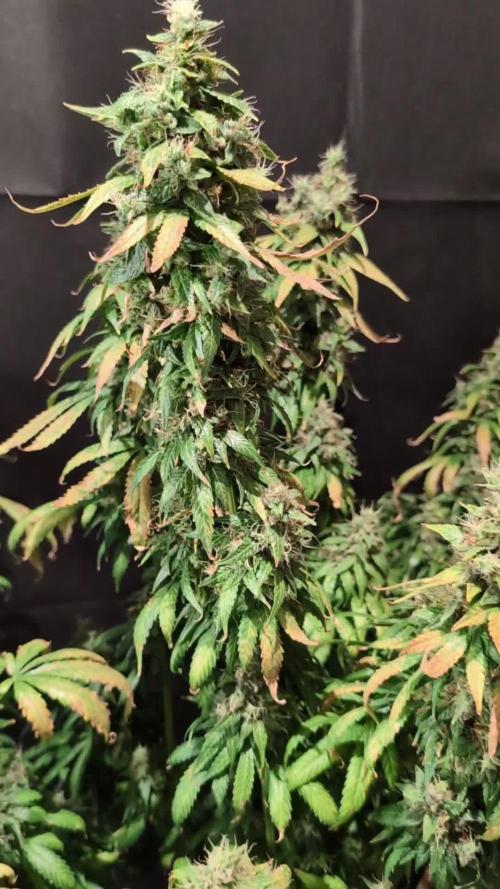
Nach der zehnten Blütewoche kommen wir endlich in die finale Blütewoche!
Daher war es erneut Zeit diese unter die Lupe zu nehmen.
Fast alle Trichome sind milchig und es sind auch allmählich bärensteinfarbene Trichome zu sehen.
Daher ist es nächste Woche Zeit für die Ernte
Die Pflanze entwickelt einen eher würzigen und von Kräuternoten geprägten Geruch.
Die Pflanze ist von der Beschreibung her nicht darauf getrimmt viele Trichome auszubilden, da dass Hauptaugenmerk ja auf die THCV Produktion gelegt wurde.
Die Umgebungsgegebenheiten sind trocken und warm
—————
🌞 Temp: 27°C
🌚 Temp: 18°C bis 19°C
💨 RH: 56%
VPD: 1,42 kPa
😎 PPFd: 830 mqm
—————
Viele Grüße 👋

Likes
13
Share


@HeartStrong_Garden
Follow
Her buds are getting really nice and plump. I'm doing trichome checks every other day or so. Only seeing amber on the sugar leaves
Likes
31
Share


@Alex8o
Follow
So far so good till now,i Just spotted a leaf that Tells a Little potassium deficiency(solved,Just a temporary deficiency).
Topped and FIMmed one,still keep going.
I bit stressed plants by the lights and i decided to remove scrog net for Better inspecting and rotate plants,definitely not good for autoflower plants. This week i watered 1 litre Every 2 days.



Likes
52
Share


@Ultraviolet
Follow
Once again she passes my expectations, late to the show with trichome production. I'm surprised there is purple on the bud, maybe Purpinator does work. I thought I could see hints under the grow lights and thought my eyes were deceiving me, I was just being hopeful. But nah 2 of the 3(under the UV) have developed a beautiful tone of purple. I was never going to bother with a deep freeze but maybe the whole bud will change given conditions, that would be something, fingers crossed. 🤔 was a little skeptical that reducing temps humidity would change density, but it does, buds are solid something I've not been able to achieve before.
Rule of thumb is never to surpass 60% RH in the flowering phase and try to progressively reduce it down to 40% in the last 2–3 weeks before harvest. The plant will react as it seeks to protect its flowers, responding by producing denser buds and a higher concentration of resin. Cannabis plants are sensitive to sudden temperature changes, especially in the flowering stage. Extreme heat or cold can impact bud density and overall yields. In nature as a defense mechanism from cold, the plant sensing sudden dips in temperature will attempt to remove the pockets of air within the bud, it achieves this by compacting itself in doing so to better protect itself from cold snaps which are normally indicators in nature that worse weather is on the way.
Terpene levels are the highest just before the sun comes out. Ideally, you want as many terpenes present in your plants as possible when you harvest. Cannabis plants soak up the sun during the day and produce resin and other goodies at night. The plant is at its emptiest from "harvest undesirables" so to speak right before the lights on. Boiling cannabis roots during harvesting slows down the drying process. When you boil cannabis roots, it shocks the plant, closing the stomata on the leaves. This prevents massive moisture loss through the leaves, leaving only the floral clusters actively losing moisture at a reduced pace. I've always run a strict 60/60 and it took almost twice as long to dry to a snap than previous grows where I didn't boil for what it's worth.
Chlorophyll is good for the plant but not for you. When you harvest the buds, even after you flush them, if you flush them, they’re still filled with chlorophyll. Freshly cut buds are greener than dried buds because they still contain loads of chlorophyll. However, when rushed through the drying process, the buds dry but retain some chlorophyll, and when you smoke it, you will taste it. Chlorophyll-filled buds are smokable, but they aren’t clean. Slow drying gives the buds enough time and favorable conditions to lose the chlorophyll and sugars, giving you a smoother smoke. How the plant disposes of the chlorophyll and sugars by a process of chemically breaking them down and attaching the decomposed matter once small enough to water molecules which then evaporate back into the ether. Time must be given to the process to break down the chlorophyll and sugars. Think of it like optimizing the environment for decay.
All the nutrients it could ever need are in abundance, it eats nutrients based on its demand for growth, which is dictated primarily by available light.
Plant growth and geographic distribution (where the plant can grow) are greatly affected by the environment. If any environmental factor is less than ideal, it limits a plant's growth and/or distribution. For example, only plants adapted to limited amounts of water can live in deserts. Either directly or indirectly, most plant problems are caused by environmental stress. In some cases, poor environmental conditions (e.g., too little water) damage a plant directly. In other cases, environmental stress weakens a plant and makes it more susceptible to disease or insect attack. Environmental factors that affect plant growth include light, temperature, water, humidity, and nutrition. It's important to understand how these factors affect plant growth and development. With a basic understanding of these factors, you may be able to manipulate plants to meet your needs, whether for increased leaf, flower, or fruit production. By recognizing the roles of these factors, you'll also be better able to diagnose plant problems caused by environmental stress.
Water and humidity
*Most growing plants contain about 90 percent water. Water plays many roles in plants. It is:*
A primary component in photosynthesis and respiration
Responsible for turgor pressure in cells (Like the air in an inflated balloon, water is responsible for the fullness and firmness of plant tissue. Turgor is needed to maintain cell shape and ensure cell growth.)
A solvent for minerals and carbohydrates moving through the plant
Responsible for cooling leaves as it evaporates from leaf tissue during transpiration
A regulator of stomatal opening and closing, thus controlling transpiration and, to some degree, photosynthesis
The source of pressure to move roots through the soil
The medium in which most biochemical reactions take place
Relative humidity is the ratio of water vapor in the air to the amount of water the air could hold at the current temperature and pressure. Warm air can hold more water vapor than cold air. Relative humidity (RH) is expressed by the following equation:
RH = water in air ÷ water air could hold (at constant temperature and pressure)
The relative humidity is given as a percent. For example, if a pound of air at 75°F could hold 4 grams of water vapor, and there are only 3 grams of water in the air, then the relative humidity (RH) is:
3 ÷ 4 = 0.75 = 75%
Water vapor moves from an area of high relative humidity to one of low relative humidity. The greater the difference in humidity, the faster water moves. This factor is important because the rate of water movement directly affects a plant's transpiration rate.
The relative humidity in the air spaces between leaf cells approaches 100 percent. When a stoma opens, water vapor inside the leaf rushes out into the surrounding air (Figure 2), and a bubble of high humidity forms around the stoma. By saturating this small area of air, the bubble reduces the difference in relative humidity between the air spaces within the leaf and the air adjacent to the leaf. As a result, transpiration slows down.
If the wind blows the humidity bubble away, however, transpiration increases. Thus, transpiration usually is at its peak on hot, dry, windy days. On the other hand, transpiration generally is quite slow when temperatures are cool, humidity is high, and there is no wind.
Hot, dry conditions generally occur during the summer, which partially explains why plants wilt quickly in the summer. If a constant supply of water is not available to be absorbed by the roots and moved to the leaves, turgor pressure is lost and leaves go limp.
Plant Nutrition
Plant nutrition often is confused with fertilization. Plant nutrition refers to a plant's need for and use of basic chemical elements. Fertilization is the term used when these materials are added to the environment around a plant. A lot must happen before a chemical element in a fertilizer can be used by a plant.
Plants need 17 elements for normal growth. Three of them--carbon, hydrogen, and oxygen--are found in air and water. The rest are found in the soil.
Six soil elements are called macronutrients because they are used in relatively large amounts by plants. They are nitrogen, potassium, magnesium, calcium, phosphorus, and sulfur.
Eight other soil elements are used in much smaller amounts and are called micronutrients or trace elements. They are iron, zinc, molybdenum, manganese, boron, copper, cobalt, and chlorine. They make up less than 1% of total but are none the less vital.
Most of the nutrients a plant needs are dissolved in water and then absorbed by its roots. In fact, 98 percent are absorbed from the soil-water solution, and only about 2 percent are actually extracted from soil particles.
Fertilizers
Fertilizers are materials containing plant nutrients that are added to the environment around a plant. Generally, they are added to the water or soil, but some can be sprayed on leaves. This method is called foliar fertilization. It should be done carefully with a dilute solution because a high fertilizer concentration can injure leaf cells. The nutrient, however, does need to pass through the thin layer of wax (cutin) on the leaf surface.
It is to be noted applying a immobile nutrient via foliar application it will remain immobile within the leaf it was absorbed through.
Fertilizers are not plant food! Plants produce their own food from water, carbon dioxide, and solar energy through photosynthesis. This food (sugars and carbohydrates) is combined with plant nutrients to produce proteins, enzymes, vitamins, and other elements essential to growth.
Nutrient absorption
Anything that reduces or stops sugar production in leaves can lower nutrient absorption. Thus, if a plant is under stress because of low light or extreme temperatures, nutrient deficiency may develop.
A plant's developmental stage or rate of growth also may affect the amount of nutrients absorbed. Many plants have a rest (dormant) period during part of the year. During this time, few nutrients are absorbed. Plants also may absorb different nutrients as flower buds begin to develop than they do during periods of rapid vegetative growth.
432 Hz is said to be mathematically consistent with the patterns of the universe. Studies reveal that 432 Hz tuning vibrates with the universe’s golden mean PHI and unifies the properties of light, time, space, matter, gravity and magnetism with biology, the DNA code and consciousness. When our atoms and DNA start to resonate in harmony with the spiraling pattern of nature, our sense of connection to nature is said to be magnified.
Another interesting factor to consider is that the A=432 Hz tuning correlates with the color spectrum while the A=440 Hz is off.
Audiophiles have also stated that A = 432 Hz music seems to be non-local and can fill an entire room, whereas A=440 Hz can be perceived as directional or linear in sound propagation.
Once you adopt the idea that sound (or vibration in general) can have an equalizing and harmonizing effect (as well as a disturbing effect), the science of harmony can be applied to bring greater harmony into ones life or a tune to specific energies. There is a form of absolute and of relative harmony. Absolute harmony can for example be determined by the tuning of an instrument. The ancients tuned their instruments at an A of 432 Hz instead of 440 Hz - and for a good reason. There are plenty of music examples on the internet that you can listen to in order to establish the difference for yourself. Attuning the instrument to 432 Hz results in a more relaxing sound, while 440 Hz slightly tenses up to body. This is because 440 Hz is out of tune with both macro and micro cosmos. On the contrary, 432 Hz is in tune. To give an example of how this is manifested micro cosmically: our breath (0,3 Hz) and our pulse (1,2 Hz) relate to the frequency of the lower octave of an A of 432 Hz (108 Hz) as 1:360 and 1:90.
It is interesting to note that 432 Hz was the standard pitch of many old instruments, and that it was only recently (19th and 20th century) the standard pitch was increased. This was done in order to be able to play for bigger audiences. Bigger audiences (more bodies) absorb more of the lower frequencies, so the higher pitch was more likely to “cut through”. One of the oldest instruments of the world is the bell ensemble of Yi Zeng (dated 423 BC), tuned to a standard F4 of 345 Hz which gives an A= 432 Hz. The frequency of 345 Hz is that of the platonic year! Similarly many old organs are tuned in an A=432 as well; for example: St. Peter’s Capella Gregoriana, St. Peter’s Capella Giulia, S. Maria Maggiore in Rome.
Maria Renold’s book “Intervals Scales Tones and the Concert Pitch C=128 Hz” claims conclusive evidence that 440 Hz and raising concert pitch above scientific “C” Prime=128 Hz (Concert A=432 Hz) disassociates the connection of consciousness to the body and creates anti-social conditions in humanity.
The difference between concert pitch A=440 Hz and Concert A=432 Hz is only 8 cycles per second, but it is a perceptible difference of awareness in the human consciousness experience of the dream we share called existence.


Likes
4
Share


@420Paddy
Follow
Wedding cake was a failure, will still produce something but definitely not worth the run. Shit happens. Coming down in a few days.
Others are thriving and look to have another week or 2 left in them if not longer.


Likes
5
Share


@Ninjabuds
Follow
It’s the 1st week of flower I flipped the plants to 12/12 a few days ago. There is a lot going on and a lot of cool and amazing things coming in the near future. Make sure to check out my YouTube page. I bought me a DJI gimbal this week. Might be my new favorite toy. The temps are starting to break for the summer. I don’t see it being very long until winter is here and it’s time to use a heater and not an ac unit. All of the plants are healthy. The plants have all grown so well I turned down the light intensity a bit today the plants didn’t seem like they was starting to strech very much. Hopefully the lower light intensity will make them strech out just a bit

Likes
Comments
Share


@Cannajo
Follow
Still just watering with ph water at 6.2 , steady growth slower than the other grow I’m growing (banana cream sundae) but still thin leaves. No nutrients soil was pre amended should last it a while
Likes
15
Share

@masterofsmeagol
Follow
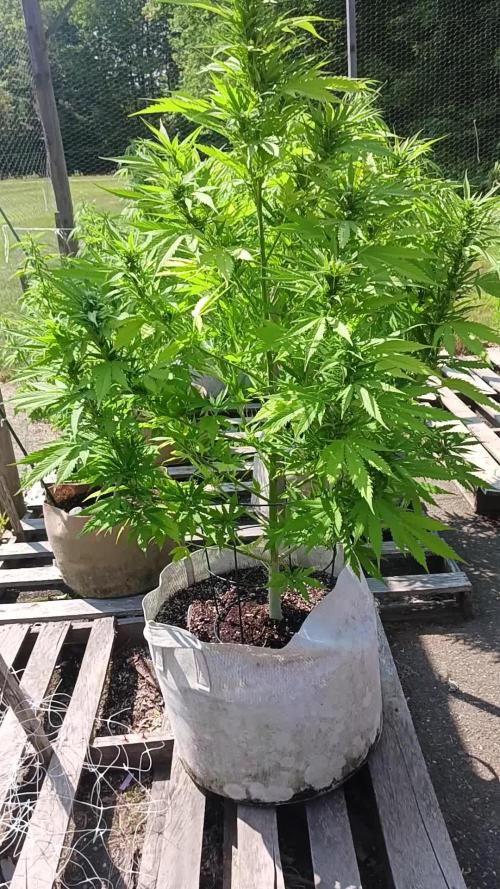
8/10 Hurried morning. Today was water day and the hose fucked up. Dad got it working while I filled half the jugs needed with water and the requisite amount of plant doctor. I gave the preventative dose (which is 1/2 tsp per gallon but I upped it closer to 1 tsp per gallon) on the plants that have received the three full treatments, the 10th planet in the middle and the chemdog. The rest received their last full dose. I had watered the NATURAL mk ultra and other tenth planet yesterday so I'm waiting until tomorrow when the need water to give them their treatment. Other than the 10th planet I'm worried things are going pretty good. Tjat's probably tine too. I certainly wouldnt have even noticed it a few years ago. I only bought like half the amount of soil as last year and really tried keeping costs down. These aren't the biggest plants I've grown but I'm grateful for what I have. I'm working hard to get the most out of them I can. I'm planning to give it a few days and then feed later in the week.
EDIT: I THINK I got my grow question deleted. Finally. It's strange that I didn't get ONE outdoor growers response. Doesn't matter. I figured out the best course of action. I'm lucky. Or maybe I just work hard. I defoliate twice a day. I have some pruning to do on the interior of a COUPLE plants. I've cleaned them up pretty good this year. No signs of ANY wpm which is great but suprisinging considering the rh and the rolling fog most mornings.


Likes
12
Share


@leafy_greenz
Follow
Note: Moisture and Temp readings are done in the mornings.
Lights are on an automated 17/9 schedule unless stated otherwise.
Drip water system waters 1 Liter every 9 hours.
Quick Notes: I notice as I go into full-blown flower, the plants are starting to need less frequent waterings, especially North. The watering system overflows her pot often, and the AKs soils feel relatively damp before the auto-watering starts. All plants are stopping their growth also. North is the furthest into flowering and is starting to smell and get sticky, the microscope is showing trichome development also.
📏: AK1: 36 in (91.44 cm), AK2: 44 in (111.76 cm), North: 24 in (60.96 cm)
Day 64 (Jul 29) - Manually watering today. All plants drinking a bit slower, especially North (probably had a 0.5 liter overspill). Refilling drip water system tomorrow to get a better pace for watering.
💧: Tap: 7.45 pH
Adjusted with pH down.
AK1: 1.5 liter (5.95 pH, 1 ml FloraMicro, 2 ml FloraGro, 3 ml FloraBloom, 2.5 ml CalMag) ~1220 PPM
AK2: 1.5 liter (6.05 pH, 1 ml FloraMicro, 1.5 ml FloraGro, 3 ml FloraBloom, 2.5 ml CalMag) ~1150 PPM
North: 1.5 liter (x pH, 1 ml FloraMicro, 2 ml FloraGro, 3 ml FloraBloom, 2.5 ml CalMag)
💦: 57% (37-67) - 🌡️: 27C (22-30)
Day 64 (Jul 30) - Noticing Plants drinking slower. Soil not completely dry in the mornings as usual. Defoliated AK2 a bit more. Attempted to Supercrop but decided not to follow through (crushed main trunk between fingers without bending it over)
Watered all plants and refilled drip water system with 14.2 liters.
💧: Tap: x pH
Adjusted with pH Down.
All: 14.2 liter (6.2 pH, 14.5 ml FloraMicro, 14.5 ml FloraGro, 33.5 ml FloraBloom, 33.5 ml CalMag) ~1250 PPM, ~2250 EC
💦: 49% (38-70) - 🌡️: 28C (20-30)
Day 65 - Plants look healthy. Set drip System to water 1 liter every 9 hours.
💦: 38% (36-65) - 🌡️: 26C (20-29)
Day 66 - Plants look healthy.
💦: X% -🌡️: xC
Day 67 - Trimmed some leaves below. Humidity spiked unexpectedly, buying dehumidifier.
💦: X% (40-79) - 🌡️: XC (21-29)
Day 68 - Humidity spike overnight. Manually watered AK1 & AK2, not North (didn't seem like she needed it).
Looks like the plants are needing a bit less watering overall.
💧: Tap: x pH
Adjusted with pH down.
AK1: 1.5 liter (6.05 pH, 1 ml FloraMicro, 1.3 ml FloraGro, 2.3 ml FloraBloom, 2.3 ml CalMag)
AK2: 1.5 liter (5.95 pH, 1 ml FloraMicro, 1.3 ml FloraGro, 2.3 ml FloraBloom, 2.3 ml CalMag)
💦: 45% (39-71) - 🌡️: 27C (20-29)
Day 69 (week 9) - Humidity spike overnight. Set water system to water 1 liter every 11 hours. Dehumidifier came in mail, monitoring effectiveness throughout the day and tomorrow. Refilled water system and set to water 1 liter every 10 hours.
All: 14.2 liter (6.2 pH, 14.5 ml FloraMicro, 14.5 ml FloraGro, 33.5 ml FloraBloom, 33.5 ml CalMag) ~1550 PPM
💦: 44% (36-70) - 🌡️: 26C (19-29)

Processing
Likes
142
Share


@MadeInGermany
Follow
Hi everyone 🤗.
Everything is going great 👍.
There are no defects or anything unusual :-).
Today the Blue Cheese Pheno 1 became the first time rinsed, and now only gets 0.4 Ec water for the next 10 days ca :-).
Everyone else needs a while.
otherwise there is not much to report this week.
I wish you all a nice week, stay healthy 🙏🏻 and let it grow 🌱


Likes
12
Share


@prebiancagrower
Follow
Helloooo good people, how are you all?
I am very happy with this ladies, the Northern Light leaves are sooooo beautiful, wtf!!! :-D
The roots are amazing as well!
The Mimosa Auto I had to clean up all the plant, she was a little bit weak, but on the next day after defoliation, she was wonderful, full of energy again!!!
A happy growth for everyone.
Love!!
Likes
27
Share


@Jens_420
Follow
Sehr schön am gedeihen. Kann nicht genau sagen, wann sie fertig sein wird, das Wetter ist bei uns zurzeit mies wechselhaft, muss sie teilweise manchmal einen ganzen Tag im Schatten stehen lassen. Trichome sind milchig, teilweise auf den Zuckerblättern ein paar vereinzelt bernstein
Likes
22
Share


@Ieiogrow94
Follow
Tutto perfetto piante molto molto soddisfacenti!
Sicuramente verranno riproposte!!
Grazie a tutti del supporto e al team @Kannabia per la collaborazione ❤️💚
Ne vedremo delle belle!!!

Likes
18
Share


@Grower_Of_Persia
Follow
week intel:
its time to harvest some of plants the ones that is mature enough. indica dominant plants will done first always so we should harvest them first
because my base nutrients and one of boosters was salt based, i'll do flushing this week to get some relieve to plants in the last days
stresses :
flushing
Drought stress via watering only one time with flushing this week
feeding:
day 1 : i flushed them with Advanced Nutrients Flawless finish and adjusted ph
day 3 : no more feeding from now on
day 5 : no more feeding from now on
guide of the week :
i harvest in 2 parts : first i harvest top of the branches and will let the lower buds to ripe another week then ill harvest the second wave.
indica dominant plants will get done 1 or 2 weeks sooner than sativa dominant plants that will often takes more than 8 weeks so be aware to harvest them sooner.
my dry and cure style is this:
3 days of hanging upside down to get water activity lower to around 0.6 in 50% humidity and 26 C temp (i know its a little high but we are in a hot summer right now and i cant get it lower even with air conditioner) and then after 3 days of drying i remove leaves and stalks, trim buds and move them to jar for the rest of their life :D . and in the first 4 days of curing i open the jar door and let hem get some fresh air in the jar for about 5 minutes and close the jar door again, after 4 days of curing like that buds are smokable but they will get better as they getting cured about 1 month.
im happy as hell with this harvest :D.
