


Likes
Comments
Share

@RooftopFarmer
Follow
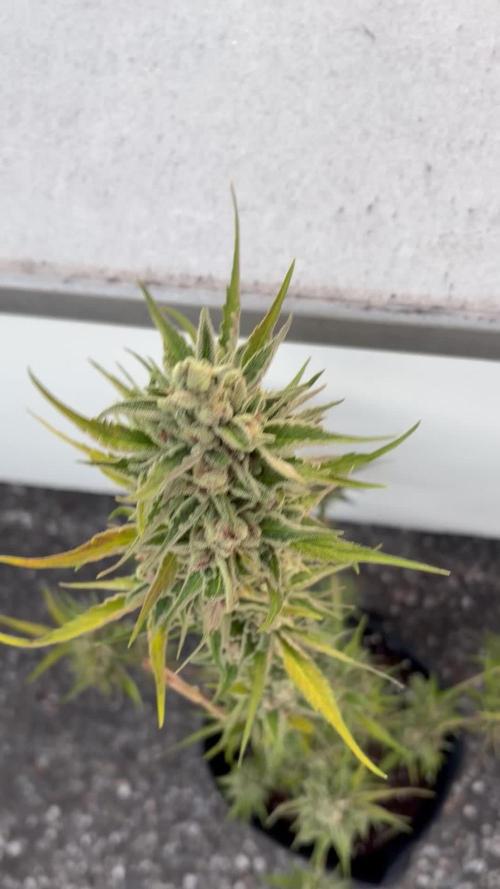
Banana Guava – Week 11 (Fast Buds Outdoor 2026)
Banana Guava is nearly ready. She mainly showed a lot of dried out leaves, so I removed most of them (defoliation).
She smells amazing and very strong.

Likes
64
Share


@valiotoro
Follow
The buds are exactly how I like them super dense, frosty, and sticky!
The smell almost makes you hungry… gonna pair perfectly with the afternoon coffee, haha!
Biscotti see you soon


Likes
60
Share

@GrowerBaal
Follow
Day 92
Had no time.
Day 93
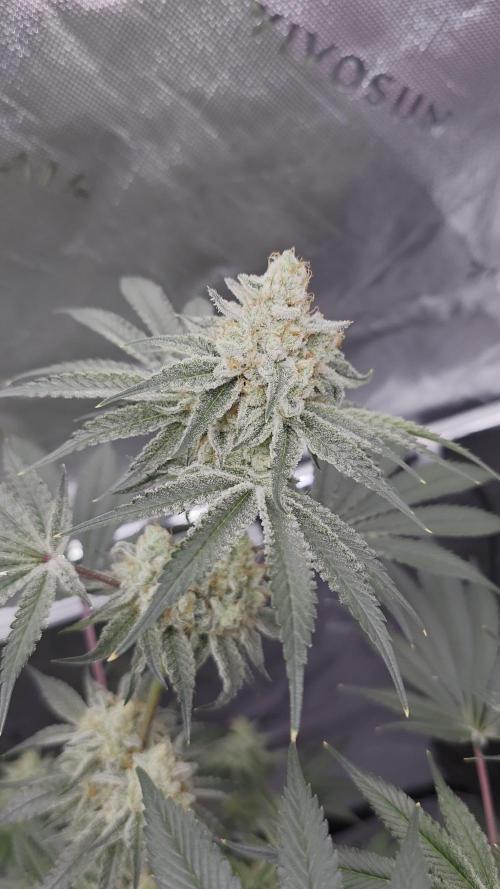
Her eighth full week of flowering started yesterday and today is the 55th day on 12/12. HSC wrote she needs 50 to 55 days to mature, so i will check her this weekend. Her buds became already very frosty . As the heat wave had ended the humidity inside also decreased.
Day 94
Decided to chop her after i checked the trichomes. There are already amber ones at the buds on the middle of the height. She smelled intensively like sour oranges.

Likes
Comments
Share

@Lf1190
Follow
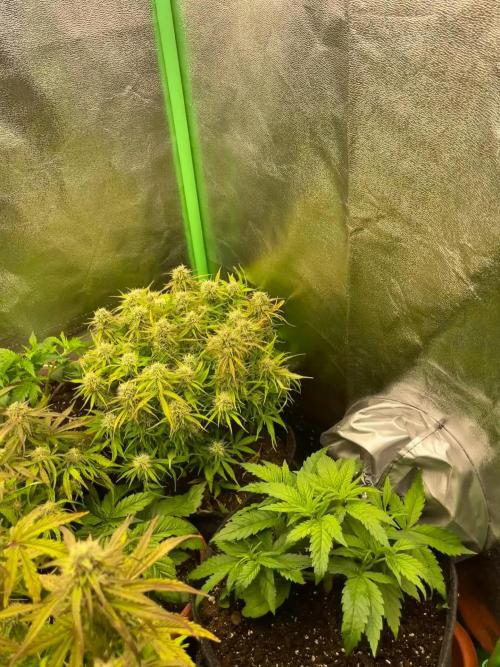
The only plant I grew outside was a hulkberry; unfortunately, I was too impatient and harvested it earlier than I should have. I also lack many pictures beyond some veg the harvest and the rest of plant.
Likes
16
Share


@JJs_Js
Follow
Plants have officially started their flower cycle this week. Gradually increased light wattage from 75% to 100%, originally had the light at 15” but raised to 17” after seeing small signs of light burn. My cheap Amazon PH meter broke after 2 months so I’m currently using the GH PH tester solution - hoping to pick up a Bluelab pen by the end of the week.
The green crack has been the fastest growing seed by far! It’s been a bit nerve-wracking defoliating her, I keep having to pull leaves to uncover her flower sites (I know I’ll have to do it again too).
One of the LSDs I’m experimenting with- I put about 2 inches of super soil (Subcool’s recipe) on the bottom of the pot and am continuing to feed her on the same regiment as the others. She’s happy with no signs of nute burn! The West Coast OG on the other hand seems to be a light feeder and had a bit of nute burn, so I’ve been going extra light on feeding.
As we get deeper into flower, I will be posting more individual photos of each plant so you can see the bud development.
Likes
43
Share


@Jack_Greenstalk
Follow
week 3, at day 21 I started to defoliate. needs more airflow around colas. This is the start of defol, will clean and prune as needed next week. Stretching has slowed and colas are starting to stack. Ran a sort of modified manafold into the scrog. "V" on the left has 15 tops from 4 main stalks, she was topped to 4th node early on. "Blue nemo" was topped to the 3rd node early, she has 18 tops after the week 3 prune of the week lowers who couldnt make it up to the canopy. I left some popcorn buds down low that have began to develop, will throw these in the ice water hash after harvest.

Likes
Comments
Share

@GothBotanical
Follow
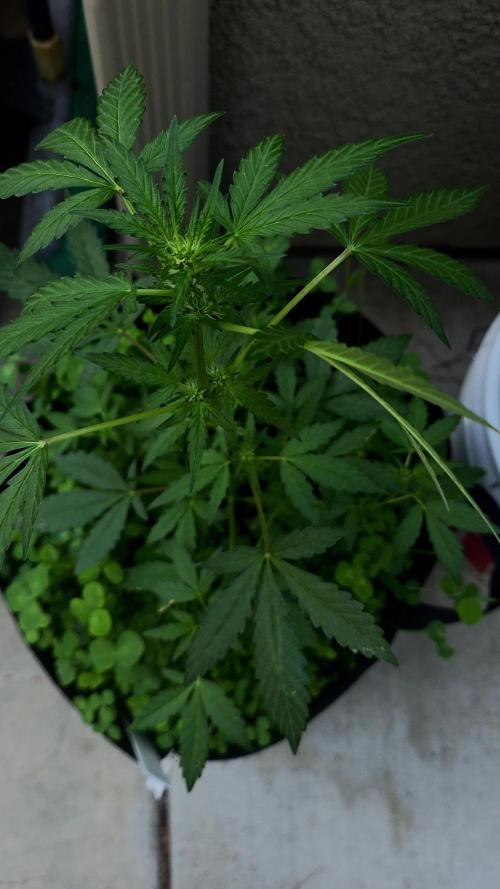
The outdoor girls settled into mid-vegetative growth this week under stable late-summer conditions. Daytime highs hovered in the mid-80s °F with warm evenings and good airflow. The 5-gallon plant continued to bulk up with thick stems and wide fans, while the two 3-gallon pots stayed slightly smaller but healthy and even. Light training was maintained to keep open canopies and even tops. All three plants showed solid color—medium green with no major deficiency signs—but minor heat stress and light leaf curl appeared on the hottest days. They were watered evenly through the auto-watering bases with RO water and light Cal-Mag, letting the soil dry back fully before refilling. No top-dress or compost tea this week; amendments from earlier feedings were still active. Overall, Week 6 was a steady outdoor stretch phase with healthy structure, balanced moisture, and a smooth lead-in toward pre-flower.
Likes
5
Share


@LittleBigTrees
Follow
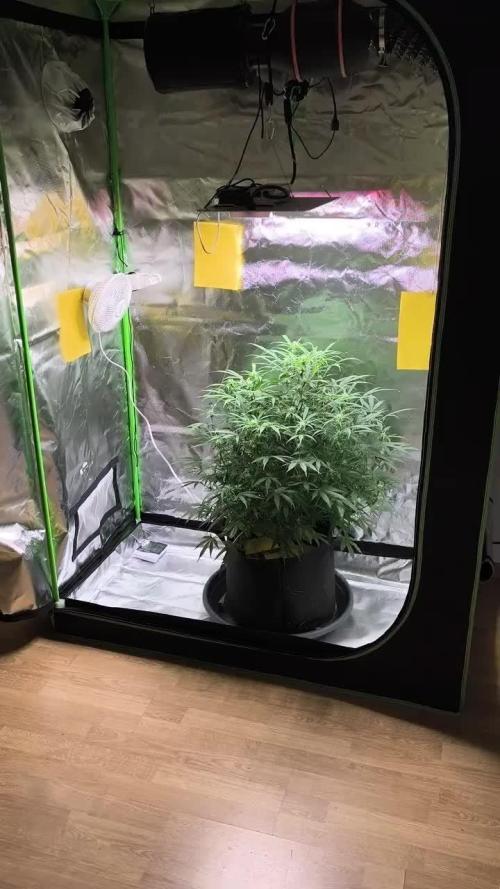
I've defoliated a little as I go.
One of the watermelon candy has a flat stem (Fasciation) I've been trimming the leaves as they are growing in abundance on the affected branches.
The black orchid smells so good it's very pungent and captivating, I'm really looking forward to trying it now.
Likes
2
Share


Likes
7
Share


@eldruida_lamota
Follow
Vamos familia, actualizamos la 4 semana de floración de estas Gelato Olandese de Dutchfem Seeds .
Y es que hasta aquí todo va correcto , están enormes, tienen un buen color, se ven sanas, y van progresando las flores adecuadamente.
La alimentación de Agrobeta la están aceptando muy bien , ya se las puede apreciar.
Agrobeta:
https://www.agrobeta.com/agrobetatiendaonline/36-abonos-canamo
Mars hydro:
Code discount: EL420
https://www.mars-hydro.com/
Las maximas de temperatura no superan los 26 grados y las mínimas no bajan 20, así que no me puedo quejar.
Los niveles de humedad también son los correctos van entre 50%/65% de humedad relativa.
Por supuesto el Ph lo estamos dejando alrededor de 6.
Hasta aquí es todo, buenos humos 💨💨💨.

Likes
16
Share


@osmrducks
Follow
Day 22: Honestly didn't think I would have made it this far. The girls are looking great minus a couple of issues. I have over watered them and over fed too! Not to mention trying to LST too early. I will wait a bit longer before watering this time.
Day 23: MORNING - They were super dry. I have been over watering a bit so I watered maybe 1/2 gallon for all 6. I also did some more LST and took 1 large fan leaf off of each plant. I will update again before lights out.
Day 23: NIGHT - The girls are responding very well to the LST. I don't think they are liking the 80°. I am starting to have issues with lower humidity again. I need to try and figure some sort of ducting out or possibly even get a small AC unit for the grow room.
Day 24: MORNING - I removed a couple more leaves that were covering potential bud sites. I have also done a partial main-line on the smallest girl. It looks to be already showing pistols. I've had to open the tent with a big fan blowing directly in with the humidifier behind it. The girls were getting hot and dry.
Day 24: NIGHT - Well 5 are showing to be female. The biggest plant is showing no signs of sex. I am guessing it will be the mystery seed. I will be doing no more LST to these ladies for at least a week or better. I think I have stressed them out enough the past 2 days.
Day 25: These girls are very resilient!! I tortured them all weekend and the one I nopped off to do a sort of mainline grew by 20% at least.
Day 26: It is the official 3 week mark today and the girls are starting to flower. I tied em down to get light to all bud sights. I will 100% not touch them unless they need it from this point!!!! They are soo small and I need not stunt them any more!! I have removed the Mystery Seed as it looks to be a male and I do not want to take the chance!! Also fed and watered today. Only 200 ppm for the feed.
Day 27: Nothing new to report. These girls are gonna be tiny :| I must've stressed em too much too soon :( Looking good though I think! 💪
Day 28: I never do what I say. Dumb! Broke main stem on one of the best plants. Taking it as a lessons learned. It's been two hours and she looks SICK! Oh well.

Processing
Likes
35
Share


@Njaak
Follow
Added 2 videos on preparing a nutrient solution and pH balancing the solution.
This week saw aggressive topping (mid week 4) and some serious leaf damage. Not sure if the leaf damage is from the topping, nutrients, etc. I did a flush and solution swap, cleaned the air stone and inside of the jar etc. Built the trellis and started training. I'll cut away whatever trellis doesn't end up getting used once flowering starts.
Creepy Don Santa is watching this grow closely. That cat of his is trouble.

Likes
12
Share


@TMGrow
Follow
11.01 - Watered ~ 3L with worm casting tea (2Gal water, 2 cups worm castings, 2 TBPS Roots Bloom Terp Tea)
11.02 - Solid defoliation of fan leaves and removal of bud sites below scrog
11.04 - Misted soil
11.05 - 3 L w/ 1/2 tsp Recharge - Top dressed with 2 Tbps Terp Tea Bloom
Likes
67
Share


@Dunk_Junk
Follow
Wow....
This week.... She stinks!! Way more than anything else in the tent!! 😍 Very citrus. Very very lime!! 😍
Look at the amount of trichomes she has. It's crazy! Do all CBD strains do this?
I'm thinking there's a week or two left for harvest.....
Anyway, apologies for poor pics this week, they're all getting too big to get in and out the tent without damage. Last week I snapped the main cola on her last week 😭 It is taped up and a cane support added. It will survive! 💪
EDIT: I realised I'd uploaded completely the wrong pictures 😅 😂 😜

Likes
7
Share

@Thomas86
Follow
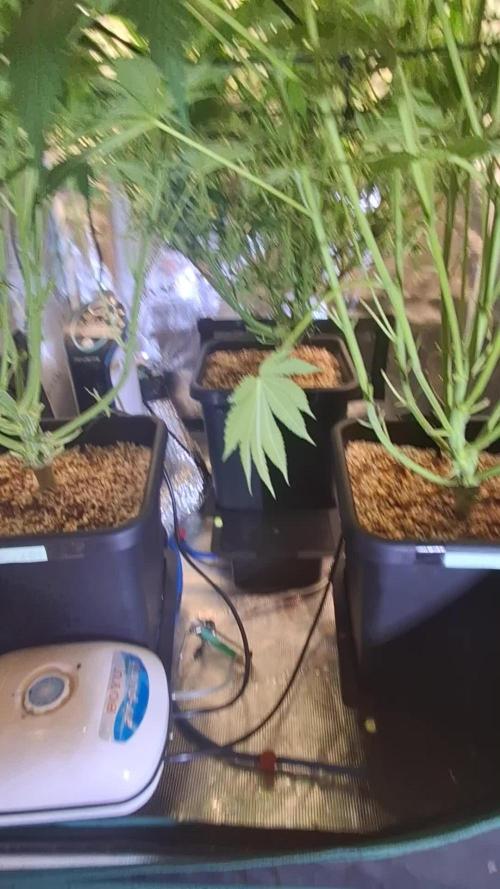
The cherry cola at the front stretched more this week, theres no room left in the tent so hopefully thats its vertical height achieved, had a minor problem with the autopot valve on the banana punch blocked with dirt so I replaced it with a spare, started using pk 13/14 in the rez yesterday, Not much else going on this week, humidity is still high but dropping, hoping the 2 front plants start focusing on bud production this week.
Likes
54
Share


@WishiFishi
Follow
***May 22
Finally harvest day! Thank you all for following along if you have made it this far.
A few things to say about this strain;
I had a wonderful experience with freakshow by 7east genetics. It was easy to grow, and very forgiving. It seemed like it didn't care what I threw at it.
It is very stress resistant and powdered mildew resistant.
There were days that the reservoir wasn't filled as high as it should have been, days where I forgot to open the tent up (so it sat at 100% humidity a couple times, for a day at a time), and not bothered one bit.
I didn't do any training on this girl whatsoever other than picking a few fan leaves off here and there.
It is a very airy strain with the leaves being very light penetrating, so not much worry about light blockage.
I would 100% recommend this strain for anyone who is new to growing or lives in a humid climate.
The plant finished off with some nice purple hues on the leaves, not too much on the buds themselves.
Smells of vanilla coffee, a very sweet and warm aroma.
Will update more as it dries and will post smoke review once finished!
***May 26
Throwing more color as it dries. Trying to dry it nice and slow.
***May 29
Nugs were a little wet and squishy on the 26th, now they are hardening up!

Likes
12
Share


@CordersGreen
Follow
👉DIA 10/1/2022👈
👇👇👇👇👇👇👇👇👇👇👇👇👇👇👇👇👇
vamos con su 2º semana de crecimiento, están hermosísimas y un color, altura y anchura impresionantes!!
👉instrucciones:👈
- vamos a colocar los tutores porque todavía no tienen demasiadas raíces. y he preferido de colocarlo ahora que luego en floración para no hacerles daño.
- preparamos el agua opmotizada 30L.
- realizamos el aporte de abonos de nuestra tabla.


Likes
4
Share

@HoneyBlunt42
Follow
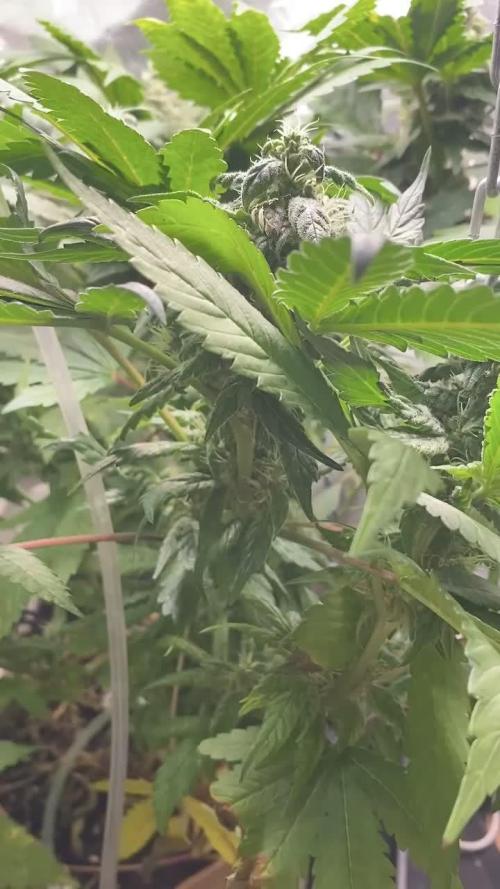
It's blooming beautifully. It's been on automatic watering all week. A 5mm tube is attached to the roots. Currently, a 5-liter bottle lasts 2-3 days per plant. I'm thinking of installing a 15-liter canister so I can go at least a week without having to look at it.
Currently, the 5-liter tank with the solution is pumped with oxygen by an aquarium aeration stone and a 2.5-watt Hailea pump (a powerful one, but that's the only one I had in stock).


