


Likes
Comments
Share

@Relentless-Pressure
Follow
💚💚💚💚💚
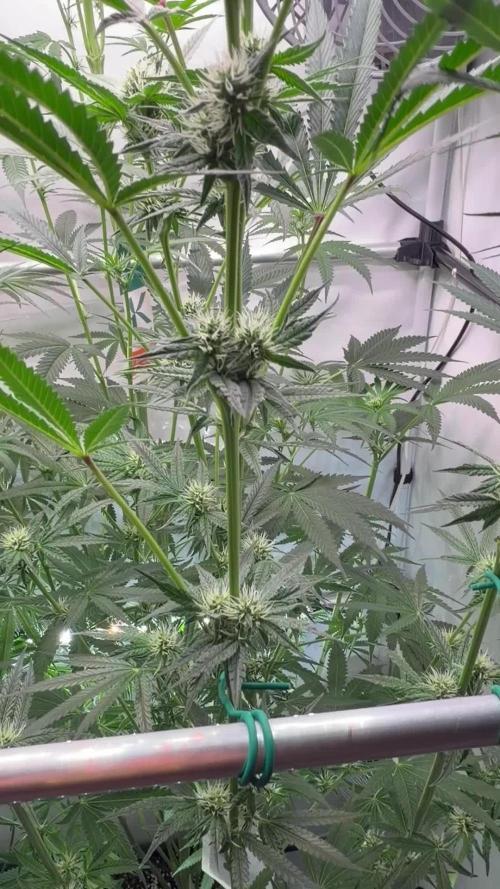
Day 29-34 12/12
Fast Finishing for sure I bet I can finish her in 55 days but the other babes Need more time so I think she will be sittin around and waiting on her Girls like we do always 🤣🤣🤣💚💚💚 i love and will never forget you 🐭

Likes
6
Share

@For2itous
Follow
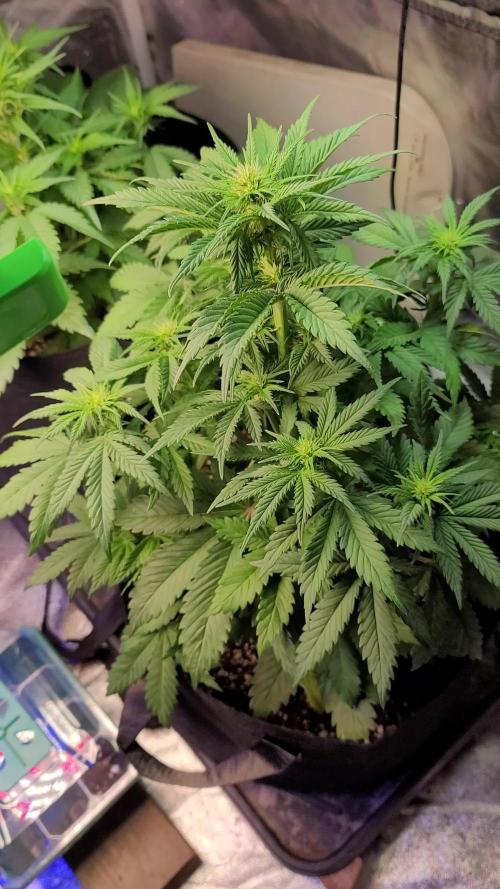
Just some lst bending of leaves and stuff rn. Wow has this plant exploded with vigor so far 😎 growing quicker than the guava next to her. Can't wait to see how big it actually gets since my light setup is subpar lol. Happy growing 🌴


Likes
26
Share


@PedroAndHisPlants
Follow
Day 99: New Week
We've decided against using additional nutrients and have completely stopped fertilizing. The light cycle has been reduced to 11 hours, and we're already starting to give them cooler water. Starting Monday, I will be watering with ice water to stress the plants further, aiming for higher yield, more terpenes, and increased frost. The adjustment to the light cycle should also help the plants ripen evenly.
The lights are hanging about 20 cm above the buds, which are getting thicker every day, soaking up the light intensely. In about a week, most of the plants should be ready for harvest. We plan to stop watering them for about 100 hours before harvest. During this period, I'll place ice cubes on the soil to shock the roots one last time.
48 hours before harvest, I will turn off the lights, giving the plants two days of darkness. After this period, the plants will be cut and hung to dry.

Likes
17
Share


@Broedt
Follow
Day 70 of flowering
It has only been three days since my last update.. But hence the confusion of days past, I'll update it now again since this is day 70 and that markes week 10.
The girls are looking very nice, if I may say so myself. The smell has intensified very much during the last days, yesterday when I opened the tent it really hit me hard in Tha nostrils in a good way.
That smell that I couldn't set in words are still present but it smells lovely!
I'm not at all sure how fast the trichomes are developing, so I'm checking up on them every day. This leads to alot of uncertainty of when I should start to flush. Some leaves have been yellowing for a while, at a slow pace and I fear that I might start the flush to early or late. But I'm thinking around day 71-75 will be the last day with nutritions.
I have uploaded a picture of the trichomes, please let me know what you think?

Likes
508
Share


@Legendaryseedthumb
Follow
Well the harvest was good still the best fricking smoke ever! So much crystals and so much keif and hasch from the leaves.
Will grow it again soon! I’m going to move soon so i have to plan my next grow for some weeks before I start a new one!
Love growing Sannie’s seeds with marshydro, it’s the best!
Drying day 4: everything is going well! Smells so good in tent and super sticky crystals! Will give it 4-5 more days of drying 😁
Likes
40
Share


@KingSalomonsWeed
Follow
Oh, day 27. Flower 1
23.10.
For real? Poor plant. She doesn't look happy.

Likes
27
Share


@Salokin
Follow
Hi Growmies,
She is becoming a monster. This plant is only 18 cm tall and basically consists of stems an buds, by now she has overtaken her mother in terms of bud production, quality and bud volume. I like to believe that the one feeding of pk 13/14 stimulated it even more. As of now the feeding will get less end less, preparing her for ripening. I am a super proud of this little project and it’s outcome and looking forward to cut this beauty down in roughly 3 weeks. Not much more to do but wait.
Likes
8
Share


@Satoshiva_Nakamota
Follow
Discovered spider mites on a lower leaf (as you can see on last photo) I carefully removed and burned this leave and after a long, thorough search I did not discover 1 other affected leaf.
Better safe than sorry so I again ordered some bugs to eat the spider mites!


Likes
2
Share


@Altitonans_Fulmen
Follow
For most crops, a slightly acidic soil pH between 6.0 and 6.8 is ideal because it optimizes nutrient availability. When soil pH rises above 7.0 (alkaline), the concentration of hydrogen ions H+ drops significantly, and they are replaced by calcium, magnesium, or sodium ions on the clay colloid exchange sites. To naturally lower alkaline soil pH, you can add organic matter (carbon-rich materials), which produces weak organic acids as it decomposes. Maintaining this slightly acidic range stimulates a highly active, diverse microbial community; these microbes decompose organic matter and release carbon dioxide CO2, which plants absorb through their roots and leaves to boost photosynthesis and sugar production. Furthermore, the added organic carbon acts like a sponge, drastically improving the soil's water-holding capacity.
While soil biological activity does involve cellular electron transport, electrical conductivity (EC) in soil is actually a measure of dissolved mineral salts, not a voltage carried by individual microbes. Soil microorganisms secrete organic acids and chelate metallic and non-metallic minerals, transforming locked-up inorganic compounds into bioavailable organic complexes. Unlike harsh synthetic fertilizers that can dehydrate soil life in high concentrations, these naturally chelated nutrients safely nourish the plant, creating a thriving, self-sustaining ecosystem where plants can efficiently synthesize their own food.
Metal-based: Could include elements like iron, manganese, copper, or zinc, which are essential nutrients for plants but can exist in forms not readily accessible.
Non-metal-based: Examples like calcium carbonate, phosphate, or sulfur are also important for plant growth and potentially serve as building blocks for the organic salt.
Chelation in a plant medium is a chemical process where a chelating agent, a negatively charged organic compound, binds to positively charged metal ions, like iron, zinc, and manganese. This forms a stable, soluble complex that protects the micronutrient from becoming unavailable to the plant in the soil or solution. The chelate complex is then more easily absorbed by the plant's roots, preventing nutrient deficiency, improving nutrient uptake, and enhancing plant growth. Chelation is similar to how microorganisms create organic salts, as both involve using organic molecules to bind with metal ions, but chelation specifically forms ring-like structures, or chelates, while the "organic salts" of microorganisms primarily refer to metal-complexed low molecular weight organic acids like gluconic acid. Microorganisms use this process to solubilize soil phosphates by chelating cations such as iron (Fe) and calcium (Ca), increasing their availability.
Added sugars stimulate soil microbial activity, but directly applying sugar, especially in viscous form, can be tricky to dilute. Adding to the soil is generally not a beneficial practice for the plant itself and is not a substitute for fertilizer. While beneficial microbes can be encouraged by the sugar, harmful ones may also be stimulated, and the added sugar is a poor source of essential plant nutrients. Sugar in soil acts as a food source for microbes, but its effects on plants vary significantly with the sugar's form and concentration: simple sugars like glucose can quickly boost microbial activity and nutrient release. But scavenge A LOT of oxygen in the process, precious oxygen. Overly high concentrations of any sugar can attract pests, cause root rot by disrupting osmotic balance, and lead to detrimental fungal growth. If you are one who likes warm tropical high rh, dead already. Beneficial, absolutely, but only to those who don't run out of oxygen. Blackstrap is mostly glucose, iirc regular molasses is mostly sucrose. Sugars, especially sucrose, act as signaling molecules that interact with plant hormones and regulate gene expression, which are critical for triggering the floral transition. When sucrose is added to the growth medium significantly influences its effect on floral transition.
Probably wouldn't bother with blackstrap given its higher glucose content. Microbes in the soil consume the sugar and, in the process, draw nitrogen from the soil, which is the same nutrient the plant needs. Glucose is not an oxygen scavenger itself, but it acts as a substrate for the glucose oxidase (GOx) enzyme, effectively removing oxygen from a system. Regular molasses (powdered if you can), as soon as she flips to flower or a week before, the wrong form of sugar can delay flower, or worse. Wrong quantity, not great either. The timing of sucrose application is crucial. It was more complicated than I gave it credit for, that's for sure. When a medium's carbon-to-nitrogen (C:N) ratio reaches 24:1, it signifies an optimal balance for soil microbes to thrive, leading to efficient decomposition and nutrient cycling. At this ratio, soil microorganisms have enough nitrogen for their metabolic needs, allowing them to break down organic matter and release vital nutrients like phosphorus and zinc for plants. Exceeding this ratio results in slower decomposition and nitrogen immobilization, while a ratio below 24:1 leads to faster breakdown and excess nitrogen availability.
Carbon and nitrogen are two elements in soils and are required by most biology for energy. Carbon and nitrogen occur in the soil as both organic and inorganic forms. The inorganic carbon in the soil has minimal effect on soil biochemical activity, whereas the organic forms of carbon are essential for biological activity. Inorganic carbon in the soil is primarily present as carbonates, whereas organic carbon is present in many forms, including live and dead plant materials and microorganisms; some are more labile and therefore can be easily decomposed, such as sugars, amino acids, and root exudates, while others are more recalcitrant, such as lignin, humin, and humic acids. Soil nitrogen is mostly present in organic forms (usually more than 95 % of the total soil nitrogen), but also in inorganic forms, such as nitrate and ammonium. Soil biology prefers a certain ratio of carbon to nitrogen (C:N). Amino acids make up proteins and are one of the nitrogen-containing compounds in the soil that are essential for biological energy. The C:N ratio of soil microbes is about 10:1, whereas the preferred C:N ratio of their food is 24:1 (USDA Natural Resource Conservation Service 2011). Soil bacteria (3-10:1 C:N ratio) generally have a lower C:N ratio than soil fungi (4-18:1 C:N ratio) (Hoorman & Islam 2010; Zhang and Elser 2017). It is also important to mention that the ratio of carbon to other nutrients, such as sulfur (S) and phosphorous (P) also are relevant to determine net mineralization/immobilization. For example, plant material with C:S ratio smaller than 200:1 will promote mineralization of sulfate, while C:S ratio higher than 400:1 will promote immobilization (Scherer 2001).
In soil science and microbiology, the C:S ratio helps determine whether sulfur will be released (mineralized) or tied up (immobilized) by microorganisms.
A carbon-to-sulfur (C:S) ratio smaller than 200:1 promotes the mineralization of sulfate, when the C:S ratio is low, it indicates that the organic matter decomposing in the soil is rich in sulfur relative to carbon. Microorganisms require both carbon and sulfur for their metabolic processes. With an excess of sulfur, microbes take what they need and release the surplus sulfur into the soil as plant-available sulfate
A carbon-to-sulfur (C:S) ratio higher than 400:1 will promote the immobilization of sulfur from the soil. This occurs because when high-carbon, low-sulfur materials (like sawdust) are added to soil, microbes consume the carbon and pull sulfur from the soil to meet their nutritional needs, temporarily making it unavailable to plants.
200:1 C:S 400:1: In this range, both mineralization and immobilization can occur simultaneously, making the net availability of sulfur less predictable.
This dynamic is similar to how the carbon-to-nitrogen (C:N) ratio regulates the availability of nitrogen in soil. Just as microbes need a certain amount of nitrogen to process carbon, they also require a balanced amount of sulfur. Both mineralization and immobilization are driven by the metabolic needs of the soil's microbial population.
Sulfur is crucial for protein synthesis. A balanced ratio is particularly important in relation to nitrogen (N), as plants need adequate sulfur to efficiently use nitrogen. A severely imbalanced C:S ratio can hinder the efficient use of nitrogen, as seen in trials where adding nitrogen without balancing sulfur levels actually lowered crop yields.
Maintaining a balanced carbon-to-sulfur (C:S) ratio is highly beneficial for plant growth, but this happens indirectly by regulating soil microbial activity. Unlike the C:N ratio, which is widely discussed for its direct effect on nutrient availability, the C:S ratio determines whether sulfur in the soil's organic matter is released (mineralized) or temporarily locked up (immobilized).
Glucose will hinder oxygenation more than sucrose in a solution because glucose is consumed faster and has a higher oxygen demand, leading to a more rapid decrease in oxygen levels. When cells respire, they use oxygen to break down glucose, and this process requires more oxygen for glucose than for sucrose because sucrose must first be broken down into glucose and fructose before it can be metabolized.
In a growth medium, glucose is a more immediate and universal signaling molecule for unicellular and multicellular organisms because it is directly used for energy and triggers a rapid gene expression response. In contrast, sucrose primarily acts as a signaling molecule in plants to regulate specific developmental processes by being transported or broken down, which can be a more complex and slower signaling process.
Critical stuff.
Likes
15
Share


@SamDo
Follow
Hello, nouvelle session, et 1ere expérience cette fois ci en coco. Avec une nouvelle gamme d’engrais de chez Canna, ainsi que le substrat en coco de chez Canna aussi
J’ai constaté que les graines de Quick Critical+ ont germées très vite par rapport à la terre, ici, à peine 72h pour les 1ères. Et un joli 100% pour la germination!! Merci dinafem!👍🔥
J’ai pu aussi constaté que le réglage du PH et de l’Ec prennent ici toute leur importance,, puisque pour mes 1er arrosages j’ai oublié de contrôler l’Ec, résultat, légère brûlure sur le bout des 1ères feuilles,, j’ai immédiatement corrigé en contrôlant et en ajustant l’Ec,, les choses devraient rentrer dans l’ordre maintenant.
Voilà pour cette 1ere semaine de découverte de la culture en coco,,,
A la semaine prochaine...
Happy grow...😎

Likes
103
Share


@Schnabeldino
Follow
_____ Week 6 | Day 49 - 56 ______
Day 49 🌞
- Install 2 LED BARS from Spider-Farmer.
https://www.proximitylighting.com/home-2-1
THE OPTIMAL ADDITION OF LIGHT
By increasing PPFD levels in the most
light-hungry layers of the crop,
deploys addional wattage where it's
most useful to encourage:
• Tighter internodal spacing
• Larger average cola size
• Increased cola uniformity
• Higher output per square foot
Day 50 🌞
- 2 Liter each Plant....gluck, gluck, gluck....
Day 53 🌞
- light switch to 12/12
- defoliation all leafs under the net
Day 55 🌞
- 2,5 Liter each Plant....gluck, gluck, gluck....
____________________________________________________________________________________________
Light - 18/6 h - 400 Watt 60% Dim.
PPFD - 600 - 650 µmol
Temp. avg. - 22,1°
Hum. avg. - 72 % RLH




Likes
11
Share


@LapsekiliTayfur
Follow
Day in and exit fan 15 min off 15 min on Van is full on
Night in and exit fan 30 min off 15 min on Van is full on
10 ML Rhizitonic 5 ML Humic 5 ML Cannazym 5 ML Cal Mag 3 Gr Grow @ 5 Liter Day 22
10 ML Rhizitonic 5 ML Humic 5 ML Cannazym 5 ML Cal Mag 3 Gr Grow @ 5 Liter Day 24
22 ML Rhizitonic 22 ML Humic 20 ML Cannazym 11 ML Cal Mag 7 Gr Grow @ 11 Litre Day 26


Likes
23
Share


@PositiveVibes
Follow
Day 71: Beautiful big frosty extremely smelly buds! They keep stacking and throwing put new white pistils. Trichs are clear and cloudy. I got the smell under control with a new filter, but when I open the tent it is like a smack in the face (but in a good way). I gave her 2L of water with nutrients. More leaves are slowly fading purple too.
Day 73: 2L of water with nutes
Day 75: I am leaving for a week to travel to a funeral. Death puts so many things in perspective. I asked my girl to give the plant 2L of plain water 3 days from now and then I'll water again when I get back.
Today I gave her 2L of water with nutrients and pulled off a couple yellow leaves. The fore ast calls for rain, so I raised the light and will leave it on 24hrs to keep the humidity from rising too much. Anyway, now I have 2 fans circulating air in the tent, so there is a lot of airflow. The buds continue to grow as you can see in the pics. The smell is strong!

Likes
6
Share


@GreenGuerilla
Follow
29/06
Day40
Height 83cm
Noticed that on one of the plants that approx 70% of the leaves look exaggeratedly rough with a dusting of orangey brownish markings. This came after the bug episode I remedied with Eccofective Bug Spray (Organic)
Fed each 2L of Solution
Inoculated the rims of their pouches with Peppermint Oil. The creepy-crawlies hate it😈
07/06 Day 47
The one plant looks decidedly miserable. Weird rough leaves with slight discolouration and droopy. They're not being over or under watered.
They both receive the exact same nutrient ratio and mix.
It's been suggested to me by Bloombuster that it's heat-related. This makes sense as it was over 30c when I moved them outdoors.
They're also showing Indica genetics more than the Sativas they're meant to be. I'll make mention of this to Lineage Genetics.


Likes
49
Share


@Grasshopper96
Follow
This plant grow regular and finally male a multi fingered leaf, this Is brilliant
Likes
38
Share


@Danger90946
Follow
Day 86 12/05/2021- Week 5 of flower almost done hopefully by the end of the month. Went out on a trip and GoPro never turn on for the last two days bummer but will upload time lapse videos daily. Today the lady got nutrients as well.
Day 89 12/08/2021- Today the lady got water, really hoping to see buds starting to fatten up.
Day 91 12/10/2021- So today the lady got a special treat, freshly collected rain water. She is just doing her thing and making those buds. I have also finally put the spider farmer SF-2000 at 100%. Also end of another flowering week, see you guys next week.
--------Have a good one friends and stay high--------