



@LveR
Follow
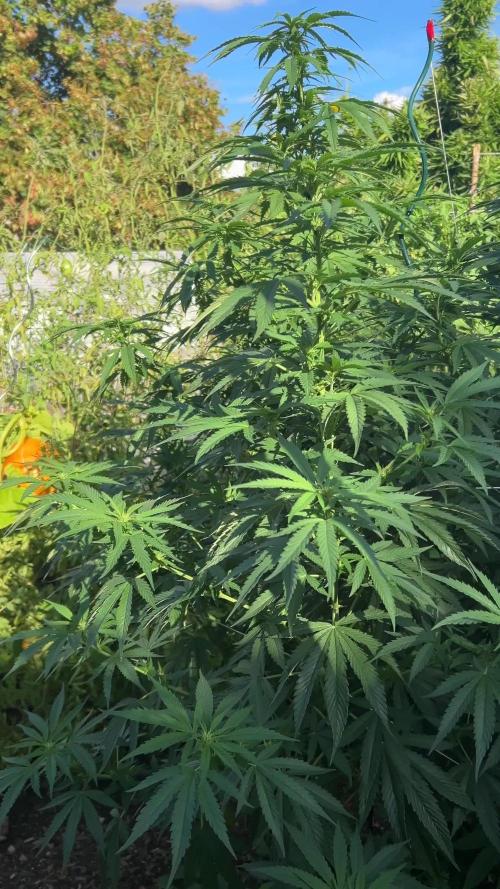
The last late 2 GG4 Sherbert (i presume) are starting to flower. Fast, maybe, but not early at all. It will end at the end of October, not what i was expected actually. But 'c'est la vie' :)
The Wedding Cheesecake is in her 4th week, budding her best life, i did a very slight defoliation, just 4 or 5 big fan leaves, and the last one who is still an unknown strain ends her second week of flowering. Reached already 150cm, a deep bottle green, nice babe. (All four are great actually)


@Ultraviolet
Follow
Green light is radiation with wavelengths between 520 and 560 nm and it affects photosynthesis, plant height, and flowering. Plants reflect green light and this is why they appear green to our eyes. As a result, some growers think that plants don’t use green wavelengths, but they actually do!
In fact, only around 5 – 10% of green light is reflected from leaves and the rest (90 – 95 %) is absorbed or transmitted to lower leaves [1].
Green wavelengths get used in photosynthesis. Chlorophyll pigments absorb small amounts of green wavelengths. Light that doesn’t get absorbed is transmitted to leaves that are shaded out from direct light. This means that leaves at the bottom of the canopy get more green light than leaves at the top. A high proportion of green wavelengths compared to other colors tells lower leaves that they are being shaded out, so they are able to react accordingly. Lower leaves may react by opening or closing their stomata or growing longer stems that help the leaves reach brighter light [1, 2, 3].
When it comes to growing cannabis, many cultivators are interested in the quality of light used for the flowering stage. In many plants, flowering is regulated by two main photoreceptors: cryptochrome and phytochrome. Both photoreceptors primarily respond to blue light but can also respond to green, although to a lesser extent. Green can accelerate the start of flowering in several species (although cannabis has yet to be tested) [1, 4, 5]. However, once flowering has begun, it’s important to provide plants with a “full spectrum” light that has high amounts of blue and red light, and moderate amounts of green, in order for photosynthesis to be optimized.
Green light mediates seed germination in some species. Seeds use green wavelengths to decide whether the environment is good for germination. Shade environments are enriched in green relative to red and blue light, so a plant can tell if it is shady or sunny. A seed that senses a shaded environment may stay dormant to avoid poor growing conditions [1]. Some examples of plant species where researchers have documented this response are: ryegrass (a grass that grows in tufts) and Chondrilla (a plant related to dandelion) [1, 6].
Although green wavelengths generally tell plants NOT to germinate, there are some exceptions! Surprisingly, green wavelengths can stimulate seed germination in some species like Aeschynomene, Tephrosia, Solidago, Cyrtopodium, and Atriplex [1, 6, 7].
Of course, light is not the only factor affecting seed germination – it’s a combination of many factors, such as soil moisture, soil type, temperature, photoperiod, and light quality.
When combined with red and blue light, green can really enhance plant growth [1, 8]. However, too much green light (more than 50% of the total light) can actually reduce plant growth [8]. Based on the most current research, the ideal ratio of green, red, and blue light is thought to be around 1:2:1 for green:blue:red [9]. When choosing a horticultural light, choose one that has high amounts of blue and red light and moderate amounts of green and other colors of light.
Not many studies can be found about the effect of green light on cannabis growth or metabolism. However, if one reads carefully, there are clues and data available even from the very early papers.
Mahlberg and Hemphill (1983) used colored filters in their study to alter the sunlight spectrum and study green light among others. They concluded that the green filter, which makes the environment green by cutting other wavelengths out, reduced the THC concentration significantly compared to the daylight control treatment. It has been demonstrated that green color can reduce secondary metabolite activity with other species as well. For example, the addition of green to a light spectrum decreases anthocyanin concentration in lettuce (Zhang and Folta 2012).
If green light only reverses the biosynthesis of some secondary metabolites, then why put green light into a growth spectrum at all? Well, there are a couple of good reasons. One is that green penetrates leaf layers effectively. Conversely red and blue light is almost completely absorbed by the first leaf layer.
Green travels through the first, second, and even third layers effectively (Figure 2). Lower leaf layers can utilize green light in photosynthesis and therefore produce yields as well.
Even though a green light-specific photoreceptor has not yet been found, it is known that green light has effects independent from the cryptochrome but then again, also cryptochrome-dependent ones, just like blue light. It is known that green light in low light intensity conditions can enhance far red stimulating secondary metabolite production in microgreens and then again, counteracts the production of these compounds in high-intensity light conditions (Kim et al. 2004). In many cases, green light promoted physiological changes in plants that are opposite to the actions of blue light. In the study by Kim et al. blue light-induced anthocyanin accumulation was inhibited by green light. In another study it has been found that blue light promotes stomatal opening whereas green light promotes stomatal closure (Frechilla et al. 2000). Blue light inhibits the early stem elongation in the seedling stage whereas green light promotes it (Folta 2004). Also, blue light results in flowering induction, and green light inhibits it (Banerjee et al., 2007). As you can see, green light works very closely with blue light, and therefore not only the amount of these two wavelengths separately is important but also the ratio (Blue: Green) between these two in the designed spectrum. Furthermore, green light has been found to affect the elongation of petioles and upward leaf reorientation with the model plant Arabidopsis thaliana both of which are a sign of shade avoidance symptoms (Zhang et al. 2011) and also gene expression in the same plant (Dhingra et al. 2006).
As mentioned before, green light produces shade avoidance symptoms which are quite intuitive if you consider the natural conditions where the plants grow. Not all the green light is reflected from the highest canopy leaves in nature but a lot of it (50-90%) has been estimated to penetrate the upper leaves at the plant level ((Terashima et al., 2009; Nishio, 2000). For the plant growing in the understory of the forest green light is a signal for the plant of being in the shade of a bigger plant. Then again, the plants growing under unobstructed sunlight can take advantage of the green photons that can more easily penetrate the upper leaves than the red and blue photons. From the photosynthetic pigments in higher plants, chlorophyll is crucial for plant growth. Dissolved chlorophyll and absorb maximally in the red (λ600–700 nm) and blue (λ400–500 nm) regions of the spectrum and not as easily in the green (λ500–600 nm) regions. Up to 80% of all green light is thought to be transmitted through the chloroplast (Terashima et al., 2009) and this allows more green photons to pass deeper into the leaf mesophyll layer than red and blue photons. When the green light is scattered in the vertical leaf profile its journey is lengthened and therefore photons have a higher chance of hitting and being absorbed by chloroplasts on their passage through the leaf to the lower leaves of the plant.
Photons of PPFD (photosynthetic photon flux density) are captured by chlorophyll causing an excitation of an electron to enter a higher energy state in which the energy is immediately passed on to the neighboring chlorophyll molecule by resonance transfer or released to the electron transport chain (PSII and PSI). Despite the low extinction coefficient of chlorophyll in the green 500–600 nm region it needs to be noted that the absorbance can be significant if the pigment (chlorophyll) concentration in the leaf is high enough.
The research available clearly shows that plants use green wavelengths to promote higher biomass and yield (photosynthetic activity), and that it is a crucial signal for long-term developmental and short-term dynamic acclimation (Blue:Green ratio) to the environment. It should not be dismissed but studied more because it brings more opportunities to control plant gene expression and physiology in plant production.
REFERENCES
Banerjee R., Schleicher E., Meier S. Viana R. M., Pokorny R., Ahmad M., Bittl R., Batschauer. 2007. The signaling state of Arabidopsis cryptochrome 2 contains flavin semiquinone. The Journal of Biological Chemistry 282, 14916–14922.
Dhingra, A., Bies, D. H., Lehner, K. R., and Folta, K. M. 2006. Green light adjusts the plastic transcriptome during early photomorphogenic development. Plant Physiol. 142, 1256-1266.
Folta, K. M. 2004. Green light stimulates early stem elongation, antagonizing light-mediated growth inhibition. Plant Physiol. 135, 1407-1416.
Frechilla, S., Talbott, L. D., Bogomolmi, R. A., and Zeiger, E. 2000. Reversal of blue light -stimulated stomatal opening by green light. Plant Cell Physiol. 41, 171-176.
Kim, H.H., Goins, G. D., Wheeler, R. M., and Sager, J. C. 2004.Green-light supplementation for enhanced lettuce growth under red- and blue-light emitting diodes. HortScience 39, 1617-1622.
Nishio, J.N. 2000. Why are higher plants green? Evolution of the higher plant photosynthetic pigment complement. Plant Cell and Environment 23, 539–548.
Terashima I., Fujita T., Inoue T., Chow W.S., Oguchi R. 2009. Green light drives leaf photosynthesis more efficiently than red light in strong white light: revisiting the enigmatic question of why leaves are green. Plant & Cell Physiology 50, 684–697.
Zhang, T., Maruhnich, S. A., and Folta, K. M. 2011. Green light induces shade avoidance symptoms. Plant Physiol. 157, 1528-156.
Wang, Y. & Folta, K. M. Contributions of green light to plant growth and development. Am. J. Bot. 100, 70–78 (2013).
Zhang, T. & Folta, K. M. Green light signaling and adaptive response. Plant Signal. Behav. 7, 75–78 (2012).
Johkan, M. et al. Blue light-emitting diode light irradiation of seedlings improves seedling quality and growth after transplanting in red leaf lettuce. HortScience 45, 1809–1814 (2010).
Kasajima, S., et al. Effect of Light Quality on Developmental Rate of Wheat under Continuous Light at a Constant Temperature. Plant Prod. Sci. 10, 286–291 (2007).
Banerjee, R. et al. The signaling state of Arabidopsis cryptochrome 2 contains flavin semiquinone. J. Biol. Chem. 282, 14916–14922 (2007).
Goggin, D. E. & Steadman, K. J. Blue and green are frequently seen: responses of seeds to short- and mid-wavelength light. Seed Sci. Res. 22, 27–35 (2012).
Mandák, B. & Pyšek, P. The effects of light quality, nitrate concentration and presence of bracteoles on germination of different fruit types in the heterocarpous Atriplex sagittata. J. Ecol. 89, 149–158 (2001).
Darko, E. et al. Photosynthesis under artificial light: the shift in primary and secondary metabolism. Philos. Trans. R. Soc. B Biol. Sci. 369 (2014).
Lu, N. et al. Effects of Supplemental Lighting with Light-Emitting Diodes (LEDs) on Tomato Yield and Quality of Single-Truss Tomato Plants Grown at High Planting Density. Environ. Control Biol. 50, 63–74 (2012).


@Earthling37
Follow
77 Days have passed.
Heatwave in my country, so im just relaxing and enjoying life.
- I hope you do too!
Did a heavy defoliation, gonna be making some nutritious fruit smoothies with that.
- 2 week ish before i switch to flower.
---1st time growing with FLO - Florian Living Organics.---
They claim that there is no need to pH when watering and that their living fertilizer is the only thing that i will need throughout the whole grow so i only need to mix with soil and just water with plain water.
If this stuff works then it can simplify my future grows ALOT!
Happy growing. 😎


@Lordshiva83
Follow
Olá companheiros, mais uma semana que passou, tudo está bem, a rainha continua a crescer bem, desta vez só cresceu 10cm numa semana mas as ramas laterais cresceram muito e estão muito ramificadas, uma rama de baixo partiu-se com o peso.. e ainda não tinha flores.. a planta continua com um desenvolvimento espectacular, esta semana borrifei óleo de neem para combater algumas pragas, e tudo vai bem, estou muito contente 🌲🌲✌️


@Gardener_of_Goodness
Follow
Bubblegum is one of my faves from the Dam and I had the opportunity to go for FastBuds Original Line Genetics which have promising results as always!
With Bubblegum being a big girl (should you let her) I popped her into a 7gal Fabric pot of BioBizz light mix after my usual methods of a day in a shot glass and another in a wet paper towel 🤓
Off to a great start with germination but a little slow to show it’s head out the ground, we all know that this can mean nothing so let’s have our fingers crossed for a big and beautiful girl in the coming weeks! 🤞
I don’t plan to do too much LST to this one, I’d like to see her really stretch and use the height she has available to her. Nutes I’m yet to decide but will either be BioBizz line up or GreenBuzz Liquids.
See you all in a week with an update! Take care stay safe and as alway happy growing! ✌️👊👍


shorts_status_processing


@AgroCultiveta
Follow
Son fotos y videos de múltiples cultivos debido a que nunca e realizado un seguimiento como tal, espero realizar uno ahora!
Nutrientes Utilizados en general Trybac y Trypack biobizz.
Las criticas siempre serán bien recibidas!😋
Espero les guste el contenido!


@Pot_Portraits
Follow
A really fun grow comes to an end, the result is more than impressive from this strain. I grew a few critical cross autos in hydro, they all have their typical grow strength, especially at the beginning of flower but this one stood out. Started "normal" and then just didn't want to stop anymore and that with a very basic feeding regime. This strain can take stress and nutrients, what you get in return is some purple flowers that smell so amazing that you ask yourself why you are not only growing this strain :P I made some ice water hash from it and it was such a beautiful smoke. The potency is quite impressive in this one, it seems a lot of growers are to focused on THC levels but terpines decide where your high goes, this high is great and compared to other strains with a much higher THC numbers the purple queen auto can easily compete. The smell and flavor is super floral and fruity.


@DonPerion1983
Follow
Sensi skunk! Fem not auto! Few other bcn critical fem seeds planted around 3 weeks after the sensi seeds! Any signs that they actually female? First time growing! Some have been topped and lst tried! Also removed a few fan leafs from the bottom! Feeding every two days one hour after lights come on! Main 3 big plants are about 42 days old since germination so I put them into flowering 8 days ago! Not sure if it was too early! When lights go of I have a oil heater that keeps the temperature at the same level 25-29 degrees is this correct? I’m currently using canna coco a and b nutrients with cal mag my mix is 40 ml of canna a 40ml canna b 40ml cal mag mixed in to tap water 10 litres! I’ve feed them this mix since they were two weeks old! Recently feeding 1.8 litres every other day as stated above!
Should I be adding flower nutes now?
Up the feeding level?
Few leafs look like there getting a few brown spots! Do I need to increase cal mag help needed as come this far and don’t wanna mess things up as cost me a fortune so far cheers


@bypado_farm
Follow
Day 79:
Watered the gorilla cookies with 1.5L with nuts
1481 ppm, 3151 us/cm, 3.1 EC (last week before flush)(same feeding as last week on the diary)
283 ppm, 591 us/cm 0.5 EC (3 strawberry banana, 3 purple punch and 3 wedding Cheesecake) (2L each)
Harvested 2 purple punch
Day 82:
Watered the gorilla cookies with 1.5L with nuts
1605 ppm, 3414 us/cm, 3.4 EC (last week before flush)(last feeding with nuts)
268 ppm, 561 us/cm 0.5 EC (3 strawberry banana, 3 purple punch and 3 wedding Cheesecake) (2L each)
Day 84:
Watered all the plants with 2L each
259 ppm, 551 us/cm 0.5 EC
Day 86:
Watered all the plants with 2L each
272 ppm, 578 us/cm 0.5 EC


@Mett420
Follow
Dopo due settimane senza postare nulla siamo all’ultima settimana di prodotti prima del risciacquo. Tutte e 4 le piante sembrano avere un ottima struttura, una buona ramificazione degli apicali e teste compatte e profumate (a super incollose, senza guanti non si possono toccare. Partiremo a breve con il risciacquo con il ghiaccio per incentivare i pigmenti viola a formarsi ed espandersi su tutta la pianta. Ci aggiorniamo a inizio risciacquo!


shorts_status_processing


@RealPuffDaddy
Follow
Last week of veg for lil Junebug. Ph water, no nutes this week to clean her roots of all the buildup. Flushed her yesterday and she’s in 18 dark hours to initiate the flip. Weekend feed will be week 1 bloom. She could easily veg and veg but we’re gonna make sure she’s got plenty of room to stretch and thrive within the heart of the HPS bulb. Appreciate the views and comments. Now the fun begins. Till next week.

@GrowOpsAnonymous
Follow
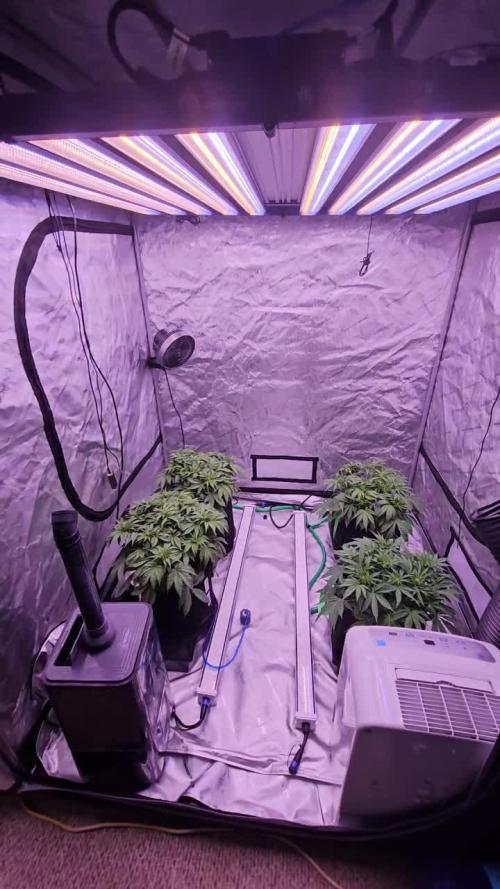
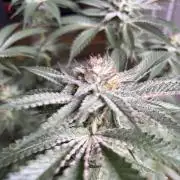
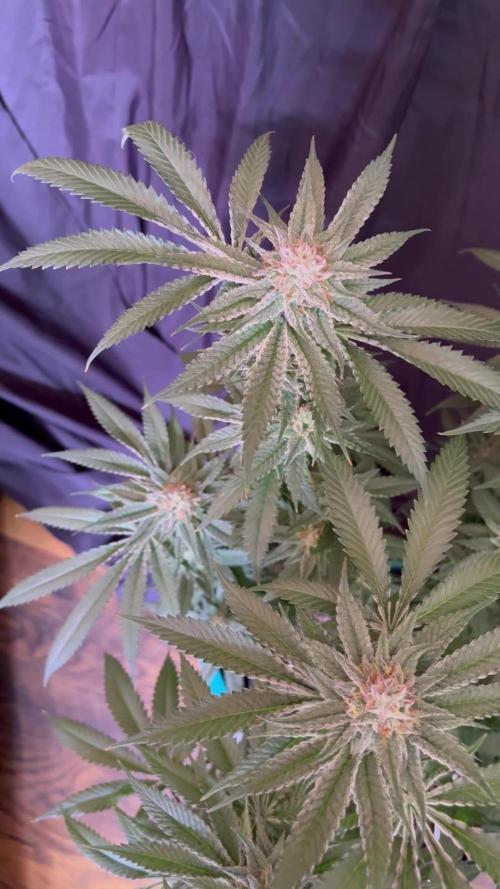
Still struggling to get the EZ Feed dialed in.
The APs are looking great. Number 1 is going to be a monster.
The two EZ Feed plants have skinnier leaves and the stems aren't as stout.

@Ninjabuds
Follow
A pretty small plant with huge potential if I had a bunch of the same plant I could have moved the light closer this was the shortest plant in the tent and was kinda far from the light. When I was wet trimming the buds I realized the are really dense still and super dank they have some huge tricomb heads. Definitely a plant you could have some really good hash with just the trim. The plant smells good some fruit gunk and a little gas smell but a strong pungent smell for sure


@MadeInGermany
Follow
Info:
Unfortunately, I had to find out that my account is used for fake pages in social media.
I am only active here on growdiaries.
I am not on facebook instagram twitter etc All accounts except this one are fake.
Have fun with the update.
Hey everyone :-)
She becomes a beautiful bush.
It was poured twice a week with 1.2 l and once with 1 g enhancer per l coco.
Furthermore, I continued to train her with topping because this time I want a real bush :-).
Have fun and stay healthy 👍
You can buy this Strain at
https://www.amsterdamgenetics.com/product/super-silver-haze/
Type:
Super Silver Haze
☝️🏼
Genetics:
Haze x Skunk #1 x Northern Lights
Type:
70% Sativa – 30% Indica
👍
Vega lamp:
2 x Todogrow Led
Quantum Board 100 W
💡
Bloom Lamp :
2 x Todogrow Led
Cxb 3590 COB 3500 K 205W
💡💡☝️🏼
Soil :
Canna Coco Professional +
☝️🏼
Fertilizer:
Green House Powder Feeding
☝️🏼🌱
Water:
Osmosis water mixed with normal water (24 hours stale that the chlorine evaporates) to 0.2 EC. Add Cal / Mag to 0.4 Ec Ph with Organic Ph - to 5.5 - 5.8 .


@EBxAH
Follow
I'm a little late on the update, super busy. Everything is still looking good. I took 2 of the smallest clones down as a sample. Other than slightly harsh due to quick dry is was good for early. Definitely looking forward to full maturity!!! I figure they have another week and they're done. I can smell the wine and the trim already 😁❤️😁
Happy growing everyone ✌️🍀✌️
