


Likes
Comments
Share


@GoodTimesOrganics
Follow
Hi liebe Community and Welcome Back! 🌿💚
🖍️Permanent Marker von Seed Junky Genetics x Doja Exklusiv!
Wir befinden uns in Wachstumswoche 10 seit dem Eintopfen (Tag 61 + Tag 14 Blüte).
Die zweite Blütewoche ist nun vorbei.
Die Pflanze geht auch ordentlich in den Stretch und hat in dieser Woche nochmal 9cm zugelegt
Die Pflanze hat einen wundervoll geschwungenen Wuchs. Sie ist schön Breit und dennoch kompakt. Ihre Höhe schätze ich als Moderrat ein.
Die Pflanze legt insgesamt eine top Performance hin.
Bildet allerdings viel Blattwerk aus, daher habe ich nochmal ordentlich defoliert und die unteren Triebe Rausgeschnitten.
Auch habe ich nun die oberen Triebe nochmal etwas runtergebunden um eine bessere Homogenität hinein zu bekommen.
Gegrowt wird wie immer rein Organisch, diese Woche gab es nur Wasser.
Die Bedingungen sind aktuell gut!
—————
🌞 Temp: 26
🌚 Temp: 18°C bis 19°C
💨 RH: 58%
VPD: 1,07 kPa
💡ppfd: 630 mpm
—————
Grüne Grüße 💚🌱

Likes
22
Share


@coriander
Follow
Day 74 -
Cheese - Been watering with only clean ph every 3-4 days and watching the trichomes. They're mostly cloudy with no amber. Just gonna keep watching and letting it swell.
Super Lemon Haze - Buds are coming in nicely. Purple leaves coming in near the top. Gets cold in the basement at night, so I'm not surprised with a bit of colour change. The tip burn doesn't seem to be moving too fast on the leaves it effected and the rest of the growth is coming in nicely. I Think there should be only a few weeks left now, so probably one more nutrient feed and onto flush as well.
End of week 11 -
For my first grow, I've already made it far past my expectations. Love growing and love these plants. Stay tuned for cheese harvest!


Likes
2
Share


@heinzhammer
Follow
Raised EC to 1.9-2.0 ish
pH 5.8
Raised the Lights to the maximum height.
Tops-to-Light-distance around 25-30cm
Buds are bulking up daily!
This run is smooth as hell. No deficiencies, no pests, plants look happy from beginning until now....
Lets hope the last 5 weeks will be ok!

Likes
15
Share


@northern_rookie
Follow
Hifi 4G seems to be a bit sensitive to the current and previous feeding levels. Had multiple leaves exhibit nutrient burn. Otherwise all seem to be happy. Hifi 4G, NL/Skunk and Blueberry continue to lead the pack on Bud development. God I hope I don't screw this up!


Likes
151
Share


@BioBuds
Follow
It has been a week of amazing growth for the Xtrakush too. What an amazing plant this is. Resilient, enormous growth, it was only last week that we took out her brother. It turned out to be male, which is why we planted two in one pot. Already she has taken up its space almost entirely. And the bud growth is also something I haven't seen before. This can really turn out to be enormous buds if the buds grow out like advertised.
All in all a great week with lots of activity on my part to facilitate these results. We are three weeks into flowering, the deadline I set myself from where I'm allowed defoliating the underside. To prevent stress, but also to maximize growth I hadn't touched them all grow. Also, I made the flowering amendments, it didn't seem they needed anything so I waited a couple of weeks. I made a mix of 2 cups worm castings, 2 cups bonemeal, 1 cup of micro life (per plant) and mixed this. I dropped this on the soil around the stem. In just a day another amazing stretch happened. The combined defoliation and added nutes gave a boost they seemed to love.
I watered with a heavy mix of BAC organic flowering, Topmax and Calmag, and a one in 6 mix of my trusty permaculture tea.
This SP 3000 is performing so well. Thanks again @MarsHydroLED for letting us try it. We are believers!
If you are in the market for a light, give this one a chance!!
Thanks again for all the likes, comments and the people following! Only 6 more weeks to go!!
Big hug!!
Bud
Likes
6
Share

@KarlOlga
Follow
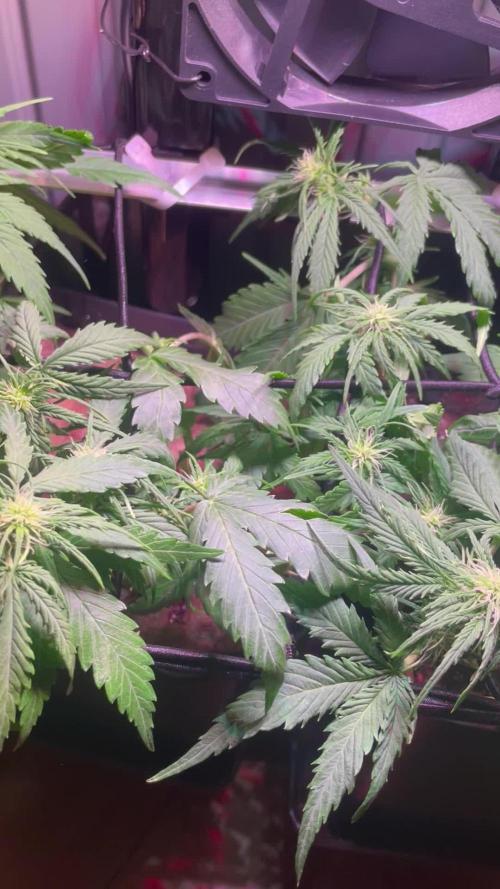
Heute (01.04) noch mal entlaubt und alle Triebe auf gleiche Höhe gebracht bei der Mango. Die bloody skunk holt auf und ist aber direkt nach dem Topping in die Blüte gegangen.
Bin gespannt!
04.04- paar Blätter entfernt
06.04 - LST und paar Blätter weg!


Likes
20
Share


@a1Andrew
Follow
Love the strain. There was heat stress, and for such much light 2x2 tent would be better. After curing: Tasty as hell grape "cold" flavour, body tranqulizing high, after few hits from the bong its a good idea to chill and watch a movie. Absolutley love the smoke in the end, from bag appeal to high :)0


Likes
33
Share


@Dudders
Follow
So I'm on holiday at the mo. My friend is house sitting (plant sitting) and has sent me a few photos to keep me happy. Not the best quality as over exposed, so I'll upload some better ones when I'm home on Sunday.
Worth noting that the light yellowing of the leaves is a result of the over exposure and not a dying plant lol.
Looks like good progress. No close ups to see if it's flowering unfortunately, but it's definitely still growing in stature.
A follower noticed some leaves clawing at the top of the plant, but it hasn't got any worse in the last week and I haven't actually given it any additional nutes, so fingers crossed I don't have nitrogen toxicity.
Gave some Biosyss last week, hoping that it has provided an optimum environment
I didn't use LST and wondering whether that's going to mean a lesser yield.
Update: asked a question and found that not too late to LST so going to start that Monday when back from hols.
Updated with better pictures 👌🏻
Any thoughts?
I'm back from holiday tomorrow and planning on starting a feeding schedule of biogrow, bio bloom and topmax to maximise yield 👌🏻
10/10/21 - Back from holidays and have uploaded new pictures.
Lots of pistels appearing now suggesting it is going into flowering.
I have decided to go ahead and LST despite the stress it might cause. I figured with it being a hardy strain that it may tolerate it, and the benefits (if it works) would make it worth the risk.
11/10/21 - Plants have coped really well with the nutrients. Checked pH today and sitting at around 6 which is ideal. Humidity fluctuates a little. Between 45% and 65%. If keeps going high then I'll put a dehumidifier in.
Buds starting to form/flower now.
Exciting times

Likes
2
Share


@big_bro_is_bloomin
Follow
Seems to be doing well! Stretch appears to be complete and a little LST daily is keeping all of the air and light moving around nicely. Hoping for a solid harvest in a few weeks!
Likes
52
Share


@Ultraviolet
Follow
Lacewings seemed to have mostly killed themselves by flying into hot light fixtures. I may have left the UV on which was smart of me :) Done very little to combat if anything but make a sea of carcasses, on the bright side its good nutrition for the soil.
Made a concoction of ethanol 70%, equal parts water, and cayenne pepper with a couple of squirts of dish soap.
Took around an hour of good scrubbing the entire canopy.
Worked a lot more effectively and way cheaper.
Scorched earth right now, but it seems to have wiped them out almost entirely very pleased.
Attempted a "Fudge I Missed" for the topping. So just time to wait and see how it goes.
Question?
If I attached a plant to two separate pots but it was connected by rootzone, one has a pH of 7.5 ish the other has 4.5. Would the Intelligence of the plant able to dictate each pot separately to uptake the nutrients best suited to pH or would it still try to draw nitrogen from a pot with a pH where nitrogen struggles to uptake?
Food for stoner thought experiments!
Another was on my mind.
What happens when a plant gets too much light?
Well, it burns and curls up leaves.
That's the heat radiation, let's remove excess heat, now what?
I've always read it's just bad, or not good, but when I look for an explanation on a deeper level it's just bad and you shouldn't do it.
So I did.
How much can a cannabis plant absorb, 40 moles in a day, ok I'll give it 60 moles. 80 nothing bad ever happened.
The answer, finally. Oh great........more questions........
Reactive oxygen species (ROS) are molecules capable of independent existence, containing at least one oxygen atom and one or more unpaired electrons.
"Sunlight is the essential source of energy for most photosynthetic organisms, yet sunlight in excess of the organism’s photosynthetic capacity can generate reactive oxygen species (ROS) that lead to cellular damage. To avoid damage, plants respond to high light (HL) by activating photophysical pathways that safely convert excess energy to heat, which is known as nonphotochemical quenching (NPQ) (Rochaix, 2014). While NPQ allows for healthy growth, it also limits the overall photosynthetic efficiency under many conditions. If NPQ were optimized for biomass, yields would improve dramatically, potentially by up to 30% (Kromdijk et al., 2016; Zhu et al., 2010). However, critical information to guide optimization is still lacking, including the molecular origin of NPQ and the mechanism of regulation."
What I found most interesting was research pointing out that pH is linked to this defense mechanism. The organism can better facilitate "quenching" when oversaturated with light in a low pH. Now I Know during photosynthesis plants naturally produce exudates (chemicals that are secreted through their roots). Do they have the ability to alter pH themselves using these excretions? Or is that done by the beneficial bacteria?
If I can prevent reactive oxygen species from causing damage by "too much light".
The extra water needed to keep this level of burn cooled though, I must learn to crawl before I can run.
Reactive oxygen species (ROS) are key signaling molecules that enable cells to rapidly respond to different stimuli. In plants, ROS plays a crucial role in abiotic and biotic stress sensing, integration of different environmental signals, and activation of stress-response networks, thus contributing to the establishment of defense mechanisms and plant resilience. Recent advances in the study of ROS signaling in plants include the identification of ROS receptors and key regulatory hubs that connect ROS signaling with other important stress-response signal transduction pathways and hormones, as well as new roles for ROS in organelle-to-organelle and cell-to-cell signaling. Our understanding of how ROS are regulated in cells by balancing production, scavenging, and transport has also increased. In this Review, we discuss these promising developments and how they might be used to increase plant resilience to environmental stress.
Temperature stress is one of the major abiotic stresses that adversely affect agricultural productivity worldwide. Temperatures beyond a plant's physiological optimum can trigger significant physiological and biochemical perturbations, reducing plant growth and tolerance to stress. Improving a plant's tolerance to these temperature fluctuations requires a deep understanding of its responses to environmental change. To adapt to temperature fluctuations, plants tailor their acclimatory signal transduction events, specifically, cellular redox state, that are governed by plant hormones, reactive oxygen species (ROS) regulatory systems, and other molecular components. The role of ROS in plants as important signaling molecules during stress acclimation has recently been established. Here, hormone-triggered ROS produced by NADPH oxidases, feedback regulation, and integrated signaling events during temperature stress activate stress-response pathways and induce acclimation or defense mechanisms. At the other extreme, excess ROS accumulation, following temperature-induced oxidative stress, can have negative consequences on plant growth and stress acclimation. The excessive ROS is regulated by the ROS scavenging system, which subsequently promotes plant tolerance. All these signaling events, including crosstalk between hormones and ROS, modify the plant's transcriptomic, metabolomic, and biochemical states and promote plant acclimation, tolerance, and survival. Here, we provide a comprehensive review of the ROS, hormones, and their joint role in shaping a plant's responses to high and low temperatures, and we conclude by outlining hormone/ROS-regulated plant-responsive strategies for developing stress-tolerant crops to combat temperature changes.
Onward upward for now.
Next!
Adenosine triphosphate
(ATP) is an energy-carrying molecule known as "the energy currency of life" or "the fuel of life," because it's the universal energy source for all living cells.1
Every living organism consists of cells that rely on ATP for their energy needs. ATP is made by converting the food we eat into energy. It's an essential building block for all life forms. Without ATP, cells wouldn't have the fuel or power to perform functions necessary to stay alive, and they would eventually die. All forms of life rely on ATP to do the things they must do to survive.2
ATP is made of a nitrogen base (adenine) and a sugar molecule (ribose), which create adenosine, plus three phosphate molecules. If adenosine only has one phosphate molecule, it’s called adenosine monophosphate (AMP). If it has two phosphates, it’s called adenosine diphosphate (ADP).
Although adenosine is a fundamental part of ATP, when it comes to providing energy to a cell and fueling cellular processes, the phosphate molecules are what really matter. The most energy-loaded composition for adenosine is ATP, which has three phosphates.3
ATP was first discovered in the 1920s. In 1929, Karl Lohmann—a German chemist studying muscle contractions—isolated what we now call adenosine triphosphate in a laboratory. At the time, Lohmann called ATP by a different name. It wasn't until a decade later, in 1939, that Nobel Prize–-winner Fritz Lipmann established that ATP is the universal carrier of energy in all living cells and coined the term "energy-rich phosphate bonds."45
Lipmann focused on phosphate bonds as the key to ATP being the universal energy source for all living cells, because adenosine triphosphate releases energy when one of its three phosphate bonds breaks off to form ADP. ATP is a high-energy molecule with three phosphate bonds; ADP is low-energy with only two phosphate bonds.
The Twos and Threes of ATP and ADP
Adenosine triphosphate (ATP) becomes adenosine diphosphate (ADP) when one of its three phosphate molecules breaks free and releases energy (“tri” means “three,” while “di” means “two”). Conversely, ADP becomes ATP when a phosphate molecule is added. As part of an ongoing energy cycle, ADP is constantly recycled back into ATP.3
Much like a rechargeable battery with a fluctuating state of charge, ATP represents a fully charged battery, and ADP represents a "low-power mode." Every time a fully charged ATP molecule loses a phosphate bond, it becomes ADP; energy is released via the process of ATP becoming ADP.
On the flip side, when a phosphate bond is added, ADP becomes ATP. When ADP becomes ATP, what was previously a low-charged energy adenosine molecule (ADP) becomes fully charged ATP. This energy-creation and energy-depletion cycle happens time and time again, much like your smartphone battery can be recharged countless times during its lifespan.
The human body uses molecules held in the fats, proteins, and carbohydrates we eat or drink as sources of energy to make ATP. This happens through a process called hydrolysis
.
After food is digested, it's synthesized into glucose, which is a form of sugar. Glucose is the main source of fuel that our cells' mitochondria
use to convert caloric energy from food into ATP, which is an energy form that can be used by cells.
ATP is made via a process called cellular respiration that occurs in the mitochondria of a cell. Mitochondria are tiny subunits within a cell that specialize in extracting energy from the foods we eat and converting it into ATP.
Mitochondria can convert glucose into ATP via two different types of cellular respiration:
Aerobic (with oxygen)
Anaerobic (without oxygen)
Aerobic cellular respiration transforms glucose into ATP in a three-step process, as follows:
Step 1: Glycolysis
Step 2: The Krebs cycle (also called the citric acid cycle)
Step 3: Electron transport chain
During glycolysis, glucose (i.e., sugar) from food sources is broken down into pyruvate
molecules. This is followed by the Krebs cycle, which is an aerobic process that uses oxygen to finish breaking down sugar and harnesses energy into electron carriers that fuel the synthesis of ATP. Lastly, the electron transport chain (ETC) pumps positively charged protons that drive ATP production throughout the mitochondria’s inner membrane.2
ATP can also be produced without oxygen (i.e., anaerobic), which is something plants, algae, and some bacteria do by converting the energy held in sunlight into energy that can be used by a cell via photosynthesis.
Anaerobic exercise means that your body is working out "without oxygen." Anaerobic glycolysis occurs in human cells when there isn't enough oxygen available during an anaerobic workout. If no oxygen is present during cellular respiration, pyruvate can't enter the Krebs cycle and is oxidized into lactic acid. In the absence of oxygen, lactic acid fermentation makes ATP anaerobically.
The burning sensation you feel in your muscles when you're huffing and puffing during anaerobic high-intensity interval training (HIIT) that maxes out your aerobic capacity or during a strenuous weight-lifting workout is lactic acid, which is used to make ATP via anaerobic glycolysis.
During aerobic exercise, mitochondria have enough oxygen to make ATP aerobically. However, when you're out of breath and your cells don’t have enough oxygen to perform cellular respiration aerobically, the process can still happen anaerobically, but it creates a temporary burning sensation in your skeletal muscles.
Why ATP Is So Important?
ATP is essential for life and makes it possible for us to do the things we do. Without ATP, cells wouldn't be able to use the energy held in food to fuel cellular processes, and an organism couldn't stay alive.
As a real-world example, when a car runs out of gas and is parked on the side of the road, the only thing that will make the car drivable again is putting some gasoline back in the tank. For all living cells, ATP is like the gas in a car's fuel tank. Without ATP, cells wouldn't have a source of usable energy, and the organism would die.
Eating a well-balanced diet and staying hydrated should give your body all the resources it needs to produce plenty of ATP. Although some athletes may slightly improve their performance by taking supplements or ergonomic aids designed to increase ATP production, it's debatable that oral adenosine triphosphate supplementation actually increases energy.
An average cell in the human body uses about 10 million ATP molecules per second and can recycle all of its ATP in less than a minute. Over 24 hours, the human body turns over its weight in ATP.
You can last weeks without food.
You can last days without water.
You can last minutes without oxygen.
You can last 16 seconds at most without ATP.
Food amounts to one-third of ATP production within the human body.

Processing
Likes
15
Share


@Andres
Follow
I pull it out of the tent so I can take some photos. she grows strong and healthy.

Likes
9
Share


@chapothegrower
Follow
Dynamic growing now. Flowering phase!!! Early flowers you can see, missed one week with photos because of some busy busy time! 100% organic see you soon 😘 one plant 6 main colas, second plant - 7 main colas. you can spot them on the video, my camera is quite poor sorry for bad quality 😷
Likes
9
Share


@420DeepGrow
Follow
Gracias la equipo de Super Sativa Seeds Club, Marshydro y XpertNutrients sin ellos esto no seria posible
💐🍁 Lava Freeze:
Con el nuevo cruce de Friesland Indica (M33 para los cultivadores de la vieja escuela) con Lava Cake, ha nacido una nueva híbrida muy sabrosa que te pega fuerte y te deja colocado.
En su día, la Friesland Indica original, alias M33, alias Freezeland, se hizo inmensamente popular en América del Norte. En Canadá, se convirtió inmediatamente en una joya entre los expertos de semillas de cannabis. Fue elogiada por su productividad, su efecto y su increíble sabor. Friesland Indica era también muy robusta y capaz de soportar bien el duro clima exterior de Canadá. Esto la convirtió en una variedad recurrente para muchos cultivadores comerciales clandestinos canadienses y todavía se puede encontrar hoy en día en muchas salas de cultivo canadienses.
🚀🌻 Consigue aquí tus semillas:
https://dutch-passion.com/es/semillas-de-marihuana/lava-freeze
💡FC6500: Eficiencia líder en el mercado: la lámpara de cultivo LED FC-E6500, que ostenta un estatus líder en el mercado, es una solución rentable con un PPE de 2,8 µmol/J y un rendimiento máximo de 2,5 g/vatio. Ofrece un PPF alto de 2026 umol/S y es adecuada para una cobertura de vegetación de 1,50 m x 1,50 m y una cobertura de flores de 1,20 m x 1,20 m.
Iluminación versátil y uniforme.
https://marshydro.eu/products/mars-hydro-fc-e-6500-730w-commercial-led-grow-light/?gad_source=1&gclid=Cj0KCQjw1qO0BhDwARIsANfnkv9IIrYSbmJqz8PqpJOIyWwJfp5bc3SGJgUV68USLQ4tjmXDYwoBuAsaAue3EALw_wcB
🚥 MarsHydro ADLITE UV/IR/RED:
Para lograr un crecimiento óptimo de las plantas y maximizar los rendimientos es un arte simple que depende en gran medida de las condiciones ambientales adecuadas. Reconociendo las limitaciones de la iluminación natural y las soluciones de iluminación tradicionales para satisfacer estas necesidades únicas, lanzamos ADLITE. Estas luces especiales UV, IR y roja están diseñadas para llenar áreas del espectro, proporcionando las altas longitudes de onda que las plantas necesitan para un crecimiento y desarrollo óptimos.
Consigue aqui tu Adlite:
https://marshydro.eu/collections/adlite-supplemental-lights/
🏠 : Marshydro 1.50 x 1.50 x 1.80, carpa 100% estanca con ventanas laterales para llegar a todos los lugares durante el grow
https://marshydro.eu/products/diy-150x150x200cm-grow-tent-kit
🌬️💨 Marshydro 6inch + filtro carbon para evitar olores indeseables.
https://marshydro.eu/products/ifresh-smart-6inch-filter-kits/
🍣🍦🌴 Xpert Nutrients es una empresa especializada en la producción y comercialización de fertilizantes líquidos y tierras, que garantizan excelentes cosechas y un crecimiento activo para sus plantas durante todas las fases de cultivo.
Consigue aqui tus Nutrientes:
https://xpertnutrients.com/es/shop/
📆 Semana 1
Un comienzo explosivo en solo 3 dias que llevan en floracion gracias a la nueva iluminación de mi patrocinador Marshydro, gracias al Adlite y como no a la gran gama de nutrientes de XpertNutrients.
Continuo con las dosis de nutrientes recomendadas por el fabricante, esta vez el olor es penetrante y eso que todavia no tiene desarrollada las flores.
En algunos ejemplares se pueden apreciar lindas preflores hembras.

Likes
47
Share
@squalino
Follow
TRAINWRECK AUTOSEEDS
THC-HUNTER VS SQUALINO
❤️❤️❤️❤️❤️❤️❤️❤️❤️❤️❤️❤️❤️❤️❤️❤️❤️❤️
⚠️ Information importante : Le duel en direct est temporairement annulé suite à des petits problèmes chez THC-HUNTER. Pas d'inquiétude, nous comparons nos plantes respectives à la fin de sa session ! N'hésitez pas à lui apporter votre soutien sur son profil.
Mise à jour de croissance
Variété : Trainwreck Auto
Date de germination : 10/09
Âge de la plante : 30 jours (Semaine 5)
Taille actuelle : 38 cm (+ 11 cm depuis la dernière semaine avec lst)
❤️❤️❤️❤️❤️❤️❤️❤️❤️❤️❤️❤️❤️❤️❤️❤️❤️❤️
Arrosage & Nutriments
Jour 24 : Rien donné
Jour 25 : 3 ml Orgatrex
Jour 26 : Rien donné
Jour 27 : Rien donné
Jour 28 : Rien donné
Jour 29 : 0.5 ml Calmag + LST +défoliation
Jour 30 : Rien donné
Description
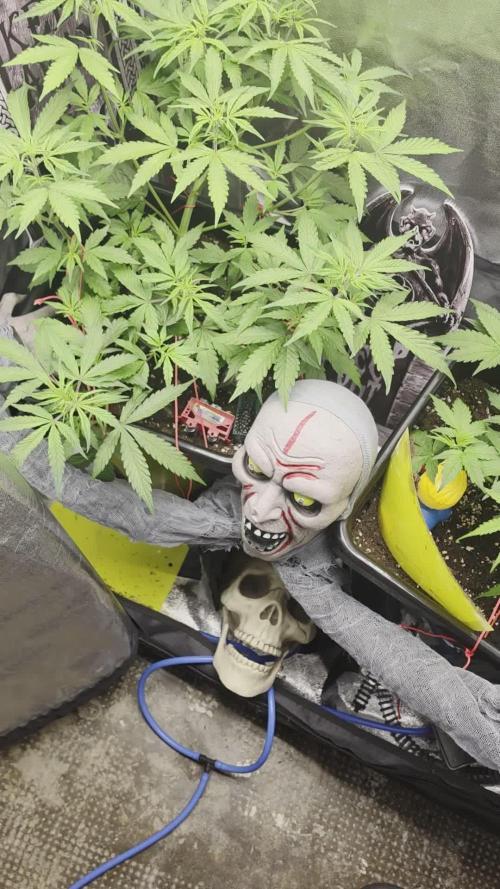
Superbe évolution cette semaine ! La plante atteint désormais 38 cm (+ 11 cm). Le palissage (LST) ajusté au jour 29 permet d'ouvrir magnifiquement la structure, offrant une exposition lumineuse optimale à l'ensemble des départs secondaires.
Les sommets commencent à s'éclaircir nettement et les sommets se resserrent : la plante entre clairement en phase de préfloraison ! Le feuillage conserve une excellente vigueur, une belle couleur verte et une structure trapue parfaitement maîtrisée. Le passage à la floraison s'annonce très prometteur !
Un grand merci à AutoSeeds pour leurs magnifiques graines. Vous pouvez les retrouver directement dans leur catalogue sur leur boutique : https://www.autoseeds.com/shop/seeds/
Merci à tous les lecteurs pour votre suivi ! N'hésitez pas à aller faire une tournée chez mon partenaire THC-HUNTER : https://growdiaries.com/grower/THcHunteR23


Likes
5
Share


@Gingercannacat
Follow
Week two had some challenges, weather started getting cold, night temperature reaching 17- not good- decided to stress them out with one day of 24 hours of light to adjust the 4 hours night time to be during the day to maintain good temperature thru out the day.. Transplant done into 11 L pot, fed them with plagron grow 2 ml and 1ml power roots and 2 ml vita Race spay on leafs. I will do the same every 5 days from now on. Will top one and Lst the other one without topping just for comparison.
Processing
Likes
13
Share


@Crazy_zx10r
Follow
About a day into week 3 . Growing very strong and fast. Transplanted into the 5gal bags at night . Over week 3 they exploded. They wanted the room .. the 5gal bags made that happen. Amazing results with just foxfarm ocean forest soil.

Likes
5
Share

@JeyGanesha
Follow
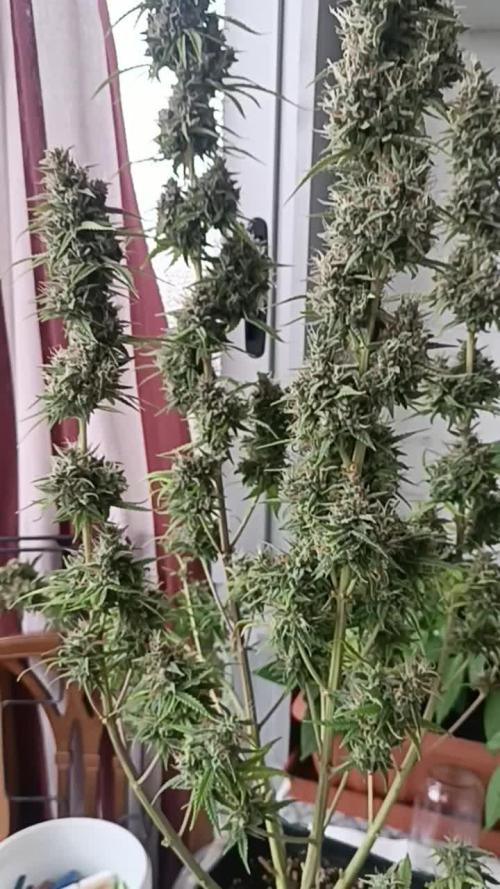
Queste grape ape sono cresciute benissimo la qualità è più che buona..per la mia patologia funziona benissimo. Molto efficace...sé ritrovo i semi la rifarò