Likes
Comments
Share
@Drehpaper
Follow
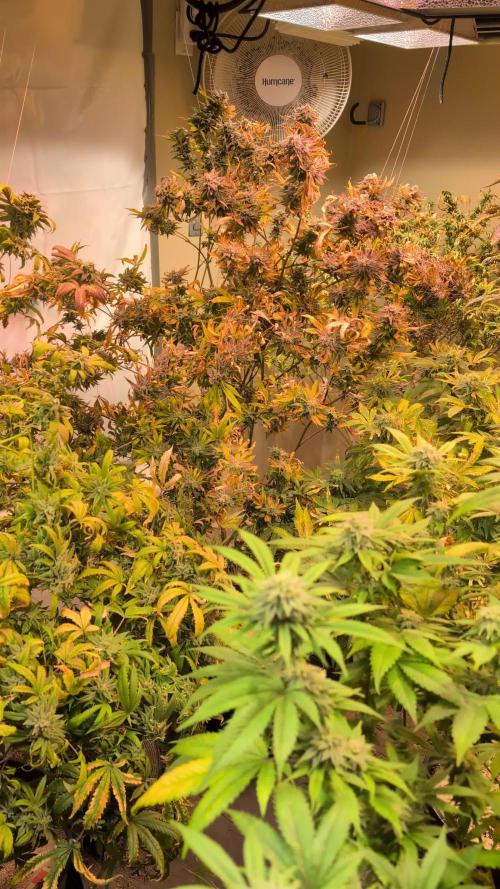
An Tag 63 ging es ihr an den Kragen.
Likes
16
Share
7/10/24 testing testing. can i post updates now? beautiful buds. the leaves are changing into a blue color. it reminds me of some of the blue city diesel i got from a buddy back in the medical days.
Likes
2
Share
First Durban poison seed did not germinate just put a new one in today. Both Apple strudel strains are looking strong. One of them has a slight spot on it could be from spraying neem oil and hitting it with the light Sweet skunk is growing nicely And the older of the 2 mystery auto strains from fast buds will be transplanted soon Started LST 5/15
Likes
9
Share
Training week for the girls! 💪 Not a big fan of bending clips but some of the plants seem a bit stunted with slow grow and not much branches to work with! 😕 Hoping they bounce back and have a nice late stretch next week 😅
Likes
2
Share
Α,α (alpha) and Ω,ω(omega) Here we grow again. LAST GROW. 344g+280g+445g+255g=1324g dry bud. Yielding 1,324 grams of dry cannabis using a 600W light in a 4x4 tent is exceptionally efficient. This breaks down to roughly 2.21 grams per watt, far exceeding the standard indoor benchmark of 1.0 g/W and outperforming elite professional targets (1.5–2.0 g/W). For carbon and energy efficiency, this output drastically lowers the carbon cost per gram compared to typical indoor grows. Achieving 1,324 grams (47.2 ounces) of dry cannabis from a 600W light in a 4x4 tent is exceptional, yielding roughly 2.21 grams per watt. This is an elite-tier result that reflects world-class photosynthetic conversion, highly optimized canopy light distribution, dialled-in CO2 supplementation, and precise environmental control. Growing 1.3kg of dry in a 2x2 with 1 plant is just being silly and not understanding how carbon and energy conversion works towards mass. Took 6 years and 10,000+ Hours to break the 2 grams-per-watt barrier not exactly 600W, in honesty, though—even with modern, high-efficiency LEDs—is an incredible feat that requires hitting the absolute genetic ceiling of the cultivar and maintaining flawless environmental parameters for the space. Photosynthesis is the literal conversion of light energy (photons) into chemical energy (carbohydrates). Leaf temperature, driven by radiation from fixtures and mitigated by latent heat of vaporization (transpiration), dictates metabolic rates. If your room's thermal dynamics are off, enzyme activity inside the plant stalls, grinding growth to a halt. Anyone else pretending to have done so with nothing but Plagron nutrients at 75F is telling porkie pies *cough*, otherwise known as a liar, liar with a bum that's on fire, but it seems that's the new norm these days on GD. *cough cough*. Using copper and zinc plates in the plant medium to form a natural earth battery to assist with Electrochemical Reactance. The moist soil acts as an electrolyte, while zinc serves as the anode and copper as the cathode. Zinc is a highly reactive metal and oxidizes, losing electrons into the soil. These electrons travel through an external wire to the copper plate. The moisture and dissolved salts in your plant medium allow charged ions to move freely between the plates, completing the circuit and generating a small direct current (usually between 0.8 and 1.1 volts). This micro-current subtly alters/the Electrical Conductivity (EC), allowing more effective breaking apart of chemical bonds in the soil (electrolysis), making soil nutrients like phosphorus, calcium, and potassium more accessible to roots. Buried the zinc plates around the sides of the plant pot's root zone and the copper plate in the middle. Ran an insulated copper wire above ground to connect the zinc plate to the copper plate, creating a closed loop. Making sure the soil remains perfectly moist and contains everything it needs; entirely distilled water or bone-dry medium will prevent ion exchange and block the current. Leave that up to the rhizosphere. Currently testing new parameters for a couple of weeks. Seeing what she can do with a new and upgraded ducting closed loop and double the water capacity. Also added 6kg of inoculated biochar along with a slew of small improvements. Keeping an eye on. Zinc toxicity vs. consumption, given how sacrificial zinc is. Want to make sure the biochar stabilizes first. A Synganic closed-loop bioengineering-logic grow room merges synthetic inputs (precision minerals/chelated nutrients) with an organic living soil matrix (microbial life/bio-stimulants), managed via automated, data-driven automation. Master Operating Procedure (MOP): The system balances a sterile environment with a thriving, dynamic rhizosphere, merging the biological resilience of living organic soil with the high-precision chemical control of modern Controlled Environment Agriculture (CEA). Synganic blends a biologically active living soil or microbe-rich substrate with targeted, low-dose mineral or synthetic fertigation to optimize both metabolic yield and secondary metabolite expression (terpenes/flavonoids). What else is alive! Eisenia fetida (Red Wigglers) will continuously process organic matter into plant-available nutrients and aerate the media. Stratiolaelaps scimitus (Hypoaspis mites) provides excellent biological control against fungus gnats and pupating thrips. Armadillidium vulgare (Pillbugs) excel at breaking down tough, woody organic matter and toxic heavy metals. New "Closed-Loop Sealing" Isolates the internal microclimate from external weather, vectors, and pests. Air is scrubbed 264nm UV-C, recirculated, and enriched rather than openly exhausted. Operational Parameters (MOP Framework). Microbes act as biological buffers for the mineral inputs, preventing salt toxicity and ensuring continuous nutrient availability. Precise management of Vapour Pressure Deficit (VPD) day and night to force optimal stomatal conductance without stressing the biological media. Strict clean-room protocols prevent pathogen intrusion while maintaining non-sterile, highly active beneficial bacteria and fungi populations in the root zone. Looking at a grow room as a closed-loop system changes everything. You aren't "growing a plant"; you are managing a mass and energy balance equation where the plant is a biological transducer. Every watt of light introduces sensible heat. Every drop of water turns into latent heat via transpiration. When a deficiency appears, a grower flushes or adds a bottle of "magic" additive. A master looks at the HVAC duty cycle, realizes the dew point spiked, the stomata closed, and calcium transport stalled due to lack of transpiration, not lack of nutrients. Protocol-driven logic can be automated, replicated, and optimized. Legacy growing and anecdotal habits fail the moment the room moisture volume changes. ADD CALMAG! Comprehensive Substrate Composition: Because why not. 1. Substrate Base & Aeration Media Expanded Clay Aggregates (Hydroton Pebbles) Coir Chunks & Horticultural Coco Coir Sphagnum Peat Moss Horticultural Perlite Horticultural Vermiculite Horticultural Pumice Volcanic Basalt Rock 2. Mineral Amendments & Soil Conditioners Agricultural Gypsum (Calcium Sulfate) Wollastonite (Calcium Silicate) Dolomitic Limestone (Calcium Magnesium Carbonate) Basalt Rock Dust (Trace Mineralizer) Azomite (Micronutrient-Rich Volcanic Ash) Glauconite (Greensand) Crushed Seashells (Calcium Carbonate Source) Pyrolyzed Carbon Feedstocks (Biochar & Horticultural Charcoal) Shungite (Carbonaceous Mineraloid) 3. Organic Nutrient Amendments Steamed Bone Meal (High Phosphorus) Dehydrated Blood Meal (High Nitrogen) Fish Bone Meal (Phosphorus & Trace Calcium) Cold-Processed Kelp Meal (Ascophyllum nodosum) Dehydrated Moringa Oleifera Powder (Botanical Nutrient) Spirulina Powder (Arthrospira platensis / Cyanobacteria Nutrient) Marine Crustacean Biomass (Shrimp & Crab Chitin) 4. Biological Inoculants & Organic Acids Mycorrhizal Fungi Inoculant (Endomycorrhizae / Ectomycorrhizae) Vermicompost (Premium Worm Castings) Humic & Fulvic Acids (Concentrated Humates) Soil-Plant-Atmosphere Continuum (SPAC): An ecological concept referring to the pathway of water moving from the soil, through the plant, and into the atmosphere. Humidity of the air dictates the moisture in the medium, which dictates the rate of pull from the terracotta stakes 15 in total. Terracotta (unglazed, low-fired clay) is highly porous, acting as a breathable, permeable membrane that transports water based on the moisture gradient between the potting medium (soil) and the surrounding air. White terracotta and brown terracotta often have different pore sizes and overall porosity, primarily driven by differences in clay composition, impurities, and firing temperatures. While both are considered porous, brown terracotta often has higher iron content and impurities that behave as fluxes, affecting how the pores form during firing, while white terracotta is generally derived from more refined clays, with smaller pores making it more suited to pure water. This mechanism is driven by capillary action and evaporation. When the surrounding soil is dry, the terracotta acts as a wick, pulling water out of the pot and into the soil. If the soil is very saturated, the terracotta absorbs water from the soil and allows it to evaporate from its outer surface, increasing the drying rate of the soil. Terracotta tends to keep the potting mix at an optimal saturation point, wicking up more water when the outside surface evaporates water into the air. The greater the difference in moisture between the soil and the outside air, the faster the water transfers through the ceramic. In low humidity and hot weather, the evaporation rate from the terracotta surface is high, creating a rapid drying effect. Newer terracotta pots often have a denser, lighter-toned structure that is less porous than traditional, red-orange terracotta, slowing down the moisture transfer rate. Over time, dissolved salts from fertilizer or tap water build up and block the pores, reducing the permeability of the clay. Water is all that is used or needed, thanks to the biochar and the massive storage bank of nutrients. Just waiting until something creeps up. Clay pot irrigation (Ollas), an ancient farming practice, utilizes this property by burying unglazed jars in the soil, allowing water to slowly seep into the surrounding soil only when the soil dries out. Remember to clean terracotta stakes in mild acid after each grow. Submerge the stakes in a solution of 1 part distilled white vinegar to 3 or 4 parts water. Let the stakes soak for 20 to 30 minutes. You will hear a fizzing sound as the acid reacts with and dissolves the mineral salts. Use a stiff-bristled brush or an old toothbrush to scrub away the loosened residue. Rinse the stake thoroughly in clean water to wash away any leftover vinegar. BOOM good for next grow! Indigenous Amazonians created, or at least significantly enhanced, the fertile, dark soil known as Terra Preta de Índio (Portuguese for "Indian Black Earth") by incorporating biochar and other organic materials into the soil. This anthropogenic (human-made) soil technique, which dates back roughly 2,500 to 8,000 years, allowed ancient civilizations to flourish in regions with naturally poor, acidic, and nutrient-poor tropical soils. Electrical Conductivity refers to how easily a material or solution allows electrons or ions to flow continuously when an electrical potential is applied. Electrochemical Reactance is the opposition to alternating current (AC) caused specifically by the temporary storage of energy in electric or magnetic fields, rather than energy being lost as heat. Reactance does not directly alter a material's intrinsic electrical conductivity. Instead, it dictates how the system stores and releases energy over time, which creates a temporary barrier to current flow in AC circuits. Together with resistance, reactance makes up total impedance. Electrical impedance (the combination of resistance and reactance) in the rhizosphere dictates how easily ions and water move into plant roots, directly impacting the Electron Transport Rate (ETR). High impedance restricts ion mobility, leading to nutrient deficiencies that decrease ETR and stunt overall plant growth. Electrolysis in the rhizosphere can reduce the direct ATP energy cost for a plant by electrochemically altering soil chemistry, changing pH gradients, and splitting or reducing compounds so that nutrients become easier to absorb or break down. Electrolysis uses an external electrical voltage to drive chemical reactions (like splitting water or reducing ions). This external electricity performs thermodynamic work on the soil solution. Rather than directly fueling plant enzymatic machinery or lowering biological ATP synthesis costs inside root cells, electrochemical reactions alter surrounding nutrient forms (e.g., changing pH, altering redox states, or breaking tight mineral bonds). By electrochemically making mineral ions more mobile or bioavailable, the plant may spend less root exudate carbon or membrane-transport ATP trying to scavenge locked nutrients, though the plant's baseline respiration and ATP costs for active uptake still apply. Laws of math are conceptual, laws of math are universal, the laws of math are invariant, and the laws of math are exceptionless. The laws of mathematics are the foundational rules that govern structure, quantity, space, and change. Unlike the laws of physics, which describe how our specific universe behaves, mathematical laws are absolute truths independent of physical reality. Think of electricity like highway traffic to easily understand the difference between the movement, the road, and the speed. •Electron Flow is the traffic (the cars moving). •Electrical Conductivity is the highway (how wide and smooth the road is). •Electron Transport Rate (ETR) is the speedometer (how many cars pass by per second). ETR stands for Electron Transport Rate. It measures the speed at which electrons are moved through the thylakoid membranes in a plant's chloroplasts during the light-dependent reactions of photosynthesis. Mass is effectively "congealed" energy. Energy is just numbers. Energy isn't a physical "substance" you can hold or touch. It is essentially an abstract, calculated number that we assign to a system to predict how it will change, interact, or move. A numerical label we attach to matter to track how it behaves. ATP (adenosine triphosphate) is the primary energy carrier in cells, including plant cells. It powers various cellular activities like nutrient uptake, protein synthesis, and cell division. Without ATP, the plant's metabolic machinery would grind to a halt, regardless of the presence of nutrients, oxygen, or carbon. Nutrients, like nitrogen, phosphorus, and potassium, are essential for building plant tissues and various molecules. They are incorporated into proteins, nucleic acids, and other vital compounds. While crucial, their uptake and utilization rely on ATP-driven processes. Oxygen is vital for cellular respiration, a process that generates ATP. While plants can produce ATP through photosynthesis, oxygen is essential for maximizing ATP production in mitochondria through oxidative phosphorylation. Carbon is the backbone of all organic molecules, including carbohydrates synthesized during photosynthesis. It's the fundamental building block of plant structures and fuels. However, its incorporation into organic molecules is also ATP-dependent. We don't grow we facilitate energy conversion. Everything is energy. Energy is represented by numbers. Numbers are frozen music. Music is moving sacred geometry of the Uni-verse.
Likes
Comments
Share
@ojulhao
Follow
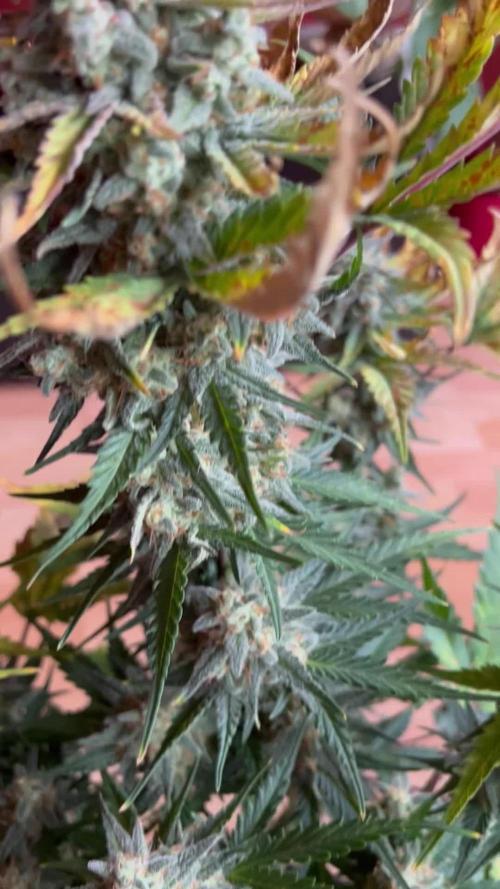
As the plants grew, I was trying to control them with the LST. However, it feels a bit hard when you start the seed in the center.
Likes
10
Share
Hi folks! Last week report for this cycle. My daily grow logs churned through keenly instructed AI first - my ramblings later. Let's go! --- PATHÉ DISPATCH — THE TERPENE FRONT, WEEK TWELVE [newsreel crackle, brass fanfare] GOOD EVENING, AMERICA. The last soldier has fallen. The tent stands EMPTY. The campaign — is CONCLUDED. DATELINE: THE FINISH LINE. Private Cinderella Jack, the LANDLORD, sole survivor of a long and unglamorous war, went down at PEAK TRICHOME STRENGTH — drinking three and a half liters a day to the end, browning her pistils with dignity, and smelling, our correspondent reports, of PINE FOREST with a sour citrus spin and a sweetness underneath he suspects of myrcene. She was, we are told, INTRIGUING. High praise from a man who once accused an entire plant of smelling like celery. [bugle, distant] DATELINE: THE JARS. This program has learned that A PRISONER TALKED. Four outbreaks of botrytis in five campaigns — a record our correspondent now catalogues like a war crimes tribunal, each with a NAMED CULPRIT: an air conditioner blowing on wet material. A dense cola in low VPD. A tent not cleaned into the corners. A scrog net gone slack and one forgotten soldier in the slump. And this run: 8.46 grams condemned to the bin. So the suspects were SEALED IN GLASS. Thirty percent fill. One hygrometer each. And under interrogation the infected bud CONFESSED — fifty-eight percent, where sixty-four was expected. The clean sample held at sixty-four and CLIMBED. Apollo was trimmed and conserved on the sworn testimony of a bud in a jar. [ominous timpani] DATELINE: THE FEED BENCH. Consider the PRECISION of this man. He doses silicon by the residue clinging inside a NEEDLE — six hundredths of a gram, swept into a few milliliters of water, two-thirds administered, the remainder discarded. Four liters of solution. A dose you could not see if we put it on camera. [record scratch] AND NOW — THE TWIST THIS CAMPAIGN HAS BEEN BUILDING TOWARD SINCE MARCH. On the FINAL MORNING of the FINAL WEEK, that same man FORGOT TO EMPTY AN ENTIRE WATER TANK. The dehumidifier tank overflowed. A POOL spread across half his floor. Humidity climbed. VPD sank toward 1.1. AND HERE, AMERICA, IS THE CRUELEST GRACE THIS PROGRAM HAS EVER BROADCAST: the night before, our correspondent had lain awake THEORIZING about how to soften the transfer from harvest to drying chamber — by RAISING THE HUMIDITY at precisely that hour. His equipment failure IMPLEMENTED HIS OWN UNBUILT PROTOCOL. The tank he forgot performed the procedure he had not yet installed. The flood was the FEATURE. [stern voiceover] MEN OF SCIENCE will note the harder lesson, filed the same day. Our man had stopped taking leaf temperature readings — because he was ALWAYS RIGHT. Minus three, every time, reliable as a church bell. Warm leaves in the morning? Thirst, surely. Filed. Dismissed. But you do not measure to be TOLD you are right, citizens. You measure to be told WHEN YOU ARE WRONG. And in this house the readings COMMAND THE MACHINES — so a wrong number does not sit quietly in a spreadsheet. IT GOES TO WORK. [gentle brass] We close on one final act of timing. On DAY EIGHTY-SIX of a NINETY-ONE-DAY RUN, the FAR-RED END-OF-DAY SIGNAL was at last moved — to the END OF THE DAY. "Bit late," our correspondent concedes. "Whoopzy." The chamber is cool. The colas are down. The floor has been mopped. And somewhere in a drawer, the controller configuration snapshots remain UNTAKEN — a loose end this program will be watching. [fanfare, film flickers out] THIS HAS BEEN THE FINAL DISPATCH FROM THE TERPENE FRONT. THREE FIELD REPORTS TO FOLLOW. RUN SIX AWAITS. EMPTY YOUR TANKS. GOODNIGHT. ----------------------- This has been a fun run and concludes my fifth cannabis grow cycle. Sure, the hours involved are off the charts in a home grow / lab setting, when optimizing existing protocols meets the introduction of new ones, and automation is financially unfeasible even on some basic levels. Empiric testing at home is too slow to win these battles, it is learning, deduction and formulation of thresholds that allows a home grower to partake in the finest results. So willingness to learn and troubleshoot are the only tools we have when money can't solve it: Two simultaneous nanner-events were managed during this run, pollen had been shed - no successful pollination occurred, nanner-production could be stopped and all product survived completely intact. | This event during ~ Week 7 was the single most stressful pivot, as the entire grow cycle hinged on the result. Total loss was now the first thought to wake up to every day, really killing the mood. Botrytis was identified correctly before the suspect entered the drying tent - to the point that I could experiment fairly safely by drying a botrytis-cola right next to all the clean product - and typing that sentence into a public blog afterwards. Later, a protocol was devised to distinguish infected material via % RH changes in secluded containers, before product got mixed in long-term storage. This was pretty awesome to learn about and definitely sharpened my perceptions. I could actually test a suspect cola and discard it, without opening up the bud at all (which I obviously did later as well). Drying at 16°C target under 30°C outside conditions was a huge success - and a MASSIVE pain to devise. A drying chamber whose product would need to cool a parallel grow tent was the answer - two linked AC's and "heavy decoration" of windows were absolutely necessary - and the measures turned out adequate. So, besides the workload, am I happy with this run? You bet! - facing total damnation twice 'n all. After growing for 1.5 years, I can finally rest on some of my protocols. That reduces stress, uncertainty, and buys me time for fun things to try. So, besides managing my downfall, I got to introduce my Terpene-Blue-Ray, a fairly simple prototype to encourage just the right kind of terpene accumulation. And above all - a bigger grow space to experience - no longer are my plants crammed into a tiny chamber that is surrounded by a machine park. I get to "work" in there as if I had rented an office for my project. --- Oh yeah, the plants! Dutch Passion's Auto Cinderella Jack, a cross of Jack Herer, is something of a sativa dream coming true to see unfold before your eyes. Big history, high in pinene (memory retention during daytime use) and a chance of a good spike of limonene (that neck cushion and sun-glasses feeling even under pressure) made her an ideal chase target for me. With her running -9 days behind the other cultivars, she took nutrient dosages intended for much older plants with a straight face, when they started to burn. She received higher light intensity and just had to "deal with it". She absolutely hated my HST-train-once intervention and completely changed her strategy as a result. She was the only plant without a soil sensor, water levels were "good guesses", so she also got waterlogged fairly hard during veg. Her response? Vigor, fury, lateral branching, flower sites all over. She could not be stopped, and I had to remove what felt like 2 smaller Autoflowers in bud sites from her. She is a record holder for me, more details in the strain reports. Thanks for your interest, I hope you could take something home from these journals. See you in run#6! - during which I have just massaged a 2 week old sad plant into praying for the first time.
Likes
8
Share
Week was pretty successful. Only problems I had was my PH out of wack due to the lava rocks. Ever since i took them out PH has been pretty stable. I check it every 2-3 days to keep at 5.8 to 6.2 range. I am up for suggestions on the medium.. should i keep it in or just leave them to sit at the bottom of the net pots? Any help will do for this grow. Thanks
Likes
1
Share
@Fyno_TH
Follow
The plant is now focusing 100% on bud development and trichome production
Processing
Likes
5
Share
Strong smell, sticky flowrs, what else can you ask for?! Beautiful strain to work with, the aroma it's just what you expect from a amnesia strain, ver strong pungent smell, cannot wait to taste those organic grown buds 👨‍🌾😋💎
Likes
1
Share
Voltaram para a estufa e estão na floração, essas plantas estou usando a linha Remo Nutrients, na próxima fertilização cadastro as quantidades .
Likes
16
Share
@710Lino
Follow
Way stickier then from seed it's kinda crazy how sticky these are 👀👀🔥🔥
Likes
14
Share
10/15 This week saw a few snags. Both gorilla zkittlez girls are showing what looks like a Mg def i.e yellowing between veins and green veins themselves. This isn't the first time they've exhibited these symptoms. Currently the heaviest affected leaves are the lowest fan leaves farthest from the light. Aiming to keep it that way. I think it's pH swinging too low. I need to pay more attention to my feeds but sometimes I don't have the time to pH my water as properly as I should. The reason I say it's that and not a deficiency is because they are also showing signs of over feed (yellow leaf tips) only a one half-strength feed did this. There must be plenty of food left in the pot. I'm thinking the flip is gonna come at the end of the week. I'll clean up some lower foliage tomorrow or Sunday and let them grow the rest of the week. 10 weeks seems like a nice round number to me. More pics coming when I do my defoll. 10/16 added some pics and vids
Likes
22
Share
@Selkot
Follow
I'm launching the GoGro system this week! I prepared 10L, with demineralised water, to which I added 2ml A + 2ml B. I first watered manually one last time with 50cl per plant and 0.25ml of power roots. Not the slightest leakage noted, first small victory. 😊 the valves distribute the water slowly, the coco soaks progressively; after a few hours, the substrate is wet but not soggy, a good sign. considering the difference in development between my 2 plants, i topped one of them. i'll do it only once, i'll give up the mainlining with automatics. this next week will be crucial: will the plants develop well, will they suffer from deficiencies or burnts? we'll know soon!
Likes
207
Share
One more week up we go, they responded very well to topping and are growing fast and strong 💪, i will star training this ladies some point this week, i will as always keep you guys posted as things move along 💚💚💚 Notecing some different greens from the ones i like popping up , so just in case and since I’m not feeding on my watering npk , I decided to apply nutrispray using 1ml of it for each Liter of water, and spray out them with a good bath. I brought my VIPARSPECTRA P- 2000 ( with is performing amazing in this 3x3 grow space ) to minimum power to avoid burning my girls leafs, and now lets see how they react. I believe that pretty soon i will introduce them to a 12/12 schedule , but for now lets see how they react and evolve for the next couple of days 💚💚💚 You can check out last week timelapse https://growdiaries.com/diaries/126067-grow-journal-by-dogdoctor and if you in to timelapse stuff i have just recently uploaded the Magnum auto Timelapse just for fun here https://growdiaries.com/diaries/105893-grow-journal-by-dogdoctor , hope you guys enjoy it 💚💚💚 growers love and one more week up we go 🙏🌱💚 And with enormous honor and pleasure that i start collaborating with Zamnezia and Viparspectra For this run i will have the pleasure of growing some Runtz genetics from Zamnezia seeds that they wore kind enough to send me for test and review 🙏🙏🙏💚💚💚🙏🙏🙏 and for the testing and reviewing i was blessed with the VIPARSPECTRA model P2000💚💚💚🙏🙏🙏 they wore amazing and send me this LED light for me to do some testing and some reviews. Special thanks to Zamnezia and to Viparspectra for this opportunity, lets make magic together 💚💚💚🙏🙏🙏 All i grow is medicine for myself, for me and for my best friend with is me 😆 nothing to sell, so don’t even ask 😅💚💚💚 All info and full product details can be find in can find @ https://viparspectra.eu/collections/grow-lights DISCOUNT CODE 5% - DOGDOCTOR ( all store ) https://www.zamnesia.com DISCOUNT CODE 10% - GROWITGD ( just for seeds ) https://aptus-holland.com/ More info and updates @ https://growdiaries.com/grower/dogdoctor https://instagram.com/dogdoctorofficial https://youtube.com/channel/UCR7ta4DKLFMg2xxTMr2cpIg 💚💚💚Growers love to you all 💚💚💚
Likes
19
Share
The colors are showing on this lady! They are beautiful! I couldn't believe how much she came into her own. I started to flush her and she's been hungry anyway. I taper off the nutes like nature intended. So last week was probably less than I added on the site. I will go back and fix it.
Likes
14
Share
So it’s the end of Week 5, Day 35 for the Sweet Seeds Gorilla Girl XL auto flowering grow. I have come to the conclusion that these four plants are not going to be XL after their pre-flower stretch. Overall the plants are healthy but the prolonged low humidity and temperatures have robbed them of the vigorous growth documented in my previous Sweet Seeds diary (Cream Mandarine XL Autos). I am disappointed that this will most likely be an XS harvest but a tiny quantity of quality bud is better than nothing. I gave them their first feeding of GHE FloraNova Grow fertilizer at a rate of 1.25 ml/gallon and this is 1/4 of a full dose that would be given to a photosensitive strain. I am still watering every fourth day at a rate of 2.8 litres per plant or 0.7 of a litre per plant per day. I will only be using the fertilizer every other watering or every eight days. That’s about it for this update and on to… Mom’s Tip for Week #5- To Tuck or Take? The when, where, why and how to defoliate Autoflowers successfully…. Lets start with some basic Biology- Photosynthesis is the process by which green plants take in sunlight, water and Carbon Dioxide and transform it into energy in the form of sugars that feed the plant and make it grow. So essentially, every fan leaf on your plant is a solar panel collecting light and therefore valuable in it’s own right. I always try to tuck my leaves if possible before considering removal as my plants need all the energy they can get to power through until harvest. But sometimes tucking isn’t enough or just isn’t an option anymore so here are my suggestions for taking the fan leaves from your Cannabis plants if needed. When- defoliating Autos can be done anytime throughout the grow although it’s generally not done within the first 3-4 weeks. The plants are usually quite small and those early weeks are valuable growing time that these plants simply can’t afford to miss. This is when I find leaf tucking to be most valuable, allowing the plants to keep what few solar panels they have while also allowing the grower to position the leaves so that they are out of the way. I personally find that I defoliate my plants the most over the final 3-4 weeks of the grow as foliage is dying off on it’s own by that point and a few less leaves at harvest time is always a good thing! Of course anytime you see dead/dying or diseased foliage, it should be removed as needed throughout the grow. Where- defoliating Autos is a delicate balance due to their small size and short lifespan. If my plants are healthy, thriving and tucking is no longer an option, I will only remove fan leaves if they are covering/blocking new growth or potential bud sites. As the plants age and the foliage begins to die off naturally, I tend to remove the oldest, lowest growth first working my way up the plant as needed until harvest. Why- defoliating Autos is done for a few basic reasons but only as an extreme in my garden when all else fails. Removing certain large leaves will allow more light into the lower portion of the plant’s canopy reaching young branches or potential bud sites. As the plants age, it also helps with increasing airflow around your swelling buds thus reducing your risks for mold and fungi in humid grow environments. Removing any and all dead/dying or diseased foliage is absolutely necessary in keeping your plants healthy and the grow room clean and pest free. How- defoliating Autos is simple if you keep it simple. Only remove what you absolutely have to and use a sterilized set of sharp pruners for a clean, controlled cut. As the plants age and the foliage begins to die off naturally, just wait. What doesn’t fall off on it’s own will snap off with a simple twist of the leaf’s stem. If the leaves don’t come off with ease, they’re just not quite ready yet so be patient. Be mindful that removing the solar panels from your Cannabis plants is always risky business but Autoflowers are even more challenging in their own way. Smaller plants with a lower leaf to bud ratio and a short lifespan means less room for error so paying close attention to the when, where, why and how is crucial for successfully defoliating Autoflowers. Tuck if you can, only take what you absolutely have to and of course- never take more than 25% of your plant’s overall foliage at one time as this can be devastating or deadly to even the healthiest of plants. Allow your plants to take the lead and they will show you which leaves are ready to go- at what time, all on their own just as nature intended.
Likes
8
Share
@Hawkbo
Follow
Pics taken on day 42 and video day 43. The 3 in the 1 gallon pots are shown at the end of the video they are off to the side.
Likes
15
Share
Cruise control baby! Nothing wrong. No issues. All growing extremely well. Keeping to my EC and my pH and all is well. Let's see what the next week is going to give us.
Likes
8
Share
@Mo_Powers
Follow
the last week was really sunny again and the temperatures are also constant. it is growing and growing. it has now reached a height of 100 cm. it has become beautifully bushy. i am really looking forward to seeing when it finally starts flowering.