


Likes
Comments
Share

@DogDoctorOfficial
Follow
🍮 8×8 Adventure – Week 11
Chem Brûlée – Pheno B
Hungry, Frosty & Still Asking for More 🌸❄️💡
Hello everyone, and welcome back to another chapter of the 8×8 Adventure! 🌱💚
And here we go again...
Chem Brûlée Pheno B.
If you've been following her diary, you already know this girl has never really been shy about expressing herself.
She's tall.
She's vigorous.
She's hungry.
She's beautifully structured.
And she's definitely not the quiet girl in the room. 😂
But this week, something interesting happened.
The plant itself didn't need much from me.
The room changed.
The lighting system received a serious upgrade.
The nutrition moved forward slightly.
And then...
we stepped back.
Because at this stage of flowering, sometimes the most important thing we can do is provide what the plant needs and let her get on with the job.
And Chem Brûlée Pheno B?
She's doing exactly that.
She's still shining.
She's still hungry.
She's still building.
And she's still very much herself.
🍮🌸❄️💡
────────────────────────
🌸 Week 11 – Let Her Keep Building
Chem Brûlée Pheno B remains around 130 cm, maintaining that taller, more open architecture that has separated her from her sister throughout this journey.
And honestly...
I'm really enjoying watching what she's doing with that structure.
The height isn't the story anymore.
The flowers are.
The plant has already established her architecture.
The branches are positioned.
The flowering sites are developing.
And now we're watching that framework slowly become something much more substantial.
This is the stage where I don't feel the need to constantly interfere.
She's healthy.
She's green.
She's flowering.
She's developing resin.
She's using the environment.
So...
let her work.
────────────────────────
🍽️ Yes... She's Still Hungry
If there's one thing Chem Brûlée Pheno B has made extremely clear throughout this grow, it's that she has an appetite.
😂🍽️🌿
She seems to look at the environment we've created and say:
"Okay... what else have you got?"
And while we obviously don't make nutritional decisions based purely on appearance, her vigorous growth and continued flower development make her a very interesting phenotype to observe.
She's using resources.
She's producing new floral development.
She's maintaining her foliage.
She's processing all that available light.
And she's continuing to build.
So yes...
our hungry girl is still hungry.
And we're listening.
We're not throwing everything at her.
We're not changing things dramatically.
We're simply making measured adjustments and watching the response.
That's the approach.
────────────────────────
❄️ The Frost Is Becoming Part of Her Personality
One of the things becoming increasingly difficult to ignore is the resin.
The frost is developing beautifully.
When you look at the plant from a distance, you see her overall architecture.
Move closer...
and suddenly the story changes.
Pistils.
Sugar leaves.
Trichomes.
Flower structure.
Texture.
Tiny details everywhere.
That's one of the reasons I love documenting these plants individually.
The wide photograph tells you where the plant is.
The macro photograph starts telling you what she's becoming.
And Chem Brûlée Pheno B is becoming increasingly interesting.
She's not finished.
Not even close.
But the direction?
I really like it.
────────────────────────
🌸 The Flowers Are Taking Shape
The developing flowers continue becoming more defined.
Those long white pistils are still reaching outward from the developing structures, giving the flowers that almost explosive appearance we've been watching.
But underneath those hairs, something more substantial is happening.
The buds are gaining structure.
The individual flowering sites are becoming easier to distinguish.
And the plant is slowly moving away from:
"I have flowering sites."
toward:
"I'm building flowers."
That's the transition we're watching now.
And because Pheno B has such a distinctive structure, it's particularly satisfying to see those flowers developing throughout her branches.
The architecture is becoming the foundation.
The flowers are becoming the story.
────────────────────────
💡 The 8×8 Just Got A Serious Photon Upgrade
Now let's talk about the biggest change this week.
The plants themselves didn't need much intervention.
But the lighting environment received a major upgrade.
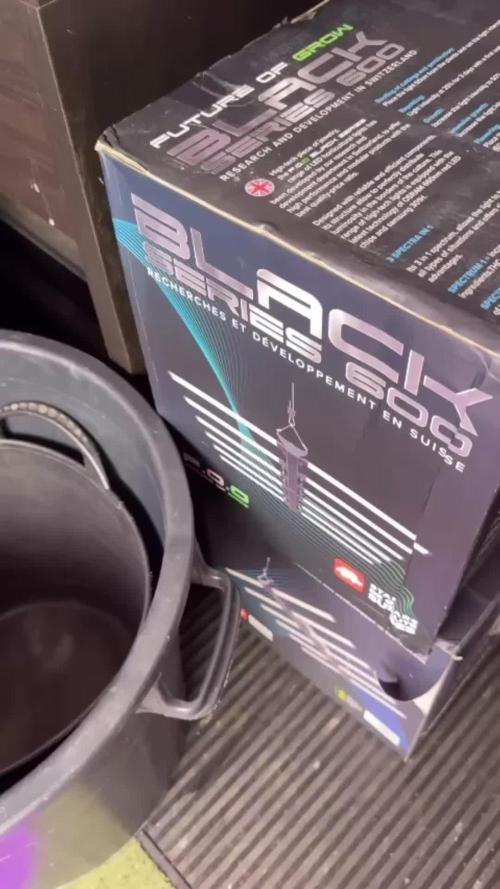
We've added two additional Future of Grow Black Series 600W fixtures to the 8×8.
And...
yes.
We definitely noticed. 😂💡
The available light increased more than I wanted initially.
So rather than simply running everything harder, we reduced the output.
We're currently running at approximately:
🔌 59% power from the plug.
And we're seeing approximately:
☀️ 1,500 PPFD across the upper canopy.
That's a serious amount of available light.
And I much prefer having that capacity available while controlling how much of it we're actually using.
We're not chasing the biggest number possible.
We're looking for the level that makes sense for the plants and the room.
And right now...
I'm very happy with where we've landed.
────────────────────────
☀️ More Light Doesn't Mean We Need More Power
This is something I particularly like about the new setup.
We now have considerably more lighting capability.
But we're not obligated to use all of it.
We added the two additional fixtures.
We measured the result.
The PPFD went higher than I wanted.
So we turned them down.
Now we're around 59% power from the plug.
Approximately 1,500 PPFD across the upper canopy.
And we're also saving electricity compared with simply running all the fixtures at maximum output.
That's a win for me.
We're testing the fixtures properly.
We're learning what they can do.
We're finding a practical operating point.
And we're not wasting power just because we have it available.
That's exactly what I wanted from this lighting upgrade.
────────────────────────
💚 Future Of Grow – A Big Thank You
A special shout-out this week to Future of Grow.
They provided the two additional Black Series 600W fixtures for us to test here in the 8×8 Adventure.
And now we're putting them to work.
Real room.
Real flowering plants.
Real measurements.
Real adjustments.
The additional fixtures gave us more lighting capability than we initially wanted, so we reduced the output to approximately 59%.
We're now seeing around 1,500 PPFD across the upper canopy.
And I'm genuinely happy with the balance.
Strong lighting.
More control.
Lower power consumption than running everything flat out.
And twelve different plants showing us how they respond.
Thank you, Future of Grow, for giving us the opportunity to test these additional fixtures and see what they can do in a real grow environment.
────────────────────────
☀️ Chem Brûlée Under The New Artificial Sun
And here's where things get fascinating.
The lighting environment has changed.
But Chem Brûlée Pheno B hasn't suddenly become another plant.
She's still tall.
Still vigorous.
Still hungry.
Still beautifully structured.
Still developing those flowers.
Still frosting up.
That's the beauty of genetics.
We can provide the environment.
We can provide the photons.
But the plant decides what to do with them.
The same light can fall on two phenotypes and produce two completely different stories.
And Pheno B is continuing to write hers.
She's taking that available energy and putting it toward what she does best:
growing.
Building.
Flowering.
────────────────────────
☀️ Around 1,500 PPFD Across The Upper Canopy
The approximately 1,500 PPFD we're currently seeing is across the upper canopy.
And with Pheno B, that distinction is particularly important.
She's a tall plant.
Her flowers and leaves occupy different levels.
The top of the plant sees stronger direct illumination.
The middle receives a different intensity.
The inner areas receive less direct exposure.
And lower parts of the structure naturally receive something different again.
That's completely normal.
A plant isn't a flat surface.
It's a three-dimensional solar field.
😂🌿☀️
Our goal isn't to make every single flower receive identical light.
It's to create a strong, useful lighting environment while allowing the plant to use the available photons effectively.
And that's why the ability to control the output is so valuable.
We can provide a very powerful artificial sun without necessarily running it at maximum intensity.
────────────────────────
💡 Photons Are Only One Part Of The Equation
I've talked about photons throughout this project because they're fundamental to what we're doing.
But they're never the entire story.
Light interacts with temperature.
Temperature interacts with transpiration.
Water availability affects nutrient movement.
Root-zone conditions influence uptake.
Nutrition supports development.
CO₂ influences photosynthetic potential.
Plant structure determines how photons move through the canopy.
Everything is connected.
That's why I don't want to simply keep increasing light because we can.
The objective is balance.
Give the plant strong usable light.
Keep the environment appropriate.
Maintain irrigation.
Support nutrition.
Observe.
And adjust when the plant actually tells us something needs changing.
Right now?
Chem Brûlée Pheno B is telling us she's happy.
────────────────────────
⚗️ Nutrition – A Small Step Forward
We've also made a small adjustment to the flowering nutrition this week.
Nothing dramatic.
We're simply moving Terra Bloom from 2.2 ml/L to:
🌱 Terra Bloom — 2.3 ml/L
The rest of the recipe remains:
🌱 Green Sensation — 1 ml/L
🌱 Power Buds — 1 ml/L
🌱 Sugar Royal — 1 ml/L
🌱 pH adjustment as required
That small increase brought the EC up slightly.
We're now around:
⚡ EC — 2.14 mS/cm
Again...
small adjustment.
Small movement.
Measured response.
We're not trying to reinvent the feeding programme.
The plants are developing beautifully.
So we're simply giving the flowering nutrition a small progression and watching how they respond.
And our hungry girl?
She's certainly giving us plenty to watch.
😂🍽️🌸
────────────────────────
💧 Irrigation – Let The System Keep Doing Its Job
The irrigation system remains consistent.
We're currently around:
💧 1.45 L per plant / 24 hours
with approximately:
🌡️ Solution temperature — 25°C
🥥 Substrate temperature — 25°C
At this stage, consistency becomes increasingly important.
The plant doesn't need us constantly changing things.
She needs a reliable root environment.
She needs water.
She needs nutrition.
She needs oxygen around the roots.
And then...
she needs time.
So that's what we're giving her.
The system continues doing its job in the background while we concentrate on observation.
────────────────────────
🌡️ Week 11 – Current Environment
The room is currently running approximately:
• 🌡️ Day Temperature: 26.5°C
• 🌙 Night Temperature: 26°C
• 💧 Relative Humidity: 61%
• 🥥 Substrate Temperature: 25°C
• 💦 Nutrient Solution Temperature: 25°C
• ⚗️ pH: 6.02
• ⚡ EC: 2.14 mS/cm
• 💨 CO₂: approximately 693 ppm
• 💡 Light Schedule: 12/12
• 💧 Irrigation: approximately 1.45 L/plant/24h
• ? Pot Size: 15 L
• 📏 Plant Height: approximately 130 cm
The environment remains broadly stable.
Summer still likes to remind us that absolute precision isn't always possible. 😂☀️
So the objective isn't chasing one perfect number.
It's maintaining a stable overall environment.
Avoiding unnecessary swings.
Watching the plants.
And responding when something actually needs attention.
Right now...
Pheno B looks very comfortable.
────────────────────────
🌿 No Need To Manufacture Work
This is probably one of the biggest themes of this week's report.
We're not doing much to the plants.
And that's intentional.
Earlier in the grow, we had plenty of work.
Training.
Structure.
Canopy management.
Defoliation.
Positioning.
Adjustments.
But now?
The plant has done most of the building.
She's created the architecture.
She's established the flowering sites.
She's developed the canopy.
She's now putting her energy into the flowers.
So I'm not going to manufacture work simply because I feel like I should be doing something.
Healthy leaves are working.
Flowers are developing.
The plant is healthy.
Air is moving.
Light is available.
Nutrition is consistent.
Water is being delivered.
Sometimes...
the best thing a grower can do is leave a healthy plant alone.
And our hungry girl seems perfectly happy with that arrangement.
────────────────────────
🌸 She's Putting Those Photons Somewhere
This is what I really enjoy about looking at Pheno B now.
We can actually see the result of all that invisible energy.
The photons are arriving.
The leaves are capturing light.
The plant is processing that energy.
And the visible result is right there:
More flower structure.
More definition.
More resin.
More development.
The plant itself becomes the record of what's happening.
And Pheno B is giving us a pretty impressive record.
She's not sitting still.
She's working.
Hard.
😂🌿
────────────────────────
📸 The Camera Is Still Loving Her
And once again...
this girl is fun to photograph.
😂📸
The full-plant shots show that tall, open architecture.
The middle-distance photographs show how the flowers are distributed through the branches.
And then you get closer...
and suddenly the frame becomes pistils, resin and flower structure.
That's the beauty of photographing the same plant every week.
You stop relying on memory.
You can actually compare.
Week after week.
Flower after flower.
Change after change.
And when you look back at the early photographs?
The difference is remarkable.
Chem Brûlée Pheno B has travelled a long way.
And she's not finished yet.
────────────────────────
Same Environment. Completely Her Own Answer.
This is still the heart of the 8×8 Adventure.
Twelve plants.
One room.
Shared environmental conditions.
Shared general lighting philosophy.
Shared irrigation.
Shared nutrition.
And yet...
twelve individual stories.
Pheno B is another perfect example.
She isn't Pheno A.
She isn't one of the compact girls.
She isn't one of the quieter phenotypes.
She's tall.
She's vigorous.
She's hungry.
She's frosty.
And she's developing her flowers in her own particular way.
The environment gives her the opportunity.
The genetics decide how she uses it.
And honestly?
I really like her answer.
────────────────────────
🍮 The Hungry Girl Is Still Hungry
If I had to choose one sentence for this week's report, it would probably be:
"She's still asking for more."
😂🍽️🌿
More photons.
More time.
More room to build.
More opportunity to develop.
And we're giving her those things in a controlled way.
Not blindly.
Not excessively.
But consistently.
The new lighting gives us additional capacity.
The small nutritional increase gives the flowering programme a little more room.
The irrigation keeps the root environment supplied.
The environment remains stable.
And then...
we watch.
That's the relationship between grower and plant at this stage.
We provide.
She responds.
We observe.
And when necessary...
we adjust.
────────────────────────
🔬 The Lighting Experiment Continues
The two additional Future of Grow Black Series 600W fixtures have added another fascinating layer to this project.
We now have substantially more lighting capability than before.
But the interesting result isn't simply the maximum output.
It's finding the useful operating point.
The PPFD initially went higher than I wanted.
So we reduced the fixtures to approximately 59% power from the plug.
We're now seeing around 1,500 PPFD across the upper canopy.
And we're doing it while using less electricity than running the fixtures at maximum output.
That's exactly the kind of practical information I wanted from this experiment.
The hardware gives us the capability.
The measurements tell us what is actually happening.
And the plants tell us whether they like it.
Chem Brûlée Pheno B?
So far...
she's looking pretty happy.
────────────────────────
🔮 Looking Ahead
From here, the plan remains beautifully simple.
Keep watching.
Keep photographing.
Keep the environment stable.
Keep irrigation consistent.
Keep nutrition appropriate.
Keep monitoring the lighting.
And let Pheno B continue doing what she's been doing.
Over the coming weeks, I'll be watching:
🌸 Continued flower development
❄️ Increasing resin coverage
🌿 Healthy foliage
💡 Response to the stronger lighting environment
💧 Water demand
🌡️ Environmental stability
🌬️ Air movement through the canopy
📈 Increasing flower density and definition
No need to force the next chapter.
She's already writing it.
We'll simply be here to document it.
────────────────────────
💭 Final Thoughts – Let This Hungry Girl Shine
Chem Brûlée Pheno B continues to be exactly what she has shown us throughout this journey.
Tall.
Vigorous.
Hungry.
Beautiful.
Distinctive.
And increasingly frosty.
This week, we didn't need to do much to her.
And that's a good thing.
We added two additional Future of Grow Black Series 600W fixtures.
We measured the increased light.
The PPFD went higher than I wanted.
So we reduced the output to approximately 59%.
We're now sitting around 1,500 PPFD across the upper canopy.
We increased Terra Bloom slightly from 2.2 to 2.3 ml/L.
The EC moved a little higher to approximately 2.14 mS/cm.
And then...
we stepped back.
Because she's doing her job.
She's taking the photons.
She's using the water.
She's using the nutrition.
She's building flowers.
She's producing resin.
She's becoming more and more herself.
And honestly?
That's exactly what I want to see.
The goal isn't to make her behave like another phenotype.
It's to give her the opportunity to show us what she can become.
And Chem Brûlée Pheno B is definitely taking that opportunity.
🍮🌸❄️💡🔥
So keep shining, hungry girl.
Keep building.
Keep frosting up.
Keep showing us what your particular expression of Chem Brûlée can become.
We're watching.
We're photographing.
We're learning.
And we're enjoying every minute of it.
────────────────────────
🙏 Thank You
A huge thank you to everyone following the 8×8 Adventure and taking the time to follow these individual stories.
Thank you to GrowDiaries for giving us the platform to document the journey and share what we're learning along the way.
Thank you to Zamnesia for the Chem Brûlée genetics and for giving us the opportunity to explore different phenotypes side by side.
Thank you to Plagron for supporting the garden with the nutrition and growing programme throughout this adventure.
And a massive thank you to Future of Grow for providing the Black Series lighting and, especially this week, for providing the two additional 600W fixtures for us to test in the 8×8.
Being able to increase the lighting capability, measure the response, reduce the output and find a practical operating point has been a fantastic part of this experiment.
We're currently running around 59% power and seeing approximately 1,500 PPFD across the upper canopy while also keeping electricity consumption lower than simply running everything at full power.
That's real-world testing.
That's what I like.
Thank you as well to Lumiflora for helping illuminate the deeper parts of the canopy and giving us another perspective on three-dimensional lighting.
And thank you to TrolMaster for helping us monitor and manage the environment behind the scenes.
And finally...
thank you to everyone following along.
Every comment.
Every question.
Every message.
Every person stopping by to see what these girls are doing.
You're all part of the adventure.
Twelve plants.
One room.
One shared environment.
And twelve completely different stories.
Chem Brûlée Pheno B is writing hers with an appetite.
😂🍽️🌸
She's hungry.
She's frosty.
She's beautiful.
She's developing some gorgeous flowers.
And she's still asking for more.
So let's give her the spotlight.
Let's keep those photons flying.
Let's keep watching those flowers develop.
And let's see just how far this hungry girl wants to take us.
🍮❄️🌸💡🔥
Until next week...
Growers Love, my friends, and happy growing! 🌱💚
See you next week in the 8×8 jungle. 🌿📸🍮

Processing
Likes
4
Share


@Ogbangbang2981
Follow
I never thought I'd say it but i think when it comes to my indoor C4 vs my outdoor C4 Indoor takes the prize, I mean that's only for now lets see what happens in the upcoming weeks. I'm sticking to my bat turd mix and all sun, I shift her around during the heavy showers, yea it rains out here. I don't feed no store bought nutrients all from nature same goes for my indoor ... if you look closely you'll see that I lst her it's only because of her mutation.

Likes
Comments
Share

@BombBuds
Follow
Ende Woche 2 Blüte. Alles schaut schön aus buds bilden sich und von den Milben nichts mehr zu sehen.


Likes
6
Share


@Cannabis_ConnectionUK
Follow
Flying along now
All tied up lights on 100%
Just sit back and watch now 👍🏻

Likes
6
Share


@Sato_Growing
Follow
Going to add week comment soon cause i have a lot of work to dooo ! :P
You can understand i suppose happy new year with a lot of trimming job to do <3


Likes
6
Share

@thclover066
Follow
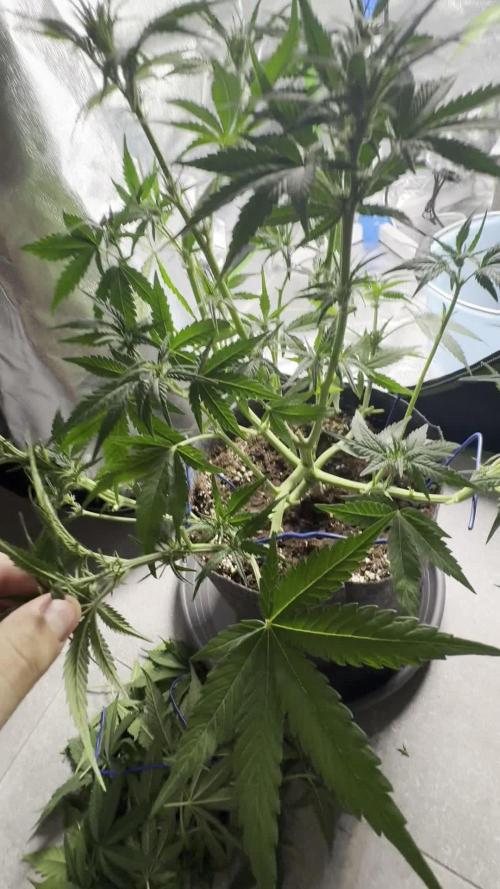
The plants have officially started flowering and are looking strong and healthy! 🌸 Unfortunately, I ran into a nutrient lockout in the soil, so I flushed each pot with about 20L of pH-adjusted tap water. This brought the runoff PPM down from around 2000 to about 900.
For this next watering, I’ll be giving only plain water and checking the runoff again. Based on the readings, I’ll decide whether to resume nutrients on the following watering—and if so, whether to start with a half dose or go back to a full dose.
So far, the plants seem to be handling everything perfectly, and I’m excited to see how they develop through bloom. 🌱💪


Likes
82
Share


@BigBadLion
Follow
Hey everyone!
Here's the Week 6 update! 😀 and I had some issues! Nothing too serious but still worth mentioning!
I had some kind of algae growing in my medium so I stopped watering the plants for a while (I used to feed them twice a week) and I just did it once this week to wait for the plants to use more of the water inside their pots and I think it did work! I also removed most of the soil on the top to avoid spreading anything dangerous to my plants! 😭
Besides that I started doing a more aggressive LST and I also pruned some of the bigger sugar leafs 😲
My plants were also somewhat overfed (or I was close to nutrient locking them) as some of their leafs were quite dark (you'll be able to notice the difference from the color of the new leafs vs the old ones) so for the next schedules I'll just feed them once per week or feed them once then go only with pH'd water and then go back to fertilizers to avoid damaging the plant! 💀
On another note, the smallest plant has grown quite well so next week I'll be swapping her to a new por! I think she deserves it! The 3rd plant now has a name and it's "Boomer"! 😍
I also decided to go for 4 colas instead of 8 because the size available in my tent is small and I don't want risking my plants fighting for light in such a small space! 😢
Anyway, thanks everyone for reading everything so far!
Take care! 👽

Likes
8
Share


@Kelseyheart
Follow
Saw some pistols.. was a feminized seed but still good too see that. Week 2 of 12/12 but I think it has been in preflower the last couple weeks.. maybe officially starting to flower now. Didn't notice much flowering stretch.. maybe this upcoming week? Anyone know how long preflower lasts? ❤️


Likes
16
Share


@DrShotzUK
Follow
All round sugarlato is looking like the healthiest auto I’ve grown so far.
The smell is phenomenal and I will defiantly be using green house seed co for every grow I do.
Genetics are 12 out of 10.
Can’t wait to taste the end result!
Likes
4
Share


@RBG
Follow
All done and up for drying, will come back in a bit and write me a paragraph on the ladies that have been taken down!
Overalll very happy with the outcome, they went over there suggested flowering times by a few weeks. Ceremony was the only one on her top side that had just started to finish up but she flowers for about 12 weeks so understandable but weve only got that 1 room to dry n grow in currently until more equipment arrives for the next coco ladies
Drying on 55% RH with a 21-23 room temperature.

Likes
10
Share


@CampaCavallo
Follow
4ª settimana di fioritura alla CAMPACAVALLO per la Black Muffin di SweetSeeds 💚🐘🔝
Di piccoli peni 🍌 non se ne vedono più...
Ed i bud si stanno gonfiando alla grande😛🎈
Beve 🍺 propio tanto in questa fase di crescita 🐫
🖤La CampaCavallo manda un grande abbraccio a Valencia ed alle persone colpite dalla maledetta alluvione🖤
Likes
21
Share


@gr3g4l
Follow
esta semana seguimos doblando y podando alguna que otra ramita . Al parecer la nº1 ,la Triploide (tres ramas mismo nudo), que pasó a ser diploide (dos ramas mismo nudo) después de podar el primer apical parece ser que ha vuelto a Triploide y esto podria dificultar las otras dos ramas que van más avanzadas por lo que me decidí por cortar y así que siga diploide.
A los 40 dias volví a podar los segundos nudos de cada rama dejándolas ahora si listas para pasar a floración en un par o tres de dias. más un agarre de las ramas a las macetas y así ir deshaciéndome de los dobladores , estos estan quedando pequeños.
A los 41 dias me dió por cambiar de posición la nº2 y ponerla en el lugar de la nº1, la triploide.
La nº2 está creciendo algo más vigorosa que las otras dos y la nº1 va por el camino de quedarse algo más enana. La nº3 seria un intermedio.
Likes
11
Share


@Lifesgarden420
Follow
Great genetics with the best nutrients always produces awesome results
Every harvest continues to get better
These ladies are healthy and happy

Likes
19
Share


@adam_pawloski87
Follow
What another great week it’s been , today is Day 39 from seed an the lil ladies have jumped into preflower 😍! Yesterday gave em the trim up of the unders , kinda popsicled you can say to each one, cause we want to focus on them colas ! This week we should see some more great progress, let them caps start stacking ! Can’t wait to see what we do next week ! Hope you all enjoy an have an amazing productive day! Peace love an positive vibes to y’all Cheers 😶🌫️💨💨💨💨💨🤙🏻

Likes
28
Share


@Sators
Follow
Hi good fellows!💚
🌱Day 50. Watering with 3L 6.8ph 150ppm clear tap water. Run off water get 115ml and measures is 6.7ph 650ppm.
MP4 included.💚
🌱Day 52. Watering with 2.7L 7ph 150ppm clear tap water. Run off water get 115ml and measures is 6.7ph 550ppm.
Worry about ppm level. Keep watering with clear tap water!💚
🌱Day 54. Watering with 2.5L 7ph 150ppm clear tap water. Run off water get 35ml and measures is 6.7ph 400ppm.💚
🌱Day 56. Watering with 2.7L 6.8ph 150ppm clear tap water. Run off water get 55ml and measures is 6.7ph 400ppm.
Amazing!💚


Likes
6
Share


@Kanbal
Follow
Still no flowers, foliar calmag, silicate, proroots. Still problems with Calcium. Matterhorn is unstable genetics!
Likes
5
Share


@UnCultivadorDeWeed
Follow
La gorila glue con sus hojas llenas de resina, he cultivado 6 semillas antes de la misma variedad y puedo ver hasta el momento una cepa estable.
Las big bud entraron en mayor observación dado a que dejaron de engordar dos.
La Mack va como avión, a pesar de todo lo que se podo al entrar a floración estiró hasta igualar a la Gorila y llenando los brotes de cogollos

