


Likes
Comments
Share


@DogDoctorOfficial
Follow
# 💙 Project Blue Tent – Week 12
## ? Blue Waffle F1 – Pheno A
### 🌸 More Photons, More Flowers, and a Beautifully Balanced Ecosystem
Hello everyone, and welcome back to another chapter of Project Blue Tent! 💙🌱
And honestly, my friends...
LOOK AT HER! 😂🌸
We're now moving further into flowering, and I'm genuinely happy with what I'm seeing inside this little ecosystem.
Four plants. Two different cultivars. One tent. One shared environment.
Our beloved Blue Waffle F1 girls are sharing the space with their Pickle Lemon Haze F1 sisters, and every plant is giving us something interesting to observe.
But today, we're putting the spotlight on Blue Waffle F1 – Pheno A.
Because even though she's sharing the same tent, the same reservoir, and the same environmental conditions as the other girls, she deserves her own report and her own moment to shine.
And this week, we made a couple of small but meaningful adjustments.
We lowered the temperatures and humidity slightly, increased the power of our overhead LEDs, and kept the entire nutrition recipe exactly where it was.
No unnecessary changes. No complicated interventions.
Just a little refinement of the environment and a lot of appreciation for what these beautiful cultivars are showing us.
Let's get into it! 💙🌿
### 🌸 WEEK 12 – A SMALL CHANGE THAT MAKES THIS WEEK INTERESTING
Not every week needs to bring a major transformation.
Sometimes, the most interesting updates are the ones where we make a few adjustments and observe how the plants respond.
That's exactly where we are now.
The major structural work has already been completed. The canopy has been organized, the second SCROG is in place, and the under-canopy lighting experiment is underway.
Now we're concentrating on maintaining a comfortable environment while the flowers continue developing.
This week, we made two principal adjustments:
- We reduced the temperature and relative humidity slightly.
- We increased the power of the overhead LEDs to the highest level we intend to use in this 1 × 1 metre tent.
We're not running everything at 100%, and we're not necessarily trying to squeeze every possible watt out of the equipment.
Instead, we're giving the girls a little more light than before while keeping an eye on how the whole ecosystem responds.
And so far?
They're looking beautiful! 😂💙
### 💡 MORE PHOTONS – BUT WE'RE KEEPING OUR HEADS COOL
Let's talk about the lighting, because this is one of the most interesting changes this week.
We've increased the LED power to the maximum level we currently intend to use in this particular tent.
Not necessarily the maximum the equipment can deliver, but the maximum we've decided to use for this setup.
There's a difference!
I honestly don't think we need to push the lights harder just for the sake of doing it. The tent is relatively compact, and we already have a beautiful, productive-looking canopy.
But we also know that light is one of the important factors influencing plant development and flower production.
So we're giving the girls a little more photon availability and observing how they respond.
The goal isn't simply to turn up the lights and hope for the best.
It's to find a sensible balance between light intensity, temperature, humidity, and the plants' overall condition.
More light can be beneficial when the plants can use it effectively, but more isn't automatically better. The response depends on the intensity reaching the canopy, the environment, and how comfortably the plants are handling the conditions.
That's why we're not jumping straight to 100%.
We're increasing the available light while keeping the ecosystem balanced.
And now we watch.
Because the plants always get the final word. 🌿💡
### 🌸 THE WHITE PISTILS ARE CHANGING, AND THE FLOWERS ARE FORMING
This is where things are becoming particularly beautiful.
The white pistils are developing and changing as the flowers continue to form.
The flowering sites are becoming more defined, and the overall structure is starting to show us more clearly where this plant is heading.
When I look at Blue Waffle F1 Pheno A, I see a plant that's moving through another stage of her flowering journey.
We're no longer looking only at the framework we created during vegetation.
We're watching the flowers develop within that framework.
The branches, the canopy organization, the training, and the support system are all part of the picture, but the flowers are increasingly taking centre stage.
And the close-up photographs make it even more enjoyable to follow.
Every week gives us another opportunity to compare what we're seeing now with what we saw before.
The pistils. The flower structure. The developing resin. The way the plant is progressing.
It's a beautiful process to document.
And she's giving us plenty of reasons to keep the camera ready! 📸💙
### ❄️ THE FROST IS STILL ONE OF MY FAVOURITE THINGS TO OBSERVE
I have to mention the frost again, because you know me...
😂❄️
I love getting close to the flowers and seeing all those little details that are easy to miss when you're simply looking at the whole plant.
The developing flowers and sugar leaves give us so much to appreciate through the camera.
And that's one of the things I love about keeping a detailed diary.
You can see the plant from a distance and appreciate the structure.
Then you get closer, take a photograph, and discover an entirely different level of detail.
We're documenting the plant as she develops, not just taking pretty pictures.
Although, let's be honest...
the pretty pictures certainly help! 😂💙
### 🌡️ A LITTLE LESS HEAT AND HUMIDITY
Alongside the increase in LED power, we've also reduced the temperature and relative humidity slightly.
These adjustments go together as part of the overall environmental management.
When we change the lighting, we're also paying attention to the conditions around the canopy. More light can mean a different thermal load, so we want to make sure the room continues operating comfortably.
We're not changing every setting at once or rebuilding the entire environment.
We're refining the conditions while keeping the rest of the setup consistent.
And that's an important distinction.
We already have a system that we're happy with. We don't need to reinvent it every week.
We simply need to keep observing, make sensible adjustments when appropriate, and avoid changing things without a reason.
The ecosystem is working beautifully, and the goal is to keep it that way. 🌿💙
### 🌱 SAME NUTRITION, SAME RESERVOIR, SAME PHILOSOPHY
Now, here's something that hasn't changed this week.
The nutrition.
We're keeping the same recipe in the reservoir because everything is progressing well, and there's no reason to introduce unnecessary changes just because we've adjusted the lighting and environmental conditions.
Our current recipe remains:
- PLAGRON Hydro A — 2.2 ml/L
- PLAGRON Hydro B — 2.2 ml/L
- PLAGRON Power Buds — 1 ml/L
- PLAGRON pH Plus — 0.03 ml/L
- PLAGRON pH Minus — 0.03 ml/L
The pH Plus and pH Minus quantities are the recorded recipe values; the actual amount required for adjustment can vary with the source water and the solution.
We're not changing the nutrient recipe this week.
The plants are developing, the irrigation system is working beautifully, and we're happy with the overall progress.
Keeping the nutrition consistent also means we're not introducing another variable while observing the effect of the lighting and environmental adjustments.
That's part of what makes this project interesting.
We make a change where we believe it makes sense, maintain the other elements, and watch what happens.
Simple, consistent, and documented. 💙
### 💧 IRRIGATION AND DRAINAGE – THE QUIET HEROES
One of the best things about this ecosystem is that the irrigation and drainage systems are doing their jobs without demanding constant attention.
The girls are sharing the same reservoir, and the automatic irrigation system continues supporting the plants throughout the day.
When these systems are working properly, it's easy to forget how important they are.
But consistency matters.
We want a setup that supports the plants while allowing us to concentrate on observing their development.
And that's exactly what we're aiming for here.
The equipment doesn't need to be the star of every update.
Sometimes, the best compliment you can give a system is that everything is running as expected.
No unnecessary drama.
Just another part of the ecosystem working together. 💧🌿
### 🕸️ THE STRUCTURE IS ESTABLISHED – NOW WE WATCH
Remember how much work went into getting these girls to this point?
The training.
The topping.
The SCROG.
The defoliation.
The management of the stretch.
The adjustments to the available space.
The additional support.
The airflow improvements.
There was a time when the main question was how we were going to manage the canopy.
Now, the structure is established, and we're watching the plants develop within it.
The second SCROG remains an important part of that support system, while the canopy organization helps us observe the flowering sites more clearly.
We're not looking to make unnecessary structural changes this week.
The plant has a framework, the support is in place, and the focus is on monitoring her progress.
Sometimes, the best way to appreciate the work we've done is to stop interfering with it and see what the plant does next.
And that's precisely what we're doing with Blue Waffle F1 Pheno A.
### 💡 TWO LUMIFLORA FIXTURES – LIGHT FROM BELOW
Our under-canopy lighting experiment also remains part of the bigger picture.
We're using two LumiFlora 150W full-spectrum fixtures underneath the canopy, arranged in an X-cross configuration.
The main LEDs provide the primary overhead lighting, while the LumiFlora fixtures give us another way to explore supplemental lighting in the lower portions of the plants.
It's an interesting addition to this setup, particularly because the plants have developed substantial vertical structure.
But, as always, we're approaching this as an experiment.
We aren't assuming that adding lights underneath will automatically produce a particular result.
We're interested in observing how the lower flowering sites develop and how the complete lighting arrangement performs as the plants progress.
The overhead power adjustment and the under-canopy lighting are both parts of the lighting environment, but they serve different roles.
Now we continue monitoring the plants and documenting what we see.
That's what this project is about: experimenting, observing, and learning as we go. 💡🌸
### FOUR PLANTS, TWO CULTIVARS, ONE BEAUTIFUL ECOSYSTEM
This is one of the things that makes Project Blue Tent so enjoyable for me.
We have four plants sharing one tent, representing two different cultivars: Blue Waffle F1 and Pickle Lemon Haze F1.
They're growing in the same room, sharing the reservoir, and experiencing the same general environmental conditions.
And yet every plant deserves to be documented individually.
I know I've mentioned how uniform these plants can look, but I still find it fascinating.
Sometimes, looking across the canopy, the plants appear remarkably similar in their overall development.
At the same time, we need to leave room for individual differences to show themselves as flowering progresses.
That's why I'm keeping separate phenotype reports.
A shared environment gives us a useful basis for comparison, but it doesn't mean every plant will necessarily respond identically.
Each one has its own development to document.
And today, that's Blue Waffle F1 Pheno A's moment.
She's looking fantastic, and I'm genuinely happy with the way this ecosystem is progressing.
### 🌿 WHY THIS WEEK MATTERS – AND WHY IT DOESN'T NEED TO BE DRAMATIC
I think this is an important point to make.
This week matters because we've adjusted two environmental variables: temperature and relative humidity. We've also increased the overhead LED power to the highest level planned for this tent.
Those are meaningful changes to observe.
But this doesn't mean we need to make the week sound more dramatic than it is.
We haven't changed the nutrition.
We haven't introduced a completely new training technique.
We haven't rebuilt the room.
We're refining an already established setup.
And sometimes, that's exactly what a good grow update should document.
Not every week needs a breakthrough.
Not every adjustment needs to produce an immediate, obvious difference.
Some changes need time before we can properly evaluate them.
So we're recording what we've changed, appreciating what we're seeing, and giving the plants time to respond.
That's how we learn.
And that's why I enjoy documenting the entire journey rather than only showing the big moments.
The quiet weeks matter too. 💙
### 🌸 CURRENT GROW CONDITIONS
- Cultivar: Blue Waffle F1
- Phenotype: Pheno A
- Flowering: Week 12
- Height:Approximately 145 cm
- Light schedule: 12/12
- Day temperature: Reduced slightly; current value to be confirmed
- Night temperature:Reduced slightly; current value to be confirmed
- Relative humidity: Reduced slightly; current value to be confirmed
- pH: 6.01
- EC: 2.24 mS/cm, last recorded value
- Solution temperature: 25°C, last recorded value
- Substrate temperature: 24°C, last recorded value
- CO₂: Approximately 666 ppm, last recorded value
- Pot size: 8 L
- Watering volume: Approximately 1.6 L per plant per 24 hours
- Main lighting: LED power increased to the maximum planned level for this tent
- Under-canopy lighting: 2 × LumiFlora 150W full-spectrum fixtures
- Nutrient program: PLAGRON Hydro
- Nutrient recipe: Unchanged this week
Note: The previous recorded readings are retained where no new measurement was provided. They should not be interpreted as newly measured values for this week.*
### 🔭 WHAT I'M WATCHING NEXT
Now I'm particularly interested in seeing how the girls respond to the updated environment.
How will Blue Waffle F1 Pheno A progress with the increased overhead light intensity?
How will the slightly reduced temperature and humidity affect the overall balance of the room?
How will the flowers continue developing?
How will the lower flowering sites progress under the supplemental LumiFlora lighting?
And will the similarities between our Blue Waffle F1 and Pickle Lemon Haze F1 plants continue as they move further through flowering?
We don't need to answer all those questions today.
We need to keep the environment consistent, observe the plants, and record what happens.
That's the beauty of a project like this.
We're not simply trying to reach the finish line.
We're learning along the way.
### 💙 FINAL THOUGHTS – KEEP EVERYTHING SHINING
Blue Waffle F1 Pheno A is looking beautiful, and I'm genuinely happy with the direction this ecosystem is taking.
The flowers are forming.
The white pistils are developing and changing.
The structure is established.
The nutrition remains consistent.
The irrigation and drainage are working beautifully.
We've slightly reduced the temperature and humidity, increased the overhead LED power, and kept the rest of the system stable.
And that's the story of this week.
A few deliberate adjustments.
No unnecessary changes.
And a beautiful plant continuing her flowering journey.
I don't believe we need to push every setting to its absolute maximum to prove that we're doing something.
We need to find a balance that makes sense for the space, the lighting, and the plants themselves.
That's why we're not running the LEDs at 100%.
We're giving the girls more light while keeping the whole environment in mind.
And now we let the plants show us how they respond.
I'm really, really happy with this room.
Four plants. Two cultivars. One ecosystem.
And so much still to discover.
Blue Waffle F1 Pheno A deserves her own spotlight, and this week she's getting exactly that.
Keep the environment balanced.
Keep observing.
Keep learning.
And remember that sometimes the best decision is the one that allows you to appreciate what you've already built.
💙🌸🌿
### 🙏 A HUGE THANK YOU
A huge thank you to Zamnesia for making Project Blue Tent possible and giving us the opportunity to explore these beautiful Blue Waffle F1 and Pickle Lemon Haze F1 cultivars.
Thank you to PLAGRON for the Hydro nutrient line supporting the girls throughout this journey.
A massive thank you to Zamnesia for the Phytonaut LED lighting, curved scissors, and clip fans that have become important parts of this ecosystem.
Thank you to Mars Hydro for the automatic irrigation and drainage system that continues helping us maintain consistency throughout the tent.
And a special thank you to LumiFlora for the 150W full-spectrum under-canopy fixtures that we're using to explore supplemental lighting beneath the canopy.
And of course, thank you to GrowDiaries for giving us the platform to document the journey, the experiments, the lessons, and the beautiful moments along the way.
Most importantly, thank you to everyone following Project Blue Tent! 💙
We're continuing to learn, observe, and enjoy the process, one week at a time.
Until next week...
More flowers.
More observations.
More learning.
And hopefully, even more reasons to stand in front of the tent, look at these beautiful girls, and smile.
😂💙🌸
Growers Love, happy growing, and take care everyone!🌱💙

Likes
13
Share


@Chuckwaggon420
Follow
This week everything is falling perfectly into place week 8 so close to the end not even funny! You can see from the tricomes shots (all from lower buds) is just around the corner of all 5 plants being done. Some is already sone like a runtz muffin and 1 persian pie, but we wait for their friends. Over week 8 have gave them only fresh water with blackstrap molases and have taken the temps even lower to 67 at night. Pushing towards that finish line!!! Next should be a harvest i would think!!!


Likes
10
Share


@Barzenegger
Follow
Since the GMO seems to be getting more and more spots and is losing color, I decided to up the nutes a bit and also buy a few more Canna products.
The buds started swelling so I thought it's a good time to try Canna Boost and PK 13/14.
Likes
14
Share


@MG2009
Follow
03/18/2021
Making the switch to 12-12, flowering should Start by next week.
Likes
29
Share


@coldweave
Follow
Day 19 since flip, not much to report. Top dress today of 4-8-4 rose and flower mix from down to earth with a little worm castings. Almost done with stretch. Back two are Gary Poppins (Gary Payton x Red Runtz). One on the left is stretching to the moon, definitely a Gary leaner, and the one on the right turned out to be the smallest plant of the five, definitely a Runtz leaner. Plain ph’d tap water and that’s it
🌡️: 77-80 F
💡: 65% @ 20 inches
💦:60%


Likes
10
Share


@Diegobike
Follow
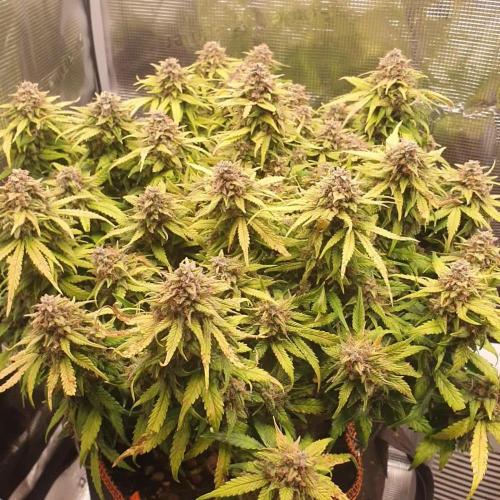
He estado de viaje hoy vuelvo y veo mi niña ya empezando floración como dios manda esperemos que está mamba salga re bombastic



Likes
7
Share


Likes
33
Share


@Gruenerfinger85
Follow
Hallo meine Pflanzen Freunde.
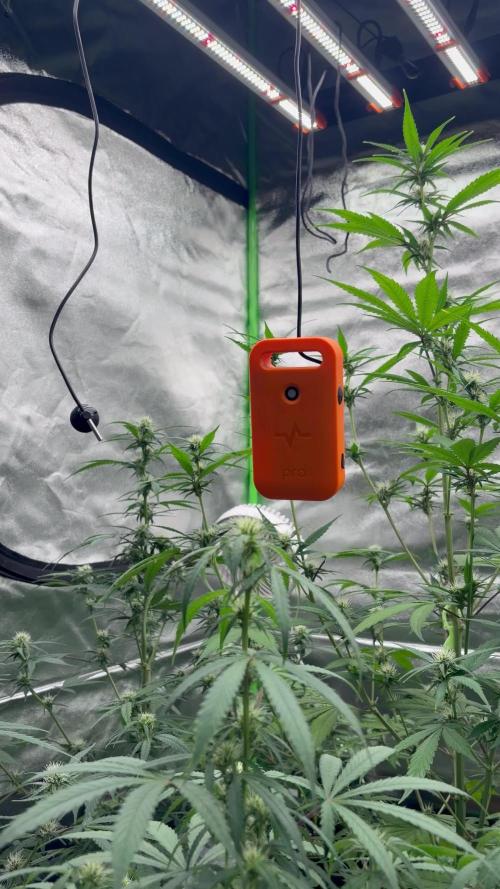
Wieder ist eine Woche rum, die Pflanzen sind aus der Vorblüte und sind jetzt in der Vollblüte.
Ich muss sagen das bei dieser Sorte die Vorblüte sehr früh schon eingesetzt hat.
Bei diesem strain geht alles Schlag auf Schlag.
Dieser strain kann es gar nicht abwarten dicke schmackhafte buds zu produzieren, was mich glücklich stimmt.
Mit der Luftfeuchtigkeit bin ich nicht ganz zufrieden sie könnte um 20% höher sein.
Ich werde mir was einfallen lassen damit ich diese in Zukunft besser kontrollieren kann, ansonsten bin ich mit der Entwicklung zufrieden. Viele Verzweigungen hat dieser Phäno nicht aber ich glaube die Blütenstände die sie hat werden monströs.
Wir werden sehen wo uns die Blütezeit schicken wird.
Ich persönlich hätte mir ein paar Verästelungen gewünscht, man könnte diese Dame nicht einmal richtig Trainieren mit der LST Methode weil es nix zu trainieren gibt.☹️
Die Noiden Abstände sind umso besser, was nützt mir das wenn die Blüten direkt am Hauptstamm wachsen, nun man kann nicht immer alles haben und man sollte das beste draus machen was einen die Natur gibt.
Deshalb wollen wir nicht soviel meckern und mit dem zufrieden sein was wir haben.✌️🏼
Das war es erstmal von dieser Woche, vielen Dank das du uns besucht hast und ein Like da gelassen hast.
Schau gerne bei meinen anderen Büchern vorbei es gibt einiges zu sehen.
Diese Pflanzen werden mit einem organischen Dünger von S&R Organics gedüngt. Schau in ihrem Shop vorbei, neben dem großartigen Dünger findest du alles was man für denn Anbau von Pflanzen brauchst und hiermit erhältst du 20% GREENPOWER20
Also nix wie hin, hier ist der Link: https://www.sr-organics.com/
Bei Royal Queen Seeds bekommst du 20% mit GROWERS20
Let’s Grow ✌️🏼





Likes
19
Share


@PigBearMan
Follow
High. 🐸
Plants are growing fine.
First pistils appeared on FD 15.
That's all to report for this week, nothing to complain about, everything looks good so far. 💚
Stay green. 👨🌾🏻
Likes
181
Share


@GODSGIFT_2005_JM
Follow
🍼Greenhouse Feeding BioGrow & Bio Bloom
🌱GARDEN OF GREEN SEEDS
⛺️MARSHYDRO
The ⛺️ has a small door 🚪 on the sides which is useful for mid section groom room work. 🤩
☀️ by VIPARSPECTRA (models: P2000 & XS 2000)

Likes
8
Share

@The_Doctor_Green
Follow
Hola a todos!!!
Perdon por la demora en la actualización, 😅🙏
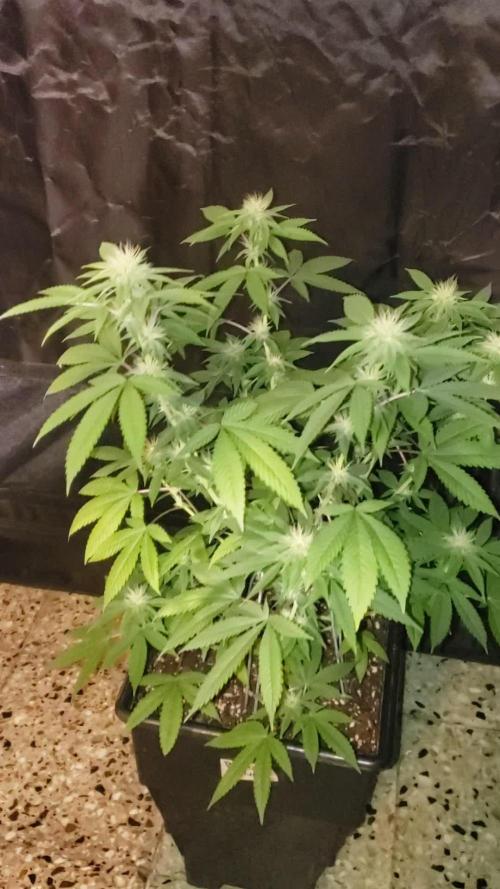
En esta semana he aumentado la dosis de fertilizantes a 2 ml x litro de agua, de top bloom y top candy de top crop.
El ph de riego es de 6.3, no controle drenaje,pero aun se la ve bien.


Processing
Likes
2
Share


Processing
Likes
1
Share


@ladyjane
Follow
8/22 - There has been some explosive growth among my 4 purple Microdots. They are growing by leaps and bounds each day,
8/23 - So far everything is going smoothly. Just watering each day w/ RO water and organic black strap molasses.
8/24 - Brewing up some compost tea. This will be there first! As they start to get a little bigger I've made a prediction for sex. I think A238 & A239 are male and A240 & A241 are female. We'll see!
8/25- Fed the ladies with the compost tea and used it as a foliar spray as well. They responded very well and continue to have crazy, rapid, growth.
8/27 - They have gotten so big and bushy. I'm going to start a little LST on them today!
8/30 - They are starting to show sex! Still can't tell whether it's male or female...but it should be any day now!
Likes
2
Share

@Organic_G
Follow
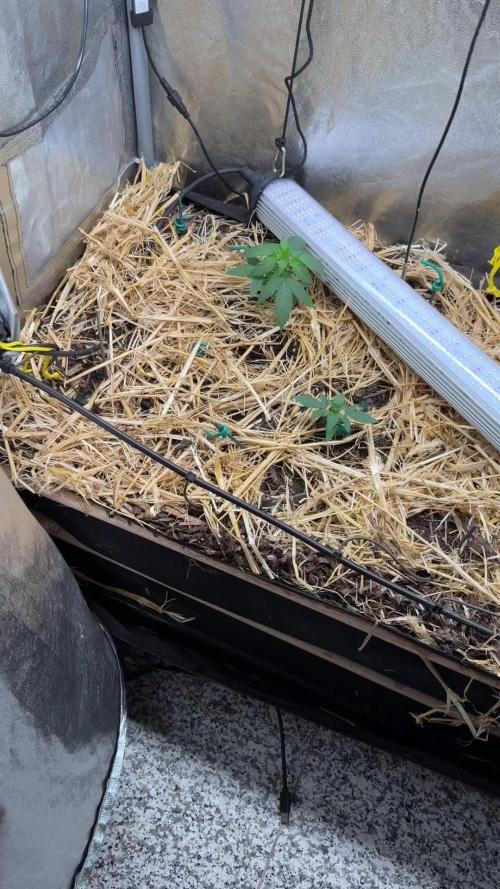
Einfach wachsen lassen bisher, haben wohl gut gewurzelt und jetzt mal schauen was wird. Bin einfach auf die blütenqualität gespannt ob DS was gutes ist.

Likes
Comments
Share
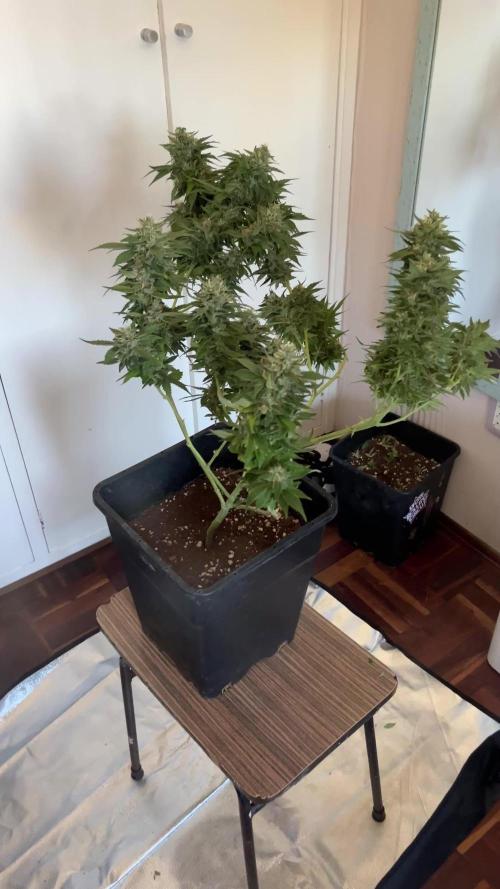

@Jardin33ro
Follow
Podriamos haber tenido un punto de corte mas optimo, pero la verdad que un primer cultivo exitoso. Muy rico en aromas y en sabores. El olor a mandarina muy marcado y al final un toque de pimienta que hace que no sea tan impalagoso el citrico tangie. 250 g en seco, nada mal.

Likes
3
Share


@Boscaglia
Follow
Plants left pretty much unattended the entire week. pH spiked up to 6.5 during this time, might have to start looking at the pH every couple of days and correcting accordingly.
So far, so good, leafs looking a little lime green, but it's been a long time since my last hydro grow, so I'll play it conservative and wait before I start increasing individual nutrients.