


Likes
Comments
Share


@BudXs
Follow
What makes an outdoor grow successful? Is it dodging a hurricane and pulling pounds? Is it avoiding the sticky fingwrs of AstroThieves? Is it looking wpm and botrysis in the eye and telling em they stand no chance? Is it defeating all cockshit fucker parasites? Is it finding solitude and happiness in making something work? Something thats yours and only yours? Is it distraction from reality? Is it trolling the GD platform as the current presidenr and not growing at all?
Dunno. See my solo

Likes
8
Share

@GERGrowDesigns
Follow
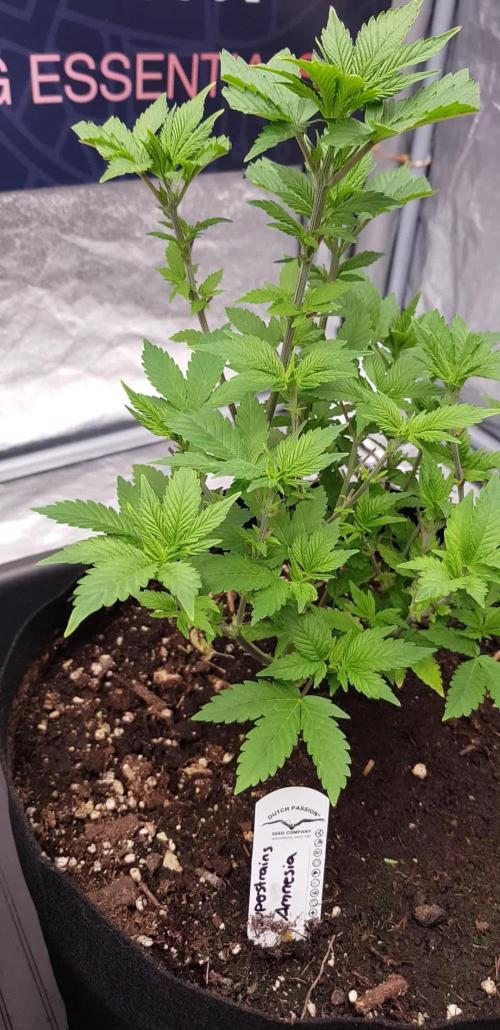
Welcome to Veg Week 5 of SuperStrains Amnesia
I'm excited to share my grow journey with you from my
SuperStrains Project . It's going to be an incredible ride, full of learning, growing, and connecting with fellow growers from all around the world!
For this Project , I’ve chosen the Feminized Photo Strain Amnesia :
Here’s what I’m working with:
• 🌱 Tent: 120x60x80
• 🧑🌾 Breeder Company: SuperStrains
• 💧 Humidity Range: 60
• ⏳ Flowering Time: 10 Weeks
• Strain Info: 25%THC
• 🌡️ Temperature: 26
• 🍵 Pot Size: 20
• Nutrient Brand: Hy-Pro
• ⚡ Lights : 600W x 2
A huge thank you to SuperStrains for allowing me to try my Best with this amazing collection from Photo Strains they managed to Sponsore side by side with theyre Hy-Pro Nutriets . Big thanks for supporting the grower community worldwide! Your genetics and passion speak for themselves!
I would truly appreciate every bit of feedback, help, questions, or discussions – and of course, your likes and interactions mean the world to me as I try to stand out in this exciting competition!
Let’s grow together – and don’t forget to stop by again to see the latest updates!
Happy growing!
Stay lifted and stay curious!
Peace & Buds!

Likes
17
Share


@Dunk_Junk
Follow
Apologies for lack of photos. But here is a close up timelapse bud shot for half a week...

Likes
6
Share


@HappyPetals
Follow
I believe we are about to move into the flowering stage. I see a bit of the white hair.
I've given them probably their last mixture of grow+CalMag nutrients this week. We'll see how they are looking in the coming weeks and I'll switch to the flowering nutrients next.
They are well over 4ft and 3ft tall (excluding the pot) and they look like they will be huge! Looking forward to the next stage.

Likes
6
Share


@20SYL
Follow
Arrosage plutôt léger cette semaine (tout les deux jours), après le sur arrosage et l'excès de nutriments de la semaine dernière elles se sont très bien remises. La dernière est toujours en retard, elle continue sa croissance donc pas d'inquiétude !
On entre dans une période de canicule (35/40°C) donc le climatiseur tourne à fond, j'arrive à limiter la température à 26/27 max et environ 24 de moyenne. L'humidité est un peu difficile à maîtriser malgres le déshumidificateur, en moyenne 57,7% mais il chauffe, donc il faut trouver le juste milieu.
Pour le moment tout va bien, j'attends de voir la suite ☀️


Likes
16
Share


@CookiesAndCake
Follow
The buds on this girl were quite small but they came out veeery dense. The smell wasn't anything special as she was growing but now that she's cured, it smells like a really nice strong indica with hints of citrus. But she was incredibly easy to grow and so quick to recover! Couldn't be happier with the final outcome and really happy about growing this strain!

Likes
25
Share


@Roberts
Follow
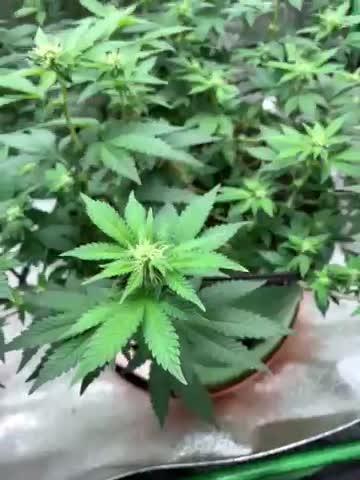
Melon Gum is starting to form her cola sites. Everything is looking good. I will be doing a solution change soon. Thank you Pure Instinto, Spider Farmer, and Athena nutrition. 🤜🏻🤛🏻🌱🌱🌱
Thank you grow diaries community for the 👇likes👇, follows, comments, and subscriptions on my YouTube channel👇.
❄️🌱🍻 Happy Growing 🌱🌱🌱
https://youtube.com/channel/UCAhN7yRzWLpcaRHhMIQ7X4g.




Likes
3
Share


@Jamminbear
Follow
Flip the switch to 12/12. All ladies looking pretty good. @sereneoo22 Thank you for dropping by!! Water with Yucca/coco water/root wise Phos/ rootwise enzymes. ph to 6.2.
Day 4 #flowering #livingsoil #barneyfarms #lsdbarneysfarm #peyotecritical #pineapplechunkstrain Top#2 #mainlining #rosettastonexx #brothersgrimmseeds
#opticsled #urbnatural #timbergrowlights #trainingday #weedyoga
#composttea #boogiebrew #dragonflyearthmedicine #fatflowers #lushroots #Brilliantblack #NaturalMystik #Radiantgreen #redwrigglers #buildasoil
#mulching #coconutwater #aloewater #rootwisemycrobe #covercrop

Likes
9
Share


@Siriuz
Follow
Yo, get ready cuz I aint got time for the
b!Tches - Sing with me go go go
High as f
Whats up my friends how is it going?
Im just happy I did some crazy stuff on this gorilla girl after having the accident with the main trunk thank God it healed and created other colas but since she was so bushy I went and defoliate her some more, she got bushy again but left her like that didnt fck with her no more until I had to for specific REASONS but before that I also went and literally stab two of her branches, you will see duct tape covering those, reason I did that was to force her to produce more flower thru those branches believing that HEALING redirects vitamins from living soil when feed in a schedule with the right nutes, she gets healed real fast plus she got real bud on those two branches that were stabbed.
IT was literally something to force her produce more bud and yes indeed it worked those bud suites right now are fully loades on tips are very dense thc yellowish and then white hairs and the main trunk has white hairs good size fattening up and yielding some more but still not so many yellow dark amber hairs like in those branches that were stabbed lol
I called that SiriuzShot lol
Hey guys whats up its just about getting creative, look at how green my leaves are and the nice nice bud is coming up
We at mid bloom right now brothers just switched schedule to 18/6 Flowering girls need resting time added fan for extra air flow and hopefully adds density to buds???
Yo give your tips suggestion anything related organically home made whats good lemme know so I can keep fattening up this ladies very well
Hey by the way added some molasses and banana tea with some other tea and sugary stuff they taking it well, no nute burnt no problems at all girls liked it x 100000
Good stuff organically
Lemme know if anything alright
Stay tuned for more
Check me out @cannagrowersiriuz
Take it easy son have fun
Happy growing
Likes
Comments
Share


@Ogchemst
Follow
She came out to be a pretty noce plant, very small with little stretch tho and very bushy so I'm definitely gonna run her again and see what the other phenos might look like.. I'm feeding them everyday now the cherry gusher and runtz are doing alot better than the og so I will definitely run these again, but I will be using a little smaller pots i suppose... I want to fit more plants in there to use up the space better and a bit faster since I'm going to be pheno hunting and taking clones in future to get the best out of here strains i have around 9 seeds of cherry gusher left i got the big pack as I knew i wanted this one for the beautiful looks and taste and effect i was told it has..
Happy growing!

Likes
12
Share


@Staffedition
Follow
Привет друзья.
Моей растихе сегодня 88 дней.
Растение пришло в себя.
20.10 буду переводить на цвет.
Начал применять LST технику на 19 дне и продалжаю применять её через день, а 18 августа добавил ДЕФОЛИЗАЦИЮ
С 20.08 ДЕФОЛИЗАЦИЮ делаю каждые 3,4 дня
С 20.08 LST технику делаю каждые 4.6 дней
На сегодняшний день влажность 54%
5.09.2023 заметил высокий Ph 7.9
С 48 дня Ph не ниже 5.8
На сегодняшний день Ph 6.0
Начал кормить с 60 дня Canna Terra Vega
PPM 450
Погладитель влажности хорошо справляется со своей задачей. Рекомендую
Всем мира и добра!
Не забудь поставить лайк❤️, если понравилась как прошла неделя
И читайте наш TELEGRAM: https://t.me/smail_seeds
#Smail_Seeds 😀#Cali Buds
Likes
13
Share


@Skinnytalls420
Follow
Day 23-30/04/22 all looking very healthy gave them a nice watering today about half a liter each! Bio grow and calmag!!!
-
Day 24-01/05/22 everyone of my babies are looking very well 👌.
-
Day 25-02/05/22 everything looking good no need to water today just let them do there thing!!!!
-
Day 27-04/05/22 gave them a nice watering today!!!! All looking good 👍

Likes
7
Share


@ZoogFarms
Follow
Week 4 for the Critical and Sour Diesels and Week 3 for Lemon Pie, Blackberry and Gorilla Zkilttlez


Likes
36
Share


@Cannabeast40
Follow
Once again, I welcome you back to my summer grow🙂💚
Still adding more bloom and PK boost to the nutrients mix and also bumping up the light a bit 😎🤙🏻
I started to add UV/IR for one hour a day, mainly before lights go out 🙂
Happy growing y’all 💚
-------------------------------------------------------------------------------------------------------
SpectrumX LED🔥 @medicgrow
880 Watt⚡️
2x UV/IR LED panels 💥
2.7 μmol/J🔥
Full Spectrum V1,F1,VS,FS🌈
Display with PPFD & Live spectrum
Light measurement: Apogee MQ-610 & Apogee DLI-600.
Fertiliser:
Organics Nutrients
https://www.organicsnutrients.com/en/
Green Buzz Nutrients
Discount Code: GD42025
Grants 25% with a minimum Order value at 75 Euro.
https://greenbuzzliquids.com/en/shop/

Likes
2
Share


@kens1
Follow
Getting rid of more yellowish leaves, I dont know is it because of the extreme heat or the ppm but yeah at least the plant is HUGE haha
Likes
15
Share


@crystal_garden_0
Follow
Good week. Careful with the nutrients. I upped mine a little to much and noticed right away. Amazing smelling. Really sticky. Careful with nuts nice plant.
Likes
223
Share


@Tropicannibis_Todd
Follow
💩Holy Crap We Are Back At It And Loving It💩
Growmies we are at DAY 35 and she's just killing💀it👌
👉We are in the Preflower stretch 👈 OG 👍 GP 👍 AF was the hold out be she finally went into Preflower 👈
So Shit , I gave them just a tad to much nutes on the last feeding 👈 But I have since fixed it
So I'm starting to pull her over and do some low stress training 🙃 and some defolation 😳
Lights being readjusted and chart updated .........👍rain water to be used entire growth👈
👉I used NutriNPK for nutrients for my grows and welcome anyone to give them a try .👈
👉 www.nutrinpk.com 👈
NutriNPK Cal MAG 14-0-14
NutriNPK Grow 28-14-14
NutriNPK Bloom 8-20-30
NutriNPK Bloom Booster 0-52-34
I GOT MULTIPLE DIARIES ON THE GO 😱 please check them out 😎
👉THANKS FOR TAKING THE TIME TO GO OVER MY DIARIES 👈

