


Likes
Comments
Share


@PinonAraucano
Follow
The flowering started! I'm very excited to see those first little white "hairs" in my plants. Everything is going well, the stems are getting thicker and flowers are groing very fast. I'll keep you all updated with this, send me good vibes!


Likes
1
Share

@Organic_G
Follow
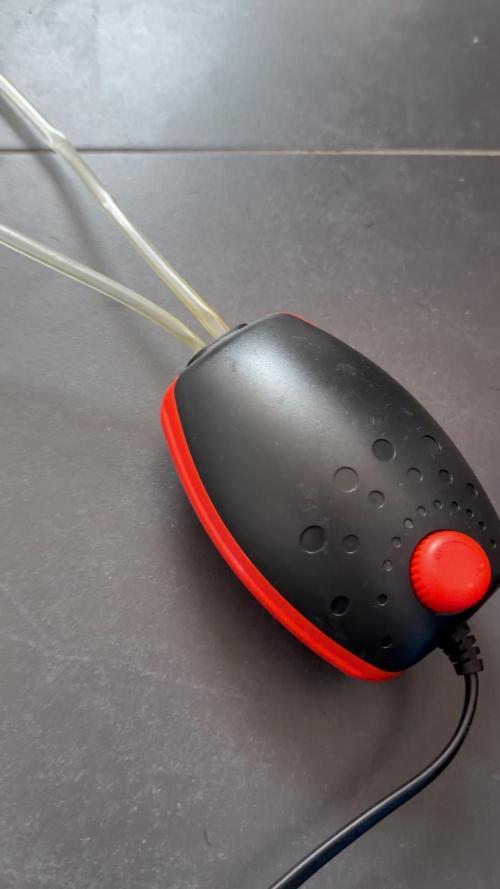
Kleines Süppchen gekocht um das Bodenleben nochmal anzuregen,
Bat Guano Flüssig
Fermakor
Zuckerrohrmelasse
2x Bannanenschalen
24h Sauerstoff zugeführt und eben die Hälfte gegossen, hoffe das es die jungen Wurzeln nicht verbrennt

Likes
60
Share


@SooSan
Follow
13 jours de 12/12
OK il y a du changement !
Dans la partie du scrog vertical le stretch n’a pas été assez fort
J'ai donc abandonné la culture verticale pour cette fois
J'ai donc fusionné le bas de la tente pour avoir un espace de 90x60x90
Le ts1000 a été retiré pour laisser la place aux barres du FC-E 4800
Et bien sur gros LST pour gagner en surface et gagner 20 à 30cm de hauteur
Vu qu’il y a 16 plantes mais que sur growdiaries on ne peut mettre que 8 variétés j'ai divisé en 2 diaries pour le bas de la tente
1️⃣
🏠 90x60x90
☀️ FC-E 4800 => puissance a 20%
🍁
1x Black Bomb / Philosopher Seed
2x Amnesia Lemon / PEV Seeds
1x Blueberry / PEV Seeds
1x Blueberry / 00 Seeds
1x Wappa / Paradise Seed
1x Dark Phoenix / Green House Seed
1x Quick Sherbet / Exotic Seeds
1x Mango Cream / Exotic Seeds
1x Banana Frosting / Sensi Seed
1x Hindu Kush / Sensi Seed
4x Fast Mix / Sweet Seed
📎 https://growdiaries.com/diaries/122084-grow-journal-by-soosan
📎https://growdiaries.com/diaries/124052-grow-journal-by-soosan
2️⃣
🏠 30x60x50
☀️TS1000 => puissance a 50%
🍁 4x Quick Sherbet - Exotic Seed
📎 https://growdiaries.com/diaries/122080-grow-journal-by-soosan


Processing
Likes
18
Share


@Manic
Follow
Both the girls are doing very well and are continuing to stretch. No problems at all from either one of the plants. They deff started sprouting there pistols and where Alaskan purple fell behind in veg, she is now ahead in the flowering stage. The bottom leaves shrivelled which I am aware this will happen during this stage so I cut them off and there is a little nutes burm on Alaskan purple so the next two feedings will be with distilled water with pH of 6.5.

Processing
Likes
Comments
Share


@Scarface8290
Follow
Went light on the nutes. Quarter strength. They responded well. Lowest leaves looking somewhat burnt. Still getting fat though.



Likes
3
Share


@Bluemels
Follow
Tag 46: Malsehen wie lange die Pflanze mit den doch schon recht hellen Blättern durchhält.

Likes
2
Share

@Tropical_Grow
Follow
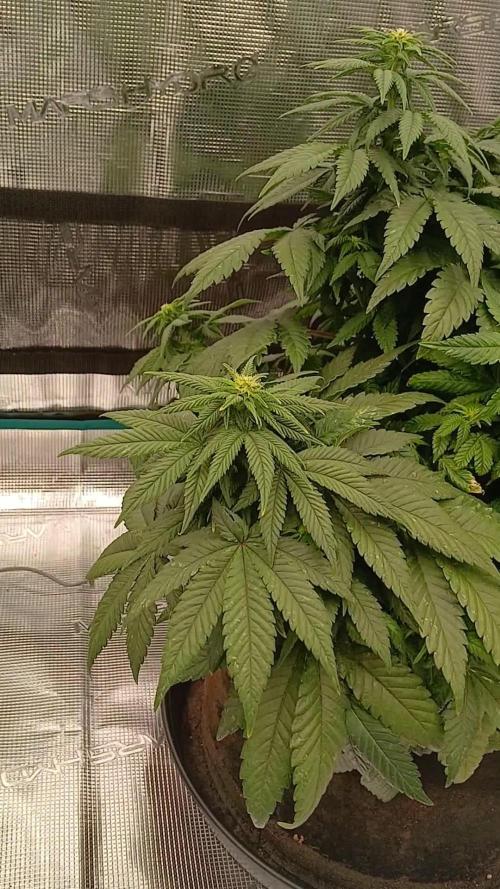
Very good structure, the branches are sturdy.
Short and compact plant. Flowering has begun; I'll see how it stretches.
Processing
Likes
88
Share


@No_Clout
Follow
01/08/18 - I fed them all 1 litre each, one of them seems to be praying up but the other two Seem a little bit droopy still.
02/08/18 - #3 is praying like usual and the other two are getting better Day by day I’m going to be giving them another feeding tomorrow, I have seen roots stretching out to the sides of the pots so I might saturate the whole pot.
04/08/18 - horrible sight today looks like rusty cracks in some leaves , not got a clue what this.
05/08/18 - browning has continued since last night and it’s all on the new leafs not the older ones. i fed them without any calmag , so I think it could be a deficiency of some sort (cal/mag).the mad thing is, it’s only two of the girls, one of them is completely fine nice green leaves not yellow marks that turn orange/brown. It definitely has nothing to do with my ph or all three girls would be showing some symptoms seeing as they all get fed with the same soloution.✌️🏻
07/08/18 - everything’s cleared up their was slight nute burn in the process but everything seems a lot better so I decided to start LST. all the new leaves are the colour they should be with no nute burns or calcium deficiency 🙏🏻

Likes
7
Share

@Cannussy
Follow
7/13/25 - 7/16/25
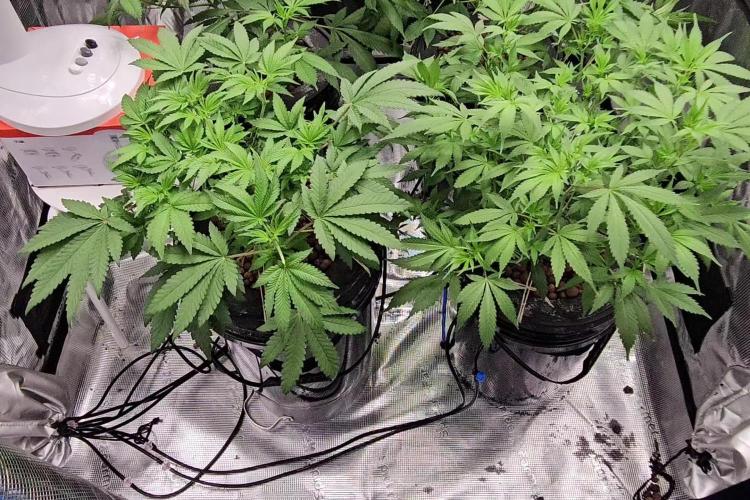
Flipped as another strain is gonna be a problem otherwise. Very stumpy and thicc lady, already smells very funky and rotten. Now we wait and see what emerges in flower.
7/17/25 - 7/19/25
One hungry girl, she is on 100% feed rn. And god she stinks, really gives u burning nostrils. I know copycat is a sensitive topic in the breeder world but he knows his shit. I am abaolutely going to get more of his shit.
Likes
49
Share


@FlavoursUk
Follow
Very easy strain to grow that’s has little to no stretch from transition from veg to flower. Fairly quick flowering time. Super fat, dense buds. Real unique tasting strain as I can’t pin point an exact flavour. Good all round strain. If you grow her you’ll need to veg her to the final size you want her at. Loads of purple in my pheno, which is aesthetically pleasing to the eye.

Likes
34
Share


@Roberts
Follow
Blue Dream Auto has grown a little, but I think more was going on in the coco mix. I imagine she will make some progress this next week. She looks healthy and she is getting nutrition with the darker shade of green development in her leaves. Everything is going well, and ready for her to shine. 🤣Thank you Medic Grow, and Seedsman. 🤜🏻🤛🏻🌱🌱🌱
Thank you grow diaries community for the 👇likes👇, follows, comments, and subscriptions on my YouTube channel👇.
❄️🌱🍻 https://www.seedsman.com/?a_aid=Mrsour420.
This is my affiliate link to seedsman.
Thank you Happy Growing 🌱🌱🌱
https://youtube.com/channel/UCAhN7yRzWLpcaRHhMIQ7X4g.


Likes
15
Share


@Huckleberry39
Follow
Everything is going really good. Introduced nutes the other day and she took the great...no burnt tips or anything!!! Imbpretty sure she is just pre-flowering but she looks good!!
Processing
Likes
Comments
Share


@Greenbean15
Follow
Discovered a male plant in with my girls in the bigger tent. No pods had burst, it was only about 10 days in to flower. Moved the male to the small tent and moved the older flowering PT clone to the big tent. The larger plant has less time for seeds to develop and while I want seeds, I still want quality bud as well... trying to minimize pollination as much as I can until I have the chance to selectively pollinate branches on each of my girls.
This plant got moved to the large tent and ScrOGed. Here’s to hoping I am able to minimize the pollination. This is an end grow and I don’t have any seeds put back so the male isn’t getting chopped until he does fertilize a few females.
So far the male has been reduced to three main colas, I hope to only pollinate one branch on each female. Some random seeds from natural pollination are also okay if it happens.
Ignore my commentary on the video unless you just want to know about the strains I have lol... a friend has a clone about the same size of the same strain and asked about my grow since getting the same lights I have.
Likes
7
Share


@eldruida_lamota
Follow
Vamos familia actualizamos la cosecha de las gelato Olandese de Dutchfem .
La verdad que el secado muy bien 7 días en Malla y a los botes, 40% humedad y 24 grados es la temperatura ambiental que han tenido en el secado.
Por lo demás de miedo os la recomiendo.
Gracias a DutchFem, Agrobeta y Mars hydro , sin ellos este proyecto no sería igual 🙏.
Agrobeta:
https://www.agrobeta.com/agrobetatiendaonline/36-abonos-canamo
Mars hydro:
Code discount: EL420
https://www.mars-hydro.com/
Buenos humos.

Likes
4
Share


@m0use
Follow
***Sponsored Grow*** = Medic || https://medicgrow.com || Grow = ***Sponsored Grow***
Not a whole lot is happening this week, still having some PH issues in the medium, I believe this is from the microbial mass I added a while back. A microbe product, PH going into the medium is around 6.5-6.8 and coming out is between 5.5-5.8, so something is acidifying it up. Also noticed the runoff last week was a bit higher at times. So lowered the feed down quite a bit, going in at 1.4EC vs 1.8 will bump it up to 1.5 and 1.6 in the next few weeks. I also added in a bit of a PK booster. nothing to crazy only 60ppm worth on a total allowance of 700PPM
Lights now running at 100% with V1 spectrum, decided to go with 100% now vs after stretch, will see how it works out.
Till next week.
https://medicgrow.com/
+
https://seedstockers.com/
Facebook:
https://www.facebook.com/medicgrowled
+
https://www.facebook.com/SeedstockersBarcelona/
Twitter:
https://twitter.com/medicgrow
+
https://twitter.com/seedstockersb
Instagram:
https://www.instagram.com/medicgrow420/
+
https://www.instagram.com/seedstockers_seeds
YouTube:
https://www.youtube.com/channel/UCNmiY4F9z94u-8eGj7R1CSQ
+
https://www.youtube.com/channel/UC4GiFYrIWeNtwtXjcivCmfw
Growdiaries:
https://growdiaries.com/grower/medicgrowled
https://growdiaries.com/grow-lights/medic-grow
+
https://growdiaries.com/grower/seedstockersofficial
https://growdiaries.com/seedbank/seedstockers

Likes
62
Share


@ButterfliesLittleFarm
Follow
Hello Diary,
The third week of vegetation has ended and the plants are entering the flowering phase.
The flowers have started to form, which is nice to see in the photos, all in all I am satisfied with how they are developing.
They grew a little more than 10 cm and got a lot of new leaves, so now they are really bushy.
I'm thinking of doing a little defoliation next week, I'll see how it goes.
The humidifier is still on to keep the humidity around 60% while the temperature is around 22 degrees.
They still don't ask for much water so I only had one watering this week when I gave them about 2 liters of water each.
This time I added Bigger Flowers and Thicker Flowers at the recommended dosage for the third week of vegetation.
Here's what it looked like last week.
12/02/2023. - Day 19.
Watering.
I prepared 4 liters of water, lowered the pH. to 6.0 with Plagron's Lemon Kick and added Bigger Flowers 0.5/1 lit and Thicker Flowers 0.1/1 lit and with that amount I watered both plants evenly.
14/02/2023. - Day 21.
Photographing and height measurement. End of the third week of vegetation.
Medusa F1 #1 - 32cm
Medusa F1 #2 - 28 cm
That's all for this week, see you soon.
Likes
5
Share


@DaddyPrime2
Follow
5/2 she's finally tall enough to spread out and she's looking so fucking good. She's showing sex but I don't think its flowering
5/31 the main stem of this plant is crazy. The branching is abnormal and I can't wait to see what it does.
Likes
25
Share


@JeyGanesha
Follow
Più ci avviciniamo al raccolto e più sento che ne è valsa la pene investire tempo in questa piantina

