Likes
Comments
Share
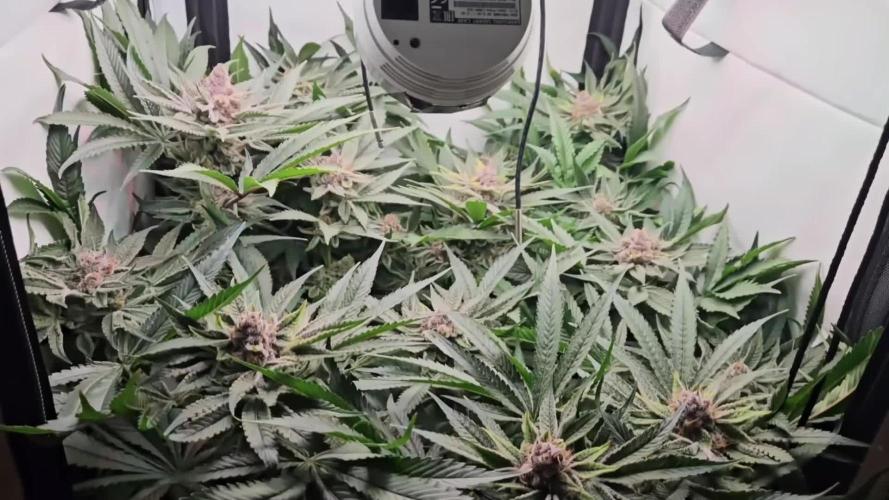
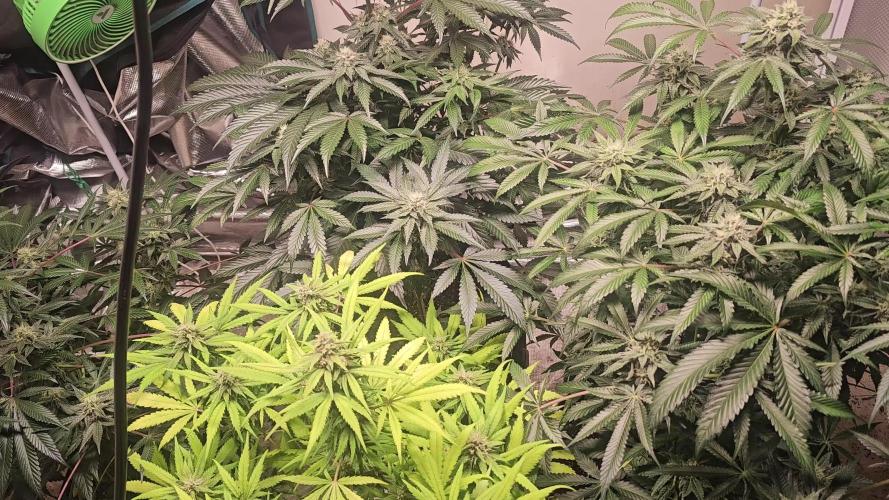
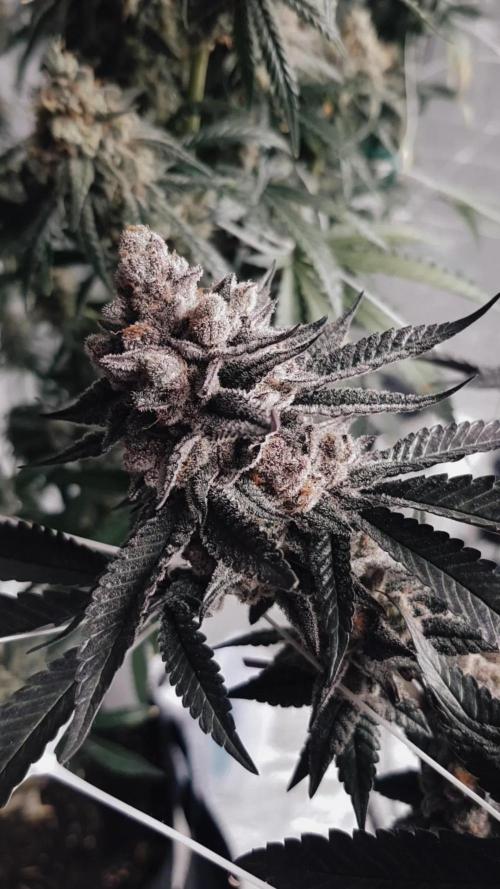
Greetings, Week 3 and their first liquid feeding. the Strawberry Ice are really doing well the Blue dream haze are coming along nut not as fast as the Strawberry Ice. Time will tell what strain will produce. the reboot is coming along as well I will veg these for another 2 to 3 weeks and that should give the reboot time to fill out a little. Im going to top next week and then the last week before I flip them to flower. I want to do a Scrog on these but i have had little success with this technique in the past. got to do some home work on the SCROG if you have any advice please comment below. thanks and Merry Christmas to all. Topped the 5 the reboot still to small.
Likes
Comments
Share
Ya estamos casi listos para cosechar. Estamos regando con agua y solo lo estrictamente necesario para mantener hidratadas nuestras plantas. Tambien hemos reducido al 50% la potencia de nuestras luminarias LazerLite Pro 720w.
Likes
52
Share
@Natrona
Follow
Divine Seeds Auto V.2 Contest 👉Sponsored Grow👈 W9F4 7/27-8/2 Big Demon Auto This week I’m still trying to resolve lockout issues by lowering the feed solution ph. I usually ph down the water to 6.6-6.8 and discovered the soil ph rose to +9. After taking measurements, I asked if the ph could also be contributing to the problems Black Opium and Big Demon exhibit. This high alkaline status contributed, if not caused the nutrient lockout. This week, I lowered the intake ph to 6.35. This reduced the runoff ph to 7.0-7.82. Big Demon looks like she is greening up a little but the damage done will remain. Many pistils are already orange, but this is an indication of stress not ripeness. I have been watering 1500 ml with 125ml run off. This is low and I will Increase water to 1750ml next time. Also I did not start Green Sensation as planned due to the lockout issues so maybe next week. Thank you all for your continued support and encouragement. Your likes and comments motivate me to keep sharing my journey. Let’s continue to learn to grow together! Stay green, growers love 💚🌿 💫Natrona💫
Processing
Likes
17
Share
Both purple punch and the gorilla zkittles are doing great, however the blue gelato 41 is a different story. Just realized it's a bit lighter in color so I add just two cap full of Gia Green all purpose just cause I felt it needed some boost to see if that's what it's missing or perhaps it's the low humidity or the night temperature
Likes
3
Share
@CheeRz
Follow
We are nearing the finish line! Both ladies look great, and the delicious aroma wafting from the tent brings a smile to my face every time. I think we should finish the run in about two weeks. 🍋🍋🍋🍒🍒🍒
Likes
25
Share
@Dingle
Follow
Another week of decent growth 🌱 All three plants seem to be healthy and are growing quite a lot each day. Having to adjust the light on a daily basis to avoid too much light exposure. Some little deficiencies showing here and there but for the most part they are looking good. 🤞🏻👨‍🌾🏻🤞🏻 ✌️
Likes
18
Share
@RFarm21
Follow
I loved the first grow of this strain. let's try again.
Likes
2
Share
Well big flowers strong smells,nothing more to ask for ❤️❤️😍
Likes
56
Share
Once again she passes my expectations, late to the show with trichome production. I'm surprised there is purple on the bud, maybe Purpinator does work. I thought I could see hints under the grow lights and thought my eyes were deceiving me, I was just being hopeful. But nah 2 of the 3(under the UV) have developed a beautiful tone of purple. I was never going to bother with a deep freeze but maybe the whole bud will change given conditions, that would be something, fingers crossed. 🤔 was a little skeptical that reducing temps humidity would change density, but it does, buds are solid something I've not been able to achieve before. Rule of thumb is never to surpass 60% RH in the flowering phase and try to progressively reduce it down to 40% in the last 2–3 weeks before harvest. The plant will react as it seeks to protect its flowers, responding by producing denser buds and a higher concentration of resin. Cannabis plants are sensitive to sudden temperature changes, especially in the flowering stage. Extreme heat or cold can impact bud density and overall yields. In nature as a defense mechanism from cold, the plant sensing sudden dips in temperature will attempt to remove the pockets of air within the bud, it achieves this by compacting itself in doing so to better protect itself from cold snaps which are normally indicators in nature that worse weather is on the way. Terpene levels are the highest just before the sun comes out. Ideally, you want as many terpenes present in your plants as possible when you harvest. Cannabis plants soak up the sun during the day and produce resin and other goodies at night. The plant is at its emptiest from "harvest undesirables," so to speak,k right before the lights come on. Freshly cut buds are greener than dried buds because they still contain loads of chlorophyll. However, when rushed through the drying process, the buds dry but retain some chlorophyll, and when you smoke it, you will taste it. Chlorophyll-filled buds are smokable, but they aren’t clean. Slow drying gives the buds enough time and favorable conditions to lose the chlorophyll and sugars, giving you a smoother smoke. How the plant disposes of the chlorophyll and sugars by a process of chemically breaking them down and attaching the decomposed matter once small enough to water molecules, which then evaporate back into the ether. Time must be given to the process to break down the chlorophyll and sugars. Think of it like optimizing the environment for decay. Plant growth and geographic distribution (where the plant can grow) are greatly affected by the environment. If any environmental factor is less than ideal, it limits a plant's growth and/or distribution. For example, only plants adapted to limited amounts of water can live in deserts. Either directly or indirectly, most plant problems are caused by environmental stress. In some cases, poor environmental conditions (e.g., too little water) damage a plant directly. In other cases, environmental stress weakens a plant and makes it more susceptible to disease or insect attack. Environmental factors that affect plant growth include light, temperature, water, humidity, and nutrition. It's important to understand how these factors affect plant growth and development. With a basic understanding of these factors, you may be able to manipulate plants to meet your needs, whether for increased leaf, flower, or fruit production. By recognizing the roles of these factors, you'll also be better able to diagnose plant problems caused by environmental stress. Water and humidity *Most growing plants contain about 90 percent water. Water plays many roles in plants. It is:* A primary component in photosynthesis and respiration Responsible for turgor pressure in cells (Like the air in an inflated balloon, water is responsible for the fullness and firmness of plant tissue. Turgor is needed to maintain cell shape and ensure cell growth.) A solvent for minerals and carbohydrates moving through the plant Responsible for cooling leaves as it evaporates from leaf tissue during transpiration A regulator of stomatal opening and closing, thus controlling transpiration and, to some degree, photosynthesis The source of pressure to move roots through the soil The medium in which most biochemical reactions take place Relative humidity is the ratio of water vapor in the air to the amount of water the air could hold at the current temperature and pressure. Warm air can hold more water vapor than cold air. Relative humidity (RH) is expressed by the following equation: RH = water in air ÷ water air could hold (at constant temperature and pressure) The relative humidity is given as a percent. For example, if a pound of air at 75°F could hold 4 grams of water vapor, and there are only 3 grams of water in the air, then the relative humidity (RH) is: 3 ÷ 4 = 0.75 = 75% Water vapor moves from an area of high relative humidity to one of low relative humidity. The greater the difference in humidity, the faster water moves. This factor is important because the rate of water movement directly affects a plant's transpiration rate. The relative humidity in the air spaces between leaf cells approaches 100 percent. When a stoma opens, water vapor inside the leaf rushes out into the surrounding air (Figure 2), and a bubble of high humidity forms around the stoma. By saturating this small area of air, the bubble reduces the difference in relative humidity between the air spaces within the leaf and the air adjacent to the leaf. As a result, transpiration slows down. If the wind blows the humidity bubble away, however, transpiration increases. Thus, transpiration usually is at its peak on hot, dry, windy days. On the other hand, transpiration generally is quite slow when temperatures are cool, humidity is high, and there is no wind. Hot, dry conditions generally occur during the summer, which partially explains why plants wilt quickly in the summer. If a constant supply of water is not available to be absorbed by the roots and moved to the leaves, turgor pressure is lost and leaves go limp. Plant Nutrition Plant nutrition often is confused with fertilization. Plant nutrition refers to a plant's need for and use of basic chemical elements. Fertilization is the term used when these materials are added to the environment around a plant. A lot must happen before a chemical element in a fertilizer can be used by a plant. Plants need 17 elements for normal growth. Three of them--carbon, hydrogen, and oxygen--are found in air and water. The rest are found in the soil. Six soil elements are called macronutrients because they are used in relatively large amounts by plants. They are nitrogen, potassium, magnesium, calcium, phosphorus, and sulfur. Eight other soil elements are used in much smaller amounts and are called micronutrients or trace elements. They are iron, zinc, molybdenum, manganese, boron, copper, cobalt, and chlorine. They make up less than 1% of total but are none the less vital. Most of the nutrients a plant needs are dissolved in water and then absorbed by its roots. In fact, 98 percent are absorbed from the soil-water solution, and only about 2 percent are actually extracted from soil particles. Fertilizers Fertilizers are materials containing plant nutrients that are added to the environment around a plant. Generally, they are added to the water or soil, but some can be sprayed on leaves. This method is called foliar fertilization. It should be done carefully with a dilute solution because a high fertilizer concentration can injure leaf cells. The nutrient, however, does need to pass through the thin layer of wax (cutin) on the leaf surface. It is to be noted applying a immobile nutrient via foliar application it will remain immobile within the leaf it was absorbed through. Fertilizers are not plant food! Plants produce their own food from water, carbon dioxide, and solar energy through photosynthesis. This food (sugars and carbohydrates) is combined with plant nutrients to produce proteins, enzymes, vitamins, and other elements essential to growth. Nutrient absorption Anything that reduces or stops sugar production in leaves can lower nutrient absorption. Thus, if a plant is under stress because of low light or extreme temperatures, nutrient deficiency may develop. A plant's developmental stage or rate of growth also may affect the amount of nutrients absorbed. Many plants have a rest (dormant) period during part of the year. During this time, few nutrients are absorbed. Plants also may absorb different nutrients as flower buds begin to develop than they do during periods of rapid vegetative growth.
Likes
5
Share
Servus Moin! Die Super Double Cherry macht sich äußerst prima. Bei ihr ist mir bis jetzt nichts aufgefallen.
Likes
15
Share
@Flavors
Follow
🌱 Week 5 Update! 🌱 The girls are THRIVING and loving their new homes 🏡 — just got transplanted into 10-gallon pots! 💪
Likes
41
Share
My grow of 8 plants in 4 cups (-->2 girls in a cup) of BANANA KRUMBLE (=Banana Punch x OG-Kush) from GREENHOUSE SEEDS is now in week 14 (counted from germination). This means they have been growing for 6 weeks and then flowering for 8 weeks. They have a VERY NICE reddish to almost purple coloration as you can see in the pics. The buds are COVERED in TRICHOMES with a thick white layer of crystals...its AWESOME to see. The plants are STICKY AS HELL, if I accidentally touch a bud my fingers stick together like they are SUPERGLUED! 😜 All side- and mainbranches have grown into BIG COLAS and are filled with hard and compact buds...simply DANK! 😎 The AROMA of the Banana Krumble plants is now even SWEETer and FRUITier than before! It reminds me of ripe bananas with a hint of cinnamon...simply DELICIOUS! The sweet smell has a 'gassy' or 'fuelly' undertone, which comes from the OG-Kush parent...very ENTICING! The strength of the smell is overwhelming strong and it surprises me each week that it can get even stronger! The 8 plants fill out the whole area of my HOMEBOX AMBIENT R120 grow-tent and have grown to 80 cm of size. The fan-leaves are starting to wilt now and turn red and yellow already, which means the plants are getting ripe now. My two layers of trellies hold up the plants well, I am glad I put them in earlier. The BIOTABS nutrients are still working well, the only thing I have to do, is give the plants PURE TAB-WATER (no need for measuring EC- or ph-value or do a ph-correction!). Its SO SIMPLE AND CONVENIENT...I LOVE IT! The nutrients are precisely measured to last the FULL CYCLE, but also not too much, so they are gone at the end. At harvest time you do NOT want any nutrients left in the plants, since that makes the smoke harsh and scratchy in the throat. A good tell-tale is the yellowing of the fan-leaves, once that starts you know the plant uses its own sugars now and all nutrients in the soil are gone. Ay havest time you WANT YELLOW leaves, a green plant mostly has NOT BEEN FLUSHED properly and then it will hurt when you smoke the dried bud! My three SANlight LED-lamps are still hanging at 40 cm distance to the top of the plants. The two outer Q4W-Gen.2 lamps are dimmed to 100% (=three green lights on dimmer ON) and the Q3WL-Gen.2 in the center is dimmed to 80% (=two green lights on dimmer ON). The plants LOVE the spectrum and light-intensity of the SANlights, its amazing to see them flourish! Until now this round is developing FANTASTICALLY and I am totally happy with the genetics from GREENHOUSE SEEDS...👍😎
Likes
6
Share
I can’t say enough! Terpy piney gas, frosty, yield, beautiful bud structure! Just a perfect plant all around. 🏻💚
Likes
22
Share
@Mazgoth
Follow
This is the only one that has heat stress,maybe because I was starting with 24/0 and maybe wasn’t good idea,now it’s running 20/4 and seems to work fine.Stick to 20/4
Likes
1
Share
This is still week 7 but a couple days after last weeks pictures. The Photos haven’t fully flipped to flower but are showing clear signs. Really pleased with Somango and BCP but I’m not really liking the way LSD is growing. Doesn’t have an abundance of leaves and is growing really long Branches. We’ll see how that goes in Flower, I hope it’s not going to turn in to a lot of Space and/or humidity Problems.
Likes
3
Share
Dia 29. Tengo una invasión de mosquitas de humedad. Voy a tratatlas con phitonat plus y con BTI. Por el momento las plantas vienen muy bien. Hice una defoliacion muy grande y dejé expuestas a la luz todas las flores. La temperatura de la solución empezó a subir siendo que ya estamos entrando en primavera, pero por ahora lo tengo controlado. Lo que me preocupa es la plaga, así que voy a intentar resolverlo lo antes posible.