


Likes
Comments
Share


@Cookie_monster12
Follow
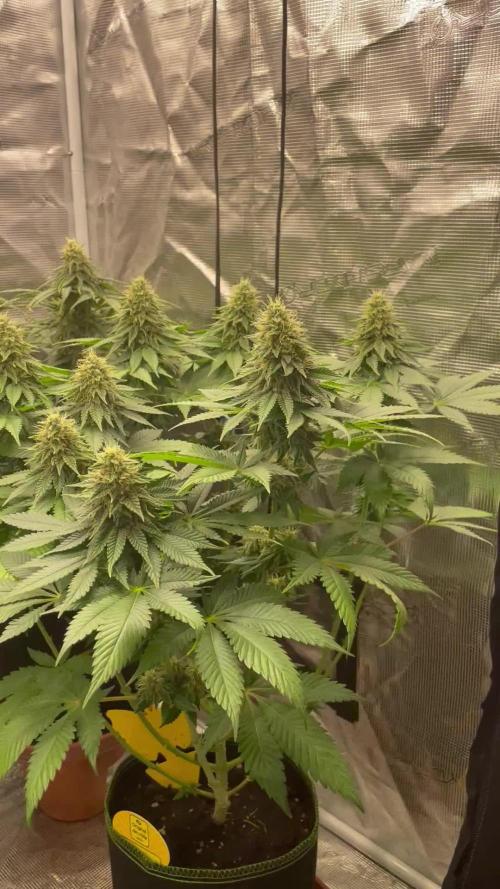
Gained some height since last week, bud sites everywhere. Defoliatated a few leaves to allow light in as its really bushy. Upped the nutrients and shes drinking alot more now. Hopefully see some trichromes popping up soon and they fatten up

Likes
218
Share


@DevilsBud
Follow
Week 2 of flowering phase
Critical royal queen seeds
Hallo fellow growers here we go
Day 8 flowering phase
looking good amazing to see them developing up close day by day . Today no watering maybe some defoliation below the net but that it cool beans 😎
Day 9 Flowering phase
Didn't see the plant for 20hours and jebus they grew over night they went up 15cm . But they are looking healthy
Gave them almost 1.2L nutrients was getting dry that was it .
Day 10 flowering phase
Today adjust some things in the tent it didn't feel a right not to happy with tents quality 🤔 also it's very challenging to get to back corner plant. I need to fully open the tent. There are no peak holes ore other opening to get to the back . And it feels unstable. The Plants i only did some final defoliation and gave 0.5l normal water
Day 11 flowering phase
Plants looking okay to me. Didn't water them today want to let them dry out some . I think because of all the watering i am Struggling with the humidity in the tent . It is around 80% and that little dehumidifier don't do jack patetoe . Def need to think of a solution for later in the weeks
Day 12 Flowering phase
Gave nuts water and put a 2nd ScrOG up a little higher .
Today got my seeds in from Zamnesia
3X 🧟♂️ haze seeds from sumo Seeds
3x Taison Autoflower from VIP seeds
1x girls scout cookies from Zamnesia
Free with order 👌
Day 13 Flowering phase
Sunday relax day no watering . Everything looking good that budcandy and Big bud from advanced Nutrients are working like a charm . I have bin semi keeping to the recommend advanced Nutrients schedule and i think works for me . I have here and there play around a bit but they seem to not be having problems with that . Advanced Nutrients is getting 10/10 for me
Day 14 Flowering phase
Week 2 of flowering phase complete
It was a learning week for me . Got bit scared how they grow 15 cm in a day . But it's seems to be oké i got still some real estate left. I think that i am not giving them any water what so ever . I need to learn to let them dry out some . Also a bit struggling with humidity in the tent . I am trying to give them water right before light on ore right after light out . It's definitely a learning process that i don't mind learning 🤘🏻🤘🏻
Thanks for stopping by growmies i appreciate it a lot 😎
And for the one's that read my stuff sorry for misspelled English


Likes
16
Share


@BudXs
Follow
Super busy with a move and a big garden reno. Sorry, this is the only update for this week

Likes
4
Share


@Lazuli
Follow
She flowered very fast. The smaller ones smell different and have more shiny flowers very nice, it smelled very strong at the end, while trimming the buds a smell of fruit and gas spread trough the whole house

Likes
2
Share

Likes
48
Share


@TheCannaProphet
Follow
~ WEDDING CHEESECAKE FAST FLOWER by FastBuds ~
Well fam, here we go again with another epic strain from FastBuds Fast Flowering stable. After having such tremendous success growing their Gorilla Cookies Fast Flower outdoors last year, I've decided to run another of their fast flowering strains outdoors this year... Wedding Cheesecake Fast Flower!
The best description of this awesome cultivar comes directly from my friends at FastBuds which is as follows:
"A delight for the mind and body: Wedding Cheesecake FF (Fast-Flowering) is a delicious strain that offers XXL yields in a 7-8 weeks flowering cycle. This terpene powerhouse produces loads and loads of mouth-watering vanilla-creamy-cookie-scented terps with hints of citrus and cinnamon. In addition to its delicious aromas, this variety grows very well in both indoor and outdoor setups, yielding up to 650 g/m2 without extra maintenance, making it the ideal strain for beginners as it allows you to maximize yields while minimizing work. This super-fast feminized photoperiod version offers upbeat and energetic yet deeply relaxing effects that are perfect for consumers looking for a heavily focused, motivating, and creative high. It’s the ideal strain for those needing that extra energy boost to start a busy day on the right foot.
Wedding Cheesecake FF boasts chunky, large-sized buds with a thick layer of silvery-white resin and bright orange hairs scattered all over: that just screams ‘quality’. The lime-green flowers sparkle with an array of hues ranging from dark to light green, to magenta and purple, and reek of a delicious aroma that’ll remind you of fresh store-bought cheesecake.
This is an XXL hybrid that grows extremely tall in height, reaching up to 3m with one huge main cola and multiple long side branches that can withstand enormous yields of up to 650 g/m2 with ease. Wedding Cheesecake FF is extremely resilient to the elements and can be grown in almost every climate as long as you’ve got the space and basics covered, making her an excellent choice for those looking for large-scale harvests with a quick turnaround time without much effort."
________________________________________________________________________________________________________________________________________________________________________________________________________________________________________________________________________________________________________________________
The Setup:
This is going to be an outdoor grow, but I have started the Wedding Cheesecake FF indoors as our weather is still too cold to put her outside (nighttime temp's dipping regularly into the 30's℉).
The plan is simple... let her grow inside under a 19/5 light schedule until the nighttime temperatures stay above the mid 40's℉, at which point she'll be moved outside and transplanted into the soil which I have already setup and inoculated with beneficial microbes, and then let the fun begin!🤪💚
________________________________________________________________________________________________________________________________________________________________________________________________________________________________________________________________________________________________________________________
Weekly Updates:
7/4- 🎉HAPPY 4th of JULY!🎉
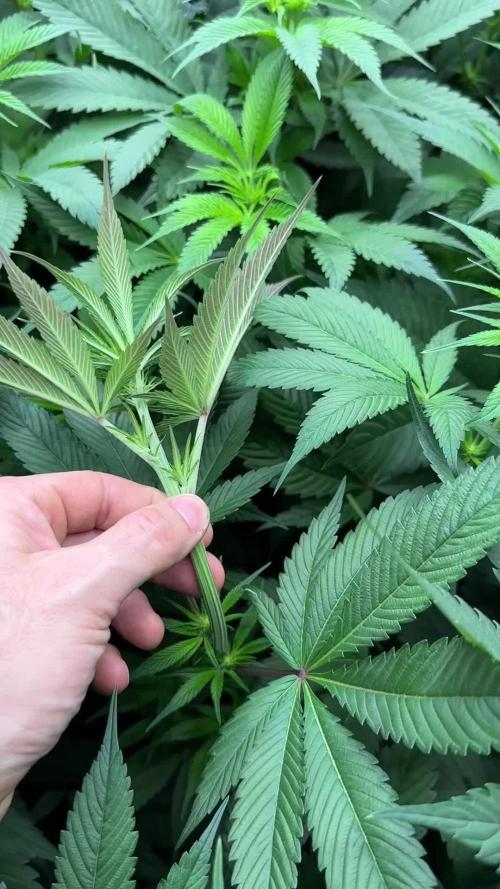
Week Fourteen of veg and things have really heated up here! Our weather is continuing with exceptionally HOT days having heat indexes over 100℉ so I've maintained my regime of watering the Wedding Cheesecake FF every day with 5-8g of straight well water from the garden hose in the late afternoon once the plant is in the shade.
The FastBuds Wedding Cheesecake Fast Flower has taken the heat like a champ and is transforming into a very LARGE and bushy lady! She's at over 5 1/2 feet tall now and is still stretching! She has maintained excellent vigor, color and has shown great resistance to pests and other stressors!
7/6- Yesterday we had a thunderstorm pass through early in the day, which provided about an inch of rain in a short time. I went ahead and watered in the afternoon, but only gave the Wedding Cheesecake FF approx. 3g of water from the well.
7/8- The daily watering continues, as does our blistering hot🔥weather. All is well with the FastBuds Wedding Cheesecake Fast Flower and today, after watering, I got under the trellis net and removed a bunch of shade leaves that were growing straight down through the net... bye bye!
7/10- Well the weather and the Wedding Cheesecake FF are both on fire! Hopefully the weather will cool down soon, and the Wedding Cheesecake FF will continue to explode!🤩 There's another week of veg for this beauty and I can't wait for the flowering to begin!
Thank you for checking out my diary, your positive comments and support make it all worthwhile! 💚Growers Love!💚😎🙏


Likes
6
Share

@Growbody
Follow
Herzlich Willkommen zu meinem Growbericht der Black Runtz Automatic von Zamnesia Seeds.
Die URL für den Strain findet Ihr hier:
https://www.zamnesia.com/de/11159-zamnesia-seeds-black-runtz.html
Für den Grow verwende ich die 9 Liter doppellagigen Stofftöpfe von ROOTIES. Sie haben sich bei meinem letzten Grow gut bewährt.
Auch die Smart Start Plugs von Zamnesia werden wieder verwendet, dieses Mal ohne den Samen vorher einzuweichen.
Und die Erde und der Dünger von BioBizz findet wieder Verwendung.
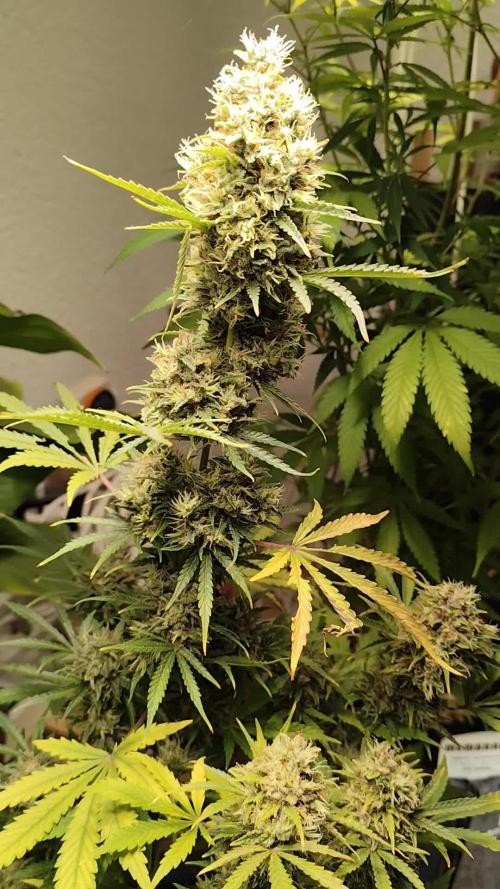
Tag 101: Die Black Runtz von Zamnesia Seeds bekommt ab jetzt nur noch reines Brunnenwasser. Nächste Woche wird sie geerntet, obwohl sie noch soviele frische Blüten hat. Sie ist wunderschön anzuschauen.
Schön, dass du dir mein Tagebuch angesehen hast. Schau gerne wieder rein✋😎

Likes
Comments
Share

@CheeRz
Follow
🌿 VEG WEEK 3: AK-47 XL | Divine Seeds
🌱 VEGETATIVE PROGRESS
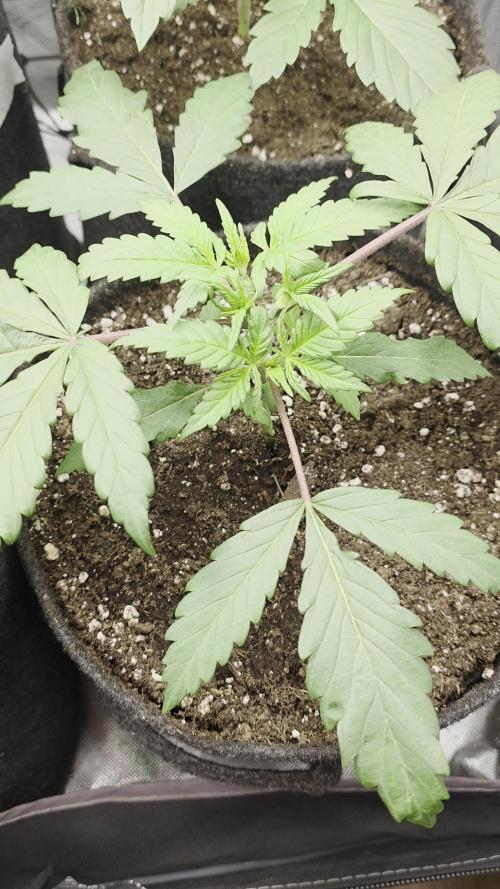
We have reached Week 3, and the plant is showing massive structural development. The biggest move this week was topping the plant to break apical dominance and promote a more horizontal, bushy growth pattern.
The recovery has been seamless. The secondary branches are already pushing out with high energy, taking advantage of the redirected growth hormones. The main stem has thickened up significantly, and the fan leaves are broad and healthy, indicating that the plant is thriving despite the high-stress training. The canopy is starting to fill out nicely, setting the stage for a more productive structure. 📈
💧 NUTRIENT FEEDING & WATERING
Still following the established feeding routine. The plant’s metabolic rate is clearly increasing as it develops more growth points.
Current Feeding Schedule (per Liter):
Root-Juice: 2.0 ml/l
Acti-Vera: 1.0 ml/l
Calmag: 0.5 ml/l
Parameters:
pH: 6.5
RH: 65%
VPD: 0.94 kPa
CO2: 600 ppm
Temperature: 23°C
💭 GROWER'S NOTE
Topping was a success. By removing the main tip, I’m encouraging the side shoots to catch up, which will eventually lead to a more even canopy. The node spacing remains incredibly tight, so I’m expecting a very dense plant. These Divine Seeds genetics are handling the training like a champ—no stalling, just straight growth. 🚀

Likes
34
Share

@Suemchen
Follow
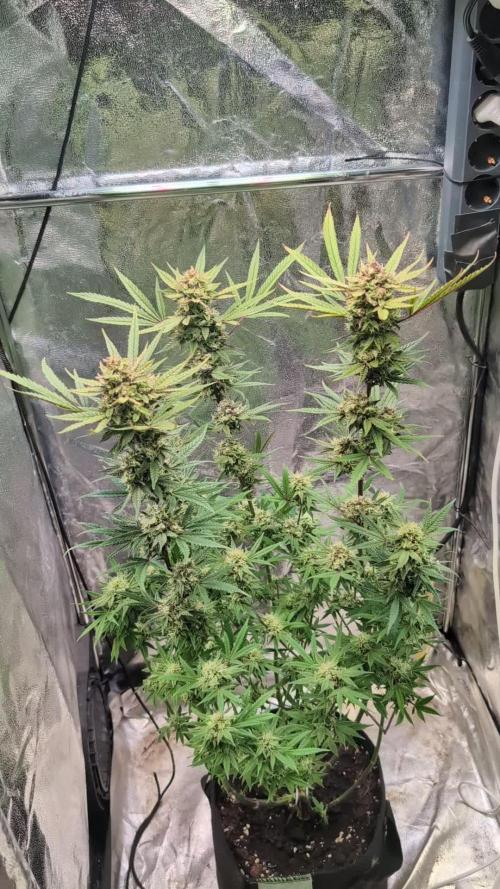
Sanlight EVO 3-60 at 80%
Day 120: looking good and watered again🌊. Watered with rain water, 1 ml/l Cal Mag, and 1 ml/l Green Sensation
Day 123: looking good and watered 🌊. Watered with rain water and 1 ml/l Hesi Boost, 1 ml/l Cal Mag, and 1 ml/l Green Sensation. EC at 1.0 and a pH of 6.4 .
Day 126: looking good and watered again. Watered with rain water and 1ml/l Powerzyme, 1 ml/l Hesi Boost, 1 ml/l Cal Mag, 1 ml/l Bloom Complex and 1 ml/l Green Sensation. EC at 1.0 and a pH of 6.4.
Likes
1
Share

@Growfather1
Follow
Hello everyone,
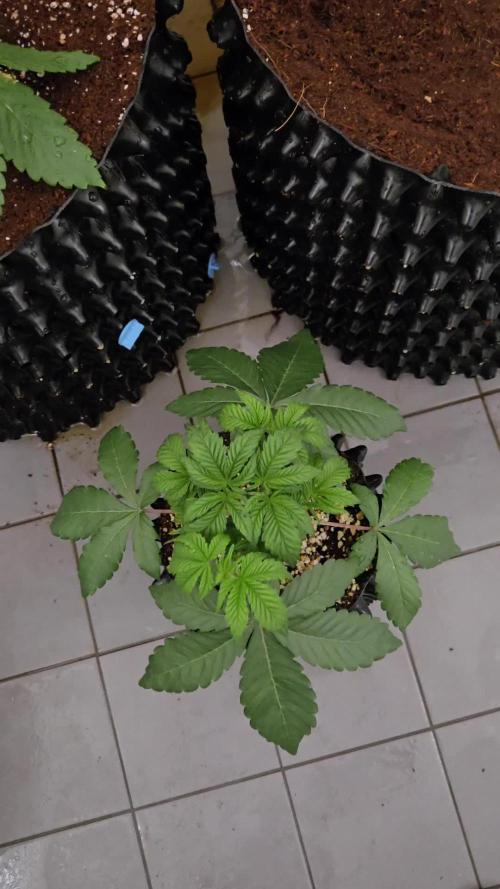
Finally finished transplanting 2 Mac1 F1 plants and i can tell you I'm exhausted and i still need to move them 25 meters to the tent OMG.
I have one plant that i will transplant within 48 hours.
I gonna give them a good defoliation and then they can enjoy their new pot for at least 4 weeks before flipping to flower.
Let's see how they look next week, thanks for stopping by and have a nice week.
Regards,
Growfather
Likes
5
Share


@MoonFlowerOrganics
Follow
Day 63 from germination. All 3 plants look and smell amazing. Have about 12 days left before I chop them down. Definitely ended up with 3 very different pheno types. All 3 have a very sweet smell with a hint of diesel.
Even though I’m using super soil for these plants. I still like to flush the last 2 weeks. Watering every 4 days and have about 2 watering left.

Likes
7
Share

@MaxWax
Follow
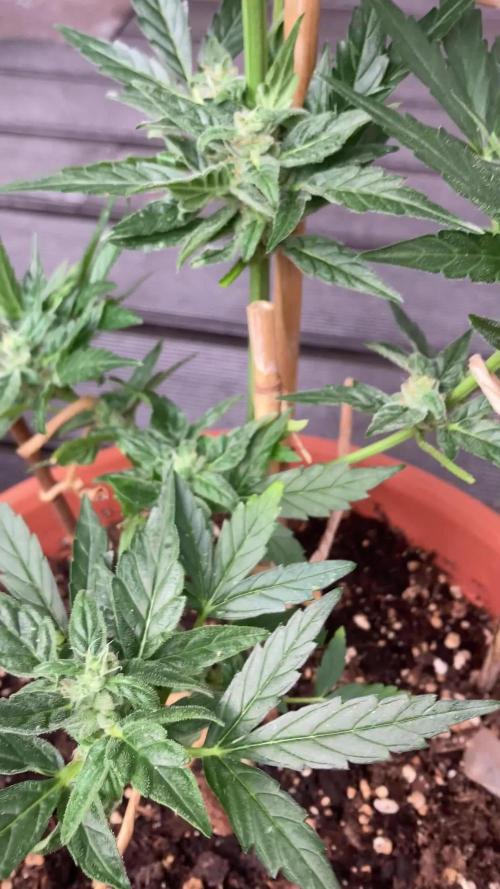
The plant is really small hopefully there are a few grams xD and now it is even infested towards the end and has to go out in quarantine lol
Likes
48
Share


@DreamIT
Follow
💐🌟HESI contest🌟💐
💮 1.3...
💮 2.3...
💮 3.3...
💮 4.3...
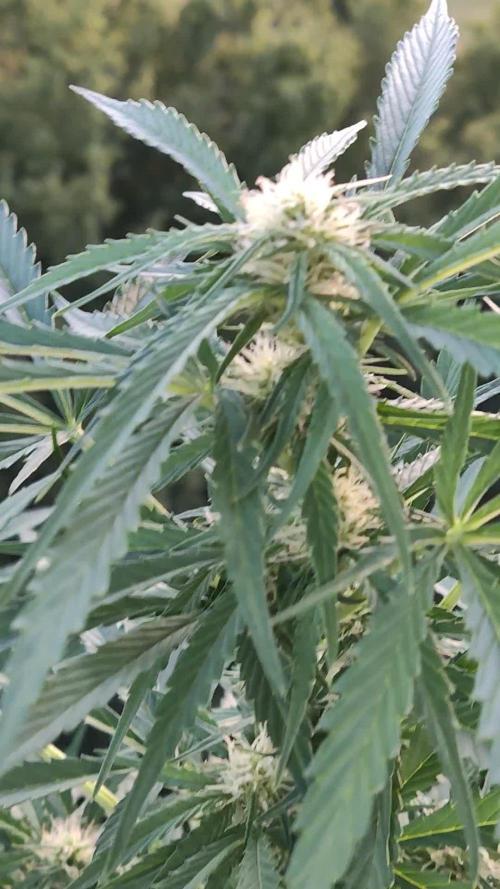
💮 5.3 more fertilized, second week of flowering, yeah
💮 6.3
💮 7.3
____________________________________________________________________________________
❕❗❕ Do you already know HESI products?
Take a look at the details You will be fully satisfied 😉
👀 https://www.hesi.nl/en/products
📜 A look at the details of what I'm growing 📜
🍓🍌🍇Strawberry Banana Grape by Seedsman🍇🍌🍓
⚧ Gender
▪️ Feminised
➰ Genes
mS
🎄 Genetics
▪️ Strawberry x Grape x Banana OG
🚜Harvest
▪️ 400 - 500 g / m²
🌷Flowering
▪️ 60 - 65 days
✨THC
▪️ 15.0-20.0%
✅CBD
▪️ 1.0%
🏡Room Type
▪️ Indoor
🌄Room Type
▪️ Outdoor
🕋Room Type
▪️ N/D
🎂Release Year
▪️ 2019
__________________________________________________________________________
📷🥇 Follow the best photos on instagram 🥇📷
https://www.instagram.com/dreamit420/
🔻🔻Leave a comment with your opinions if you pass by here🔻🔻
🤟🤗💚Thanks and Enjoy growth 💚🤗🤟



Likes
17
Share


@GreenHouseLab
Follow
A lot more active on Instagram, green_house_lab
If interested in the genetics hit me up
My heart and spirit is with the people in Ukraine 🇺🇦💚
Likes
10
Share


@STAYINGONMYMAINCBATORUNTWO
Follow
Most confusing plant I’ve ever grown but only down to the misinformation from the seedbank! But I’m working with her! Having to water a little a day now until the over water I did dries out too but she’s not too affected by it! She’ll have time to settle anyway until I move her into the bloom tent! (Other account)
Likes
7
Share


@DEEGREEN
Follow
DAY 26 I CHANGE MARSHYDRO TS1000 WITH 2X 150W. PLANT GROWTH LAMP / PGL150FAV
