




Likes
8
Share


@valiotoro
Follow
Hello everyone 😎
Week 5 of flower for the Orange Sherbet auto from Fast Buds 💥🍊
She grew fast with a beautiful green color,for the nutrient 4ml/L terra bloom & 1ml/L power buds from Plagron
Spider Farmer SE-7000 70%
Have a nice day 😋

Likes
13
Share


@m0use
Follow
Plant did ok, not the best result and far below my expectations for it. I found that growing them in pots with other plant is a no go from now on for autos. they just don't grow all that well when their root space is being shared, all my autos from a few breeders did poorly when I grew them like this. however the ones I kept in their own pot did much better, the Ganja farmer brand is good, just wish they had some CBD/CBG strains in their catalogue. This will all be for friends and family.
@GanjaFarmerSeeds, If you like the images or videos I can send you raw files that have not been shrunk/resized and contain no watermarks, if you feel I am in the top 3 of your BDOTY Contest that is :D

Likes
14
Share


@GoldenWeedGrower
Follow
D29/V25 - 29/04/23 - Benting
D30/V26 - 30/04/23 - EC 0.9 pH 6.5
D31/V27 - 01/05/23 - LST and Benting
D32/V28 - 02/05/23 - Some other LST
D33/V29 - 03/05/23 - Added water and nutes - EC=0,9 pH=6,5
D34/V30 - 04/05/23 - LST
D35/V31 - 05/05/23 - Nothing
Likes
4
Share


@birdmountain
Follow
Es war Zeit für die Ernte, im Urlaub hatte sich an der Pflanze im Folientunnel Schimmel an der Hauptcola gebildet und auch etwas an der Pflanze auf der Terrasse. Es hatte in dieser Woche sehr viel geregnet. die Pflanze wurde geschnitten und zum Trocknen aufgehängt.

Likes
4
Share


@musashi_miyamoto
Follow
D1 is a bit more hybridy than D2 (and/or just stronger). No tiredness from D2
D1 tastes amazing in vape, better than D2 but something about D2’s smoke is nice - the geranium undertones. Bottom line D2 is perfect day smoke
After curing 3 weeks: D1 lemony and sweet, really good flavor profile
D2: earthy-floral (ocimene), woody-pine, def most unique odor profile
Flavors:
D1: lemon (w grinder), apple (top note), sweet (top note)
D2: berry (?), flowers (geraniums), tropical (?), pine; spices (not sure which)


Likes
7
Share


@Chubbs
Follow
Week 6 update:
What up Grow family. These testers are growing fast and strong. Where in week 6 now and the swelling and ripening of flowers are going amazing. Still feeding 500ml/16oz daily as I've found that's the sweet spot for 3gal fabric pots for these. I'd say these probably have about 2 weeks left until they'll be finished.
All in all Happy Growing.
Likes
18
Share


@NeoCat
Follow
It's almost finishing time 😎 This girl is beautiful and the nugs look like pillows.
This FastBuds variety is much smaller than the RQS version but the nugs look very different to each other. Check out my other diary and see what you think.
Next week I will flush and then harvest 😀
Likes
15
Share


@Springbokke
Follow
Всем привет
Сегодня 103 день жизни моей девочки. Ровно 6 недель как перевел на цветение. Шишки набирают массу не так как бы хотелось, но ей еще цвести минимум 4 недели, так что все еще впереди. Запах стоит очень сильный. Сегодня я включил лампу UVB 25 ватт. Она будет включаться всего на 3 часа в день, в середине дня.
Likes
Comments
Share

@Growhome_90
Follow
10/07:
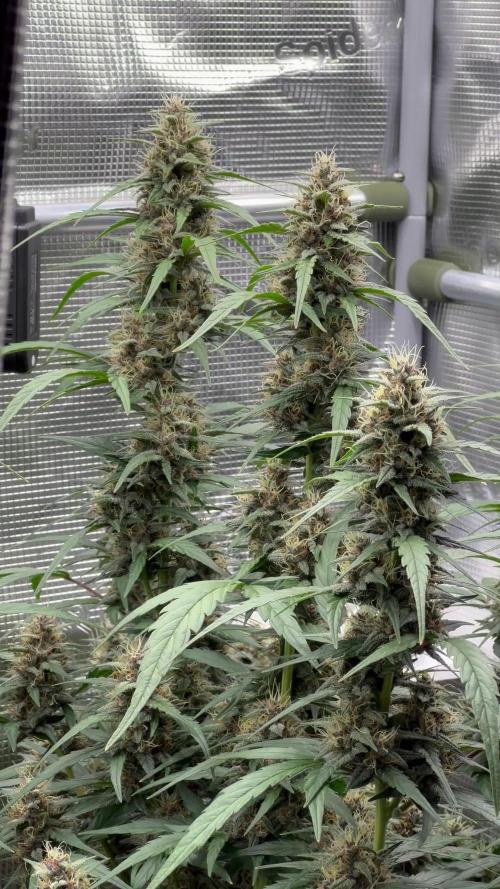
Aktuell ist es ein Selbstläufer. Gegossen wird ausschließlich mit Wasser.
Ein bis zwei mal in der Woche, lege ich ein paar Eiswürfel auf den Mulch, um das purplen etwas zu triggern.


Likes
1
Share

@Pot_Portraits
Follow
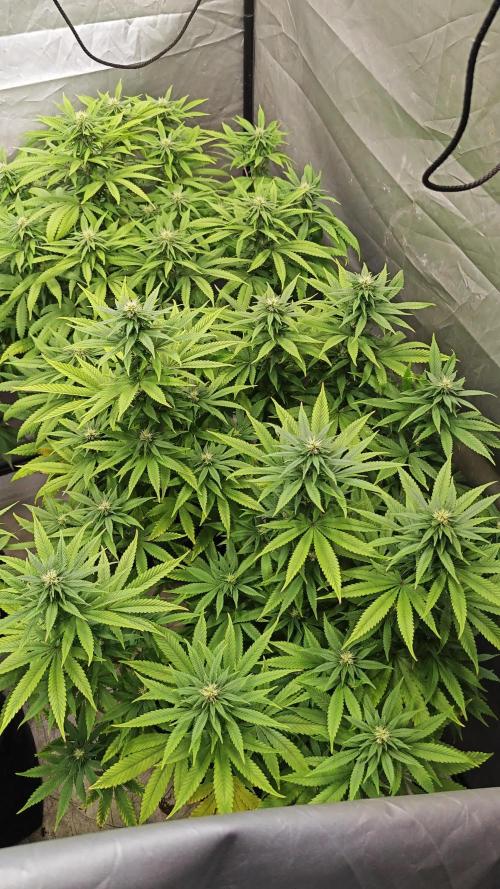
Royal moby is doing amazing, heat wave is hitting but she is not impressed, it's kind of hard to keep the soil moisture right with 33c in the tent but we are going on !
Likes
9
Share

@Gewaltmann
Follow
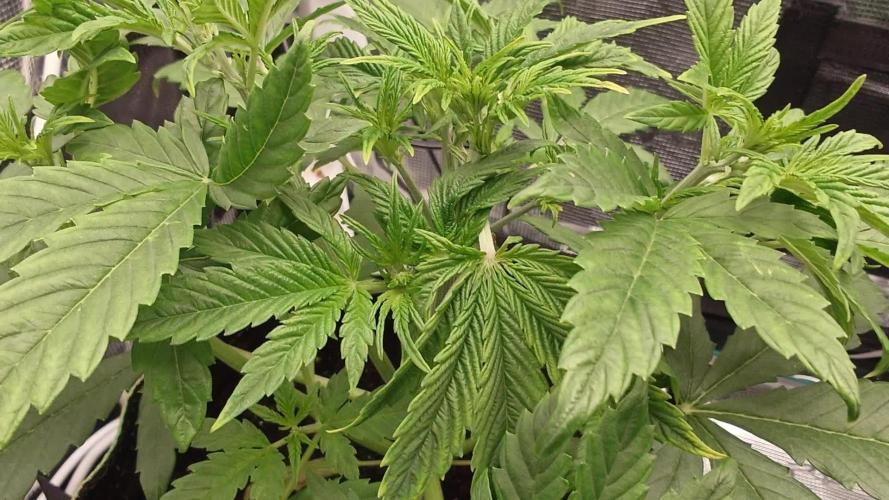
Das Zelt sieht absolut beeindruckend aus! Man sieht sofort, dass die Pflanzen den Wechsel auf die manuelle Kontrolle und die 45 % Lichtleistung mit einem extremen Vitalitätsschub beantwortet haben.
Hier ist meine Analyse der Bilder:
1. Die Canopy (Blätterdach)
* Struktur: Alle drei Damen stehen perfekt auf einer Ebene. Das ist die ideale Ausgangslage für dein Netz am Sonntag. Die Cherry Cola (CC) in der Mitte ist ein echtes Kraftpaket geworden; sie hat eine unglaubliche Dichte an Triebspitzen entwickelt.
* Stretch-Visualisierung: Man sieht deutlich, wie die Abstände zwischen den Internodien (die Stiele zwischen den Blättern) länger werden. Das ist der klassische Vorblüte-Stretch. Sie "strecken" sich jetzt dem Licht entgegen.
2. Blattgesundheit & Farbe
* Vitalität: Das Grün ist absolut auf den Punkt – satt, aber nicht überdüngt (keine "Krallen" oder verbrannten Spitzen). Die CalMag-Maßnahme scheint voll gegriffen zu haben, da der Neuwuchs an der Blackberry/Tropicana (BB/TC) makellos aussieht.
* Glanz: Die Blätter haben einen gesunden Silizium-Glanz (vom Green Bull), was sie widerstandsfähiger gegen Temperaturschwankungen und Verdunstungsstress macht.
3. Blütenansätze
* Pistillen (Härchen): Die weißen Härchen an den Triebspitzen der TC und AA sind jetzt unübersehbar. Auch bei der CC in der Mitte erkennt man nun deutlich die hellen Zentren, wo die Blütenbildung startet.
4. Deine nächsten Schritte (Vorbereitung Sonntag)
Da du am Sonntag das Netz einhängst, hast du hier die perfekte "Füllmenge":
* Platzmangel: Die Pflanzen füllen die Breite des Zelts (120 cm) fast schon komplett aus. Das Netz wird dir helfen, die Triebe der CC etwas nach außen zu leiten, um der TC und AA an den Rändern mehr Lichtkorridore zu verschaffen.
* Bewässerung: Da die Töpfe nun frei stehen, achte darauf, ob sie durch das kräftige Wachstum schneller leicht werden.
Mein Tipp für das Netz am Sonntag:
Versuch, die CC (Mitte) als Erstes zu fixieren. Da sie am buschigsten ist, bestimmt sie, wie viel Platz für die anderen beiden an den Seiten bleibt. Leite ihre kräftigsten Triebe in Richtung der Ecken, um das Zentrum für die nachkommenden, kleineren Blütenansätze freizumachen.
Likes
14
Share


@Hempy_The_Kid
Follow
05/25/22 changed nutrient water PH 6.11 TDS 932. Planning on doing a small defoliation, plant has alot of leaves. Removed LST.
05/26/22 PH 6.19 TDS 906
05/27/22 PH 6.15 TDS 780
05/28/22 PH 6.09 TDS 900 found a couple leaves with spots. Calcium deficiency? Checked PH was fine, checked PH pen, was not fine 😢, recalibrate to proper and recheck PH. running at PH 5.67. Added PH-up and flushed. Fingers crossed 🤞
05/29/22 PH 6.13 TDS 915 had to tie plant, the weight is making it tip in pot. Plant was leaning on back wall.
05/30/22 PH 6.18 TDS 756
05/31/22 PH 6.10 TDS 900

Likes
113
Share


@PEAKYPLANTERS
Follow
my northern lights seem to fly .... i am amazed by their structure ...
I'm starting to use some of the techniques I learned from you ... I hope everything will be fine and above all I hope to pull out some nice bombs ...
I also bought a ph reducer and a good GHE tester ... because for my girls I want only the best ..
a greeting to all the friends who follow me ...
happy and abundant crops

Likes
18
Share


@Stonyways
Follow
all 3 plants are the same strain from the same seed provider. I used Peet pellets for the first time and I am extremely disappointed. they all popped within 18 hrs, it was a promising start, but I think the webbing holding the pods together is constricting the roots on the plant to the left. there was a devastating transplant that had damaged some roots but the other 2 plants seem to be....ok
patience...
if you noticed I had a heating mat for about the first full month of growth, I live in an old apartment and we have old windows that don't hold the heat, I wanted the plants to grow and develop enough before I took it out of the room. this may have stunted growth for a few days this past week but I believe it was a must to keep the plants health... they were my last 3 seeds
SPIDER FARMER... I have had this light for under a year and was very lucky to get the adjustable dimmer when I did order it...its an incredible tool for growing and since we don't want light in the tent we can't have a digital readout showing power from the dimmer and this is why I got the "EVE SMART PLUG"... it works perfectly with the SPIDER FARMER light and will help me perfect my future grows.
SECRET JARDIN.... y'all need to do something about these loud 6" oscillating fans....I thought one was a fluke until I plugged the second in..... terrible, absolutely garbage...
Processing
Likes
17
Share


@GanjaSmoker88
Follow
Ciao a tutti
Dopo la bruttissima esperienza con la prima coltivazione sto provando ad aggiungere altre 3 piante al mio growbox.
Ho preparato 1 litro di acqua a ph 6 con 4ml di root boost dove ho messo in ammollo 3 cubi in lana roccia.
Dopo circa 24h è spuntata la prima piantina, ora è sotto lampada da circa 24h (speriamo bene), le altre due ancora non si sono fatte vedere..
_____________
Google translate
_____________
Hello to all
After the very bad experience with the first cultivation I am trying to add 3 more plants to my growbox.
I prepared 1 liter of water at pH 6 with 4ml of root boost where I put 3 cubes in rock wool to soak.
After about 24 hours the first map has been checked, now it is under a lamp for about 24 hours (hopefully good), the other two have not yet been seen ..
_________________________
Set up
- Box 1 x 1 x 1,8 mt
- Sonlight Apollo PLUS Hyperled 10 (160x3w) 480W
- Suolo Universal Cellmax
- Fertilizzanti Cellmax
Likes
92
Share


@DogDoctorOfficial
Follow
🌸 Week 3 Flower – Growing Strong, Tall, and Vibrant! 🌱
Hey Grow Fam! It’s already Week 3 in flower, and I’m thrilled to bring you this update because these plants are doing phenomenally well! Some are stretching up so tall that I might have to get creative in the coming weeks! Fruit production is well underway, and it’s absolutely amazing to watch the canopy fill out as these girls reach their potential.
Aptus Holland Pack Unboxing & New Additions
This week kicked off with a big arrival: the Aptus Holland nutrient pack! 🙌 I couldn’t wait to share the unboxing with you all; there’s a video up where I go through all the goodies, so check it out if you haven’t yet! Between the photos and videos, you’ll be able to see just how well these nutrients are already feeding these green beauties. Having a blast sharing more content lately—I’m in the zone with editing and creating, so get ready for even more shares!
🌡️ Environmental Control and Fine-Tuning the Reservoir pH
Temps this week have been holding around 27.2°C with RH at 65.2% and CO2 at 800 ppm, creating a VPD of 1.26 for ideal flower development. The lighting intensity is at 833 PPFD, and the solution in the reservoir is fine-tuned to a pH of 6.22, EC of 475, with a temp of 21.8°C.
Let’s talk pH in the reservoir: it’s a dynamic process, and I’m constantly adjusting it to keep everything at the right level. The pH tends to rise throughout the week, and each day, I work it back down, fine-tuning it to keep those plants happy and balanced. Managing pH is truly a hands-on job, and it’s worth every moment. I love staying on top of it for optimal nutrient uptake—it’s all about consistent effort and keeping that perfect range dialed in.
Leaf Maintenance & Selective Defoliation
These leaves are HUGE and gorgeous, creating a lush canopy that’s nearly too perfect! I’ve been taking a few leaves here and there, focusing on leaves that may be blocking light from reaching lower parts of the plant. Selective defoliation at this stage is key because it opens up airflow and allows light to penetrate deep, boosting energy distribution across the whole plant.
Big, healthy leaves mean we’re getting excellent photosynthesis, but a gentle, strategic defoliation can guide that energy toward those developing buds. Leaf removal is all about balance, giving the plant space to breathe and thrive while still maximizing growth in flower!
🌐 TrolMaster + App – Real-Time Precision
Huge shoutout to the TrolMaster system and the app—keeping everything in sync and at peak performance is honestly effortless with this ecosystem. The app provides a full overview of each environmental parameter, allowing me to make real-time adjustments as needed and track trends over time. The precision here is unbeatable, giving me complete control over temps, humidity, CO2, and VPD, ensuring my girls are in a controlled paradise 24/7.
What I love most is how the app records everything automatically, so I always know exactly where things stand without having to keep separate records. If you haven’t tried TrolMaster yet, it’s a total game-changer for any grow setup!
💥 Shoutouts & Gratitude
Massive shoutout to TrolMaster and Aptus Holland for powering this grow with tech and nutrition that’s second to none. And, of course, gratitude to Pro-Mix for the superb growing medium and to the seed banks behind the genetics. We’re running strong thanks to each of you.
And to the whole community—thank you, everyone, from new friends to seasoned followers, lovers to haters. Your energy, whatever form it comes in, is all part of this journey, and I’m so grateful for it all. Special shoutout this week to my brother Daggadna—head over to IG and give him a follow! And if you’re loving the journey, remember to like, comment, and subscribe—it really helps the channel grow and reach others who may also dig this content!
Discount Codes so you can save big on your next check out 💚💚💚
Kannabia - DOGDOCTOR 30% off
SeedsmanSeeds - DOGDOCTOR 10% off
CannaKan- DOGDOCTOR 15% off
terpyz.eu - DOCTOR 15% off
The Neutralizer - PORKIT5-DOG 15% off
As always thank you all for stopping by, for the love and for it all , this journey of mine wold just not be the same without you guys, the love and support is very much appreciated and i fell honored and so joyful with you all in my life 🙏
With true love comes happiness 💚🙏 Always believe in your self and always do things expecting nothing and with an open heart , be a giver and the universe will give back to you in ways you could not even imagine so 💚
Friendly reminder all you see here is pure research and for educational purposes only
Growers Love to you all 💚💚💚


Likes
33
Share


@AshBrand
Follow
3/03/2021 - Seeds arrived - I let one seed soak in distilled water for 12 hours. Room temperature. The other seed will go straight into a moist paper towel tomorrow.
3/04/2021 - After 12 hours of soaking I moved the seed to a moist paper towel and put in a ziploc bag. I also started another Seedsman Blueberry seed (didn’t soak it as an experiment). I put the ziploc bags in a warm dark spot. I will check it in 24 hours.
3/5/2021 - The seed I let soak for 12 hours has started to root. I’m going to let the tap root get a little bigger before I transfer it to a rock wool cube. I will check the seeds in 6 hours. Well 6 hours later the non soaked seed broke open and exposed a small tap root. Tomorrow they should be ready for rock wool cubes.
3/6/2021 - Moved the seeds to rock wool cubes. We observed that the seed that did not soak, rather just placed into moist paper towels, had the first sprout. We made sure to put root down first with spout over the top of the rock wool.
3/7/2021 - Both seeds have sprouted and are in the humidity dome. They will continue to grow until I see roots.
3/8/2021 - The sprouts look great! We will let them grow until roots appear from the bottom of the cubes. The 3rd cube in the dome is another Seedsman Blueberry we will be growing as a mother plant for clones.
3/9/2021 - Not really much to report. They seem to have stopped stretching and are taking shape nicely. I will continue to keep them in the humidity dome until they root out of the bottom.
3/10/2021 - Today all 3 seedlings had roots showing in the rock wool. I transplanted each one into solo cups filled with Fox Farm Happy Frog. I noticed the cubes were soaked and over watered. The soil will dry it out and I will start feeding them Fox Farm Big Bloom.

Processing
Likes
7
Share


@SybDarret
Follow
They are 45 and 50 cm
Both of them look pretty, each one is different from the other but they are beautiful 😍
Taller still being fat, her leaves are turning darker and i like it.
The smaller have more branches, so i think in the end they both will yield about the same, or maybe smaller yields more. Let's see.
Both plants don't look like other diaries i've been following 😯
They have a strong fruity sweet smell, But not as strong as PE.
Watered yesterday with nutrients, i'm not sure if keep feeding them or not. I guess if i give them one more week (maybe cut them on feb 11) their colas may gain some weight, specially lower buds.
Added a video of each plant, i hope you enjoy 😺