Processing
Likes
21
Share
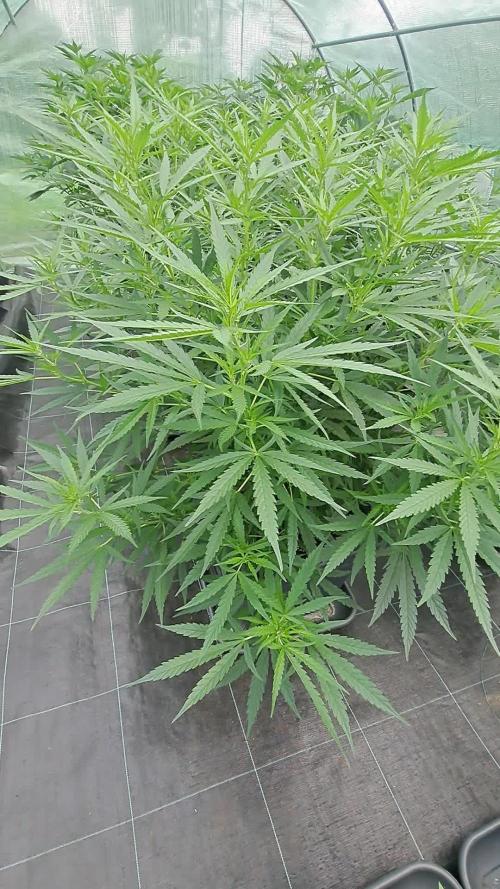
pbk has started a little stretch shes started to grow well will be keeping her on calmag and silicon for the next week or 2 untill can see signs of flowers appearing stripped some of her nodes and didn't effect her sshes getting 2l every 2days and is starting to ask for more nothing else to report thanks for reading happy growing guys
Likes
3
Share
La verdad que increíble estas flores, un sabor a caramelo con crema y notas dulces. Cogollos que si bien se recubre de hojas llenas de resina, a mí particularmente no es muy de mí agrado. Pero que está nevada, no lo dudo. Hermosa cosecha en interior, a seguir creciendo!
Likes
4
Share
🌸 Week 1 Flower – Super Silver Haze (Zamnesia Seeds) Grower: Dog Doctor Strain: Super Silver Haze Phenotypes: SSH #1 & SSH #2 Tent: 8x8 Shared Grow Space Lighting: Future Of Grow – Black Series 600W LED Control System: TrolMaster Hydro-X Watering: Hand Watering Pot Size: 11L Fabric Pots Medium: Super Soil with Aptus Holland amendments CO₂: ~700 ppm Day Temp: 31°C Night Temp: 25°C Humidity: 50% Soil Temp: 25°C Water pH: 6.1 Water EC: 0.6 Runoff EC: ~2.0 Water Temp: 18.5°C PPFD: 760–780 µmol/m²/s ⸻ 🌿 Early Flower Surprise Week 1 of flower… and I swear these girls are moving like they’re already in week 2. Pistils are out, floral sites are forming, and the stretch is starting with elegance. It’s possible they slipped into pre-flower during late veg without me catching it, they were so stable, compact, and lush that I might have missed the subtle signals. Either way, they’ve entered bloom with full confidence. Both phenos are incredibly similar in structure and size, making them a joy to manage. They’re compact yet big, stacking nodes tightly while still filling space. The leaf color is deep and uniform, the formation is textbook Haze, and the inner node spacing is perfectly balanced for light penetration. ⸻ 💧 Feed & Water Adjustments We’ve tweaked the recipe this week, retiring Aptus Start Booster and introducing Aptus Top Booster at 0.25 ml/L. Current Feed (per L): • Aptus Regulator – 0.15 ml • Aptus CalMag Boost – 0.25 ml • Aptus Top Booster – 0.25 ml The soil is already enriched with slow-release Aptus pellets, which explains why EC in solution is lower (0.6) while the medium’s own EC is holding steady at ~2.0. They’re drinking well, 1.5–2 L per day — with irrigation happening around 25% dryness in the pots. ⸻ 🌡️ Environmental Conditions & Upcoming Changes The room is running hotter than ideal at 31°C daytime, 25°C night. RH is stable at 50%. CO₂ sits comfortably at ~700 ppm. A dedicated AC unit is on its way and should be installed next week, which will help dial temperatures closer to the sweet spot for flowering. Soil temperature is at 25°C, supporting strong root activity, while PPFD at the canopy sits between 760–780 µmol/m²/s depending on plant position. We monitor these numbers carefully to keep photosynthesis at optimal efficiency without stressing the plants. ⸻ ⚙️ Why We Measure Everything • PPFD: Ensures plants receive the right light intensity for maximum photosynthetic activity during each stage. Too low = underpowered; too high = light stress. • Soil Dryness: Prevents both overwatering and underwatering, protecting root health and microbial balance in living soil. • Soil EC: Tells us nutrient availability inside the medium, helping us adjust feed without guessing. • CO₂: Works in harmony with light intensity and temperature to push growth rates without causing metabolic stress. ⸻ 👑 Remembering the Queen Super Silver Haze isn’t just another cultivar, she’s an old school heavyweight, a cup-winning legend with a long legacy. Growing her feels like growing history. There’s nostalgia here for me, a personal connection to the magic this plant has delivered over decades. My hope is to see her express that classic SSH magic, the electric haze high, the silver sheen on the colas, and the unmistakable aroma that once ruled the cups. ⸻ 📸 Studio Shots & Natural Growth Of course, I couldn’t resist taking them to the studio this week. Under the lens, they shine, vibrant greens, symmetrical structures, healthy posture. No training yet, letting them express themselves naturally as they settle into flower. Next week, I expect to see stronger pistil development, initial stacking, and perhaps the first hints of stretch acceleration. ⸻ 🔮 What’s Next? • AC unit installation for tighter climate control • Continued monitoring of PPFD and EC • Watching for early resin development • Tracking stretch patterns for possible support netting These queens are just starting to show what they’re capable of. The road to the crown begins here. 🌿👑 💚 Dog Doctor 📣 Thank you for following the Super Silver Haze journey! We share every step so growers can learn, compare, and enjoy the process. 📲 Don’t forget to Subscribe and follow me on Instagram and YouTube @DogDoctorOfficial for exclusive content, real-time updates, and behind-the-scenes magic. We’ve got so much more coming, including transplanting and all the amazing techniques that go along with it. You won’t want to miss it. • GrowDiaries Journal: https://growdiaries.com/grower/dogdoctorofficial • Instagram: https://www.instagram.com/dogdoctorofficial/ • YouTube: https://www.youtube.com/@dogdoctorofficial There’s a new series blooming—and it’s more than just plants. It’s about process, patience, and paying attention. ⸻ Explore the Gear that Powers My Grow If you’re curious about the tech I’m using, check out these links: • Genetics, gear, nutrients, and more – Zamnesia: https://www.zamnesia.com/ • Environmental control & automation – TrolMaster: https://www.trolmaster.eu/ • Advanced LED lighting – Future of Grow: https://www.futureofgrow.com/ • Root and growth nutrition – Aptus Holland: https://aptus-holland.com/ • Nutrient systems & boosters – Plagron: https://plagron.com/en/ • Soil & substrate excellence – PRO-MIX BX: https://www.pthorticulture.com/en-us/products/pro-mix-bx-mycorrhizae • Curing and storage – Grove Bags: https://grovebags.com/ ⸻ We’ve got much more coming as we move through the grow cycles. Trust me, you won’t want to miss the next steps, let’s push the boundaries of indoor horticulture together! As always, this is shared for educational purposes, aiming to spread understanding and appreciation for this plant. Let’s celebrate it responsibly and continue to learn and grow together. With true love comes happiness. Always believe in yourself, and always do things expecting nothing and with an open heart. Be a giver, and the universe will give back in ways you could never imagine. 💚 Growers love to all 💚
Likes
23
Share
Day 44: This afternoon I received the Air Pot and then I immediately mounted one and put in the soil a seed of Amnesia Haze Automatic of the Royal Queen bringing the total of the plants to 15: 8 Gorilla + 1 that has yet to germinate, 4 Cheese (2 large and 2 small) and an Amnesia Haze Auto all from Royal Queen Seeds + 1 x LSA Lemon Haze. At the moment I moved the small Lemon Haze under the new LED + CFL setup to provide a greater amount of direct light. Then under the 600w HPS lamp there are 12 plants and in the grow room 3, the Lemon Haze + 1 Gorilla and 1 Amnesia awaiting germination. However, I decided to leave the grow room open. The crops are close and I connected all three lamps to a single timer with cycle 19/5. Also with this system the plants in the grow room will receive more air and therefore more oxygen, carbon dioxide etc. and a small amount of light coming from the HPS lamp. Day 48: The six Gorillas in advanced bloom have stopped growing in height and have started to form larger gems. The final height of the 8 Gorillas is about 150 centimeters for 3 specimens, and 120 centimeters for the remaining 5 plants of which 2 are in late flowering. The production of numerous sugar leafs is also a sign that the final flowering phase has begun. I think I can collect the first cola in two or three weeks. The sweet smell of resin in this phase begins to become more intense. In this session I photographed the plants one by one before placing them in the final position. In this last position I have rebuilt all the plants, including the two Big Cheese.
Likes
1
Share
Processing
Likes
8
Share
@NOLOGIK
Follow
I cut the main top to have a structure with 4 main tops. all the rebirths change Hours 12/12 the name already says a lot, I cut the main top and put it on the vase, making it look more homogeneous to receive the light, I changed the light cycle in 12/12 for the flowering, it is a super strong plant thinking about what it has undergone for the first 3 months ...
Likes
8
Share
🌿 Week 11 – Harvest! (Day 77) Harvest time for my Tropicana Cookies Auto — 77 days from seed to chop. Instead of giving her 24–48 hours of darkness, I decided to harvest right in the middle of her light cycle to preserve maximum THC and terpene content while the resin was at its peak. Trichomes were mostly cloudy with a few amber — exactly where I wanted them. The buds came out dense and sticky with a deep citrus aroma and colorful hues. Final wet weight: 300g, expecting around 60–75g dry after a slow cure. She’s currently drying on mesh racks in a dark, ventilated space with ~21°C and 55–60% RH. I’ll jar her up once the stems snap clean. This was a compact but resin-heavy pheno — rich in terpenes and easy to grow. Really happy with how she turned out. Thanks for following the grow — time to cure and enjoy the results! 🔥🌱
Likes
1
Share
@JLaser
Follow
Not much has changed since last week. Sugar leaves are developing more than the buds are.
Likes
3
Share
@Ninjabuds
Follow
Turning out to be a huge plant with huge nugs. The nugs are starting to get pretty frosty I’m happy with it so far
Likes
23
Share
@GrowGuy97
Follow
Wish the buds would have got a little bigger but feel like that’s particularly my fault for a short Veg but overall I am blow away by the outcome for all the seeds to just be random bag seeds! 2 of the plants are drying now 3rd one will be cut tomorrow & the other 2 got probably 2 more weeks! Will do a taste & smoke report and also give a weight as soon as they dry & cure a little bit but honestly couldn’t be happier with my first grow! Thanks for all the support & help along the way & happy growing friends!🤙🏼✌️🏼🌱 Update on 1st plant - dry weight 42g, still smelled pretty Earthy when I put it in the jar but the smell is definitely coming out now, extremely sticky & frosty buds❄️: 1:🏼🙏🏼 Update - plant 2 Dry weight was 40 grams! Extremely happy with the out come this is honestly some of the best bud I have ever smoked! Amazing to me this came from a random bag seed, it has a very citrusy flavor, smells & smokes amazing! Honestly a 10/10 in my book, wish I could knew what strain this was so I could grow it again!😫❄️✌️🏼🌱 Update - plant 3 Dry weight 34g, smells & look phenomenal, the buds are much smaller & had the smallest yield so far but this is by far the best smelling so far! Will have a smoke update on this one soon, stay tuned friends & happy growing!✌️🏼🌱 Update - plant 5 dry weight was 52g it dried a little faster than plant 4 which I will probably jar tomorrow! Will update again with a smoke report soon, this plant brought my total so far up to 168 off 4 plants👍🏼 Thanks for following friends & happy growing! Also the butter I made from the trim was 🔥🔥
Likes
2
Share
We’re deep into Week 8, and Blue Banana Cream is stacking up beautifully. Trichomes are looking frosty, covering the buds in a thick, sticky layer—definitely a strain that’s going to shine post-cure. The aroma has intensified compared to earlier weeks, now pushing out a stronger creamy, fruity scent with a slight gas undertone. Every time I open the tent, it hits harder. The buds are swelling up nicely, transitioning from airy to more mid-compact density. Pistils are still mostly white, meaning it’s got a bit more time before it fully ripens. One thing I’ve noticed—the branches are starting to lean from the weight, so some light support might be needed to prevent them from bending too much in the final stretch. I’m keeping temps at 18-20°C and humidity around 55-60% to ensure a proper finish. With harvest around the corner, it’s just about watching those trichomes shift from clear to cloudy/amber and letting this one reach its peak.
Likes
3
Share
@DrBud420
Follow
17.05. I don't have anything special to say, of course the weather is terrible... it's 6-7 at night, 15-16 during the day, so they're inside... the temperature inside is 20-21 during the day, at night from 15 to 17 when it's this cold... the plants were exactly 3 weeks old yesterday, today they entered the fourth week and most likely they will wait inside for the fifth week as well because the weather is terrible and there is no point in transplanting yet. Stay High!
Likes
9
Share
And it starts like this. an official collaboration starts with the friends of Zamnesia, from today I will only grow, grow and flower Zamnesia Seeds plants and I really like it. We are close to a flowering in the extreme heat and therefore we opted to start with 4 very fast F1s, they are not joking guys when they tell you that they are made to be more resistant, stable and fast they are not telling you something false. The girls are super fast, even those from other brands tried in the past are excellent and a sliver and this one from Zamnesia have all it takes to be the best autoflowering on the market. The Pineapple Express F1s were also born at the speed of light, 22 hours in water, 36 on land and we were already born, both of them. Oh yes, a lot of research is being done on autoflowering plants, you have all noticed monstrous improvements compared to Low Rider and subsequent derivatives. Whoever works best wins and from what I have been able to see so far Zamnesia is working very well. I know, there is a group of sceptics, friends I'm here on purpose, give me a couple of months and we'll see. Zamnesia is the best online shop in the situation, you can find everything from seeds, to mushroom kits, through vaporizers and a thousand other things https://www.zamnesia.io Pineapple Express F1 seeds specifically https://www.zamnesia.com/10681-zamnesia-seeds-pineapple-express-f1-automatic.html Site Description ZAMNESIA SEEDS - PINEAPPLE EXPRESS F1 HYBRID AUTOMATIC: FRUITY FLAVORS AND ENERGETIC EFFECTS Combining Trainwreck with Hawaiian, Pineapple Express F1 Hybrid Automatic brings a beloved strain to new heights. This autoflowering F1 hybrid cultivar ensures exceptional uniformity, reliability, and stability, making it well-suited to growers of all experience levels. If you've not checked out Pineapple Express F1 hybrid Automatic for yourself just yet, now is the time. GROWING PINEAPPLE EXPRESS F1 HYBRID AUTOMATIC All it takes is 8–9 weeks from germination before Pineapple Express F1 hybrid Automatic is ready to harvest. Thankfully, very little effort is required throughout the growing process, aside from a bit of maintenance, to ensure ample, high-quality harvests. Thanks to its F1 genetics, Pineapple Express F1 Automatic offers superb resilience and uniformity, meaning all plants will have a similar height and appearance, and will churn out comparably large yields. Reaching heights of 50–70cm, Pineapple Express F1 Automatic is not an overbearing plant and can effortlessly slot into any setup. Once ready to yield, growers can see a return in the region of 400–550g/m² indoors and up to 200g/plant outdoors. AROMAS, FLAVORS, AND EFFECTS OF PINEAPPLE EXPRESS F1 HYBRID AUTOMATIC Just one hit of Pineapple Express F1 hybrid Automatic treats users to a rich assortment of flavors and aromas. This strain offers strong pineapple notes alongside moments of citrus, spice, and pine, making for a mouth-watering blend that's extremely moreish. Bolstered by 21% THC and an array of cannabinoids, Pineapple Express F1 Automatic showcases an energetic and uplifting high that will have you feeling chatty in no time. So if you've been looking for a strain to enjoy with friends, Pineapple Express F1 Automatic could be just the thing.
Likes
4
Share
She's starting under a seedling lamp outside the tent and the humidity is a bit low. I used a dome for a few hours, but decided just to let her grow. Won't affect her too much in the long run and I really don't need to squeeze every gram out of my plants.
Processing
Likes
26
Share
@AsNoriu
Follow
Day 50. Girls still on water diet, one more watering, or maybe even two more left. In video tried to highlight, most N hit plants, others are more than fine, thinking to throw out all who still in veg or didn't made through canopy, its still jungle at mines ... Nothing special, supercroped plant recovered well, think i have two new objects for HST ;)))) they fly, but stretch patern that they got from to high lights is repeated even when they reached optimal height, mistakes are bad and have long lasting consequences... One third of flower is done i guess, only couple plants will be bigger than an ounce, but i think i have like 40 of them ;))))))) Next time i count ! Day 54. Girls are very dry, some leaves still curled now from that, not only excess of Nitrogen... My night shifts don't leave me time, whenever i am back - they sleep... 12 hours shift, bike, train ... no time left at all, but .. Today they got still water , but i added 2ml of silica acid to it, ph after all - 6.6. Thinking to defoliate them sooner or later, maybe even today ... Next watering full feed or maybe not, if i rip all that leaves away, still valuating plants, would do it last week, but had no time ...
Likes
19
Share
Привет садоводы Прошла неделя после того как я перевел ее на цветение , но пока она не зацвела выглядит она хорошо довольно пышная , листья красивые , не проблемные
Likes
1
Share
Turned off IR @ nights Red wigglers (Eisenia fetida) are highly beneficial. They are considered an ideal choice for "no-till" or container-based organic growing because they live in the upper layers of soil, feeding on organic mulch rather than the plant's root system. Red wigglers accelerate the breakdown of organic amendments and produce high-quality, nutrient-dense worm castings directly in the root zone. Clover is another exceptional component of an organic rhizosphere, offering a sustainable, self-sustaining alternative to synthetic nitrogen fertilizers produced via the energy-intensive Haber-Bosch process. By forming a symbiotic relationship with Rhizobia bacteria, clover converts atmospheric nitrogen N2 into ammonium NH4, providing a steady, slow-release nutrient source that enhances soil health and reduces environmental impacts. Red clover offers superior nitrogen fixation and biomass production compared to white or yellow clover, making it the premier choice for maximum soil vitality, particularly for improving soil structure and providing a high-volume nitrogen credit for subsequent crops. If it is fully functional and efficient soil, the rhizophagy cycle is far superior long-term than any synthetic delivery when it comes to preventing deficiencies, not because it's "better," per se. The medium will require a very high CEC to make it to harvest without re-fertilization. The rhizosphere acts as a dynamic, interactive exchange where plants and soil microbes trade resources based on immediate needs. When a plant lacks a specific nutrient, it changes its physiology and releases specialized chemical cocktails—root exudates—into the surrounding soil. These exudates, which include sugars, amino acids, and organic acids, serve as a "shopping list" to attract specific microorganisms, which in turn return higher levels of desired nutrients. There is nothing in comparison to synthetic delivery, which causes plants to stop producing exudates, effectively "starving" the beneficial soil life, over time turning the soil barren and void of microbial life. Responsible use, applying the right amount at the right time, can minimize these negative effects. Relying solely on synthetic fertilizers without replenishing organic matter is what typically leads to exhausted soil. The use of synthetic fertilizers can utilize the Cation Exchange Capacity (CEC) of the soil, but without a robust rhizosphere and active microorganisms, the efficiency of this process is significantly reduced. This makes synthetic growing more difficult to prevent deficiencies overall compared to an efficient organic living soil with a robust rhizophagy cycle, as there is no "one size, fits all" when it comes to different nutrient profiles of strains/genetics, making it trickier to "guess" and prevent creeping deficiencies. CEC does not contribute towards EC. Add more CEC using biochar, problem solved. If you keep pH between 6.3 and 6.7, hydrogen is exudated to cycle the medium's CEC for its needs. Keeping the pH between 6.3 and 6.7 creates an environment where plants release H+ to displace positively charged nutrients (like Ca2+, Mg2+, K+ held on soil particles or within artificial media this cycle through nutrients via the medium's Cation Exchange Capacity (CEC) Microorganisms generate a stable potential of approximately 0.5 V EC. The rhizosphere creates its own food, similarly to chelation, using 1000's of varying combinations to create its own food. Start to finish, just add water. Eventually, more materials will need to be added at the beginning of each new grow, but very attainable to go from seed to harvest without ever fertilizing, regenerative cultivation. ATP is king above all else when it comes to biomass accumulation. Cellular root respiration and cellular respiration are essentially the same biological process, the breakdown of glucose to create usable energy (ATP) in the presence of oxygen, just taking place in different parts of the plant. Synthetic (salt-based) grows have significantly lower levels of total rhizosphere respiration, often referred to as root-zone activity, compared to organic living soil grows. While the plant roots themselves may respire in both systems, the surrounding soil ecosystem in a living soil setup is vastly more active, teeming with bacteria, fungi, and beneficial microorganisms. 2 pools of ATP, it won't double in growth buuuut, but improving root respiration by ensuring high oxygen in the soil is crucial. Good aeration ensures roots can fully utilize glucose to generate the ATP necessary for nutrient uptake, leading to healthier and more productive plants, even if growth isn't exactly doubled. The ATP created using root respiration is dedicated to rootzone growth; the ATP created using regular cellular respiration in a synthetic system would have to dedicate a lot of ATP to the roots when there is little or no root respiration. It's true that there is less of an initial ATP cost in breakdown when nutrients are already in their final form (synthetic), but you lose a solid chunk of ATP when the entire plant is reliant on cellular respiration alone; a large portion of ATP is dedicated to root zones for "forced" (active) nutrient uptake. Making it overall less efficient, even if the initial cost of breakdown is higher. If that makes sense. Oxygen is of critical importance when growing in living soil compared to synthetic methods because it supports the metabolic needs of the microbial, fungal, and insect ecosystem, rather than just the root respiration required by the plant itself. While synthetic grows can survive in lower-oxygen environments with precise mineral feeding, living soil systems rely on aerobic microbes to decompose organic matter (microbial mineralization) to create plant-available nutrients, which is an oxygen-intensive process. While a specific fair percentage is difficult to guess, my experience points to a massive, compound difference between the two methods and the amount of oxygen required. All the ATP spared is used on more biomass, not only that, but the extra root respiration can achieve a much higher CO2 compensation point naturally than you could with synthetic and atmospheric CO2 alone. As a plant grows faster and increases in size, its demand for nutrients to support that growth increases, requiring a higher rate of nutrient uptake. As plants enter phases of rapid vegetative/floral growth, their metabolic demand for nutrients increases exponentially. Without a robust buffer zone—whether in the soil (cation exchange capacity) or in a hydroponic reservoir—deficiencies will occur rapidly because the instantaneous demand for specific nutrients can quickly exceed the rate of supply. A growing body of evidence suggests that organic living soil provides superior long-term soil health and environmental benefits compared to synthetic fertilizers, which are often criticized for promoting a cycle of dependency and degradation. While synthetic fertilizers offer short-term convenience and high yields, they often come at the expense of long-term soil health, sustainability, and increased corporate control over growers/ farmers. Organic living soil, while slower and requiring more care to establish, creates a sustainable, resilient, and, ultimately, more fertile environment. We don't grow; we facilitate energy conversions. Once all water is removed, approximately 95% to 97% of a plant’s dry matter consists of carbon, oxygen, and hydrogen. These three elements form the structural backbone of all plants. Corporate interest sells you the other 3-5% NPK & all the rest in RATIOS! Why not throw the 3-5% in a pot, and focus your energy on the other 95-97%? Indigenous Amazonians created, or at least significantly enhanced, the fertile, dark soil known as Terra Preta de Índio (Portuguese for "Indian Black Earth") by incorporating biochar and other organic materials into the soil. This anthropogenic (human-made) soil technique, which dates back roughly 2,500 to 8,000 years, allowed ancient civilizations to flourish in regions with naturally poor, acidic, and nutrient-poor tropical soils.
Likes
Comments
Share
germination: Came out strong in 2 days transplanted to 1 gallon first week
Likes
4
Share
@Chucky324
Follow
Hello. This is the end of week 6 and the beginning of week 7 of veg. This plant is doing good. Growing well. Gave a 1/2 tsp of - www.wollammo.com - powder for a Cal-Mag boost, and it got lots of other great minerals in it too... Check it out. She's a little dry, so when I'm done here she will get a big drink. She's nice and dark green and liking her food. Hope she's a good one. OK. Have Fun. Chuck.