




Likes
54
Share


@Mosquito_Haarlem
Follow
5 juli en ze is aan haar einde gekomen, ze hangt nu aan de waslijn
Heerlijke dikke buds met een heerlijke geur.
Deze strain zal ik zeker nogmaals kweken.
Bedankt James voor de mogelijkheid 👌🏽❤️
Ze zal ongeveer 2 weken nodig hebben om te drogen. Hierna zal ik de buds wegen en in potten doen.
Uiteraard volgt er dan ook nog een smokereport en meer foto's


Likes
92
Share


@DogDoctorOfficial
Follow
🌟 Welcome to the TrolMaster Chronicles: Seed to Harvest Adventure! 1st run🌟
Hey, Grow Fam! It’s DogDoctor here, and I’m thrilled to kick off this exciting new series with you. Today marks the beginning of our journey through the TrolMaster sponsorship, and we’re diving right into the heart of the action with germination and unboxing. 🌱✨
We’re starting strong with the Germination Station by @thecannakan, a game-changer for this process. I’ll be showing you all the details as we delve deep into every aspect of our grow adventure.
Here’s today’s lineup for the germination extravaganza:
1️⃣ Mandarin Squeeze - Terpyz Mutant Genetics. 🌈 One seed germinated.
2️⃣ Punch Pie RQS and Tyson 2.0 Genetics. 🍰 One seed germinated.
3️⃣ RS11 by Kannabia Seeds. 🚀 One seed germinated.
4️⃣ Green Papaya by Super Sativa Seed Club. 🍍 Tester unreleased seed, one germinated.
5️⃣ Gorilla Mellon by Fast Buds. 🍉 Two seeds, one germinated (the first one didn’t make it).
6️⃣ Tropical Smoothies - Tried all seeds from the pack, but unfortunately, none germinated. 🌴
We’re also using the complete organic mineral line from @aptusholland, which includes top-notch nutrients to ensure our plants get the best start possible. 🌿✨ Plus, we’ve got the new ProMix Mycorrhizae soil, which will help create a thriving root environment. 🌱
Throughout this journey, I’ll be breaking down every step, sharing tips, and keeping it real with both the successes and challenges. I’m excited to share this adventure with you, and there’s so much more to come!
For more in-depth coverage and exclusive content, make sure to check out my YouTube channel and subscribe—where you’ll find full video breakdowns, detailed insights, and more. 🌟🎥 Follow me on Instagram for additional exclusive updates and behind-the-scenes peeks that you won’t find anywhere else! 📸✨
Your support means the world to me, and I can’t wait to have you along for every step of this amazing journey. Let’s grow together and make some magic happen!
#TrolMasterChronicles #SeedToHarvest #GrowDiaries #GrowJourney #TrolMaster #TheCannakan #GrowLife #PlantAdventure #HighFrequency #PositiveVibes #GrowWithMe #SubscribeNow #ExclusiveContent #AptusHolland #ProMixMycorrhizae
P.S. 🌟💚 I want to take a moment to express just how honored and grateful I am to be the first TrolMaster Maverick. This opportunity is a dream come true, and I’m beyond excited to embark on this journey with all of you. Being a part of this incredible community and pushing the boundaries of indoor horticulture with TrolMaster and ThinkGrowLED is a privilege I don’t take lightly. 🙌
A massive shoutout and thank you to the entire TrolMaster and ThinkGrow team for believing in me and supporting this adventure. Your trust and support mean the world to me, and I promise to give it my all to make this journey as amazing as possible. 🌟🙏
Thank you, Grow Fam, for being here from the start. Your encouragement and enthusiasm fuel my passion and make every step of this journey worth it. Here’s to making magic happen together and to many more incredible milestones ahead. Let’s grow, learn, and shine! 🌱✨
With all my heart,Growers Love and thank you. 💚
#FirstMaverick #TrolMasterFamily #ThinkGrowLED #GratefulHeart #GrowTogether #MakingMagic
Lets Play a game , FB Gorilla Melon Jump in to the future, can you guess the week ? Let me know in the comments before we get there , this is just for fun Lets Grow 💚💚💚 Growers Love everyone 💚💚💚


Likes
24
Share


@Basementganja
Follow
Harvested the Clones!
I'm stoked how #4 grew out, I think she's the winner!
With limited space in my grow, I'm only going to be able to bloom out the rest of the phenos clones to week 3-4.. The show must go on..
It's the price I must pay for using non-ideal cloning methods... Next round of phenohunting will have 100% cloning success, using my new aeroponics cloning machine.


Likes
25
Share


@Xanthur
Follow
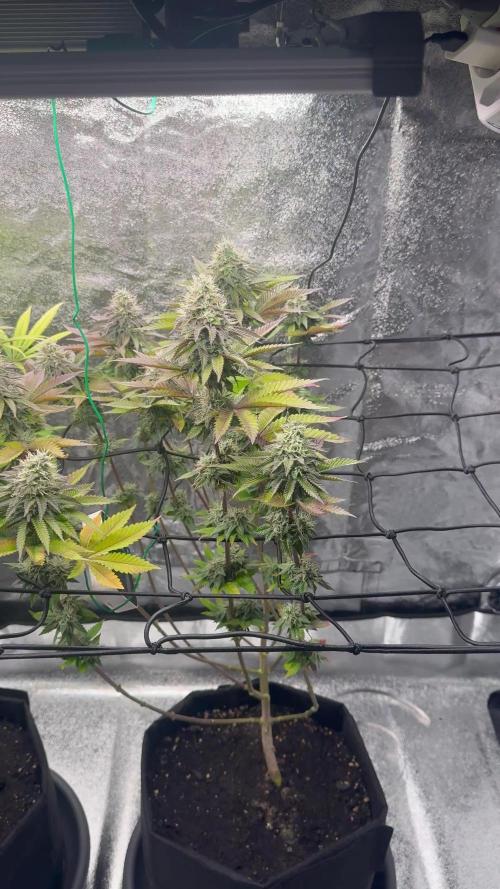
I am posting this on day 20 of flower. Stretching seems to have slowed dramatically. Getting some great buds forming. Drinking about 7 gallons a day. Everybody is happy!
I supercropped maybe 10 shoots that were too eager, and now the canopy is nice and even. A little taller than I planned for the scrog, but it should work out well.
Likes
Comments
Share


Likes
2
Share


@SamDo
Follow
Journal de Culture – Semaine 1 : Transplantation du Clone
La culture démarre avec une bouture de Mother Gorilla (Royal Queen Seeds), prélevée sur mon pied-mère. Après un enracinement en douceur, elle a été transplantée dans son nouvel environnement de croissance. Bonne nouvelle : le système racinaire s’est bien développé, signe que la transition s’est faite correctement !
Cette fois, j’ai bien veillé à maintenir une hygrométrie stable à 80 %, ce qui avait été un souci lors de ma précédente culture. Pour ça, j’ai investi dans un humidificateur AC Infinity qui fait très bien le job.
Côté paramètres :
• Éclairage : 18h de lumière
• Humidité : 80 %
• pH : 5,5 - 5,8 (légères corrections à faire)
• Température de l’eau : 18°C
Pour l’instant, la plante est encore en phase d’enracinement, mais ça se passe bien. On va voir comment elle évolue la semaine prochaine ! J’espère que cette variété réagira bien en hydroponie. Hâte de voir la suite !
🇺🇸Grow Journal – Week 1: Clone Transplantation
This grow cycle kicks off with a Mother Gorilla (Royal Queen Seeds) clone taken from my mother plant. After a smooth rooting process, she’s been transplanted into her new grow environment. Good news: the root system has developed well, which means the transition went smoothly!
This time, I made sure to maintain a steady 80% humidity, something I struggled with in my last grow. To help with that, I picked up an AC Infinity humidifie and it’s working great.
Key parameters:
• Lighting: 18 hours
• Humidity: 80%
• pH: 5.5 - 5.8 (minor adjustments needed)
• Water temperature: 18°C
Right now, the plant is still in its rooting phase, but everything looks good so far. Let’s see how she progresses next week! I’m curious to see how this strain performs in hydro. Excited for what’s next!
Likes
Comments
Share

@GoodTimesOrganics
Follow
Hi liebe Community and Welcome Back! 🌿💚
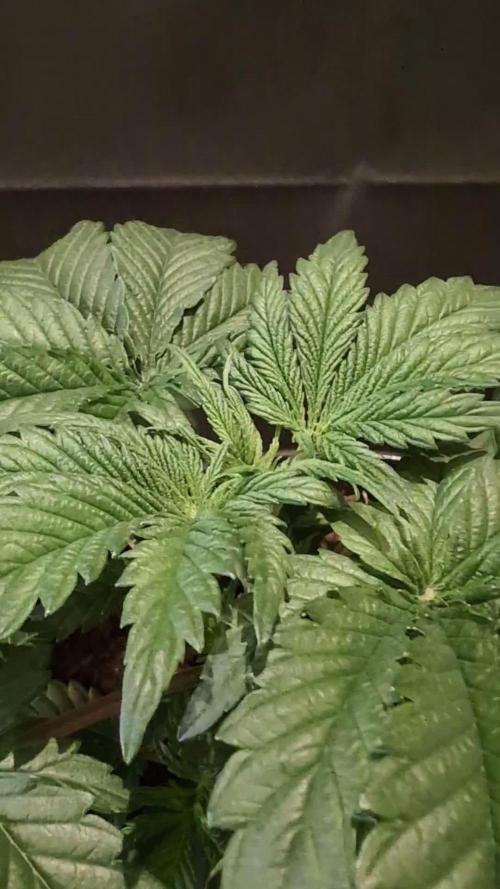
Die kleinen Äffchen wachsen prächtig! 🌄🐒
Die Jungpflanzen machen sich sehr gut und es ist zu beobachten, dass nun dass Wachstum richtig startet.
Die Seitentriebe bilden sich immer weiter aus. Die Blattform ist schön Breit und Buschig.
Die Umgebungsgegebenheiten sind aktuell gut:
—————
🌞 Temp: 24
🌚 Temp: 18°C bis 19°C
💨 RH: 58%
VPD: 0,91 kPa
💡ppfd: 330 mpm
—————
Viele Grüße 👋


Likes
20
Share

@GREENPHOENIX6262
Follow
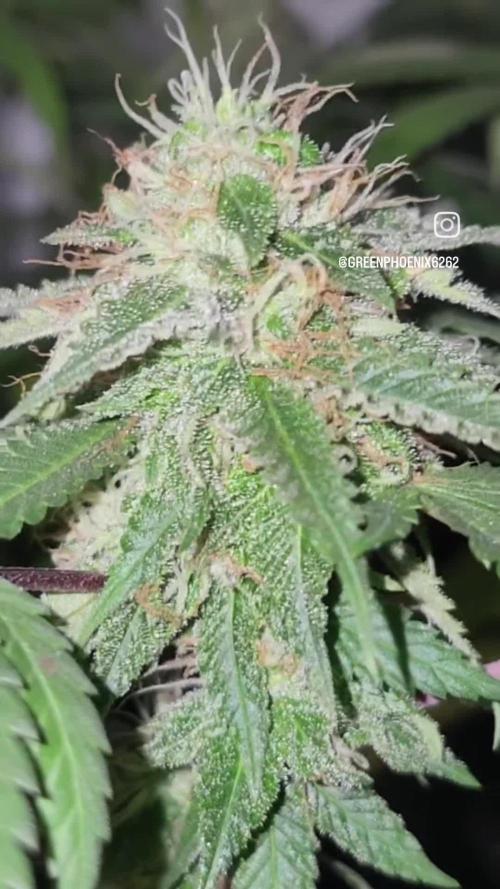
05/30 - (C) - As we closer to harvest all 8 ladies are running at full capacity with 0 issues - I will be increasing their nute feeds to 3 times a day and will be using more phosphate, potassium and Cane Molasses on the heavy feeds and Silica, Flower fuel, kelp and bloom for supplement feeds. The aroma from these girls is amazing, they have balanced notes of citrus, lavender and earthy notes. Follow my IG:Greenphoenix6262 for more content😎😎😎
*Disclosure* I will no longer be using the identifiers (M) or (C) to designate submission titles since the mother has been cut down everything moving forward will be for the clones*
06/03 - The babies are doing great, almost ready for harvest - I began a frozen water feed program 2 weeks ago and since then I have seen a definite increase in trichome production and cola structure - My feed system is a 2 days process consisting of tea blend for 24hrs and then from fridge to freezer for another 24 hours then feeding the plants while the nutrient feed is about 32-35 degrees (Right as the solution begins to create thin layers of ice). This cycle is repeated every 4 days with a clean water feed in between - For the 8 - 1 gallon clones I am processing about 3 gallons of nutrient feed. So far so good. 😎😎😎😎😎😎😎😎
06/06 - All the babies are rocking out accordingly - There are o signs of any deficiencies throughout all 8 clones - I will begin the pre-harvest process next week - In the meantime they will be on the regular program and frozen water feed schedule as stated on the previous update. The entry will close out this week.

Likes
1
Share

@RageTdavis
Follow
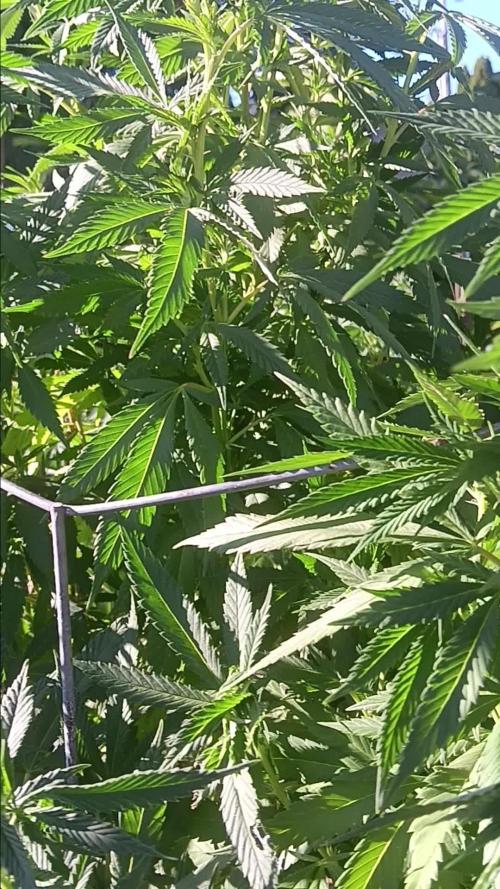
from 7-22-26 week away from pre-flower. Just today noticed bloom heads starting to appear. im ready for this, i might go to every 2 day feed.
see how much she shows. instead of 3 day. then a water only phase. Peace out fam.
Likes
8
Share

@Islandboi340
Follow
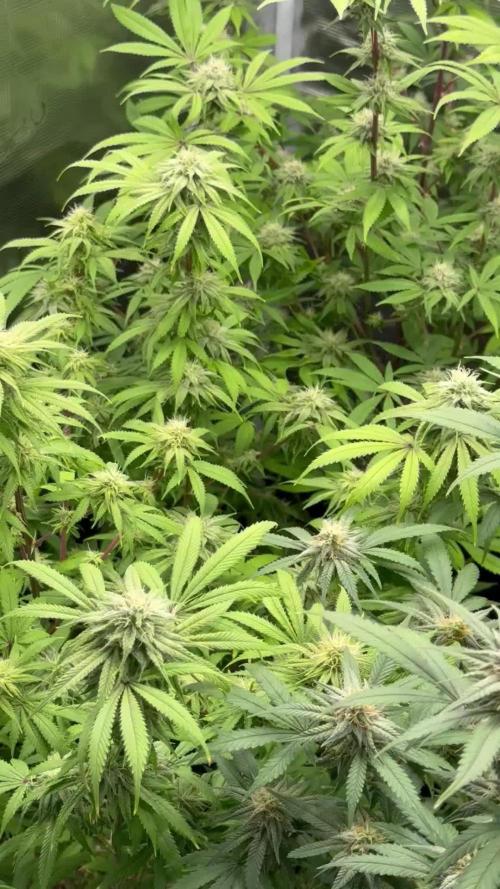
Was extremely busy for the last two weeks but here’s my girls at 8 weeks goin try push dem to 9 weeks still a lot of white hairs also got some videos of my 3x3 and 2x4 tents


Likes
16
Share


@HowtoBubatz
Follow
The Plant is getting very bushy and I am thinking of dedefoliating the plant but I am unsure because of it being an Autoflower in the early stages.

Likes
2
Share


@regionallystoned420
Follow
8 weeks into flower , white pistels still forming but thricombes are ready .
Likes
2
Share


Likes
2
Share

@sir_growalot
Follow
Hier hab ich die Bilder aus Mitte der 6. Blütewoche und das Video Anfang 7. Blütewoche kombiniert. Hier sieht man, dass die zwei die Umstellung von Licht und Temperatur nicht so gut vertragen haben. In dem Video habe ich schon einige gelbe Blätter entfernt. Nur die, die auch sehr trocken aussahen. Zudem habe ich noch einen kleiner zweiten Ventilator installiert um eine bessere Umluft zu generieren
Here I've combined the pictures from the middle of the 6th week of flowering with the video from the beginning of the 7th week. You can see that the two plants didn't tolerate the change in light and temperature very well. In the video, I've already removed some yellow leaves—only those that looked very dry. I also installed a small second fan to generate better air circulation.

Likes
28
Share


@RicoGrow
Follow
Hello
Well, I've finally reached the flowering stage.
Today, I'm no longer using Power Zym.
This week:
3.5 ml/l Algua Bloom
1 ml/l Green Sensation
1 ml/l Sugar Royal
I'm supplementing with one watering this week using 1 ml/L of Power Buds.
One watering this week using 2 ml/L of cane molasses. When I use it, I don't add Sugar Royal.
Now, I'm letting nature take its course.
I wish you all happy growing!
DIAPOGRAMME
MUSIC SOUNDCLOUD
EL MUNDO & ZAZOU
LIKE FOREVER
[HMWL061]
Bonjour
Voilà, je suis vraiment arrivé dans la floraison.
Ce jour, je n'utilise plus power zym .
Pour cette semaine
3,5 ml/l algua bloom
1 ml/l green sensation
1 ml/l sugar royal
Je complète avec 1 arrosage dans la semaine avec 1ml/l de power buds.
1 arrosage dans la semaine 2ml/l de mélasse de canne a sucre. Quand je l' utilise, je ne mets pas de sugar royal.
Maintenant, je laisse faire les choses de la nature.
Je vous souhaite une bonne cannabiculture.
DIAPOGRAMME
MUSIC SOUNDCLOUD
EL MUNDO & ZAZOU
LIKE FOREVER
[HMWL061]
