


Likes
Comments
Share


@Ganjaman19
Follow
Another banger by @divineseeds make sure your following them on Instagram awesome company awesome genetics top service and some top fire strains
Thank you Divine seeds for this opportunity its been great and hopefully be doing work with you guys all the time now


Likes
14
Share


@Mrs_Larimar
Follow
2025-06-15
I took zthe pictures a few days ago, the plants are in overdrive,
producing lovely floweringstands
xxxxxxxxxxxxxxxxxxxxxxxxxxxxxxxxxxxxxxxxxxxx
Purplematic CBD is a unique autoflowering CBD strain. It’s a 90% indica-dominant hybrid cross
of Kush Rose Auto CBD and Afghan Rose Auto CBD. Both of these parent strains are fast-flowering,
CBD-rich autoflowers with excellent genetics.
Kush Rose Auto CBD is, as the name suggests, a CBD-rich Kush variety. It boasts a unique aroma combining
distinct hints of rose with the unmistakable spice and earthiness of top-shelf Kush. It produces thick, frosty resin and beautiful, dense buds.
Afghan Rose Auto CBD, the second parent, is a CBD-rich hybrid with Afghan landrace heritage. It produces dense,
heavy, and super-resinous buds in roughly 9 weeks. Afghan Rose Auto CBD has that complex, spicy,
and earthy aroma characteristic of plants from this region.
Purplematic CBD brings together the best of both parents. It flowers quickly, boasts a rich and complex aroma,
and makes for a really easy strain to grow. Its buds are also very attractive, bringing together a beautiful range of extremely eye-catching colours.
xxxxxxxxxxxxxxxxxxxxxxxxxxxxxxxxxxxxxxxxxxxxxxxxxxxxxxxxxxxxxxxxxxxxxxxxxxxxxxxxxxxxxxxxxxxxxxxxxxxxxxxxxxxxxxxx
xxxxxxxxxxxxxxxxxxxxxxxxxxxxxxxxxxxxxxxxxxxxxxxxxxxxxxxxxxxxxxxxxxxxxxxxxxxxxxxxxxxx
Growing Environment Setup & Specifications
Lighting System
Model: Sanlight EVO 5-150
Quantity: Up to 5 units
Power Output: 320W per unit
Maximum Total Output: 1600W
Environmental Control
Management Unit: Growcontrol Growbase Pro
Humidity Management:
Dedicated Humidifier
Dedicated Dehumidifier
Temperature Control:
Primary: System-controlled
Secondary: Additional Radiator for supplemental heating
Air Management
Air Circulation: 2x Stand Fans
Air Extraction: Exhaust Fan with Filter System
Irrigation System
Primary: Autopot XXL Pot System
Water Storage: Flexi Tank
Root Zone Aeration:
Airdomes
Dedicated Air Pump
Growing Medium
Type: TERRA PRETA MJ-Mix
Nutrients
System: BIOTABS
Method: "Just Add Water" Strategy
Type: Organic-based feeding

Likes
3
Share

@Ninjabuds
Follow
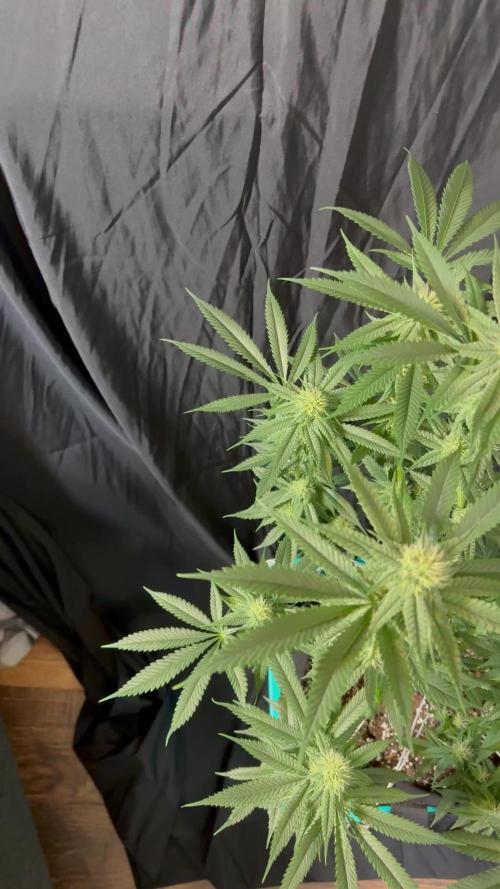
This little guy is coming around it’s really healthy just a short plant with good stacking
Likes
12
Share


@fivegrow
Follow
Fast cycle, no disease or nutrition big problems. Pretty good harvest for one computer space.

Likes
25
Share

@DE_BW
Follow
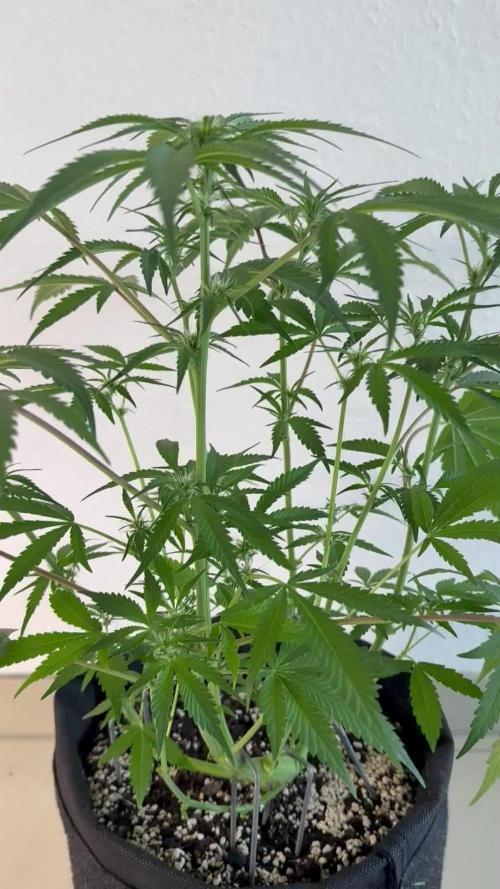
Mendo Frost is now fully in flower and currently going through the main stretch phase. LST is basically finished at this point and the overall structure stayed very stable over the last days. The canopy is surprisingly even right now, with the plant reaching around 40 cm in height. Bud sites are forming everywhere, although the side branching remains rather minimal and compact compared to my other plants.
Likes
23
Share


@Prilyfe13
Follow
July 29, 2024
So I was going to wait to harvest at the end of this week, but a friend of mine said I should harvest now. I agreed after looking closely at the trichomes.
Sour Diesel A weighed in at 20.5 Oz wet weight. No trimming.
Sour Diesel B weighed in at 19 Oz wet weight. No trimming.
Sour Diesel C weighed in at 23.5 oz wet weight. No trimming.
Sour Diesel D weighed in at 18 Oz wet weight. Partial wet trim. The cola is solid, so I couldn't access a lot of the stems from the fan leaves. It'll be a pain to trim I think.
The environment should be around 65° and the humidity just below 60%. I'll strive to keep it that way. I shouldn't have a problem with the humidity still being high in my room.
I'll be back in 10 to 14 days with a final yield and smoke review.
July 30, 2024
Quick update with estimates.
The environment in the tent is off by a lot today. I'll have to open the tent once or twice a day to let the super high humidity out. I hate my portable AC.
So based on the 81 Oz wet weight and my previous runs, the weight retention after trimming should be around 13%. That should be a total of around 10 oz. It may be a tiny bit more or less. With Sour Diesel D being partially wet trimmed and being so dense, it might increase the total dry weight a little bit. But it could be as low as 8 Oz. We shall see.
July 31, 2024
You know, it really sucks when the humidity still spikes and now the tent is too warm. However, as I'm writing this, the central air kicked on. This should fix it all, but I'm still running into super high humidity at night and in the morning while the AC is off. I really hope this doesn't mess up the final product.
August 2, 2024
Day 4 of drying. Everything looks good so far. The humidity is still way too high and I'm thinking I should've wet trimmed just because the humidity is so high. Too late now. Anyway, I'm monitoring closely. The exhaust fan is maxed out to help keep air flow constant. That way there's less chance of mold and mildew.
I also have both oscillating running below the plants with a small dehumidifier in the middle. It's not keeping the humidity down to a reasonable level, but it IS keeping it lower than it would be. With the fans running, it's evenly leveled out through the tent. The only issue is the temp. It's a bit on the warm side. I'd like it to be at 65°. Currently it's hovering between 69° and 70°.
August 4, 2024
Day 6 of drying and these ladies are taking their time. Unfortunately it's because of the super high humidity we ran into the day I harvested. So I'm fighting with 71% humidity in my bedroom. It's crazy.
The portable AC is doing absolutely nothing except keeping the temp below 70°. That's good, but it's not good enough. Oh well. I'll just keep opening the tent up with the bedroom light set to green to ensure they air out and let fresh humidity in. Lol. I'll keep checking in until they are done drying.
August 6, 2024
Quick update. These ladies have been drying for 8 days now and they aren't ready yet. I'd say another 5 to 7 days. With the humidity being so bouncy, I feel like something will get messed up. It probably won't. I have the exhaust fan up and the oscillating fans going. Should be safe from mold and whatnot. But still.
Currently, the temp is at 63° and the humidity at 60%. Hopefully it stays that way for the next few days. At least during the day. I have an idea for night time. It gets pretty humid at night. So I'll turn both dehumidifiers on when I go to bed and turn them off when the AC kicks on. That should technically keep the humidity down, but the temp may go up. However, I do run the portable AC at night to keep my room cool enough for the plants. That brings in a lot of humidity. Still no clue why, but it does.
Anyway, the whole idea should work. I just have to remember to shut the dehumidifiers off when the central AC kicks on.
August 8, 2024
We are at day 10 of drying. Still another few days left.
So a good thing to note is the size of the buds. They didn't shrink all that much. To be honest, they look like they've only lost about 25% of their size. Not a bad thing in the slightest. Hopefully with that being the case, the yield will be even bigger than I calculated.
I'd also like to make a correction with my original calculation. My average yield is 15% of wet weight. That being said, I should be looking at closer to 12 oz total.
81 oz. x .15= 12.15 oz. We shall see how close I am now.
August 10, 2024
It's now day 12. These ladies are nearly done. I'd say another 2 to 3 days. Not much else today. Just a quick one. I weighed Sour Diesel D. She weighs 4 oz now. A 78% drop in weight. That being said, I think I can safely say this one will yield around 2 oz. Maybe a hint less. Which completely messed up my calculations. Now I don't know. I think I'll go back down to 8 to 10 oz. And if I get 12 oz, what happy surprise.
I also made sure to check them for mold as I do every day. So far it looks great! No signs of anything unwanted. Just beautiful trichomes glistening in the light.
Update: Sour Diesel A was the first to finish up. She had a perfect snap. Dry trimmed yield is 67 grams. 2.4 oz. Around what I thought I was gonna see. I'd say the rest will be trimmed over the next 2 to 3 days.
August 12, 2024
What a couple weeks. We are talking like 14 days. At the end of it all, I ended up with 10.65 oz. Right around where I was thinking.
Sour Diesel A 67 grams
Sour Diesel B 78 grams
Sour Diesel C 79 grams
Sour Diesel D 77 grams.
For a grand total of 302 grams.
Weight retention 13.15%. almost exactly what I calculated.
What's funny is that they are all roughly the same weight except for A. The plants were all different and still yielded roughly the same. C was the largest, while D was technically the smallest.
All of the plants have solid buds. B has airy but hard buds. It's not perfect, but this plant had the most foxtails, so I'll have to remember there was some sort of issue. I'm thinking it was the heat stress. Must have been a pocket where the air didn't flow. I'll have to fix that next run.
The smoke is fantastic. Super fire. Great high and lasts quite a while. 30 days of curing and then storage. I'll be using Grove Bags.
August 15, 2024
Quick update and then some bad news.
I fit each plant in its own 1/4 pound grove bag. They are now curing in a box. The average temp is around 68°. Humidity is perfect at 62% I haven't sampled each plant yet. Only A and B. I'll be sampling C and D next week. All in all, I'm pretty happy with this run. The yield was a bit lower than I was hoping for in the beginning, but it's still not too bad. Especially because I had some issues along the way.
Now for the bad news.
I'm losing my home in a couple months and won't be able to grow anything for a while. I have no idea how long it's going to be before I get a new home, and it could take up to 2 years given my situation. But I will be back when I'm able. Thanks for all the support and compliments.
On a more positive note, I still have a good pound of weed to hopefully last me til I get a new home. I don't smoke a ton, so it'll last quite a while.
Later my growmies.


Likes
67
Share


@GanjaReaper
Follow
Day 83:
After being in the dark for like 4-7 days, they where ready to harvest. All plants getting cut by the machine, big buds are cut by hand.
I never weight wet buds because that doesnt make any sence. I will update soon on how much it is dry weight.
My friend helped me with the harvest since it takes many hours of work.
I have many buds that are as big or bigger as my hand.
Quallity so far looks promising even thought there are shitty buds as well, but thats normal and oke.
They have been cut freshly so I won't lose much weight when cutting. This will happen when cutting dry buds.
The remaining small leafs on the wet buds will dry in with the buds and will be barely visible.
More info soon.
Likes
4
Share


@GrowSmith
Follow
So since last feed was at 3/4 I thought to give her the full dose. Found the temperature was dropping below 10 on a night so I bought a fan heater to go under the plant and circulate greenhouse.
After the first day of 28/27 degree heat some of the fan leaves started to change colour and dry up which I got advice on and found this is normal when coming to the end of your cycle also found I had spider mites
Found some of them and removed also sprayed plant down and flushed

Likes
11
Share


@CalGonJim
Follow
12/5 did some LST yesterday the first time I tried it she’s responding well I’m going to continue nutrients at half strength and that’s all for now
12/6 there are more bud sights on this than I’ve ever seen on any auto flower. I’m already seeing a lot of crystals in the leaves she’s responding well to the LST and I gave her a 1 mL per liter feeding of nutrients with 2 L of water I’m trying to be very careful.
I have been using SF1000D lights I bought them a few years ago,they’re not bad they do get hot, especially when I’ve tried to put two of them in one tent it is very difficult to keep cool.
Viparspectra I’ll keep it running at 80% and that should be good enough for one autoflower, I got the XS1500. I want to see if there’s any difference in the newer LEDs compared to my older Spider Farmer lights . I found a discount code in one of the discussions here in the site somewhere, and it actually worked it came to about 145 total. It’ll be here tomorrow.
12/7 💎💎💎 I love this seed company. This plant that I topped between three and four and did LST two days ago on is showing me bud sites that are fuller and more full of crystals that I’ve ever seen. this is my 10th Autoflower, my first one from this company and it’s completely different, way better, it’s just phenomenal. I like a clean and symmetrical and even grow. Doing this will make it much easier to process. I’ve never seen a plant grow like this. This is my first time trying LST and I’m glad I did it. It completely changes the plants you can definitely see there will be much more.
12/7 she looks great. because I spread the branches out the way I did, and only have one light on the leaf surface temperatures and the bud surface temperatures are all between 72 and 74° which is perfect.
12/8 Resin production is incredible. it looks like millions of tiny angels jizzed all over my plant it’s the most beautiful thing I’ve ever seen
12/8 I got the new Viparspectra light today. It has about 100 more LEDs in the SF 1000 D I’ll take some magnified pictures of the LEDs. The new one is much heavier I like the dimmer that way I don’t have to put in secondary lights for seedlings.
It’s not a bad light I like being able to dim the light I ran it at 100% and the temperature was a little hot for me and I’m keeping it kind of close to the plant so I’ll probably lower it down to 75% and that should be good I think. Also I noticed that this one Viparspectra light looks to me brighter than 2 sf100d lights.
12/9 I turned the Viper spectra light down to a little bit less than 75% to bring it down to 100 W. When I did that the temperature stays around 95° on the board and about 98° on the driver, so it is far cooler and more efficient at the same wattage than the older spider farmer lights which were at 110 to 118°( about the same as the XS1500 at full power). So a single 150w xs1500 is about the same as 2 SF1000D lights as far as heat I'm sure the PPF or whatthehelleverthatis is higher ,very nice, If the SF1000D's would have had dimmers they would have been perfect.
12/10 awesome 🤩
12/11 I am seeing lots of resin production more than I’ve ever seen. I think this is so far been my best most successful grow this plant is great. I’m glad I found the seed company. The other ones I used before were pretty bad, I don't LOVE them at all. Also my Yamaha A4A 1600 receiver is total junk, I mean total... I'll never have the money to spend on something like that again, I was totally ripped off. Unrelated but so many formerly trustworthy companies are just TOTAL garbage
Likes
3
Share


@Chubbs
Follow
420Fastbuds Week 6
What up, fam. Weekly update on the Photoperiod Femenized strains. GorillaMelon,RainbowMelon,
LemonManderian,LemonPaya,PapayaSherbet, and some FastFlowering GG4/Sherbet.
For just putting them outdoors 3 weeks ago, they've adjusted to the heat like a dream mid 90's and tripled in size. To think there's probably 4 more weeks of veg. These are going to get big. I might have to raise up the greenhouse or make it a convertible. I'm still just feeding well water, probably 2 liters, each straight from the hose daily. All in all Happy Growing.


Processing
Likes
8
Share


@banditman1200
Follow
running out of space..lol,despite defoliage and tidy,still coming along nicely ,starting to reek .ph is in normal range,start of week gave a days flush.will consider if any extra nutrients required over next few days eg.advanced overdrive.


Likes
28
Share


@DutchFarmer
Follow
Flower week 2

Violet BAG · Robin Hood Seeds

Tropicana Cherry · Relentless Genetics

Miami Madness · Solfire Gardens

Cherry Gar-see-ya R1 · ETHOS Genetics

Strawneapple · Exotic Genetix

Black Valentine · LIT Farms (Lost In Translation)

Sugar Cane · In House Genetics

Gorilla Cookies Auto · Fast Buds
Banana Purple Punch Auto · Fast Buds

Cereal Milk · Cookies Seed Bank
Likes
15
Share


@420keef
Follow
Buds are starting to fatten up! Can’t wait for the outcome, the smell is so strong and fruity! I love it, i think i will be using these nutrients more in the future!
Likes
91
Share


@Greenwolvesfarmer
Follow
30 días del cambio de fotoperiodo
Hemos tenido humedad extrema en esta floración , hasta 78% de humedad , queriendo obtener menos de 50% en todo este segundo mes de vida para las #lemonking @eva_seeds
🏆💡Bajo el mejor mix de luces del mercado
480w 3500k💯 #samsungquantumboards
UV / 660 / iR 👈🏼💥 #epistar
Posible gracias a los grandes @leds.mk .
🦐🍤S.A.R mode on! Libre de patógenos y libre de stress gracias a @trichomemania y el poderoso quitosano , manteniendo a las plantas firmes y de tallos fuertes ! Ademas beneficia en resina + tricomas + terpenos ! Uuuuffff! .
Cada vez menos , te amo y amaré en los buenos momentos y malos que pasamos , ha sido un lindo proyecto y la verdad me encantó cultivar una sativa como esta en mi primera vez . Amen , acepten y fluyan. Tierra madre y sol padre , bendecidos gracias a tu bello paraíso ...
👉🏼estamos en #growdiaries con el mismo nombre @greenwolvesfarmer 👈🏼🙅♀️
.
.
.
.
#seguimientomkled #cannabisfamily
#greenwolvesfarmer #weedgrower #cultivoindoor #cultivointerior #indoorgarden #ledchile #cultivoledchile #chilecultivoled #cultivamedicina #medicinanatural #chilecultiva #nomaspresosporplantar #growdiaries #growdiary #cannabisgrowers #quantumboard #chileautocultivo
#480w #quantumboards #comunidadcannabica #cannabiscomunity #evaseeds #mkledchile #ledpanel #mkled

Likes
Comments
Share

@lebrongrows
Follow
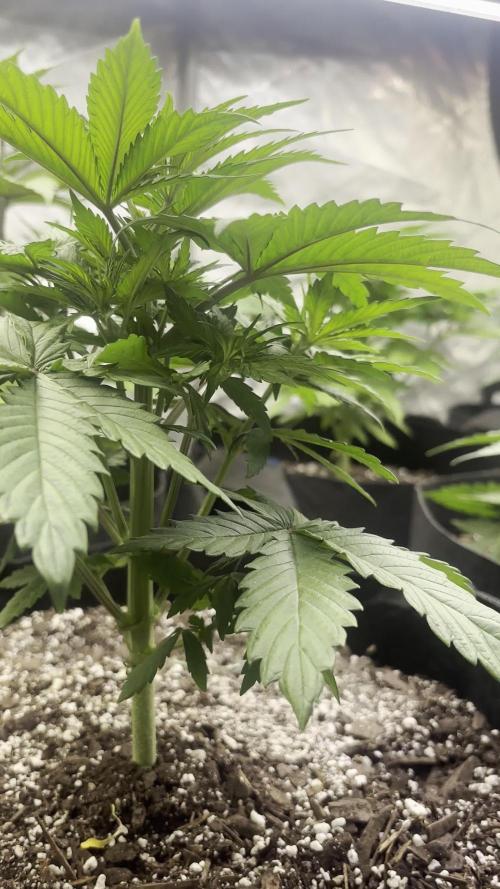
2/11: Now officially been 3 weeks since plant. Overall pretty happy with how things are going. I realized I had been slightly overwatering the plants a week ago, so I left them to dry a bit for 5 or so days, and watered them lightly yesterday morning. Will probably water them tomorrow, and this time I'm thinking of adding in a very light dose of nutrients for the first time. Overall, plants look fairly healthy. We have 2, maybe 3 phenotypes, one being super bushy and dense, the other less so but still fairly compact. The plants had been a bit droopy the last week, which is why I waited to water for a bit, but it seems they are perking back up slowly. The bushier phenotype also seems to droop a bit more. One of the plants is significantly smaller than the others, while still looking fairly healthy. Its somewhat on track in terms of number of fan leaves, it just doesn't have the vertical and horizontal growth of the others. My roommates said they kinda fucked up the roots when transplanting, so i'm hoping its just a bit stunted and will reel the others back in soon. Oh, and when I walked in the tent a few days ago in the morning, the temp was at 102f. I have no idea how it got to that, but it musn't have been for long because the plants seem fine other than maybe 4 tiny bleached spots on 2 of the plants. I'm hoping the plants get a bit leggier, as the new nodes under the bigger fan leaves are really struggling to get any light. I don't think I will do anything for now besides a very light dose of nutrients next feed, but might get into some lst, topping, and defoliage in the next week. Need to do some research to decide if we try mainlining, scrog, or other techniques. Light settings still the same also, might raise them a few inches in the next week.
2/15: Topped all the plants. Didn't have time to get lst material but will start that hopefully tomorrow or day after. Not sure if we should defoliate some of the upper fan leaves that are fully covering the new nodes coming in from under. Plants looked fairly droopy all day, I'm hoping its from underwatering, and i'm fairly confident it is. Watered them tonight, this time 0.75 gallons each, so almost double the amount of last time. Will probably stick to this amount for the next week or two. Still stuck to the same nutrient ratio: 5 tsp big bloom and 2.5 tsp grow big per 2 gallons (our watering bucket is 2 gallon). I think next feed will probably be straight water to flush the soil a bit, but not completely sure yet. Was also pretty confused as to why some of the pots had significantly more runoff than others. Hoping to continue to see growth, and less droop. The straggler is also finally starting to speed up a bit. Most plants are around 8-9 in tall besides the straggler, about half as tall.
2/17: Plants look very healthy overall. A lot less droopy, and definitely got some decent size now. Noticed one plant has some sort of bleaching that I'm fairly certain is cal mag deficiency. Makes sense since we haven't introduced any cal mag at all, so I will go buy some today. Gonna water tomorrow as the pots are already pretty much dry. Trying to add a video with detailed view of all the plants from different angles but doesn't seem like uploading is working
Likes
5
Share

@420DeepGrow
Follow
📆 Semana 11
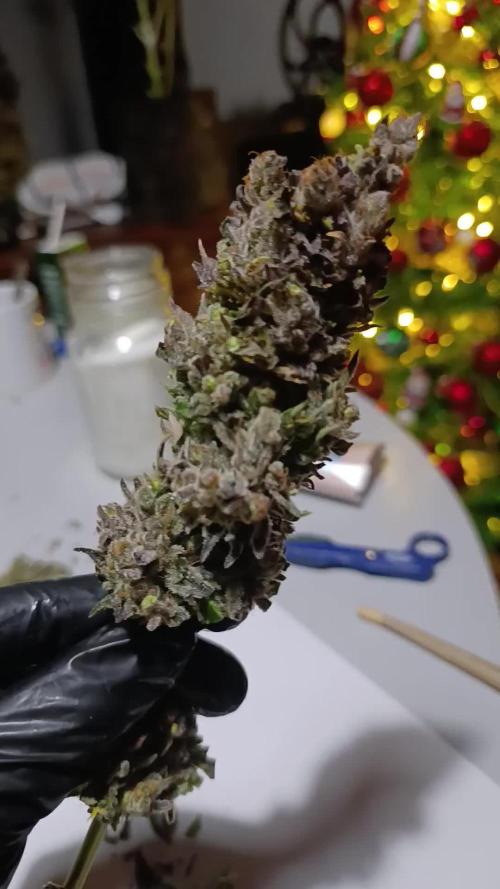
La Ice Cream Haze cierra el ciclo con una madurez redonda. La segunda tanda ha terminado de compactar y muestra los tricomas en su punto exacto, con ese brillo denso que anuncia potencia. Los matices morados están totalmente fijados y el aroma cremoso-afrutado se ha intensificado tras estos últimos días de afinado.
La planta ha entregado justo lo que prometía: volumen, color y un perfil aromático limpio y marcado.
✂️ Cosechada: ciclo completo, doble tanda afinada y resultado a la altura.
¡Seguimos creciendo fuerte 💪!

Likes
9
Share


@xmackobox
Follow
Semillas regulares Alioli de Dr. Ganjah
Simplemente alucinante la calidad a pesar del pesimo cultivador xd

Likes
65
Share


@DudeGrowsWeed
Follow
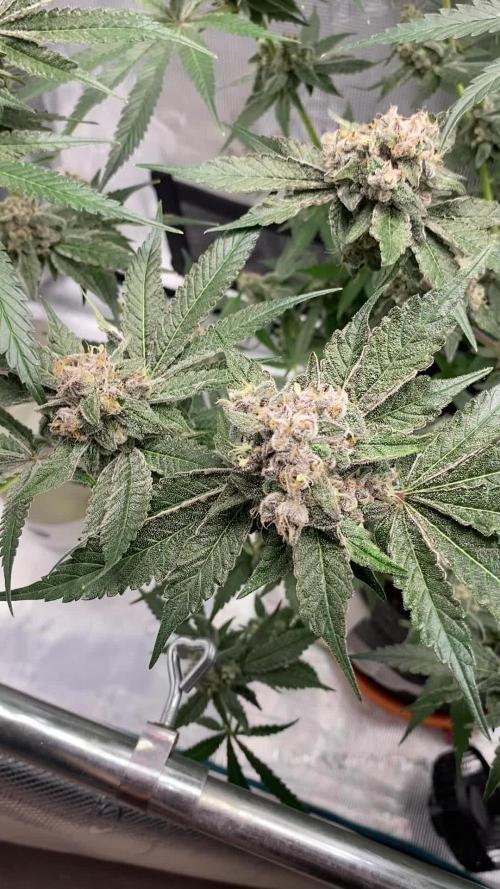
BDM close as hell to harvest. Leaves are turning yellow all over the place, hairs are nice and orange, the trichs are milky white, but no amber at all yet. Gave her Recharge only this week in anticipation of flushing soon. 😉