


Likes
Comments
Share


@Brickie74
Follow
Sour Diesel plant is growing great. Now at 27 inches and growing fast. She has been topped and is now in Flower. Now it will be watering and pruning until we get some buds.

Likes
3
Share


@Bizbiz
Follow
After 5 days of blooming I deleafed all the plants taking away all the lower level of internodes. What you see in the pictures is day 7 of flowering after the deleafing.

Likes
12
Share


@MiddleAgeDylan
Follow
Great growing plant topped it at about 3rd node but it stayed a shorter plant. Very nice growth, dense buds and a hint of lemon gasoline.

Likes
13
Share


@KingSalomonsWeed
Follow
Seit einer Nacht ist die supersüße watermelon zkittlez auf 12 12 rythmus.. Melde mich sobald sie un die Blüte geht. Ach ja bending beendet.
Habe die erde gewechselt, musste, waren kaum wurzeln da.
Hatte günstige erde genommen. Ab jetzt in bio bizz Light mix
Nach 2 Tagen in neuer Erde ist sie merklich gewachsen, sie dehnt sich, spreitzt ihre fächerblãtter und betet die greenception gc4 an.
Boah ich liebe es zu growen. Verschiedene Genetiken.
Dieselbe Gattung, so verschieden.
Barney Farm, White Label, Seedstockers, SensiSeeds, Fast buds.
Alles ganja lover.
Wurde vor 4 tagen die zeit auf 12 12 umgestellt..


Likes
16
Share

@Razzark
Follow
21.4. začátek 4. týdne
- proběhl gangbang Shamana se Shamankama (viz video)
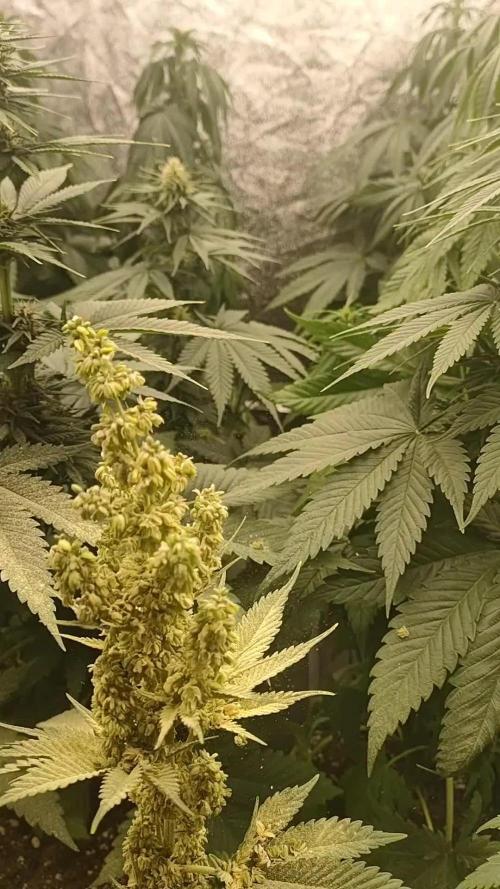
- nikdy jsem neviděl samce kvést a je to masakr kolik pylu docela malá rostlina dokáže vyprodukovat
- pestíky holek už jsou hnědý/zrezivělý, tak snad se povedlo a nějaká semínka budou
- opylení Widow grail bude trochu víc kontrolované, ty teprve začnou kvést, proto jsem si část pylu schoval do lednice
- zatím vypadá všechno v pořádku


Likes
22
Share


@Chumpkilla
Follow
7/1/23 - Day 19 I do water changes weekly. The new weeks start off with a water change. Water changes always scare me, it's the mixing of nutes and balancing the PH. It sounds easy in theory but in practice you want to interfere with the PH asap. But I was able to let the LEAF box empty the water, I filled it up with RO water, LEAF then dosed all my nutes. After that i came in a PH balanced it. (PH balance is something LEAF will be able to do, but there was a bug in the software so instead of having LEAF dose the PH i decided to do it manually for now.
The Roots are INSANE! I bet by time I'm done there will be 1+ gallons of water displaced by the roots.
I almost started cutting her lower leaves at the base, but I decided to let them grow for a bit. If they grow out some more i will be able to scrogg them and then cut the leaves below after they are trained up a bit.
The lights have kicked on and everything looks in order. The plant looks great too, she might be in a small amount of WTF because of all the PH changes but i think the drastic changes were kept to a minimum. She looks happy. As always ill update you tomorrow.
7/3/23 - Day 21- I trimmed some of the lower leaves on the bottom, I'm leaving her bushy still, I won't want to cut any more branches if I can, I need the branches from the bottom to reach the sides of the Scrogg net. In the next couple of days being apple to Scrogg and stretch her while Shes still moldable.
7/5/23 - Day 23 - I added some training lines to some of the branches. I need them to be as spread out as possible going into the Scrogg net.
I'm a big fan of not trimming too much as she grows. I don't mind there being some foliage down below. I will cut as needed if it looks like the lower areas are sprouting too much of the little leaves, but for the most part, I let nature do its thing. She's drinking a ton of water now. I am getting my RO water dropped off by the five gal loads. I just got the membrane for my RO150 unit that I plan on having up and running within a couple of weeks so I can start making my own water.
7/6/23 - Day 24 - I added a picture of my RO water setup. It cannot be set up permanently, so this was a great solution. You can see how I was able to tie my branches down, next time I will drill a few holes on the side of the pot. This is a great solution for anyone looking to Scrogg and manage the vertical height. Also, you can see on the top branch there was some pulling, so much so that it started to pull the plant and it created a small lump. All good but just goes to show how pliable these plants are.
Looking good and I'm excited for the next couple of weeks!
If you are looking for this experience check out https://www.getleaf.co/


Likes
65
Share


@3lementa1
Follow
I changed the reservoir and set the pH to around 5.3 and reduced the nutrients by 5ml/g.
I just realized I've been adding far far fewer nutrients than I thought. I've been using 30ml in a 5 gal bucket (probably 4.5g volume) but I should be using 30ml/g so 4x as much. I'm going to leave it for now but I should probably start adding more nutrients.
I took the wires I was using for LST off the bucket so it isn't stressed during flower and so it's easier to change the water. I'm taking off fan leaves that are blocking bud sites if I can't tuck them away. It grew a crazy amount today, so many little pistils came out. It's an exciting time.
July 10 she thirsty. I added half a gallon of water and a full 30ml of each nutrient. That should bring us close to half the recommended nutes. I'll probably change the full res out and give 3/4 nutes sometime this week and go up to full strength next weekend if everything looks OK.
https://www.remonutrients.com/calculator/
I just looked at my chart again and I think I was right the first time. I just added more nutrients for no reason. I added another half gallon of water and checked ppm and pH. Ppm is 1050, pH is 5.8. Gonna keep an eye on it through the day and see what happens.
305pm pH 5.8 ppm 1200
July 11 pH 5.8 ppm 1300. I'll add some plain water after the res goes down a bit more. Looks like the plant isn't using all the available nutes and is probably leaching some. She looks good though. Loads of vertical growth over the past week, now really going hard making bud sites. I'm going to see how this nute situation goes before doing any major defoliation or pruning. Leaf temp was 29 on the central cola so I turned up the fans and raised the light a bit.
July 12 ppm down to 1200, pH still 5.8. Looks like it's going to be ok.
July 13 ppm 1300 pH 6.2. I dropped an entire oscillating fan on my plant today. I broke 4 stems almost clean off. 3 appear to be surviving through duct tape and wire. The biggest one appears to be a casualty. I'm pissed. But the cabinet is coming together. Once it's perfect this kind of thing won't happen. I salvaged a piece of plywood yesterday and hand sawed the whole thing to fit as a door.

Likes
9
Share


@DaddyPrime2
Follow
11/03/24
need to get them into a bigger tent. running out of vertical space.
11/07
not sure if i should top them and try to keep them short or figure out how to get them into the flower
11/09 transplanted #2 into a 3 gal fab pot.
#5 had to be topped at every main to keep her

Likes
3
Share


@SubliminalSociety
Follow
So, I chopped the two colas off and left the main stem in the pot, because I'm lazy. But guess what I found after a week: another flower!
These genetics are crazy. I'm not sure if it's a good thing but I'll take it.
Definitely not an outdoor strain. This was a WILD ride.

Likes
22
Share

@BUZIMAN
Follow
Flowering Update
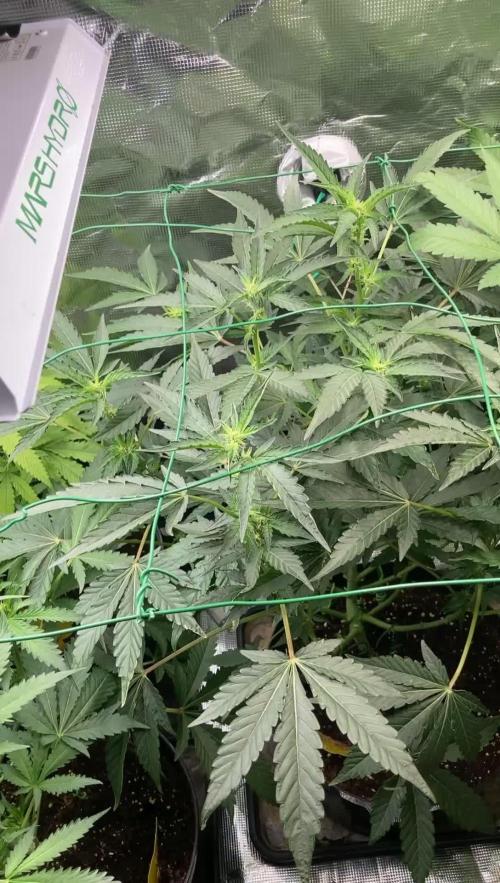
Everything is going well for these ladies! 🌱💚 The flowering stage is well underway, and they’re starting to drink more and more each day
They’re now drinking almost 2 liters per day! 💧
Can’t wait to see what the next few weeks bring… 👀

Likes
4
Share


@trigs
Follow
She is starting to stretch into flower here, and this is where my notes stopped on 7/14/2023 until 8/13/2023.
Switched to 24hrs to try to get some more growth out of her. Absolutely explosive growth and I am in shock.
Been training her down with those LST clips and gently bending branches/the main cola.


Likes
44
Share


@TheMachinist
Follow
Feb 14, 2018:
Seems my fears were unfounded, I'm not seeing any spots of mildew and I think in 4 days I would see something if it was there. Water with plain water, just ph'd nothing else added. staked up a couple of the buds, all the other palnts are managing to hold each other up, the fan leaves seem to grow into each other so the canopy is a solid moving mass. When the oscillating fan hits the colas the whole canopy sways slightly. For future grow I plan to have more space between plants, and will need a screen/net to hold everything up.
Feb 12,13 2018:
Watered with 10ml/Gal Tiger Bloom, 10ml/Gal Big Bloom, 2tsp blackstrap molasses, 1ml Cal-Mag per gallon. Ph'd to 6.5 ish. Lost my SD card so didn't get any photos 2/12, but took some with my phone on day 73, and then found my SD card. High quality photos are back tomorrow mourning.
Feb 11, 2018:
Had a bit of a freak out, thought i had spotted a couple PM spots forming, think it was just the leaves resinous sticky. After the scare decided to do some major cleanup of old leaves and ALL dead leaves, i know it wont help fight PM, but added a small 6" fan circulating air below canopy. Humidity has been constant due to running a dehumidifier so it stays between 45-50 lights on and off.
Processing
Likes
6
Share


@Mr_nugs_lover_David
Follow
A-M-A-Z-I-N-G! This alien gorilla is blowing me away maan, shit she stinks soo freaking strong, very spicy aroma very piney too, and woody, she's not sweet at all, at least this pheno but the strong spicy piney woody smell is just lovely, you fall in love instantly, the colas look like rockets 🚀🚀 very hard, dense and sticky as hell. I'm so in love with this genetic by the family of original sensible seeds man, what a crazy surprise, I need this girls in my garden every year. She's been 100% organic grown with FLO Living soil and guanokalong organic dry amendments. Hope I can make a big big xxl bush with this strain next season man💎🤤🦍👽🤞 peace everybody!

Likes
11
Share

@Bncgrower
Follow
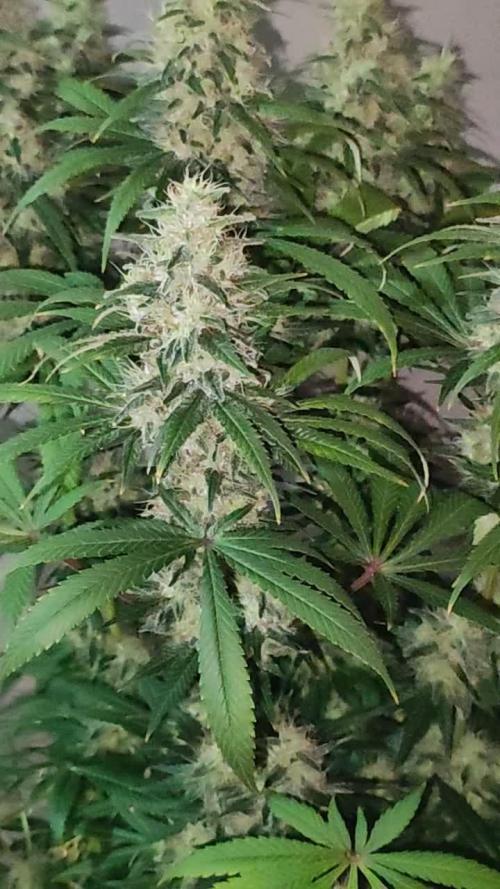
We've reached the end of the penultimate week. This girl's buds are also very dense, resinous, and fragrant. Based on the trichome analysis, she's at a great point. 😎
In the 15 days before harvest, I start watering only with RO water and a pH of 6.2. At the beginning of the last week, and about 3 days before harvest, I'll flush with RO + Cleanse 10mL.

Likes
10
Share


@xXBorn2BreedXx
Follow
2nd week of veg.
Will be using Cal/Mag and Grow With Grease for watering when needed until I begin to see nute issues.
2/16 D2 adjusted LST and turned the pot for better light penetration.
2/19 D5 mid day @ 1430 3 potential main colas were topped.
2/20 D6 The girls received a lite feeding as we transition to another beautiful week of veg growth.
Likes
44
Share


@Hempface86
Follow
Today is day 10 of flower, and this girl is stretchin as she should... this grow has been flawless from the second I dropped the seed in the medium.. Great vigor all she wants to do is grow .. i love Maxibloom...Zamnesia Seeds is 2 for 2 i think.. The watermelon candy turned out to be a banger, and this Sundae Driver 🍨 is looking like she's gonna be the same. She has a smell coming from her already, and there's not even a bract in site.. Thank you to everybody stopping by given a like in saying hi, I hope and pray everybody's doing well. And as always thank you to Zamnesia Seeds for sponsoring this grow.. definitely check them out.. God bless everybody and happy growing ✌️https://www.zamnesia.com/us/35-cannabis-seeds/368-zamnesia-seeds
Likes
8
Share


@ALittleDabWillDo420
Follow
day of cleaning and preparing the next run , excited to grt this auto run going for divine.seeds aswell

Likes
5
Share


@MyloGrow2019
Follow
End of week 3 in bloom , I’ve got most of the lollipoping done , canopy has filled in really well , lots of bud sites , I will remove some of the shade leaf out of the canopy in another week , stretch is done so just want to give the buds as much light as possible. I had a discussion with my grow shop rep and we discussed water times and schedules with the need for the rock wool to dry out so I dialed my feed schedule back from 6 feedings in 24 hrs to 3 , it’s been a week and the room looks great , final weight and time will tell me if feeding them less often is better.