


Likes
Comments
Share


@Roberts
Follow
Has started to fade and looking to harvest soon. Has grown great under 100 watt spiderfarmer SF-1000 light. Thank you Bomb seeds, and spiderfarmer 👍
Thank you grow diaries community for the likes, follows, and subscriptions on my YouTube channel. I greatly appreciate the support. 🌱🌱🌱
To purchase the light please visit the appropriate link below:
US:https://amzn.to/396hXXb
CA:https://amzn.to/3ol4oK4
DE:https://amzn.to/3q15SJT
UK:https://amzn.to/2L7NVKN
AU:https://amzn.to/3pZD6ZQ
FR:https://amzn.to/2Xkomsi
IT:https://amzn.to/3nk7A7h
ES:https://amzn.to/2XhtGwB
Discount code: saveurcash

Likes
3
Share


@Jointjourney
Follow
One week more. The two ladies have developed quite well in the last week and I have now defoliated them again. I think the yellow leaf tips are due to low humidity. The morello cherries auto in the soil also had a bit of bad news for me. There was a small bag of bananas, which I have removed for now and will continue to observe whether new ones appear. With a new cultivar, I can well imagine that it will be even more stable.
Otherwise, the morello Cherrie flowers very fast and l'm a little surprised at the low stretch.

Likes
18
Share


@xtchill
Follow
Well the end has come to this beautiful strain
What can I say it was fun to grow even considering the early problems I had with the yellowing it turned out amazing
The smell and taste are out of this world.
Tastes very citrucy and sweet.
With a super heavy high.
Looking forward to curing this one.
Onto the next and big up the followers

Likes
72
Share


@Stinkfox
Follow
She smells incredible! Same as last time. She’s starting to bulk up. I’m probably going to harvest this one a week earlier than last time, for more of a rush/energetic high. I’ll start flushing after the next ful week of flower.

Likes
17
Share


@YorkshireGardeneruk
Follow
They popped up 2nd of January after germination. Biobizz soils mixed just using oxy plus for first couple of weeks as well as silicone


Likes
17
Share


@BlumenBot
Follow
3/29 - flush day. I'm not sure if I should keep this one going or if I should plan to harvest at the end of this week...she doesn't have much amber, maybe 1%. Lots of cloudy and some clear. I'm tempted to let her run until Runtz is ready but I think I might have a week discrepancy between the two.
2L distilled water
5.9pH
69.5 *F
3/31 - feeding, getting close to finished I think. I'm going to try to harvest at mostly milky
3L distilled water
6.0pH
70*F
475ppm
Bloom 2.99g
Kelp 0.67g
Yucca 0.9g
Cane Molasses 1.5g
Amino Acids 1.05g
Enzymes 0.28g
Real Grows Recharge 0.2g
4/3 - feeding day. Terps are still 30-40% clear with very little amber so I'm going to let her run some more. First time giving Terpinator so I'm curious if that will make any sort of difference this late in the game.
2L distilled water
6.0pH
71*F
110ppm
RAW Cane Molasses 0.71g
Terpinator 25ml (too much...oops)
Great White 1.04g
Real Grows Recharge 0.11g



Likes
86
Share


@Hawkbo
Follow
This week they are all just putting on some weight still a few weeks left to go. Pics were taken on Monday video on Tuesday. The aromas are pretty strong in the tent in general.
These 2 are startin to stink like candy I hope they fatten up some more.
Likes
2
Share


@Madman2020
Follow
Plants seemed close to finish so i defoliated on day 52.
The plants went through shock.
I will not be doing this again
Attempting Generative steering, i dropped humidity and allow the pots to dry out more. Watering every 2 days by hand


Likes
9
Share


@DeepRootsGrowTrees
Follow
TRIPPLE G by ROYAL QUEEN SEEDS
Week # 17 overall
Week #16 Veg
No issues this week she looking good looks like she is about to start to flower!! Stay Growing!!
Royal Queen Seeds TRIPLE G

Likes
6
Share


@Naujas
Follow
she's amazing !!! the girl drinks a lot, 4.5 liters every 3 days:) she grows very fast and looks healthy and happy:).


Likes
4
Share


@Thibaut
Follow
I started germinated these beautifull ladies on the 15th,
All 5 are doing great showing there first leaves
Only the weater is not the best right now but i have faith it will come alright
Likes
8
Share


@Huganji_37
Follow
In my opinion, the harvest was quite good for a first grow. The buds are now in jars with humidity control packs and hygrometers, curing in the dark. Several weeks have passed, and I've already had the chance to try them. I have to say that I quite like the taste, and when smoking, I don't experience any harshness or other negative effects; instead, it feels rather mild and pleasant. The effect is good—not what I'm used to, but very pleasant and calming. I'm already looking forward to the next grow.
Likes
11
Share


@BruceBlack
Follow
Week was crazy, I needed to cut a plant that my wife found out (lucky me) was a hermie and thanks to the comments I think It was the best choice. I'm drying it and will be probably used for tea or cannabutter.
One day I could't give em water so they went super down but rn they look aaawesome (check video)
Since I starter growing one of them sooner it's showing nice buds, the rest mostly are starting to get fat ( it's an special greenman you can recognize them cause their leaves totally smaller then the cali kush
I had sometimes 30 Celsius degree so one of them shows that some leaves are burnt
I started adding 2x ml per liter to the water
Smell its sweet and fruity
I removed some dried leaves from the bottom
Thanks for al help during the week and fast answers really
Keep on growing, blessings
SOG looks like shit XD but anyway plants look awesome (maybe some N is missing )


Likes
Comments
Share
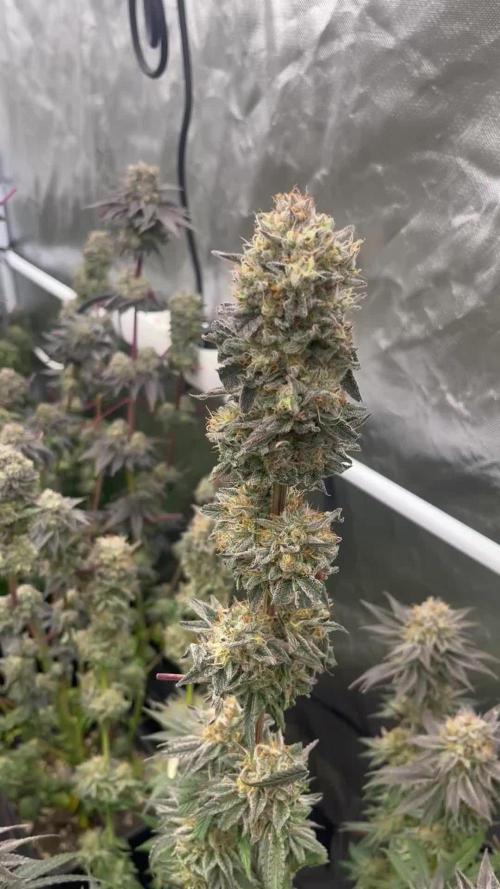

@LordIceCream
Follow
Cultivo de Ethos, semillas asequibles -más con el multipack- y genéticas muy recomendables.
Processing
Likes
6
Share


@The_Projexx
Follow
Shes a strong little seedling , gonna give her a light does of Voodoo and B52 this week to see how she responds , going to be giving it at 1/4 strength . Other then that shes growing really well and has already started on her second set of leaves <3
I'd like to thank everyone thats stops into the diaries . A special thanks goes out to all my followers for stopping in daily and weekly to check out the progress !
-Happy Growing!

