




Likes
5
Share


@DarkRaven420
Follow
This week they came out of the nursery and started to absorb light from their leaves instead of water. Growth is slower with the Northern Lights vs. the Cookies Gelato. “Cookie” is a monster so I will name it “Cookie Monster”, and The Northern Lights is called “Noel” because she will be ready around Christmas… When I was young we used to get “Christmas Buds” around the second half of December, which was Original Northern Lights. It’s a childhood dream of mine to grow Northern Lights, so I’m so excited for her to grow up big and strong.😛

Processing
Likes
13
Share


@Xelxz
Follow
ºDay 44 (21Dez) - Did some "plant work", moved upper bigger leaves under the colas that were developing below so they get more light.
ºDay 45 (22Dez) - LSTing the rest of the colas, 13th watering (1st vegNute);
ºDay 47 (24Dez) - LST on other colas, 1st and 2nd videos;
ºDay 48 (25Dez) - 14th watering (2nd vegNute), broke one of the colas on accident...
ºDay 49 (26Dez) - End of week 7;

Likes
18
Share


@DogDoctorOfficial
Follow
Hey fellow green thumbs! 🌿💚 It’s harvest time for our Auto Fat Pete’s Cookies from Super Sativa Seed Club! After an exciting journey, we’re thrilled to share the details of this unique plant’s final stage. Let’s dive into the harvest report!
🌟 Harvest Details:
Day 75: Harvest Day
• Harvest Date: Day 75
• Harvest Method: Our Auto Fat Pete’s Cookies was harvested yesterday. While the flowers turned out less dense than expected, the amazing smell has us super curious about the final product. 🌿🌸
• Preparation: Before hanging, we meticulously cleaned the plant, removing all leaves without trichomes to ensure a smooth drying process and to enhance the quality of the final product. 🌿✂️
Current Drying Process:
• Method: The entire plant is now hanging upside down to dry. This method helps maintain moisture levels within the buds, allowing for a slower and more even drying process. 🌿🔄
• Environment:
• Temperature: 18-22°C (65-72°F)
• Humidity: 50-60%
Maintaining these conditions is crucial for achieving a perfect dry and preserving the plant’s aromatic and flavorful profile. 🌡️💧
🌟 Plant and Bud Characteristics:
Auto Fat Pete’s Cookies:
• Bud Structure: The buds are not as dense as we’d hoped, but they are still sticky and resinous, showcasing a beautiful array of green hues with hints of purple and orange pistils.
• Aroma: The aroma is incredibly strong and delightful, filling the grow room with a sweet, cookie-like scent that hints at the strain’s name. 🌿🍪
• Trichomes: A generous layer of trichomes covers the buds, promising a flavorful and aromatic final product. 🌿✨
🌟 Care Tips:
• Drying Process: Patience is key. Allowing the plant to dry slowly will enhance the final quality, preserving both flavor and potency. Ensure good airflow around the hanging plant to prevent mold and mildew. 🌬️💧
• Trimming: Once the drying process is complete (typically 10-14 days), it will be time to trim the buds. This is where we’ll shape the final product and get it ready for curing. ✂️🌿
• Curing: After trimming, curing the buds in jars for at least 2-4 weeks will further enhance the flavor and smoothness. This final step is essential for achieving the best possible smoking experience. 🍁
🌟 Genetics Spotlight:
Auto Fat Pete’s Cookies:
• Characteristics: Known for its sweet and cookie-like aroma, this strain has shown remarkable aromatic qualities throughout the grow. Despite the less dense flowers, the strong scent and generous trichome coverage promise a high-quality final product.
• Harvest Expectations: Sweet, aromatic buds with a rich flavor profile. The slower drying process will ensure the best possible preservation of cannabinoids and terpenes.
🌍🌿 Fun Fact:
Did you know? 🌿✨ The aroma of a cannabis plant can be a strong indicator of its final flavor profile. Strains like Auto Fat Pete’s Cookies, with their unique and strong scents, often translate these aromas into delicious, flavorful buds.
For a detailed grow guide and to see this strain in action, head over to my YouTube channel! 🎥✨ I share tips, tricks, and in-depth reviews to help you get the best results from your grow. This week’s harvest has been particularly intriguing, and I’ll be explaining the reasons behind the less dense flowers in detail.
👉 Join me on YouTube Link in my profile 👈
🌟 Conclusion:
Harvesting Auto Fat Pete’s Cookies at Day 75 has been an interesting and rewarding experience. While the buds are not as dense as we hoped, the strong aroma and generous trichome coverage give us high hopes for the final product. With the plant now drying, we’re eagerly awaiting the final outcome.
Stay tuned for updates on the drying, trimming, and curing process, and get ready for a sweet and aromatic harvest!
Happy growing, and see you next time! 🌿💚✨
#SuperSativaSeedClub #HarvestReport #FatPetesCookies #PlantMagic #GardeningJoy #NatureLovers #PlantPower #InspireGrow #YouTubeJourney
Germination method 🌱 @thecannakan
Genetics @supersativaseedclub_official
Nutrition
@aptusholland 🌿
@aptus_world 🌎
@aptus_es 🌍
@aptusbrasil 🌱
@aptus_thailand 🌿
@aptus_portugal 🌳
@aptususa_official 🍀
@aptusplanttechnz 🌺
@aptusplanttechaus 🍃
Ambient controls🎮
@trolmaster.eu @trolmaster.eu.support @trolmaster.support @trolmaster.agro
Soil @promix_growers_eur @promix_cannabis
LED - @lumatekeu
Watering- @autopot_usa @autopot_global
Love and attention- @dogdoctorofficial
As always thank you all for stopping by, for the love and for it all , this journey of mine wold just not be the same without you guys, the love and support is very much appreciated and i fell honored and so joyful with you all in my life 🙏
With true love comes happiness 💚🙏 Always believe in your self and always do things expecting nothing and with an open heart , be a giver and the universe will give back to you in ways you could not even imagine so 💚
More info and complete updates from all my adventures can be found ⬆️link in the profile description ⬆️
Friendly reminder all you see here is pure research and for educational purposes only
💚Growers Love To you All 💚
Discount Codes :
@thecannakan DOGDOCTOR 15% off
@theneutralizer PORKIT7-DOGDOCTROSO 17% off
@kannabiaglobal DOGDOCTOR 30% off
@seedsmangenetics DOGDOCTOR 10%off
@terpyz.mutant.genetics DOCTOR 15% off

Processing
Likes
20
Share


@Firsttimegrowercanada
Follow
Day 1 Week 10. Added AN Big Bud to the feeding as per Advanced Nutrients feeding calculator. Still fighting to keep the stretch under control. And the RH is hitting 80% leaving the door partially unzipped. Ordered a small Dehumidifier to help. Changed the cover picture in celebration of an election.
Day 3 week 10. Added a dehumidifier to help bring the RH inline. Sofia and Claudia are starting to show their flowers. Happy girls make happy grower.
Day 5 week 10. Each morning a defoliation, and the next day grown in again. The girls have grown enough to see where they are joined from their single seed.


Likes
9
Share


@frenchysmoker
Follow
Lil budds starts to appears everywhere this week :) I made a big defoliation and main lining on those plants I hope great quality smoke at the end.
Next week I will start to put Booster in my mixture and up load it to 1.5liters per plant :)


Likes
16
Share


@DeepRootsGrowTrees
Follow
GORILLA KING AUTO / KANNABIA
WEEK #12 OVERALL
WEEK #7 FLOWER
This week was a good week no issues to report her buds are getting super dense covered in trichomes and she smells sweet. She's got about 2 weeks left before harvest as you can see. Stay Growing!!
Thank you for stopping by and taking a look it's much appreciated!!
Thank you KANNABIA!!!
KANNABIA.COM GORILLA KING AUTO

Likes
199
Share


@CRiSPrGrow
Follow
Not bad not bad, by the looks of it she'll be a fatty but i just hope that she'll be ready at the same time as the others. What i want to know is how the bbc can predict when i want my harvest but can't predict when my fucking landlady will break in and faff about it my grow room, long story short 46 makes me 👺 anyways, boucing back from a scare nevermind mind her 46 is my focus lol oh my the things we do... enjoy ! 🚀 Induced resin production by dropping the lightschedule to 10/14 almost immediate effects were smelt, loud and clear : candy shop goodness ! this one is gonna be a sweet one ! 👊


Likes
35
Share


@Hiroots420
Follow
16/04/2021
Llego el momento de iniciar temprano un nuevo cultivo de suelo vivo.
Para ello comenzamos armando el sustrato (200L) para posteriormente dejarlo pre mezclado y con su vida correspondiente para recibir a estos 4/5/6 esquejes que van a ingresar.
Se instalo el sistema de riego sensible de Blumat Tropf con sus dos zanahorias y 5 puntos de goteo por cada una, con apenas dos Dias ya observamos como se germinaron esas lentejas que van a producir ese cover crop y alojar a todos esos hongos benéficos de sus raíces hasta esperar que lleguen las plantas.
21/04/2021
Las lentejas ya germinaron de manera correcta, se colocó el mulch orgánico y el sustrato continua con una muy buena humedad por lo que se estima que la vida debajo se está poniendo interesante.
27/04/2021
Hoy sigue a la espera de una nueva luz Quantum Board 240w para este espacio, de todas maneras se colocaron las plantas en el espacio de cultivo para ver cómo queda la dispocion!

Likes
Comments
Share


@Marbanya
Follow
2024-11-27 to 2024-12-02
The first time I grew Chernobyl, the plant was dense and unruly with thick, lush vegetation. In fact, the plant took up so much room in my tent that I have it to a friend to finish outdoor. It showed signs of bud rot early in the flowering period and luckily, most of it was saved from itself. In addition, the stems of this strain are more hollow and brittle, gaining thickness quickly and making Low Stress Training a difficult task that requires patience when working the branches around the LST clips. I have broken many branches on a Chernobyl plant even when applying care and caution. It requires getting the plant to the shape and size you need early, so that silica can be added to strengthen the branches in prep for those killer nugs.
They are taking about .5 gallons of feed every other day.


Likes
11
Share


@TechDCo
Follow
12/02/2024
13/02/2024
MS is growing funny 😁
TF has exactly the same feed mls.
Shes looked forever hungry
14/02/2024
Lite Defoll.
Midday.
TF has never looked the healthiest with the first time using HydroSol + H202 water soluble feed.
I think i have the ratio/some sroted to where I've seen improvements.
First improvements i have seen are:
1. NO Nutritional burn or Lockout!
(non-salt based). P.s ignore the over salas 12% HP at the start (no idea what i was thinking).
Sometimes being ahead; means i am a being with a head that makes human errors. Oh, the joys of plant-discovery. Sorry side tracked lol
2. Quicker Absorbing witb water soluble food. As long as she's hydrated she's eating!
3. No idea yet
Have a ball!!
Listening to this relaxing and i started thibking about Spirituality and how its included in all faiths. But if say "Jesus Christ is a façade and all religions are based on astrological events painted with fictional characters to repent the Christological doctrine to "date" the past.
21 Ways Archaeologists Date Ancient Artifacts are mostly flawed because they only have the "present" to date decay from. They miss the mark and the professionals deliberately push the religious artifacts to match up to the hollyword.
So who's to say what "Date & Time" we are currently living in!
In reality; we can only measure and date time from the the last natural apocalypses or near misses, dor we are the surviours from such events..
Look round at real history! What mordern day academics just brushed under the rug with some made up theories of what they like us to believe happened. Even they are in a Dilemmas (government's) have the knowledge of these such events.
SpaceX and Nasa are all doomsday preppers! As for India going to the moon 🌙 seriously 😐 who's buying this stuff?
I've let go so much that the whole world is my own intention and floods my brain with endorphins of being the observer. The reason we are all "consciousnesses" and in sudden alert of awareness of this world and being alive is because we are in the end time again! We have all woken up to everything because the omens of the apocalypse alerts and kicks in certain parts of the DNA to force memories to the soul like "hey you need to remember this and get somewhere safe"
17/02/2025
Vast improvements
18/02/2025
Defolled to make way for fast growth

Likes
12
Share


@BudXs
Follow
Super busy with a move and a big garden reno. Sorry, this is the only update for this week
Likes
12
Share

@Mannirumpel420
Follow
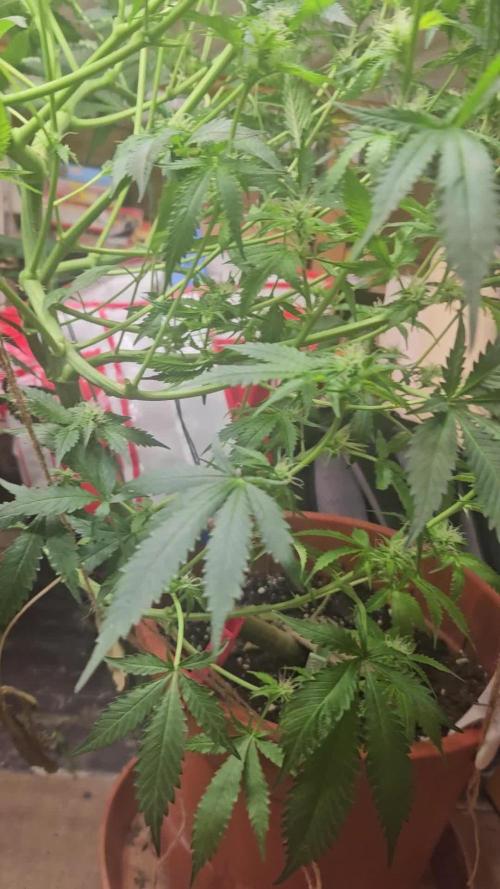
Ich habe wirklich Probleme mit ihrer Größe.Ich probiere heute sie mit einem scrog Netz etwas kleiner zu bekommen.Ich habe sie nun doch runtergebunden und supergecropt,da beim Versuch das Netz zwischen 2 Hockern zu spannen einer auf eine pflanze gefallen ist und ein trieb beschädigt wurde.Ansonsten bekommen sie weil sie jetzt so breit sind an manchen stellen wenig licht ab.Sie sollten sich aber wieder etwas aufrichten.

Likes
8
Share


@ChitownCannaChica
Follow
Full harvest update next week. Harvested the tops two weeks ago and the rest of her today.

Likes
9
Share

@Ninjabuds
Follow
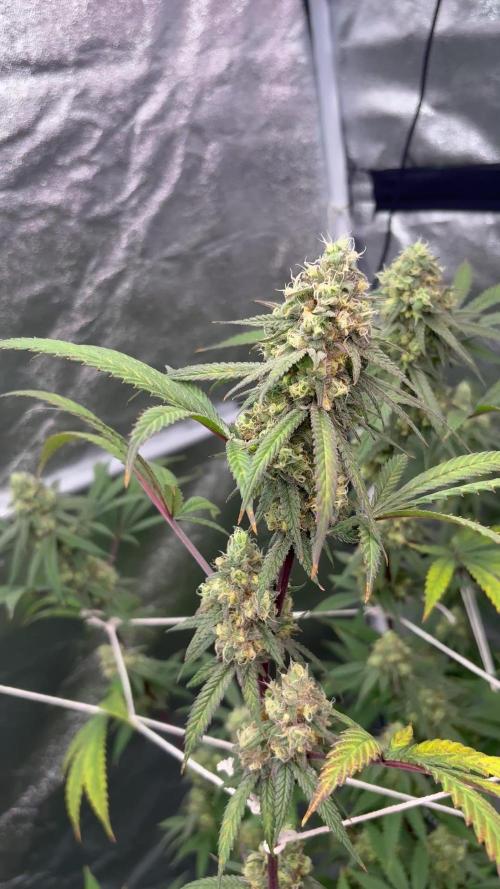
Huge plant with tons of strech and vigor it just keeps growing and growing. It has huge round nugs that are soild. It is gonna be a huge producer. This is definitely a strain to grow again buds smell great like gelato and gas
Likes
18
Share


