


Likes
Comments
Share


@masterofsmeagol
Follow
I DID A PREVENTATIVE SPRAY OF BT THIS WEEK BUT I DON'T REMEMBER EXACTLY WHICH DAY. I THINK I MIXED AT 3 OR 4 TBSP GALLON WITH SOME DAWN. BONIDE BRAND THURACIDE.
8/30 Fed two gallons to the garden. Watered before and after the feed. Defoliated what was dead. Its scary seeing so many leaves go but energy is shifted to the buds. Buds are ripening but on one mislabeled mystery seed and the wedding cake they look far behind the rest. Wondering how they could possibly finish in the 6 to 8 weeks I have left. If needed I MAY be able to put something in the garage at night. I'd have to RIP the bag out of the ground though which wouldn't be good. I mean some of the plants are pushing ten feet but we use it for heavy equipment. So foggy this morning. Horrible weather. Still fighting PM, possible lockout and ear wigs. We will see how it goes. I'll continue weekly treatment for the pm and I'll find something for the earwigs. I'm hesitant to use the Spinosid in flower.
8/31 Rained last night. Surprise, surprise. Talked to a few other growers and consulted my last year's diary. I had a couple early pheno's last year but things seem on schedule. It's amazing the amount of growth that can happen in a day. Even my ice cream cake has small flowers. Time is running short. Probably six to eight weeks max growing time left. I hope everything finished up nicely. I need to continue monitoring PM and pests. Considering spraying preventative BT tonight. Yesterday I saw the biggest pile of powder mildew and leaf septoria on a tree an hour from my grow. It literally looked like snow flakes on leaves then someone dumped a bag of flour on it. This gives me some perspective and gratitude that the TINY spots I'm treating could be much worse. Weekly treatments until harvest. Hopefully BT or diy green cleaner tonight for earwigs and worms (if they are there).
9/1 Watered thoroughly. Leaves still yellowing. I hope it's senescence. Still need to continue treatments with BT and potassium bicarbonate. Sunny day but rain tonight. Need to add more supports for heavy branches. Will update as I go.
9/2 Rained all night and it's still raining. I'll update when the rain stops. Went back over and added a couple higher supports and defoliated a shit ton. Spent two hours in the garden last night. Too tired for pictures.
9/3 Fed two gallons to the garden and upped Kool bloom to a full tablespoon. I'm thinking about using beastie bloom then cha ching as I have them both. I'm a little hesitant. Wondering what others thoughts are on those products. I plan to spray either tonight or tomorrow with another helping of potassium bicarbonate to help with the WPM. To be honest it seems to work great. I just don't want to go overboard. I wish you guys could smell the pictures. Shits getting fun now.
9/4 Had a torrential rain storm with massive wind. No damage. Buds are getting huge. Had to add a few more supports this morning as branches were hanging. If I had room I'd do a second vertical trellis. Unfortunately I do not. I AM able to run string across the cage though which really helps things higher up. I need to put some pictures of my stalks. Legit bigger than soda cans. I wish you guys could smell my pictures. Re-checked all cameras and everything is working good. On high alert. I'd be very surprised if anyone even attempted to rob me but you never know. That's why it's 24/7 supervision until Croptober.
9/5 Lots of sun yesterday but if course it rained last night. Buds are progressing at a rapid rate. Leaves seem to be dropping to soon on the blueberries. I need to do another potassium bicarbonate treatment tonight. Branches are really getting heavy. I'm hoping all this rain doesn't cause bud rot but so far so good.


Likes
21
Share


@Pedrojuan
Follow
Después del cambio de solución y con el agregado del h2o2, explotaron... los nutrientes siguen estables y madida que pasan los días mejora el PH, en el cuarto día de la semana noto que han consumido +o- 7 u 8 ltrs de agua. Por ser mi primer cultivo creo que de momento va todo bien. Todavía los olores están controlados. Pero si siguen creciendo así no se como llegarán al fin de la floración, no me queda mucho margen para mover los led.
Termino la semana con un PH ideal, nivel de EC en 1,7 y agregué nutrientes a la solución.. consumen mucha agua o se evapora...Y con a triste noticia del mas grande de todos los tiempos! AD10s DIEGO!



Processing
Likes
2
Share


@Cogollo_eu
Follow
**Encontrarás la traducción a español al final de la descripción**
From/Desde: 16/09/19 || To/Hasta: 22/09/19
From day/Desde día: 15 || To day/Hasta día: 21
Blueberry Cookies Diary / Diario de las BlueBerry Cookies:
https://growdiaries.com/diaries/38769-dinafem-039-s-blueberry-cookies-at-the-ocean
If you like this week, please hit a like, it costs you nothing! 👊. Thanks in advance 😉!
-----IMAGES & VIDEOS-----
From the next week i will start to record a timelapse video of the tent. Cheers!!
-----WEEK SUMMARY-----
I'm so sorry for the delay this last weeks, hard work times are very bad for my updates. This week is obvious how after remove them from the cheap chinese light, they're growing at high speeds. I'm going to top them the next week, I don't have very clear what I'm going to do, because I'm really without time this las weeks, and that is terrible for the plants, as this are very important weeks if I want to train them in a good way, and i can't, I'm praying to the goods of weed instead expending my time.
Ok ok ok, let's talk about the plants. For me, it's impressive the speed at how are they growing this 3rd week, they are already at about 15 cm tall, and for the next the 20 cm rule it not going to be enough to measure them.
All leaves are very green and I don't see any weird sympthoms, but if any better eye than mine sees something i would be very greatful with him/her if made a comment.
-----WATERING CALENDAR-----
16/09/19 DAY 15 - 1 l with all week nutrients (Organic Grow Half dosed) @ (0.9 EC | PH 6.1 | 25.7ºc)
22/09/18 DAY 21 - 1.5 l with all week nutrients -(Silica Power & Pro Active) @ (1.2 EC | PH 6.1 | 25.7ºc)
*****ESPAÑOL*****
Por favor, si te gusta esta semana dale un like, no te cuesta nada 👊. ¡Gracias por adelantado 😉!
-----IMÁGENES & VÍDEOS-----
A partir de la semana que viene empezaré a graba un timelapse del armario.
-----SUMARIO SEMANAL-----
Siento mucho el retraso sufrido esta semana y la que viene, los tiempo de mucho trabajo son muy perjudiciales para mis updates. Esta semana es obvio como después de haberlas quitado de la luz china malísima se han puesto a crecer a mucha más velocidad. La semana que viene las realizare el topping, no tengo muy claro qué ni cuanto puedo hacer esta vez, por que realmente tengo absorbido el 95% de mi tiempo estas últimas semanas y esto es malísimo para las plantas, ya que estas semanas son muy muy importantes para poder realizar un buen entrenamiento en las plantas y no me está siendo posible. Así que estoy rezando a los dioses de la hierba en vez de gastar el tiempo que no tengo para que todo vaya bien.
Ok ok, hablemos de las plantas. Para mi realmente es impresionante la velocidad a la que están creciendo esta tercera semana, ya están a 15 cm de altura y la semana que viene la regla de 20 cm ya no va a ser suficiente para medirlas.
A mis ojos todas las hojas se ven verdes y sin síntomas raros, estaría muy agradecido si algún ojo más experto que el mío ve algo y deja un comentario.
-----CALENDARIO DE RIEGO-----
16/09/19 DÍA 15 - 1 l Con todos los nutrientes semanales (Organic Grow mitad de la dosis) @ (0,9 EC | PH 6,1 | 25,7ºc)
22/09/18 DÍA 21 - 1,5 l Con todos los nutrientes semanales -(Silica Power y Pro Active) @ (1,2 EC | PH 6,1 | 25,7ºc)

Likes
42
Share


@Gabarram
Follow
Happy New Year guys! Unfortunately, the heat has arrived completely for January and I guess that both the plant and I are gonna suffer this. Pistils are getting brown and curly, and I see extensive trichome production on certain buds but not all of them. Also I see the buds in general keep on fox-tailing.
Day 4 Week 16 ( 03-01-2019) she looks good, surviving the hell temperatures in there but enduring. Fertigation is about 600 ppm inflow, run-off 700 pom, I', giving her 0.55 g/L Bloom fertilizer. I see buds are getting thicker. The tent is a jungle. My God, I've never had such a mess., and never grew a sativa like this. I've had a specimen of Nirvana Sky "superauto"; indeed she was a real monster, but even she was autoflowering, I remember topping her early because I was fearing the big size.
But this one is "uitstekend"!
Last pics of the week (this plant's weeks start on Tuesdays). I returned home after a short leave and found her the same as I had left her.

Likes
4
Share

@420DeepGrow
Follow
📆 Semana 8
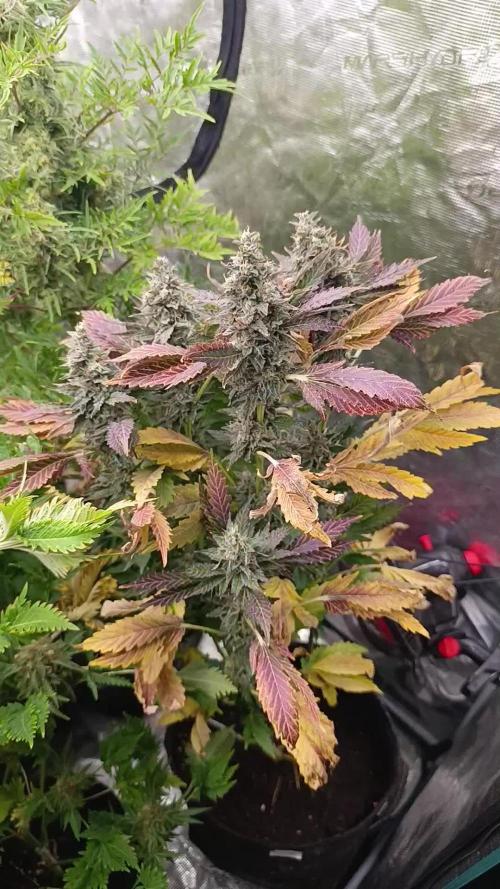
La Sticky Queen entra en su última semana antes del cierre total. Los cogollos se endurecen y compactan al máximo, con una resina abundante y brillante que cubre cada cálice. Los pistilos siguen oscureciéndose y los morados se intensifican en las zonas mejor iluminadas, realzando su carácter visual y aromático.
El aroma se vuelve más profundo: dulce, afrutado y con un trasfondo terroso que envuelve todo el espacio. Los riegos se reducen al mínimo necesario y la planta termina de concentrar sus nutrientes en flores y resina, mientras la ventilación mantiene el ambiente óptimo.
🌸 Última semana de engorde: potencia, color y resina afinándose para el gran final.
¡Seguimos creciendo fuerte 💪!

Likes
16
Share

@Borberad
Follow
Woche 9
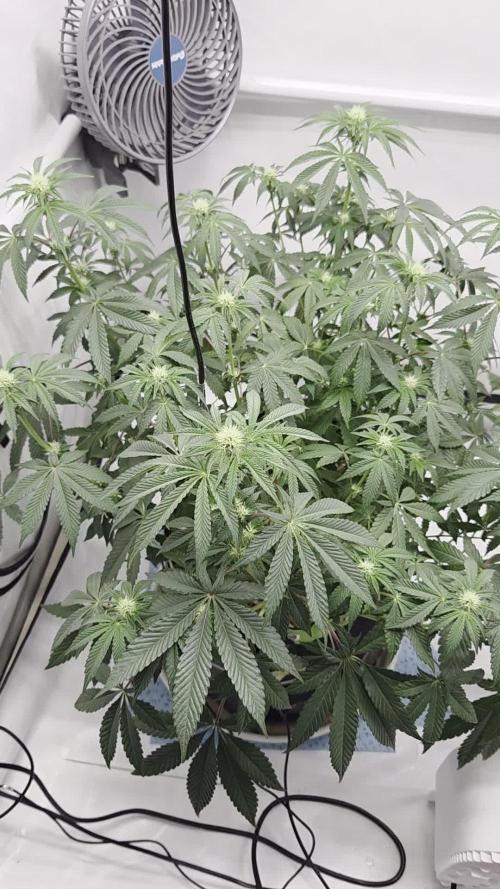
Sie wird weiter von innen möglichst Blattfrei gehalten um eine gute Durchlüftung zu gewährleisten. Solange gesamte kommt die Blüte richtig in Gang.
Tag 58. Ganz schön durstig die Gute. Heute gab's 4l und trotzdem fast kein Drain. Müssen wohl die Wassermenge erhöhen.
Tag 61 Wir haben sie nochmal etwas auseinandergezogen. So breit gezogen, braucht sie das Zelt fast für sich allein. Morgen wird sie sich nach oben gestreckt haben, dann passt es wieder.

Likes
4
Share


@Chuckwaggon420
Follow
Coming along great 1 is obviously the winner on this girl. So others will be booted out for room. On vacation so stuff little slower coming in. Will be back to normal enjoy the pics
On vacation in Florida in a condo 3 bedroom all 5 kids!!!
Stay up everyone
Love

Likes
29
Share


@KingSalomonsWeed
Follow
Hello,
28.10. Day 58 of flower.
LOL. Auto Seedins! LOL
I mean, anyone else falling in love with these colorful buds?
And yes, some headbud leaves re even in sunlight lila.??? What a plant, im on my knees.
30.10. Day 60 of flower... 70 days the breader says... Ok, i see only milky trichomes. But that massive.
With greatings from the unexpected colorful Trans Syberia... 😛 💪

Likes
13
Share


@Lou_Grows
Follow
Well day 34 of flower today week 6. Let me start by saying that this week hasn't been too good for my white widow, all sort of issues, first she started to burn with the nutes, that was corrected fast, but then I had a power outbreak on my air pump and water quality went to hell follow by that Ph sky rocket and was very hard to keep steady. All that is now under control bit she suffered a lot this week and I'm afraid my yield is going to be affected by this terrible week. 😕



Likes
5
Share

@JeyGanesha
Follow
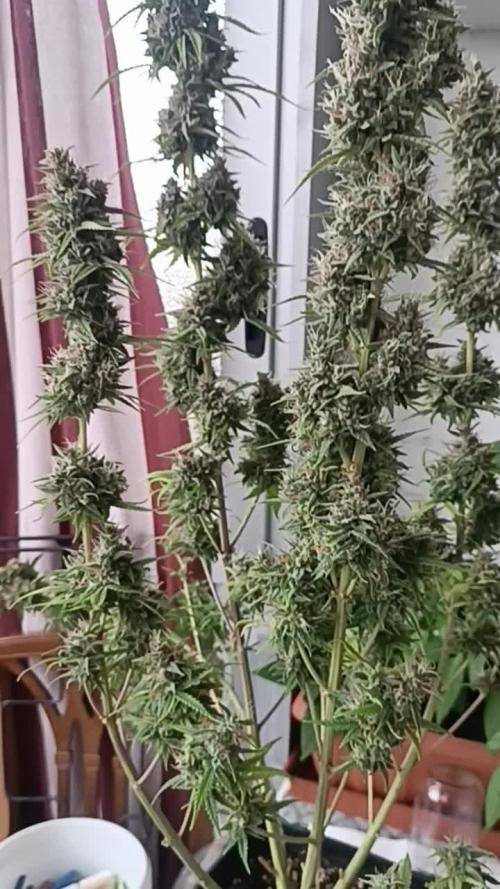
Queste grape ape sono cresciute benissimo la qualità è più che buona..per la mia patologia funziona benissimo. Molto efficace...sé ritrovo i semi la rifarò



Likes
19
Share


@sunshinegroww
Follow
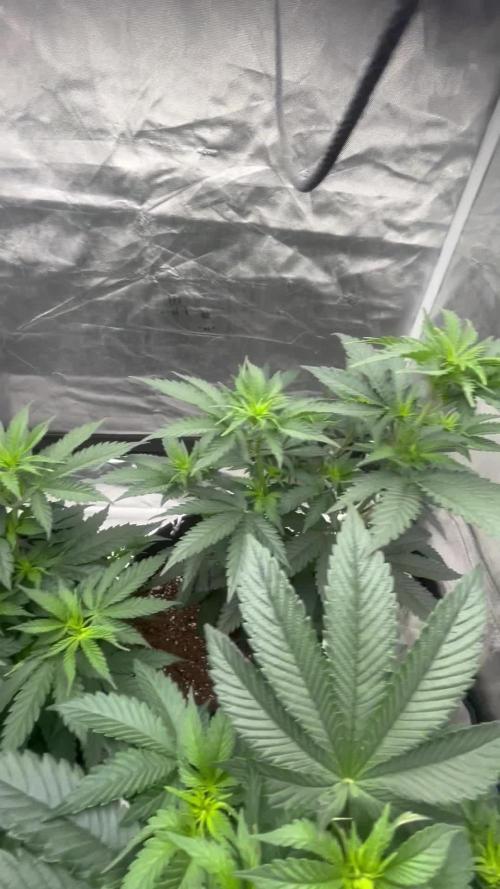
After ive topped her she and switch lights to 24 hours shes growing like crazy
Lets hope for the best
Tight her down a little just to opened up
Likes
12
Share


@cookingwithninja
Follow
day 42 images are in last week, I can not count XD. bridal is stacking a lot of weight and is constantly shifting/leaning every morning, good things. I would chop any day but I will wait it out. water, tiny bit of humic and folvic to reduce chloromine, chlorine- air stones
day 45 took a few nugs off on day 42, dried for 3 days. Tried bridal and blackberry. As a heavy recreational, thc is up there! bridal felt like having a blindfold over your eyes somewhat sativa uplift but heavy weight feelings. Very good. Lasted as good as 30%'s. Dr. Thunder was also very nice, nug was smaller so mixed with blackberry to have a small j. Also feels very good indica. Both trials were chopped on week 6 day 1. Very pleased with the results. I was worried bridal was more sativa; which charasteristica I am not looking for. So I believe this is a very good heavy hitter run with 4 plants. I can chop any day, but I am waiting for pink paradise to finish seeds.
day45 took top nugs from bridal party, blackberry oreo bigstuff and dr. thunder. No touching pink paradise!!
day 46 can chop anytime just waiting on pink paradise seeds to finish, bridal party leaning more
day 47 bridal leaning hard from weight.
day 48 stacking, day 48 video

Likes
43
Share


@Hashy
Follow
********************************************
Week 3 Veg.
********************************************
Light cycle=18/6
Light Power=90w 37%
Extractor controller settings
High temp= Day 25c, Night 20c
Low temp= c
Temp step=0c
High Rh= Day 63%, Night 68%
Low Rh= %
Rh step=0%
Speed max=8
Speed min=1
Smart controller settings (during lights on).
Lights on=4.00am
Humidifier on=-55%
Humidifier off=+59%
Top fan on=+24.0c
Top fan off=-23.5c
Smart controller settings (during lights off).
Lights off=10.00pm
VPD aim=0.5-1.1
DLI aim=16-20
EC aim=0.2-1.4
PH aim=6.0-6.8
💧💧💧💧💧💧💧💧💧💧💧💧💧💧💧💧
Method= Autofeed 5 drippers.
Feed=Veg Nutes.
Neutralise=0.1ml/L
Grow=2.0ml/L
Roots=0.2ml/L
Silicon=1.0ml/L
Calmag=1.0ml/L
Volume=8L
Easy Ph down= 0.125ml/L
Ec=1.4 PH=6.5/6.7
Runs=12
Run times=4min (260ml each)
Gap times=16min
Total runtime=48mins (3.12L each)
Total flowrate= 130ml/min (65ml/min each)
Auto start time=5.00am
Auto stop time=8.44am
💧💧💧💧💧💧💧💧💧💧💧💧💧💧💧💧
********************************************
📅2/6/24 Sunday (day 15)
📋 Hot today. Humidifier is in grow room now and not the tent.
📅3/6/24 Monday (day 16)
📋 H=11cm D=52cm Dli=18.6 Ppfd=287
📅4/6/24 Tuesday (day 17)
📋 Installed drip system.
📅5/6/24 Wednesday (day 18)
📋 I don't think this one got as much water.
Topped ✂️ between 5th and 6th nodes at 8.30pm
💧💧💧💧💧💧💧💧💧💧💧💧💧💧💧💧
Method= automatic
Feed=nutes
Volume=8L
Ec=1.4 PH=6.5
Volume left=3.75L
Volume used=4.25L
Volume each=2.1L
Runoff.
Total runoff=0.7L
Ec=6.3 PH=5.6
💧💧💧💧💧💧💧💧💧💧💧💧💧💧💧💧
📅6/6/24 Thursday (day 19)
📋
📅7/6/24 Friday (day 20)
📋
📅8/6/24 Saturday (day 21)
📋 H=15cm D=48cm Dli=21.3 Ppfd=328
********************************************
Weekly roundup.
📋 This is Fire, she's been topped between 5th and 6th nodes, recovering well from the topping and looking very healthy. The rate she has grown has really impressed me.
Take it easy.
Back soon.
********************************************


Likes
18
Share


@Grower_Of_Persia
Follow
week intel:
im felling in love with them everything is good . this week was time of second net layer , the first layer was for spreading the branches and doing LST now the second layer is for supporting branches for later weeks when the buds gain weight and gets heavy the net will hold branch stand up without benting.
stresses:
im just gonna cause a little E.C stress to raise the terpens. i found their max tolerance is 1.9 E.C so im not gonna reach or get close to that amount again and beside this wont cause any more streses untill week 6 that will do second pruning and we are done with trainings then.
feeding:
as always im feeding plants 3 times per week with nutrients , no plain water at all, just with nutrients with adjusted p.h at this order :
day 1 : i feed them heavy with silicate +base nutrients(calcium & micros + Bloom) and karbo about 950 ppm - 1.8 e.c to cause a little e.c stress.
day 3 : i feed them low dose for start of Green House Feeding Booster around 267 ppm - 0.6 e.c alone cuz this bad boy is very strong.
day 5 : i feed them with medium dose of Top-Max around 160 ppm - 0.3 e.c to let them recover the stresses and eat the previous nutrients untill next feed at next week
and the next 2 days will rest and eat :D
just remember never feed them plain water besides the first week of germination always feed water with nutrients to feed them right p.h every time and to avoid excess water problems, and let them eat the previous meal for 24 hours and dry the soil, so at total only feeding nutrients 3 times a week other days let them dry and rest

Likes
12
Share


@HIAZ_urbanbudfarmer
Follow
Hi gromie's welcome to week 8.
These girls are going great, started flushing on Monday 11/11/24 with plain ph'd water and Resin from Green Planet Nutrients at 2ml/ltr.
I also reduced watering to just 2 times a day for 15 minutes on each time.
Just trying something different as I usually do high fertigation . 15 minutes on watering cycle every 2 hours.
From what I've read, I was hoping they would draw moisture from within themselves to help with drying but also some people believe it can increase THC??
It has worked at bringing out some more of that beautiful colour with in the buds but you can really notice the back plant has started canabilising itself!
Starting to see some really nice fading of colours on the vegetation of the plant at the back, which is something I don't usually get with hydro because you usually feed them right to the end & Only need to flush for 2 to 3 days. Gave them a long flush this time.
I've been waiting on a new microscope to arrive to check trichomes, but these girls are looking about done going off pistills turned orange/brown & curling in , Calyx closed & swelling up, looking really frosty!!! Will harvest this week! As I need to get veging plants into Flower
Come on Grow diaries get your act together!!!
I'm tired of updating my
Diary only to see it's all wrong, things have been changed, put my day temp at 28°c save it & it shows -2°c & it's like that All through the diaries????
Likes
13
Share


@gr3g4l
Follow
Una vez pasados los dias huele bién, sabe bién y buen efecto.
Sabor: Matices dulces y cítricos
fácil de cultivar.
