Likes
Comments
Share


@Killerbubu
Follow
Total de dias 29 - 31/08/2021 ( Mais um dia e vou mudar para floração.) Faco 30 dias de vegetação
Total de dias 30 - 01/09/2021 / Rega ( mudança de horário para 12/12 fase de Floração )
( Fase de Floração )
Total de dias 31 (F 01) - 02/09/2021
Total de dias 32 (F 02) - 03/09/2021 / Rega com um 1ml de Bloom.
Total de dias 33 (F 03) - 04/09/2021
Total de dias 34 (F 04) - 05/09/2021 / Rega apenas com agua

Processing
Likes
31
Share


@GreenGoldGrower
Follow
Day 21
BLOOM STAGE
At day 18 I had switch my light in 15/9 and in the 19 day I switch at 12/12. At day 19 I had do a little flushing and at day 21 I start with nutrients for bloom. The Twins are very strong and grow very hard I'm happy for this.
Tomorrow I put pictures with light off because these are not nice.
DAY 23 VIDEO
Now we are in the middle of first week of bloom. I have notice that one plant has leafs like sativa and the other one indica. What do you thing about this? they are two differemnt pheno??? Fantastic it's not siames twins but heteroziogots twins
DAY 25 end of first week of bloom.....let's go!!!!
Happy growing for all 🙏
GGG

Likes
5
Share

@eldruida_lamota
Follow
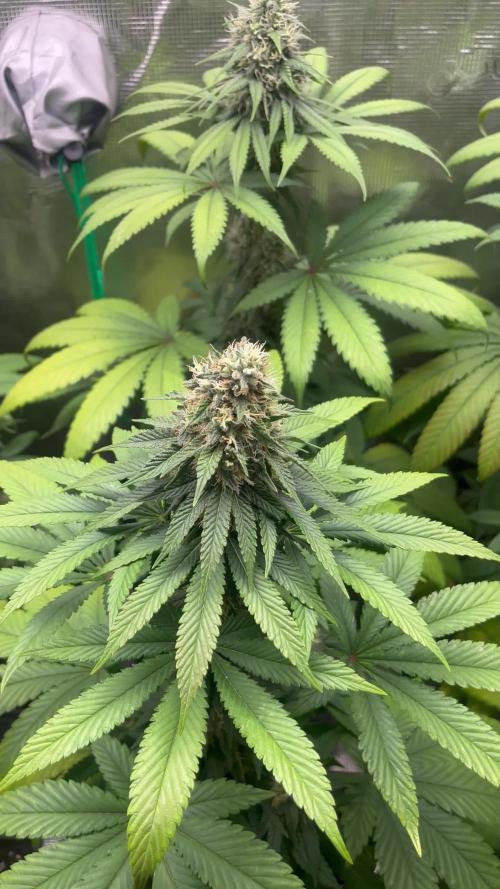
Vamos familia, actualizamos la quinta semana de floración de estas Lemon Mandarin de FastBuds.
La temperatura que estuvo entre los 24-26 grados y humedad dentro de los rangos correctos.
En cuanto a las plantas las veo verde sano, estiraron bien y ensancharon bastante también.
Se nota que los nutrientes de la marca Agrobeta cubre todas las necesidades de cada ejemplar, añadimos Thor y Mega Pk.
Las flores empezaron a engordar y a tricomar, por el momento todo correcto, os dejé también alguna novedad y un cambio en la sala, agradecer al equipo de Mars hydro por el nuevo TSW2000. (los últimos 5 años cultive solo con los leds de esta marca)los cuales probé, TS600, TS1000, TS3000, TSL2000.
- os dejo por aquí un CÓDIGO: Eldruida
Descuento para la tienda de MARS HYDRO.
https://www.mars-hydro.com
Hasta aquí todo, Buenos humos 💨💨💨


Likes
11
Share


@UrbanBoer
Follow
Finally almost a year later and she finally retires 😭😭😭😭😭to emotional she did not want to miss out on the summertime heat and the beginning of autumn, 70 grams, the plastic bag is 3 grams.
Loving her… she is my 2nd best strain this harvest, the smell
Likes
8
Share


@STAYINGONMYMAINCBATORUNTWO
Follow
This week I have made a video to show The progress over 4 weeks trying to be a bit different on GD! Hope you like!
Was a little worried when this one didn’t pick up her pace but I gathered I had over watered and put a heat mat under her for a couple of days! And that sorted her right out! I have trained with pipe cleaners to hold those stems down as they allow the lower coverage to rise! Everything going smoothly! I hope you like buddies!

Likes
26
Share


@Densko
Follow
Boy oh boy, the final day of the first Medusa F1 Hybrid 1/5. Seed to harvest in 93 days.
The first medusa F1 grew super fast. Her vegetative period was very short, showing white pistils at day 18 already, but grew into a beautiful lady.
The first medusa was only subjected to LST and a little defoliation. The other Medusa plants from my diary (2/5 and 4/5),were topped and this definitely increased the amount of flower sites.
Nevertheless, she grew thick and fat with heavy buds smelling like a sweet petrol station.
The pistils turn bright orange and many calyxes are formed with hardly any leaves in between. I noticed after week 11 she started producing new calyxis with white pistils and therefore I waited a bit longer. I would recommend this and wait a bit longer to see if it happens for you too.
Some trichomes were starting to turn amber and I maybe could have waited a little longer, also for the lower part to develop more.
She was cut down on the 18th of July and was placed in my dark dry tent for 13 days at a temperature of 18 °C and a humidity of 60%. A long and slow dry is important to preserve terpenes.
After 13 days, on the 31st of July, the branches were making a cracking sound when bending, so I decided to take the branches out of the drying tent and trim them.
My 4 x 200W lights (on the box) only pull 50W from the wall so I think they are not super good.
I made pictures with a Nikon camera and a white background.
I smoked some and she tastes peppery with a sweet aftertaste. I will smoke more after a good long cure for at least 2-4 weeks in my jars.
Check the progress of my other medusa F1 diaries and see the full experiment if topping is beneficial for these F1's.
I would recommend trying out these amazing genetics and see for yourself.
Great job Royal Queen Seeds for breeding these cultivars.


Likes
6
Share

@Bdog7878
Follow
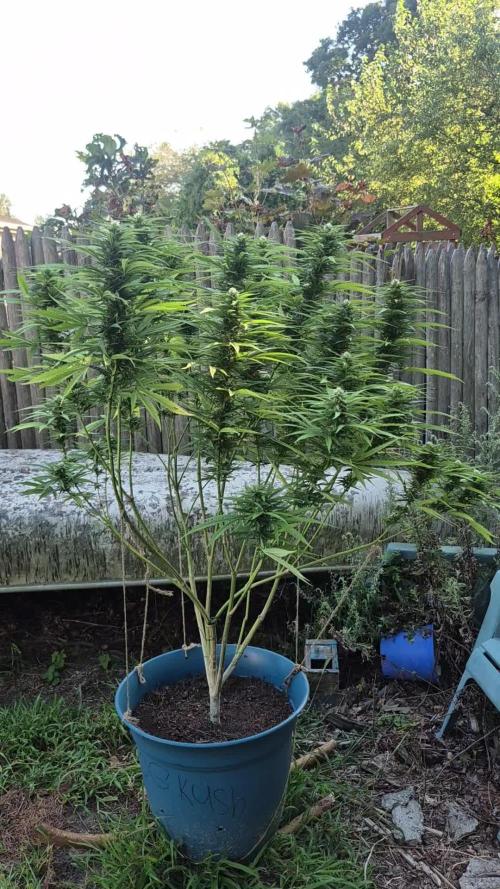
All plants doing well. I did a sledgehammer flush and after a few hrs i ran a bunch of water through soil to help flush the soil. I'm using full bloom nutes on everything but the dynamite desiel which are getting half bloom half grow next week I will start only bloom nutes the dynamite. I spray bt and neem oil once a week. There taking 2 gallons of water every 2 days. Weather has been nice cool at night and 75 to 80 day not too high humidity usually around 60 to 75 percent. I've started checking my soil ph and I've been ph my water and nute solution to 6.5. I've got no issues ATM.


Likes
14
Share


@Skunk_Life85
Follow
This little plant put out. Super strong blueberry/skunk smell. She is full of buds all the way down the stem. She stayed small. My doing, put her in a 3 gallon pot, if I used a bigger pot I would of had a bigger plant. None the less, she is pretty. Grew like a champ, fast to flower, and smell is on point. Her trichome changed super fast, in the morning there were a couple Amber's on the calix, 12 hours later there were calix full of Amber's, so it was like a snap of the fingure and she was done. Day57 of flower.

Likes
14
Share


@Echevarriaf
Follow
So it seems my baby is transitioning as her budder nips are growing at a quite doubling rate! Topped of with ph 5.5 R/O and Added an extra 5ml bloom and 5ml floranectar keeping the same nutes until Friday 5/17/2019 😛💪🏽




Likes
107
Share


@DogDoctorOfficial
Follow
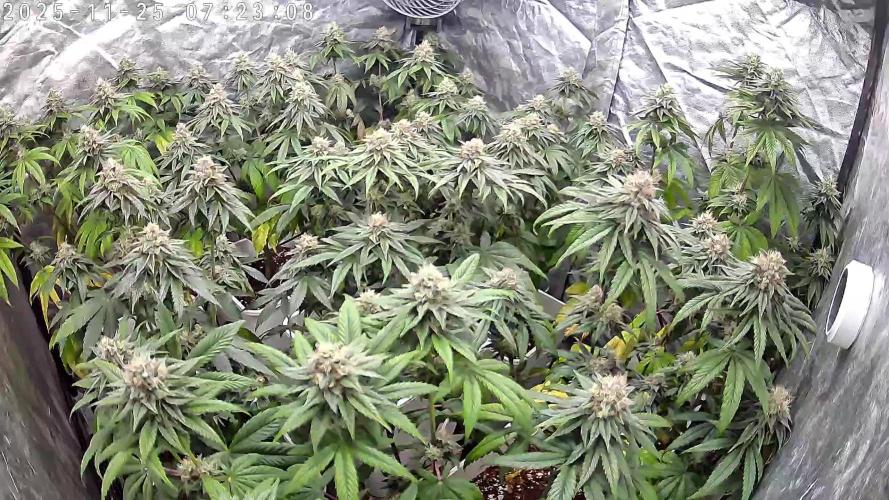
Welcome back to the world of my magnificent Purple Lemonade FF in Week 7 of vegetation! Our lovely lady has been embracing the scrog net like a superstar, and let me tell you, she's no longer a little Lemonade—she's a towering, mighty mama! It's like witnessing a botanical growth spurt of epic proportions. Our once-compact plant has blossomed into a majestic beauty, filling the grow space with her vibrant green presence.
As her branches dance through the scrog net, it's as if they're reaching for the stars. The net has become their guiding path, ensuring they grow in a controlled and even manner. This creates a lush, full canopy that captures the essence of horticultural perfection. I can't help but marvel at the sight, imagining a symphony playing in the background as our plant proudly takes center stage.
But let's not forget about our tiny defenders, the unsung heroes of the garden—the nematodes, Spical Ulti Mite, and Swirskii! These pint-sized warriors have been diligently protecting our precious Purple Lemonade FF from the clutches of thrips and fungus gnats. It's like a miniature battle royale happening in the soil, where good triumphs over evil. I can almost picture the nematodes donning their tiny armor and the mites and Swirskii swooping in like avenging angels. It's a thrilling spectacle of nature's finest defenders.
Now, let's take a moment to appreciate the harmony and balance that the scrog net and our IPM superheroes bring to our grow space. They work together like a well-choreographed team, ensuring our plant's health and well-being. The net provides support and structure, allowing our Purple Lemonade FF to flourish and maximize her exposure to light. And the IPM heroes, ever vigilant, keep unwanted pests at bay, ensuring our plant's pristine condition.
In this garden adventure, we are not just mere gardeners—we are the directors of a botanical spectacle, the curators of a living masterpiece. As we tend to our plants, we become part of this vibrant tapestry, witnessing the growth, the struggles, and the triumphs that nature so graciously presents.
So, my fellow growers, let's celebrate the tremendous growth of our Purple Lemonade FF and the invaluable role of the scrog net and IPM superheroes. Together, they create a stage for our plant to shine and protect her from the forces that seek to hinder her progress.
Stay tuned for the next chapter in our journey, where we'll uncover more stories from the marvelous world of my Purple Lemonade FF. Until then, keep nurturing your plants with passion, humor, and the joy that comes from witnessing nature's remarkable resilience!
As always thank you all for stopping by and for supporting me on this journey, i am super passion about growing and fell blessed to have you all with me on this new journey <3 <3 <3
Genetics - Fast Buds Purple Lemonade FF
Ligth - Lumatek ZEUS 465 COMPACT PRO
Food - Aptus Holland
#aptus #aptusplanttech #aptusgang #aptusfamily #aptustrueplantscience #inbalancewithnature #trueplantscience #fastbuds #dogdoctorofficial #growerslove
With true love comes happiness <3 <3 <3 Always believe in your self and always do things expecting nothing and with an open heart , be a giver and the universe will give back to you in ways you could not even imagine so <3 <3 <3
All info and full product details can be find in can find @
https://2fast4buds.com/
https://aptus-holland.com/
https://autopot.co.uk/
https://lumatek-lighting.com/
<3 <3 <3 Growers love to you all <3 <3 <3
" Arising from a cross between purple and citrus Cali genetics, Purple Lemonade FF (Fastflowering) offers a complex high made up of perfectly balanced cerebral and body effects that are ideal for daytime use. Expect an extremely enjoyable high that boosts your mood while deeply relaxing your whole body and getting rid of muscle pain. This meticulous cross produces up to 550 g/m2 of some of the most beautiful purple buds, with pinkish and reddish hues that will catch everyone’s attention. The beautiful purple buds are ready for harvest in 7-8 weeks and come hand-in-hand with unbelievably sugary citrus terps that are just as refreshing as a cold lemonade on a hot Summer day. It’s the ideal variety for the sweet-tooth stoner seeking strains that deliver both in quality and quantity of resin.
Bud Description
Purple Lemonade FF grows chunky, spade-shaped buds that boast a whole range of pinkish-purple hues with rich, dark orange pistils shooting out of every direction. This variety stands out for the, oftentimes, lilac trichomes that give them a gorgeous pink tint and make for outstanding purple concentrates. The buds give off a delicious tart lemon aroma that reveals a sweeter, more fruity scent as you break the buds open. Definitely a must for flavor chasers and those looking for pungent terpene profiles. Smoke Reports
Purple Lemonade FF offers an effect that’s just as unique as the flavor. Expect a potent uplifting high that gives you that energy boost you need to get things done while 100% happy and stress-free. The effect gradually transforms into a wave that works its way along the limbs and through the muscles, deeply relaxing your body and putting you in the right mindset to go through a busy day with a huge smile on your face. This is an excellent all-day smoke as it not only increases energy but can also help combat chronic pain, migraine and stress. Plant Appearance
This feminized photoperiod variety develops a thick and strong structure, growing a medium-sized main cola with multiple shorter side branches, typical of hybrid strains. Purple Lemonade FF develops fairly short internodal spacing with gorgeous purple buds growing stacked on top of each other, making it the perfect choice for growers of all levels looking to get lots and lots of top-shelf purple weed, as this variety can produce up to 550 g/m2 in a 7-8 week flower cycle.
Grow Tips
This is a super fast feminized photoperiod version that takes approximately 7-8 weeks to flower with a 5-week vegetation cycle,, this means you can have faster harvests by shortening the veg cycle or have a longer veg cycle for bigger yields. Purple Lemonade FF (Fastflowering) makes for a great candidate for growers of all levels as it’s a vigorous strain that will thrive with basic maintenance both indoors and outdoors. This is a resin powerhouse so make sure to have your trim bin close by as all the resinous sugar leaves will make for the most mouth-watering hash and extracts. Flavor
Expect a long-lasting citrus zest that taste just like it smells. Purple Lemonade FF reeks of a delicious blend of sweet fruits and tart citrus that’ll make your mouth water. On the inhale, expect sour flavors that taste just like lemon candy with hints of orange and a really subtle earthy background. And on the exhale, the citrus flavors open up, giving place to a more sugary berry fruitiness that leaves your whole mouth tasting like an extremely sweet weed-infused lemonade.
Likes
9
Share


@CanarianGrow92
Follow
The first week of flower just passed and already some small tiny pistils are visible, in general this plant doesn't stretch exaggerated so its a perfect strain for me to put like 10 of these in one of my grow rooms, im happy to try this strain as I've heard quite some good things about this strain. Lets see how it goes the next couple of weeks 😜

Likes
27
Share


@GrowinHome
Follow
Its almost time for lights out.
Today they had their last watering.
I think this is the best grow I had since I started 1 year ago.

Likes
Comments
Share

@LaBurlaVerde
Follow
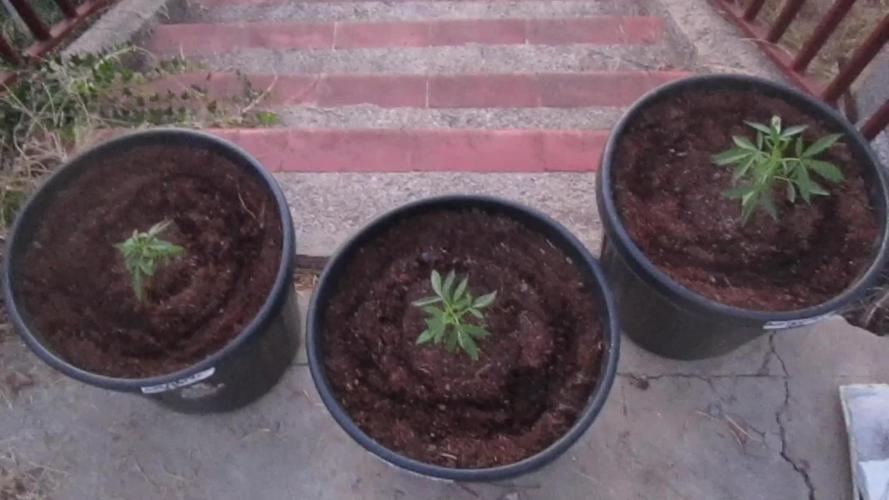
Actualización de la Semana 3, la semana pasada estuvieron bajo el Led de maravilla alargando las horas e incluso un dia entero que estuvo nublado disfrutaron de la luz extra 20 horas al dia, esta semana el Martes el led dejo de funcionar ya me a pasado otras veces, se funde un led y no va la luz.. este seguimiento no quiere que me lleve ningun premio 😂😂 Esta semana han sido regadas una vez con 1,5 litros de agua, al estar en 20 litros solo riego 1 vez por semana.. De momento aun no les e dado fertilizante extra tienen suficiente alimento la semana que viene empezare a darles un chute de Top Auto de Top Crop.

Likes
25
Share


@Herbz_Unkraut
Follow
i accidently bought some unbuffered coco and mixed it with my ussual earth, had major calmag problems in mid-flower but i´m still pleased with the results...also had a little trouble with mold at the end due to bad weather and high humidity in the final weeks of the grow, had to remove a few buds and harvest early @ day 55 of flower....but there's still alot of great looking buds left for me to enjoy and all look mostly done...
Just harvested and hung them upside down, currently drying them at constant 19.5-20.5°C and 50-60% RH..will update as soon as they are dry

Processing
Likes
2
Share


@MG2009
Follow
07/12/2018
Two days two inches of growth. Veg in full swing
07/15/2018
She is a foot tall, normally I would top her now,but it is late in season and hours of light are getting shorter, so gonna let her do her thing.
07/17/2018
13.5" tall almost feeding time. Will start feeding her in week 4.👍
07/18/2018
Uploaded 2 photos Fed with Espoma tomato tone 3-4-6 top dressed watered in with plant success Organic granular 3-1-2
Product Description
Endo & Ecto Mycorrhizae: Beneficial Bacteria, Trichoderma & All-Purpose Fertilizer