


Winter Photoperiod Season 2026/27








Indoor
Room Type
12-12
weeks 3
LST
weeks 3
20 liters
Pot Size
1 liters
Watering
Start at 3 Week
G
Germination20d ago


Nutrients 5

PowerZyme
1 mll

Root Complex
2.5 mll

SuperVit
0.2 mll
TommyBVRSA75 Germination completed on 5/11/2026.
LED box without a heating mat.
Germination in peat cubes and transfer to the final pot on 8/11/2026
3 likes
comments
Share
Used method
Peat Pellet
Germination Method
1
Week 1. Vegetation14d ago

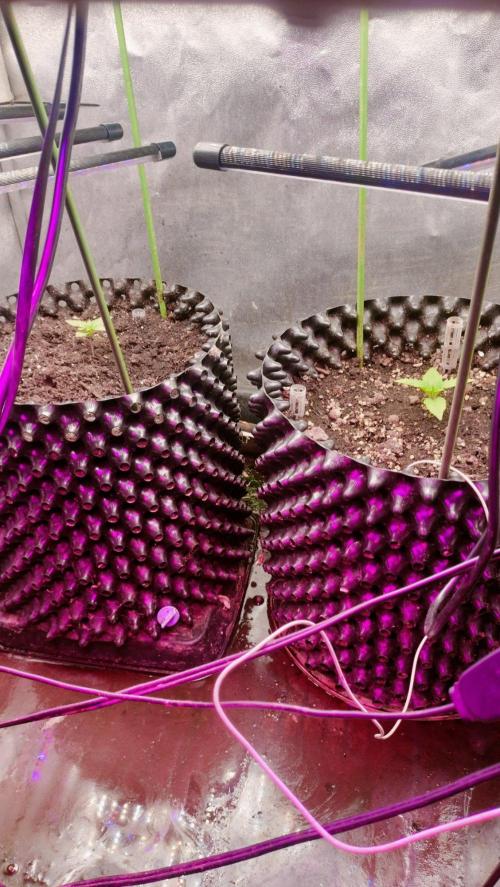


8 cm
Height
18 hrs
Light Schedule
27 °C
Day Air Temp
6.2
pH
No Smell
Smell
1210 PPM
TDS
60 %
Air Humidity
20 °C
Solution Temp
24 °C
Substrate Temp
21 °C
Night Air Temp
20 liters
Pot Size
1 liters
Watering Volume
35 cm
Lamp Distance
400 PPM
CO₂ Level
Nutrients 8
Ecogrowing Go and Boost
5 mll
Mycofeed
3 mll
PowerZyme
2 mll
TommyBVRSA75 Solid growth with excellent temperature and humidity conditions (VPD at light levels above 1.4 to 1.61—optimal vegetative growth conditions).
Excellent response to transplanting into the final pot.
Lights at 2.7 µmol, with blue light provided by the Bseah tube and three panels (2 Mars Hydro TS 1000s - NX2 Phytolite (4 blue/red spectrum panels))
Total coverage—500 watts over 80X80 cm, 35 cm from the seedlings.
Alternating biweekly applications of Eco and Grow, a nitrogen-based compound with fulvic and humic acids. Application guidelines: a) foliar application at 7.5 ml/L using a spray bottle, or direct root watering at a rate of 5 ml/O,. Thanks to its organic nature, it stimulates the plant and its growth, increases resistance, enhances leaf color by boosting nitrogen during the vegetative stage, and improves both the quality and quantity of the harvest in the long term. (Last foliar application was on November 20—so the NEXT APPLICATION, AS A FOLIAR FEED, WILL BE ON DECEMBER 6.)
We’ll keep you updated weekly.
Feel free to ask questions.
Tommy
1 like
comments
Share
2
Week 2. Vegetation6d ago


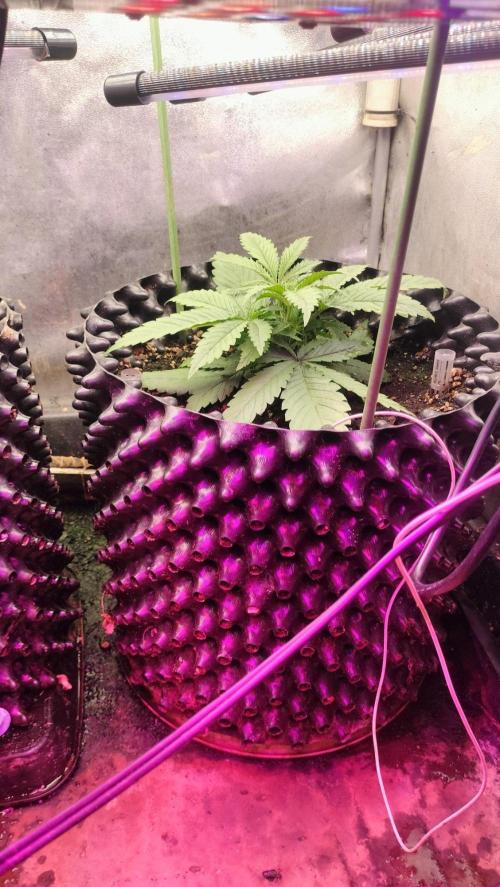


17 cm
Height
18 hrs
Light Schedule
27 °C
Day Air Temp
6.2
pH
Weak
Smell
1009 PPM
TDS
60 %
Air Humidity
21 °C
Solution Temp
23 °C
Substrate Temp
23 °C
Night Air Temp
20 liters
Pot Size
1 liters
Watering Volume
35 cm
Lamp Distance
470 PPM
CO₂ Level
Nutrients 9
Ecogrowing Go and Boost
5 mll
Mycofeed
3 mll
FITOABONO Floración c/aminoacidos
10 mll
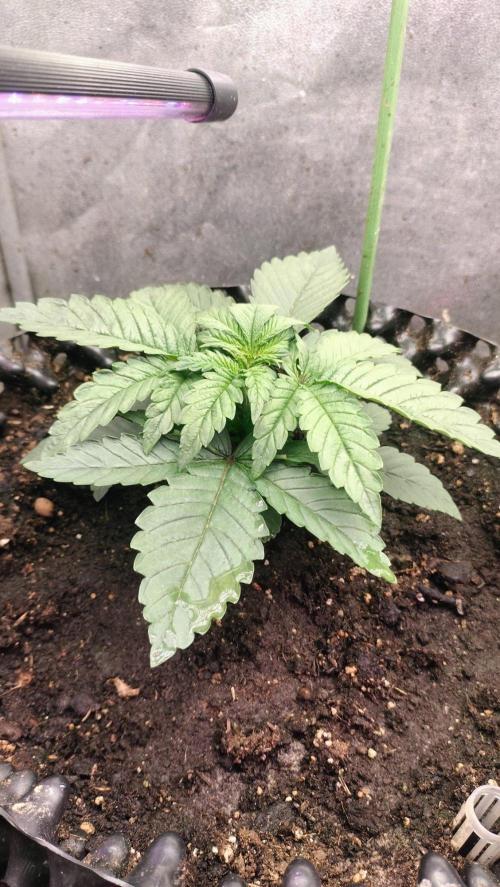
TommyBVRSA75 Expansion of the surface area of the primary leaves as they develop during the vegetative stage.
In addition to the basic setup of the two traditional panels I use, the Mars Hydro TS1000, each 150 watts (full spectrum) and 2.45 µmol, and the supplementary use of the NX2 4000 Resina Phitolyte LED (as well as the brand-new Bseah clip-on LEDs with 4 points at 5 watts each), each introducing a purple reflection (red+blue), the purpose has always been to develop vegetative characteristics during the first 3 to 4 weeks, as shown in the photos.
The plants tend to stay short, with broad leaf surfaces to optimize the photosynthetic area. This approach is intended to prevent excessive vertical stretching and instead produce leaves with as much surface area as possible, so that when I apply the LST clips in a few weeks, there will be as many flowering sites as possible, creating flowers and room for them to grow.
On the weekly VPD chart, the readings are within the ideal standard ranges for vegetative growth, while also opening up equally ideal conditions for the start of flowering. With average flowering temperatures within the optimal ranges (26.5°C to 27°C with the lights on and 23.5°C to 24°C with the lights off), and especially with humidity levels between 55% and 60%, VPD ranges from 0.60 in the dark to 1.55 with the lights on. So, as the plants move from the vegetative stage into flowering over the next ten days, the conditions couldn’t be better.
By choice, I’m pushing at least one day’s worth of nutrients geared toward flowering, namely Fitoabono Flowering Compound, which is an excellent organic product with a great amino acid base and micronutrients such as molybdenum, among others. It’s a good organic precursor for flowering, with notably high nitrogen levels to wrap up the vegetative stage.
Then there are two very specific nutrients, outside Hesi’s “usual lineup,” which is more organic. I’m still using Powerzyme and Super Vit throughout the entire cycle, while already starting to add Hesi Boost and, above all, the “unknown” product I know very well: Sehen Nexus Orgânico Go and Boost Ecogrowing. It’s an excellent supplement for the start of flowering, with a perfect blend of humic and fulvic acids and an impressive amount of organic matter. And especially Mycofeed from Mycoterra, perhaps one of the most balanced “sugars” for feeding the rhizosphere available on the market.
To keep things balanced, and very much in response to the plants’ needs at this stage, I’m giving them a small dose of ATA Calmag. More than specifically supplying calcium or magnesium, it helps prevent lockout from any potential nutrient excess—which hasn’t happened at all. Growth has been almost optimal, with no deficiencies as they enter flowering.
As I mentioned, starting next week I’ll begin applying the LST pins to help achieve a top-tier flowering stage. The signs of sativa phenotype growth, combined with the quality of the temperatures and humidity recorded, point to an excellent run.
Green greets, brothers!
1 like
comments
Share
3
Week 3. Vegetation10h ago





29 cm
Height
12 hrs
Light Schedule
27 °C
Day Air Temp
6.2
pH
Weak
Smell
1271 PPM
TDS
58 %
Air Humidity
21 °C
Solution Temp
23 °C
Substrate Temp
23 °C
Night Air Temp
20 liters
Pot Size
1 liters
Watering Volume
35 cm
Lamp Distance
502 PPM
CO₂ Level
Nutrients 18
Mycofeed
3 mll
Special THC Plus
6 mll
BacHumus Evolution
4 mll
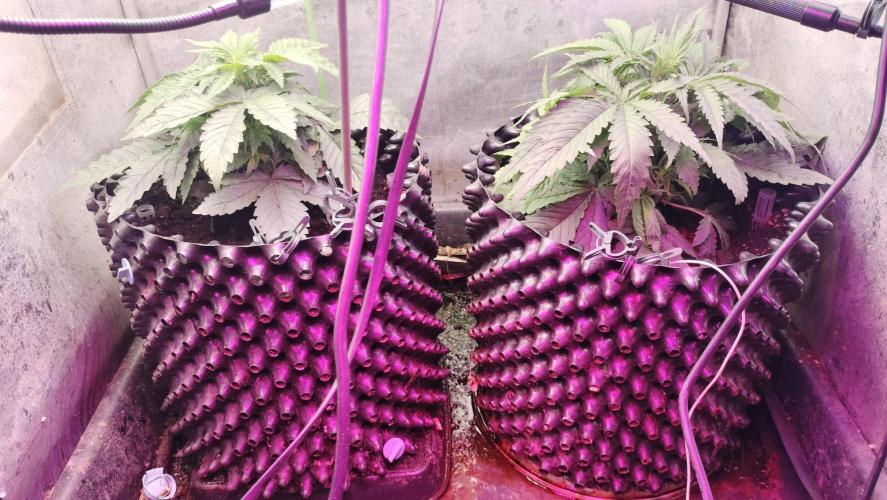
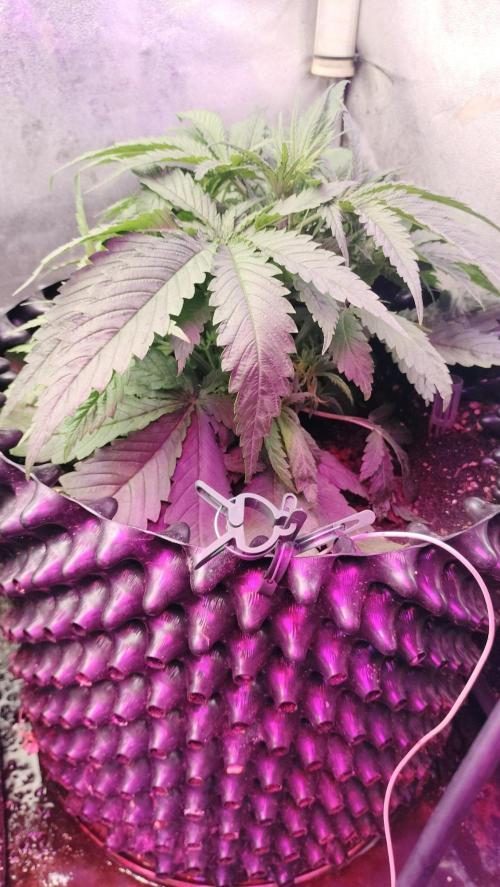
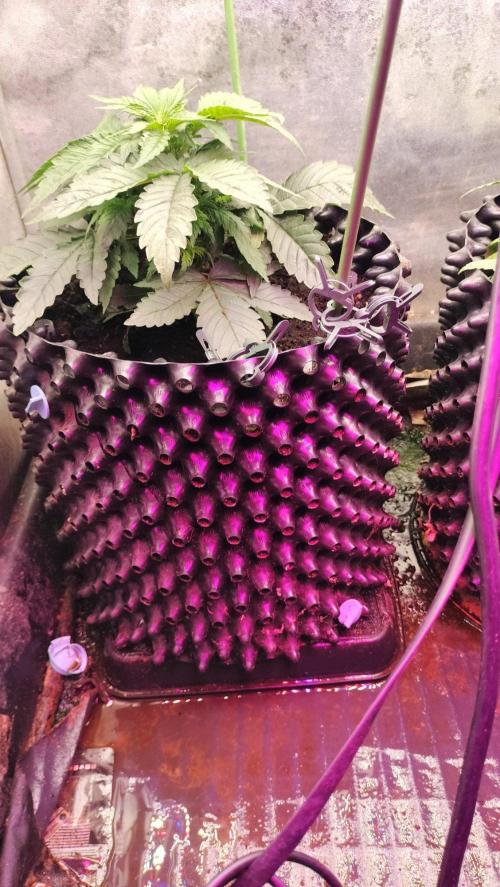
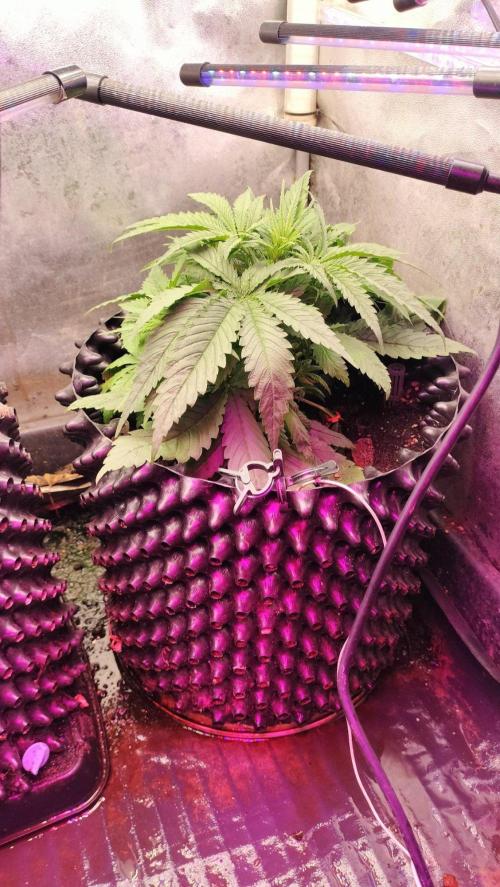
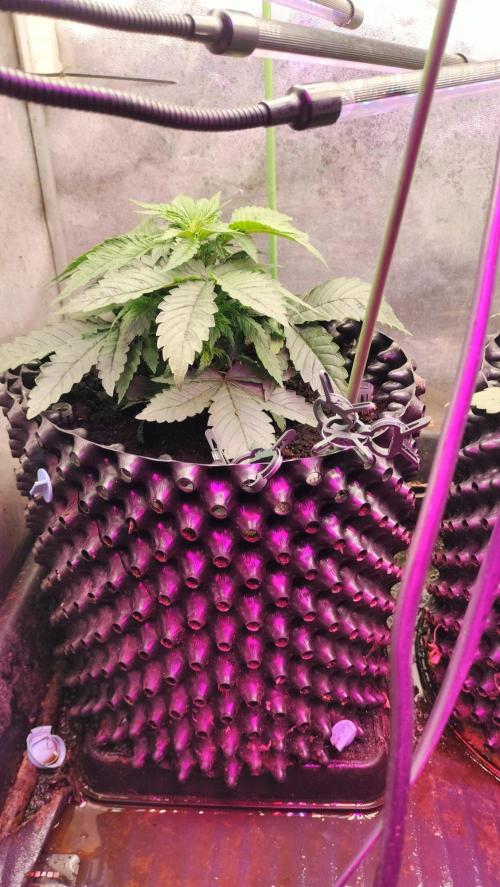
TommyBVRSA75 Week 3 ( day 20 since germination ) - ....and very clear signs of flowering induction.
First and foremost, the clear signs of the onset of flowering with the widening of primary leaves (FAN) and the exponential multiplication of secondary branching in these spaces.
Let us therefore look at the nuances revealed by the first three weeks of growth..
It has been "house policy" for many years to promote vegetative growth using full spectrum, to use two Mars Hydro TS1000 panels (2 x150 watts) and for the 300 watts of full spectrum to be more than enough to cover the 0.65m² area, which is 80 cm x 80 cm, and the tent height, with a height relative to the growth extremes of 1.60m.
This area, thus covered, easily provides the 2.3 µ/mol needed for perfect photosynthesis across the entire coverage area; however, in winter, it has also become standard to apply a third NX2 400 Phytolite panel, which consists of four diode modules that form a purple spectrum, and since this year, to use hook LEDs (BSEAH type, with four tubes of 5 watts each, allowing three patterns to be alternated (at the beginning, blue ones for the initial germination phase; the second set of purple LEDs for full growth and, in the last weeks, the use of the tubes in the red spectrum, for flowering/fruiting).
In winter, with temperatures and relative humidity much easier to achieve than in summer, this double set of full spectrum from the Mars Hydro panels at 300 watts and purple at 230 watts (Phytolite panel) + 25 watts of purple from the BSEAH tubes (about 300 watts of purple) allows two extremely important functions in the initial weeks. The Mars Hydro full spectrum promotes vertical growth and the onset of flowering (according to vertical growth), and the 300 watts of purple are directly responsible for the difference in purple patterns, which causes the grows to take on a relatively small size in the initial weeks of vegetative growth, but with very broad primary leaves. In other words, the photosynthetic area of the vegetative areas is ample and allows the optimized integration of cellular integration processes during vegetative growth.
Very importantly, this strategy in summer is quite risky and can entail major risks to the proper development of the plants in the initial weeks, with the risk of leaf burn affecting the normal growth of the strains, so adding 300 watts of purple spectrum through a panel such as the Phitolyte, which is a first-generation purple light, to two 150-watt full-spectrum panels that easily cover the grow area of the tent, will "almost certainly" result in burned leaves and light stress in summer. And pay close attention: you know what you have in technical terms, especially regarding light panels that cover the required growing area more than optimally, and above all understand that increased wattage in summer also means light stress and blocked nutrient absorption due to excessive light levels in the covered area; it is the fine line between the success or failure of the season.
With this, it should be understood that winter, and the increased cold and humidity, are when applying spectra with two distinct natures an advantage that can never be disregarded. For those who, like me, use LED spectra "old school", as a rule they achieve fabulous results in winter, since two distinct types of LED can mean perfect heat patterns and, above all, the purple pattern that allows plants to be short in the first weeks but have "sheet-like" leaves, ideal for photosynthetic capacity, and especially because they are perfect for the protected development of secondary branching, where in a few weeks we will have impeccable flowering sites and, above all, resin development that is covered and does not dry out under direct light.
This season the strains are of a nature that I greatly appreciate, in terms of the quantity and quality of resin they produce, and in winter both the hazes (from Amnesia Haze, with the very typical skunk hybridization that shapes the Nerds) are genotypes that, with phenotypes reactive to low temperatures even under LED exposure during the illuminated period, end up being extraordinary plants with flowers at the final stage. It's been so long that I've been complaining over the last two years about excessive heat in winter and, above all, inconsistent humidity conditions.
It seems, then, that the God of the "little green ones" has given us a reprieve this year, and we're heading for a good season...so I hope, and it is also shaping up that way.
Next week, it will already be time to see the flowering shoots and to apply some LST maneuvers as appropriate. May it come quickly and bring colors and flavors and textures, because the way the phenotypes are expressing themselves is promising, and when we've been at this for some time, we end up knowing what our "daughters" will be like somewhat in advance.
A hug and 420 to everyone!
1 like
comments
Share
Used techniques
LST
Technique
12-12
Technique
Enjoying this diary? Follow for more updates!
Prefer the old Diary view?
Go back to the old Diary view