


training

chuligan88started grow question 8mo ago
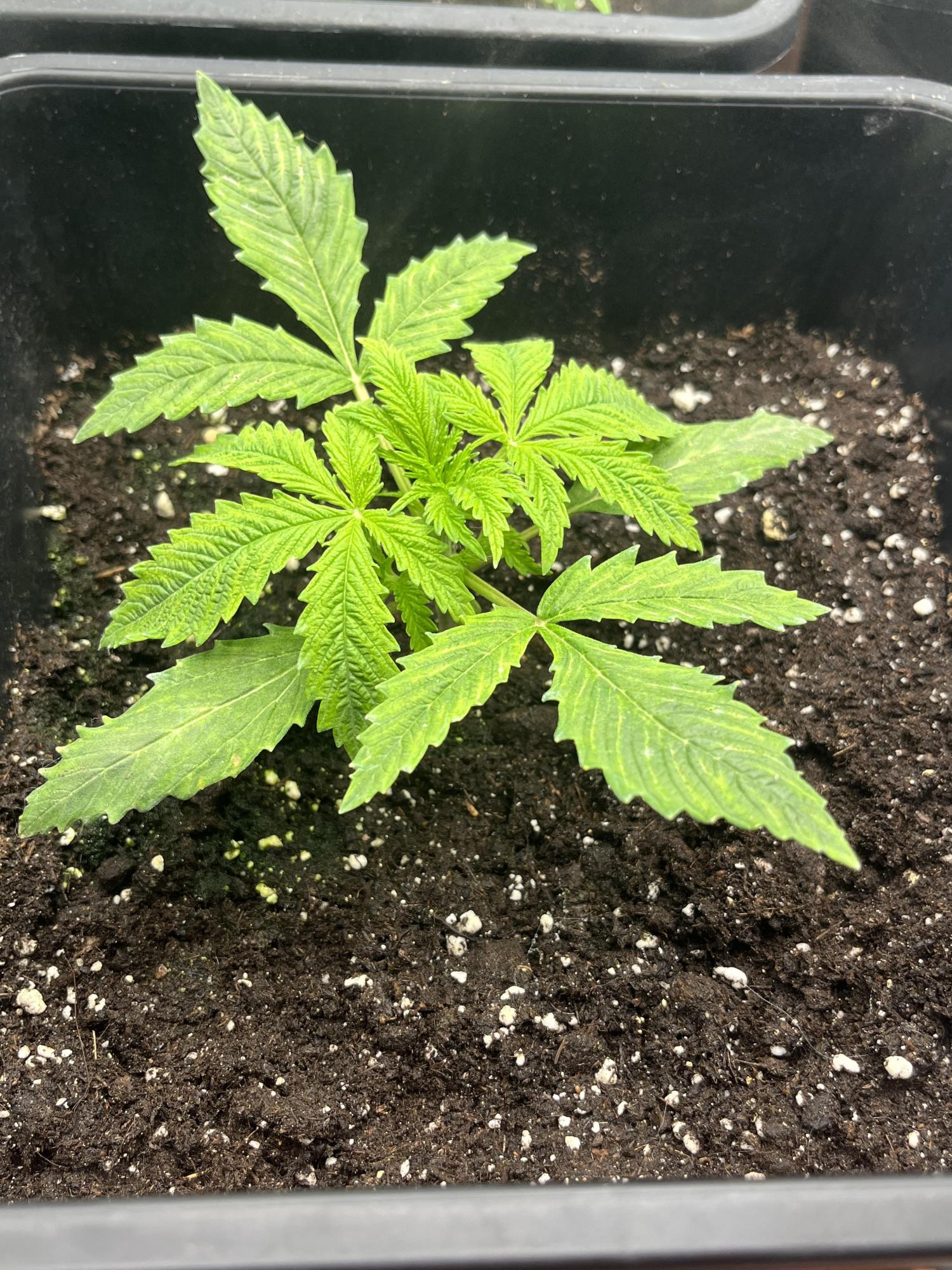
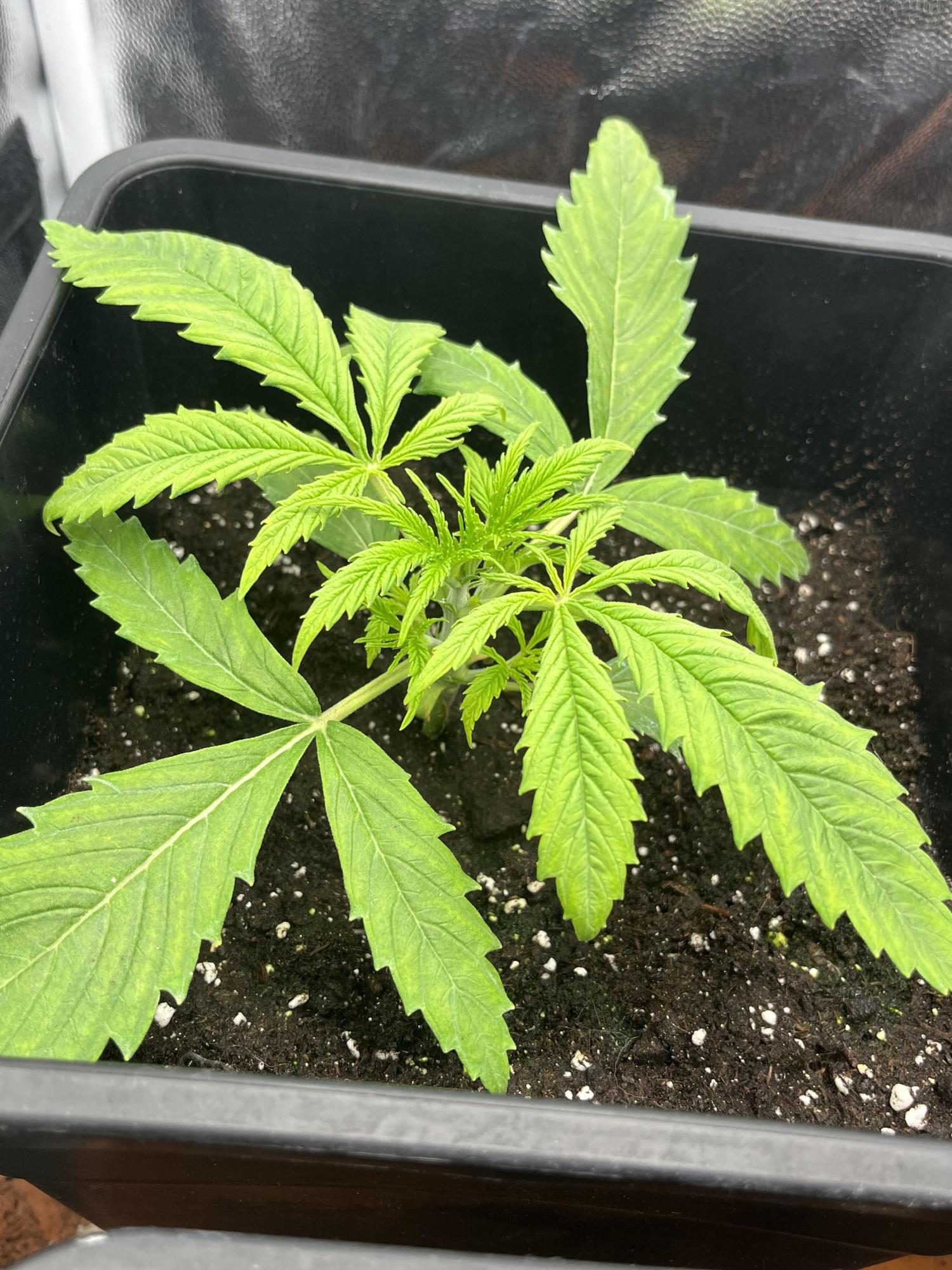
Hi there its my first grow and I need advice on whether it's the right time to topping and in a few days after topping LST thanks and may it grow.
Solved
Techniques. LST
Techniques. Topping
2 likes

DogDoctorOfficialanswered grow question 8mo ago
Hey buddy 👋 hope your day’s been kind to you.
Alright, first thing first: great job so far. For a first grow, these plants actually look healthy and happy. That already means he’s doing a lot right 🌱
Now, humble opinion time (and I really mean humble, not dogma):
For a first run, I usually don’t recommend going straight into topping + “hard training.” Not because it’s wrong, but because every cut is stress, and stress always needs recovery time. When you’re still learning how plants talk back to you, it’s easy to stack stress without realizing it.
Why LST is often the best first move
Low Stress Training teaches you how the plant grows, not just how to shape it.
• You don’t remove growth, you redirect it
• The plant keeps all its energy
• Recovery is basically immediate
• You can watch how light, hormones, and structure interact in real time
Simple things like:
• Gently bending the main stem
• Tying branches outward
• Opening the center for light and airflow
That alone can already give you a beautiful, even canopy.
About topping
Topping isn’t bad at all, it’s just more decisive.
A good rule of thumb:
• Wait until the plant is clearly vigorous
• 5–6 solid nodes
• Fast growth, good color, no signs of stress
Even then, many growers:
• LST first
• Let the plant show strength
• Then top later (or not at all)
There’s no rush. Plants don’t care about our schedules 😉
Most important part
There is no single correct way to grow. Every technique is a tool, not a rule.
For a first grow:
• Learn the plant
• Watch how it reacts
• Build confidence
Later runs are for experiments. This one is for understanding.
So yeah, if it were me?
👉 I’d stick to gentle LST, leaf bending, patience, and let her tell the story.
And whatever you chooses: you already doing fine.
Growers love, my friend 🤝🌿

OrionGrowgulanswered grow question 8mo ago
I'm still waiting for the fourth node to be stronger. If it's a photo, you can cut the top off, wait a week, and then do LST. For an auto, I wouldn't recommend topping, just LST. The plant looks really good, just wait a bit longer. Patience always pays off!
likes
Complain
FarmerRasaanswered grow question 8mo ago
I top at the 4th node personally and then I will start training after that. I see a big growth spurt at this point which is why I do it at this node versus other nodes. Training is best to do early on while branches are still flexible. They will eventually get woody and could snap or break if you try to bend them. This looks good so far! Good luck with your grow.
likes
Complain

Purrple_Hazeanswered grow question 8mo ago
Hi, to me she looks okay so far. Did you take the photos right after lights on? She looks a bit droopy, which can be normal at that time 🌱
Once the third node is clearly visible, you can top and start with LST. Just bend the shoots very gently — they can break easily, especially early on
Have a nice grow 👌
likes
Complain

DrGruenanswered grow question 8mo ago
hi Chuligan.....
I would fertilize the plant first so it looks stable again.......
Once it's healthy again, I would top it after the fourth node 😎
After it has recovered from the topping and is healthy again, I would start with LST 😉
Good luck
likes
Complain

AestheticGenetixanswered grow question 8mo ago
Start feeding soon. She's getting yellow and hungry.
I wait until the 4th node to top. Some wait till the 5th or 6th.
For LST, your plant needs to be tall enough to bend over, which she isn't yet. Or you have to wait until the side branches are long enough to bend down parallel with the soil
likes
Complain

JUNGLE_B4RNSanswered grow question 8mo ago
I top my plants at the 3rd node. LST isn’t really required when topping, the plant will get bushy enough (just look some of my diaries). Except if you don’t have enough space and want to grow a dwarf plant.
You plants seems to be slightly overwatered, on your leaves you can see like interveinal speed bumps and wrinkles (a bit like your fingers when you stay too long in the water) and they are puffy. Your light is definitely too close, plants are miniaturized white short internodes, and you can see like interveinal clear stripes between the veins of the leaves.
There’s only 3 PORBLEMS TO AVOID growing indoor, TOO MUCH LIGHT, TOO MUCH WATER, TOO MANY NUTRIENTS.
So I will also suggest you to use an EC/TDS meter when using your nutrients, and to not follow manufacturer schedule neither manufacturer dosing instructions.
likes
Complain

Ultravioletanswered grow question 8mo ago
No don't top. More oxygen in the rootzones 🙏
likes
Complain
Ultravioletanswered grow question 8mo ago
A 4-inch lip (the distance between the soil surface and the pot rim) creates a significant boundary layer of stagnant air that acts as a localized "dead zone" for humidity. This depth disrupts natural air circulation across the topsoil, leading to stagnant humidity and reduced transpiration.
Transpiration is the primary method by which vascular plants move water from the soil to the atmosphere, if it becomes limited or restricted then soil will remain saturated and in plastic pots growth stunt for a number of reasons.
it is scientifically accurate that when soil becomes saturated—meaning the pores are completely filled with water—oxygen moves roughly 10,000 times slower than in air-filled pores. This dramatic reduction in mobility often leads to an oxygen flux (the total amount of oxygen reaching plant roots) that is up to 320,000 times lower than in well-aerated, dry soil.
Doesn't matter how much perlite there is, its akin to locking out oxygen.
Soon as oxygen goes everything moves from aerobic to anaerobic, at drops dramatically, lactic acid is released slowly lowering ph acidic.
Low oxygen (hypoxia) in a growing medium creates anaerobic conditions that significantly alter nutrient availability, often leading to iron (Fe) deficiency, particularly in compacted or waterlogged soils. While waterlogging initially increases the solubility of iron (making it more available to the point of potential toxicity), the combination of low oxygen and oversaturation disrupts root respiration, which is essential for iron uptake.
Iron is absolutely critical for the synthesis of new chlorophyll, and its unavailability leads to a rapid, visible cessation of chlorophyll production, often manifesting within 52 hours of a severe iron-deficient environment. While iron is not a direct structural component of the chlorophyll molecule itself, it acts as an essential catalyst for the enzyme systems that build chlorophyll, generally why she goes light green.
Good luck.
likes
Complain

Selkotanswered grow question 8mo ago
hey 👋
u need to wait until you have 4 well formed nodes.
Once you do, cut the top, leaving about 0.5 cm (or a bit more), otherwise you risk the plant splitting in two during training.
At the same time, cut off the first two lower branches.
u’ll then be left with 6 branches across 3 levels, which you can train however you like 👌
1 like
Complain
Similar Grow Questions

Solved

noxethegrower
Techniques Harmful or Beneficial?Would doing all 3 of these techniques Topping, LST, and Lolli-popping ruin/stress my plant out too much?Techniques. LST
Techniques. Topping
Techniques. Other
6y ago
3
3
Solved

Growerxm00
Lst and top at the same time, can I do it?Hello growers, I first started lst on my 2 plants but then I decided do top them and lst at the same time, is there any problem of doing that?
Thank you all, good grows! 🌿✌️🏼
Other. General questions
Techniques. LST
Techniques. Topping
5y ago
4
3
Solved

Euphorium
LST and ToppingHowdy fellow growers, quick question for you all, I'm going to try my hand at LST and topping on this my second grow after just letting my first grow just do its thing. Any advice for the new guy? When should I Top and start with the LST?
Many thanks in advance!
6y ago
3
1
Solved

Stefan420
Should i top the LST trained plants?I posted a question yesterday and wanted to give an update. The plants are now 22 days old, photoperiod, and they're in 20L pots. Yesterday, I gave them their first LST.
The question from yesterday still stands: Should I top them in 1-2 days once the main stem
Setup. Strains · Photoperiod
Techniques. LST
Techniques. Topping
2y ago
1
Solved

Firefly
Accidently topped my autoflower, we it survive/rebound?Day 24 in my first ever grow. Mephisto northern cheese haze auto. Did a round of LST/Tucking last night, woke up to a fully broken off top growth of the main stem, effectively topping it(?). Is there anything I can/should do? Will it bounce back or should I start another grow?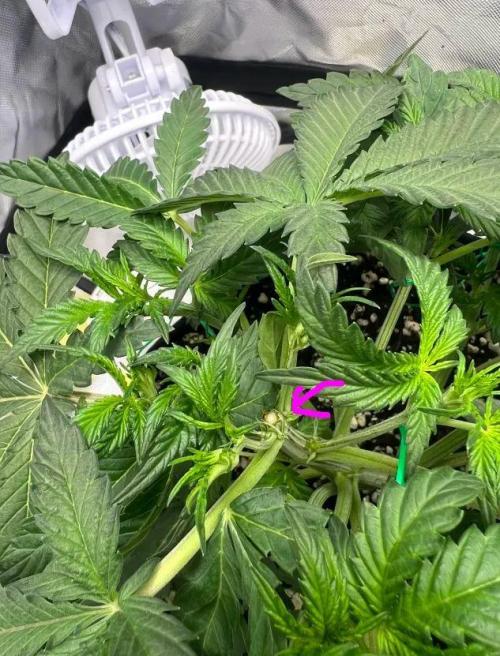
Techniques. LST
Techniques. HST
Techniques. Topping
1y ago
1
1
Solved

Viccrazyweed
Little cookies growing slow(?)So the cookies is literally as old as my other plant but she has grown half of the size
yesterday night i topped the little top
i know its more streess that keep tying it with the rope like the other one but I don’t know
im just trying because this is my first grow
is it righ?
Techniques. LST
Techniques. Topping
4y ago
3
Solved

CBDreamer
Topping or LST after 1st toppingLast week I topped this little baby, the plant now is growing ok. I noticed that not only the two top side branches are growing a lot, but that the ones on the node under it too.
I would like to make the 4 grow and like that I don't have to top more, is it ok? How can I do it?
4y ago
3
2
Solved

Newbiegrower420
LST method, topping and switching to flower!Please look at my four girls and advise when I should top them? LST going good so far but think I need to wait a little longer before topping? Anyone have a preferred method of doing things? I’m hoping to LST for another week or so and then switch to flower, am I rushing things🙏Techniques. LST
Techniques. Topping
Techniques. Defoliation
6y ago
2
2


Solved

Eldritchscotchtober
Fuck. First week of 12-12 and I almost accidentally top this plant. Broke the stem enough to cause it to bleed on one side. Think it will hold/heal?Accidentally broke one side of this stem while attempting LST through a lattice. My idea was, instead of simply topping, to bend the plant downwards into the lattice to keep it down. Problem I'm trying to solve is plants keep growing too close to lights. Thoughts? ✌️
6y ago
1
3
Solved

ramika
Hello guys
Help....
700W LED Full spectrum IS IT EXACTLY?!?!..
Tropicana banana - week 11, growth has stopped,
fertilizer - florra trio (according to the chart), could it have gotten stressed during LST? Or during topping?
The main thing! I don't know when to switch to 12/12. This is my first photoperiod plant.6y ago
1
1


Solved

ekkoz897
LST and ToppingI am starting to feed them nutrients and they are growing faster lately. I am considering starting LST and topping next week. LST when it reaches 4/5 nodes, and topping above the 5th node. Do you have any tips on how to perform this the best way ? Thank you in advance !
3y ago
2
2
Solved

NIagaraFalls420
Auto training techniques lst/hst/toppingJust about to start a few auto flowers, will be my second auto grow. Any tips for best training methods? I know lst is most popular but any recommendations on which one works best? Also any advice on topping? Lots of people say don’t but lots of growers seem to do this. Thanks!6y ago
2
2

Solved

Beginnerbuds2020
When to topWhen can I top my girl I don’t want to do it to early ?
Can anyone help ?
Techniques. LST
Techniques. Topping
5y ago
2

Solved

Cremo
Training Automatics - best practices!Hi guys. How do you go about training automatics? Some say only LST, some don't hesitate to top several times and some say to just leave it grow by itself. I'd love to top'em a few times but I'm not sure. Please HALP! Thank you!
(Pic pretty unrelated, it's my last Mimosa EVO)
Techniques. LST
Techniques. HST
Techniques. Topping
6y ago
2
3
Solved

SkyHighGrows
LST after ToppingWhen would you start doing LST after doing a topping? I have topped about 3 days ago now, and have good growth from the new sites, about 1/2 inch of stock coming from the tops. Worried if I LST a little too early those new tops might not be grown enough yet!Techniques. LST
Techniques. Topping
6y ago
1
1