


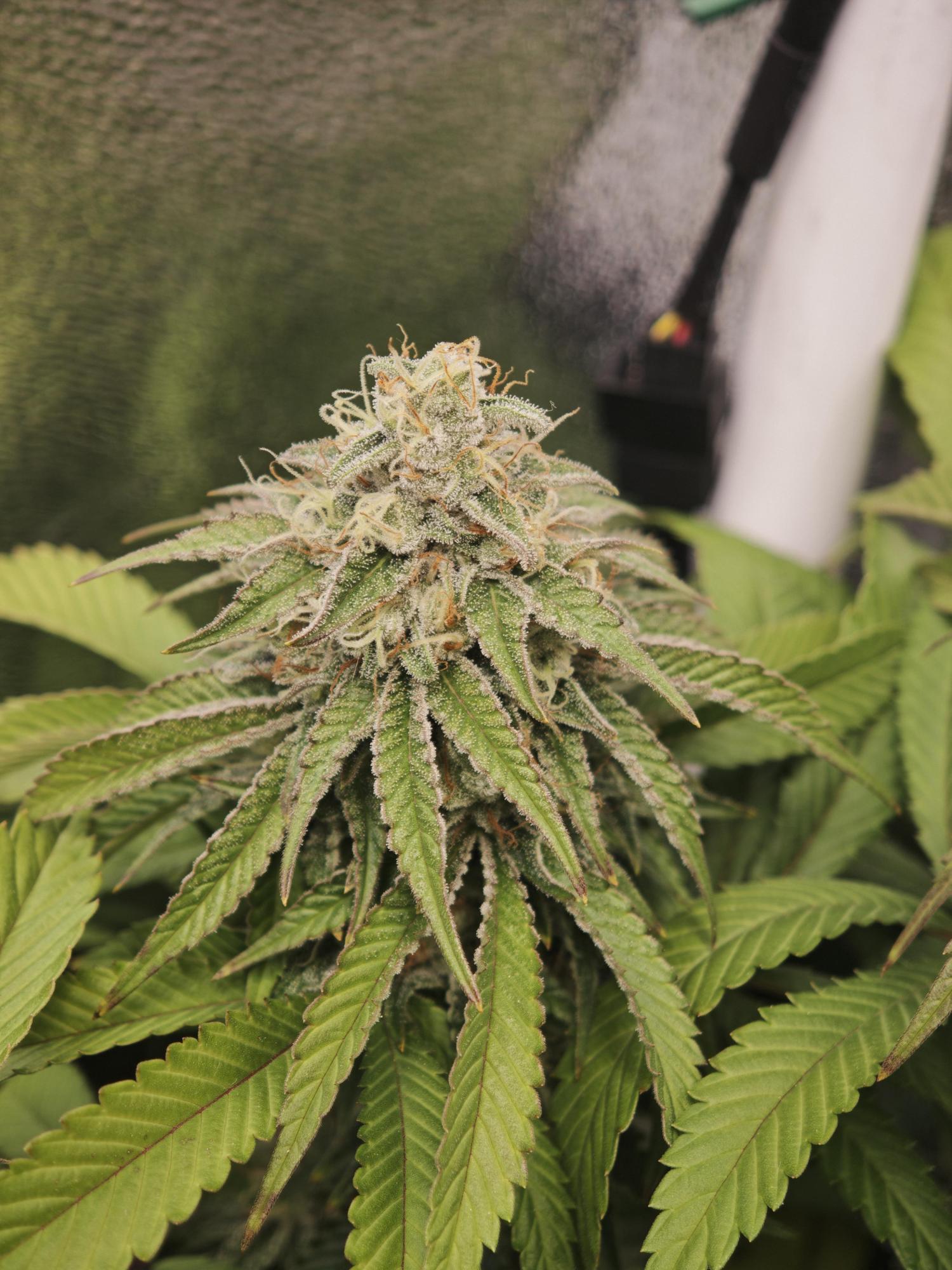
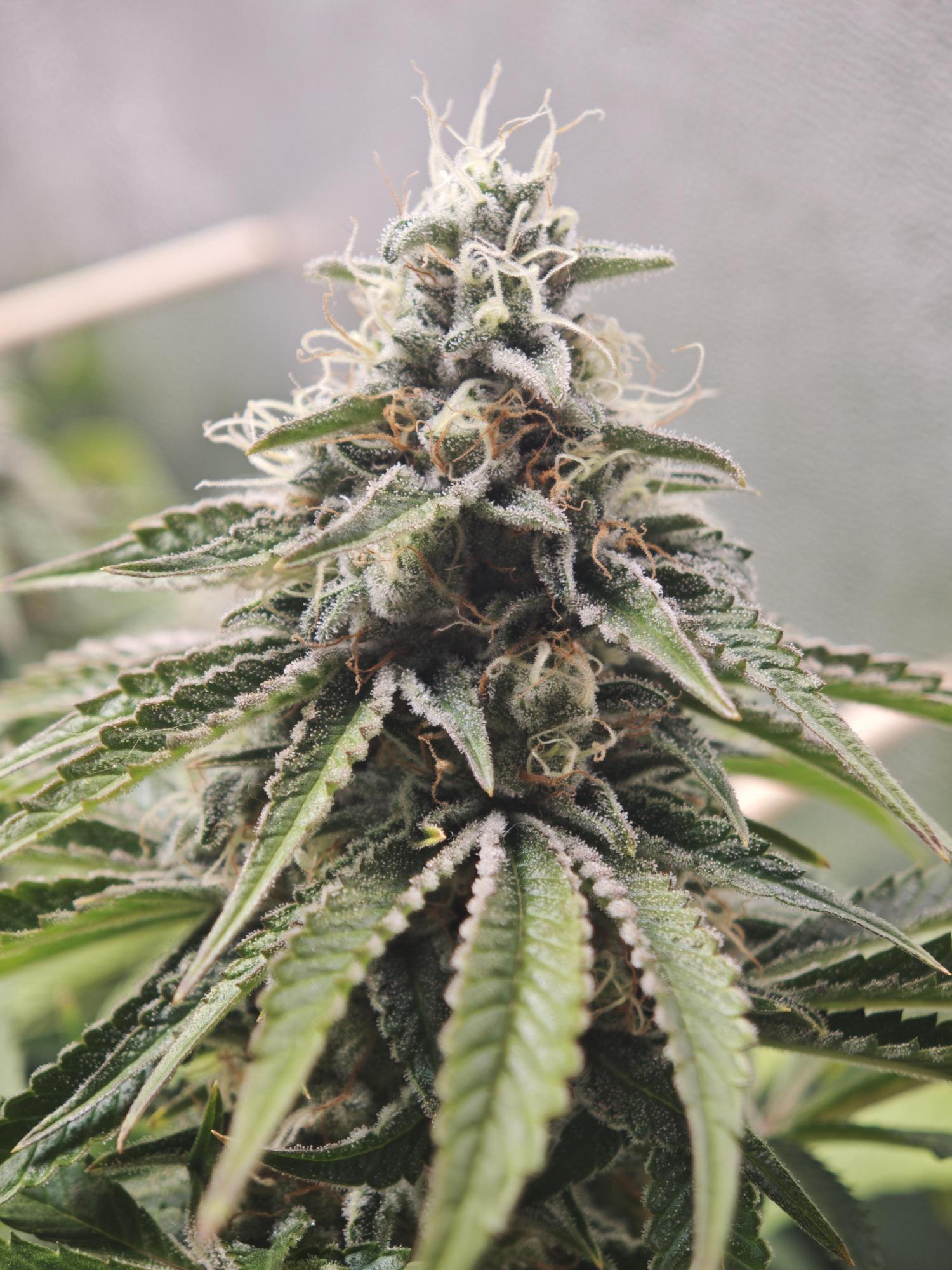
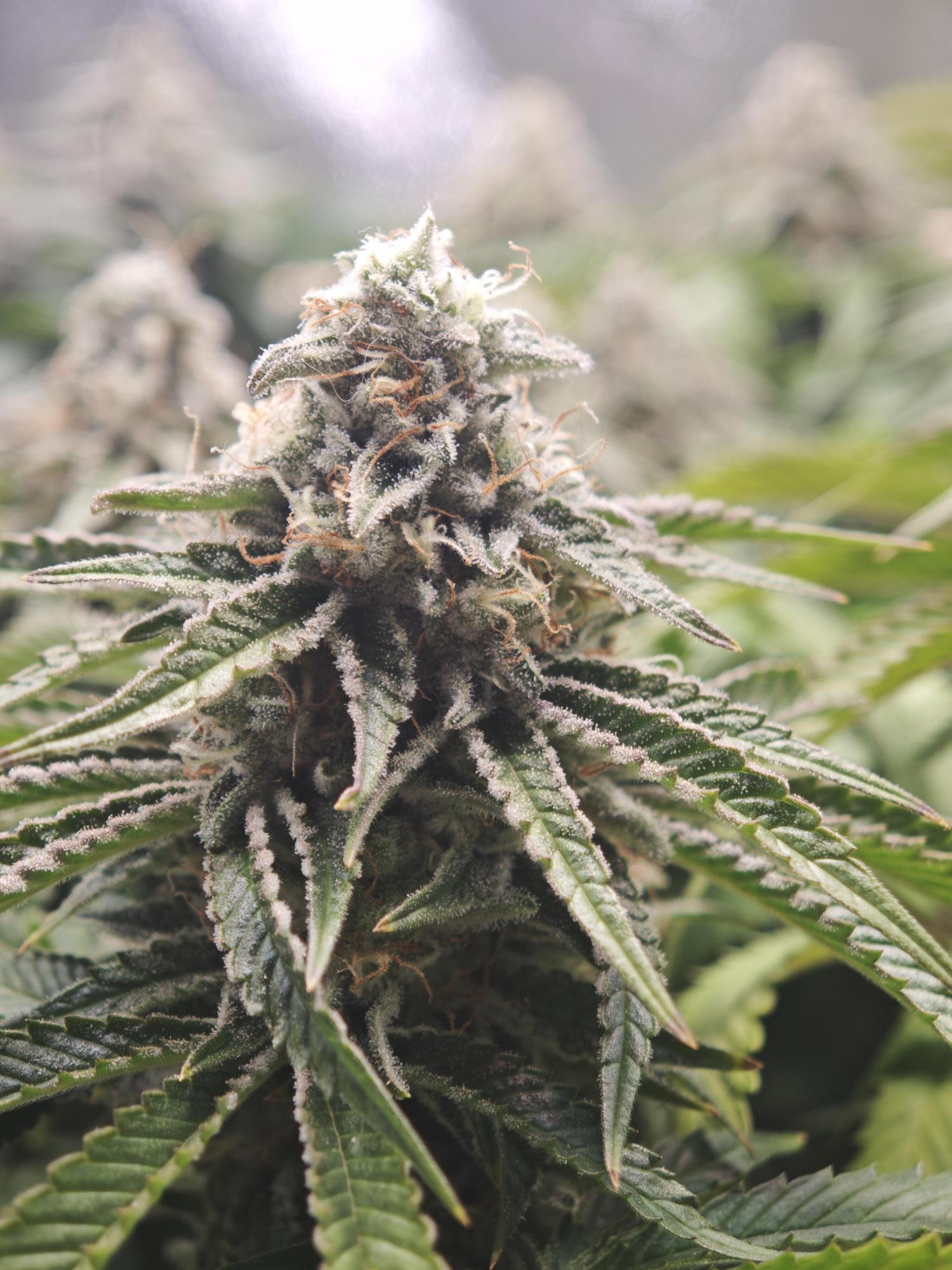
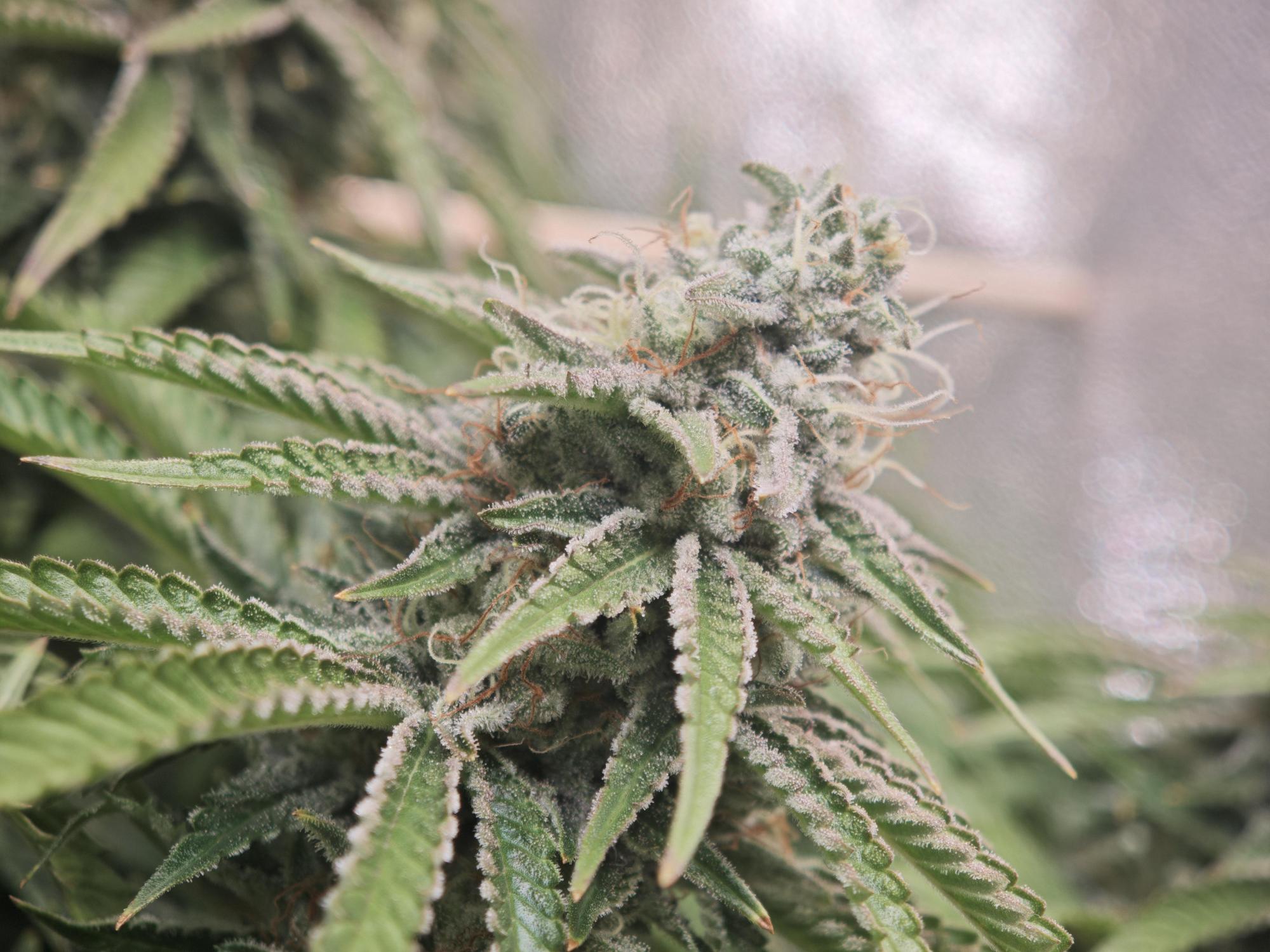
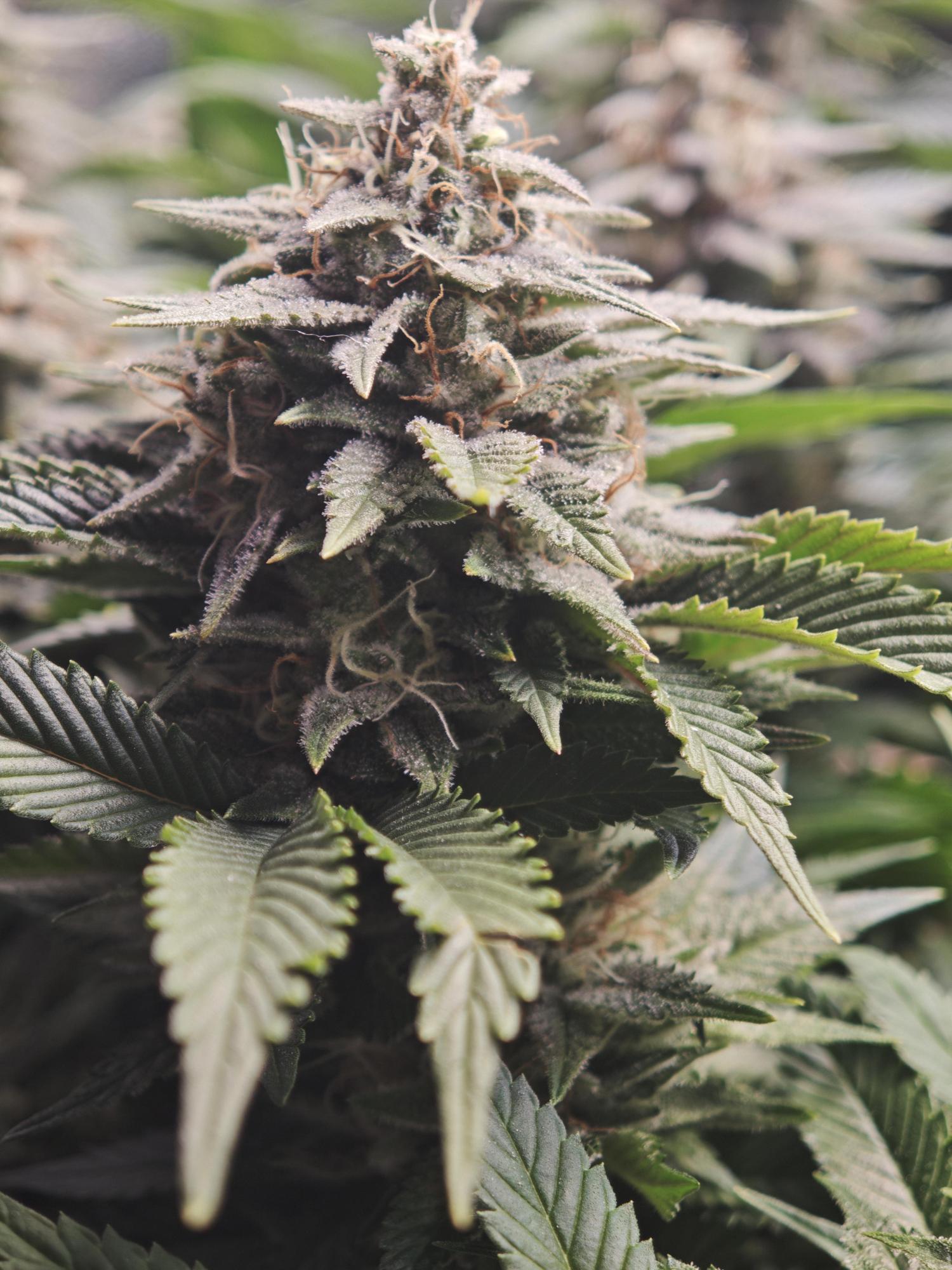
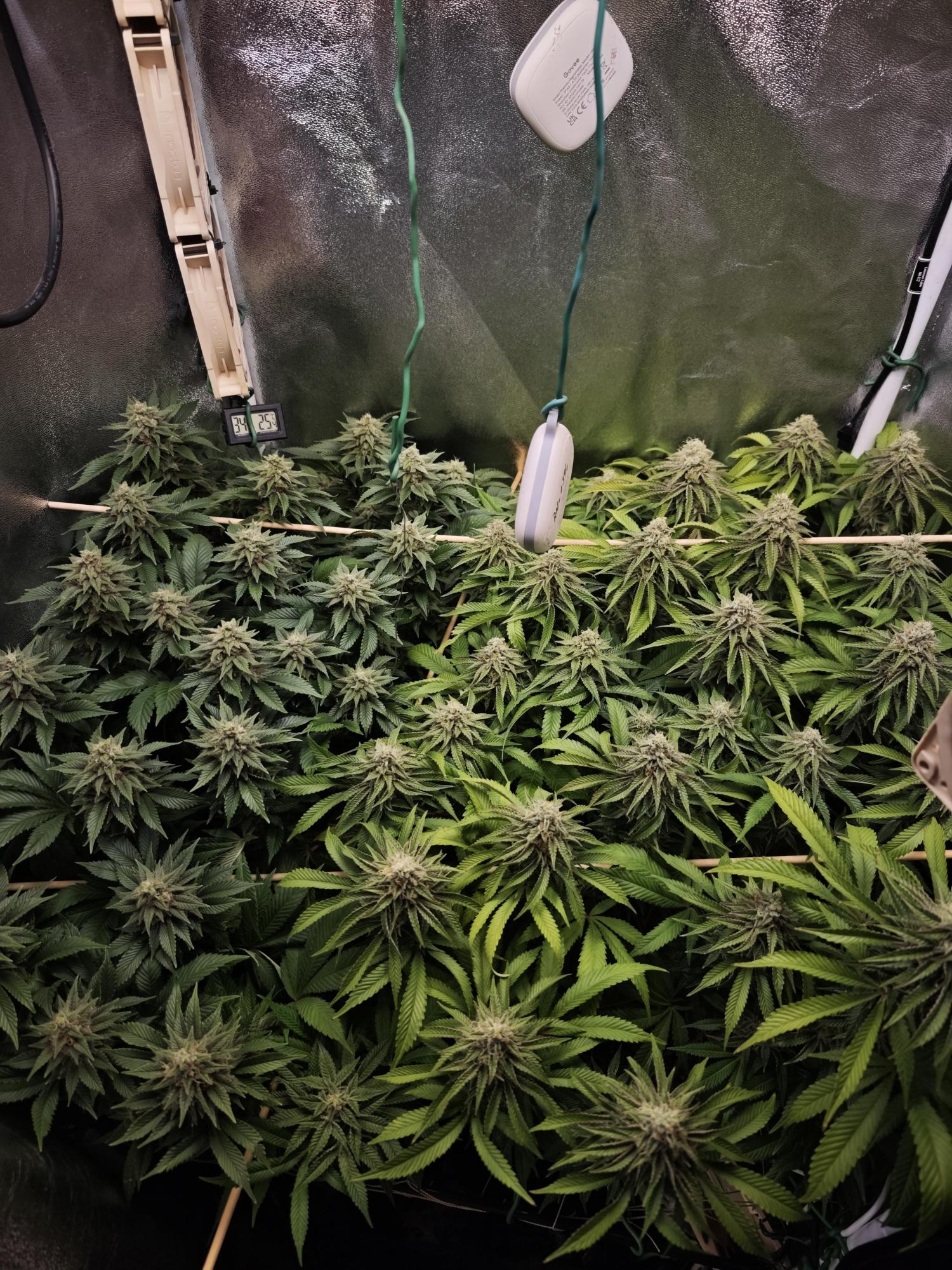
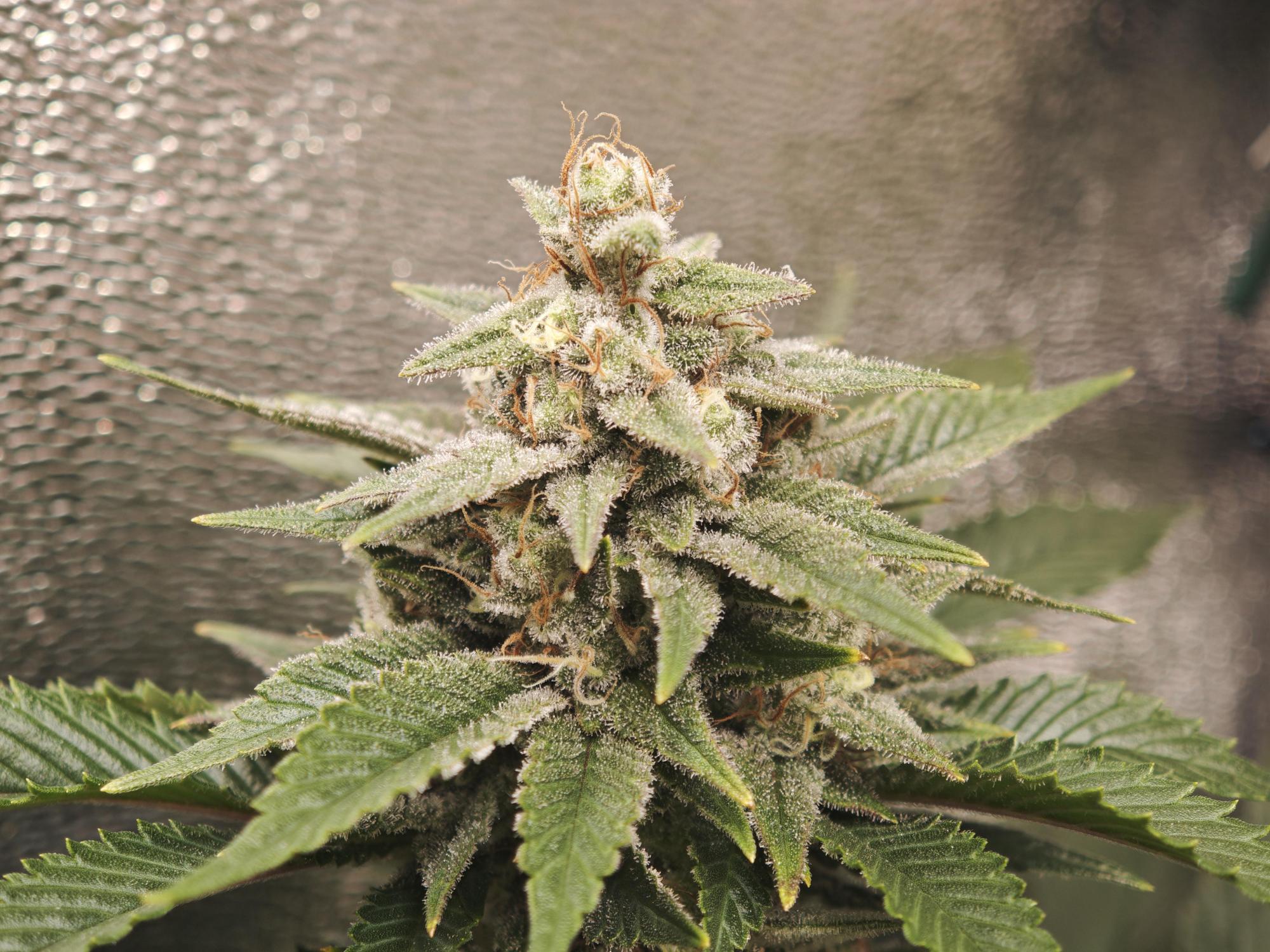
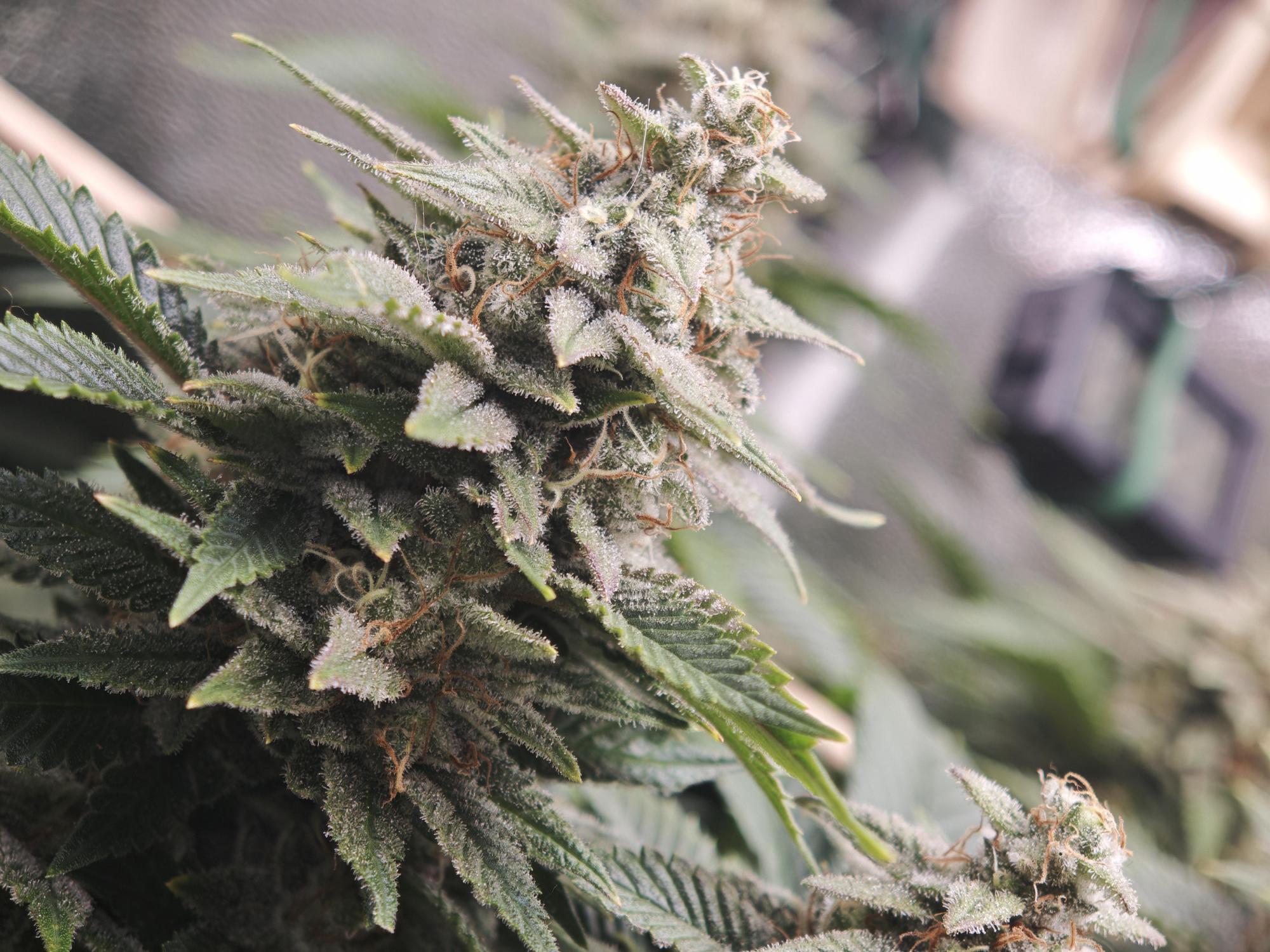
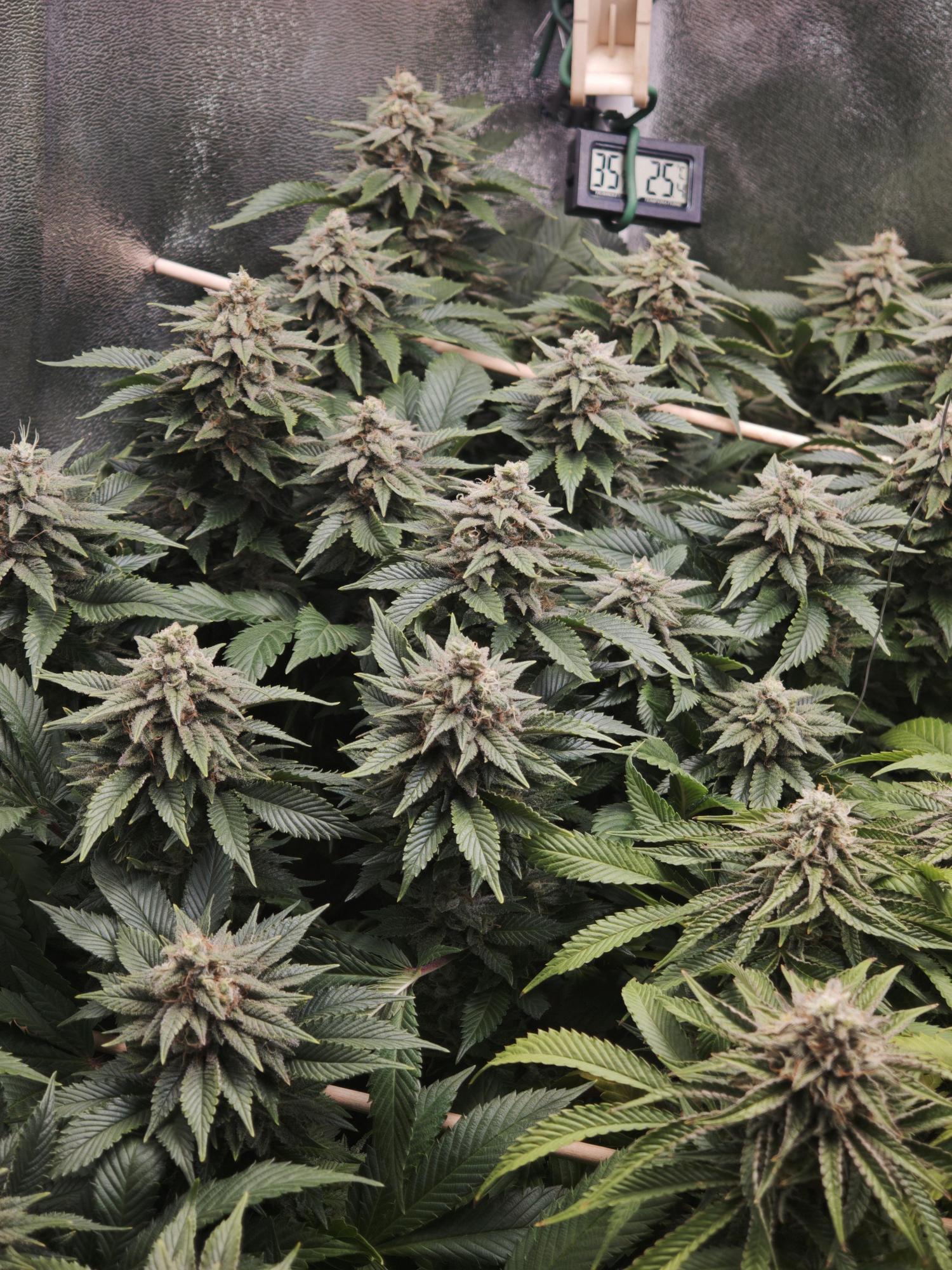
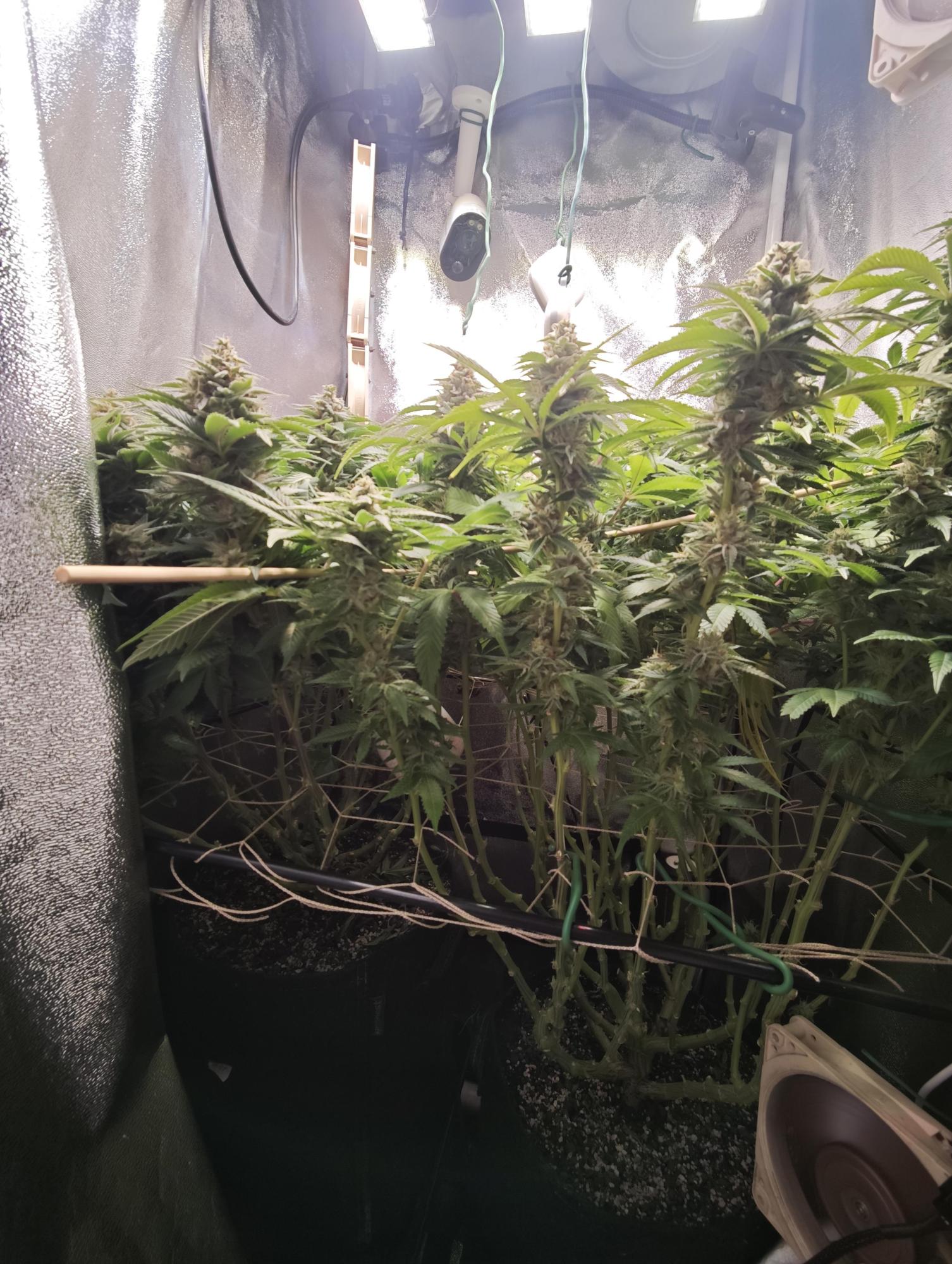
Improving the ripening of the lower buds and thinning/defoliating — is it necessary? Is it helpful? Day 42 of flowering.”

JSanchezzstarted grow question 7mo ago
Is it necessary/helpful at this stage to remove some large upper fan leaves so the lower buds get more light for a more even ripening? The tent is very full/dense; mold isn’t an issue. Day: 24°C RH 45–48%. Night: 17–18°C RH 54%. Left: Purple Punch, right: Mimosa x Orange Punch.
Open
Other. Other
likes
Answer
00110001001001111Oanswered grow question 7mo ago
Nope. Remove leaves at no time allows the plant to 'focus more on buds' .. in fact it's the opposite effect unless the plant has completely ceased vegetative growth. Then you just have fewer leaves when pruned off, lol, and the plant takes in less energy and co2 than before... 2 factors that are very unlikely to be outweighed by some imaginary benefit that's has never been tested or proven with an ounce of good evidence.
The products of photosynthesis are essentially ever-present in the vascular tissue and it is highly mobile, so access to sugar does not dictate growth. Sugar is used more locally than afar in the plant, but that's a dynamic of physics and geometry more than anything. Anywhere growth is advanced a concentration gradient draws more to that locale. Apical dominance dictates where the denser and airy buds are on the plant. Buds getting light really isn't important. Not crowding the canopy, which you have avoided nicely, is all you need to do in this regard. I've purposefully left buds covered by a leaf for numerous grows and yet to see a difference compared to other buds of similar 'stature' for lack of better vocab -- same vertical height, same primary or secondar branch location etc... There is no difference, if it is shielded or not.
Also, light hitting leaves further away from the source of light is also significantly less intense. Just increasing inefficiency as far as portion of photons hitting or missing the plant trying to get the light to hit lower leaves, or worse sex organs that have 1/100th the photosynthetic potential. Green stem is 1/1000th. Tops of leaves are for light. Sex organs are for reproduction. Cell differentiation is an important concept to understand. Different organs have different functions, flower's function is to produce seed, not convert light to sugar. Leaves do that. And again, that sugar produced is highly mobile... going where it needs is not a hinderance to growth. Apical dominance dictates how much gets used where...
The hypothesis behind this is so unlikely that I'd wager no reputable biologist would bother, because it can mostly be ruled out with existing knowledge. Hindering co2 intake or light absorption is not a winning strategy.
2 likes
Complain

JUNGLE_B4RNSanswered grow question 7mo ago
I bet you keep giving cal/mag all along the flowering cycle ? 😊
Next time, switch from cal/mag to Mag/Sulfur at week 5 of flowering, it will improve the overall ripening 😉
likes
Complain

wolfvbanswered grow question 7mo ago
Salam JSanchezz! 👋 Your canopy is looking incredibly dense and frosty, Habibi! Excellent work getting them to Day 42 looking this healthy. 🌳
You have hit the classic debate: "To defoliate or not to defoliate in late flower?"
Let's look at this through the lens of Modern Engineering: 🛠️
1. The "Solar Panel" Rule: Leaves are the engines that produce sugars to swell the buds. If you strip the plant naked right now (Week 6), you will rob her of the energy she needs for the final bulk. 📉
2. Targeted Pruning: However, photons (light) cannot pass through a solid leaf. If you have a massive fan leaf acting like an umbrella and completely shadowing a good-sized lower bud, yes, snip that single leaf off. We call this "targeted defoliation." Only remove what is actively blocking the light. ✂️☀️
The Ultimate Solution (The Staggered Harvest):
If your lower buds are still looking green and fluffy while the top colas are finishing, do what @Hashy and @Trichoma suggested! It is the best trick in the book.
When the top colas are amber and ready, chop only the top half of the plant. Then, lower your LED light closer to the remaining bottom half and let those lower buds cook for another 7-14 days. They will double in size and harden up beautifully! 🚀
Also, your environment (24°C / 45% RH) is absolutely perfect for late flower to prevent mold and push resin. Keep it right there!
Happy Growing! 💚
1 like
Complain

Trichomaanswered grow question 7mo ago
You’ve already done a great job lollipopping your plant! As for the top leaves, I’d only remove them if there’s a pest issue, otherwise, leave them be. You could remove a few more lower bud sites and leaves or lollipop a bit higher, but overall, it’s looking good!
Just make sure you have solid airflow both from below and above to keep mold away. Looking great, keep it up! 👍
If possible, consider a staggered harvest: Chop the main colas first, then give the smaller bud sites an extra week or two to fatten up before harvesting the rest.
likes
Complain

Green_Clawsanswered grow question 7mo ago
What @oldskoolkool say..leaves are best kept when serving a positive purpose. There's scientific proof that defoliation helps grow the targeted crop, here being the flower.. People can't understand that if the plant needs them why are they making them and so it's a no to defoliate,, massive mistake hopefully they realise and swallow the pill and take it on the chin before my kids are growing better haha ...
likes
Complain

Hashyanswered grow question 7mo ago
My last grow I did partial harvest, chopped the tops off and started drying them and let the lower parts get an extra week under the light, that seemed to help mature the lower buds.
likes
Complain

oldskoolkoolanswered grow question 7mo ago
Its best to defoliate during the first 3wks of flowering but you'll be ok if you don't take off too many.I would certainly take some off those.Is that only two plants?That canopy is nice and full.I'd take several off each one.Be careful whos advice you take on here,mine included.Id triple check everything.You should be checking with people that are trusted in the industry and remember one size does not fit all.Soil works different to coco,mineral food is different to organic and so on.You still get fools on here claiming you should never defoliate even after theyve been shown the evidence.The majority of breeders will tell you to defoliate certain strains they sell.Not all need it.A typical indica compared to a Sativa is like night and day.Yours are hybrid but theyre more indica with the wide leaves that catch more sun than the sativa.Landrace sativa grow closer to the sun so have thinner leaves so sativa don;'t need defoliating as much if ever.Youve got a little cupping going on with your leaves as well.They do it to protect themselves.Google it.It will be the light or the atmosphere.Use the light metre app on your smart phone.I have my lights as high as poss at this stage then turn them down for the last two weeks.
likes
Complain
Similar Grow Questions

Solved

BunnyBud
15% OFF (FastBud) ❤️If you’re looking for quality seeds for your grow, check out FastBud. Using the code DEEP420 gives you 15% off your order.
This isn’t just a discount — it’s a way for growers like us to save some money and keep growing top-notch plants without breaking the bank.❤️🐇
Other. Other
1y ago
3
1
Solved

Kershaw1231
Does she need nutrientsHi does my plant need nutriento she is a northen lights auto RQS 1 of her fOrston round leave has a little brown dot on is she ready for feed if so can anyone help with what ml of advanced nutrients micro grow and bloom I put into 500 ml water thank
Other. Other
Setup. Strain · Autoflowering
Feeding. Other
5y ago
1

Solved

DrMunchies
Drastic change of humidity and temeperature.I didn't notice my plant had 35% RH and 29C for around 5 hours instead of the usual 50-55% RH and 22C, can this have stressed or even stunned my plant? Are there any long term effects? What can I do to fix this as fast as possible, I already adjusted the temps and humidity.
Week 2
Other. Other
6y ago
2
2
Solved

SAC87
Cross pollinationHi there, I’m growing autos outdoors and am wondering if anyone has tried to grow around hemp fields. I’m wondering if the male hemp pollen will cross pollinate to my plants? I grew 4 last year and they were full of seeds. This years amnesia haze seems to have seeds. ThanksWeek 9
Other. Other
6y ago
3
3


Solved

BRLGrow
no smell or very low smell, low resino
Ultra lemon haze - auto seeds
Lemongrass - anesia seeds
Bought autos , 6 weeks flowering
They are no smell or very low smell, low resin
The professors know what should i do to finish with a good smelling frosty buds?… Show more
Buds. Not fattening
Buds. Other
Other. Other
6y ago
1
6
Solved

YOREEL
Bin and start again?I can see my other two plants have brown pistols at 4wks of flower. The last run had bananas at the end so i feel these are now pollinated as I failed to reset &clean the tent.
Now I can feel hard things on the tops. Do i reset & pop another seed with 3 months to go? Advice plzWeek 9
Other. Other
6y ago
4
5


Solved

Tubington9
Ideal temps during flower?The temperature in my tent is currently sitting in the 84-87 range due to heat wave rolling through my province (~98 for several consecutive days). I am in 5th week of flower, humidity has been sitting 40-50% consistently. Is this temp too high during flower?
Other. Other
5y ago
2
4
Solved

B4niTa
Fake Nutrients?Hi there i have question about B52 , my bottle is a fake?
Other. Other
Feeding. Other
4y ago
5
3
Solved

m0use
WiFi Won't Connect?I have turned it on & off again but WiFi will not work!
Do you know if their is a paring button somewhere on it?
It has a firmware update, but I can't do this without WiFi and there is no Ethernet port to hardwire it, Seedsman has been of no help troubleshooting..
Cheers,… Show more3y ago
9
8
Solved

HiddenMessage
starting a new grow. I have fox farm ocean forrest as main soil. also have vermiculite , perlite, peat moss, worm castings, and compost. will start grow in solo cups then move to 5 gal. for the solo cup starting soil what mix of these ingredients should I use?or just use ocean?Other. Other
4y ago
5
Solved

Cezar
Forse aiuta qualcunoa 20% discount for those in need at the store IDROPONICA.IT
Other. Other
5y ago
1
1