


Hi my plants suffered from overwatering when they had like 2-3 weeks old

sethstarted grow question 6mo ago
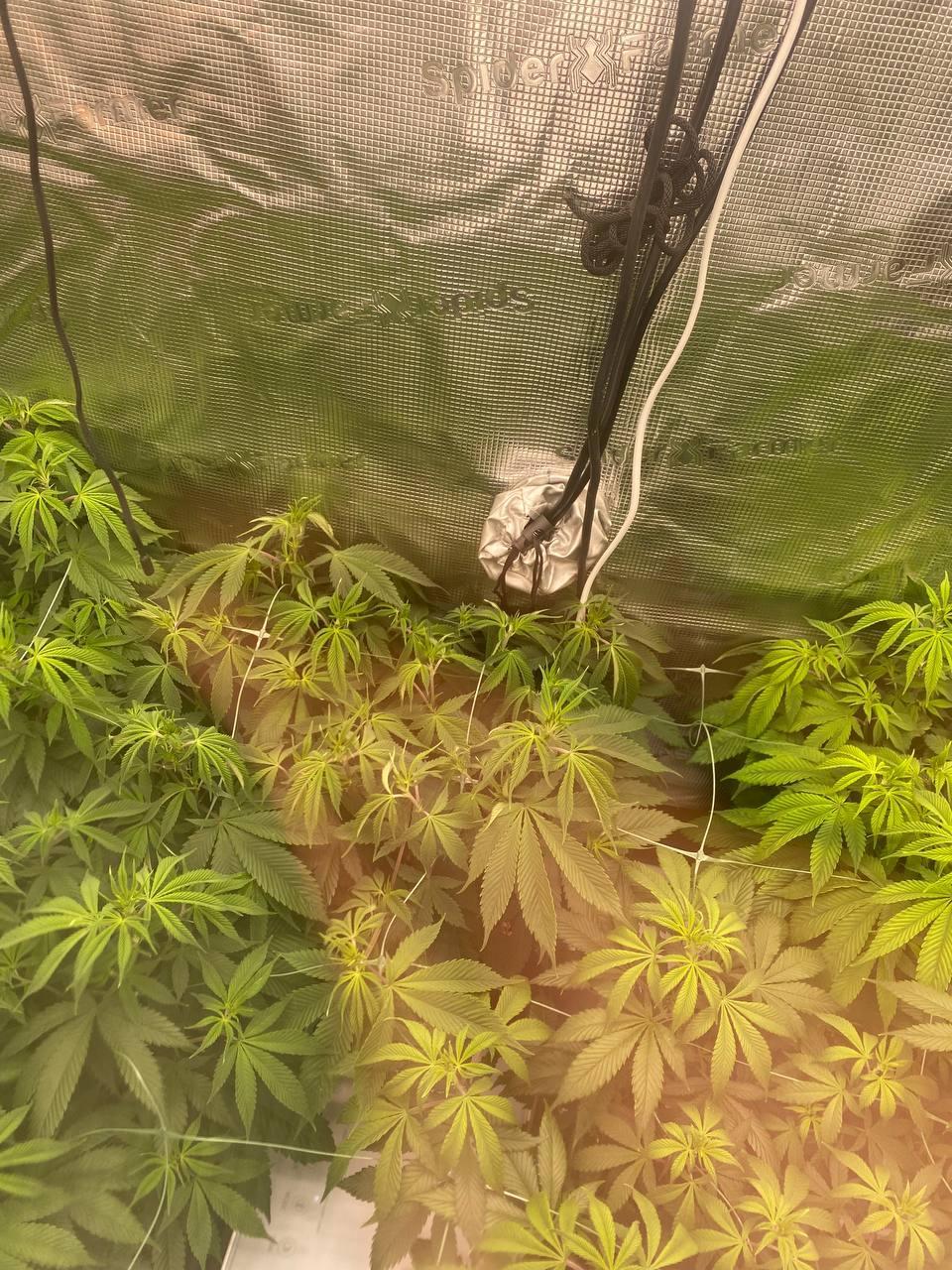
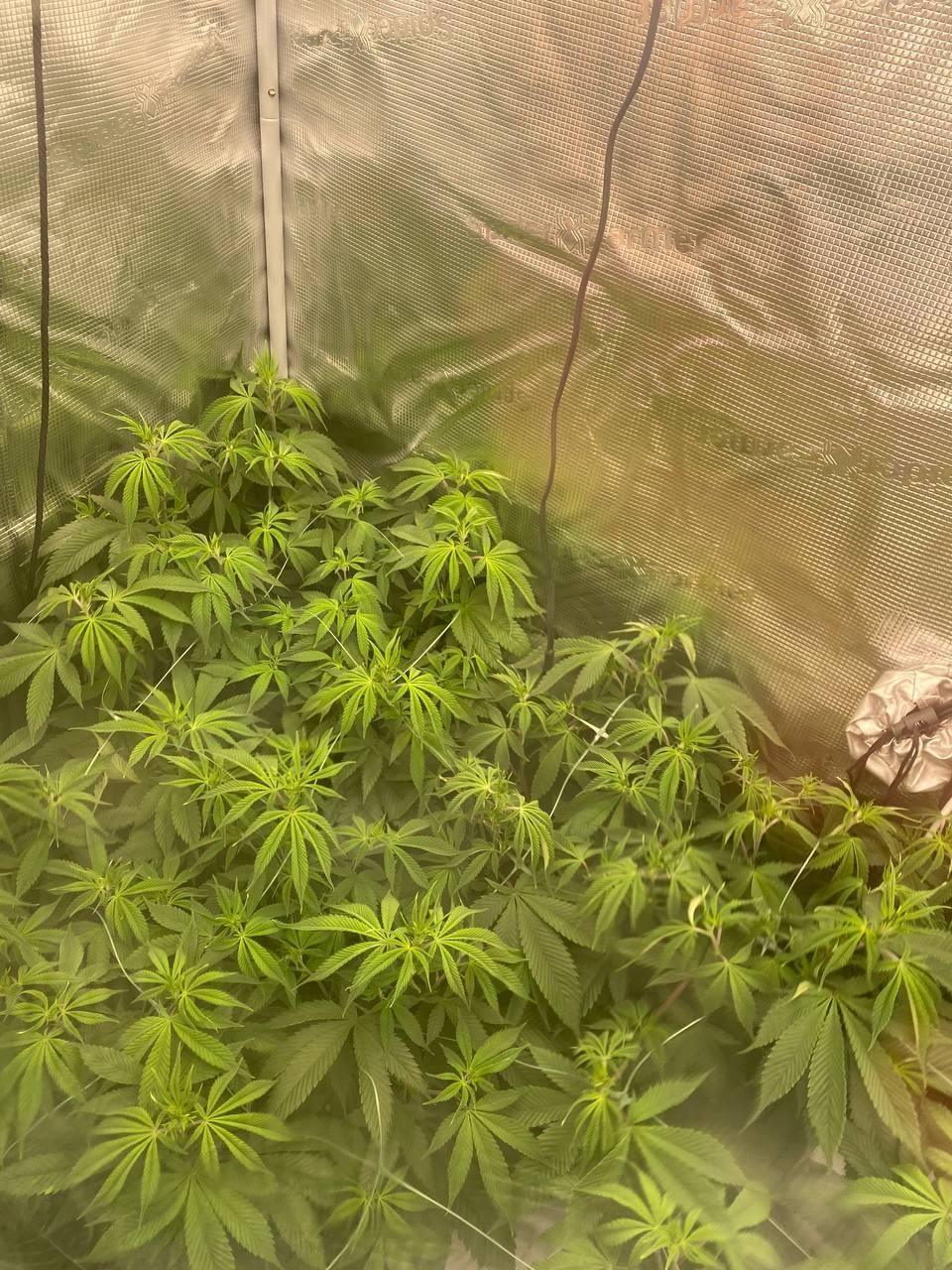
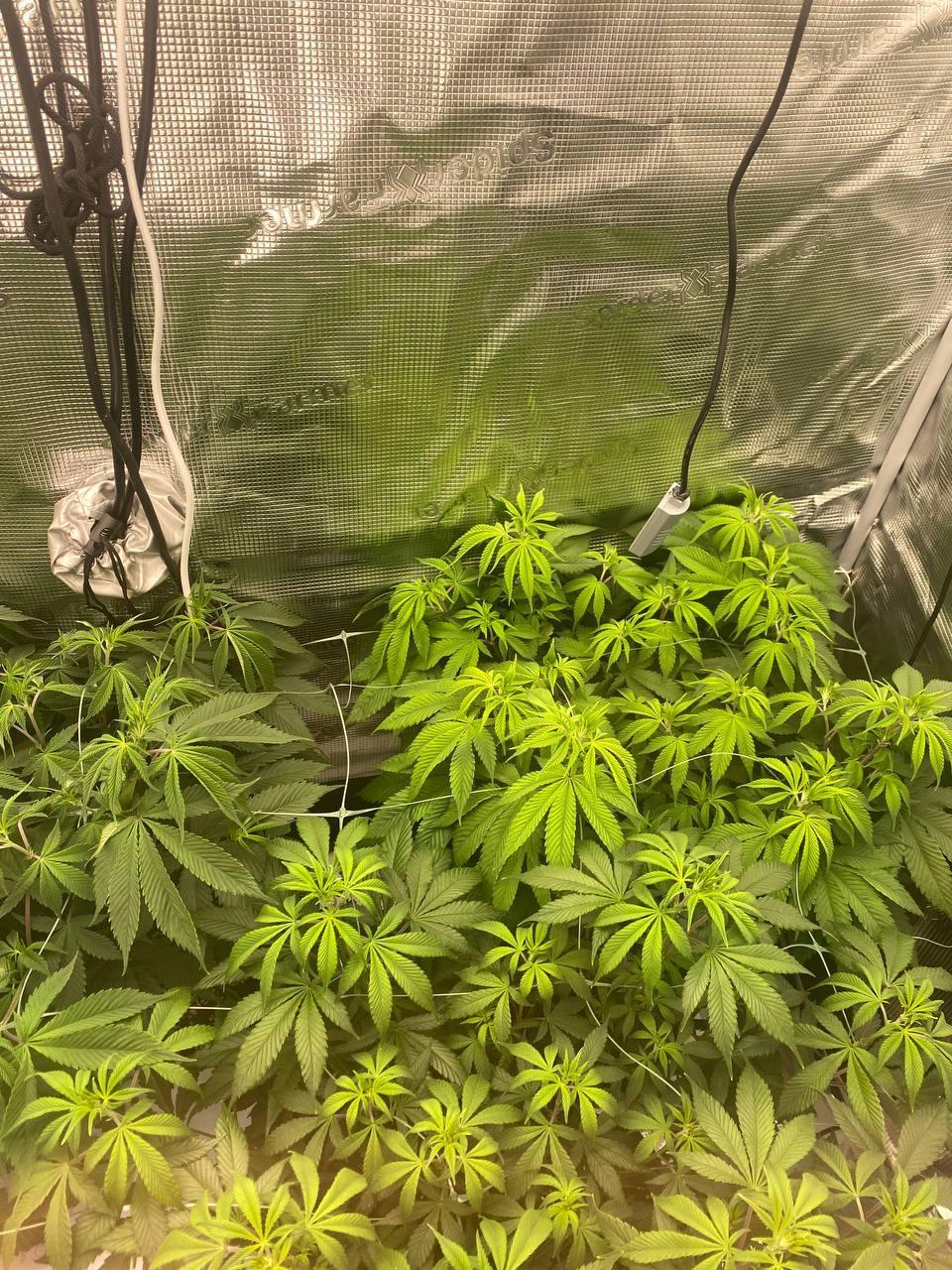
since then they slowly recovered and then slowly grew. They are in supersoil, 26Celsius and 60% RH. Why these tops are weird and skinny and leaves are often crawled down. Thos pics are 6-7 hours after irrigation with dech tap water 6.6ph 150ppm .what could be the problem?
Solved
Leaves. Curl down
likes
squalinoanswered grow question 6mo ago
Hi there. Sorry if the response is long, but I needed to explain a few things. Deionized water is completely devoid of minerals. Even when mixing it with tap water to reach 150 ppm (which is very low), you're creating a mineral imbalance.
Calcium and Magnesium deficiency (CalMag): Thin stems and leaves curling downwards (in a "claw" shape) are often the first signs that the plant lacks structure. Calcium is the "cement" of plant cells. Without it, the stems remain weak and can't support the weight of the leaves.
pH (6.6): This is a bit high for an active vegetative phase, especially if your soil is already well enriched. Aim for 6.2 - 6.3 to maximize absorption.
2. The "enriched" soil and watering
If your soil is already very rich, the plant doesn't need to make much effort to seek its food, which can lead to lazy roots and thus thin stems.
The "Over-watering" effect: Leaves falling 6-7 hours after watering is typical of a substrate that lacks air. If your soil is compacted or too rich in peat, the roots saturate with water and the plant "chokes" instead of standing tall. That's why they look droopy even though they've just been watered.
3. The parameters (26°C / 60% RH)
Your parameters are correct, but at 26°C, the plant has a fast metabolism. If it doesn't have enough silica or calcium to build strong stems, it stretches but remains "soft."
My action plan to strengthen them:
Stop pure deionized water: Use tap water (if it's not terrible) or definitely add a CalMag supplement to your mix to raise your ppm to 300-400.
Add Silica: If you can, use a silica-based additive (Liquid Lead or similar). This will harden the stems and make them much more rigid.
Direct ventilation: Make sure a fan is gently moving the stems. Mechanical stress (wind) forces the plant to produce cellulose and thicken its stems.
Let it dry more: Wait until the pot is really light before watering. The roots need to seek out water to force the plant to strengthen. I hope I could help you. Have a great day!

00110001001001111Oanswered grow question 6mo ago
Overwatering is never caused by normal irrigation.
1) fully saturate - minimal runoff so you don't waste those amendments you paid for in your living soil
2) wait for appropriate dryback and repeat - e.g. letting the top 1" dry is a good trigger for a high water capacity medium.
If this basic procedure causes droop or problems, it is the fault of your medium. Add more drainage/aeration amendments like perlite or vermiculite. For a high water capacity medium, you want 50% perlite/vermiculite or similar... in something made of coco coir you need 33%. In the end, both contexts end up holding roughly the same volume of water per pot - no accident. if the droopiness is occuring only after an irrigation, ti's the fault of the medium. Not much you can do about it midstream. Next time constitute it with better drainage/aeration properties as explained.
more than one thing can cause skinny new growth, too much light, too much K, too much P. New node growth spacing is the simplest way to assess light intensity. How much light depends on various local variables, so it won't always be the same for every garden... node spacing is how you fine-tune it. Too tight and it needs less... too stretched and it needs more. simple. I don't see signs of P or K toxicity, so i'd lean toward too much light being the problem.
Too much light, if only slightly too much, can take a week or more to show symptoms. It may tolerate it intiailly but eventually wear down from the stress and not show signs of droop for quite some time. Growht may even seem fine initially but eventualyl that stalls out too. If that sounds familiar, raise the light.
No info on light but you can take the specs and do some common sesne extrapolations...
For 18 hour vege/auto operation, you only need ~500-600 PPFD. For 12 hours, you need 150% more to equal the same light provided per day over fewer hours - 800-900 PPFD.
Take your umol/s PAR production of the light and divide by area in meters-squared. This gives the max PPFD the light could produce. IT'll always be less than this in practice, fwiw. With typical hanging distnaces and reflective walls, you can expect 35-40 DLI to be up near the top of what you can give with ambient CO2. Your climate will impact how much a plant can handle each day, too.
so, a 300mol/s light coveringn .5m^2 would be ~600 ppfd. If you then reference a DLI table with hours of operation (18) you'll see it equates to 38.9 DLI. Now, that's a good starting point, and it will speed up the trial and error to dial it in correctly using the plant in front of you as a guide. Like i said, with so many variables, your "max" is not likely the same as someone else's. Use the growth pattern to dial ina healthy amount of light... too lanky, needs more; too tight, needs less... simple. The math just gets you within 5-15% of power... dimmer can dial in the rest.
Figure the percent power is proportional to umol/s PAR output. It won't be more than 1-2% off in that regard. So 50% would be 150umol/s PAR etc... Hanging distance should be about teh geometry of even light coverage from end to end without sacrificingn overall average... Hanging distance shouldn't change, but some less-than-ideal contexts may require it.
1 like
Complain

PlantFriendHHanswered grow question 6mo ago
Still looks like too much water to me. I guess there’s not enough oxygen in the root zone.
1 like
Complain

JUNGLE_B4RNSanswered grow question 6mo ago
Puffy leaves can come from many factors, mostly overwatering, or too intense light.
Your plants are just the best measurement tool to know there’s a problem under the soil with the roots.
Back up your light first, and boost the roots with some roots enhancers. Recovering takes about 2 weeks for a plant.
2 likes
Complain
Similar Grow Questions
Solved

GrowingTime
hey guys as written my ph tester went off and i think my plant stayed about a day in the solution around 4 i think, now the solution i back at about 5,5-6 what do you guys suggest? flushing? keep it in the actual solution? drain and change totally the solution?
thanks for allWeek 9
Leaves. Curl down
8y ago
1
3
Solved

Bimbadabang
Identify problem with Yellow and drooping leaves (anything helps)Can anyone identify what’s going on here? (LSD-25 auto week 7)
I’ve got two yellow droopy leaves at the opposite of each other, all the other leaves are fine, 2nd pic is from a week ago.
They’ve had plenty of nitrogen, ph is 6.3, give them 500ml water+feed every 48h and cal-mag
Leaves. Curl down
Leaves. Color · Yellow
6y ago
1
2


Solved

gamberro
Why is my plant looking like this? She was fine until Thursday morning! First time grower!Hi everyone, I planted her on July 24th and everything was going great until Thursday morning when I had to leave on a short trip. I set up a programmed watering system to give her 60ml of water daily early in the morning. When I got back today, I found her looking like this.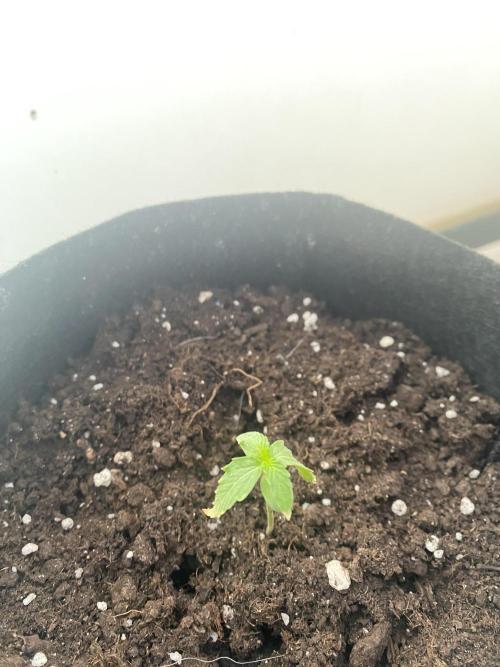
Leaves. Curl down
1y ago
2
2


Solved

Growlecule
Droopy plant early, fading leavesHi gromies how is it growing?😁👊
My PurpleL is showing either a deff or a excess(duh)
I just can't figure it out.
It always happens in early flower, but not on every plant. Although they have the same conditions.
Organic coco mix, feeding tea's, +1time alga bloom and calmag.25%Week 6
Leaves. Curl down
7y ago
3
4


Solved

Nobel
Health of leavesHello guys,
I noticed that the new leaves seem a little curved down and puffed up. I don't know if it's because they just sprouted or can be a symptom of something.
Can you give me an opinion?
May 12 : https://ibb.co/6ZdSFKf
May 11: https://ibb.co/dJ335Week 3
Leaves. Curl down
6y ago
1
2
Solved

wqleo
Leaf ProblemDoes anybody know what happend to my leaves?Can I train this plant now?
Leaves. Curl down
6y ago
1
1
Solved

Rando1314
Neuts lockout possibly??Gave them all haircuts then topped off w new soil in the pots on Sunday night. Watered w nutrients but then today they looked like this!! They’ve gotten progressively worse since Monday morning so I’m thinking possibly a nutrient lockout? I watered just now w flora-Kleen
6y ago
1
1

Solved

aDriftwoodKing
Yellow leaf with brown spots?Plant has only 1 leaf like this, and the opposite fan leaf appears normal. Another plant has a similar leaf like this but with less spots, and one yellow or bleach spot. But only 1 leaf on each plant. My latest diary entry has more info, any help appreciated.
3y ago
6
5
Solved

BakedPanda
Seedling Leaves Drooping (8 days old)Hi,
Need some advice for my first grow.
Noticed today that the seedling's leaves are starting to droop, they were close to 180 degrees horizontal the day before and I have no idea what is going on.
Flushed the pot with water to check drainage, and waters passing through well
Leaves. Curl down
5y ago
2
5


Solved

Mackorodoo
Why going yellow from inside to outsidePot leaves turning yellow slowly from the inside and stems lowering in green colour im thinking most likely alittle over nutting along with over watering would like to avoid flushing if possible rh has been a little low but not significantly so ph 6.4-6.6 runoff 6.0-5.8
Leaves. Curl down
Leaves. Color · Yellow
Plant. Other
6y ago
2
4