


Likes
Comments
Share


@Professor_Chaos
Follow
Ran into some pH issues in the medium.. Runoff would come out at 5.5 at times.. But now that I think about it.. The plant was very Indica.. Fat leaves.. The leaves stayed super close to the main stalk.. Not letting ANY light to the lower branches.. But defoliation is obviously a must.. I grew this with another strain.. Mandarin Cookies and she was ready to flip weeks earlier for sure.. If I could have vegged maybe 2 more weeks she would have been able to fill her half of the tent alot better.. But all in all.. Great strain! Very terpy! Very complex aromas! Super dank strain! Pretty Indica, I'd say... Narcotic like effects. Beautiful plant.. Awesome tastes! Impossible to even try to explain!

Likes
14
Share


@Laezu
Follow
Hahaha, she's gonna be gorgeous when all said and done. The **before** trim pics show off how well this girl is taking in the nutrients. Huuuuuuuge fan leaves off the bat, not seeing any nutrient issues... I also think she might be part fern 😂
The **after** pics are just getting rid of the giant leaves so the new stems can start getting some love too. LST all active stems, topped the main, and defoliated this week. I may have defoliated a little too much, but the leaves are so thick they were really dampening the stems underneath. We'll see how thick she has grown next week.
I hope the video comes through, it's the month 1 timelapse. I was not expecting the stem to do a complete 360 before the roots finally latched on.
Processing
Likes
7
Share


@gablmo
Follow
Finally flower. They are 4 feet now. What am I going to do? I don't want them to burn into the light.

Processing
Likes
32
Share


@Platinouuu
Follow
noto que estan comiendo mucho, osea se secan rápido que es que estan comiendo bastante de lo comun. Las ojas tornandose color amarillo para cambiar a color vino. se ven muy bonitas y estan fewlices. No he cambiado mucho entre los nutrientes (Té y Recharge), he sostenido alimentarlas simples y he tenido muy buenos resultados. muy contento con todo, sigas adelante, buenos humos y feliz 2021
Likes
39
Share


@SirBudAlotts
Follow
I broke the mainstem performing LST😬🙄😳...Idiot 🎭...
Repaired her with some tape, Guess no more LST training for her hehehe..
Actually, she started performing better after the break 🤷♂️...So perhaps it was a blessing 🙌.
No nutes,No problems


Likes
14
Share


@LokalGrenz
Follow
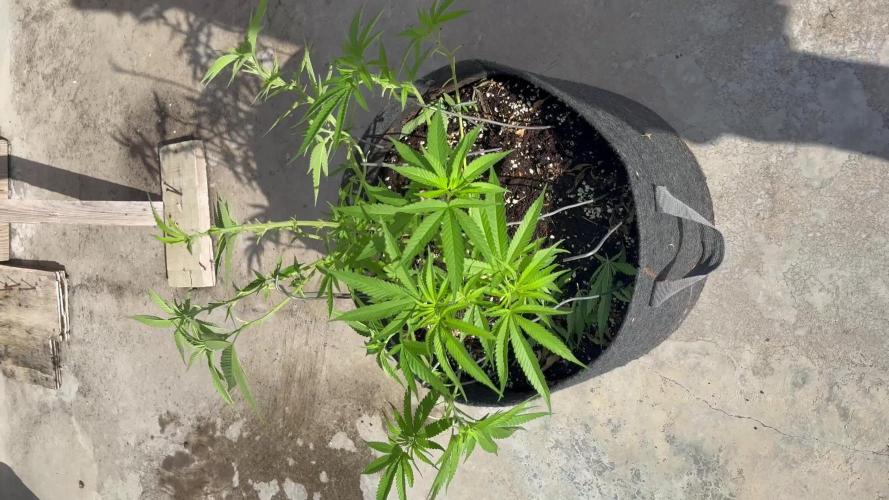
Had some humidity issues been watering with spring water until I get something to filter the tap water
Jan.8th amnesia haze 1 got bit taller so I did some more LST


Likes
2
Share

@Organic473
Follow
Her new location better light spread for growth. November is considered the wettest month here and she is currently experiencing extra rain water and high humidity…so far so good.

Likes
4
Share


@Growbody
Follow
Tag 28: Die CBD Auto 20:1 von FastBads reagiert sehr gut auf LST. 2 Blätter entfernt.

Likes
80
Share

@Hologram
Follow
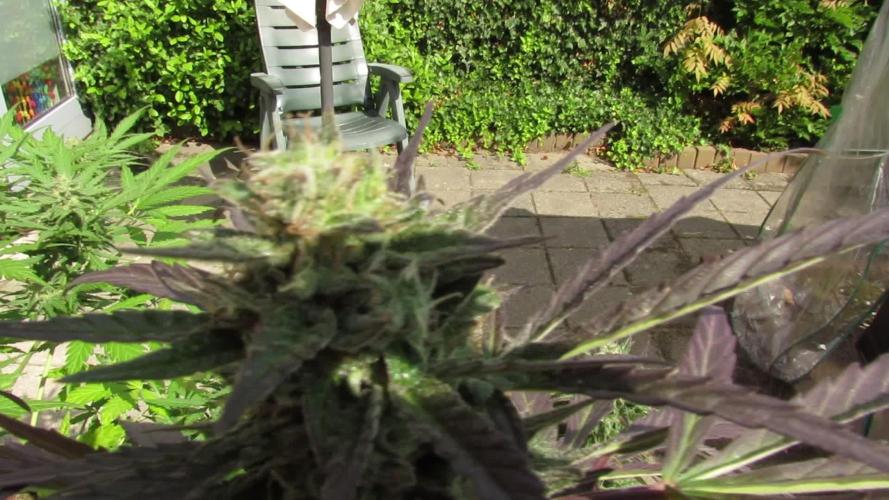
Baphomet is enjoying the autumn sun RN..😎👍
Luckily the weather is mild and sunny (but windy!) today
and the temp still gets above 20C now and then..😸 (dayllighthours are mayb 12h..)
She looks demonically delicious! 😋
Next update is gonna b a harvest..before autumn rears its ugly head..👺
(when its dry enough to vape a bit, so i can make a 'smokereport' at the same time😘)
happy growing 4 all✊
***KISS! Growingtechnique: KeepItSimple, Stupid!

Likes
88
Share


@DogDoctorOfficial
Follow
🌾 Harvest Day — The Grand Finale of the Eternity Grow Cup 🌾
Days 72–73 | Trimmed on May 25 | Posted May 27
What a journey this has been — and what a finish. These five incredible Runtz phenos have now completed their cycle, and today, we celebrate the final stage of their flowering life: the Harvest.
We sent the girls into darkness on Day 70, allowing them a full 48+ hours of rest and reset. The dark period was just a bit longer, truth be told, because time… it flows as it must. This extended dark time helps increase resin production, allowing the trichomes to mature just that final bit more.
On Days 72 and 73, we harvested them with care and reverence.
Each plant was hung upside down, whole, in a perfectly controlled 60% humidity environment for 13 full days. Before hanging, we gently removed only the fan leaves, leaving all trichome-rich sugar leaves in place — a natural armor for the delicate resin glands during drying. Why do we do this? Because those sugar leaves help protect the essential oils and terpenes, preserving potency, flavor, and aroma for the smoothest experience later on.
🌿 The Dry Room & The Trichome Guardians
Throughout the drying, we used a moisture meter to monitor the moisture content in the stems. Once it dropped to around 12–13%, we knew it was time. This tool is a simple but game-changing ally in ensuring a perfect dry — not too fast, not too slow.
We then trimmed everything by hand over a 6.5-hour focused session. Armed with trim bins and good energy, we collected an abundance of glistening trichome heads in the process — a golden bonus from these resin-packed beauties. The leaves themselves told a story: deep purples, near-black shades, autumn fades and metallic tones — just stunning.
Each girl was trimmed in order:
#5 → #4 → #3 → #2 → #1,
revealing dense, chunky buds all the way from top to bottom. Not a single pop-corn bud among them — only rock-solid nugs, heavyweight champions in every sense.
📦 Cure Begins – Grove Bags & Glass Jars
Once trimmed, the buds were tucked carefully into Grove Bags and glass jars, each stabilized at around 61% RH. The Grove Bags handle the microclimate beautifully, keeping humidity between 58–61%, perfect for preserving all that hard-earned quality.
We’re now opening the jars daily, monitoring aroma and feel. This part of the process — the cure — is where the soul of the flower truly comes to life.
☀️ UV, Reds & The Perfect Run
Part of what made this run so special was the precision in light spectrum. 40% whites, full reds, UV and IR, and the girls responded like royalty. The UV pushed trichome development to the max. The deep reds gave us thickness, color, and weight. All of it under ThinkGrow Model Ones powered through the Trolmaster ecosystem — everything syncing in harmony.
This run was stable, lush, expressive — a grower’s dream. To my eyes, this was a perfect run.
⚖️ Final Yield: 1,302 Grams (1.3 kg)
In a 4x4 tent — that’s just 1.2m x 1.2m for metric friends — we pulled in 1,302 grams of flower, not even counting the buds that were taken for filming, photos, or “quality control testing” along the way. 😉
Dense. Loud. Sticky. Resinous.
🌿 The Hidden Half: A Tribute to the Roots
In every grow, there’s a part we don’t always see — a part that lives underground, quietly holding everything together. The roots. And this time, I wanted to honor them too.
When we unpotted the plants after harvest, we were met with massive, dense root systems, completely filling the Autopot trays. These roots were vibrant, white and healthy, looking like noodles in a thick herbal soup — a true sign of vitality. The Autopots system, combined with the Aptus Holland Clean Program and Plagron Green Sensation, made sure they had the perfect environment to expand, absorb, and thrive. The PRO-MIX soil was the perfect foundation — light, fluffy, with excellent aeration. It all worked in harmony.
After unpotting, I carefully washed every root system, removing all soil to prepare them for the next chapter of their story. Now, they’re hanging and drying — and will be left to cure for at least one month, possibly more, in a dry, dark, and well-ventilated space.
But why keep the roots?
Because cannabis roots hold ancient value — both medicinal and ritualistic. Though they don’t contain cannabinoids like THC or CBD, they are rich in alkaloids, triterpenoids, sterols, and other therapeutic compounds that can be anti-inflammatory, analgesic, antifungal, and calming.
Medicinal Benefits of Cannabis Roots:
• Friedelin – known for liver protection and anti-inflammatory effects
• Pentacyclic triterpenoids – believed to support immune and anti-tumor functions
• Alkaloids – some studies suggest pain-relief and muscle-soothing properties
• High levels of fiber and tannins – excellent for digestive and skin applications
🍵 Root Medicine — Ways to Use Dried Roots:
Once fully dried (they should snap like twigs, not bend), they can be gently crushed, powdered, or infused:
🌿 Cannabis Root Tea
Soothing & Detoxifying
• 1 tablespoon of dried, ground roots
• 3 cups of filtered water
• Simmer gently (do not boil) for 20–30 minutes
• Add a bit of ginger or lemon for taste
• Sip warm, especially good for menstrual discomfort, inflammation, and general relaxation
🍲 Healing Root Soup Base
Brothy & Nourishing
• Add a handful of dried roots into a veggie broth or bone broth
• Simmer for 2+ hours
• Strain before serving
• This adds a subtle earthy tone and allows the healing properties to infuse your meal
Topical Root Cream or Balm
Great for sore muscles or irritated skin
• Infuse roots in olive oil or coconut oil (low heat, 2–3 hours)
• Strain and mix with beeswax to form a balm
• Add essential oils like lavender or eucalyptus
• Apply to temples, joints, or sore areas
🛁 Root Soak Bath
Perfect for grounding and full-body relief
• Bundle dried roots in muslin or cheesecloth
• Steep in hot bathwater for 15 minutes before entering
• Let the soak draw out toxins and ease tension
⸻
The roots are more than just the anchor of the plant. They are its memory, its foundation, its quiet miracle. By using them, we honor the entire lifecycle — nothing is wasted, and everything has a purpose.
This part of the process is new for many growers, and I truly encourage anyone reading this to try saving and reusing the roots. Dry them, process them gently, and let them offer you one final gift.
Much love to Aptus Holland, Plagron, Autopots, and PRO-MIX — this wouldn’t have been possible without their harmony working underground while the beauty bloomed above.
🌱 The Gift That Keeps Giving: Reusing the Soil
As we say goodbye to one incredible season, we begin quietly preparing for the next. But not everything gets thrown away. In this garden, nothing is wasted. Just like the roots, the soil gets another life.
After each harvest, I carefully remove the remaining roots and break up the soil. I inspect it, rejuvenate it with compost and beneficial microbes when needed, and most importantly, I repurpose it — giving it a second life in my outdoor veggie garden.
Why do I do it?
Because this soil has already done something extraordinary. It has supported life, held moisture, breathed air, balanced nutrients, and fed plants that became medicine. It’s not just dirt — it’s a living ecosystem. And to throw it away would be to ignore its potential.
In my veggie garden, this recycled soil now nurtures cucumbers, tomatoes, courgettes, and so many other little miracles waiting to unfold. It’s a beautiful way of continuing the cycle, taking all the energy and intention that was once used to grow cannabis and transferring it into growing food. 🌞🍅🥒
🌾 The Benefits of Reusing Soil:
• Sustainability — less waste, less environmental impact
• Cost-effective — no need to constantly buy fresh medium
• Soil memory — rich in organic material, microbial life, and structure
• Nutrient potential — amended soil still holds value for many plants
• A deeper connection — a way to honor the entire cycle of growth
When we reuse our soil, we’re not just being resourceful — we’re believing in tomorrow. We’re trusting that what we’ve built can be rebuilt. That what has been used can become useful again. That from what seems like an ending, something new can always emerge.
And maybe that’s the most powerful message of all in this journey:
Planting is believing in tomorrow. 🌍🌱
Every seed in the ground is a little act of faith.
So as this season comes to a close, the first tomatoes have been planted. The cucumbers are reaching for the sun. The courgettes are settling in. And the same soil that once gave us dense, resinous flowers is now feeding the vegetables that will grace the table.
From harvest to hope — the cycle continues. And it’s beautiful.
🎉 The Final Touches
Fun fact:
• Trimmed on May 25
• Photo shoot on May 26
• This report: May 27
• Dry Bud Exclusive Photo Set: Coming soon
Stay tuned — the next upload will be something special, just in time before the Eternity Grow Cup closes on May 31st.
⸻
💚 Thank You
To Zamnesia — your genetics were nothing short of extraordinary.
To GrowDiaries, for hosting such a powerful space for community.
To everyone following this journey, your support, love, and kind words fuel this project and keep the spirit alive.
Let’s keep pushing boundaries, together.
With roots deep in the earth and eyes on the stars — the next chapter begins soon.
Much Growers love always,
🌱 Dog Doctor Official 🌱
Genetics - Runtz https://www.zamnesia.com/6000-zamnesia-seeds-runtz-feminized.html
Nutrients - Plagron https://plagron.com/en/hobby
- Aptus Holland https://aptus-holland.com/
Controls - Trol Master https://www.trolmaster.eu/
LED - https://www.futureofgrow.com/en
LED - https://www.thinkgrowled.com
Soil - https://www.promixgardening.com/en
Germination - Cannakan https://cannakan.com/?srsltid=AfmBOopXr-inLXajXu3QFgKXCXXos4F1oEvScjMKIB5MR5dk8-GJ-F49
DOGDOCTOR 15% off
Smoking Papers - https://ziggioriginal.com/
Terpene saver - https://grovebags.com/
As always thank you all for stopping by, for the love and for it all , this journey of mine wold just not be the same without you guys, the love and support is very much appreciloved and i fell honored with you all in my life
With true love comes happiness Always believe in your self and always do things expecting nothing and with an open heart , be a giver and the universe will give back to you in ways you could not even imagine so
As always, this is shared for educational purposes, aiming to spread understanding and appreciation for this plant. The journey with nature is one of discovery, creativity, and respect. Let’s celebrate it responsibly and continue to learn and grow together!
Growers Love To you All 💚
#EternityGrowCup #RuntzHunt #GrowersLove #CannabisCommunity #AptusHolland #ProMixSoil #TrolMaster #Zamnesia #Plagron #ZiggiPapers #Grovebags

Likes
33
Share


@BodyByVio
Follow
Harvested 445g dry bud from 300w led light. I consider it a successful grow.

Likes
48
Share


@CapybaraProbioticTeam
Follow
Bueno, esta fue la octava semana de floración. Desafortunadamente no pude sacar ninguna buena foto bien de cerca, pero la mayoría de todos los tricomas están bien blancos (o "lechosos"), pero casi ninguno color ámbar todavía. Para algunos, este seria un punto optimo de corte, pero a mi personalmente me gusta que tengan un 20%-30% de tricomas ámbar. Espero que para finales de la semana que viene pueda cosechar. Pero como ya sabemos, la ansiedad es nuestra peor enemiga cuando de cosechar se trata!
Nada que cambiar respecto de la semana anterior, riego y medio ambiente similar.
Esto es todo por ahora. Espero que les gusten las fotos y el vídeo de la planta completa!😃
(Todas las fotos son del día 119).

Likes
9
Share


@Cestlaweed
Follow
Se realizo podas de bajo y comienza segunda semana de LSD 25.
Gran estirón al final de la semana.
Temperatura se comienza a elevar hasta valores de 31 grados.


Likes
29
Share


@valiotoro
Follow
Hello everyone 😎
After 24hours in a glass of water with a few drops of hydrogen peroxyde all the seeds have germinate🌱🦍😈
They will grow under the new Mars Hydro FC1200 evo💥
Likes
27
Share


@w33dhawk
Follow
Moin moin ihr lieben! Diese Woche war auch wieder nicht viel los tägliches biegen und binden hab ich am Sonntag 05.03.23 das letzte mal gemacht (somit eingestellt) und die Damen dürfen nach oben auf steigen (liegt daran das ich wirklich kein platzt mehr habe um zu weben) aber der stretch ist noch nicht wirklich zurück gegangen und der Platz nach oben wird bald zur Mangel ware. Naja drückt mir die Daumen das der stretch bald vorüber geht und das alles hin haut. Habe am 08.03.23 also an Tag 21 nach Umstellung den ersten compost Tee angesetzt der dann Anfang der neuen Woche also Woche 4 nach Umstellung oder um genau zu sein am 09.03.23 vergossen wird ansonsten gibt es nicht viel zu sagen...... Euch allen glitzer nuggetz, zur ernte ich wünsche! 🖖
Edit:habe schon die ersten Bilder für den Kompost Tee rein gesetzt nächste Woche dazu mehr
Likes
1
Share


@thesocialclub
Follow
Very good terpene profile and bud structure. EC is at 3.5, and pH is at 6.1. One plant received slightly less water due to a broken dripper. VPD is at 1.1 kPa.

Likes
6
Share


@Excalibur
Follow
05/10/2018
New Tent setup.
4 plants - Veg room.
06/10/2018
Re-arranged the room to make it more practical.
07/10/2018
2x Seeds Pineapple Haze dropped into Root Riot.
08/10/2019
Propagation kit added
11/10/2018
Day 5
Sprouted
12/10/2018
Day 6 -
Stretching
13/10/2018
Day 7 -
Added to the tent setup.

Likes
6
Share


Likes
6
Share

@Chubbs
Follow
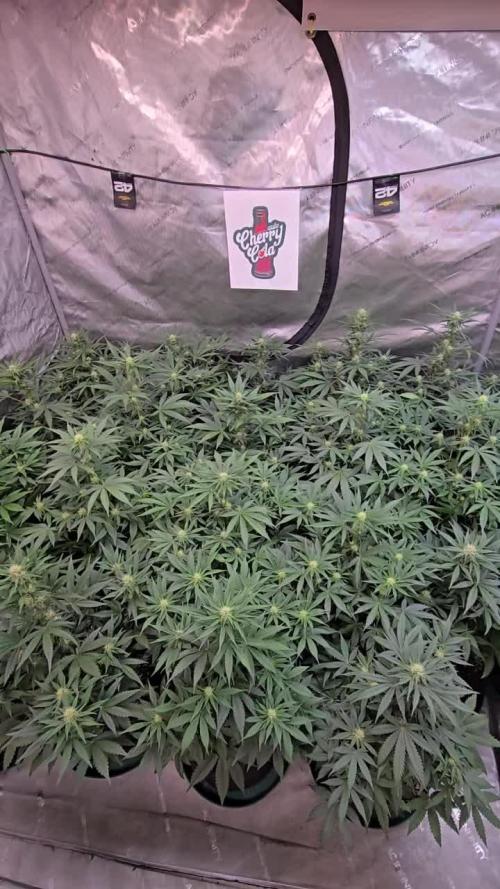
These girls are growing amazing. I did some defoliation and lollipopped them this week. Hopefully with more air flow at the canopy level and lollipopping, the tops and main colas can focus all the energy on growing some beautiful flowers. All in all Happy Growing.