The Grow Awards 2026 🏆
Likes
Comments
Share
@BlumenBot
Follow
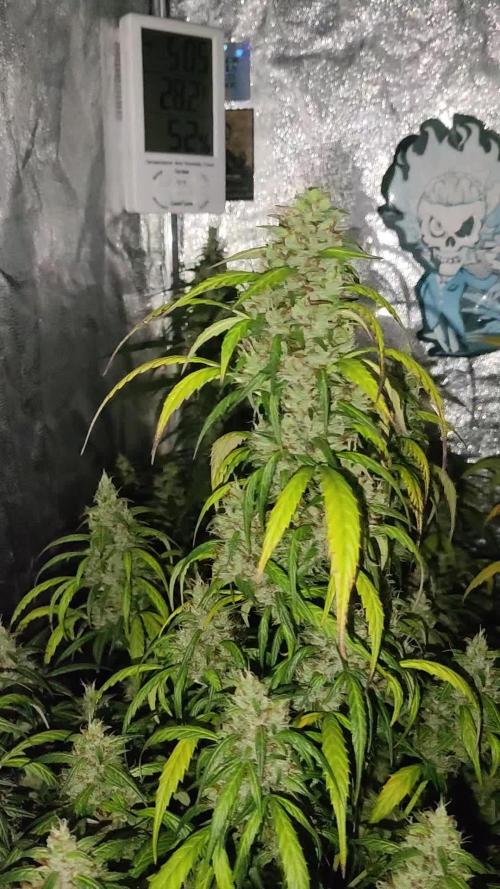
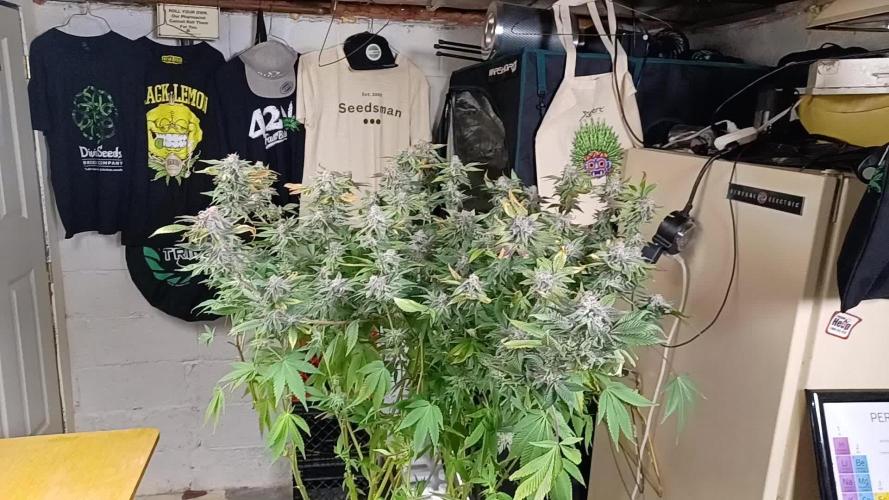
Getting ready to leave for the holidays. She will be on auto feed for 7 days. Hopefully 2.5 gallons gets her through! 12/20 - spread her out abit to add more light down below and allow more air flow. She is looking awesome 12/21 - water only feeding 6.3ph 12/22 - she's all set for 7 days of auto watering with 2.5 gallons of nutrient mixed water at 6.3ph. Pump in the reservoir mixing things around for me. 12/23 - and it's off on its own auto watering 5 mins per day!! Let's see how this goes... 12/24 - merry Xmas eve!!
Processing
Likes
12
Share
@Adam420
Follow
19 inches and beautiful. This plant is as large as my Indica plants and still in veg
Likes
8
Share
@Oldwied
Follow
I added two 120mm fans and CO2 bag. Plant looks great. Kush is very compact and need less defoliation. Happiness is the perfect ScroOG plant. One or two weeks and I switch to bloom. Before Happines grows to big, because the high of my grow space is very limited.
Likes
28
Share
October 28, 2021 Doing my weekly diary updates a couple days early this week. This weekend I'm doing some work on the basement to finally finish the last of the construction projects for the Dude Cave!!! Once finished, I have a new 2x3 tent and a Viparspectra XS2000 (240w LED) that will be set up next week. Then I'll run the 2x3 for veg/autos and the 2x4 for photos. I spoke with Dylan from Coast of Maine today about my experience and issues with these girls. He said with a 3 gallon pot the Stonington Blend would only feed for around 3 weeks and additional nutrition should be fed starting around the 3rd week. He recommended the Stonington Blend Organic Plant Food as a top dress and then also adding Fish Bone Meal around week 6 (assuming autoflower and 10-12 weeks seed to harvest). He also said to go seed to harvest with the Stonington Blend adding water only would require at least 7-10 gallon pots for autos. Well, I already knew they were malnourished/underfed and I have been feeding Fox Farm Big Bloom and Neptunes Harvest Fish and Seaweed. I'm not sure how much these nutes may help at this point, but they can't hurt. I really have nothing to lose here, so let's see what they look like next week.
Likes
6
Share
@mingokoon
Follow
Week 3: 2 are thriving 10" and 7", 1 slightly smaller 3", 1 quite small but healthy green and 1 sickly. light is now at full so I will wait while they grow into the light but may lower it depending on how they take the light. I will slowly bring it to 3'. Started the calmag and increasing nutes.
Likes
10
Share
@barlobruz
Follow
6/29/2021 - New mains for quadlining growing out nicely since topping. - Watered with un-PH'd de-chlorinated tap water. - Foliar fed with DIY kelp extract. - She's jumping out the gym, very excited. - It's been 5 weeks of alternating DIY nutrient teas (coconut water + kelp extract + neem & karanja extract + water) and un-PH'd Toronto tap water, and I've seen no signs of deficiencies or lockouts. - She's taking well to the various DIY foliar sprays as well, no burning. 7/1/2021 - I think one of my bottle sprayers is infected with butyric acid, 'cause it stinks in here, loll. - SHE WANTS TO GROOOWWW! 7/4/2021 - Growth a week after topping is strong. Hoping the auxins in the kelp foliar, and nutrients in coconut water are responsible. - I barely need to train her right now, it's as if she wanted to be topped. Besides some periodic light bending, she seems to be leveling out her branches herself.
Likes
19
Share
Yellow butterfly came to see me the other day; that was nice. Starting to show signs of stress on the odd leaf, localized isolated blips, blemishes, who said growing up was going to be easy! Smaller leaves have less surface area for stomata to occupy, so the stomata are packed more densely to maintain adequate gas exchange. Smaller leaves might have higher stomatal density to compensate for their smaller size, potentially maximizing carbon uptake and minimizing water loss. Environmental conditions like light intensity and water availability can influence stomatal density, and these factors can affect leaf size as well. Leaf development involves cell division and expansion, and stomatal differentiation is sensitive to these processes. In essence, the smaller leaf size can lead to a higher stomatal density due to the constraints of available space and the need to optimize gas exchange for photosynthesis and transpiration. In the long term, UV-B radiation can lead to more complex changes in stomatal morphology, including effects on both stomatal density and size, potentially impacting carbon sequestration and water use. In essence, UV-B can be a double-edged sword for stomata: It can induce stomatal closure and potentially reduce stomatal size, but it may also trigger an increase in stomatal density as a compensatory mechanism. It is generally more efficient for gas exchange to have smaller leaves with a higher stomatal density, rather than large leaves with lower stomatal density. This is because smaller stomata can facilitate faster gas exchange due to shorter diffusion pathways, even though they may have the same total pore area as fewer, larger stomata. Leaf size tends to decrease in colder climates to reduce heat loss, while larger leaves are more common in warmer, humid environments. Plants in arid regions often develop smaller leaves with a thicker cuticle and/or hairs to minimize water loss through transpiration. Conversely, plants in wet environments may have larger leaves and drip tips to facilitate water runoff. Leaf size and shape can vary based on light availability. For example, leaves in shaded areas may be larger and thinner to maximize light absorption. Leaf mass per area (LMA) can be higher in stressful environments with limited nutrients, indicating a greater investment in structural components for protection and critical resource conservation. Wind speed, humidity, and soil conditions can also influence leaf morphology, leading to variations in leaf shape, size, and surface characteristics. Small leaves: Reduce water loss in arid or cold climates. Environmental conditions significantly affect gene expression in plants. Plants are sessile organisms, meaning they cannot move to escape unfavorable conditions, so they rely on gene expression to adapt to their surroundings. Environmental factors like light, temperature, water, and nutrient availability can trigger changes in gene expression, allowing plants to respond to and survive in diverse environments. Depending on the environment a young seedling encounters, the developmental program following seed germination could be skotomorphogenesis in the dark or photomorphogenesis in the light. Light signals are interpreted by a repertoire of photoreceptors followed by sophisticated gene expression networks, eventually resulting in developmental changes. The expression and functions of photoreceptors and key signaling molecules are highly coordinated and regulated at multiple levels of the central dogma in molecular biology. Light activates gene expression through the actions of positive transcriptional regulators and the relaxation of chromatin by histone acetylation. Small regulatory RNAs help attenuate the expression of light-responsive genes. Alternative splicing, protein phosphorylation/dephosphorylation, the formation of diverse transcriptional complexes, and selective protein degradation all contribute to proteome diversity and change the functions of individual proteins. Photomorphogenesis, the light-driven developmental changes in plants, significantly impacts gene expression. It involves a cascade of events where light signals, perceived by photoreceptors, trigger changes in gene expression patterns, ultimately leading to the development of a plant in response to its light environment. Genes are expressed, not dictated! While having the potential to encode proteins, genes are not automatically and constantly active. Instead, their expression (the process of turning them into proteins) is carefully regulated by the cell, responding to internal and external signals. This means that genes can be "turned on" or "turned off," and the level of expression can be adjusted, depending on the cell's needs and the surrounding environment. In plants, genes are not simply "on" or "off" but rather their expression is carefully regulated based on various factors, including the cell type, developmental stage, and environmental conditions. This means that while all cells in a plant contain the same genetic information (the same genes), different cells will express different subsets of those genes at different times. This regulation is crucial for the proper functioning and development of the plant. When a green plant is exposed to red light, much of the red light is absorbed, but some is also reflected back. The reflected red light, along with any blue light reflected from other parts of the plant, can be perceived by our eyes as purple. Carotenoids absorb light in blue-green region of the visible spectrum, complementing chlorophyll's absorption in the red region. They safeguard the photosynthetic machinery from excessive light by activating singlet oxygen, an oxidant formed during photosynthesis. Carotenoids also quench triplet chlorophyll, which can negatively affect photosynthesis, and scavenge reactive oxygen species (ROS) that can damage cellular proteins. Additionally, carotenoid derivatives signal plant development and responses to environmental cues. They serve as precursors for the biosynthesis of phytohormones such as abscisic acid () and strigolactones (SLs). These pigments are responsible for the orange, red, and yellow hues of fruits and vegetables, while acting as free scavengers to protect plants during photosynthesis. Singlet oxygen (¹O₂) is an electronically excited state of molecular oxygen (O₂). Singlet oxygen is produced as a byproduct during photosynthesis, primarily within the photosystem II (PSII) reaction center and light-harvesting antenna complex. This occurs when excess energy from excited chlorophyll molecules is transferred to molecular oxygen. While singlet oxygen can cause oxidative damage, plants have mechanisms to manage its production and mitigate its harmful effects. Singlet oxygen (¹O₂) is considered a reactive oxygen species (ROS). It's a form of oxygen with higher energy and reactivity compared to the more common triplet oxygen found in its ground state. Singlet oxygen is generated both in biological systems, such as during photosynthesis in plants, and in cellular processes, and through chemical and photochemical reactions. While singlet oxygen is a ROS, it's important to note that it differs from other ROS like superoxide (O₂⁻), hydrogen peroxide (H₂O₂), and hydroxyl radicals (OH) in its formation, reactivity, and specific biological roles. Non-photochemical quenching (NPQ) protects plants from damage caused by reactive oxygen species (ROS) by dissipating excess light energy as heat. This process reduces the overexcitation of photosynthetic pigments, which can lead to the production of ROS, thus mitigating the potential for photodamage. Zeaxanthin, a carotenoid pigment, plays a crucial role in photoprotection in plants by both enhancing non-photochemical quenching (NPQ) and scavenging reactive oxygen species (ROS). In high-light conditions, zeaxanthin is synthesized from violaxanthin through the xanthophyll cycle, and this zeaxanthin then facilitates heat dissipation of excess light energy (NPQ) and quenches harmful ROS. The Issue of Singlet Oxygen!! ROS Formation: Blue light, with its higher energy photons, can promote the formation of reactive oxygen species (ROS), including singlet oxygen, within the plant. Potential Damage: High levels of ROS can damage cellular components, including proteins, lipids, and DNA, potentially impacting plant health and productivity. Balancing Act: A balanced spectrum of light, including both blue and red light, is crucial for mitigating the harmful effects of excessive blue light and promoting optimal plant growth and stress tolerance. The Importance of Red Light: Red light (especially far-red) can help to mitigate the negative effects of excessive blue light by: Balancing the Photoreceptor Response: Red light can influence the activity of photoreceptors like phytochrome, which are involved in regulating plant responses to different light wavelengths. Enhancing Antioxidant Production: Red and blue light can stimulate the production of antioxidants, which help to neutralize ROS and protect the plant from oxidative damage. Optimizing Photosynthesis: Red light is efficiently used in photosynthesis, and its combination with blue light can lead to increased photosynthetic efficiency and biomass production. In controlled environments like greenhouses and vertical farms, optimizing the ratio of blue and red light is a key strategy for promoting healthy plant growth and yield. Understanding the interplay between blue light signaling, ROS production, and antioxidant defense mechanisms can inform breeding programs and biotechnological interventions aimed at improving plant stress resistance. In summary, while blue light is essential for plant development and photosynthesis, it's crucial to balance it with other light wavelengths, particularly red light, to prevent excessive ROS formation and promote overall plant health. Oxidative damage in plants occurs when there's an imbalance between the production of reactive oxygen species (ROS) and the plant's ability to neutralize them, leading to cellular damage. This imbalance, known as oxidative stress, can result from various environmental stressors, affecting plant growth, development, and overall productivity. Causes of Oxidative Damage: Abiotic stresses: These include extreme temperatures (heat and cold), drought, salinity, heavy metal toxicity, and excessive light. Biotic stresses: Pathogen attacks and insect infestations can also trigger oxidative stress. Metabolic processes: Normal cellular activities, particularly in chloroplasts, mitochondria, and peroxisomes, can generate ROS as byproducts. Certain chlorophyll biosynthesis intermediates can produce singlet oxygen (1O2), a potent ROS, leading to oxidative damage. ROS can damage lipids (lipid peroxidation), proteins, carbohydrates, and nucleic acids (DNA). Oxidative stress can compromise the integrity of cell membranes, affecting their function and permeability. Oxidative damage can interfere with essential cellular functions, including photosynthesis, respiration, and signal transduction. In severe cases, oxidative stress can trigger programmed cell death (apoptosis). Oxidative damage can lead to stunted growth, reduced biomass, and lower crop yields. Plants have evolved intricate antioxidant defense systems to counteract oxidative stress. These include: Enzymes like superoxide dismutase (SOD), catalase (CAT), and various peroxidases scavenge ROS and neutralize their damaging effects. Antioxidant molecules like glutathione, ascorbic acid (vitamin C), C60 fullerene, and carotenoids directly neutralize ROS. Developing plant varieties with gene expression focused on enhanced antioxidant capacity and stress tolerance is crucial. Optimizing irrigation, fertilization, and other management practices can help minimize stress and oxidative damage. Applying antioxidant compounds or elicitors can help plants cope with oxidative stress. Introducing genes for enhanced antioxidant enzymes or stress-related proteins over generations. Phytohormones, also known as plant hormones, are a group of naturally occurring organic compounds that regulate plant growth, development, and various physiological processes. The five major classes of phytohormones are: auxins, gibberellins, cytokinins, ethylene, and abscisic acid. In addition to these, other phytohormones like brassinosteroids, jasmonates, and salicylates also play significant roles. Here's a breakdown of the key phytohormones: Auxins: Primarily involved in cell elongation, root initiation, and apical dominance. Gibberellins: Promote stem elongation, seed germination, and flowering. Cytokinins: Stimulate cell division and differentiation, and delay leaf senescence. Ethylene: Regulates fruit ripening, leaf abscission, and senescence. Abscisic acid (ABA): Plays a role in seed dormancy, stomatal closure, and stress responses. Brassinosteroids: Involved in cell elongation, division, and stress responses. Jasmonates: Regulate plant defense against pathogens and herbivores, as well as other processes. Salicylic acid: Plays a role in plant defense against pathogens. 1. Red and Far-Red Light (Phytochromes): Red light: Primarily activates the phytochrome system, converting it to its active form (Pfr), which promotes processes like stem elongation and flowering. Far-red light: Inhibits the phytochrome system by converting the active Pfr form back to the inactive Pr form. This can trigger shade avoidance responses and inhibit germination. Phytohormones: Red and far-red light regulate phytohormones like auxin and gibberellins, which are involved in stem elongation and other growth processes. 2. Blue Light (Cryptochromes and Phototropins): Blue light: Activates cryptochromes and phototropins, which are involved in various processes like stomatal opening, seedling de-etiolation, and phototropism (growth towards light). Phytohormones: Blue light affects auxin levels, influencing stem growth, and also impacts other phytohormones involved in these processes. Example: Blue light can promote vegetative growth and can interact with red light to promote flowering. 3. UV-B Light (UV-B Receptors): UV-B light: Perceived by UVR8 receptors, it can affect plant growth and development and has roles in stress responses, like UV protection. Phytohormones: UV-B light can influence phytohormones involved in stress responses, potentially affecting growth and development. 4. Other Colors: Green light: Plants are generally less sensitive to green light, as chlorophyll reflects it. Other wavelengths: While less studied, other wavelengths can also influence plant growth and development through interactions with different photoreceptors and phytohormones. Key Points: Cross-Signaling: Plants often experience a mix of light wavelengths, leading to complex interactions between different photoreceptors and phytohormones. Species Variability: The precise effects of light color on phytohormones can vary between different plant species. Hormonal Interactions: Phytohormones don't act in isolation; their interactions and interplay with other phytohormones and environmental signals are critical for plant responses. The spectral ratio of light (the composition of different colors of light) significantly influences a plant's hormonal balance. Different wavelengths of light are perceived by specific photoreceptors in plants, which in turn regulate the production and activity of various plant hormones (phytohormones). These hormones then control a wide range of developmental processes.
Likes
21
Share
@NSABND
Follow
Today start of week 10 (Day 70) 😎😵😏 with Trailer Park Mod 😂😂😂😂 i had old fans around here and a ice box, so i startet to build the 7 watts Trailer Park Fans Mod 😁😁😁 It´s Monday Day 71 and "Hilde" got another fertilizer shot today from Day 72 to Day 75 i was on a Road Trip... 😳😎😳 Back from Road Trip and "Hilde" got another fertilizer shot today 😎👍😏
Likes
54
Share
@RastaGrow
Follow
Greetings Rastamans, as you can see my girl is getting thicker and is growing weekly. Every used fertilizers have very good results. Slowly aproaching the time of harvesting, This is evidenced by the trichomes as well as the timing of the flowering cycle. I believe that the harvest from this plant will be great. Use of the necessarry techniques at the right period of times gave me the results that you see yourselves. It is the last day of lighting. It will be in dark for 36hrs. Also today defoliation will take its place and I have already splited main stalk. hope you get enjoyment and also knowledge from my diaries. Wish you all good luck. Yours trully Rastagrow
Likes
3
Share
At the and of the week all lST supporting thenfs were removed: canopy is formed and all the stems are hardened. The progress is very slow, but I like how the plant looks, it seems to be healthy and has more flowering points than I've seen on any autos I grew before. I also adjusted the fertilizers ratios to get more optimal for flowering stage and added pH-down to improve the solution assimilation.
Likes
3
Share
¡ÚLTIMA SEMANA! Esta semana fue la última para estas preciosas 🍇PURPLE PUNCH🍇 todas han estado aumentando el peso de las flores estas dos semanas atrás, engordando hasta tal punto de doblarse enteras, tuve que agarrar dos fenotipos bastante pesados al armario. en total estuvieron 9 semanas en floración. De los 6 fenotipos x3 han cogido tonalidades muy bonitas como podéis ver en las fotos. ⬆️90cm ☀️Interior ⏳64 días 🏺11L 😶 Indica: 90% / Sativa: 10% 🚀THC: 25%
Likes
3
Share
@FicoCG
Follow
Hey Leute, Chup Chup die kleine Lokomotive ist stark am Dampfen!!! Die Woche 7 ist im vollem Gange und die Buds werden immer größer ^^ Ich konnte noch schnell genug reagieren, habe mich jetzt bei einem ppm von 1200 eingependelt. Die Hitze von der Lampe ist immens, habe sie jetzt auf 75% dauerhaft reduziert, und die Höhe eingestellt, ca 1200 ppfd im ganzen Zelt. Die Lemon Skunk (Red No. 2) rechts hinten macht mir etwas Sorgen aber jetzt ist es auch nicht mehr so lange bis zur Ernte!!! Ich bin mal gespannt ob das mit dem Roten Licht wirklich eine Wirkung hat und ich bessere Buds und früher ernten kann. Sie haben immer noch immensen Durst alle 4 Tage 5 Liter pH und Dünger Wasser. Ich hoffe es gefällt euch wie sie aussehen, schade, dass man den Duft nicht durch Handy schicken kann!!! Liebe Grüße Fićo!
Likes
12
Share
@timbarin
Follow
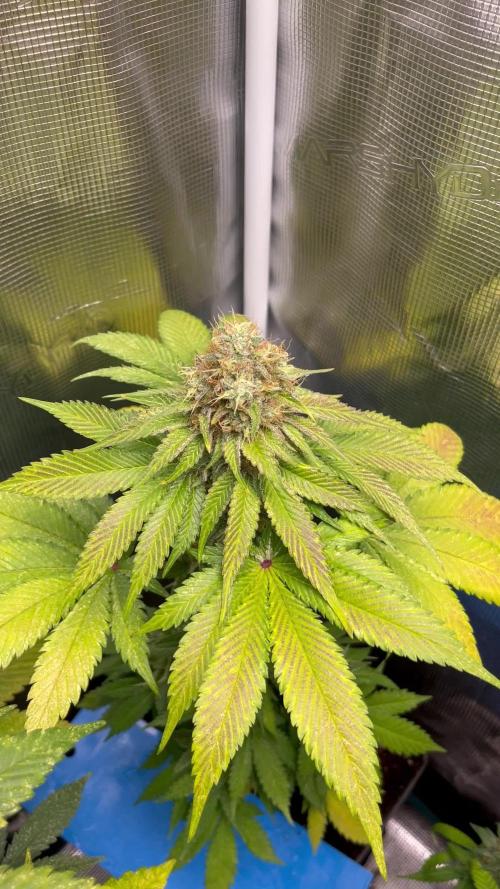
Week 4 of flowering just ended. She has some burned out leafs and requires bit of cleaning. I'll perform some maintenance next week when I'm back.
Likes
2
Share
@Ninjabuds
Follow
My Purple Kush plant is the smallest in the tent and hasn't been growing much. It's a classic strain, so I'm not sure why it's struggling. Maybe I just got a bad seed. I'm still hoping it'll turn purple and delicious, though! Okay, This past week has been absolutely fantastic! The weather has been incredible, and I've been able to keep the windows open almost the entire time. My plants are thriving in the humidity, and the VPD has been perfect. Everything just feels so balanced and in check.
Likes
4
Share
@KhaVigga
Follow
now im start to using many kind of sugar till harvest, beer-fpj-molasses-coconut water...
Processing
Likes
6
Share
@Tommy716
Follow
This week was the best week so far. My ladies doubled in size. They are now in full flowering and all my lol lovely ladies are doing Great we have switched to flowering nutrients and cranked up the lights. The new 4000 LED light is a monster as well .I can't wait to see how these autos do. So surprised at the results I'm getting from these lovely ladies. Still astonish to see autos at 3 ft tall. I will recommend a quality seed. Makes the grow so much easier. Each week is like watching a baby grow into an adult. Stay tuned. As always, I have a couple tricks up my sleeve to go ahead and fatten up the buds and really packing on the turps. Happy budding and as always, stay high
Likes
22
Share
@nonick123
Follow
Día 21 (12/05) Sigo sin regar... Día 22 (13/05) Sigo sin regar... Día 23 (14/05) Saco al exterior! 💥💨😁 Riego con 300 ml H2O RO - POR FIN! Le aplico mulch con heno para mejorar la vida en el sustrato al estar en exterior Goooooooo!!!!!!!!!!! 😍 Día 24 (15/05) Buen aspecto tras 24 horas en el exterior! La planta más grande empieza a estirarse (stretch) No hay que olvidar que es una strain con gran dominancia Indica, que se deben quedar pequeñas (aunque no enana como una de ellas...) Día 25 (16/05) N/A Día 26 (17/05) Aparecen las pre-flores en la planta más grande! 😍 Día 27 (18/05) Riego con 500 ml H2O RO A ver como se comportan en el stretch... Elimino las "ramas" / brotes inferiores de cada planta 🚀 FastBuds 15% DISCOUNT code "NONICK" 2fast4buds.com @fastbuds.official 💦 BioTabs 15% DISCOUNT code "GDBT420" biotabs.nl/en/shop/ @biotabs_official 🌱Substrate PRO-MIX HP BACILLUS + MYCORRHIZAE @promixmitch @promixgrowers_unfiltered
Likes
12
Share
Little girl will have to go if big girls over grow her.😔 How they have grown omg. Every day the change. Love the morning smell when i take there picture. They grow up so fast.🤤