


Likes
Comments
Share


@Kendoda
Follow
It’s the final week. I’m just giving them a couple of waterings with ph’d water before the chop.


Likes
6
Share

@420Junglist
Follow
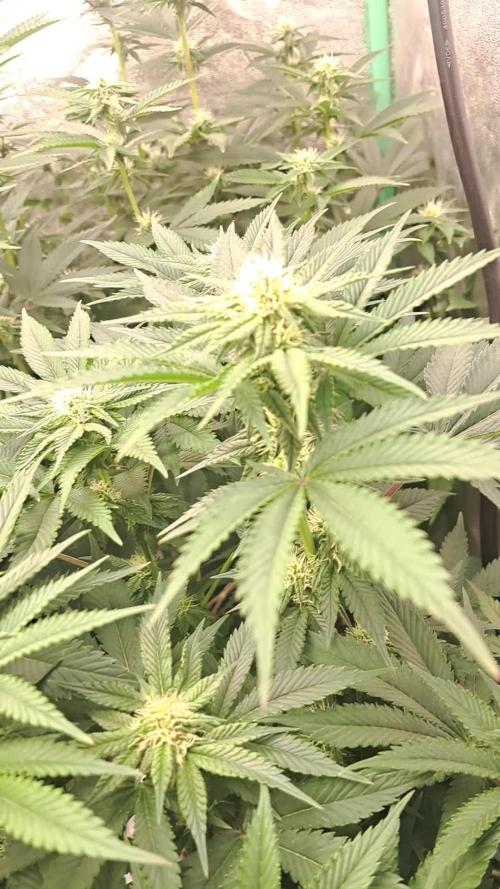
Here we are at roughly 3.5 weeks ane everything looks to be on track. These fastbud genetics are top notch. Cant wait for them to finish up.


Likes
1
Share


@dreamLife
Follow
momento preciso en que cague la planta con sobre fertilización, después de esta última alimentación se vieron los efectos del daño.
Likes
6
Share


@Lordviper28
Follow
Last week was very successful pretty happy about how turned out during veg no I got them flipping to flower on a 12 to 12 light cycle I'm feeding with envy part a & b with envy bloom trigger all plants looking healthy and can't wait to see bud start growing gotta give a shout out to experts seed for this strain

Likes
15
Share

@BLAZED
Follow
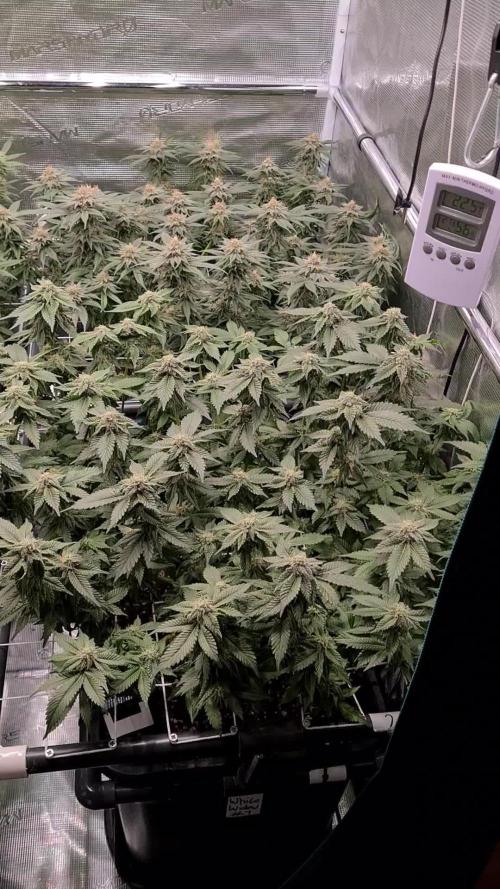
Week 15 (5-5 to 11-5)
5-5
Temps: 18.5 to 23.8 degrees
Humidity: 49% to 60%
Watering: Both 1000 ml. EC: 1.6
6-5
Temps: 18.2 to 23.8 degrees
Humidity: 51% to 61%
Watering: Both 1000 ml. EC: 0.4
7-5
Temps: 18.8 to 23.9 degrees
Humidity: 51% to 62%
Watering: Both 1000 ml. EC: 1.6
8-5
Temps: 18.8 to 23.8 degrees
Humidity: 48% to 61%
Watering: Both 1000 ml. EC: 0.4
9-5
Temps: 19.1 to 24.1 degrees
Humidity: 51% to 60%
Installed a new carbon filter, exhaust fan set from 4 to 3.
Also it looks like #2 is getting purple, would this mean a Purple White Widow phenotype?!
10-5
Temps: 17.5 to 24.5 degrees
Humidity: 46% to 57%
Watering: Both 1000 ml. EC: 1.6
11-5
Temps: 19 to 25.2 degrees
Humidity: 46% to 55%
Watering #1: 800 ml. #2: 1000 ml. EC: 0.4
Exhaust fan set from 3 to 4.
Likes
11
Share


@Chuckwaggon420
Follow
This has been an amazing growth once again and I got to do the compound genetics like been wanting to for a year. This stuff is so decked out

Likes
9
Share


@newenglandgrowers
Follow
Cut the plants down on the 24th of April, drying room levels are 72°F and around 60%RH, I'm currently on Day #14 of drying and the buds don't feel fully dry yet, the main tops feel crunchy and dry but the lower smaller buds are still quite moist and smell like chlorophyll, I think I may harvest the main tops so I don't overdry and leave the rest in the tent for another few days, either that or put the rest of the buds in a brown paper bag to finish drying. Finished dry trimming the plant ended up with 200 grams dry weight not including trim there's another 2 ounces of trim which if you want to include that would bring the total weight from this 250W LED to 256 grams. I'm super happy with the result of this especially for my first grow and from one autoflower, it can only get better from here on out. FYI Not sure why I can't edit the lights I used but the bloomgro 600W LED is PULLING AN ACTUAL 250W FROM THE WALL so the gram/watt should be .8g/W
Likes
Comments
Share

@Captain_Greenout
Follow
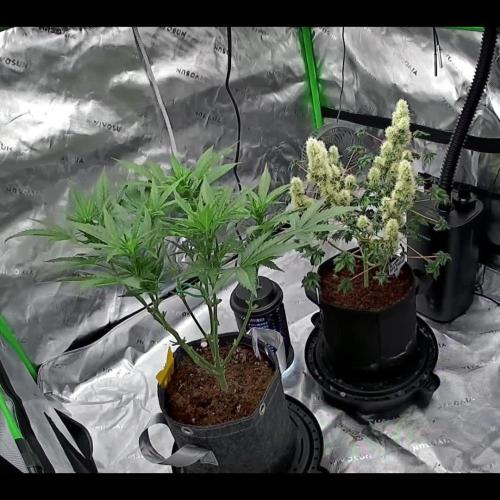
[2026-Feb-20 | Day 56] - She spent the week putting out new pistils and stretching colas. She is a very typical looking Kush, with sugar leaves and water leaves galore. She is drinking quite a bit, going through a couple gallons in a single week. The sugar leaves have a nice coat of trichomes now. Petioles have lots of anthocyanin in them, having a rich burgundy-like color. Her smell is about the same as last week, but it is getting stronger little by little, like a waft of cologne that hits my nose whenever opening the tent.
Likes
11
Share


@TheMeltCorporation
Follow
Havrested a bit before just becouse i needed to have a harvest before the full one

Likes
5
Share

@ShinWeed
Follow
.
🌱 Tag 28 - Eine Woche, die sich endlich wie Routine anfühlt
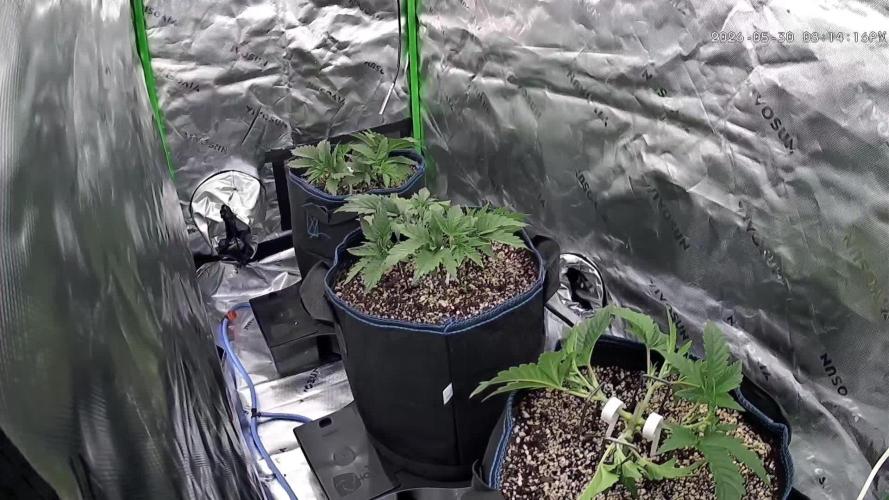
Seit dem letzten Update ist eine Woche vergangen und trotz kleiner Unruhe in den letzten Durchgängen hat sich das Setup diesmal deutlich stabilisiert. Kein pH-Chaos, keine Mischfehler im Tank, einfach konstante Versorgung und gleichmäßiges Wachstum.
Wir merken deutlich, dass sich unser Wachstum gerade verändert. Es geht nicht mehr nur darum, größer zu werden, sondern darum, Struktur aufzubauen. Die ersten Anzeichen der Blütephase sind da und der ganze Rhythmus verschiebt sich langsam in diese Richtung.
Noch ist es kein kompletter Wechsel, eher ein Übergangszustand. Aber wir arbeiten sichtbar anders weiter als noch vor einer Woche.
Wir wachsen weiterhin gleichmäßig und ohne Stresssignale. Die Blätter werden dichter, die Struktur klarer und intern passiert deutlich mehr, als man von außen direkt sieht. Diese Phase fühlt sich ein bisschen so an, als würden wir uns neu sortieren, bevor es richtig losgeht.
Das Wasser und die Nährlösung passen aktuell gut zu uns. Der pH wird konsequent auf 5,7 eingestellt und driftet über ein bis zwei Tage auf etwa 6,3, wo er sich dann stabilisiert. EC liegt konstant im Bereich 1,6–1,8.
Bisher kommen wir damit sehr gut klar und zeigen keine negativen Reaktionen.
👨🌾 Gärtner:
Diese Woche war unangenehm unspektakulär.
Ich hab mittlerweile den Dreh mit dem Wasser wirklich raus. pH-Management läuft inzwischen bewusst und reproduzierbar, nicht mehr nach Gefühl und Hoffnung. Die anfänglichen Probleme durch Hydrogencarbonate im Leitungswasser sind jetzt eingeplant statt überraschend.
Wichtigste Erkenntnis der letzten Tage:
Wenn man den pH sauber auf 5,7 einstellt und die EC-Spanne 1,6–1,8 hält, ist das System deutlich weniger anfällig.
Der leichte pH-Anstieg über 1–2 Tage auf ~6,3 ist inzwischen kein Problem mehr, sondern einfach ein bekanntes Verhalten des Systems. Nichts, was Panik auslöst. Eher so ein: „Ja gut, du bist halt so“-Moment gegenüber dem Wasser.
Und das eigentlich Beste:
Die Pflanzen reagieren darauf bisher stabil und ohne Beschwerden.
Likes
6
Share


@Izlti_ocelopilli
Follow
Cruising along, adding more fermented inputs, and WSC, will be flipping into preflower aug 1st and reducing my greenhouse light schedule from 5am to 6am and adding more red to the spectrum.
Likes
70
Share


@Roberts
Follow
Big Fat Wedding Cake grew well under the Spider Farmer G5000/UVR40 lights. Nice frosty colas with a spicy kush smell. Looks very potent and tasty. I did burn her in flowering when the nutrition got too strong for her. My bad. She still turned out great. Thank you Spider Farmer, Athena, and DutchFem Seeds. 🤜🏻🤛🏻🌱❄️🌱
Thank you grow diaries community for the 👇likes👇, follows, comments, and subscriptions on my YouTube channel👇. ❄️🌱🍻
Happy Growing 🌱🌱🌱
https://youtube.com/channel/UCAhN7yRzWLpcaRHhMIQ7X4g
Spider Farmer Official Website Links:
US&Worldwide: https://www.spider-farmer.com
CA: https://spiderfarmer.ca
UK: https://spiderfarmer.co.uk
EU: https://spiderfarmer.eu
AU: https://spiderfarmer.com.au
G5000 Light Amazon Link:
amzn.to/4643esa
UVR 40:
https://www.amazon.com/dp/B0BR7SGTHS
Discount code: saveurcash (Stackable)

Likes
13
Share


@WhackyTobaccy
Follow
So far so good. Like how big the leaves are getting. Slowly introducing more nutrients to these babies.
We've ordered a bag of CO2. Can't wait till it arrives. 🙏🤗
Day09 - Foliar spray. Nothing special. So far so good.
Day11(May06) all good so far. Both plays at 7cm tall.
Day13(May-08) did LST on both plants. So far so good.
Day-14(May-09) nothing to report.
Additional Notes:
- Making 1 liter batches with water which i give every day about 100ml.
- Using Alg-A-Mic 0.5 ml/l as a foliar spray.

Likes
9
Share

@Miketama
Follow
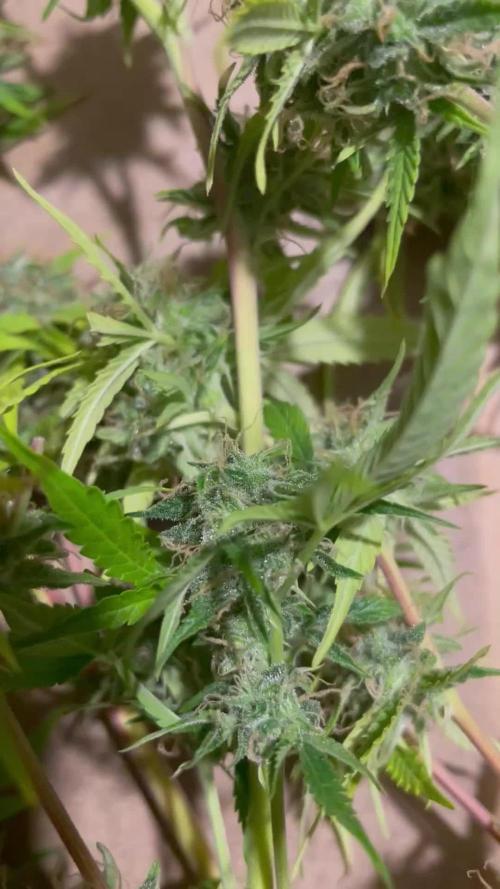
Grown together with 3 other strains in a total of 0.36m² using Migro Aray 2 (125W). Variable dimming: W1 60%/24h, W2-10-11-12 60%/20h, W3-5-8-9-13 80%/20h, W6-7 100%/20h. Average consumption ~24W per plant.

Likes
33
Share


@StickyFingah420
Follow
Día 88 y penúltimo antes del corte.
Ya se aplicó Flawless Finish para un acabado impecable como su nombre lo indica. Siempre prefiero hacer el lavado de raiz solo aplicando agua en las últimas 2 semanas, pero esta vez lo hice aplicando el finalizador y luego los últimos riegos con agua purificada.
La verdad es que estoy contento con los resultados de esta nena, que es hermosa por cierto, desprende olores ácidos, cítricos, dulces.
Los colores son hermosos y las flores están rebosantes de tricomas, lo que la vuelve muy vistosa.
Es todo por ahora, estaré manteniendoles informados en estos últimos días.
Buenos humos! 👽

Likes
30
Share


@Ultraviolet
Follow
Hello 👋 and welcome back. I've been really, really stoned for a month or two. I do enjoy a good cleaning. No need to be rushing this one, I've got a lot of stuff to tweak in the grow tent. Give it a good scrub to boot. Added a bunch of organic amendments to the medium and reloaded mineral content. Giving it a few weeks to let everything break down, settle in, and balance out before beginning, I'll be doing a thorough pH and EC prior to placing anything in the final pot and making sure to give it a good till in the top soil once everything is broken down into more palatable size.
Organic fertilizer = organic matter that's still in the process of breaking down.
Mineral fertilizer = salt mineral that's already broken down and ready for uptake in its current form.
Synthetic mineral fertilizer = man-made minerals ready for uptake in their current form.
Synthetic concentrated fertilizer = man-made concentrates that don't exist in nature.
Adding this grow.
500g Horticultural charcoal.
454g Elite Shungite Coal (Fullerene C60).
1kg Spirulina is approx NPK 10%, 100g/1kg (N), 20% 200g/1kg (P), and 20% 200g/1kg (K).
In 1 kg (1000g) of spirulina, you can expect approximately 50 mg to 177 mg of Zeaxanthin.
1 kg of moringa powder, approximate NPK : 4.8% N, 0.5% P, and 1.9% K.
500g Azomite. (Ultimate mineral micro nutrient).
1kg of Gaia green 4-4-4, 1kg of 4-4-4 fertilizer contains 4% which is equivalent to 40 grams of each in 1000g.
500g eggshells, 20grams of calcium per 500g.
Generally, the more organic matter a plant breaks down, the higher the soil's electrical conductivity (EC) tends to be. This is because the breakdown of organic matter releases nutrients into the soil solution, which increases the concentration of dissolved ions that conduct electricity. Roots and microorganisms do not directly compete for electrical conductivity itself. However, they do interact in the rhizosphere, a zone around plant roots where microbes and plants compete for resources like nutrients and water, which can indirectly influence electrical conductivity. Plant roots release exudates (carbon) into the soil, providing energy and nutrients for microbes. In return, microbes can help plants access nutrients, particularly in the rhizosphere, where nutrient availability can be high. Both roots and microbes compete for the same resources, such as phosphorus (P) and iron (Fe). Factors like microbial decomposition of plant-derived chelators and the proximity of microbes to the root surface can influence this competition.
Carbon 60 (Fullerene) can enhance plant growth by boosting microbial activity in the soil, improving water retention, and even increasing plant biomass and yield. It's not a fertilizer, but rather a soil amendment that acts as an ideal companion product for fertilization programs. Studies have shown that fullerenes can influence soil bacterial communities and potentially activate processes like nitrogen transformation in the soil. Some research suggests that fullerenes can increase the availability of nutrients and enhance plant growth. Buckminsterfullerene is a type of fullerene with the formula C60. It has a cage-like fused-ring structure (truncated icosahedron) made of twenty hexagons and twelve pentagons, and resembles a soccer ball. Each of its 60 carbon atoms is bonded to its three neighbors. Shungite coal, particularly the "precious Shungite" variety, is known to contain fullerenes, with a higher content found in Shungite of category 3. The most common fullerene, C60 (also known as buckminsterfullerene or a buckyball), is a well-studied example.
The influence of water-soluble carboxylated light fullerene derivatives on the physiological plant state is not well studied.
The addition of Spirulina is primarily for zeaxanthin, as it contains a lot. But on top of that, Hawaiian Spirulina is cultivated in open ponds using a combination of 100% fresh potable water from Hawaiian aquifers and ultra-pure, deep ocean water containing all 94 trace minerals & elements. It is then gently dried using patented Ocean Chill Drying technology and cold-pressed to ensure maximum nutrient levels. Spirulina, a blue-green alga, is rich in nitrogen, phosphorus, and potassium (NPK), making it an excellent source of nutrients for plant growth. Studies have shown that Spirulina can be used as a biofertilizer, effectively replacing chemical fertilizers, especially for nitrogen with a whopping, NPK of 10% (N), 20% (P), and 20% (K).
Azomite needs no introduction; Just incase, Azomite delivers 70+ minerals and trace elements to boost BRIX, root strength, soil vitality, and yields. Micronized.
Moringa is a highly nutrient-dense plant, often called the "miracle tree" or "tree of life" due to its impressive nutritional profile and potential health benefits. It's particularly rich in vitamins, minerals, antioxidants, and other bioactive compounds, making it a valuable resource for addressing malnutrition and promoting overall health. Containing over 92 verifiable nutrients, Moringa oleifera is found to be the most nutrient-dense plant on earth. As far as we know this is the only place online where we list all 92 (and more) nutrients of the Moringa tree and we list all 46 antioxidants of the Moringa tree too. Deep in the Himalayas is a tree called Moringa oleifera, also known as the drumstick tree, and throughout the subtropics, this tree is cultivated for its amazing health benefits.
This amazing tree has the ability to grow in an array of conditions, and its health benefits are astonishing. The drumstick tree contains a staggering 92 nutrients and 46 natural antioxidants and as it also holds a number of anti-inflammatory compounds. The sheer number of nutrients found in this tree brings it to the top of the superfoods list, and in its native locations, it is said to have the ability to help treat more than 300 diseases and illnesses.
To give you an idea, just a single serving of the Moringa tree contains: 4 times the amount of calcium in the same amount of milk. More vitamin C than 7 oranges. Double the protein and 3 times the amount of potassium in a banana. It's high antioxidant levels can help fight free radicals, potentially slowing down the ageing process and promoting longevity. It is thought to be able to help lower cholesterol levels and regulate blood pressure, due to the high levels of niacin and vitamins B3 and B10.
A serving of 100g of this tree gives:
Over 8g protein
Over 400mg potassium
Nearly 450mg calcium
164mg vitamin C
738 ¼g of vitamin A.
Moringa also contains vitamins B1, B2, B3, B6, B7, A, C, K, E and D. Amino Acids: In addition, it contains various other nutrients, including the following essential amino acids:
Threonine – a nutrient that helps metabolism and prevents fatty buildup in the liver. It also aids digestion.
Isoleucine – good for a healthy brain and helps to give the body natural energy.
Leucine – works hand in hand with isoleucine to increase energy levels.
Phenylalanine – aids communication between the brain’s nerve cells and also helps to reduce hunger pangs as well as increasing alertness and improving memory.
Tryptophan – supports your immune system, and its mood boosting ability helps to beat depression and anxiety-associated insomnia. It also reduces the risk of heart attack and lowers bad cholesterol levels.
Lysine – aids the absorption of calcium into the bones, supports antibodies and regulates various hormones as well as inhibiting the growth of virus cells.
Methionine – provides the body with sulphur as well as helping to lower cholesterol. It also supports the liver, kidneys, and helps keep skin, hair and nails healthy.
Valine – helps to keep the mind calm.
There are other amino acids in Moringa too, which are not essential to the body but are still beneficial in supporting health. These include histidine, alanine, glutamic acid, arginine, cysteine, proline, aspartic acid, glycine, serine, and tyrosine. Moringa seeds contain oils that hold high levels of oleic acid, which may act to reduce inflammation.
https://amchara.com/detox-cleanse/92-nutrients-and-46-antioxidants-in-one-tree-maringa-oleifera/
4.8% N, 0.5% P, and 1.9% K. Moringa can also serve as a natural source of nitrogen, potentially replacing chemical fertilizers.
About 95% of the dry eggshell is calcium carbonate weighing 5.5 grams. The average eggshell contains about . 3% phosphorus and . 3% magnesium and traces of sodium, potassium, zinc, manganese, iron and copper.
1 ppm in water (mg/L) = 1 ppm in soil (mg/kg)
If you use 10 grams of 10-20-20 fertilizer in 4 liters of water:
Nitrogen: (10 grams * 10/100 * 1000000) / 4000 mL = 2500 ppm N
Phosphorus: (10 grams * 20/100 * 1000000) / 4000 mL = 5000 ppm P
Potassium: (10 grams * 20/100 * 1000000) / 4000 mL = 5000 ppm K
In summary, to determine the precise ppm of an NPK fertilizer, you need to know the specific weight of fertilizer used, the volume of water, and the NPK percentages. The general formula and example calculations can help you make these conversions.


Likes
5
Share


@C4NN4815_030
Follow
Leaves are praying, fast growing. Very healthy and no deficiency. No pests, the substrate is very clean too.

Likes
55
Share


@Max1973
Follow
Day 93 - Fattened up good, getting really heavy....posted pic of test bud.... vid of the led uv globe i got on ebay...
works awesome.... highly recommend...... 😎
maybe 1 more week.... they smell delicious, not very strong smell....
just normal water in bottom drip tray, dutch master one gold ....next week, flush em and next sunday pull em..... idk....
Day 95 - had a good look at both girls and worked out a harvest plan...... i've started flushing/watering on the smaller one,
and sunday (day 100) will be her last. i'll leave the larger one (she's still quiet white) for another week and re evaluate her fate next week.
Day 97 - 4 vids .... looks good 😎
getting a 1600x Camera Endoscope USB Digital Microscope from ebay, see if it will help with harvest........ 😎