


@6toecat
Follow
Adding water level checks to the NodeRED code to prevent pump from running when water level is too low.
Read more here: https://hackaday.io/project/188129-rhaspberry-pi4-basic-watering-system-for-balcony



@Chucky324
Follow
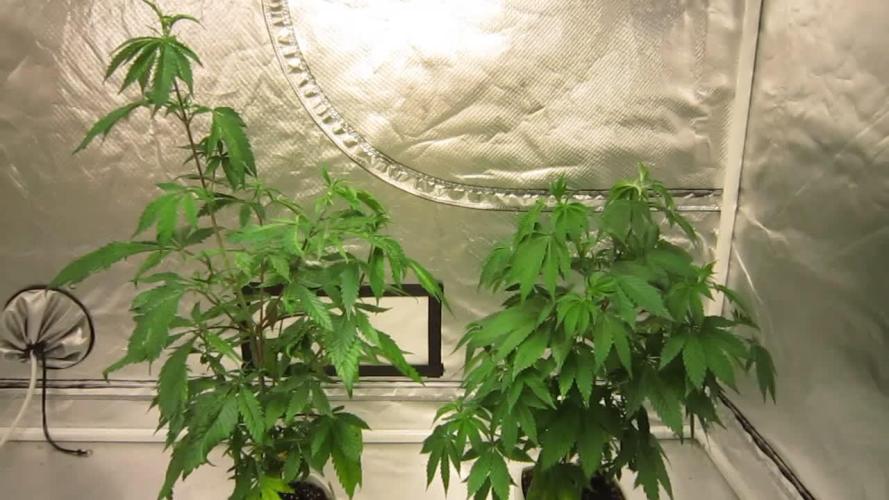
Hello. This is the end of week 7 and the beginning of week 8 of veg.
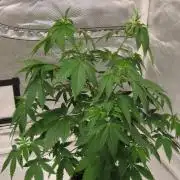
OK.... My patient's has run out with this weird plant #1.... I'm going to scrap her and just grow her sister.
Plant #2 is doing great, nice structure. It will be easy to train.
I still have to clear a space in the greenhouse for her.
I'm a bit behind because a deer got into one of my gardens and tramped around on the newly sprouted beds.
I worked for 3 afternoons to heighten the fence so... hopefully... they won't get in to that garden the rest of the summer.
OK. Be Great.
Chuck.


@Piorkeed
Follow
Week 10 (27/03 - 02/04)
During the past week the blue cheese started to change the colors of pistils into brown. All plants seem to be healthy and next to the end. During the past week I bought an iHub power strip in order to change my self-made control system, but at this time the iHub app is far useless; it often loses the settings and it randomly turns off/on the outlets. I hope that Mars Hydro will fix these bugs soon, it is annoying considering that the power strip is sturdy and well built as the rest of their products but the app that should control everything it isn't.
During this week I'll change the nutrients to plants and I'll check the trichomes.
27/03 D64: -
28/03 D65: one liter of tap water each @ pH 6.3. Trichomes check: majority are cloudy, especially on two fat bananas, few amber
29/03 D66: one liter of tap water each @ pH 6.2
30/03 D67: one liter of tap water each @ pH 6.0
31/03 D68: one liter of tap water each @ pH 6.2. Trichomes check: Fat banana #2 has almost all trichomes cloudy and few amber; Fat banana #1 has majority cloudy, very few amber; Blue cheese has cloudy and few crystal
01/04 D69: one liter of tap water each @ pH 6.3
02/04 D70: -


@WhiteWidow
Follow
** video in 2 parts
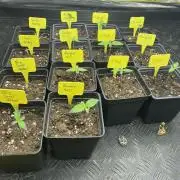
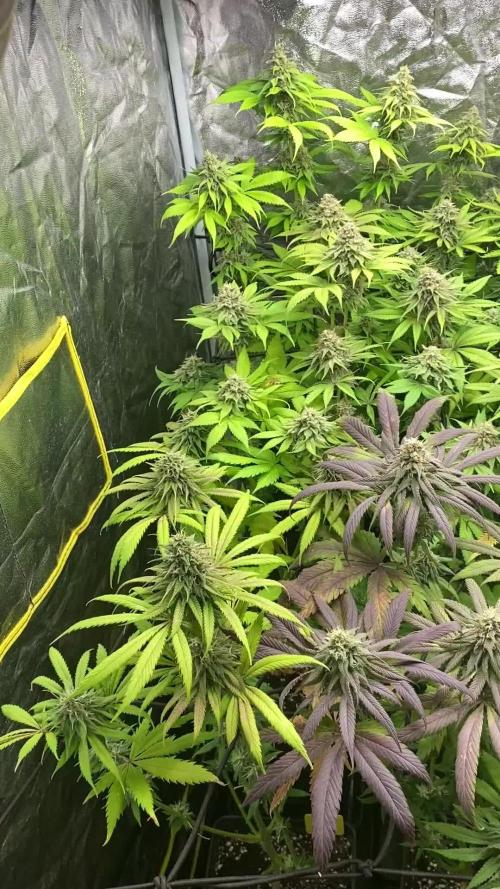
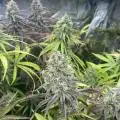
Sweet and sour showing interesting gold color on her leaves and some curled tips so i flushed her with canna flush and will dry her for a few days.. i dont know whats the provlem except the cold nights for the last few days. Would like to hear opinions..
Grapefruit from dinafem is amazing smell - very fruity and sweet..
Sweet and sour and spliffs strawberry share almost the same smell but sweet and sour is more hubba bubba chewing gum, intensive sweetnes...
Remo chemo still no distincitve smell, just sweet.. amazing trichome production.
Ayahuasca isnt purple and smells like a bag of nuts and petroleum. Very odd i am afraid i wont like.her...


@Centollo
Follow
Día 42. Esta semana les voy a dar los últimos abonados. Huelen de maravilla y siguen engordando y resinando. Buenos humos!!!


@I_Identify_As_A_Dan
Follow
Week 10 for Fuel D.OG by seedsman
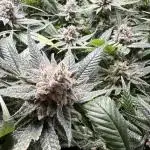
Starting to get some nice pistols coming in but no stretch whatsoever... which surprised me compared to how much the black Lebanon's are stretching.
She's getting fed every 3/4 days still.
Struggling a bit to keep temps low.. have lights on during the night & still having to run my big A/C unit at 19/20 ish to get okay temps in the tent.
Plants are loving the Taurus TRS600 every time i come in they are praying
😇



@Master_weeda
Follow
Jour42 defolliation and LST
Jour45 defolliation
Jour47 arrosage avec de l'eau ph6.3 à laquelle j'ajoute 1ml par litre d'eau de topmax biobizz
La plante entre maintenant en floraison c'est donc le début du stretch
Explication en anglais
(Stretch explanations more)
EXPOSURE TO LIGHT
One of the main culprits in abnormal stretching of cannabis plants is the lack of light. Plants that are too far from an adequate light source will respond by accelerating stem growth in order to get closer to the lamp themselves. Especially when there are many other plants. A lack of lighting can easily cause overcrowding in a growing chamber, reducing the steady progression of your crop and the distance ratio between your bulbs and your plants.
To address this problem, be sure to provide enough light to your plants to prevent stem growth. At the same time, you should not position your lights too close to your plants either since this would also result in an over-stretching of the stems and in some cases, the loss of your crop.
In addition to the distance between the light source and the plant, the type of light you will use also affects the size of the stretching of your crop. The orange and red lights encourage stretching and result in thinner, larger stems. And conversely, blue light stimulates a growth of thicker stems and a smaller size. When a species is ready to enter the vegetative phase and undergo its most drastic stretching period, metal halide lamps can be used to deter far too long stems.
THE HEAT
Heat is another essential element that can determine the stretch size of your plants during vegetation. Temperatures above 27 degrees push the stems to lengthen more and more and will propel the potential of sativas to push as high as possible. Heat lamps that are positioned too close to plants create an intolerable environment that will grow large, soft plants that will potentially wobble until they fall and lose flowers in its fall.
OTHER CAUSES OF STRETCHING
There are multiple variables that can lead to the stretching of plants beyond what could normally be expected of the plant. Environmental stressors resulting from transplantation (when a plant passes from one pot to another) can cause the plant to return to shock. This will eventually trigger a reaction causing a stretch. Cannabis plants that are not grown in decent conditions or do not receive enough nutrients will respond in a variety of ways and this includes stretching.
Crops that are not spaced far enough apart are likely to stretch to sting the light to other plants. Due to extreme proximity, the plants will fight among themselves to reach the light, forcing them to expand as much as possible throughout the crop.
HOW TO CONTROL STRETCHING DURING FLOWERING
Stretching during flowering, you guessed it, takes place when you move your plants from the vegetation stage to the flowering stage. This is a completely normal reaction, as your plants are preparing to bear the weight of their heads.
Stretching of a plant at the beginning of flowering varies widely; some plants can double in height while others grow only a few centimetres. There are, however, two main variables that can give you at least an idea of how your plants are stretching during flowering, and how much. Here are these two variables:
Variety: Genetics has the greatest impact on the size of your plant. In general, sativa varieties stretch more than indicas and tend to develop long, slender stems.
Light: Some lights, such as HPS, are more likely to encourage stretching. In addition, great distances between your canopy and your lights will cause the plants to stretch as they try to get closer to the light source.
Stretching during flowering usually lasts the first two weeks of the phase. To minimize stretching, keep your lights between 10 (for CFL) and 30 centimetres (for HID) of your canopy. Finally, choose indica varieties if you have a smaller growing space.
HOW TO AVOID STRETCHING
In many cases, you can expect your cannabis plants to stretch during the flowering phase. Keeping that in mind helps to make a plan in case your species ends up growing much more than you could have imagined. If the information is available, get information on the standard size of your species and compare it to the size of your growing space taking into account the necessary distances between the bulbs and the plants.
TRAFFIC
While outdoor crop operations benefit from natural air to naturally limit stretching, indoor crops must assume the maintenance of air circulation within a confined space. Basic ventilation is enough to help the cannabis stems strengthen and become thicker rather than too high. In this way, the plants continue to grow vigorously without reaching heights and at the same time, your tolerance ceiling.
MANUAL INTERVENTION
For growers who want to get their hands dirty, there are physical procedures that can be done to reduce stretching. Similar to the natural effect that the wind has on cannabis plants, manually bending the leaves and stems will cause tiny cracks in the plant's tissues that will cause the plant to focus on regenerating its wounds instead of its vertical growth.
THE TOPPING
Topping is a form of manual intervention on cannabis to influence its performance, shape or size. In essence, topping is a process in which a new node is cut, growing from the plant to reduce its size and create a "v"-shaped notch that will eventually form two heads. Topping may be an effective measure to combat stretching, but it is important not to do so when the flowering phase begins.
In most cases, an abnormal stretch of cannabis plants will not completely destroy your crop. In fact, stretching can indeed help increase your performance. For growers with a growing operation large enough to contain tall plants, stretching can increase the total yield of a species with more vertical space for head formation. In both cases, stretching can easily be planned in advance and there are multiple solutions to help you with this problem which is all too common.
May the force be with you 💪


@Samsemilla
Follow
Wir schreiben die vierte Woche der Wachstumsphase.
Letzte Woche hatte ich erst das Gefühl es verschlimmert sich, dann hat es sich scheinbar verbessert.
Ich bin mir ehrlich gesagt noch nicht 100% sicher was jetzt das genaue Problem ist bzw was den Pflanzen fehlt.
Sind sie jetzt von einem Cal/Mag Defizit in eine Überdüngung geraten? 🤔
Oder sind es wirklich einfach nur die kleinen Töpfe..?
Naja die Pflanzen sind mittlerweile auf jeden Fall jeweils zu viert in ihren 15l Töpfen (Endtöpfe), haben also jeweils ca 3,75l Substrat,... mit der üblichen Mischung + Biotabs Palette
( leider finde ich hier keine Auswahlmöglichkeit zu Mengenangaben von Feststoff.-/Streudünger wie g/l(Substrat) )
Außerdem haben sie eine schöne BoomBoom Spray Dusche bekommen, fantastisches Zeug - ich liebe es und die Pflanzen lieben es noch viel mehr.
Der Topf mit den Automatics steht jetzt hinten links.


@Chuckwaggon420
Follow
This week has been time to put on weight!! They are getting so heavy glad put in secondary scrog net.
Have only been doing water so plants can just pull what they want our the soil they are starting to fade on their own. They have some amazing kinda blue tent to the buds. They have a gassy sweet smell to them!
This will be the last week I feel but still see some clear heads and no amber so shall see over next week!!


@CrizzlePope
Follow
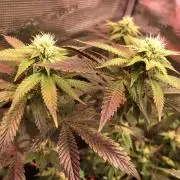
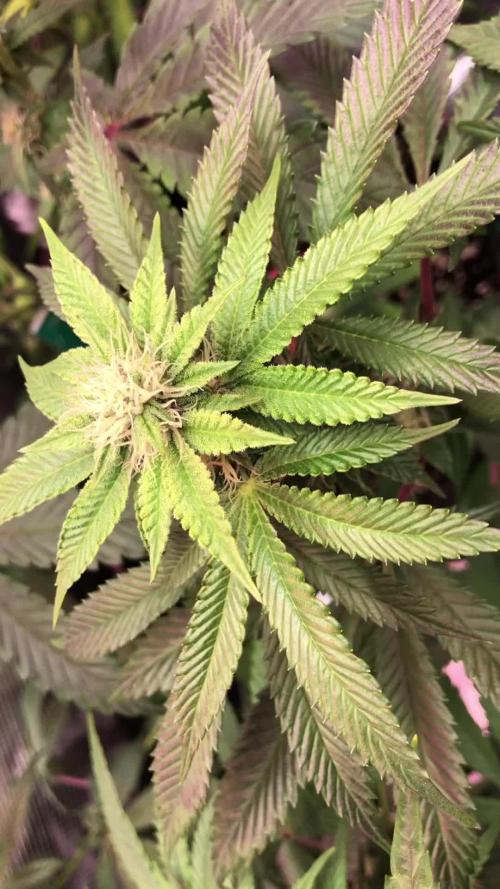
Finally getting all caught up here. Sorry not more details, but the dates on photos are accurate from iPhone timestamp. Skipped a few nutrient feedings due to still fighting what I thought was a ph issue, so we’ll see how she reacts to being fed on 11/19.





@Mr_Ewell
Follow
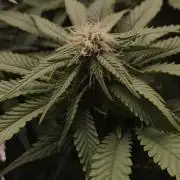
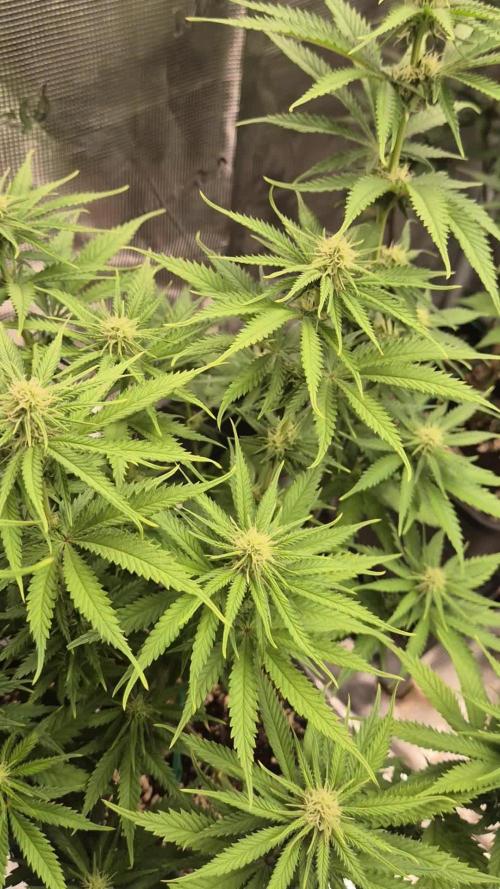
The strain was easy to grow. The autos were topped and suppercropped. Along with lst. Amazing yeild for my first grow. Almost a pound with 300w led. Trichomes were hard to read and took forever to turn. Went for 17 weeks from sprout. Didnt flush as long as a wanted so curing is my focus rn.



@Daris_Growmance
Follow
Deutsch:
🌿 Grow Diary – Blüte Tag 28 🌿
Heute genau ein Monat seit dem Umstellen auf 12/12 – wir sind offiziell am Ende von Woche 4 angekommen.
Diese Woche haben wir ein leichtes Lollipopping gemacht ✂️
Alles im unteren Bereich, was kaum Licht abbekommt, wurde entfernt, damit die Pflanzen ihre Energie gezielt in die oberen Buds stecken können.
Die Struktur ist jetzt deutlich cleaner und luftiger, was für bessere Lichtverteilung und Luftzirkulation sorgt.
Die Buds entwickeln sich jetzt immer deutlicher und starten langsam in die richtige Massephase 🔥
Die Pflanzen wirken stabil, gesund und reagieren bisher genau so, wie man es sich wünscht.
Ab jetzt wird’s spannend – die nächsten Wochen entscheiden über Ertrag und Qualität.
📅 Status: Blüte Tag 28
English:
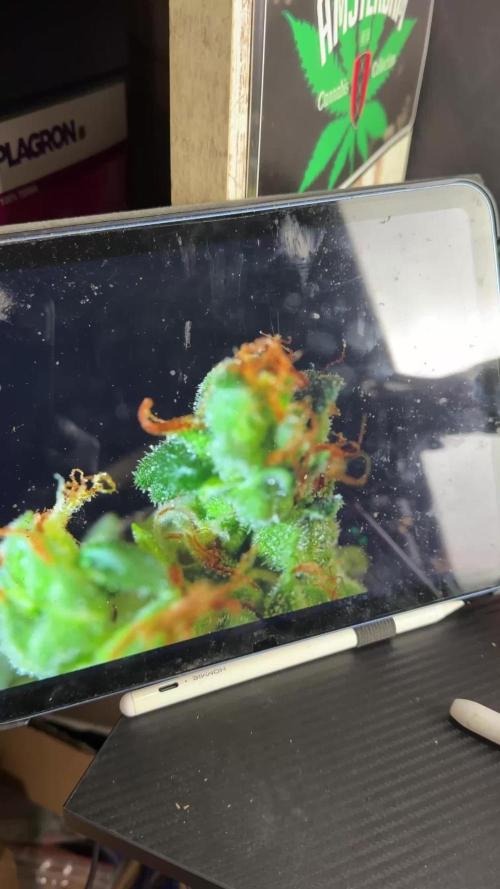
🌿 Grow Diary – Flower Day 28 🌿
Exactly one month since switching to 12/12 – we’ve officially reached the end of week 4.
This week we did some light lollipopping ✂️
Everything in the lower area that wasn’t getting much light was removed, so the plants can focus their energy on the top buds.
The structure is now much cleaner and more open, improving both light penetration and airflow.
The buds are developing more and more and are just starting to enter the real bulking phase 🔥
So far, the plants look stable, healthy, and are responding exactly how you’d want them to.
Now it gets interesting – the next few weeks will define yield and quality.
📅 Status: Flower Day 28


@DogDoctorOfficial
Follow
🦄🌿 Frosted Guava Auto by Zamnesia | Pheno B
Week 14 – The Dark Little Unicorn Has Left the Tent… Big Mama's Next Chapter Awaits! 🦄👑💎❄️
Welcome back to another chapter of the 8×8 Adventure! 🌱💚
And here we are again, my friends…
Another Frosted Guava has left the building!
😂🦄✂️
Last time, we said goodbye to her sister, Frosted Guava Pheno A, as she left the tent and started her post-harvest journey.
And now?
It's Pheno B's turn.
Our dark little unicorn.
Our frosty girl.
Our beautiful Big Mama.
👑💎🌿
Because yes, this girl has her own personality, her own structure, and her own story. And although the two sisters share some similarities, they certainly haven't been identical throughout this adventure.
Same genetic family.
Same room.
Same general environment.
Same 12/12 journey from seed.
But two different seeds, two different expressions, and two beautiful girls who have given us plenty to appreciate.
And now, just like her sister, Pheno B has completed her time in the tent.
We took her final photographs in the grow room, moved her into the studio, photographed individual branches and flowers, explored some macro details, and created more photo stacks.
Then we broke her down, removed the leaves we wanted to take off, vacuum-bagged the material, and placed it in the freezer.
❄️🌿📸
That's where she is now.
Resting.
Waiting for the next chapter.
And that next chapter will involve processing the frozen material into bubble hash. We'll document that process in future updates, explain what we're doing, and share what happens after the extraction.
But we're not going to jump ahead.
Today is about Frosted Guava Pheno B, her journey, her harvest day, her photographs, and the beginning of this new chapter.
So let's give Big Mama the spotlight she deserves!
🦄👑💚
────────────────────────
📢 FIRST THINGS FIRST – WHY ARE WE PUTTING HARVEST DAY IN A FLOWERING WEEK?
Before we get into the photographs, let's explain why we're documenting another harvest under a flowering-week update.
I know some of you might look at the diary and think:
"Hang on a minute… isn't this a harvest report?"
😂
Yes, my friends. It is harvest day.
But GrowDiaries has a limit of 30 photographs per update, and when you're documenting an entire harvest journey, those photographs disappear very quickly.
We have the final photographs inside the tent.
We have the studio session.
We have individual branches and flower details.
We have macro photography.
We have photo stacks.
We have the breakdown and trimming.
We have the vacuum-bagging process.
And we still have the extraction and everything that follows to document.
That's a lot of material to squeeze into one update!
So, just as we did with her sister, we're using this flowering-week entry to document the final day in the tent and the beginning of her post-harvest journey.
This is an individual diary, and we want to keep her story together as clearly as possible.
GrowDiaries doesn't provide a dedicated section specifically for extraction projects, so we'll use the available diary updates to document the different stages without pretending that everything happened in one day or one chapter.
Depending on how much material we have, we'll continue in another update or updates.
The extraction itself will have its own explanation, and we'll share the results when we actually have them.
So please consider this the beginning of Big Mama's post-harvest story, not the final report.
Thank you for understanding, everyone! 💚🌱
────────────────────────
🌱 A QUICK RECAP – THE 12/12 JOURNEY
Let's rewind for a moment.
Frosted Guava Auto Pheno B has been part of our 8×8 Adventure, where we've been following different plants and phenotypes sharing the same general environment.
And one of the most interesting parts of this project has been watching how differently plants can express themselves under a shared setup.
We started these plants from seed under a 12/12 light schedule.
That means we've been observing their development from the beginning under the same daily light-and-dark rhythm, rather than changing to a conventional longer vegetative schedule before flowering.
And the autoflowers?
Well…
They've certainly given us plenty to talk about!
😂🌿
Throughout this run, we've watched the plants develop at their own pace, build their own structures, and show their own personalities.
Frosted Guava Pheno B became one of our more distinctive girls.
Her darker green character, beautiful flowers, frost, and unusual flowering structures made her increasingly recognizable as the weeks went by.
And, of course, her sister was showing some similar foxtailing characteristics.
That doesn't prove a specific genetic explanation by itself, but it gave us an interesting pattern to observe in this shared environment.
Two sisters.
Two individual expressions.
And plenty of reasons to keep looking closely.
That's what I love about this adventure.
We aren't trying to make every plant look the same.
We're documenting what each one becomes.
And now, Big Mama has reached the end of her flowering journey.
🦄💎🌸
────────────────────────
👑 BIG MAMA HAS LEFT THE TENT
Let's be honest…
This girl earned her nickname.
😂👑
Big Mama!
She has been a beautiful presence in the room, and although she shares a genetic family with Pheno A, she's developed her own character along the way.
The flowering journey is now complete for this plant.
We took our last photographs of her inside the tent, documenting her where she'd spent her time growing alongside the rest of the 8×8 girls.
Those photographs matter because they preserve the final view of the plant in her original environment.
Once a plant is harvested, the structure changes.
The branches are separated.
The flowers are handled individually.
The grow-room chapter ends, and the post-harvest chapter begins.
So before doing anything else, I wanted to capture that transition.
One last look at Big Mama in the tent.
One last photographic record of the plant as a whole.
And then…
It was time to move her into the studio.
📸🌿
────────────────────────
📸 STUDIO TIME – GIVING BIG MAMA HER MOMENT
After documenting her final day in the tent, we took Frosted Guava Pheno B into the studio.
And this is where I get to enjoy another side of the whole adventure.
Photography!
😂📸💚
I love documenting plants while they're growing, but the studio gives us another opportunity to explore their details.
We took photographs of the plant and selected branches.
We photographed individual flowers from different angles.
We explored the details more closely.
And, of course, we spent time creating photo stacks.
Because I don't want to remember Big Mama only as a plant that stood in the tent.
I want to preserve the details that made her interesting.
Her structure.
Her flowers.
Her individual characteristics.
The way she looked at the end of her flowering journey.
And those photographs will become part of her permanent diary record.
The grow tells us how she developed.
The photographs help us look back and appreciate what she became.
And for me, that's a beautiful combination.
🌿📸👑
────────────────────────
🔬 MACRO PHOTOGRAPHY – GETTING CLOSER
Some of the photographs from this session focus on individual flowers and smaller details.
And that's where things become especially interesting for me.
From a distance, you see the overall plant.
Move closer, and you start noticing the individual flower structures.
Get closer still, and there are details that can be easy to overlook when you're simply looking at the plant in the tent.
That's one of the reasons I enjoy macro photography and stacking.
It gives me a way to study and document the subject more closely.
And Frosted Guava Pheno B has certainly given us something worth exploring.
🦄🌸🔬
I also enjoy the creative side of the process.
The lighting.
The angles.
The background.
The focus.
The way a small change in position can completely change how a flower looks in the final photograph.
It's a different kind of work from growing, but it's still part of how I enjoy this hobby.
And Big Mama deserved a proper studio session before moving on to her next chapter.
────────────────────────
📸 PHOTO STACKING – MORE THAN ONE PICTURE
If you've been following my recent updates, you already know how much I enjoy photo stacking.
For anyone who hasn't come across it before, the basic idea is to capture multiple photographs of the same subject at different focus distances and combine the sharp areas into one final image.
This can create a photograph with greater apparent depth of field and reveal more of the subject's details.
But it's not simply a matter of pressing a button and walking away.
😂
There's setup involved.
There's lighting.
There's positioning.
There's capturing the individual frames.
And then there's processing the photographs and checking how the final image comes together.
For this session, we took individual flowers and branches into the studio and created stacks to document some of the details that caught my eye.
The resulting images give us another way to appreciate Big Mama beyond the wider photographs of the whole plant.
And that's what I love about this process.
One plant can give you many different photographic stories.
The whole plant.
A branch.
A flower.
A macro detail.
A stacked image.
Each one shows something different.
📸💚
────────────────────────
🌿 FROM PLANT TO INDIVIDUAL FLOWERS
After the photographs, we moved on to the next part of the process.
We broke the plant down into individual sections and removed the leaves we didn't want to retain around the flowers.
This was part of preparing the material for the next stage of our project.
I want to make an important distinction here.
This wasn't a conventional drying-and-curing update, and we're not presenting the material as finished flower.
We have taken a different route with this particular harvest.
After the initial breakdown and trimming, we vacuum-bagged the material and placed it in the freezer.
❄️🌿
That's where it is now.
The plant has left the tent.
The studio session is complete.
The material has been prepared and stored.
And the next chapter will focus on the extraction process we're planning to document.
So, rather than trying to explain every part of that process here, we'll give it the attention it deserves in a future report.
For now, this update is about the harvest itself and the transition from the growing environment to the next stage.
────────────────────────
❄️ BAGGED, VACUUM-SEALED AND INTO THE FREEZER
And now…
Big Mama is resting in the freezer.
😂❄️👑
After breaking the plant down and removing the leaves we wanted to take off, we vacuum-bagged the material and placed it in the freezer.
This is the preparation stage for the next part of the project.
We're planning to use this frozen material for a bubble-hash extraction, and we'll document that process separately.
I don't want to jump ahead and start describing results we don't have yet.
The extraction hasn't been documented in this report.
We haven't shown the final product.
And we're not going to pretend that the story is already finished.
Right now, the material is stored, and the next chapter is still waiting for us.
❄️🌿
This is one of those moments where the diary becomes a little different from a conventional grow report.
We're not simply following a plant from seed to harvest and stopping there.
We're documenting what happens next, too.
And that means giving each stage its own space.
Big Mama's growing chapter is finished.
Her post-harvest chapter has begun.
And the extraction story is still ahead of us.
────────────────────────
🫧 THE NEXT CHAPTER – BUBBLE HASH
So, what happens next?
The plan is to document the process of turning the frozen material into bubble hash.
For anyone unfamiliar with the term, bubble hash is a type of cannabis concentrate made by separating resin-bearing trichome material from plant material using ice-cold water and filtration.
The process uses the difference in physical characteristics between the resin-bearing material and the rest of the plant, with filtration helping separate the collected material into different grades.
It's a different project from simply drying and curing flower, which is why we want to document it separately rather than trying to squeeze it into this harvest update.
We'll explain what bubble hash is, how the process works at a high level, what equipment and stages we're using, and what we observe along the way.
We'll also document the drying of the collected material and what we decide to do with it afterwards.
But we're not there yet.
😂🫧
For now, Big Mama is safely stored in the freezer, and the next chapter will begin when we're ready to carry out and document that process.
I want to show the journey as it happens, step by step, rather than write the ending before we've reached it.
────────────────────────
? WHY THIS IS A DIFFERENT STORY FROM HER SISTER
This is where things get interesting.
Frosted Guava Pheno A and Pheno B belong to the same genetic family, but their individual diaries are telling two separate stories.
Both girls have now left the tent.
Both have had their harvest-day photographs.
Both have moved on from the flowering stage.
But the post-harvest journey we're documenting here focuses on Big Mama and what we're doing with her material next.
For Pheno B, we've chosen to vacuum-bag the prepared material and store it in the freezer as part of our planned bubble-hash project.
That means her next update will have a different focus from a report centred on drying and curing whole flowers.
We're still documenting the plant's journey, but the next stage is a different one.
And that's precisely why I want to keep her report individual.
Even when two plants share a cultivar, they deserve their own records.
Their development is individual.
Their harvest is individual.
And their post-harvest journeys can be individual, too.
Two Frosted Guava sisters.
Two beautiful plants.
And two stories that don't need to be identical.
🦄🦄💚
────────────────────────
🌿 THE 8×8 ADVENTURE CONTINUES
There's something special about reaching this stage of the project.
For weeks, we've been watching a room full of different plants sharing the same general environment.
We've observed different structures.
Different growth patterns.
Different flowering expressions.
Different rhythms.
And now, one by one, the girls are moving into their next chapters.
Frosted Guava Pheno B has completed her time in the tent.
The plants still growing in the room continue their own journeys.
And our documentation continues with them.
That's the beauty of keeping individual diaries.
Each plant gets her own timeline.
Each plant gets her own photographs.
Each plant gets her own story.
And even after harvest, we can continue documenting what happens next.
Big Mama may have left the tent, but she's still very much part of the 8×8 Adventure.
💚🌱
────────────────────────
😂 BIG MAMA IS RESTING – DOC HAS MORE WORK TO DO
Let's be honest.
Big Mama has done her part.
She's grown.
She's flowered.
She's given us beautiful photographs.
She's had her studio session.
And now she's resting in the freezer.
😂❄️👑
Meanwhile, DogDoctor still has photographs to organize, stacks to process, future updates to prepare, and an extraction project to document.
Apparently, the work doesn't stop just because the plant has left the tent.
😂📸🫧
But that's part of the fun.
Growing is one part of the journey.
Photographing is another.
Documenting the harvest is another.
And now we have a new chapter waiting for us.
I'm looking forward to sharing it with you, because I want to show not only the final outcome but also the process that gets us there.
One stage at a time.
One update at a time.
And one beautiful Big Mama at a time.
────────────────────────
🔮 WHAT COMES NEXT?
The next chapter will focus on the extraction project.
We'll document the bubble-hash process, explain the stages, and share what happens when we work with the frozen material.
We'll also cover how we handle the collected material afterwards and what we decide to do with the final result.
The amount of material we have to share will determine whether we can fit everything into one update or whether we'll need more than one.
Either way, we won't rush it.
We want the information and photographs to tell the story properly.
And once that part of the journey is complete, we'll be able to bring everything together in a final report.
For now, Big Mama is resting.
The freezer is doing its job.
And we're preparing for the next chapter.
?🫧🌿
────────────────────────
💭 FINAL THOUGHTS – BIG MAMA'S STORY ISN'T FINISHED
Frosted Guava Auto by Zamnesia.
Pheno B.
Harvest day.
🦄👑💎
What a beautiful journey this girl has given us.
We've watched her grow from seed under a 12/12 schedule.
We've followed her individual development.
We've seen her distinctive character emerge.
We've admired her flowers and unusual structures.
We've compared her journey with her sister's while allowing her to remain her own plant.
And now, we've reached the end of her time in the tent.
We took her final photographs in the grow room.
We moved her into the studio.
We photographed branches and flowers.
We captured macro details and created photo stacks.
Then we broke her down, removed the leaves we wanted to take off, vacuum-bagged the material, and placed it in the freezer.
❄️🌿
But this isn't the final report.
It's the beginning of another chapter.
The material is waiting for the bubble-hash project, and we'll document that process in future updates.
We'll share what we do, what we observe, and what happens afterwards.
Until then, Big Mama gets to rest while we prepare the next part of the story.
And I want to say something about this whole journey.
Not every plant needs to end her story in exactly the same way.
Not every phenotype needs to follow the same path after harvest.
And not every diary needs to fit into one neat, identical format.
The important thing is to document what actually happened, explain the decisions we made, and share the experience honestly.
That's what we're doing here.
Big Mama has her own story.
Her sister has hers.
And both deserve their own spotlight.
🦄💎💚
So let's give this beautiful girl the recognition she deserves.
Thank you for the flowers, Big Mama.
Thank you for the photographs.
Thank you for the memories.
And thank you for giving us another reason to keep exploring the many different ways these plants can express themselves.
Your time in the tent is finished.
But your story?
It's still going.
😂👑❄️
────────────────────────
🙏 THANK YOU
As always, a massive thank you to everyone following the 8×8 Adventure. 💚🌱
Thank you to GrowDiaries for giving us the space to document these individual journeys and share our experiences with growers around the world.
And thank you for understanding why this harvest update sits under a flowering week. The photo limit means we need to divide the story into manageable chapters, and we want to document the harvest and the next stages properly rather than leave important details out.
Thank you to Zamnesia for the Frosted Guava genetics and for giving us these two beautiful sisters to follow.
Thank you to Plagron for supporting the growing-media and nutritional side of the adventure.
A huge thank you to Future of Grow for supplying the additional Black Series 600W fixtures and allowing us to explore the expanded lighting setup. 💡☀️🌿
Thank you to Lumiflora for helping illuminate the deeper areas of the canopy.
Thank you to TrolMaster for helping us monitor and manage the environment behind the scenes.
And, of course, thank you to everyone who follows these diaries, leaves comments, asks questions, shares experiences, and enjoys the journey with us.
Every bit of support means a lot. 💚
────────────────────────
💚 COME JOIN OUR DISCORD COMMUNITY!
And before you go, if you haven't joined us yet, you're more than welcome to come and say hello!
🌿 DogDoctorOfficial Community:
https://discord.gg/dogdoctorofficial
Our Discord community keeps growing, and honestly, one of my favourite things about it is the people.
We have conversations about the plant, growing experiences, equipment, photography, and all the little things that make this hobby so interesting.
We also have community discount codes, competitions where members can win prizes, giveaways, and other activities for everyone to enjoy.
But above all, we have a community that feels like family.
💚🤝🌱
And I want to make one thing clear.
You don't need to be an expert to join.
You don't need years of experience.
You don't need to know every technical term.
You don't even need to be an active speaker.
You can ask questions, share your experiences, join the conversations, or simply hang out and listen.
Everyone is welcome.
There's no competition over who knows the most, no need to prove yourself, and no requirement to be at a particular level.
We're there because we enjoy talking about this plant, learning from each other, and sharing the journey.
So if that sounds like your kind of place, come and join us.
We'd love to have you with us! 💚🌿
Growers Love, my friends. 💚🌱
See you in the next chapter of the 8×8 Adventure…
where one more girl has left the tent, the freezer is holding Big Mama's next chapter, the photographs are waiting to be processed, and DogDoctor has another project to bring you.
😂📸🦄❄️
The harvest is complete.
The next story is waiting.
And Big Mama?
She's not finished with us yet.
👑💎🫧
Let her shine. 💚



@kauilmayel1996
Follow
Looking good
Las raices consiguieron un trenzado hermoso
No sé si eso es normal pero está planta me sorprende y me sigue sorprendiendo