


Likes
Comments
Share


@TgOgFaRms
Follow
Week 6: Aroma, Buds, and Excitement! 🌿🌸💨
Hey there, fellow growers! It's time for an exhilarating update on my flourishing journey. We've officially reached week 6 of the flowering phase, and let me tell you, it's getting pretty amazing in my grow tent. Here's what's been happening:
The aroma that fills the air when I open my tent is mind-blowing! It hits me right in the face with its funky skunkiness, and I can't help but smile. These ladies are developing some seriously potent terpenes, and I can't wait to savor the flavors when it's time to harvest. 🌿👃💨
Speaking of buds, they are looking absolutely stunning. The development is on point, and the density is increasing day by day. I find myself gazing at them with a sense of pride and excitement. These girls are going to be something special. 🌸🌿🌱💪
I'm thrilled to report that there are no signs of seed pods or hermaphroditism. The ladies are staying true to their femininity, focusing solely on producing those gorgeous, resinous flowers. It's a relief and a testament to the genetics and care they've received. 🚫⚡️
To ensure their continued growth, I've upped the watering to 5 liters every two days. These thirsty beauties need their hydration! Along with the increased watering, I've noticed some oranging on the tops and a touch of purpling on the leaves. It's a delightful display of colors that adds even more visual appeal to the grow tent. 🌿🍊💜
As for the nutrient solution, I've maintained a stable pH of 6.33, allowing for optimal nutrient uptake. The TDS level has remained between 1150 and 1250, providing the perfect balance of nutrients for the plants' needs. ⚖️📈
With everything going so well, I'm buzzing with excitement for what the next week of flowering will bring. The anticipation of harvest is growing stronger, and I can almost taste the rewards. Happy growing, everyone! Catch you next week with more updates. 🌿💚🌸😄


Likes
46
Share


@The_Bearded_Grower
Follow
welcome to📅 Day 8 6/14/2021. Things are going just as I would expect for this stage and no gnats as of yet thank god for that🙏 If things go as planed top feedings will stop by the end of the week and I will move on to the reservoir on a 2 week cycle.
The Mars Hydro TS 1000 is performing just as I would expect and that's to say flawlessly this little light works its magic best in the veg faze of the grow when growing multiple plants but in flower it will need some help. If I had 2 of them I think I would be fine in my 4x4 tent one for each plant or better yet the TS 2000 for each plant
Until Thursday Happy Growing and as always Keep your stick on the ice 🏒
Update 📅Day 11 6/17/2021 she is well on her way and I am very happy with the progress. My Mars Hydro TS 1000 light is preforming just as I would expect and I have turned is up to 75 %


Likes
4
Share


@FourTwenty_Plants
Follow
Soooo im out of base nutes so the girls start to develope some nute deficiency but a package from Advanced is on the way to give them everything they need!
Already getting fatter and fatter im really really hyped for the outcome of this run.

Likes
76
Share


@ButtersStotch
Follow
2020-07-24 (Day 129)
So this thing is just way bigger than I anticipated! I think within the next two weeks I’ll have to add another level to the SCROG. Right before I add the next layer I will do a heavy defoliation To ensure I’ll have good airflow come fall.
No water, no nutes, this is the easiest grow ever! Less than a month and this net of purple donkey dicks should start forming! 🍆 🍆 🍆

Likes
2
Share


@PoppaGreenJeans
Follow
The smell is insane now for only being 28 days. She's extremely frosty as well. Really easy gro.

Likes
5
Share


@SgtDoofy
Follow
Apr 11
The plant is now actively sacrificing lower, less important leaves. I've used flexible garden wire to separate the side colas from the main cola to help light get in. Things are fattening up and trichomes are developing.

Likes
14
Share


@bioaccessory
Follow
Hello colleagues!
After 10 days of Flush, I finally started harvesting. Due to the difference in phenotypes (the green ones showed a pink tint at the end), there was a slight desynchronization in ripening, but overall I was satisfied with the result.
I prefer to trim the still fresh harvest, and I do it twice - the first time I remove large leaves (these are in the trash), the second time I shape the buds (this sugar trim for the cannakitchen)
Then I will dry the harvest in a dark box with the exhaust fan on for about 8-10 days. Just in case, let the ventilation fan work for the first three days too. After that, I will summarize the results, come and have a look😎
Thank you for stopping by, and be healthy! 🙏
To be continued... 😶


Likes
5
Share

@grimm420
Follow
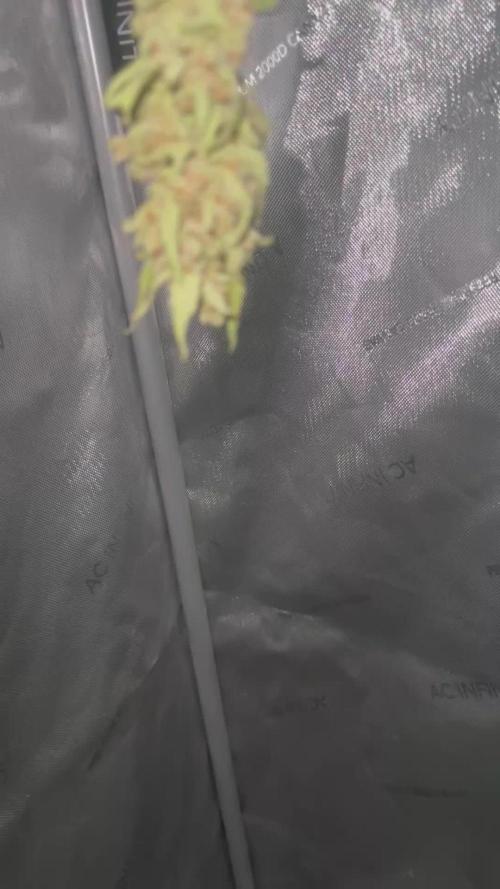
Yeahboiiiiiiiiiiiiiiiiiiiiiiiiiiiiiiiiiiiiiiiiiiiiiiiiiiiiiiiiiiiiiiiiiiiiiiiiiiiiiiiiiiiiiiiiiiiiiiiiiiiiiiiiiiiiiiiiiiiiiiiiiiiiiiiiiiiiiiiiiiiiiiiiiiiiiiiiiiiiiiiiiiiiiiiiiiiiiiiiiiii


Likes
2
Share


@DeadJoke
Follow
No nutrition for this week as i will harvest them at the end of week 8 of flowers as i am seeing 5% ember on Girl Scout Cookies and 30 or 40% on Green Gelato..


Likes
8
Share


@Fa5Venom
Follow
End week 3 plants still looking healthy. Removed couple fan leaves blocking bud sites. Temps getting hot outside in spring so tent temps have gone up but still in range to thrive. Humidity is mostly the easiest to control

Likes
36
Share


@nonick123
Follow
Día 44 (15/07) Wow! No hay shock de trasplante! 😍💥😁
Todas las ramas se han estirado hacia arriba tras el ajuste de LST y se están formando nuevos nodos rápidamente
Esta combinación de nutrientes de Lurpe + substrato de PRO-MIX HP es una maravilla 😍
Día 45 (16/07) Ayer tuvimos ola de calor (37 ºC) y han aguantado muy bien!
A última hora de la tarde (cuando ya no había sol directo) les apliqué H2O en spray foliarmente para refrescar los estomas
Hoy parece que vuelven las temperaturas estándar para esta época del año: 29 - 30 ºC en las horas centrales del día
Riego con 1 litro de H20 pH 6,5
Día 46 (17/07) Pequeños ajustes de LST
Hay algunas ramas inferiores que no se han formado / estirado mucho
Lo más probable es que haga una buena limpieza este domingo, 7 días después del trasplante, para dejar solo los brotes por encima del 4º nudo
Día 47 (18/07) Riego con 0,5 litro de H20 pH 6,5
Este domingo (día 50) haré limpieza de partes bajas y tal vez también de nuevo topping en las 4-6 ramas principales 😁
Día 48 (19/07) Día de muchísimo calor con 37 ºC. A ver como lo llevan!
Riego con 0,5 litro de H20 pH 6,5
Día 49 (20/07) Para ayudarles a llevar mejor el calor de las horas centrales del día, coloca una malla de sombreo (70%) sobre el invernadero
Lo cierto es que se nota que baja mucho la temperatura debajo de la malla! Van a estar más fresquitas! 😍
Riego con 0,5 litro de H20 pH 6,5
Día 50 (21/07) Training session!
Hago limpieza del tercio inferior de la planta, de todas las ramas y nudos que no superan la línea del dosel marcada por el 4º nudo (1er topping)
También hago topping (2º) a todas las ramas principales
La idea es tener 12 ó 14 colas principales para que no se hagan muy altas
De paso saco unos cuantos clones de las ramas inferiores eliminadas 😁💥
Para superar el estrés, hago las siguientes aplicaciones y riego:
- Riego con 1 Litro de Té Vegetativo de Lurpe Solutions. Preparación: 24 horas con bomba de aire (oxigenación) con ingredientes:
Green Sunrise 8 ml/L + Insect Frass 16 ml/L + Hummus Lombriz 8 ml/L + Melaza 1 ml/L + Kelp Hidrolizado 0,25 g/L
- Aplicación foliar Kelp hidrolizado de Lurpe Solutions a 0,25 ml/l
💦Nutrients by Lurpe Solutions - www.lurpenaturalsolutions.com
🌱Substrate PRO-MIX HP BACILLUS + MYCORRHIZAE - www.pthorticulture.com/en/products/pro-mix-hp-biostimulant-plus-mycorrhizae

Processing
Likes
6
Share


@Ashbash
Follow
Not giving them Any nutrients now until chop which should be in a few days. Seeing lots of amber on the Royal Gorilla, not so much on the Green Gelato, but still present in small amounts.
2 days until 10 weeks total flowering.
Letting the plants fall and rest on the side of the tent isnt ideal, but its the only way i could have saved them from the heat.
Check out my stardawg diary for what heat can really do to a plant....gonna upload another week soon and there is HUGE damage to the plant that didnt auto.
These smell lovely anyway, cant wait to try them!


Processing
Likes
18
Share


@Samson420
Follow
The first week of Flower is just about in the books. A big week from the girls perspective, but relatively quiet from this growers point of view.
On Sun., 5/16 The lights went out @ 8pm to kick off the first week of Flower.
On Monday evening around 7pm they got 1 gallon each of the new nutrient mix Bloom A & B and I decided to raise the light up to 36". I wanted to give the ladies a reason to grow again...(I think they came thru.)
No water or nutes on Tues.
Wed., 5/19 they got another gallon each of nutes, but run-off was more than I expected, so I knew they were getting skipped Thurs.
On Fri., 5/21 I lifted the pots again before watering to make a final decision and I was surprised that they were still kind of heavy. Well yes and no. It rained a lot this week and humidity was a b!tch to maintain. I had to buy a new dehumidifier to try and even things out because the small one that I can fit inside my tent just wasn't cutting it, even with the portable air conditioner. There were 3 days were I wasn't able to get the humidity lower that 80% before I was able to get the dehumidifier. I think they girls were stressed and didn't drink as much as they would have...anyway on Fri., 5/21 I gave them 1/3 gallon each of water, no nutes. I figured they'd drink that up and they'd be ready for big water today (Sat., 6/22) but they still felt like there was some weight in there towards the bottom 1/3, so nothing more till tomorrow. I pushed the stakes down a little bit for some LST but that's it.
Again, I think it was the humidity this week that kept them from drinking. Today was really the first day all week it hasn't rained at least a little. I have the dehumidifier and the portable A/C off at the moment (after 9pm) and it's about 75 F. and 48% Hum. in the tent.
Sad to say, no little balls that I can notice growing yet...but the girls did get a little growth spurt. Comparing the pics/measurements from last week to today, well, here are the numbers. I think I'm being realistically conservative. You can look at the pics and decide for yourself if where I'm measuring to is the right place.
Triple Cheese last week: 15.5' this week: 18.5"
White Widow last week: 14" this week: 16.5"
Critical Kush last week: 16" this week: 20.5"
So it looks like the ladies on the ends have taken over the Widow in the middle by a significant margin now.
I think that covers everything this week. More to come next week.

Likes
28
Share


@AutoCrazy
Follow
This lady is coming along nicely. Going to have to do a little more top dressing and compost teas as she’s getting hungry.
This girl has so many tops it blows my mind lol!!
😎
Likes
15
Share


@masterofsmeagol
Follow
8/17 Watered everything but the 50. Found two leaves with sep markings on the pink kish in the 50. Definitely not using old soil again. I'm pretty sure THIS plant contracted it from the soil and not the way the others did with the lawn mower and birdseed hijinx. It's supposed to rain for the first time basically all summer. It's am 80% chance so I HELD OFF ON PLANT DOCTOR AND DID NOT APPLY as I'm supposed to have a clear day after. I'll apply the plant doctor in the morning. I'm hoping this rain will knock down a bunch of those thrips. They seem to be on a small branch on a plant or two. One or two leaves show damage and I'll pick them off. I figure I'll get them after I apply plant doctor. I'll use either citric acid or just my regular bt-k pillar treatment with Castille or liquid soap. That will kill them as well. I'm on really worried about it. I also might just buy a bunch of lady bugs and unleash them once things get further along.
EDIT: TOOK A QUICK VIDEO AND A COUPLE PICS. HOPEFULLY WE GET THIS RAIN. IF NOT IM GOING TO TREAT THE THRIPS THAT ARE ON TWO PLANTS NOW. I THINK IM GOING TO GO WITH BT-K FOR NY PILLARS AND HOPE THAT THE DISH SOAP IN THE MIX KILLS THE THRIPS. I HAVE LOTS OF DIFFERENT OPTIONS SO ILL FIGURE SOMETHING OUT. BUDS SEEM TO BE EXPLODING IN GROWTH. OH AND THANKS TO THE OUTDOOR GROWER THAT MESSAGED OFFERING TO HELP. I APPRECIATE THAT. THANKS.
8/18 We got the rain we were expecting. It was sheet rain for a few hourscand rained during the night. Everything was drenched and it was cold (50°F). I shook off the special kush that's way further in flower. I decided to use the leafblowrr despite the risk of spreading anything. I did it so that it wasn't ever blowing TOWARDS another plant but still. I was hoping it might blast off some thrips that might have survived that torrential rain. We've never had a dry summer like this. I'll moniter things. My water day is tomorrow so I assume that's when the girls will get their plant doctor dose. It's a great time of year for cannabis growers. We get to watch all the hard work we've put in literally pay off. It's very peaceful in the garden.
EDIT: Went over at about one to check things out and do some minor defoliation. I checked on the thrip situation and I dont know if I blasted them off with the leafblower or if the rain washed them away bit I doubt it. Ivecmade the decision to treat these little bastards. It's on one plant but it's started to spread to another branch on another plant. I probably just overlooked it but still. Seeing that it rained like he'll and I'm seeing like zero signs of septoria I'm going to treat everything. At least I think I am. I haven't decided what to use. I think I could just use bt and soap and I'd probably be alright. I'd feel better doing that as it's something I'm familiar with. Outdoor growing. It's always something.
8/19 In the 40's last night. Hopefully that will help with the thrips. I was hurried and since today tops at 72° I only watered the 10th planet big mk ultra and the chem dog with preventative plant doctor. I'm not seeing hardly any septoria and if I do itsca random leaf. I mixed up 3tsp of citric acid and some Dawn in a 2 quart hand sprayer and treated the 10th planet that I thought had heat stress and the Pink kush in the ten gal that has the damage. I also treated a branch on my good tenth planet. It was the only branch with markings so I think I've got it early enough. I'm just wondering the best way to tackle this. The pink kush I'm sure, could handle spinosad. That strain is much later flowering. I'll see how the citriccacid works and go from there. If the other girls need water they'll get it when I get home alongcwith plant doctor. I've got some work to do. I'll keep this updated. Opinions are always welcome.


Likes
12
Share

@Suemchen
Follow
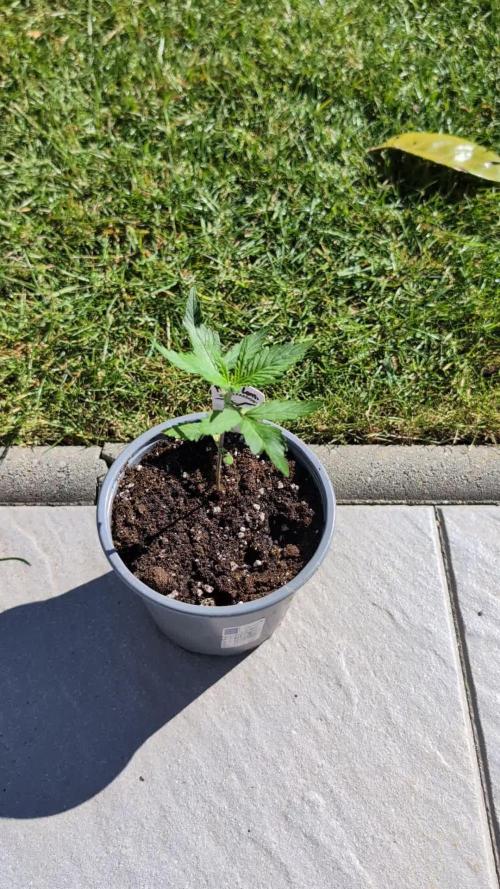
Sanlight EVO -3 60 190W at 40%
Day 15: Looks OK, a little scrawny but oh well. She got a bigger pot yesterday 👌🏻
Day 16: looking a little better, IT was probably too cold outside in the morning. Started to Bring her outside later during the day🌞
Day 17: developing OK, did nothing today 👌🏻
Day 18: looking good 👍🏻
Day 19: watered with rain water and 1ml/l Root Juice + 1ml/l Powerzyme. Added Mycorrhizal and a little Dolomit Lime to the soil.
Day 20: looking allright👌🏻 nothing to report for today👍🏻
Day 21: looking good 🤗 developing nicely👌🏻

