Likes
Comments
Share
@Canna96
Follow
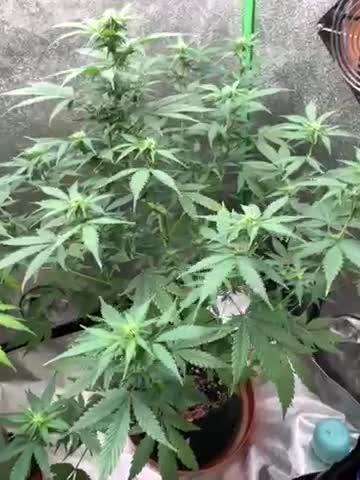
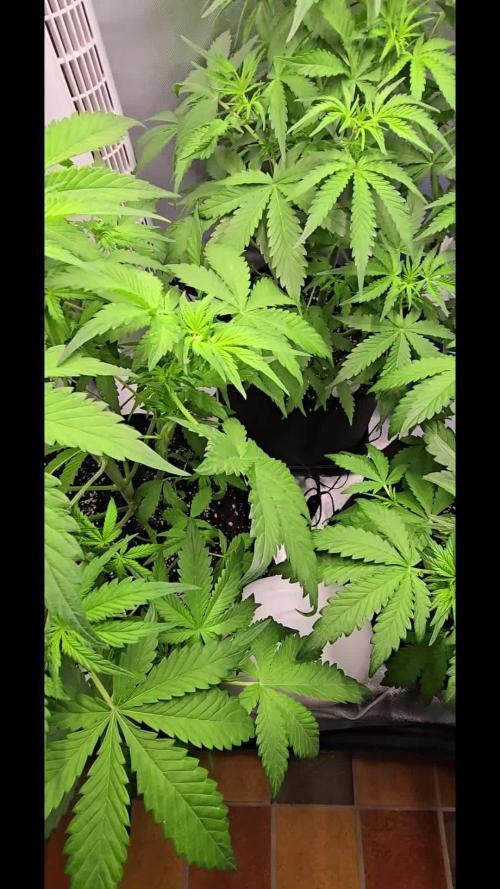
This week went pretty well, other than she stretched like crazy and I am now getting worried about running out of vertical space. I also had a few of my bottom leaves get a few brown and yellow spots on them. I did post some pics and asked a question, thank you for the responses, much appreciated! I am thinking about adding my Spyder Farmer LED 100 Watt light into the tent for the nebula auto because it is about 23 inches shorter than the sour diesel. I believe it would only raise my temp about 2 degrees, and possibly lower the humidity by one or two percent. I must say my dehumidifier has been a freaking stud, running 24X7 and not complaining. I should look into adding another unit, it has been in the mid 90's and muggy for about a week. So far I have to say I am super impressed and excited with this setup, the genetics, and with growing this wonderful plant in general. Already planning ahead to my next grow, and what I can do better. I have been enjoying myself and I really appreciate everyone who has taken the time to answer my questions! I am having a blast and am excited to see what this lady will give up in a few weeks!
Likes
3
Share
@Lvnsource
Follow
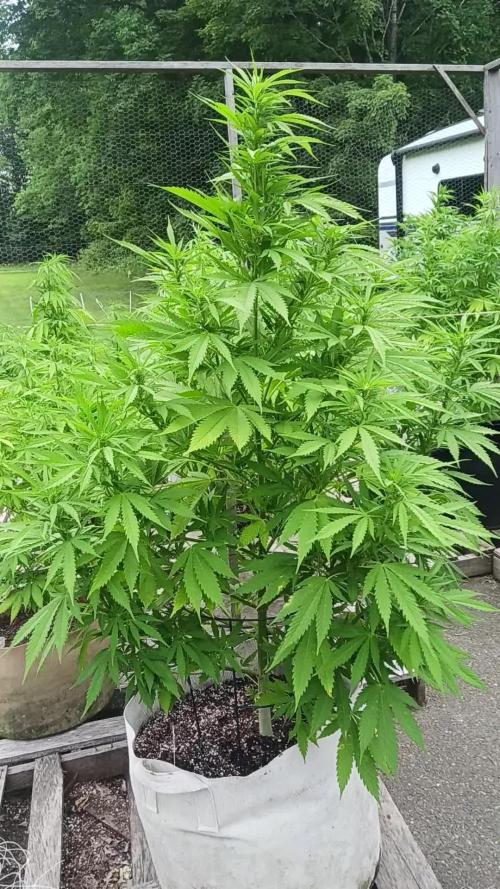
Feed Log: #1 - D:94 - 6L - Si,[3.6ml],Algo [0ml],HakaB[4g],HakaR[5g]Ca/Mg,[0.3g/L & 0.2g/L],INPUT: [pH 7.0],[1.666 + 0.440 EC], OUTPUT: 5.4L , [1.586 EC], pH [7.1] Previous irrigation: D:92 #2 - D:94 - 5L - Si,[3.6ml],Algo [0ml],HakaB[4g],HakaR[5g]Ca/Mg,[0.3g/L & 0.2g/L],INPUT: [pH 7.0],[1.666 + 0.852 EC], OUTPUT: 0.8L , [1.630 EC], pH [7.1] Previous irrigation: D:92 ——————————————————————————— Everything is running according to plan. 👍 This past week, I did another round of IPM because I spotted grasshopper nymphs, which I haven't had to deal with until now; the minor thrip damage that presented itself in the earlier weeks is practically nonexistent at this point, too. I’ve spotted a few beneficial predators here and there; wolf spiders, jumping spiders, and ladybugs. 🐞 🌱 These guys are doing most of the work for me so minimal intervention is required on my part although I will manually remove pests when around. —————————————————————————— Other than that, I’m continuing to manage pH and EC, ensuring the fabric pots never dry back to avoid salt spikes. To ensure I keep the EC levels stable, I irrigate the plants with 1–1.5L of rainwater before I add my main nutrient mix. ☑️ The plants currently require fertigation every 2 days, but that will soon shift to daily management. I’m also maintaining my manual light dep schedule: bringing the plants into darkness after 12 hours and moving them back out in the mornings. ☀️ I’ll also perform one last prune of all the shaded bud sites. 👍
Likes
25
Share
Week 2 This week I put a humidifier in the tent for a few days. Without it the humidity is around 42-49%, with it it is around 55%. I don't know if this makes sense.. Maybe one of you has some advice for me, thanks in advance. I noticed that the leaves were slowly starting to curl up at the edges. I then did some research and hung the lamp higher, about 120cm above the leaf tips and reduced the power from 50% to 40%. I hope that I have solved the problem. So far I think the leaves of the plants look better. I watered every ~ two days - without draining - and since yesterday the water quantity has been 1.5L per plant divided into 3x0.5l watering units (water, wait 30min to 1h, water again, wait, etc.). I added 6ml of CalMag to 3 liters of osmosis water. I put the last Biobizz tab into the soil and filled the pot with some more soil. Music 🙏👇 Song: sumu - apart [NCS Release] Music provided by NoCopyrightSounds Free Download/Stream: http://ncs.io/apart Watch: http://ncs.lnk.to/apartAT/youtube
Processing
Likes
88
Share
@Fergie
Follow
HEY guys so another week has passed and the end is in sight . had to buy some alternitive mag and calcium supps as calmax isn't available at present here 😑 but been run a week now and no problems as of yet . Gave a wee vid update of my nutrients and supplements im using at present and will add more with different grows . Til next week 😀
Likes
134
Share
OMG OMG OMG finding hard to put on words all i am felling with this one, she was a delight to grow and without trying yet her medicine she wen strait to my top 3, i mean super strong Mama, strong to everything pests you name it, amazing structure her terpene profile is taking me back to the 90s with her almost like gasoline smell mixed with limes and pines OMG cant wait to try out this one much but much respect to DutchPassion on this creation of them she is so so so , like glue that you cant touch without getting it everywhere <3 <3 haded the last 3 weeks and harvest time-lapse i fell like this one could have gone more than the 71 days in flower that she did, but there is no time for that in this run but i will run her again thats for sure and a must for me. Guys trust me on this one , she is a must , a real must in any garden <3 <3 <3 Thank you so much Dutch Passion for this blessing of an opportunity and for everything you guys do for the community much respect and appreciation <3<3<3 Everyone best of luck for the contest this was an amazing and fun one <3 <3 <3 As always thank you all for stoping by for the love and for it all, i truly appreciate and enjoy the ride so much more with you guys around <3 <3 <3 you guys make me fell super blessed <3 <3 <3 #aptus #aptusplanttech #aptusgang #aptusfamily #aptustrueplantscience #inbalancewithnature #trueplantscience #growerslove #dogdoctoofficial With true love comes happiness <3 <3 <3 Always believe in your self and always do things expecting nothing in return and with an open heart , be a giver and the universe will give back to you in ways you could not even imagine so <3 <3 <3 More info and updates @ https://growdiaries.com/grower/dogdoctor https://instagram.com/dogdoctorofficial https://youtube.com/channel/UCR7ta4DKLFMg2xxTMr2cpIg <3 <3 <3 Growers love to you all <3 <3 <3 I will post more photos from her dry trimmed bud report smoke etc asap <3 <3 <3 and need to clean space on my iPad so that i can upload the rest of them photos and videos , my apologies <3 <3 Done hehehe waiting on this beauties to dry now <3 <3 <3
Likes
9
Share
@Growbody
Follow
Willkommen zu meinem Growbericht der Gorilla Cookies Auto von 2Fast4Buds. Der Strain wurde 2022 zur besten Indica beim Autoflower World Cup gewählt. Laut FastBuds deren meistverkaufter Strain. Grund genug, den Strain zu testen. Für den Grow verwende ich 15 Liter ROOTiES Stofftöpfe. Ich war sehr zufrieden mit der Sonnenerde, deshalb habe ich nachbestellt. Sonnenerde hat seine Mischung für die Bio Hanferde letzten Oktober/November geändert. Jetzt sind da kleine Tonkügelchen drin und kleine Gipsstückchen. Laut Sonnenerde soll das die Erde luftiger machen. Auf den Fotos kann man die unterschiedlichen Mischungen gut erkennen. In den AirPots ist die alte Sonnenerde, in den Stofftöpfen die neue. So kann man das Wachstum in den verschiedenen Erden schön vergleichen. Die Smart Start Plugs von zamnesia hab ich wieder verwendet. Tag 29: Die Gorilla Cookies Automatic von FastBuds hat erste Blüteanzeichen und bekommt noch etwas LST. Tag 32: Sie wächst wie ein Schirm. Schön, das du dir meinen Bericht ansiehst. Schau gerne wieder rein. 👋😎
Likes
14
Share
Contento con el resultado. Hemos obtenido buena producción y unas flores de calidad. Una vez cosechada y curada..podríamos decir que es una variedad muy exótica tanto en el modo de cultivo como en el sabor de sus frutos. Toques muy pronunciados a nata con un trasfondo terroso, humus.. Es una variedad muy exquisita de fumar.. con esta cepa notaréis que is pesan los pies. Jajaj
Likes
67
Share
Week 4 Day 1 all 3 plants were transplanted from smaller cups in to 5 gallon fabric pots yesterday and seem to be taking to their new homes nicely, a little bit of leaf curling but I did give them a pretty intense watering. I picked up a bag of Fox Farms Happy Frog potting mix for them now that they are in 5 gallons, hopefully they will be happy in the better quality soil. If all continues to go well with the transplant I will be topping hopefully in the next couple days. I will be trying to manifold at least one of these plants. Week 4 Day 4 All 3 plants seem to have recovered nicely from their transplanting. I topped all three plants today and attempted two clones from the toppings of KBGB1 and Jack Herer, made a mini greenhouse for them out of a tomato cage and some cellophane Week 4 Day 5 I cleaned up all the undergrowth below the third node in preparation to start manifolding.
Likes
85
Share
💩Holy Crap💩 That was so much fun , it's full on winter where I am and it kept me busy , and come on there's nothing like growing your own stuff. I had a blast as it's been at least over 10 years since my last indoor grow , and it was fun , I had used all of my old techniques and equipment and it worked out just fine , so I was glad I had a ruff idea of what to expect...... Final thoughts Gonna be honest about that grow , it should me just how far Genetics have come, 10 plus years ago before I stopped growing indoors , all we had was like lowrider auto and greenomatic auto and maybe few others but they were horrible...... but this auto produced quite well as expected it should with the size of my medium and my soil base and very little nutrients, which is what I had hoped for from the start , cause I didn't really know where to start in terms of Genetics as I have been out the game for awhile but I'm super glad with the results and some gratitude needs to be sent to CanukSeeds , they came through as it always starts and ends with elite Genetics👌 ........... I can't wait to start my next grow diary, so keep an eye out , there's gonna be more to come , I'm going to try some really interesting cultivars........ PS. Can anyone tell me this , back in the day like 2003-4-5-6 wasn't growdiaries.com just a private forum cause if memory serves me , I was among those lucky enough to find a community that did complete grow logs, fourm style, which is where I found my growmie and Mentor Franco Loga from Greenhouse seeds , RIP BUDDY 😃 CANT WAIT TO START MY NEXT GROW 👉I HAVE CREATED A PLACE FOR GROWMIES TO VISIT , SHOW OFF THERE GROWS , AND JUST HANG OUT .....👈 👉ALL YOU NEED IS TO JOIN THE GROWDIARIES DISCORD SERVER !!!!!!!!!!!👈 LINK IS 👉 https://discord.gg/zQmTHkbejs
Likes
3
Share
Top dress making these girls look real good......I also got some other strain such as runtz, turquoise jeep and sluricanne
Likes
19
Share
Yellow butterfly came to see me the other day; that was nice. Starting to show signs of stress on the odd leaf, localized isolated blips, blemishes, who said growing up was going to be easy! Smaller leaves have less surface area for stomata to occupy, so the stomata are packed more densely to maintain adequate gas exchange. Smaller leaves might have higher stomatal density to compensate for their smaller size, potentially maximizing carbon uptake and minimizing water loss. Environmental conditions like light intensity and water availability can influence stomatal density, and these factors can affect leaf size as well. Leaf development involves cell division and expansion, and stomatal differentiation is sensitive to these processes. In essence, the smaller leaf size can lead to a higher stomatal density due to the constraints of available space and the need to optimize gas exchange for photosynthesis and transpiration. In the long term, UV-B radiation can lead to more complex changes in stomatal morphology, including effects on both stomatal density and size, potentially impacting carbon sequestration and water use. In essence, UV-B can be a double-edged sword for stomata: It can induce stomatal closure and potentially reduce stomatal size, but it may also trigger an increase in stomatal density as a compensatory mechanism. It is generally more efficient for gas exchange to have smaller leaves with a higher stomatal density, rather than large leaves with lower stomatal density. This is because smaller stomata can facilitate faster gas exchange due to shorter diffusion pathways, even though they may have the same total pore area as fewer, larger stomata. Leaf size tends to decrease in colder climates to reduce heat loss, while larger leaves are more common in warmer, humid environments. Plants in arid regions often develop smaller leaves with a thicker cuticle and/or hairs to minimize water loss through transpiration. Conversely, plants in wet environments may have larger leaves and drip tips to facilitate water runoff. Leaf size and shape can vary based on light availability. For example, leaves in shaded areas may be larger and thinner to maximize light absorption. Leaf mass per area (LMA) can be higher in stressful environments with limited nutrients, indicating a greater investment in structural components for protection and critical resource conservation. Wind speed, humidity, and soil conditions can also influence leaf morphology, leading to variations in leaf shape, size, and surface characteristics. Small leaves: Reduce water loss in arid or cold climates. Environmental conditions significantly affect gene expression in plants. Plants are sessile organisms, meaning they cannot move to escape unfavorable conditions, so they rely on gene expression to adapt to their surroundings. Environmental factors like light, temperature, water, and nutrient availability can trigger changes in gene expression, allowing plants to respond to and survive in diverse environments. Depending on the environment a young seedling encounters, the developmental program following seed germination could be skotomorphogenesis in the dark or photomorphogenesis in the light. Light signals are interpreted by a repertoire of photoreceptors followed by sophisticated gene expression networks, eventually resulting in developmental changes. The expression and functions of photoreceptors and key signaling molecules are highly coordinated and regulated at multiple levels of the central dogma in molecular biology. Light activates gene expression through the actions of positive transcriptional regulators and the relaxation of chromatin by histone acetylation. Small regulatory RNAs help attenuate the expression of light-responsive genes. Alternative splicing, protein phosphorylation/dephosphorylation, the formation of diverse transcriptional complexes, and selective protein degradation all contribute to proteome diversity and change the functions of individual proteins. Photomorphogenesis, the light-driven developmental changes in plants, significantly impacts gene expression. It involves a cascade of events where light signals, perceived by photoreceptors, trigger changes in gene expression patterns, ultimately leading to the development of a plant in response to its light environment. Genes are expressed, not dictated! While having the potential to encode proteins, genes are not automatically and constantly active. Instead, their expression (the process of turning them into proteins) is carefully regulated by the cell, responding to internal and external signals. This means that genes can be "turned on" or "turned off," and the level of expression can be adjusted, depending on the cell's needs and the surrounding environment. In plants, genes are not simply "on" or "off" but rather their expression is carefully regulated based on various factors, including the cell type, developmental stage, and environmental conditions. This means that while all cells in a plant contain the same genetic information (the same genes), different cells will express different subsets of those genes at different times. This regulation is crucial for the proper functioning and development of the plant. When a green plant is exposed to red light, much of the red light is absorbed, but some is also reflected back. The reflected red light, along with any blue light reflected from other parts of the plant, can be perceived by our eyes as purple. Carotenoids absorb light in blue-green region of the visible spectrum, complementing chlorophyll's absorption in the red region. They safeguard the photosynthetic machinery from excessive light by activating singlet oxygen, an oxidant formed during photosynthesis. Carotenoids also quench triplet chlorophyll, which can negatively affect photosynthesis, and scavenge reactive oxygen species (ROS) that can damage cellular proteins. Additionally, carotenoid derivatives signal plant development and responses to environmental cues. They serve as precursors for the biosynthesis of phytohormones such as abscisic acid () and strigolactones (SLs). These pigments are responsible for the orange, red, and yellow hues of fruits and vegetables, while acting as free scavengers to protect plants during photosynthesis. Singlet oxygen (¹O₂) is an electronically excited state of molecular oxygen (O₂). Singlet oxygen is produced as a byproduct during photosynthesis, primarily within the photosystem II (PSII) reaction center and light-harvesting antenna complex. This occurs when excess energy from excited chlorophyll molecules is transferred to molecular oxygen. While singlet oxygen can cause oxidative damage, plants have mechanisms to manage its production and mitigate its harmful effects. Singlet oxygen (¹O₂) is considered a reactive oxygen species (ROS). It's a form of oxygen with higher energy and reactivity compared to the more common triplet oxygen found in its ground state. Singlet oxygen is generated both in biological systems, such as during photosynthesis in plants, and in cellular processes, and through chemical and photochemical reactions. While singlet oxygen is a ROS, it's important to note that it differs from other ROS like superoxide (O₂⁻), hydrogen peroxide (H₂O₂), and hydroxyl radicals (OH) in its formation, reactivity, and specific biological roles. Non-photochemical quenching (NPQ) protects plants from damage caused by reactive oxygen species (ROS) by dissipating excess light energy as heat. This process reduces the overexcitation of photosynthetic pigments, which can lead to the production of ROS, thus mitigating the potential for photodamage. Zeaxanthin, a carotenoid pigment, plays a crucial role in photoprotection in plants by both enhancing non-photochemical quenching (NPQ) and scavenging reactive oxygen species (ROS). In high-light conditions, zeaxanthin is synthesized from violaxanthin through the xanthophyll cycle, and this zeaxanthin then facilitates heat dissipation of excess light energy (NPQ) and quenches harmful ROS. The Issue of Singlet Oxygen!! ROS Formation: Blue light, with its higher energy photons, can promote the formation of reactive oxygen species (ROS), including singlet oxygen, within the plant. Potential Damage: High levels of ROS can damage cellular components, including proteins, lipids, and DNA, potentially impacting plant health and productivity. Balancing Act: A balanced spectrum of light, including both blue and red light, is crucial for mitigating the harmful effects of excessive blue light and promoting optimal plant growth and stress tolerance. The Importance of Red Light: Red light (especially far-red) can help to mitigate the negative effects of excessive blue light by: Balancing the Photoreceptor Response: Red light can influence the activity of photoreceptors like phytochrome, which are involved in regulating plant responses to different light wavelengths. Enhancing Antioxidant Production: Red and blue light can stimulate the production of antioxidants, which help to neutralize ROS and protect the plant from oxidative damage. Optimizing Photosynthesis: Red light is efficiently used in photosynthesis, and its combination with blue light can lead to increased photosynthetic efficiency and biomass production. In controlled environments like greenhouses and vertical farms, optimizing the ratio of blue and red light is a key strategy for promoting healthy plant growth and yield. Understanding the interplay between blue light signaling, ROS production, and antioxidant defense mechanisms can inform breeding programs and biotechnological interventions aimed at improving plant stress resistance. In summary, while blue light is essential for plant development and photosynthesis, it's crucial to balance it with other light wavelengths, particularly red light, to prevent excessive ROS formation and promote overall plant health. Oxidative damage in plants occurs when there's an imbalance between the production of reactive oxygen species (ROS) and the plant's ability to neutralize them, leading to cellular damage. This imbalance, known as oxidative stress, can result from various environmental stressors, affecting plant growth, development, and overall productivity. Causes of Oxidative Damage: Abiotic stresses: These include extreme temperatures (heat and cold), drought, salinity, heavy metal toxicity, and excessive light. Biotic stresses: Pathogen attacks and insect infestations can also trigger oxidative stress. Metabolic processes: Normal cellular activities, particularly in chloroplasts, mitochondria, and peroxisomes, can generate ROS as byproducts. Certain chlorophyll biosynthesis intermediates can produce singlet oxygen (1O2), a potent ROS, leading to oxidative damage. ROS can damage lipids (lipid peroxidation), proteins, carbohydrates, and nucleic acids (DNA). Oxidative stress can compromise the integrity of cell membranes, affecting their function and permeability. Oxidative damage can interfere with essential cellular functions, including photosynthesis, respiration, and signal transduction. In severe cases, oxidative stress can trigger programmed cell death (apoptosis). Oxidative damage can lead to stunted growth, reduced biomass, and lower crop yields. Plants have evolved intricate antioxidant defense systems to counteract oxidative stress. These include: Enzymes like superoxide dismutase (SOD), catalase (CAT), and various peroxidases scavenge ROS and neutralize their damaging effects. Antioxidant molecules like glutathione, ascorbic acid (vitamin C), C60 fullerene, and carotenoids directly neutralize ROS. Developing plant varieties with gene expression focused on enhanced antioxidant capacity and stress tolerance is crucial. Optimizing irrigation, fertilization, and other management practices can help minimize stress and oxidative damage. Applying antioxidant compounds or elicitors can help plants cope with oxidative stress. Introducing genes for enhanced antioxidant enzymes or stress-related proteins over generations. Phytohormones, also known as plant hormones, are a group of naturally occurring organic compounds that regulate plant growth, development, and various physiological processes. The five major classes of phytohormones are: auxins, gibberellins, cytokinins, ethylene, and abscisic acid. In addition to these, other phytohormones like brassinosteroids, jasmonates, and salicylates also play significant roles. Here's a breakdown of the key phytohormones: Auxins: Primarily involved in cell elongation, root initiation, and apical dominance. Gibberellins: Promote stem elongation, seed germination, and flowering. Cytokinins: Stimulate cell division and differentiation, and delay leaf senescence. Ethylene: Regulates fruit ripening, leaf abscission, and senescence. Abscisic acid (ABA): Plays a role in seed dormancy, stomatal closure, and stress responses. Brassinosteroids: Involved in cell elongation, division, and stress responses. Jasmonates: Regulate plant defense against pathogens and herbivores, as well as other processes. Salicylic acid: Plays a role in plant defense against pathogens. 1. Red and Far-Red Light (Phytochromes): Red light: Primarily activates the phytochrome system, converting it to its active form (Pfr), which promotes processes like stem elongation and flowering. Far-red light: Inhibits the phytochrome system by converting the active Pfr form back to the inactive Pr form. This can trigger shade avoidance responses and inhibit germination. Phytohormones: Red and far-red light regulate phytohormones like auxin and gibberellins, which are involved in stem elongation and other growth processes. 2. Blue Light (Cryptochromes and Phototropins): Blue light: Activates cryptochromes and phototropins, which are involved in various processes like stomatal opening, seedling de-etiolation, and phototropism (growth towards light). Phytohormones: Blue light affects auxin levels, influencing stem growth, and also impacts other phytohormones involved in these processes. Example: Blue light can promote vegetative growth and can interact with red light to promote flowering. 3. UV-B Light (UV-B Receptors): UV-B light: Perceived by UVR8 receptors, it can affect plant growth and development and has roles in stress responses, like UV protection. Phytohormones: UV-B light can influence phytohormones involved in stress responses, potentially affecting growth and development. 4. Other Colors: Green light: Plants are generally less sensitive to green light, as chlorophyll reflects it. Other wavelengths: While less studied, other wavelengths can also influence plant growth and development through interactions with different photoreceptors and phytohormones. Key Points: Cross-Signaling: Plants often experience a mix of light wavelengths, leading to complex interactions between different photoreceptors and phytohormones. Species Variability: The precise effects of light color on phytohormones can vary between different plant species. Hormonal Interactions: Phytohormones don't act in isolation; their interactions and interplay with other phytohormones and environmental signals are critical for plant responses. The spectral ratio of light (the composition of different colors of light) significantly influences a plant's hormonal balance. Different wavelengths of light are perceived by specific photoreceptors in plants, which in turn regulate the production and activity of various plant hormones (phytohormones). These hormones then control a wide range of developmental processes.
Likes
22
Share
@Naujas
Follow
"what a space-that's how a girl is" but I like to watch how she changes :) every day the suitcase is just more beautiful to me:).
Likes
23
Share
~ FASTBUDS TRAINWRECK AUTOFLOWER~ ~FastBuds Trainwreck Auto~ Quick Service!-High Route! -Hit you like a freight train. -A potent high that will leave you feeling good all day long. -Super yields. This strain grows up to 120cm and yields 550gr/m2 in just 63 days! -Perfectly balanced. Especially bred to develop the best of Indica and Sativa traits. -Suited for everyone. Top-quality buds without much maintenance or extra attention. -The good old days. An upgraded fast flowering version of the classic, bred to perfection. __________________________________________________________________________________________________________________________________________________________________________________________________________________________________________________________________________________________________________________________________________________________________________________________________________________________________________________ STRAIN DESCRIPTION: -A fast flowering hybrid variety suited for all types of growers, it’s an easy-to-grow strain that takes 9 weeks from seed to harvest, growing up to 120cm and yielding 550gr/m2 without needing much maintenance or extra effort. Expect hard-hitting nugs that will catch everyone’s attention due to the sweet pine-sol terpenes that stink out the whole room as soon as you light up the joint; This variety will be among your favorites once you experience the exceptional effects that may not seem too potent at first but slowly creeps up on you and get you high as a kite for hours. -Bud description: Trainwreck Auto’s buds grow quite thick, with plenty bright yellowish-orange hairs that wrap around the medium-sized calyxes, complementing the light-green nugs beautifully. Expect extremely dense buds that grow stacked and end up looking like one giant nug in each branch. You’ll be amazed by the trichome production, the sugar-dipped nugs with some colorful leaves coming out of them will leave your fingers full of resin and, as soon as you start grinding them, overwhelm you with a pungent lemony pine-sol with a touch of sourness and a spicy background. -Smoke report: After a couple of hits, you will experience a really cozy and stimulating head high that will get you in a comfortable state of mind and feeling good with everything and everyone; The long-lasting uplifting effect promotes a very calm and centered state of mind with a relaxed edge at first. The motivating effect will gradually transform into a more Indica-like high that deeply relaxes your muscles and relieves pain without leaving you too sedated, an ideal choice for those who want to stay alert during the morning and need to relax when the workday ends. -Plant appearance: Growing on the taller side, this autoflower can reach up to 120cm while growing quite compact and bushy, you’ll see lots of dark-green fan leaves coming out of everywhere and a couple of side branches that can grow as tall as the main cola. Thanks to its Sativa heritage, this variety yields as much as it grows; Expect yields ranging from 350-500gr/m2, making it an ideal choice for all types of growers who are looking for a low-maintenance and fast flowering version of the classic. *The above Strain Information/Description courtesy of FastBuds ____________________________________________________________________________________________________________________________________________________________________________________________________________________________________________________________________________________________________________________________________________________________________________________________________________________________________________________ MY SETUP: Planted into Jiffy Peat Pellet that was hydrated with de-chlorinated water with SuperThrive added then ph'd to 6.0 @ 80℉ where it took 3 days for her to break ground. Grown 100% organic in 4g fabric pot by Gronest filled with Mother Earth 70/30 Coco/Perlite medium amended with (my 'Secret Recipe): 2tbs/g of Down To Earth 4-4-4 / 2 cups/g of Earthworm Castings / 1tbs/g of Dr. Earth Flower Girl 3-9-4, 1tbs/g of Dr. Earth Bat Guano, 3/4 cup of Down To Earth Azomite and 1 tsp/g Down To Earth Fish Bone Meal. 24hr light cycle during Germination, 19/5 light cycle for the remainder of the run under UnitFarm's UF-4000 and UFS3000 LED's which I have to say just blew me away with the results they gave!!! If you're on a budget and want a light that is about as low profile and cool running as they get you really need to check out UnitFarms lights. Believe me... I run a pair of HLG 650R's and a HLG 225 in my 4x8 so I'm no stranger to 'high end' lights but lemme tell ya, these two UnitFarm lights absolutely blowup my 4x4 and don't overheat the tent! She received straight water ph'd @ 6.2-6.8 when needed and weekly Compost Tea's for the entire grow which is one of the beauty's of growing 100% organic, you establish a microbial colony in your medium, then feed the microbes every 3-4 weeks keeping them fat and happy... They, in turn, through their life processes take care of feeding the plant. Pretty freaking cool if I may say so, and there's no simpler way to grow IMHO 😎: 1: This Trainwreck's structure was perfect and didn't require me to top her, only requiring minimal LST and tucking shade leaves that were blocking light penetration. She grew fairly tall to 31" with wide node spacing allowing for excellent light penetration making her a growers dream, low maintenance, extremely tolerant of temperatures and disease/pests ) and a healthy yield of some epic super dense GASSY buds glistening with trichomes... What more could you ask for? 😍💖 All in all, this strain has made it's way onto my 'list' and you'll be seeing it run again by me for sure as she's a hard one to stay away from! I highly recommend this one... Go grab some and put a huge smile on your face too! 😁: 1:💚
Likes
5
Share
Belle grande plante avec de belle grande branche latéral qui devient presque aussi haute que la central. Odeur de fraise assez forte qui donne le goût de goûté maintenant🤣
Likes
12
Share
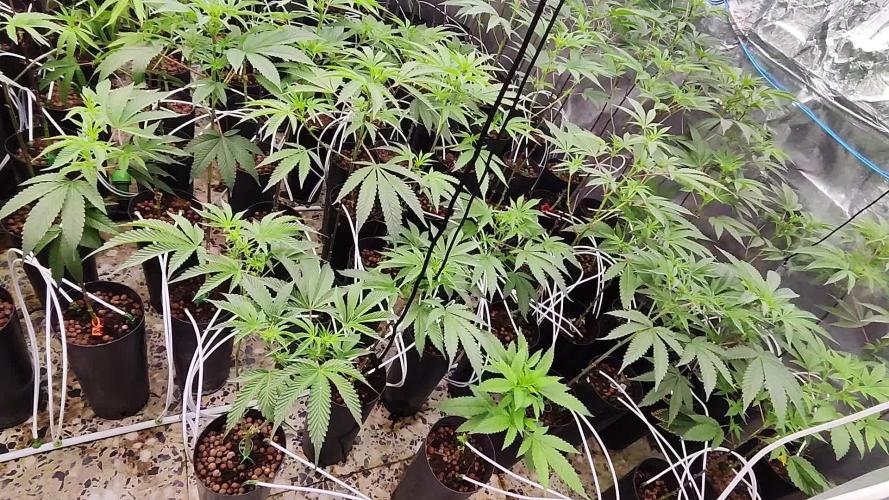
Hello hello! This past week was filled with explosive new growth; these clones certainly live up to the standards set by their mother. So much so, in fact, that I decided to take two more cuttings. We'll see if they root. This will be either the final or the second-to-last week of veg for these plants as they've nearly filled the space completely and are beginning to shoot upwards. A lesson I learned with Carl&UKBS 1 was the "perfect window" of veg time- filling the space and maximizing yield while still allowing airflow to prevent mold. HST and LST will continue into flower, HST will stop at F7. LST will continue until harvest as I'm not scrogging the plants this time around. -9/20- Tomorrow the new week will begin and the clones will be flipped to flower. Wish me luck!
Likes
4
Share
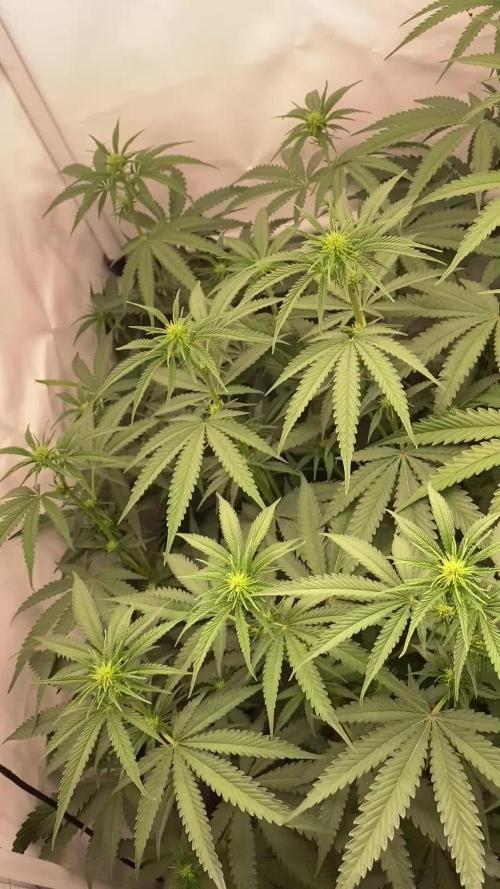
11/12 start of week 3 of flower hoping she is done stretching cus I'm out of room when it comes to height. Gave all the goodies plus added Fulpower and molasses 11/15 stretching seems to have stopped. Dropped humidity and raised vpd to stay around 1.5 super cropped the main top to be more level with all the side branches that are pretty uniform and cranked ppfd to the tallest top to 1000 ppfd
Likes
29
Share
Un altra settimana è passata senza problemi...grazie alla mia perseveranza nel curarla e debellare i ragnetti Rossi che bastardelli mi sono arrivati anche dentro al box... sicuramente c'è li ho portati io involontariamente quando sono andato a vedere delle piante di un amico che erano impregnate di ragnetti e ragnatele sui fiori....vabbè ora devo sbattermi un po' più ma non lascerò che mi rovinino la mia terapia 💪👍🙏🕉️🙏... Boom Shiva Shankar 🕉️ belle le mie coccinelle 🐞 che mi tengono pulita la mia terapia
Likes
14
Share
D29/V25 - 29/04/23 - Benting D30/V26 - 30/04/23 - EC 0.9 pH 6.5 D31/V27 - 01/05/23 - LST and Benting D32/V28 - 02/05/23 - Some other LST D33/V29 - 03/05/23 - Added water and nutes - EC=0,9 pH=6,5 D34/V30 - 04/05/23 - LST D35/V31 - 05/05/23 - Nothing
Likes
12
Share
Absoulutty banging bud , not as much weight as i wanted but I think that was down to a low veg time. I love this strain , it’s one of them flowers that you only need to smell it to know it’s gonna fuck you up😂 the bud is all Jarred up now curing and I gotta say the taste is nice , it’s not sweet as I like ,but a taste within its self . Phantom og coming next gonna try my best to keep stepping it up 🙌🌱👍🏽
Likes
26
Share
Hello fellow growers! This is my first entry on growdiaries. I've been growing for about two and a half years, and got most of my knowledge following other growers from this site. I've decided to start sharing my own grows, so I can learn from experienced growers even more, and help other growers too if I can. This is around my 7th grow now. I didn't document any of the veg for this plant, and only started documenting since Week 4, but going forward I will be trying to document the whole cycle of the plant. I'm running x2 ETHOS Fanta Sea RBX & x2 ETHOS Citradellic Sunset. I vegged them for around two months in 1 liter pots, than transplanted them to the larger 15 liter pots and into my flowering tent for about a month. I usually flip them after a week or so from transplanting, but this time I was abroad and I didn't want to flip them and not tend to them during the first weeks of flowering, when the huge growth spurt happens, so I decided to flip them after I come back. The result ended up being with all plants growing and stretching like crazy during my time away, before even flipping. Once I flipped, I threw in a scrog net and bended as much as possible. A week later ended up putting up another scrog net. I was afraid that the plants would stretch right under the lights, but now during week 4, any growing seems to have stopped and the plants energy is being channeled into the buds. During the first 3 Weeks of flowering, I had a huge issue with humidity which stayed around 70%. Problems stemmed from being in a basement, bushy plants, bad ventilation & perspiration from AC + Heat from light fixture. I learned much more about humidity from this grow. It's much more stable now after adding another dehumidifiert, fixing the ventilation and defoliating heavily. See you next week for the next entry!