Likes
Comments
Share
@Uneasy
Follow
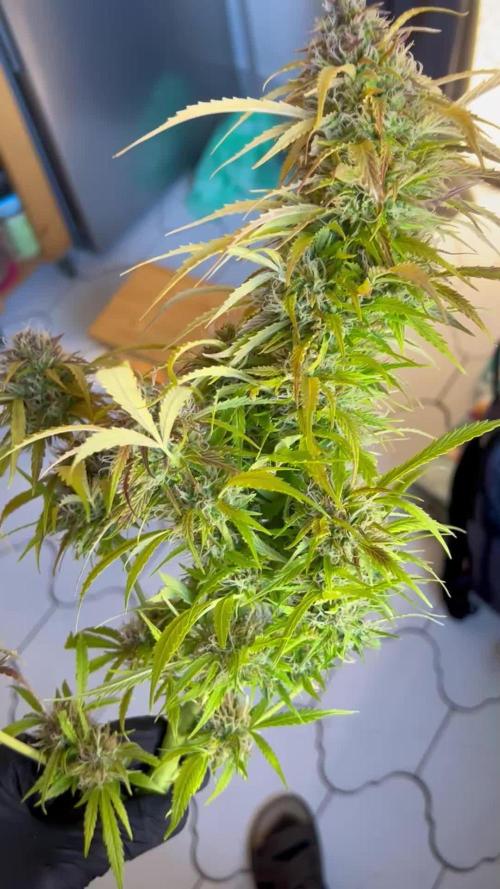
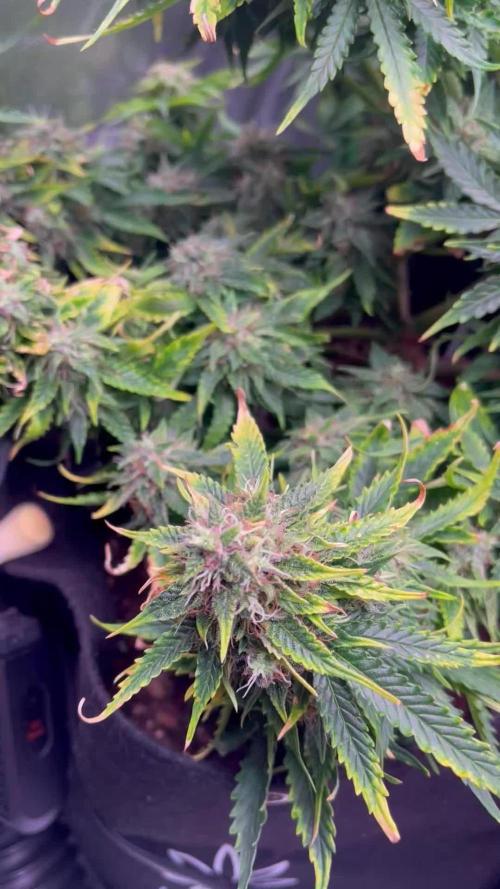
04.11--> Pistil appeared 6 days after changing the light pattern to 12-12. They're growing faster than I expected, won't fit in the cabin 😬 07.11--> One of the plants turned out to be male. I saw buds with pollen sacs and moved them away from the cabin. This was not nice. I will not be able to get close to the harvest amount I planned. 😔
Likes
32
Share
@Boomer911
Follow
1st Prize - Outdoor - III Copa Cogollos Libertadores del Noa - Salta - Argentina - 2022 Best solventless indoor flower - III Copa Cogollos Libertadores del Noa - Salta - Argentina - 2022 3rd Prize - Outdoor - II Portugal Weed Masters - Lisbon - Portugal - 2018 2nd Prize - BHO - VII Copa San Canuto - Fuerteventura - ACMECAN - Las Palmas - 2018 1st Prize - BHO - II Copa del Rey - Bogotá - Colombia - 2016 3rd Prize - Outdoor - Growshops - VI Copa THC - Valencia - Grow Thc Caravaca - 2016 1st Prize - Popular Outdoor Tasting - II Secret Cup Islas Canarias - Tenerife - La flor del valle growshop - 2015 3rd Prize - Outdoor - III Copa Txapelketa Eusfac Expogrow - Irún - Asociación Nou9Vilannabis - Vilanova del Camí - 2014 1st Prize - BHO - XIV Cannabis Parade - Córdoba - 2014 2nd Prize - Indica - I Barcelona Breeders Cup - Barcelona - Asociación Nou9Vilannabis - Vilanova del Camí - 2014 1st Prize - Outdoor - VII Copa del Gremi Growshops Catalunya Profesional - Barcelona - La Paz Greenshop - Vilanova del Camí - 2014 1st Prize - Indoor - IV Cata A.D.E.U.C - Córdoba 2013 - Asociación Nou9Vilannabis - Vilanova del Camí - 2013 1st Prize - Outdoor - VI Copa del Gremi Growshops Catalunya Amateur - Barcelona - Grow Llum Verda - Lleida - 2013 1st Prize - Outdoor - VI Copa del Gremi Growshops Catalunya Profesional - Barcelona - Grow Llum Verda - Lleida - 2013 1st Prize - Indoor - VI Copa del Gremi Growshops Catalunya Profesional - Barcelona - La Paz Greenshop - Vilanova del Camí - 2013 2nd Prize - Outdoor - XV Bella Flor - Málaga - 2012 1st Prize - Best Indica - Cannabis Canarias Cup - Winter Edition - 2012 3rd Prize - Extraction - 2nd Copa de THC Valencia - 2012 2nd Prize - Outdoor - IV Copa del Gremi Growshops Catalunya - Barcelona - Grow L’Hort dels Somnis - 2011 1st Prize- “Girl of the Year” - Soft Secrets - 2011 1st Prize - Outdoor - III Copa del Gremi Growshops Catalunya - Barcelona - Grow Llum Verda - Lleida - 2010 1st Prize - Outdoor - Cannabis Champions Cup - Spannabis Barcelona - 2009 2nd Prize - Outdoor - IV Encuentro Por La Normalización Y El Consumo Responsable - El Punto - Málaga - 2009 1st Prize - Outdoor - IV Encuentro Por La Normalización Y El Consumo Responsable - El Punto - Málaga - 2009 1st Prize - Outdoor - 2nd Coppa D’Italia Cannabica - Rome - Italy - 2008 1st Prize - Outdoor - Copa del Gremi Growshops Catalunya Profesional - Barcelona - Grow Llum Verda - Lleida - 2008 1st Prize - Indoor, Ground - Copa de Oiartzun - 2007
Likes
25
Share
***** Week 7 Veg - January 16/21 to 22/21 ***** Week 7 will be their last week being able to take them out of the tent😟 SCROG netting going in on the weekend ahead. Not really a lot to report this week as the girls are doing well and I am just wanting their side branches to grow longer to help filling in the canopy anyway. Performed more LST this week and bending over the branches daily. Didn’t do any HST this week, will once the net is in and I have a better visual of how the branches need to bend. They have come a long ways over the last 2 weeks when you look back at pictures. They have filled out with more side branching and other than battling a little purple striping on the main stems they seem pretty happy. Leaf colour is good and should be in good shape for the flip soon. Will go through all of week 8 before flipping so hopefully week 9 will be transition week and week 10 the start of flower.......have to get through next week first though😀👍 Switching over to tap water again. I have been struggling with calcium and magnesium deficiencies on all grows for the last year. I can’t seem to get the right amount added back to the RO water I use in all feedings. So running with straight water again now. Ppm coming out is 325 so I will work with that. Going to explore my own RO system in the house rather than bottled water, a system that adds back calcium, magnesium, and iron. It’s been flowing okay for the first week and will continue on for now. Using RO water I have been feeding full strength on the nutrients and have been working on backing them down a bit to compensate for the starting point of 325 now. They have continued to be fed once a week roughly and supplemented with calmag and microbes. Little more detail....... Jan 16/21, Day 43 Veg - 3L each of full line at full strength in RO water - 1150ppm and 5.8pH given to the girls - didn’t add any other nutes other than IPP line. Jan 17/21, Day 44 Veg - dry out day - pulled down all the girls again tonight to train them outwards. - side branching doing very well on Candyland girls. Jan 18/21, Day 45 Veg - 3L for each girl today with tap water and CalMag @ 1ml, Microbes @ 2ml, Nature’s Candy @ 1.5ml - 700ppm and 5.7pH is what that works out to. - have to use a considerable amount of pH down to adjust the tap water, over 6ml in 16L Jan 19/21, Day 46 Veg - measured the girls today and Candyland1 is 14” tall and CL2 is 13” tall. They were topped already😀 - dry out day for the girls. Jan 20/21, Day 47 Veg - 2.5L each with plain tap water - 295ppm and 5.8pH. - all the girls are looking big and bushy today.......they are ready for flip soon. Jan 21/21, Day 48 Veg - dry out day for the girls. Jan 22/21, Day 49 Veg - pulled all the girls down again......repeating the same LST each day manually rather than tying down for now. - this should be water day but leaving for today as I am going to lolipop the lower branches and a heavier leaf stripping tomorrow. - will feed tomorrow as they will benefit more. Very solid week ETS......the girls are taking off and expect to see lots of leaves popping out over the next couple of weeks😀👍 Work on reducing the small stresses they seem to be experiencing more next week.......continue tap water and give a feed with Epsom Salts new week.
Likes
3
Share
No purple yet, maybe never. But still beautiful and smelling very good. Very good harvest coming. Buds getting fat. Given that the soil is organic with a wide variety of amendments I decided not to keep fertilizing with liquid fertilizer.
Likes
13
Share
Eccoci qui... Tutto va per il meglio, questa settimana si inizia a vedere la resina e ora si inizieranno a formare le cime, per questo aggiungo Sugar Shot di @xpertnutrients vedremo l'evoluzione settimana prossima. Odore intenso di Big Bubble, strato di resina pazzesco e numero di cime formate più alto di tutto il ciclo, sono molto curioso di questa varietà.... STRAORDINARIA Grazie a tutti per il supporto🔥🌲❤️
Likes
2
Share
@TTerpz
Follow
Start of week 6!! One more week until flip All pits have been brought back up to ph range in the 6s
Likes
19
Share
Yellow butterfly came to see me the other day; that was nice. Starting to show signs of stress on the odd leaf, localized isolated blips, blemishes, who said growing up was going to be easy! Smaller leaves have less surface area for stomata to occupy, so the stomata are packed more densely to maintain adequate gas exchange. Smaller leaves might have higher stomatal density to compensate for their smaller size, potentially maximizing carbon uptake and minimizing water loss. Environmental conditions like light intensity and water availability can influence stomatal density, and these factors can affect leaf size as well. Leaf development involves cell division and expansion, and stomatal differentiation is sensitive to these processes. In essence, the smaller leaf size can lead to a higher stomatal density due to the constraints of available space and the need to optimize gas exchange for photosynthesis and transpiration. In the long term, UV-B radiation can lead to more complex changes in stomatal morphology, including effects on both stomatal density and size, potentially impacting carbon sequestration and water use. In essence, UV-B can be a double-edged sword for stomata: It can induce stomatal closure and potentially reduce stomatal size, but it may also trigger an increase in stomatal density as a compensatory mechanism. It is generally more efficient for gas exchange to have smaller leaves with a higher stomatal density, rather than large leaves with lower stomatal density. This is because smaller stomata can facilitate faster gas exchange due to shorter diffusion pathways, even though they may have the same total pore area as fewer, larger stomata. Leaf size tends to decrease in colder climates to reduce heat loss, while larger leaves are more common in warmer, humid environments. Plants in arid regions often develop smaller leaves with a thicker cuticle and/or hairs to minimize water loss through transpiration. Conversely, plants in wet environments may have larger leaves and drip tips to facilitate water runoff. Leaf size and shape can vary based on light availability. For example, leaves in shaded areas may be larger and thinner to maximize light absorption. Leaf mass per area (LMA) can be higher in stressful environments with limited nutrients, indicating a greater investment in structural components for protection and critical resource conservation. Wind speed, humidity, and soil conditions can also influence leaf morphology, leading to variations in leaf shape, size, and surface characteristics. Small leaves: Reduce water loss in arid or cold climates. Environmental conditions significantly affect gene expression in plants. Plants are sessile organisms, meaning they cannot move to escape unfavorable conditions, so they rely on gene expression to adapt to their surroundings. Environmental factors like light, temperature, water, and nutrient availability can trigger changes in gene expression, allowing plants to respond to and survive in diverse environments. Depending on the environment a young seedling encounters, the developmental program following seed germination could be skotomorphogenesis in the dark or photomorphogenesis in the light. Light signals are interpreted by a repertoire of photoreceptors followed by sophisticated gene expression networks, eventually resulting in developmental changes. The expression and functions of photoreceptors and key signaling molecules are highly coordinated and regulated at multiple levels of the central dogma in molecular biology. Light activates gene expression through the actions of positive transcriptional regulators and the relaxation of chromatin by histone acetylation. Small regulatory RNAs help attenuate the expression of light-responsive genes. Alternative splicing, protein phosphorylation/dephosphorylation, the formation of diverse transcriptional complexes, and selective protein degradation all contribute to proteome diversity and change the functions of individual proteins. Photomorphogenesis, the light-driven developmental changes in plants, significantly impacts gene expression. It involves a cascade of events where light signals, perceived by photoreceptors, trigger changes in gene expression patterns, ultimately leading to the development of a plant in response to its light environment. Genes are expressed, not dictated! While having the potential to encode proteins, genes are not automatically and constantly active. Instead, their expression (the process of turning them into proteins) is carefully regulated by the cell, responding to internal and external signals. This means that genes can be "turned on" or "turned off," and the level of expression can be adjusted, depending on the cell's needs and the surrounding environment. In plants, genes are not simply "on" or "off" but rather their expression is carefully regulated based on various factors, including the cell type, developmental stage, and environmental conditions. This means that while all cells in a plant contain the same genetic information (the same genes), different cells will express different subsets of those genes at different times. This regulation is crucial for the proper functioning and development of the plant. When a green plant is exposed to red light, much of the red light is absorbed, but some is also reflected back. The reflected red light, along with any blue light reflected from other parts of the plant, can be perceived by our eyes as purple. Carotenoids absorb light in blue-green region of the visible spectrum, complementing chlorophyll's absorption in the red region. They safeguard the photosynthetic machinery from excessive light by activating singlet oxygen, an oxidant formed during photosynthesis. Carotenoids also quench triplet chlorophyll, which can negatively affect photosynthesis, and scavenge reactive oxygen species (ROS) that can damage cellular proteins. Additionally, carotenoid derivatives signal plant development and responses to environmental cues. They serve as precursors for the biosynthesis of phytohormones such as abscisic acid () and strigolactones (SLs). These pigments are responsible for the orange, red, and yellow hues of fruits and vegetables, while acting as free scavengers to protect plants during photosynthesis. Singlet oxygen (¹O₂) is an electronically excited state of molecular oxygen (O₂). Singlet oxygen is produced as a byproduct during photosynthesis, primarily within the photosystem II (PSII) reaction center and light-harvesting antenna complex. This occurs when excess energy from excited chlorophyll molecules is transferred to molecular oxygen. While singlet oxygen can cause oxidative damage, plants have mechanisms to manage its production and mitigate its harmful effects. Singlet oxygen (¹O₂) is considered a reactive oxygen species (ROS). It's a form of oxygen with higher energy and reactivity compared to the more common triplet oxygen found in its ground state. Singlet oxygen is generated both in biological systems, such as during photosynthesis in plants, and in cellular processes, and through chemical and photochemical reactions. While singlet oxygen is a ROS, it's important to note that it differs from other ROS like superoxide (O₂⁻), hydrogen peroxide (H₂O₂), and hydroxyl radicals (OH) in its formation, reactivity, and specific biological roles. Non-photochemical quenching (NPQ) protects plants from damage caused by reactive oxygen species (ROS) by dissipating excess light energy as heat. This process reduces the overexcitation of photosynthetic pigments, which can lead to the production of ROS, thus mitigating the potential for photodamage. Zeaxanthin, a carotenoid pigment, plays a crucial role in photoprotection in plants by both enhancing non-photochemical quenching (NPQ) and scavenging reactive oxygen species (ROS). In high-light conditions, zeaxanthin is synthesized from violaxanthin through the xanthophyll cycle, and this zeaxanthin then facilitates heat dissipation of excess light energy (NPQ) and quenches harmful ROS. The Issue of Singlet Oxygen!! ROS Formation: Blue light, with its higher energy photons, can promote the formation of reactive oxygen species (ROS), including singlet oxygen, within the plant. Potential Damage: High levels of ROS can damage cellular components, including proteins, lipids, and DNA, potentially impacting plant health and productivity. Balancing Act: A balanced spectrum of light, including both blue and red light, is crucial for mitigating the harmful effects of excessive blue light and promoting optimal plant growth and stress tolerance. The Importance of Red Light: Red light (especially far-red) can help to mitigate the negative effects of excessive blue light by: Balancing the Photoreceptor Response: Red light can influence the activity of photoreceptors like phytochrome, which are involved in regulating plant responses to different light wavelengths. Enhancing Antioxidant Production: Red and blue light can stimulate the production of antioxidants, which help to neutralize ROS and protect the plant from oxidative damage. Optimizing Photosynthesis: Red light is efficiently used in photosynthesis, and its combination with blue light can lead to increased photosynthetic efficiency and biomass production. In controlled environments like greenhouses and vertical farms, optimizing the ratio of blue and red light is a key strategy for promoting healthy plant growth and yield. Understanding the interplay between blue light signaling, ROS production, and antioxidant defense mechanisms can inform breeding programs and biotechnological interventions aimed at improving plant stress resistance. In summary, while blue light is essential for plant development and photosynthesis, it's crucial to balance it with other light wavelengths, particularly red light, to prevent excessive ROS formation and promote overall plant health. Oxidative damage in plants occurs when there's an imbalance between the production of reactive oxygen species (ROS) and the plant's ability to neutralize them, leading to cellular damage. This imbalance, known as oxidative stress, can result from various environmental stressors, affecting plant growth, development, and overall productivity. Causes of Oxidative Damage: Abiotic stresses: These include extreme temperatures (heat and cold), drought, salinity, heavy metal toxicity, and excessive light. Biotic stresses: Pathogen attacks and insect infestations can also trigger oxidative stress. Metabolic processes: Normal cellular activities, particularly in chloroplasts, mitochondria, and peroxisomes, can generate ROS as byproducts. Certain chlorophyll biosynthesis intermediates can produce singlet oxygen (1O2), a potent ROS, leading to oxidative damage. ROS can damage lipids (lipid peroxidation), proteins, carbohydrates, and nucleic acids (DNA). Oxidative stress can compromise the integrity of cell membranes, affecting their function and permeability. Oxidative damage can interfere with essential cellular functions, including photosynthesis, respiration, and signal transduction. In severe cases, oxidative stress can trigger programmed cell death (apoptosis). Oxidative damage can lead to stunted growth, reduced biomass, and lower crop yields. Plants have evolved intricate antioxidant defense systems to counteract oxidative stress. These include: Enzymes like superoxide dismutase (SOD), catalase (CAT), and various peroxidases scavenge ROS and neutralize their damaging effects. Antioxidant molecules like glutathione, ascorbic acid (vitamin C), C60 fullerene, and carotenoids directly neutralize ROS. Developing plant varieties with gene expression focused on enhanced antioxidant capacity and stress tolerance is crucial. Optimizing irrigation, fertilization, and other management practices can help minimize stress and oxidative damage. Applying antioxidant compounds or elicitors can help plants cope with oxidative stress. Introducing genes for enhanced antioxidant enzymes or stress-related proteins over generations. Phytohormones, also known as plant hormones, are a group of naturally occurring organic compounds that regulate plant growth, development, and various physiological processes. The five major classes of phytohormones are: auxins, gibberellins, cytokinins, ethylene, and abscisic acid. In addition to these, other phytohormones like brassinosteroids, jasmonates, and salicylates also play significant roles. Here's a breakdown of the key phytohormones: Auxins: Primarily involved in cell elongation, root initiation, and apical dominance. Gibberellins: Promote stem elongation, seed germination, and flowering. Cytokinins: Stimulate cell division and differentiation, and delay leaf senescence. Ethylene: Regulates fruit ripening, leaf abscission, and senescence. Abscisic acid (ABA): Plays a role in seed dormancy, stomatal closure, and stress responses. Brassinosteroids: Involved in cell elongation, division, and stress responses. Jasmonates: Regulate plant defense against pathogens and herbivores, as well as other processes. Salicylic acid: Plays a role in plant defense against pathogens. 1. Red and Far-Red Light (Phytochromes): Red light: Primarily activates the phytochrome system, converting it to its active form (Pfr), which promotes processes like stem elongation and flowering. Far-red light: Inhibits the phytochrome system by converting the active Pfr form back to the inactive Pr form. This can trigger shade avoidance responses and inhibit germination. Phytohormones: Red and far-red light regulate phytohormones like auxin and gibberellins, which are involved in stem elongation and other growth processes. 2. Blue Light (Cryptochromes and Phototropins): Blue light: Activates cryptochromes and phototropins, which are involved in various processes like stomatal opening, seedling de-etiolation, and phototropism (growth towards light). Phytohormones: Blue light affects auxin levels, influencing stem growth, and also impacts other phytohormones involved in these processes. Example: Blue light can promote vegetative growth and can interact with red light to promote flowering. 3. UV-B Light (UV-B Receptors): UV-B light: Perceived by UVR8 receptors, it can affect plant growth and development and has roles in stress responses, like UV protection. Phytohormones: UV-B light can influence phytohormones involved in stress responses, potentially affecting growth and development. 4. Other Colors: Green light: Plants are generally less sensitive to green light, as chlorophyll reflects it. Other wavelengths: While less studied, other wavelengths can also influence plant growth and development through interactions with different photoreceptors and phytohormones. Key Points: Cross-Signaling: Plants often experience a mix of light wavelengths, leading to complex interactions between different photoreceptors and phytohormones. Species Variability: The precise effects of light color on phytohormones can vary between different plant species. Hormonal Interactions: Phytohormones don't act in isolation; their interactions and interplay with other phytohormones and environmental signals are critical for plant responses. The spectral ratio of light (the composition of different colors of light) significantly influences a plant's hormonal balance. Different wavelengths of light are perceived by specific photoreceptors in plants, which in turn regulate the production and activity of various plant hormones (phytohormones). These hormones then control a wide range of developmental processes.
Likes
6
Share
This one was In-Z-Air by PerfectTreeSeeds, grown with GreenPlanetNutrients only! Check the other weeks to see the ones with AptusPlantTech! Great zkittles terpz, awesome structure, beautiful colours!
Likes
13
Share
Wow in der Zeit ist sie extrem gros geworden, hat aber wenige Triebe. Ich bin extrem zu Frieden und denke, dass sie nich gut wachsen wird. Durch ihre höre ist sie zwar ein bisschen wackelig, aber ich werde sie bald ganz raus stellen und sie ein bisschen Wind aussetzen 👌🏽👌🏽
Likes
5
Share
@GrowGuy97
Follow
This lady got cut down on day 64, she has some beautiful colors & a very distinctive smell! The buds are all around good size nugs and very hard, can’t wait to see how she turns out! I definitely recommend going to check out Bomb seeds & getting yourself some fire genetics! Will do a harvest post as soon as she is finished drying & I get a weight! Thanks for following & happy growing!
Processing
Likes
7
Share
@gablmo
Follow
Another never ending vege week. I took clones and did more trellis work. The PH was up more than usual, they are still alive. I'm glad.
Likes
13
Share
Likes
9
Share
GH cheese is growing nicely puffy flowers with a lot of trichomes. Looking forward to tight buds full of kief. Crossing fingers that the cheese flavour is pronounced. 22/03 New Video uploaded
Likes
20
Share
These were in dark tent with ac and 3- 6 inch fans and exhaust going. I thing the ac is making the humidity rise as its at 60% rh and im shooting for 65 degrees F TEMP. FOR A 10-12 DAY DRY. sTILL HAVE TO ACTUALLY CHECK THE BUDS FOR DRYNESS NOT JUST RELY ON SOMEONE ELSES PROGRAM. i BITCHED ABOUT THIS GROW THE WHOLE WAY AND I GOT 11 OZ WET SO I am axctually thrilled. If i can get this stuff to dry and cure and not end up smelling like hay, i will be thrilled beyond imagination.. so 12 more days or whatever it ends up being but thats goal. I am watching this dry and cure like a hawk!!! WILL UPDATE WITH DRY WEIGHT BEFORE I disapear in a cloud of smoke to be a good sport and a respectible growdiaries member with complete grows. Peace!
Likes
7
Share
@refusing3
Follow
Day 29 of vegetation: raise the humidity to 60% trichomes on the leaves can be seen with the naked eye. I have never seen trichomes appear on vegetation before Day 31 of vegetation: remove 10 large leaves and made an LST. Now literally ALL the lower leaves receive 100% of the light After 35 days of vegetation, the plant looks like it ready to start flowering. Watering volume week 5: Day 29-35 - 400 ml per day
Likes
25
Share
@Stick
Follow
She has become out of control, buds are way too heavy, a stem fell during the night and the upper cola on that stem has developed mold very quickly. But this isolated incident didn't stop her from producing loads of trichomes everywhere, that are almost 100% milky. A few more days to wait and I'll proceed to harvest 😎
Likes
19
Share
@Coopmc
Follow
Beast Mode Time!! This thing is Huge somenone should tame her with my SFV
Likes
9
Share
Week 3 Bloom I did nothing this week I cleaned and changed the reservoir then sat back and let the timers do the work. This week everything grew so much. At the beginning of the week I was concerned about nug spacing. A few days later no concern at all lol. This is looking to be a nice grow. 🤞🤞