


Likes
Comments
Share


@eldruida_lamota
Follow
Vamos familia, actualizamos estas Runtz de Seedstockers, séptima semana de floración.
Tienen un porte y un color espectacular, se ve que están completamente sanas, hasta el momento genial.
La humedad está en su punto, y la temperatura al final lo solucionamos ya está estable en 24/25 grados.
Empiezan a oler ya que alimenta, tienen toques muy dulces y el aroma ya es bastante fuerte.
Esta semana seguimos con el explotacogollos de Agrobeta, que harán que las flores acaben de reventar.
Vemos como progresan esta próxima semana.
A partir de ya los riegos va a ir solo Agua controlando Ph y ya empieza la recta final.
Mars hydro:
Code discount: EL420
https://www.mars-hydro.com/
Agrobeta:
https://www.agrobeta.com/agrobetatiendaonline/36-abonos-canamo
Hasta aquí todo, Buenos humos 💨💨💨


Likes
82
Share


@Bread_n_Buds
Follow
For the last day of the year we treat ourselves to the story of a special little girl.
Her name is Biscotti, her name already says it all about the potential of this young girl born in Holland with this beautiful Italian Strain Name, she is precious and full of style since conception. She looks like she was designed by Pininfarina who smokes joints.
It's a bit as if Gianni Versace had dressed her, extravagant, provocative, truly flamboyant, if you have the patience to look at the thousand photos that I made clear that I literally couldn't stop taking. It's a journey I don't want to leave, especially when I'm in the middle of it. terpenes, please leave me there!
She grew up quietly, with her small internodal distance you could see that she was beautiful even without flowers, but it was when she flowered that she truly gave her best. Already from the first weeks of flowering you can understand very very well that the girl has a bright color and she threw resin very early thanks to Power Buds, Sugar Royal and Green Sensation in my opinion.
The flowers have an imposing shape, they really are beautiful little purple beasts just in the dry room, for a few days soon we will do an initial test and then we will wait to taste it without too much fresh taste.
I’m about sure to have rated 10 stars the strain and all feeding 5 stars but i found the strain rated 9 stars and the feeding 4, not sure but almost sure.
I often get sad when I cut it, I'm too sad to cut it, I always think I'll smoke it and everything, but it's so beautiful that it makes my heart ache to cut it. It's her life cycle, otherwise she would rot for goodness sake, it's a joke but I really have a moment of shock in her heart.
She'll move on to the first vaporized one I guess.
Technique used - She was worked with a. single topping cut but leaving the two branches lower than the cut, thus obtaining 4 main branches with the relative branches. I also did a bit of LST at the beginning but having space problems then I decided not to let it expand too much. Flowers are beautiful beasts for truly yummi.
Fertilizers - We have to make a special mention of Plagron I wrote a review in this diary which only partially explains how good this line of fertilizers is. I feel like I saw with my own eyes the changes in the plants when I gave the additives, I really saw the plants push in resin and everything. For more information read the review, I don't like to be repetitive, I don't write the quantities, they are also in the diary and in any case very similar to those recommended by the manufacturer. Never exceed this with any fertilizer and always flush.
Light and home - The light was provided by MarsHydro and the home as well, it is the SP 3000, a piece that is not of the latest generation but which I love for its length of around 110 cm which you can understand how it covers me super well, the 120 wide wide grow room cm, 60cm deep and 180cm high, always supplied by them with a better than average covering by a lot and fantastic windows from which to spy on the girls. I really love accessory holders that hang either inside or outside the growbox. top brand now leader.
There are many photos like my passion for this wonderful plant, look at as many as you want but if you have the patience to get to the end there are various super crop terpenes, beautiful and big like Porcini Mushrooms.
Love you "BISCOTTI IS BETTER THAN COOKIES"
Recommend this strain to everyone, go out and shout it in the streets, Biscotti is the most beautiful in the situation.
https://www.zamnesia.io/it/9484-zamnesia-seeds-biscotti.html
Plagron is a guarantee in feeding your little ones, I have been using it for many years until recently I thought that basic fertilizers were enough to make the little ones grow then I put the Green Sensation and I completely changed my mind.
https://plagron.com/en
I have started a series of experiments using stimulating frequencies for plants, I am trying something from the next round we will use it fixed.
Music of the week Radio Nula from Slovenia https://radionula.com/
Music of the week Music for Plants 432 hz https://www.youtube.com/watch?v=3EZqEvMoS3w
"I can see the light"
https://marshydro.eu/negozio/?lang=it

Likes
36
Share


@brownbae420
Follow
Day 55
- Watering with water PH to 6.25
- Buds fattening
- Vibe: 😍
Day 42 - 3B OG x Samsquanch
- Current week Timelapse
- Vibe: 😍
- Readings
-- Lights 18/6 - Level 10
-- Temp: 70 (ideal) | 70.0 (avg)
-- Humidity: 55% | 53.9%
-- VPD: 1.1 | 1.13 kPa
- Vibe: 😎
"Oh, the good life, full of fun seems to be the ideal..." — Tony Bennett


Likes
13
Share


@DeepRootGrows
Follow
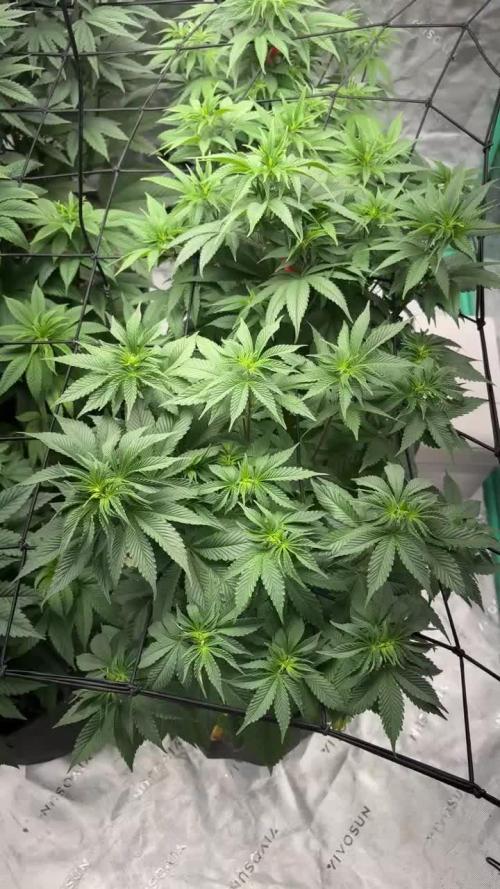
This lady has turned into an absolute beast, starting to be really frosty with trichomes and, believe it or not, I can actually smell the purple lemonade in it, this has became a really beautiful plant and I only expect it to go maybe another two weeks. The size of this thing is unbelievable though, so big for an auto. Can’t wait to get it into jars!

Likes
110
Share


@SlowpokeFuegobud
Follow
💜 💚 😍🥤💜💜 💚 😍🥤💜💜 💚 😍🥤💜💜 💚 😍🥤💜💜 💚 😍🥤💜
Dear growmies, welcome to week 1!! ❤️
Spraying the babies with Fast Plants Spray every 2 days in the morning, they love it! 💦
No waterings yet.. 💧
Thanks @Fast_Buds for your awesome genetics, growing Fastbuds is always a bit like riding a ferris wheel! Woohooo!! 😜 🙏 💚
Thanks to my sponsors @Green_Buzz_Nutrients, their nutes never ever let me down!! Check out my diaries on how well they work! 💚 😘 In case you want to give them a try, you can find a generous discount code in the setup description further down the road ⬇️
You can find more brand hot updates on my IG, where I share real time events from my growroom, don't miss this! 😝
_______________________________________________________________________
Purple Lemonade FF
As refreshing as cold lemonade on a hot Summer day. 🌞
• Quench your thirst. Just as good as lemonade on a hot Summer day.
• The gentle giant. Up to 550 g/m2 of gorgeous pinkish-purple buds.
• Refreshing for the mind and body. The ideal all-day strain with a perfectly balanced effect.
• Sweet n’ sour terps. Mouth-puckering lemon flavors that’ll hypnotize your taste buds.
• Properly purple. The perfect choice for purple hash and extractions.
Arising from a cross between purple and citrus Cali genetics, Purple Lemonade FF (Fast Flowering) offers a complex high made up of perfectly balanced cerebral and body effects that are ideal for daytime use. Expect an extremely enjoyable high that boosts your mood while deeply relaxing your whole body and getting
rid of muscle pain. This meticulous cross produces up to 550 g/m2 of some of the most beautiful purple buds, with pinkish and reddish hues that will catch everyone’s attention. The beautiful purple buds are ready for harvest in 7-8 weeks and come hand-in-hand with unbelievably sugary citrus terps that are just as refreshing as a cold lemonade on a hot Summer day. It’s the ideal variety for the sweet-tooth stoner seeking strains that deliver both in quality and quantity of resin.
Bud Description 🦔
Purple Lemonade FF grows chunky, spade-shaped buds that boast a whole range of pinkish-purple hues with rich, dark orange pistils shooting out of every direction. This variety stands out for the, oftentimes, lilac trichomes that give them a gorgeous pink tint and make for outstanding purple concentrates. The buds give off a delicious tart lemon aroma that reveals a sweeter, more fruity scent as you break the buds open. Definitely a must for flavor chasers and those looking for pungent terpene profiles.
Smoke Reports 💨
Purple Lemonade FF offers an effect that’s just as unique as the flavor. Expect a potent uplifting high that gives you that energy boost you need to get things done while 100% happy and stress-free. The effect gradually transforms into a wave that works its way along the limbs and through the muscles, deeply relaxing your body and putting you in the right mindset to go through a busy day with a huge smile on your face. This is an excellent all-day smoke as it not only increases energy but can also help combat chronic pain, migraine and stress.
Plant Appearance 💄
This feminized photoperiod variety develops a thick and strong structure, growing a medium-sized main cola with multiple shorter side branches, typical of hybrid strains. Purple Lemonade FF develops fairly short internodal spacing with gorgeous purple buds growing stacked on top of each other, making it the perfect choice for growers of all levels looking to get lots and lots of top-shelf purple weed, as this variety can produce up to 550 g/m2 in a 7-8 week flower cycle.
Grow Tips 🤓
This is a super fast feminized photoperiod version that takes approximately 7-8 weeks to flower with a 5-week vegetation cycle,, this means you can have faster harvests by shortening the veg cycle or have a longer veg cycle for bigger yields. Purple Lemonade FF (Fast Flowering) makes for a great candidate for growers of all levels as it’s a vigorous strain that will thrive with basic maintenance both indoors and outdoors. This is a resin powerhouse so make sure to have your trim bin close by as all the resinous sugar leaves will make for the most mouth- watering hash and extracts.
Flavor 😋
Expect a long-lasting citrus zest that taste just like it smells. Purple Lemonade FF reeks of a delicious blend of sweet fruits and tart citrus that’ll make your mouth water. On the inhale, expect sour flavors that taste just like lemon candy with hints of orange and a really subtle earthy background. And on the exhale, the citrus flavors open up, giving place to a more sugary berry fruitiness that leaves your whole mouth tasting like an extremely sweet weed-infused lemonade.
https://2fast4buds.com/seeds/purple-lemonade-fast-flowering
_______________________________________________________________
Setup:
140x70x200 cm Spiderfarmer tent
2x Monkey 16W fans (not oscillating)
1x Secret Jardin 30W
1x box fan 50W oscillating (on lowest level)
LED
Full Spectrum 320W AGLEX AGL-320W-MA
5,6 kg
foldable, dimmable
864 pieces Samsung LH301H
864umol/s
2,7umol/J
full spectrum white + RED 660nm + IR 740nm
wavelength range 380-780nm
covering 3x4ft
Green Buzz Nutrients https://greenbuzzliquids.com/
❗ Use code GD42025 for generous 25% discount (for orders of minimum 75€)
Biobizz Lightmix + coco + wormcastings + perlite
Carbon Active Granulate Filter 125/360 cm³/h
PrimaKlima exhaust EC 125-400/240 cm³/h
Likes
5
Share


@Mr_nugs_lover_David
Follow
The plant looks super beautiful, typical OG kush fat indica leaves, excellent growth pace, obviously short height, I love OG kush, last time I grew this strain it was 4 years ago, it's gonna be a beautiful plant for this 2021, she loves the spanish sun! Stay tuned everybody
Likes
2
Share


@Cannabot
Follow
if you love blueberry then this strain is for u,absolute nug fest.Nice colas.wasnt the tallest plant but short and stocky with decent meat on the bones.Very resistant

Likes
5
Share


@AllCannabisAreBlazin
Follow
04/28/25
Round two of WongBurger! (After failed autos..)
Two methods: directly in soil & glass of water.
4 seeds: 2/2 1 week apart.
Two ish weeks ago we bought some worms to eat the roots of the last harvest. The cover crop grew insane. Cut it back & tilled the top soil for the worms. Broke it down fast imo.
04/20/25 planted 2 WongBurger & 2 Bible Fruit Auto Flowers. None of the autos sprouted. We checked to see if it just couldnt get thru the soil. Seeds never popped. So now experimenting with glass of water germination.
First harvest we let it Xmas tree & allowing for smaller yield just to see how it grew. This harvest, plan to scrog, tip & fine tune a bit more for a higher yield. See what we can get up too!
**First harvest, thru the growing process stem smell checks smelt like pickles & now during cure it has a gassy pickly funky smell. It's pretty loud but you wouldn't smell down the street. Synthetic grows prob lol high: calming, can have sedation, can have munchies, just over all relaxing couch lock. Pretty chill.

Likes
13
Share


@mr_smooke
Follow
Here we are on day 28.
On day 23 i spoted Spider Mites. Next day i been spray leavs whit neem oil, for now SM are gone i hope they will not come back. She coming along nicely😁🤩🤘✌️

Likes
43
Share


@AumShanti
Follow
ॐ
ZOMBIE BRIDE & BRAIN CAKE from RIPPER SEEDS
1m x 1m x 2m tent, 480w led Spider Farmer, REMO NUTRIENTS
9th week of flowering
from 16.12. to 22.12.2024.
Big photo session this week and this week is prolonged for two days :)
Week of heavy flushing and darknessssss
at first they got last honey and water, then after they drinked that they got heavy flush in bathtub with ice cold water untill clear water was runoff,
they needed almost four days to drink that and to dry out, then they got ice cubes and i turned lights out and let them in darknes for three days.
Harvest is near, checking trichomes, they all are milky white with some orange tops,
buds are rock hard and smell of braincakes is so fruitiy and flowery while brides are next lvl smell :)))))))
Take care and much love :)
ॐ

Likes
50
Share


@Mr_Motalovah
Follow
Hello growers and tokers! 👋 👩🌾 🧑🌾.🔥💨
Hope you had a great week because these ladies sure have! 😍
They're starting to get that sweet aroma this strain gives off, her aroma will be over powering my tent in full flower. Love it!
Pictures and info were taken on day 12 of flower.
I put 71cm tall because that's the average between the three girls.
CC 1: 78cm
CC 2: 68cm
CC 3: 68cm
CC 1 is killing it with the double main colas. 💪 💪 🤩
CC2 is my favorite. She's got a perfect shape, nice evenly distributed canopy. Took LST great.
For me that's the goal when I do LST.
CC3 doesn't fall behind in any way, she's looking great.
There's a bunch of new growth everywhere so after 21 days i'll be doing some pretty heavy selective defoliation.
Feeding 1,5L each, every other day. Will be increasing as they ask for more.
How do they ask for more?
When feeding if the soil is drier than normal I give a 150-200ml increment of water.
I do that until they stop feeding so much then i just maintain that amount.
I start reducing if it takes longer to dry.
That works good for me. The old finger in the dirt trick. 👍
Nothing like knowing exactly what your ladies need first hand.
They've got a lovely green lush color.
It's a delight growing this strain.
I'll have to get me some more seeds for next run because this is a strain that will always have a spot in my garden. 😍 😍
Hope you enjoyed this week's update and stay tuned for next week.
If you like what you see check out the other strains in the garden. 😁
Take care and stay safe!
One love!


Likes
12
Share

@IberianRootcraft
Follow
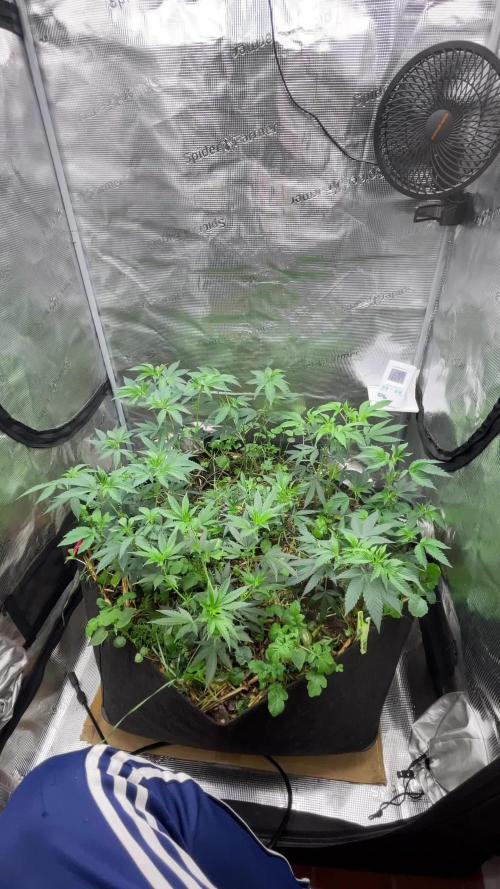
Light defoliation to level out the canopy. Supebuff Cherry 26 & Strawberry Guava are pushing way ahead, I did some training on them too.
Colorado Nightshifter is already cloned, RS11 is still recovering…
The Runtz is the smallest one and I already have a clon so I’m just applying LST.





Likes
6
Share


@zombikush81
Follow
Very easy to grow, I did not have any problems in any of the stages of both growth and blooming, good yield facility, great to start the advice.


Likes
19
Share

@BudsPerMinute
Follow
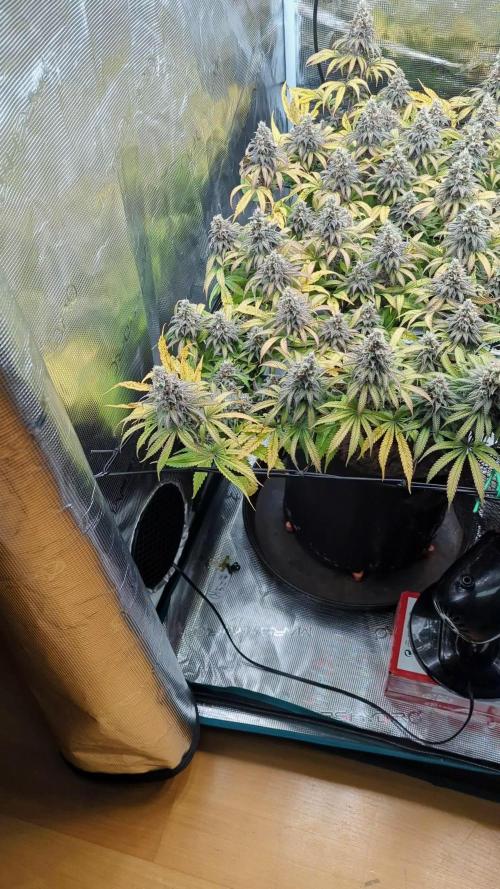
Woche 14
Mitte der Woche haben wir FlashClean gegossen um einmal alle Salze und Co zu lösen! Ab jetzt gibts es nur noch Wasser die restlichen Nährstoffe in der Erde und den Blättern muss für die nächsten 1-2 Wochen reichen.
Der Geruch ist auch wirklich sehr extrem wirklich ein Terpen Monster!

Likes
11
Share


@MadeInGermany
Follow
Flowering day 1
since time change
to 12/12
Hey guys :-)
The ladies are developing really well 😊.
After the pictures she came into the flowering tent Was poured 2 times with 1 l each (groundwater see description at the bottom)
I will spontaneously decide whether to keep her or not because all 3 phenotypes of her had seeds in the weed.
But all 3 phenotypes taste really delicious.
This phenotype 1 here only had a few single seeds so I'll give it another run and keep an eye on it.
Everything was made clean.
Fresh osmosis water is applied and the plants are sprayed and checked.
Stay healthy 💚🙏🏻
👇🏼👇🏼👇🏼👇🏼👇🏼👇🏼👇🏼👇🏼👇🏼👇🏼👇🏼👇🏼
You can buy this Nutrients at :
https://greenbuzzliquids.com/en/shop/
With the discount code: Made_in_Germany you get a discount of 15% on all products from an order value of 100 euros.
👇🏼👇🏼👇🏼👇🏼👇🏼👇🏼👇🏼👇🏼👇🏼👇🏼👇🏼👇🏼
You can buy this strain at :
Clearwater Seeds
Water 💧 💧💧
Osmosis water mixed with normal water (24 hours stale that the chlorine evaporates) to 0.2 EC. Add Cal / Mag to 0.4 Ec Ph with Organic Ph - to 5.8 - 6.5
MadeInGermany

Likes
10
Share


@SolitudeCorners
Follow
6️⃣6️⃣6️⃣****Week8 Bloom6****6️⃣6️⃣6️⃣
12/4/24
Water20L+Agsil21 10ml+Bloom 150-160ml+Core 70ml
PH 5.9 EC 2.5
Runoff Tray PH6 EC3.2
⛺️ PH5.9 EC3.2
13/4/24
Water 30L+Agsil21 15ml+Bloom 230ml+Core 120ml PH5.9 EC2.5
Runoff Tray PH 6.1 EC 3.4
⛺ PH 6 EC 5
14/4/24
Water 30L+Agsil21 15ml+Bloom 200ml+Core 100ml PH 5.9 EC 2.4
Runoff Tray PH 6.1 EC 3.6
⛺️ PH 6 EC 5
15/4/24
Water 20L+Agsil21 10ml+Bloom150ml+Core 70ml +Calboron 10ml PH 5.9 EC 2.5
Runoff Tray EC 3.8 PH 6
⛺️ EC 4 PH5.9
16/4/24
Water 30L+Agsil21 15ml+Bloom 230ml+Core 120 ml
Runoff Tray PH 6.1 EC4
⛺️ PH 5.8 EC4
17/4/24
Water 20L+Agsil21 10ml+Bloom 160ml+Core 95ml PH5.9 EC 2.5
Runoff Tray EC 3.6 PH 6.1
⛺️ EC 4.2 PH 5.8
18/4/24
Water 28L+Agsil21 13ml+Bloom 180ml+Core110ml PH 6 EC2.5
Runoff Tray EC 3.5 PH 6
⛺ EC 4.8 PH 5.6 (Flush with thrivegens)